Friday, August 28, 2026

If Bangladesh Buys the J-10C, China Finally Gets the Second Customer It's Been Chasing for Years


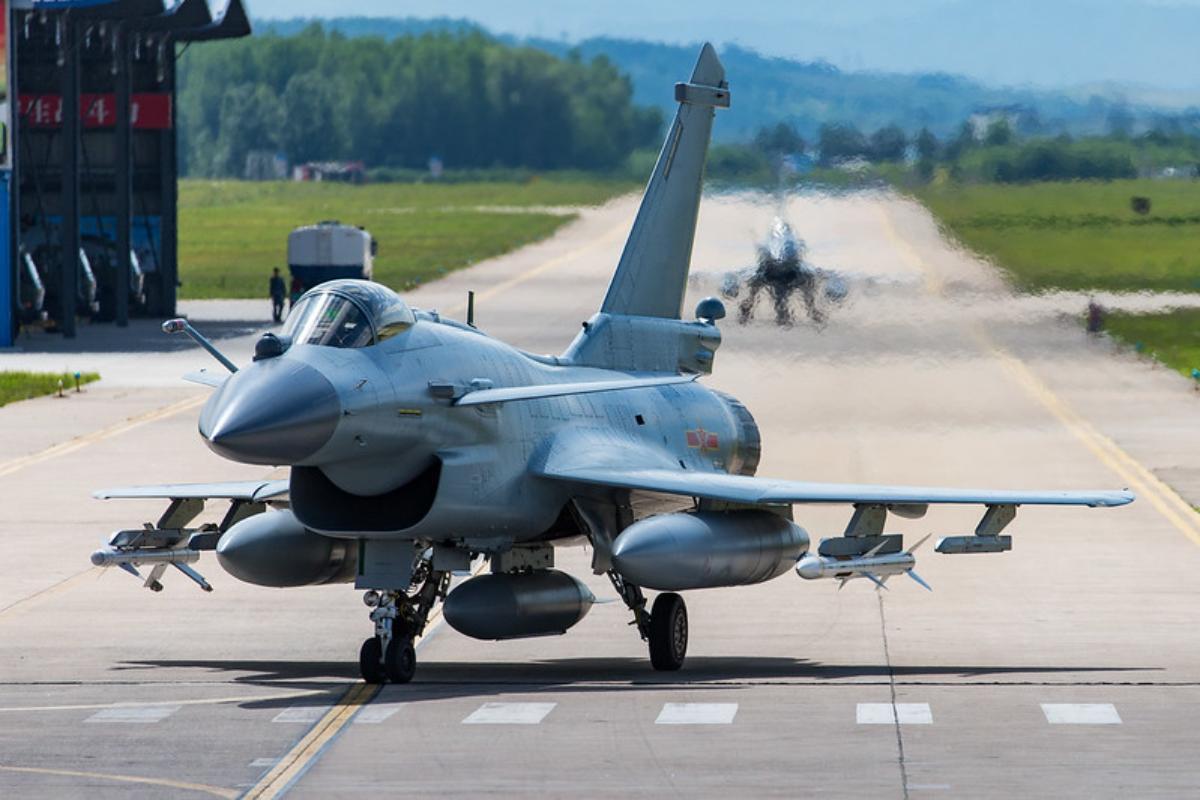
Bangladesh's government has advanced talks to acquire 20-24 Chinese J-10CE fighter jets, with Air Force officials citing Pakistan's own combat claims from its May 2025 clash with India as a factor in Dhaka's decision, according to a Bangladeshi minister quoted in this reporting. The numbers disclosed so far are substantial, roughly $1.2 billion for the airframes alone, up to $2.2 billion for the complete package including weapons, spares, and training, with payments reportedly spread across ten fiscal years through 2035-36. An 11-member inter-ministerial committee, chaired by the Air Force chief, has been negotiating the contract and evaluating the government-to-government procurement process since Bangladesh's former Prime Adviser Muhammad Yunus visited Beijing in March 2025.

This connects directly to the J-10C export struggle this blog has documented extensively all summer, and it would represent a genuinely significant breakthrough in a pattern this blog has repeatedly found frustrating China's marketing ambitions. This blog's coverage of China's aggressive J-10C showcasing, in Thailand, the UAE, and now twice against Egyptian Rafales, established a consistent theme: Beijing has spent well over a year generating combat-adjacent visibility for the aircraft while converting that visibility into actual signed contracts at a pace this blog characterized as strikingly slow, Pakistan remaining the sole confirmed operator despite years of marketing effort. This reporting's own list of countries that evaluated and ultimately passed on the J-10C, Brazil, Egypt, Indonesia, Colombia, and Iran, reads as direct confirmation of exactly that pattern. A completed Bangladesh deal would be China's actual second confirmed export customer, a genuinely different milestone than another showcase exercise or preliminary negotiation.

The specific justification Bangladeshi officials cited, Pakistan's own combat claims from the May 2025 conflict, rests on firmer ground than this blog's earlier coverage sometimes credited. A senior French intelligence official told CNN within days of the clash that Pakistan had downed at least one Indian Rafale, and French Air Force Chief Gen. Jérôme Bellanger later told reporters he had seen evidence pointing to three Indian aircraft losses, a Rafale, a Su-30, and a Mirage 2000, reporting independently carried by the Associated Press and Al Jazeera rather than sourced only to Pakistani or Chinese outlets. India's government has still not issued an official confirmation naming the Rafale specifically, and Pakistan's own claim of three Rafales lost doesn't fully match Bellanger's account of one, so real gaps remain in the public record. But this is no longer a case of dueling, unverifiable national claims with nothing independent to weigh, it's a case where the aircraft's own manufacturer country has, through named senior officers, lent real credibility to at least part of Pakistan's account. That matters for reading Dhaka's decision: Bangladesh isn't simply taking Islamabad's word for what happened, it's citing an outcome that a French general said he'd seen evidence for.

The encirclement framing this reporting builds toward connects directly to this blog's Mecca Pact coverage from earlier this summer. That pact, formalizing collective defense among Pakistan, Saudi Arabia, and Turkey, already gave this blog's coverage a clear throughline on China and Pakistan's efforts to build regional coalitions India would find genuinely destabilizing. Bangladesh's own reported interest in joining that same pact, combined with its existing Bayraktar TB2 deployment near the Indian border and now potential J-10CE acquisition, would place a Chinese-armed, Turkish-drone-equipped, Pakistan-aligned military directly along India's longest land border, 4,096 kilometers, a considerably more consequential strategic picture than any single fighter jet contract on its own. This blog's own SIPRI-sourced research confirms the underlying trend line, China already supplies 72 percent of Bangladesh's major arms imports and accounts for more than two-thirds of its total military inventory, meaning a J-10CE purchase would deepen an already-dominant relationship rather than establish a new one.

None of this confirms the deal actually closes, Bangladesh has previously signed a Letter of Intent with Eurofighter and initially explored the French Rafale, and this reporting itself notes the J-10CE joining a "long list of countries" that evaluated the aircraft without necessarily buying it. But the specific combination here, price advantage roughly half the Rafale or Eurofighter's cost, an already-dominant Chinese arms relationship, and a regional combat narrative China didn't even need to manufacture itself, is a genuinely stronger case than China has managed to build with any other prospective customer this blog has tracked this year, and if it converts into a signed contract, it would finally give Beijing the second export customer its marketing campaign has been chasing since well before this blog started documenting the pattern.

China's Tanker-Killer Claim Applies the Exact Kill-Chain Logic This Blog Already Traced From the American Side


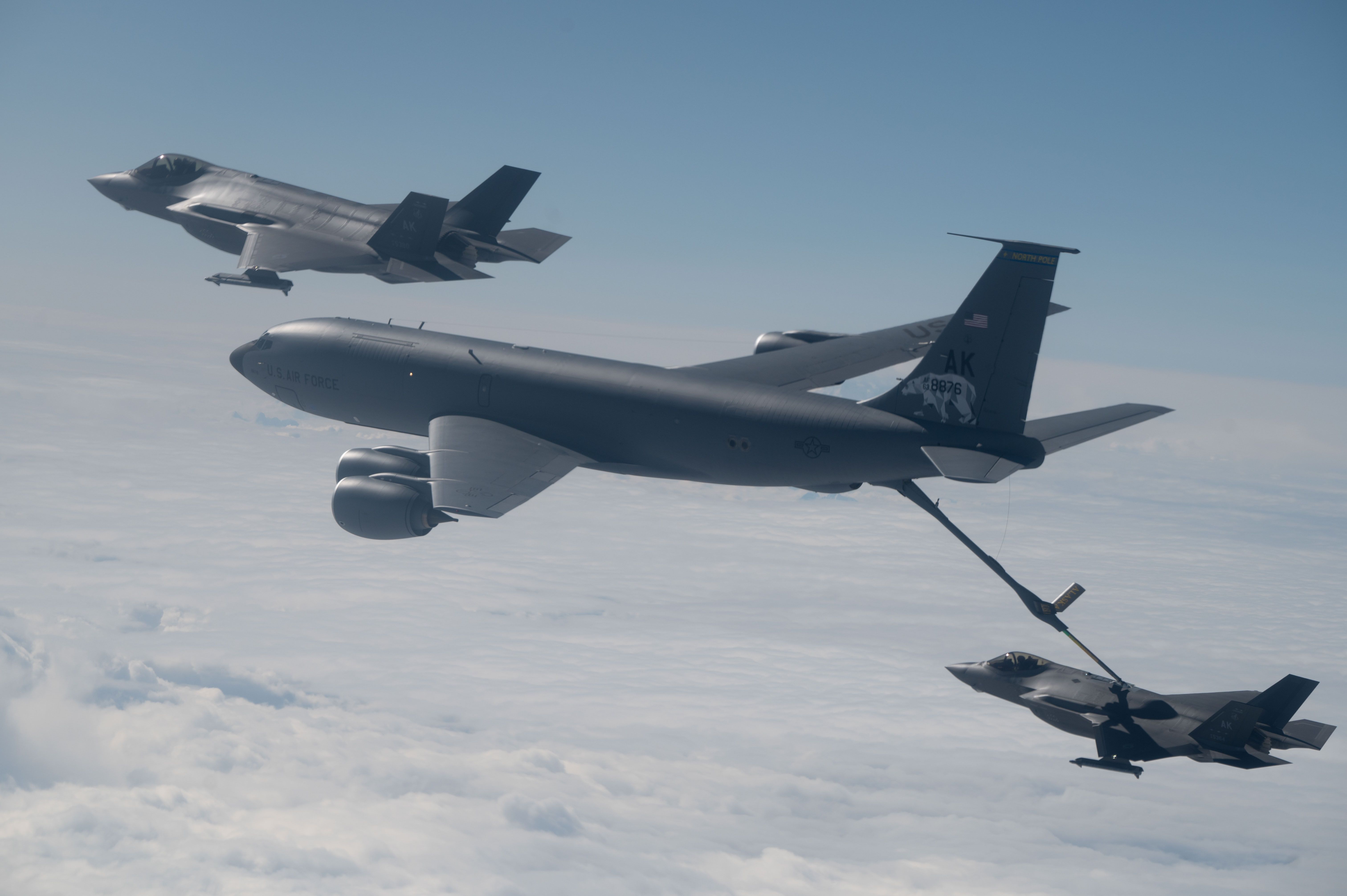
Bloomberg reporting cited by EurAsian Times describes China developing hypersonic glide vehicles capable of launching air-to-air weapons against high-value targets, tankers, AWACS, and electronic-warfare aircraft, thousands of miles away, potentially making the U.S. Air Force's entire stealth fighter fleet operationally moot across the Pacific theater without ever needing to defeat a single F-22 or F-35 directly. The mechanism is straightforward once stated: American stealth fighters have combat radii of roughly 590-600 nautical miles unrefueled, while Guam sits some 1,900 miles from mainland China, meaning the entire stealth fleet's Pacific relevance depends completely on a tanker force that is itself large, slow, unstealthy, and, per this report, potentially now within range of a weapon category no other country is confirmed to operate.

This is precisely the inverse framing of the AIM-174B and AIM-424 Malice story this blog covered in detail, where the strategic insight was that American missiles prioritize destroying China's own KJ-500 AWACS and support infrastructure over dogfighting individual fighters, because degrading an adversary's broader kill-chain matters more than winning any single engagement. China's HGV-launched tanker-hunting concept applies the identical logic in reverse, and reading both stories together confirms something neither fully established alone: both air forces have independently concluded that support aircraft, not fighters, are the actual center of gravity in a contested Pacific fight, and both are racing to build the specific long-range weapon that can reach those support aircraft before the other side's stealth or maneuverability advantage even becomes relevant.

The EurAsian Times piece deserves genuine credit for the caution it builds in explicitly, an unnamed IAF expert's on-record skepticism that "an unverified leap from a 2021 test projectile to an operational, Guam-range tanker-killer is still a claim, not a confirmed capability," is exactly the kind of hedging this blog has applied consistently to Chinese capability claims all summer, the JY-27V's real combat failure, the AI infrared seeker's quietly discounted accuracy figure, the mirror-coating J-35 photos most likely explained by sunlight. This specific claim traces back to unnamed sources in a single Bloomberg report rather than confirmed Chinese state disclosure, and it deserves that same structural caution rather than acceptance at face value, regardless of how coherent the underlying strategic logic sounds.

What doesn't require any speculative capability to validate, though, is the tactic's real-world precedent, and this is where the piece's own reporting connects directly to a story this blog covered through an entirely different lens. This blog's coverage of Zaluzhnyi's warning about NATO's outdated doctrine cited RealClearDefense's account of the March 2026 Iranian strike on Prince Sultan Air Base, which damaged a high-value E-3 Sentry AWACS aircraft and multiple refueling tankers using coordinated missile and drone strikes, exactly the class of target this new China reporting describes HGVs eventually threatening at far greater range. The EurAsian Times piece adds a second, independently sourced confirmation this blog hadn't previously documented, an Iranian-aligned Iraqi militia claiming separate SAM attacks on USAF KC-135s over Iraq, and Iran directly damaging at least five parked KC-135s at Prince Sultan. Tanker-hunting isn't a hypothetical Chinese innovation, it's an already-demonstrated tactic this blog's own Iran-war coverage has touched on repeatedly without ever naming the tanker fleet specifically as the common target.

The stark tanker-fleet imbalance this reporting quantifies, America's 610 active tankers against China's nine, is worth setting against this blog's own coverage of America's broader Pacific readiness strain, the carrier gap, the submarine maintenance backlog, USS Lincoln's extended deployment. A force this numerically dominant in exactly the enabling capability this article identifies as the actual chokepoint should represent genuine American strength, but the same numerical dominance also means America's tanker fleet is the larger, more numerous, harder-to-fully-disperse target, precisely the vulnerability an adversary investing in long-range, support-aircraft-hunting weapons would be rationally incentivized to exploit rather than trying to match stealth-fighter-for-stealth-fighter. Whether China's HGV claim holds up to independent verification or not, the underlying strategic problem it's describing, American airpower's dependence on a numerous but fundamentally vulnerable tanker fleet, is real regardless of which specific weapon eventually gets built to threaten it.

The MiG-29's "Toughest Test" Isn't Really About Egypt — It's About Russia Losing the Argument for Its Own Jets


This blog has already covered Eagles of Civilization 2026 from two angles, the Pakistan transit corridor and the India-proxy training dimension of China's J-16 flying against Egyptian Rafales. The exercise's third aircraft type, Egypt's MiG-29M/M2 Fulcrums, deserves its own separate look, because the story it tells isn't really about Sino-Egyptian cooperation at all, it's about what happens when a Russian-designed fighter becomes the control group in an exercise explicitly organized around demonstrating a Chinese platform's superiority.

Egypt's MiG-29M2 fleet is a genuinely capable, modernized variant, but it remains fundamentally a Russian-lineage 4th-generation airframe going up against a Chinese 4.5-generation heavy multirole fighter carrying AESA radar and long-range PL-15 missiles, the same technical gap this blog's coverage of the J-10C "Rafale Killer" piece already established as the core of China's current export pitch across multiple markets. Placing the MiG-29 in that same exercise, alongside the considerably more modern Rafale, effectively turns Egypt's Russian-sourced fighter into the explicit baseline against which China's platform gets to look advanced, a framing that costs China nothing and does Russia's own export reputation no favors whatsoever.

That's worth connecting directly to this blog's coverage of Uzbekistan's own MiG-29 crisis, where this blog documented Tashkent down to roughly a dozen airworthy MiG-29s out of its original fleet, driven specifically by Russia's own defense-industrial base redirecting engine overhaul and spare-parts capacity toward its wartime requirements rather than sustaining foreign operators' legacy fleets. Two entirely separate countries, on two different continents, are simultaneously providing real-world evidence of the same underlying story this blog has now documented from multiple directions, Russian-sourced airpower increasingly struggling to remain competitive or even reliably sustainable, while China's export platforms benefit from exactly the production consistency and technical currency that Russia's own war-strained industrial base can no longer guarantee its client states.

The mutual-trust framing Chinese state media applied to this exercise, "reflecting strong mutual trust and a high level of coordination between the two air forces," per this blog's research, is worth reading against Egypt's own historically layered defense relationships, American F-16s, French Mirages and Rafales, and Russian MiG-29s all in the same air force simultaneously. Egypt didn't need Chinese cooperation to demonstrate the MiG-29's relative dating, it could have drawn that comparison internally against its own Rafale fleet at any point. Choosing to stage that comparison publicly, with Chinese J-16s as the modern counterpoint and Chinese state media doing the filming, is a deliberate marketing choice that serves Beijing's export narrative considerably more than it serves any genuine operational purpose for Cairo, another data point in the pattern this blog's coverage of China's J-10C export marketing campaign already identified, showcasing combat credibility through joint exercises specifically because Beijing's actual signed-contract conversion rate has lagged the marketing effort considerably.

None of this means the MiG-29 is suddenly obsolete or that Egypt is quietly abandoning its Russian-sourced fleet, Egypt's own diversified procurement strategy this blog has covered as a deliberate hedge against single-supplier dependency makes wholesale MiG-29 retirement unlikely in the near term regardless of how this exercise gets framed. But reading this alongside the Uzbekistan fleet crisis this blog documented in detail, the pattern is becoming difficult to dismiss as coincidental: Russia's own client states are increasingly finding themselves flying alongside, or replaced by, Chinese alternatives not because Chinese engineering has definitively surpassed Russian design, but because China can currently deliver production consistency, spare parts, and export marketing muscle that a war-strained Russian defense-industrial base, this blog's own summer of Su-34 and Su-35 disclosure-skepticism coverage suggests, increasingly cannot match.

Russia Just Delivered Its Third Su-35 Batch of the Year — And Won't Say if Any of Them Are Actually for Russia


Rostec's United Aircraft Corporation announced August 27 it had delivered another batch of Su-35S multirole fighters to the Russian Aerospace Forces, the third confirmed delivery of 2026, following batches in April and May. As with the Su-34 production announcements this blog covered days earlier, UAC disclosed no aircraft count and no receiving unit, defense analyst Guy Plopsky's own review of the released photos and video counting only "two or more" airframes, the same pattern of celebratory, deliberately vague batch announcements this blog's Su-34 coverage already flagged as a consistent Russian messaging habit rather than a one-off omission.

The detail worth foregrounding here, and one this blog's earlier Su-34 coverage didn't have visibility into, is a genuinely significant complication buried in this blog's own research: Militarywatch's prior reporting indicates a substantial and possibly growing share of current Su-35 production capacity, potentially close to half, is being allocated to Iranian export orders rather than the Russian Aerospace Forces at all. That's a direct, material qualifier on every one of this year's three "delivered to the VKS" announcements, if accurate, it means Russia's own frontline Su-35 fleet may be growing considerably more slowly than the raw batch-announcement cadence implies, with a meaningful fraction of Komsomolsk-on-Amur's total output flowing to a foreign customer rather than reinforcing VKS squadrons.

This connects directly to the disclosed-versus-verified gap this blog's Su-34 coverage established as a structural feature of Russian aviation production reporting generally. Applying the same Oryx open-source tracking standard this blog used for the Su-34, independent documentation now lists nine Russian Su-35S aircraft visually confirmed destroyed since the invasion began, with Ukraine's own Air Force claiming a tenth shot down on the eastern front as recently as July 8, 2026, just weeks before this latest celebratory delivery announcement. Set against a production rate this blog's research suggests runs around two aircraft per batch, three batches disclosed so far this year, a genuinely serious question about net fleet growth remains just as unresolved for the Su-35 as this blog's earlier reporting found for the Su-34, celebratory delivery language with no quantities, against independently documented, considerably more granular loss figures the producing state has no incentive to reference in its own announcements.

The combat-claims dimension worth setting against this blog's own summer-long skepticism toward unverified Russian assertions: this blog's research turned up claims of seven confirmed Su-35 air-to-air kills against Ukrainian fighters plus one helicopter, a tally that should be read with the same caution this blog applied to the disputed Su-35-versus-Su-27 "two kills in one engagement" claim covered earlier this summer, unconfirmed Russian Ministry of Defense-sourced figures rather than independently verified outcomes. The pilot testimonial quoted in Rostec's own announcement, "this equipment works without complaints, the crew finds it comfortable to fly," is standard morale-boosting messaging accompanying literally every batch delivery this blog's research surfaced going back to 2025, not a substantive operational assessment.

The export-market context genuinely does distinguish the Su-35 story from the Su-34's, though, and it's worth noting as a real difference rather than flattening both programs into an identical pattern. This blog's research indicates 2025 marked a genuine turnaround in Su-35 export performance after years of underwhelming foreign sales, with expanded Iranian orders now cited as a primary driver reversing Russia's broader defense-export decline since 2022. That's a meaningfully different commercial trajectory than the Su-34, which this blog's earlier coverage found exporting only to Algeria at comparatively modest volume. Whether prioritizing Iranian export orders over VKS fleet replenishment reflects genuine confidence in current Su-35 stocks or a harder tradeoff between foreign currency earnings and domestic readiness is a question this blog's available sourcing can't resolve, but it's the kind of structural detail that deserves to travel alongside every future "new batch delivered" headline rather than getting lost beneath the celebratory framing those announcements consistently lead with.

The Space Force Is Deploying the Weapons Gen. Whiting Said Didn't Exist Yet


The U.S. Space Force is accelerating deployment of counterspace weapons under new Trump administration policy, adding two new electronic jammers, the L3Harris-built Meadowlands and the Northstrat/CACI Remote Modular Terminal, to a Counter Communications System that's been the service's only operational offensive space weapon since 2020. The Space Force plans to buy 32 Meadowlands units and 24 Remote Modular Terminals, with Meadowlands, a lighter, more tactical variant, already in late-stage training and live-fire exercises ahead of deployment this year. This is happening alongside the broader Golden Dome program's boost-phase and kinetic midcourse space-based interceptor contracts, and Chief of Space Operations Gen. Saltzman's own April 2025 "Space Warfighting" framework document, which formally codified the service's shift from a purely supportive role toward treating orbit as a genuinely contested warfighting domain.

This directly answers the capability gap this blog's coverage of Gen. Whiting's SMD Symposium remarks documented in detail. That earlier reporting captured Whiting warning American satellites currently have no way to defend themselves, and specifically noted the tension between his call for "credible, acknowledged" offensive space weapons and the 2022 Biden-era moratorium on destructive direct-ascent anti-satellite testing, this blog's own research at the time flagging that policy tension as unresolved. This new reporting doesn't resolve that specific ASAT-testing question, the Meadowlands and Remote Modular Terminal are both non-kinetic electronic jammers rather than destructive kinetic weapons, but it does show the "non-kinetic half of integrated space fires" this blog's earlier coverage identified as one plausible path around the moratorium is now visibly moving from concept to actual fielded hardware, a genuine, if partial, answer to the capability gap Whiting was describing in Huntsville.

The China-specific threat picture this blog's research surfaced adds real numerical weight to the urgency driving this acceleration. The U.S.-China Economic and Security Review Commission's own assessment puts China's operational satellite fleet at more than 1,060 by mid-2025, with hundreds dedicated specifically to intelligence, surveillance, and reconnaissance, a figure that connects directly to this blog's coverage of the QZS-7 hosted Space Domain Awareness payload and China's own Yaogan-41 and Ludi Tance 4-01 geosynchronous surveillance satellites documented in that earlier piece. Space Command's own posture statement to the House Armed Services Committee, cited in this blog's research, goes further still, describing genuine coordinated space activity among China, Russia, Iran, and North Korea, blending Chinese lunar ambitions and ground infrastructure with Russian launch expertise, a multi-country space cooperation axis this blog's own coverage of North Korea's KN-30 missile transfers and drone-operator pipeline to Russia would recognize as consistent with the broader pattern of deepening technical cooperation among exactly these four countries this year.

The Space Force's own 2040 forward-looking planning document, which this blog's research found describes future conflict as "full-spectrum unrestricted warfare" extending into digital and cognitive domains, connects to the detection-and-concealment throughline this blog has traced across Japan's submarine-hypersonic program and the AIM-424/AIM-174B missile family's emphasis on defeating an adversary's sensor network rather than simply out-ranging its shooters. A Space Force reorganizing "around platforms rather than around effects," as this blog's research describes the 2040 vision, mirrors the same modular, mission-flexible design philosophy this blog identified in China's own Y-20B transport-tanker-AWACS family, both major space and air powers converging on organizational structures built for rapid reconfiguration against a threat picture neither expects to remain static.

None of this confirms the U.S. is actually closing the gap with China and Russia's own counterspace capabilities, this blog's own summer of coverage on execution risk across comparably ambitious American programs, GMLRS, NGSRI, AHEL, counsels real caution before assuming 32 Meadowlands units and a handful of interceptor contracts fully answers a threat picture the Space Force's own posture statement describes as accelerating on multiple fronts simultaneously. But reading this alongside this blog's earlier Whiting coverage, the specific capability gap that Huntsville speech identified, credible offensive and defensive space weapons actually deployed rather than merely called for, is now visibly, if partially, being filled, even as the harder kinetic ASAT question this blog flagged as unresolved in July remains just as unresolved today.

Ukraine's Former Top General Just Told NATO Its Doctrine Is Already Obsolete — This Blog Has Been Documenting the Evidence All Summer


Valerii Zaluzhnyi, Ukraine's former commander-in-chief and now its ambassador to the UK, told the London Defence Conference at King's College this month that NATO's warfare model is "far from what NATO is now operating," a doctrine he argued remains rooted in outdated, World War II-era assumptions incompatible with the modern conflict Ukraine actually faces. His warning went beyond the familiar call for more resources, "this isn't just about updating defense industries or some rearmament," he said, "you need a new state policy," a root-and-branch overhaul of tactics, organization, doctrine, and training that he acknowledged would require not just money but time NATO may not have. He went further still, directly questioning whether NATO's foundational principle of collective defense remains fit for purpose against a battlefield reshaped by drones, electronic warfare, and compressed decision cycles.

This blog has spent the entire summer independently documenting the specific evidence underlying exactly this warning, one story at a time, without necessarily framing it as a unified institutional critique until Zaluzhnyi's speech named it directly. RealClearDefense's own analysis, cited in this blog's research, draws the starkest possible parallel: the "significant and seemingly preventable material losses" American and Gulf forces suffered during Operation Epic Fury, specifically the March 2026 Iranian strike on Prince Sultan Air Base that damaged a high-value E-3 Sentry AWACS aircraft and refueling tankers with aircraft photographed exposed on open tarmac, "as if no threat existed," resembling exactly the pre-Spiderweb Russian bomber basing this blog has referenced throughout its Ukraine coverage. That's a direct, named instance of the U.S. failing to apply a lesson Ukraine had already demonstrated conclusively, dispersal and concealment against drone threats, a failure this blog's own coverage of the Kuwait F-5 raid and the broader VanHerck authority-gap pattern documented from a different angle without fully connecting it to this specific "NATO hasn't learned Ukraine's lessons" framing.

The specific technical lessons Zaluzhnyi's critique implies NATO hasn't absorbed connect to nearly every major throughline this blog has tracked this year. The interceptor cost-exchange crisis, from Rafferty's SMD disclosures through the X-Bow Buckler contract this blog covered just one day earlier, is precisely the "masses of cheap, expendable weapons" doctrine this blog's research found NATO and Western defense officials increasingly acknowledging but, per Zaluzhnyi's own critique, still not adopting at the pace or scale Ukraine's own battlefield reality demands. Norway's own Operation Legio training officials offered this blog's research a genuinely candid admission worth setting alongside Zaluzhnyi's broader point, their key lesson from training Ukrainian troops is that NATO "cannot afford to get bogged down" in the kind of grinding, attritional conflict Ukraine has been forced to fight, a lesson about avoiding the war rather than necessarily winning the specific kind of war Ukraine is fighting, a genuinely different and more modest takeaway than Zaluzhnyi's own call for wholesale doctrinal transformation.

The institutional friction UK Defence Journal's reporting surfaced is worth taking seriously as the honest counterpoint to Zaluzhnyi's critique: a senior NATO official's own remarks acknowledged real reservations about sharing sensitive battlefield data across the full alliance, "given the ambiguous relations some political leaders in NATO member states maintain with Moscow," a genuinely awkward admission that NATO's own internal cohesion, the same alliance-management friction this blog has documented through the Pentagon's NATO troop review and Trump's Korea exercise cutback, may be as significant an obstacle to rapid doctrinal adaptation as any technical or bureaucratic inertia. That same NATO official's own question, whether the alliance is "learning more than its adversaries," given how much this blog's own coverage has documented China, Russia, and North Korea's own rapid capability iteration this summer, the J-16 missile-truck doctrine, the Z-20K's rapid Belarus deployment, North Korea's drone-operator pipeline, is a genuinely uncomfortable framing this blog's aggregate coverage this year would suggest deserves real weight.

None of this confirms Zaluzhnyi's more sweeping institutional critique, that NATO's collective-defense principle itself needs rethinking, is correct, and this blog's own summer of coverage on genuine, if uneven, NATO adaptation, the NSPO SeaSparrow consortium, the Piorun MANPADS four-nation buy, Poland's own Wicher frigate execution, suggests the alliance isn't uniformly stuck in the Cold War posture Zaluzhnyi describes. But a former wartime commander with more direct combat experience against exactly the threat environment this blog has spent all summer documenting, drones, electronic warfare, interceptor scarcity, telling NATO's own defense establishment that its doctrine remains fundamentally behind the battlefield reality, is a warning this blog's own reporting suggests deserves to be read as an informed synthesis of everything this year's coverage has already shown in fragments, rather than dismissed as one ambassador's rhetorical flourish.

China's Black Hawk Rival Just Flew Thousands of Kilometers to Belarus — This Blog Called That Exercise Substantive


Footage released by the PLA Air Force this week confirmed the Z-20K assault helicopter was active during the China-Belarus Swift Eagle 2026 joint training exercise, conducting rappelling, air assault, and parachute-insertion drills as the exercise wrapped up its three-phase program. A Chinese military affairs expert quoted in state media framed the choice of helicopter-borne tactics over fixed-wing transport as demonstrating the counter-terrorism mission's need for flexibility and precision, arguing the drill proves the Z-20K has reached genuine combat-ready maturity. The aircraft, alongside its supporting cast, reportedly made the actual physical journey to Belarus, described as a "cross-continental journey of thousands of kilometers," rather than simply appearing in promotional footage shot closer to home.

This blog's earlier coverage of Swift Eagle 2026 argued the exercise's real significance sat beneath its deliberately low-temperature "counter-terrorism" label, pointing specifically to the Polonez rocket system as evidence of a genuine, decade-old China-Belarus defense-technology relationship rather than a routine training footnote. This Z-20K deployment is the concrete follow-through that earlier analysis anticipated but couldn't yet confirm: a helicopter this blog's own research now shows was only confirmed combat-ready and entering operational training as recently as May 2026, per Army Recognition's coverage of its integration into Northern Theater Command exercises, being flown thousands of kilometers to a Belarusian training center within the same summer. That's a genuinely fast operational deployment timeline for a platform this new, and it confirms the earlier Swift Eagle post's core argument, that this relationship involves real, current-generation Chinese hardware rather than symbolic gestures.

The Z-20K's own lineage connects this story to the broader Indo-Pacific throughline this blog has tracked extensively, the aircraft is explicitly positioned as China's most direct attempt to match the U.S. Black Hawk, developed by Harbin after Tiananmen-era arms embargoes cut China off from acquiring additional Sikorsky S-70C-2s. That origin story is worth setting against this blog's coverage of Norway's own UH-60M Black Hawk purchase from days earlier, both countries investing heavily in the identical medium-lift helicopter category for entirely different strategic reasons, Norway for Arctic mobility and NATO interoperability, China building an indigenous alternative specifically because Western supply was cut off decades ago. The Z-20 family's proliferation across at least eight distinct variants, this blog's research turned up assault, naval ASW, search-and-rescue, airborne-corps, and combat-search-and-rescue configurations all sharing a common airframe, is itself worth connecting to this blog's coverage of the YY-20's modular multi-role transport strategy, the same "one airframe, many missions" industrial philosophy this blog identified as a genuine Chinese production efficiency advantage, now confirmed running through China's rotary-wing fleet as well as its fixed-wing transport line.

Defence Security Asia's own broader assessment of the Z-20T variant, cited in this blog's research, frames China's rotary-wing modernization as "compressing warning timelines for littoral and high-altitude scenarios" from Taipei's perspective specifically, language that connects directly to this blog's extensive Taiwan coverage this month, the Hsuehshan Tunnel blockade exercise, the TB-001/Y-9FQ reconnaissance pairing near Japan, and Taiwan's own $6.6 billion drone program. A maturing Chinese air-assault helicopter fleet, now demonstrated capable of genuine long-range deployment to a foreign training partner, adds a real capability dimension to threat assessments this blog's Taiwan-focused coverage has already documented Taipei planning against, even though this specific exercise happened in Belarus rather than anywhere near the Taiwan Strait.

None of this confirms the Z-20K matches the Black Hawk's decades of combat-proven reliability, Army Recognition's own comparative analysis is careful to note the platform "does not yet match the extensive operational experience" of American special-operations rotary assets. But a helicopter confirmed only recently combat-ready now flying thousands of kilometers for a genuine international deployment is a meaningfully faster maturation curve than this blog's summer of coverage on comparable Western programs, GMLRS, NGSRI, AHEL, has generally documented, and it's worth reading as one more data point in the pattern this blog has traced all summer: China's platform-to-deployment timeline keeps outpacing the execution risk this blog has found running through so much of its own coverage of American and allied procurement instead.

Denmark's Frigate Contest Just Got a Third, Much More Heavily Armed Contender


Spanish shipbuilder Navantia unveiled a scale model of the F-110 Flight II, also marketed for export as the IAMD, Integrated Air and Missile Defence, variant, at the same DALO Industry Days event in Denmark where this blog's earlier coverage documented Babcock and TKMS both pitching their own frigate designs to Copenhagen. Navantia's own confirmation that it's proposing this specific design for Denmark's upcoming frigate requirement makes this a direct, and considerably more heavily armed, third entrant into the exact competition this blog has already tracked in detail.

The weapons-fit numbers here are genuinely striking against the field this blog has already covered. Where this blog's earlier Denmark coverage centered on the Babcock-DFS AH140 design carrying SPY-6 radar arrays, Navantia's F-110 Flight II packs 64 vertical launch cells, a 48-cell Mk 41 Strike Length system forward plus a 16-cell Tactical Length system amidships, a fourfold increase over the baseline F-110 Flight I's 16 cells, capable of carrying up to 64 SM-2 surface-to-air missiles or, quad-packed, as many as 256 ESSM interceptors. That magazine depth connects directly to this blog's earlier analysis of the Type 054B "firepower myth," where this blog argued raw cell count matters less than what those cells can actually carry; Navantia's own design explicitly offers the flexibility to trade between long-range SM-2 depth and ESSM quantity depending on the threat picture, a genuinely more sophisticated magazine-management approach than a fixed-loadout competitor would offer.

The radar upgrade tells a parallel story worth connecting to this blog's Raytheon SPY-6 global-push coverage from earlier this month. Flight II retains Lockheed Martin's AN/SPY-7(V)2, the same radar family this blog covered competing against SPY-6 in Japan's Mogami program, but in a meaningfully enhanced configuration, 100 sub-array suites against 68 on the Flight I baseline, providing greater simultaneous-tracking capacity against more demanding and numerous targets. That upgrade path, extracting more capability from an already-selected radar family through incremental sub-array expansion rather than switching vendors entirely, mirrors the same open-architecture, extensible-design philosophy this blog identified as a genuinely encouraging pattern through the E-2D Hawkeye Block II and the NSPO SeaSparrow consortium, building systems that can grow with the threat rather than requiring a wholesale platform replacement.

The Iver Huitfeldt combat-failure context this blog's earlier Denmark coverage established as the actual driver behind Copenhagen's urgency applies with particular force to this specific design. Navantia's own marketing explicitly frames the F-110 IAMD around high-intensity naval warfare and area air-defense specifically, a direct answer to exactly the kind of layered air-defense failure this blog documented in detail, every system aboard Iver Huitfeldt failing at various points during its 2024 Red Sea engagement with Houthi drones. A 64-cell magazine with flexible SAM/ESSM mixing addresses the raw capacity problem; the retained Aegis International Fire Control Loop integration and Cooperative Engagement Capability address the networked coordination problem that arguably mattered more in Iver Huitfeldt's actual documented failure than simple missile count.

This three-way competition, Babcock-DFS, TKMS's MEKO family this blog covered separately, and now Navantia's F-110 IAMD, is worth reading against the South Korean HHI bid this blog's original Denmark coverage flagged as a genuine non-European alternative pitching faster delivery and lower cost. Denmark's eventual choice will say something real about how European navies weigh raw capability against cost and delivery speed when the underlying threat, per this blog's own extensive Baltic and Kaliningrad coverage this month, genuinely doesn't allow for a leisurely, multi-year decision timeline. Whichever design Copenhagen ultimately selects, the sheer density of serious, heavily armed competitors now bidding for this single program is itself a meaningful signal of how urgently European navies are treating the air-defense gap Iver Huitfeldt's own combat record exposed.

The Interceptor Duopoly This Blog Has Documented All Summer Finally Has a Real Competitor


The Missile Defense Agency awarded New Mexico-based X-Bow Systems an $10.9 million contract this week to develop and flight-test a low-cost interceptor under its Rapid Response Small Launcher Technology program, targeting a unit cost under $750,000, roughly a fifth of the Patriot's price. X-Bow's Buckler, a separate but related interceptor the company unveiled in July specifically to counter Group 3 drones at supersonic speeds, has already flown flight tests and carries an even steeper price target, under $100,000 per unit, according to the company. Founder Jason Hundley's own framing states the underlying structural problem this blog has tracked all summer with unusual directness, "America can't out-produce today's threats with yesterday's supplier base."

That supplier base is the real story buried in this contract announcement, and it deserves more weight than the headline price figures alone. The Pentagon's own contract language identifies the actual bottleneck this blog's GMLRS coverage flagged in passing but never fully named, solid rocket motors, the propulsion component inside nearly every American interceptor and missile, remain dominated by just two manufacturers, Northrop Grumman and L3Harris's Aerojet Rocketdyne, a duopoly the DoD's own contract announcement states explicitly this award is meant to help break. That's the same structural constraint this blog's coverage of the GMLRS rocket-motor supply crunch identified as a shared bottleneck straining PAC-3, SM-3, Tomahawk, and GMLRS production simultaneously, five separate munitions programs all competing for capacity from the same two companies. X-Bow isn't simply building a cheaper missile, it's attempting to become a genuine third entrant into an industrial base this blog has documented as dangerously concentrated all summer.

This lands as the latest entry in a now-extensive list this blog has tracked across nearly every post on the interceptor-scarcity throughline: Lockheed's PAC-3 ACE at roughly $2 million, the Ukraine-and-European Freyja coalition's interceptor priced at a fifth of a Patriot round, the Dutch Navy's Destinus Hornet B2, Germany's Cobra 600, and now X-Bow's Buckler and Low-Cost Interceptor programs. The Pentagon's own Raytheon representative, Bob Kelley, offered this blog's research the clearest single articulation yet of the strategic logic tying all of these programs together, describing the goal as "flattening the cost curve" specifically to avoid expending advanced interceptors against $50,000-100,000 drones arriving continuously, precisely the arithmetic this blog's coverage of the Iran war's Patriot depletion first documented back with Lt. Gen. Rafferty's SMD Symposium disclosures.

The scale contrast worth setting directly against X-Bow's modest $10.9 million award is Lockheed's own PAC-3 production deal, now expanded to $58.62 billion after an additional $53.86 billion tranche announced the same week according to this blog's research, aiming to triple production capacity by 2030. That's roughly 5,000 times X-Bow's contract value going to the exact incumbent prime this new low-cost interceptor push is implicitly trying to reduce dependence on, a genuine tension this blog's summer of coverage on defense-industrial concentration would flag directly: the Pentagon is simultaneously pouring unprecedented capital into scaling its existing, expensive supplier while funding small, unproven challengers at a fraction of the investment, a hedge-your-bets strategy that may be entirely sensible risk management or may simply reflect how deeply entrenched the incumbent relationship remains regardless of the diversification rhetoric.

None of this confirms X-Bow's Buckler or Low-Cost Interceptor programs actually reach fielded capability at their stated price targets, and this blog's summer of documented execution risk across comparably ambitious challenger programs, Castelion's Blackbeard hypersonic weapon among the more promising recent entrants, counsels the same caution here that this blog has applied throughout. But a genuine new entrant winning a real Missile Defense Agency contract specifically because the Pentagon's own procurement language now explicitly names supplier-base concentration as a critical vulnerability is a meaningful data point in the interceptor-economics story this blog has tracked since midsummer, official acknowledgment that breaking the SRM duopoly matters as much as simply spending more money with the two companies that created it in the first place.

The Navy Is Paying $237,000 a Day to Not Use Its Own Submarines — 15,000 Days and Counting


A newly declassified GAO report finds U.S. attack submarine maintenance delays have cost the Navy more than 15,000 lost operational days and roughly $3.4 billion since 2016, with submarines and their fully crewed sailors forced to sit pier-side, no longer certified for normal operations, unable to enter the maintenance queue that would actually fix them. The cost breakdown GAO provides is genuinely striking: active idle time runs almost $220,000 per day for the Los Angeles-class fleet and more than $237,000 per day for Virginia-class boats, meaning the Navy is paying full crew and support costs for submarines that cannot deploy, cannot train, and cannot contribute to readiness in any meaningful way. GAO's own forward-looking projection is worse still, without mitigation, 15 attack submarines will enter a separate category, inactive idle time awaiting decommissioning, between fiscal 2026 and 2030, costing an additional $3.1 billion as the Navy's four public shipyards lack sufficient capacity to even begin processing boats out of service.

This connects directly to the AUKUS Pillar I submarine production shortfall this blog has covered in detail this summer, and reading the two reports together clarifies something neither on its own fully captured: America's submarine crisis isn't confined to production, it runs through the entire lifecycle. This blog's coverage of Adm. Daryl Caudle's own congressional testimony established Virginia-class new construction stuck at 1.1 to 1.2 boats annually against a two-boat target, a production-side shortfall; this GAO report confirms the existing fleet faces an equally severe maintenance-side shortfall, submarines that were successfully built now sitting idle because the same constrained shipyard capacity, GAO explicitly names Portsmouth, Norfolk, Puget Sound, and Pearl Harbor as chronically insufficient, can't process them through overhaul on any predictable schedule. A Navy simultaneously unable to build new submarines fast enough and unable to maintain its existing fleet efficiently is facing a genuinely compounding readiness crisis rather than two separate, unrelated problems.

The historical trajectory GAO's own prior reporting reveals is worth stating plainly, because it shows this isn't a new or improving situation. A 2018 GAO report found 10,363 days of submarine idle time and maintenance delays between 2008 and 2018, costing $1.5 billion; this newest report finds 15,000 days and $3.4 billion just since 2016, alone exceeding the entire prior decade's documented total. That's not a problem the Navy has been managing down over time, it's one that has measurably accelerated, and GAO's own testimony from a separate 2019 report found the Navy missed scheduled maintenance completion dates 75 percent of the time across fiscal years 2014-2019, a persistence rate this blog's coverage of comparable execution failures, the failed 155mm shell components facility, AHEL's cancellation, the GMLRS rocket-motor supply crunch, would recognize as depressingly familiar.

This connects directly to the GAO facilities backlog report this blog covered days earlier, the $285 billion maintenance backlog across military installations globally, Minot's crumbling B-52 apron, Andersen's delayed stealth-coating hangar. Both reports trace back to the identical underlying failure, chronic underinvestment in the unglamorous maintenance and infrastructure work that doesn't generate the same political attention as new weapons programs, and GAO's specific recommendation here, that the Navy fully evaluate alternative decommissioning options and develop a genuine inactivation plan, mirrors the same institutional gap this blog's facilities-backlog coverage identified, the Pentagon accepting a problem's scale while resisting the accountability structures that might actually fix it.

The strategic stakes connect directly to the Navy tempo investigation this blog covered extensively, USS Lincoln's 250-plus days without a port call, USS Benfold and USS Higgins both losing power within months of each other, a surface fleet already documented as stretched dangerously thin. GAO's own report is careful to note it omitted classified comparisons of how America's attack submarine force generation stacks up against "strategic competitors," language that, read against this blog's own extensive coverage of China's naval shipbuilding capacity assessed at roughly 200 times America's own, suggests the classified version of this comparison is considerably less flattering than the public report's careful phrasing lets on. A Navy losing 15,000 operational days to bureaucratic and industrial-capacity failure, on top of the production shortfall this blog has already documented through AUKUS Pillar I, is exactly the kind of structural readiness gap that doesn't show up in any single ship's deployment schedule but compounds quietly across the entire fleet until, as this blog's Lincoln and Benfold coverage has already shown, it becomes impossible to ignore.

Europe's Troop-Cut Review Runs on the Exact Same Logic This Blog Traced Through Korea and Ukraine


A Pentagon review of U.S. troop deployments across Europe will produce at least four sets of options for Defense Secretary Hegseth by November 6, according to a Terms of Reference document Reuters reviewed, well ahead of the review's formal December completion deadline. The stakes are real, roughly 80,000 U.S. forces currently stationed across Europe, and NATO allies are genuinely worried this six-month review, announced in June, will produce large-scale cuts specifically targeting countries Trump believes failed to adequately support the U.S.-Israeli war against Iran. A senior Pentagon official's own on-record framing left little ambiguity about the review's actual orientation, "there's clearly at least some demand signal to have options that would show us downgrading our force levels in Europe," even while describing the broader process as spanning "a spectrum of options from where we are to wherever" the review ultimately leads.

That punitive framing, cutting troop presence specifically as consequence for insufficient Iran-war support, connects directly to the transactional alliance-management pattern this blog has now documented across two separate theaters this summer. This blog's coverage of Trump's South Korea exercise cutback established the same underlying logic applied to the Pacific, a reduction justified partly by Seoul's own "no thanks" on Iran-related cooperation. This blog's separate coverage of the U.S.-Ukraine intelligence-sharing surge documented the inverse application of the identical principle, access and cooperation expanding specifically because Ukraine was "winning" and delivering visible results, with a Western intelligence official's own blunt assessment that "Trump doesn't like losers" driving the underlying calculus. A European troop review explicitly weighing cuts against countries judged insufficiently supportive of the Iran conflict is the third confirmed instance of this exact pattern this blog has now tracked, alliance management increasingly organized around performance and loyalty signals tied to specific, often unrelated conflicts, rather than treaty commitments or standing strategic assessment.

The Colby dimension deserves particular attention given this blog's earlier coverage of his role in the Canada AWACS tariff dispute, where this blog documented Pentagon policy chief Elbridge Colby publicly pushing back on South Korea's own proposed NATO defense-industrial ties, insisting no alternative supplier base could match American systems "in quantity or quality." Colby's own scheduled September 18 decision briefing with the top U.S. general in Europe, ahead of NATO ambassador consultations in Brussels this same week, places him at the center of yet a third major alliance-management decision this blog has now tracked in a single summer, Canada's AWACS purchase, and now the broader European troop posture review. That's a genuinely consistent pattern worth naming, one senior policy official's institutional fingerprints appearing across multiple, seemingly unrelated allied-relationship disputes this blog has covered independently.

The timing lands directly on top of the Baltic and Kaliningrad signaling this blog has documented extensively this month, the EA-37B's border flight, Russia's Kuril live-fire drills, and the escalating British-Russian rhetoric around Ukraine drone strikes and Poseidon threats. A genuine reduction in American troop presence across Europe, if this review ultimately produces one, would land at almost exactly the moment this blog's own coverage has established Russian signaling activity intensifying across multiple European theaters simultaneously, a timing overlap NATO allies' own stated anxiety about this review appears to already anticipate. Whether that overlap reflects deliberate strategic calculation or simply two independent processes running on unrelated timelines is a question this reporting doesn't resolve, but the juxtaposition itself is the kind of detail this blog's summer of Baltic coverage suggests European planners are watching closely regardless of Washington's own stated intent.

None of this confirms large-scale cuts are actually coming, the Pentagon official's own framing explicitly describes a genuine spectrum of options rather than a predetermined outcome, and this blog's summer of coverage on the gap between announced reviews and actual policy outcomes, the AUKUS Pillar I production shortfall chief among them, counsels real caution before assuming November's options briefing translates directly into December's final decision. But a review explicitly weighing punitive troop reductions against underperforming allies, run by the same policy official this blog has already documented applying comparable leverage against Canada, arriving during a month of intensified Russian signaling this blog has tracked in unusual detail, is a genuinely significant story worth watching closely as it moves toward its stated deadlines.

The Marine Corps' New Rifle Laser Isn't Glamorous — But It's the Kind of Upgrade That Actually Ships on Time


The Marine Corps began fielding its new Squad Aiming Laser to students at School of Infantry-East at Camp Lejeune this summer, replacing the PEQ-16 system that's served infantry units for nearly three decades. Program officer Harry Mandeles' framing was direct about the practical improvement, "significantly less eye strain and a much clearer target picture" through night vision goggles compared to the legacy system, driven by a Vertical-Cavity Surface-Emitting Laser producing a cleaner, more uniform beam than older laser technology. The system covers the M27 Infantry Automatic Rifle, M4A1 assault rifle, M240B medium machine gun, sniper rifles, and next-generation squad weapons, weighs under 10.5 ounces, and Marine Corps Systems Command awarded the underlying $249 million contract to Envision Technology, a Roanoke, Virginia-based small business.

This is a genuinely more modest story than most of what this blog has covered this summer, no interceptor crisis, no contested-theater signaling, no billion-dollar production controversy, and it's worth being honest about that scale difference rather than manufacturing false significance. What it does offer, though, is a useful data point on program execution this blog's summer of coverage on stalled and troubled procurement, GMLRS's failed components facility, AHEL's outright cancellation, NGSRI's hedged production ramp, would recognize as a genuine positive: PM GWS's own account credits SOCOM's Small Business Innovation Research pipeline and small-business agility with moving SAL "from a stated requirement to a major contract award with remarkable speed," fielding to actual infantry training units within the same general timeframe this blog has documented considerably more ambitious programs still struggling to clear.

The tactical rationale, reduced weight improving the M27's balance during high-tempo operations, better beam quality extending effective engagement range under night vision, connects to a smaller-scale version of the same night-fighting and detection throughline this blog traced through the Air Force's target-drone RFI, where the underlying theme was American forces training and equipping against increasingly demanding threat profiles. A cleaner, lower-strain aiming system for the individual Marine riflemen who'd actually be operating in exactly the low-light, high-tempo engagement conditions this blog's broader coverage of contested Indo-Pacific and European theaters has documented all year is a genuinely sensible, if unglamorous, piece of that same broader readiness picture.

There's little more to add here without inflating a routine, competently executed infantry-equipment upgrade into something it isn't. The Squad Aiming Laser replaces aging technology with a real, disclosed performance improvement, was fielded on a timeline this blog's summer of procurement coverage would call genuinely fast, and involved a small business contractor winning a meaningful award through an established innovation pipeline rather than a legacy prime. That's worth noting as one small counterpoint to the execution-risk pattern running through so much of this blog's coverage this year, even if it doesn't carry the same strategic weight as this blog's interceptor-scarcity, Pacific carrier-gap, or Baltic-signaling throughlines.

Japan Just Fielded a Counter-Drone Weapon in Three Months — Its Own Analysts Doubt It Can Keep That Pace


Japan's Acquisition, Technology and Logistics Agency signed a mass-production contract with Terra Drone Corporation for its Terra B1 rocket-launched interceptor drone on August 25, selecting it as the sole winner among four competing models after trials the Japan Maritime Self-Defense Force conducted between July 15 and August 6. The timeline here is genuinely remarkable by this blog's own standards for comparable programs this summer: ATLA moved from opening the tender in late May to a signed mass-production contract in roughly three months, a pace multiple outlets covering this story explicitly flagged as unprecedented for Japan's traditionally slow-moving defense procurement system, with deliveries expected as early as September 2026.

Terra B1's own lineage connects directly to this blog's Ukraine coverage throughout the summer. It's the Japan-made counterpart to Terra A1, a rocket-type interceptor Terra Drone already fielded on Ukrainian battlefields through Kyiv-based partner Amazing Drones, and CEO Toru Tokushige's own framing captures the same underlying doctrine this blog has now documented across Turkey's TUFAN, Germany's Cobra 600, and the Dutch Navy's Hornet B2 all summer, combat lessons from Ukraine's own low-cost interceptor campaign against Shahed-type drones being formalized and industrialized by a fourth distinct country's defense sector within a matter of months. Terra Drone's stated 3D-printing production method is itself a deliberate strategic choice, Tokushige told Defense News it will "simplify and shorten" design and prototyping specifically to let the interceptor adapt to evolving threats without delaying deployment, the same iterative, field-informed development philosophy this blog's South Korea PKX-B coverage identified as a genuinely disciplined contrast to the multi-year Western frigate delays documented elsewhere this summer.

The threat category Terra B1 addresses connects directly to the interceptor-scarcity throughline this blog has tracked obsessively since Lt. Gen. Rafferty's SMD Symposium disclosures, and one detail buried in this blog's research is worth surfacing explicitly: Japan's own push toward interceptor drones accelerated specifically after reports surfaced that American Tomahawk missile orders could face delays given U.S. stockpiles straining under the Iran war, this blog's own extensively documented crisis. That's a direct, causal link between the American munitions shortage this blog has covered across PAC-3, SM-3, Tomahawk, and GMLRS, and an allied nation's own procurement acceleration, Tokyo apparently concluding it cannot assume American supply will remain reliably available and building domestic low-cost interceptor capacity as a direct hedge.

The skeptical counterpoint worth taking seriously, and one this blog's own summer of execution-risk coverage would recognize immediately, comes from Asia Times' own reporting on this exact announcement: strategists Alex Bristow and Rintaro Inoue argue Japan's modest physical size and dense population genuinely constrain large-scale testing of military drones and missiles domestically, a structural limitation Australia's vast, sparsely populated territories don't share. That's a genuinely different execution risk than the production-capacity and supply-chain problems this blog has documented through GMLRS's rocket-motor crunch or the failed 155mm shell facility, a geographic constraint no amount of funding or 3D-printing innovation can fully engineer around. Whether Japan's rapid procurement timeline can actually scale to the "massive UAV fleet" ambitions this blog's research surfaced, installations planned near radar sites, bases, and vessels by 2027, remains a genuinely open question this specific milestone doesn't resolve.

The 38-company applicant pool ATLA drew for this tender, narrowed to four finalists and then a single winner, is itself worth noting against this blog's coverage of Helsing's Rakuten-brokered entry into Japan's defense market and the broader Japanese defense-industrial opening this blog has tracked through the April 2026 export liberalization. A domestic tender attracting nearly forty competing companies suggests Japan's rapidly growing defense budget and newly opened procurement environment are generating genuine private-sector interest at a scale this blog's earlier coverage of Japan's historically closed, conglomerate-dominated defense-industrial structure wouldn't have predicted even two years ago, a structural shift this specific Terra B1 announcement is one concrete data point within rather than the whole story on its own.

The AMCA Engine Race Just Got a New Wrinkle: Rolls-Royce's Pitch Isn't Really About Fighters


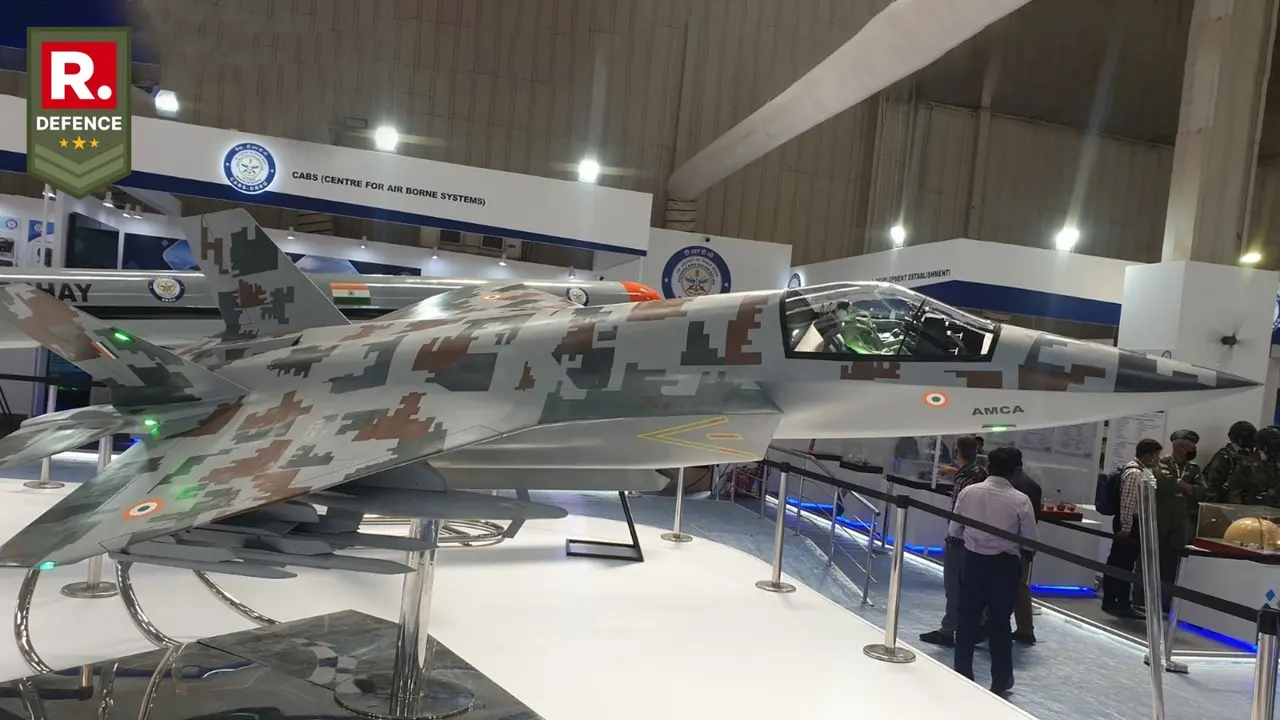
This blog's earlier coverage of India's AMCA engine race established the basic contest, Safran's government-backed joint venture with GTRE already before India's Cabinet Committee on Security, against a newer private-sector challenge from Reliance Industries and Rolls-Royce announced August 14. What's changed since that coverage is a detail that reframes Rolls-Royce's actual competitive angle: analysis from Defence Standard identifies Rolls-Royce's core structural advantage as marinisation capability, adapting a fighter engine core for naval gas turbines, a dual-use application Safran's pitch doesn't offer. A gas turbine facility producing cores for both fifth-generation fighters and next-generation warships would serve India's Navy and Air Force simultaneously, a considerably broader industrial pitch than a single-application fighter engine deal, and one that connects directly to this blog's coverage of India's Project 18 destroyer program and its own pursuit of Japanese Aegis-adjacent naval combat technology just days earlier.

The financial picture around Safran's own proposal has sharpened into genuine confusion worth flagging honestly. Reported contract values for the Safran-GTRE joint venture range from over ₹20,000 crore to as high as ₹61,000 crore, with no official government figure confirmed, and Quwa's own reporting notes the higher figure may actually describe a broader National Aero Engine Mission funding envelope rather than this specific contract, a distinction several outlets covering this story appear to have conflated. That kind of reporting confusion around basic contract scope is itself informative, echoing this blog's earlier engagement with Chopra's own writing on the AMCA engine race, where this blog noted his pieces sometimes lagged the actual state of play by days given how quickly this specific competition has been moving.

The Rolls-Royce announcement's own vagueness deserves the same scrutiny this blog has applied to comparable capability claims all summer, Defence Standard's analysis is blunt that the joint statement "carried no financial terms, no timeline, no ownership structure, and no binding contract," a strategic-intent announcement rather than an actual competing bid on Safran's level of specificity. That's worth reading against this blog's coverage of India's FCAS outreach to France, where this blog noted the AMCA and Tejas Mk2 airframes are already structurally designed around the F414's specific dimensions, meaning any new engine choice, Safran or Rolls-Royce, requires costly redesign regardless of which company India ultimately selects. A strategic-intent announcement without a design already matched to AMCA's airframe constraints is a meaningfully earlier-stage proposal than Safran's more advanced, CCS-level negotiation.

The strategic urgency underlying this entire competition connects directly to this blog's coverage of Pakistan's own airpower trajectory this summer. Indian Defence News's own reporting flags Pakistan moving closer to inducting China's J-35 stealth fighter as a direct pressure point on India's own fifth-generation timeline, alongside the blunter operational detail that India's Air Force currently operates just 29 squadrons against a sanctioned strength of 42.5. That squadron shortfall is the same kind of concrete readiness gap this blog's coverage of Uzbekistan's MiG-29 fleet, down to roughly a dozen flyable aircraft, already established as a genuine crisis-level driver behind accelerated foreign-technology partnerships, just playing out at India's own considerably larger scale and higher strategic stakes.

None of this resolves which supplier India ultimately selects, and this blog's own summer of coverage on DRDO's chronic timeline slippage, the Virupaksha radar's fourteen-year Uttam-derived maturation curve chief among them, counsels real skepticism about whether either engine partnership, however structured, actually closes India's capability gap on the timeline its own squadron shortfall and Pakistan's J-35 trajectory would suggest is needed. What is clear is that India's AMCA engine decision has evolved, in the span of roughly two weeks this blog has now tracked across three separate posts, from a two-way Safran-versus-Rolls-Royce framing into something considerably more granular, a genuine industrial-scope question about whether India wants a single-purpose fighter engine or a dual-use aerospace gas turbine ecosystem serving its Navy and Air Force simultaneously.