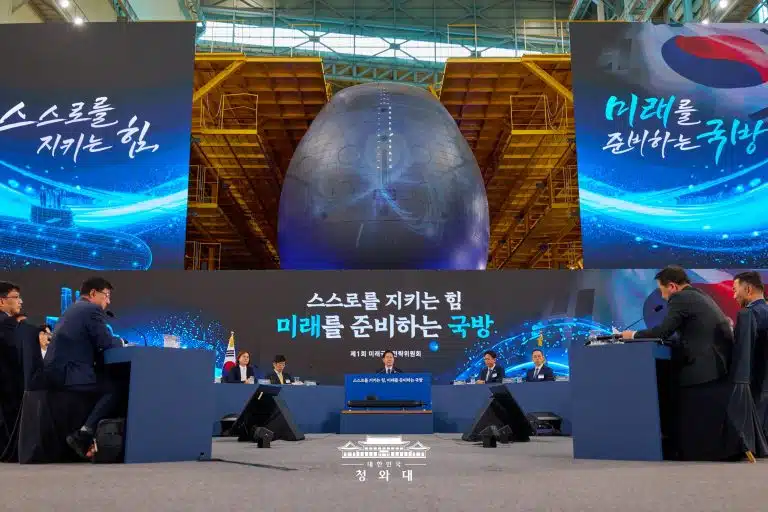
South Korea's push to field nuclear-powered attack submarines, a major strategic shift recently detailed by Naval News, has taken another substantial step forward with the release of a proposed special legislative act. The Ministry of National Defense issued a formal legislative notice establishing a comprehensive legal framework to govern the acquisition, operation, and nuclear-safety management of the country's ambitious Jangbogo-N program. By mapping out a clear statutory pathway, Seoul aims to institutionalize the initiative and secure legislative approval before the end of the year.
The proposed legislation is carefully structured to address international proliferation concerns while reinforcing transparency with global watchdogs. According to the draft, the Jangbogo-N project is strictly designated for conventional deterrence and is explicitly prohibited from developing, manufacturing, or possessing nuclear weapons. The framework incorporates binding commitments to comply with the Nuclear Non-Proliferation Treaty (NPT) and mandates complete cooperation with verification procedures established by the International Atomic Energy Agency (IAEA) and allied international partners.
From an administrative and operational standpoint, the draft act establishes rigorous oversight to manage the unique challenges of combining military warship construction with naval nuclear propulsion. Substantial provisions within the bill are dedicated to long-term nuclear safety, outlining structured safety assessments, facility inspections, reactor approvals, and stringent rules for radioactive waste management. Furthermore, the legislation proposes strategic exemptions from standard defense project feasibility studies and streamlines research and development timelines to accelerate the program's overall delivery schedule.
The legal framework directly supports the foundational roadmap unveiled by the Ministry of National Defense earlier in the year, which targets launching the first domestically built nuclear-powered submarine in the mid-2030s. Powered by low-enriched uranium, the Jangbogo-N fleet is envisioned as a vital instrument to enhance underwater surveillance and track regional threats more covertly than conventional diesel-electric boats. To sustain this capability, the government is utilizing a total life-cycle approach that integrates domestic shipbuilding expertise, specialized workforce development, and robust industrial-base support.
Complementing this legislative push, South Korea has moved rapidly to establish dedicated bureaucratic infrastructure to oversee the endeavor. The Cabinet recently approved the creation of a specialized policy and planning division within the defense ministry, alongside an expanded program office within the Defense Acquisition Program Administration (DAPA). These dedicated teams will coordinate interagency efforts, guide the special act through the National Assembly, and manage complex international consultations regarding nuclear fuel arrangements.
As South Korea navigates the complex diplomatic and technical hurdles of naval nuclear propulsion, the Jangbogo-N program represents a defining transformation in the nation's defense posture. By coupling meticulous non-proliferation safeguards with agile procurement strategies and institutional backing, Seoul is systematically laying the groundwork for a sovereign, highly capable nuclear-powered submarine force designed to secure its maritime approaches for decades to come.