
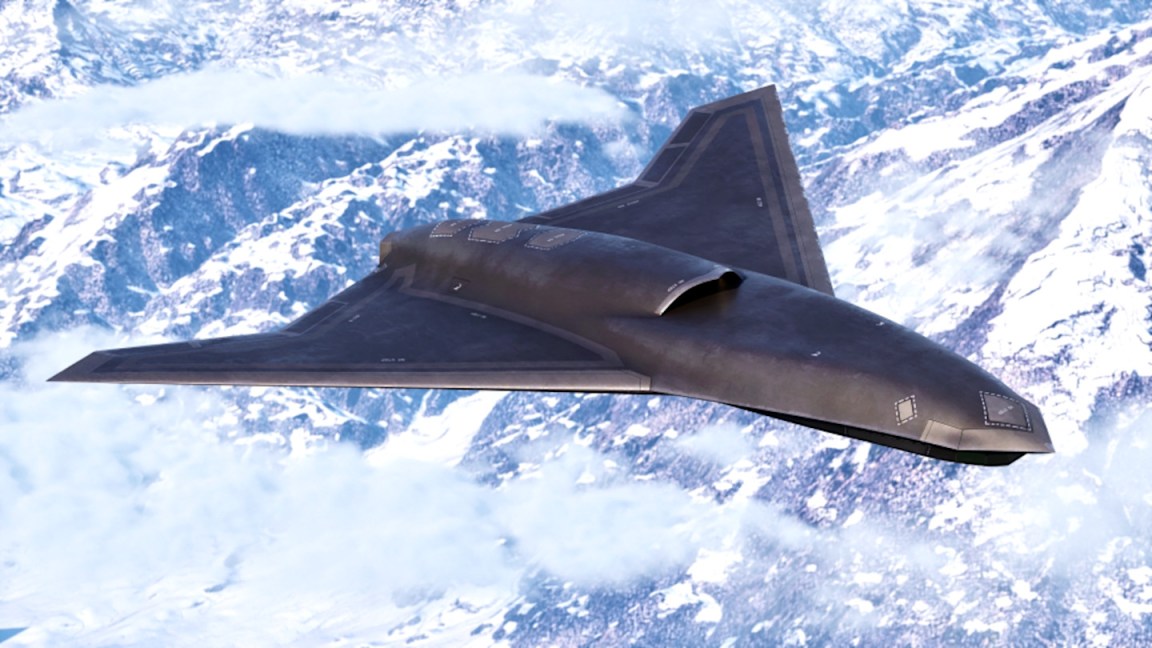
The Air Force didn't order this. Lockheed Martin isn't working under contract. Every dollar spent building five Vectis prototypes, instead of the one originally planned, is coming out of the company's own pocket, a bet that a design philosophy the service already passed over once will eventually be the one it wants to pay for.
That earlier rejection matters for understanding why this expansion is happening at all. Back in April 2024, the Air Force picked General Atomics and Anduril for the first round of its Collaborative Combat Aircraft program, the "loyal wingman" drones meant to fly alongside crewed fighters. Lockheed wasn't among them. General Atomics' YFQ-42A first flew last August, Anduril's YFQ-44A followed in late October, and Anduril's own Fury variant has already live-fired an AMRAAM missile and flown in formation with F-35s during testing. Those two companies have real hardware in the air right now. Lockheed is still more than a year from Vectis leaving the ground.
What Lockheed is betting the extra year buys is a fundamentally different design philosophy than what its rivals already won with. Ron Fehlen, the Skunk Works vice president running the program, was asked directly whether Vectis follows the low-cost, attritable approach competitors have pursued, aircraft cheap enough that losing them in combat is an acceptable cost of doing business. He said no: Lockheed is optimizing propulsion and other systems around a competitive price point while maximizing capability, rather than accepting the performance tradeoffs that usually come with a fully attritable design. Fehlen wouldn't compare Vectis's stealth directly to the F-22 or F-35, but confirmed survivability sits at the core of what the aircraft is built around. The company's underlying argument is that losing even moderately priced drones at real scale isn't actually sustainable, so a more survivable, harder-to-detect aircraft pays for itself by simply surviving more missions than a cheaper one would.
The physical aircraft, roughly 34 feet long with a 38-foot wingspan, sits in the Air Force's Group 5 category, more than 1,320 pounds and built to fly above 18,000 feet, the same weight class as the two CCA designs already fielded. Lockheed says it went from first drawing to wind-tunnel testing in under two months and finished an initial digital build in six, and picked a proven commercial engine, a Williams International FJ44-4 producing more than 3,600 pounds of thrust, specifically to avoid the schedule risk of developing new propulsion from scratch. None of that engineering speed changes the more basic fact that Vectis still doesn't have a customer.
The actual test of whether any of this pays off arrives with the Air Force's requirements document for CCA Increment 2, still being finalized, with concept refinement running through nine vendors into mid-2027 and as many as six designs expected to advance to prototyping. If lessons from flying the Increment 1 drones convince the service it needs something that can enter contested airspace without adding to a formation's radar signature, survivability over cost, Vectis is built to be the answer sitting ready. If the Air Force instead leans further into cheap and expendable, the exact approach Fehlen said Lockheed deliberately avoided, five self-funded prototypes become a very expensive lesson in betting against where a customer's own thinking was actually headed. Lockheed is also positioning Vectis's software stack, tied to the same open architecture already controlling the Navy's MQ-25 Stingray tanker drone, as a hedge that could matter in naval CCA competitions regardless of which airframe eventually wins there, one way of making sure this bet pays off in more than one arena even if the Air Force says no.
