Monday, August 17, 2026

Why a German Drone Maker Needed Japan's Amazon to Sell to the Japanese Army


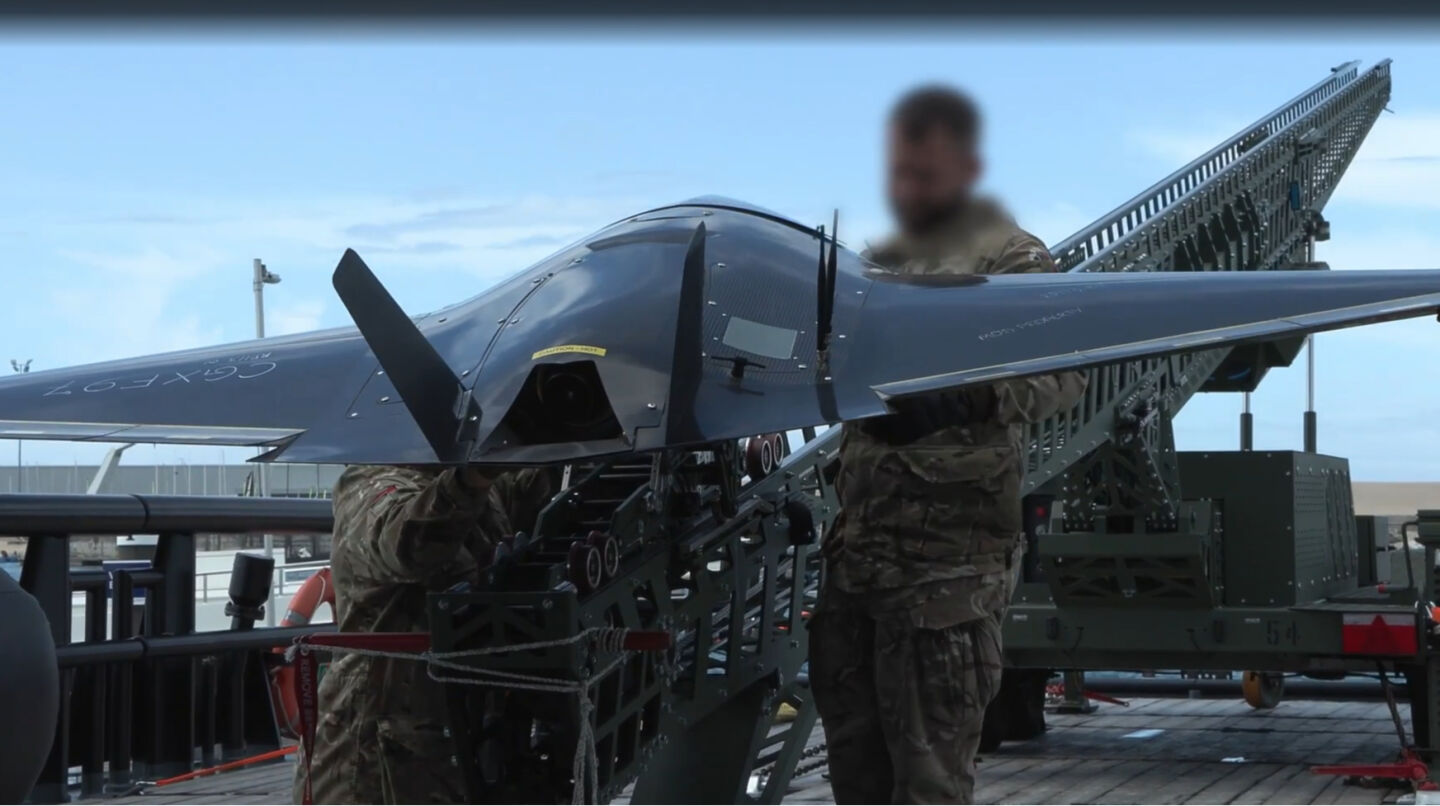
Munich-based Helsing has enlisted Rakuten, the Japanese e-commerce and finance conglomerate, to help finalize a deal selling its unmanned systems to Japan's Ground Self-Defense Forces, a Rakuten spokesperson confirmed August 18, first reported by Nikkei. Japan's GSDF is currently field-testing Helsing's HX-2 strike drone through the end of September, building on an "initial agreement" the German firm struck with Tokyo earlier this year through what Helsing described only as an unnamed "local brokerage partner." Rakuten has limited defense experience of its own, but its involvement isn't a one-off, the company separately organized a demonstration this spring for Ukrainian drone-software maker Swarmer, coordinating an AI-driven drone swarm for a Japanese military unit, and Rakuten's billionaire founder Hiroshi Mikitani has been one of Japan's most visible Ukraine supporters, helping other Ukrainian defense firms exhibit at Japanese arms fairs.

The genuinely interesting question this story raises, and the one Defense News's brief report doesn't fully unpack, is why a European drone maker with $1.8 billion in fresh funding and combat-honed technology needs an e-commerce company to broker a sale to a G7 military in the first place. The answer lies in something CSIS has flagged as structurally unique among industrialized nations: Japan has no true defense "primes." Even its largest defense-adjacent companies, Mitsubishi Heavy Industries and Kawasaki Heavy Industries, treat defense as a relatively modest slice of much larger civilian industrial businesses, shipbuilding, aerospace, heavy machinery, rather than operating as dedicated defense contractors the way Lockheed or Rheinmetall do. That structure historically made sense for a country that spent seven decades confined to domestic-only procurement under a pacifist constitutional framework, but it leaves genuinely limited institutional infrastructure for a foreign startup to navigate Japan's Ministry of Defense and Acquisition, Technology & Logistics Agency without an established local partner smoothing the relationship-building process, which is precisely the gap Rakuten's chief of staff Hideaki Mukai described in his statement, "complex procurement systems, difficulties communicating with government agencies and challenging procurement cycles."

That structural gap is opening at exactly the moment it matters most, because Japan's defense-export posture just underwent its most significant liberalization in decades. The Takaichi cabinet abolished, in April 2026, the five categories that had confined Japan's finished defense exports to strictly non-lethal roles, rescue, transport, warning, surveillance, and minesweeping, since a 2014 policy shift, reclassifying equipment simply as weapons or non-weapons and clearing the way for outright sales of warships, missiles, and fighters to the 17 countries holding defense technology-transfer agreements with Tokyo. That's the same liberalization this blog's earlier coverage flagged as enabling Japan's own Mogami-class frigate sale to Australia, and it cuts both directions simultaneously, Japan can now export more freely, and the same buildup, roughly ¥43 trillion committed through fiscal 2027 with defense-related order backlogs at Japan's three major heavy industry groups up 15 percent year-on-year, is pulling in foreign firms like Helsing who see Tokyo's swelling procurement budget as a market finally worth the effort of breaking into.

Helsing's specific pitch carries added weight given where its technology has actually been tested. Founded in 2021 and now Europe's best-funded defense technology startup after its July funding round, the company has spent the past several years supplying drones for Ukraine backed by German government funding, meaning the HX-2 undergoing GSDF field trials arrives with genuine combat-relevant credibility rather than untested lab specifications, a distinction that matters considerably to a Japanese military establishment increasingly focused on counter-drone and unmanned systems as core capability gaps. This also mirrors a pattern already visible across Japan's broader defense-industrial opening this blog has tracked, American firms like Anduril establishing Tokyo offices and beginning JMSDF sensor-fusion integration trials, and now a German startup using a domestic e-commerce conglomerate as its entry vehicle, all converging on the same underlying reality: Japan's defense budget has grown faster than its institutional capacity to absorb new suppliers efficiently, creating real demand for brokers, whether trading houses, conglomerates, or, in this case, Rakuten, to bridge a gap that pure capital and combat-tested hardware alone can't close on their own.

Whether this specific deal closes on the timeline GSDF's September test window suggests is almost secondary to what it demonstrates about the shape of Japan's rearmament moving forward. A defense-industrial base built for seventy years around domestic-only procurement and diversified industrial conglomerates rather than dedicated primes doesn't restructure itself overnight simply because the export laws changed and the budget tripled, and stories like Helsing's reliance on Rakuten are likely to keep recurring as more foreign firms, drawn by the same budget and liberalization this blog has covered from multiple angles this summer, discover that winning a Japanese defense contract requires nearly as much local relationship-navigation as it does actual product performance.

China's Anti-Stealth MANPADS Drill Is Reportedly Based on an Iran Claim That Was Never Actually Confirmed


Chinese state broadcaster CCTV aired footage on August 8 showing PLA soldiers coordinating man-portable air-defense systems (MANPADS) with HQ-16 medium-range missiles specifically to hunt stealth aircraft, with two operators firing infrared-guided MANPADS in near-perfect synchronization to strike a stealth target drone simultaneously at night, a level of coordination CCTV emphasized is technically demanding since a second missile fired even slightly late risks locking onto the first missile's heat plume instead of the target. The logic behind the tactic is straightforward: most air-defense systems rely on radar, which struggles against a reduced radar cross-section, while infrared-guided MANPADS hunt heat signatures instead, exploiting the fact that stealth aircraft reduce but don't eliminate the thermal signature generated by engine heat and airframe heating. Chinese state media explicitly tied the demonstration to reports that Iran used infrared detection to hit a U.S. F-35 earlier this year, without offering further detail on that incident.

That underlying premise deserves considerably more scrutiny than the CCTV segment gave it, because the actual F-35 incident it's citing remains genuinely unresolved more than four months later. What's actually confirmed: an F-35 made an emergency landing at a regional base in late March after sustaining damage during a combat mission over Iran, with the pilot reported in stable condition and the cause placed under investigation. What's disputed: Iran's IRGC claimed credit for the strike and released footage, but CENTCOM never confirmed the cause, and this sits inside a broader pattern of Iranian claims during the war that the Pentagon has explicitly described as exaggerated or fabricated, including a widely circulated claim of a second F-35 downed weeks later that Central Command neither confirmed nor denied, and at least one entirely fabricated F-35 wreckage image later debunked by reverse-image search. Iran separately claimed to have destroyed three F-35s and three other aircraft in an attack on a Jordanian base, which CENTCOM flatly denied, stating no U.S. aircraft were damaged in that specific incident. In short, China appears to be building an anti-stealth training doctrine partly around an incident whose actual cause the U.S. has never acknowledged and whose broader claim pattern includes confirmed fabrications.

The technical skepticism EurAsian Times' own reporting captured from Indian Air Force veteran Air Marshal G.S. Bedi is worth taking seriously independent of the F-35 sourcing question, and it's a rare instance of a source article building in a genuinely sharp counterargument rather than just amplifying the original claim. Bedi dismissed the drill as "hype" and a "typical copy-book scenario," pointing out that MANPADS' short range means a stealth aircraft would need to be dangerously close for the tactic to work at all, a proximity that runs directly against the standoff-strike doctrine every advanced air force, including China's own, is actively moving toward. His sharpest point cuts at the coherence of China's broader anti-stealth messaging: "if stealth is so easily detectable and defeatable, why is China investing in production of so many J-20s, and now, the J-35s?" That's a fair question this blog's own coverage of the J-36/J-50 sixth-generation prototypes reinforces, China isn't hedging against stealth's obsolescence, it's racing to field more of it.

This drill also isn't an isolated claim, it's the latest entry in a now-lengthy pattern of Chinese anti-stealth announcements that EurAsian Times' own reporting history lays out candidly: a bistatic space-radar system claimed last year, the JY-27V meter-wave radar unveiled in May 2025 that reportedly failed to detect U.S. stealth jets during a January 2026 operation despite the earlier claims, BeiDou-based refraction detection claimed in October 2024, and a 2022 claim of an IRST system capable of tracking a B-2 from 150 kilometers. None of these claims have been independently verified, and the same EurAsian Times reporting notes military experts and skeptics have repeatedly voiced doubt about China's theoretical, ambition-heavy announcements in this space specifically. The pattern that emerges isn't necessarily that China's anti-stealth research is worthless, multistatic radar, IRST, and networked sensor fusion are all legitimate, real approaches every major air power invests in, but that China's public messaging around each individual claim consistently outruns what's actually been demonstrated or confirmed in genuine combat conditions.

The more grounded reading of this drill, then, isn't "China has found the F-35's fatal flaw," it's a country investing seriously and rationally in complementary anti-stealth sensor layers, as EurAsian Times' own conclusion notes, while periodically attaching those investments to combat narratives, the Iran-F-35 connection among them, that don't hold up cleanly to the verification the claims are asked to bear. Given this blog's own coverage of how murky and contested combat claims have proven throughout the Iran war, from the Su-57's disputed AEW&C kill to Pakistan's contested Rafale claims, treating any single unverified incident as the empirical foundation for a new doctrine, whether that's done by Chinese state media or by anyone repeating the claim uncritically afterward, is exactly the kind of shortcut this blog has tried to avoid across a summer's worth of these stories.

Trump's Korea Drill Cutback Is Accelerating a Shift Seoul Was Already Planning For


President Trump instructed the Pentagon on August 17 to "substantially reduce" joint military exercises with South Korea, posting on Truth Social hours before the annual Ulchi Freedom Shield drills were set to begin that he was "not happy" the U.S. had agreed to participate, while highlighting his "very good relationship" with North Korean leader Kim Jong Un. Trump tied the decision explicitly to cost and to Seoul's refusal to join denuclearization efforts against Iran, writing that when he asked South Korea to participate they said "No thanks!" South Korea's Joint Chiefs of Staff confirmed the roughly 18,000-personnel exercise proceeded on schedule regardless, and Seoul's presidential office responded carefully, expressing hope that warm Trump-Kim relations might eventually produce genuine U.S.-North Korea dialogue while affirming the allies would keep coordinating combined defense posture.

Analysts reading Trump's move split on the underlying motive, and both readings are worth holding simultaneously rather than picking one. Jenny Town of the Stimson Center's 38 North program characterized it as an attempt to create diplomatic space with Pyongyang, while cautioning the move's "haphazard nature is unlikely to make much of an impression in Pyongyang," and CSIS Korea program head Victor Cha offered a second reading entirely, that Trump may be trying to peel Kim away from his deepening alignment with Moscow, given North Korean troops have been fighting alongside Russian forces in Ukraine and Ukraine confirmed just last week that North Korean-made missiles struck a Zaporizhzhia steel plant in a Russian attack. Neither explanation requires dismissing the other, and both sit awkwardly next to a third fact the same reporting surfaces: Lt. Gen. Joseph Jarrard, a senior NORTHCOM official, warned last week that North Korea has successfully tested ICBMs with enough range and payload capacity to strike anywhere in North America, a threat trajectory that hasn't reversed regardless of the warmth in Trump's public language toward Kim.

What matters more for the strategic picture than the exercise cutback itself is the moment it's landing in South Korea's own defense trajectory, one this blog's Japan white paper coverage already identified as part of a broader Indo-Pacific pattern. Seoul has been pursuing genuine defense autonomy for over a year now under President Lee Jae Myung, formalized through a new Future Defense Strategy Committee and anchored by the "Jang Bogo N Project," an indigenously designed and built nuclear-powered submarine program the U.S. approved fuel-supply cooperation for in November 2025, with construction targeted for the late 2020s and an operational boat expected by the mid-to-late 2030s. Lee's own framing of that program has been pointed rather than defensive: "Only with a strong will for autonomous national defense can we gain the respect of friends and further strengthen our alliances," he told his cabinet in May, adding "I guess a mindset of dependency still has a foothold in defense circles." South Korea has simultaneously built itself into a genuine global arms exporter across armored vehicles, artillery, jets, and missile defense systems, and Lee used a July NATO forum appearance to float expanded South Korea-NATO defense-industrial ties, a suggestion Pentagon policy chief Elbridge Colby publicly pushed back on, insisting no alternative supplier base can match America's "in quantity or quality."

That tension, Seoul actively building autonomy while Washington insists on remaining indispensable, is the real backdrop against which a unilateral, Truth-Social-announced exercise cutback lands differently than it would have a few years ago. Public support for South Korea developing its own nuclear deterrent has held around 73-76 percent through 2025 and into 2026 according to polling cited by Foreign Policy, a skepticism about U.S. security guarantees that predates this specific announcement but that an abrupt, unexplained reduction in joint training only reinforces. Read alongside this blog's coverage of the U.S. Navy's carrier-free Pacific gap, itself driven by the same Iran-war resource diversion Trump cited as partial justification for the Korea cutback, a pattern becomes hard to miss: American attention and hardware pulling toward the Middle East is now visibly touching multiple Pacific alliance relationships simultaneously, and allies aren't waiting to see how it resolves before hedging their own bets.

None of this means the U.S.-South Korea alliance is unraveling, Seoul's own response to Trump's post was notably measured, reaffirming continued coordination rather than escalating publicly, and RAND's own analysis has framed Korea's submarine ambitions as complementary to alliance goals rather than a rupture with them. But an administration citing cost and a one-off diplomatic snub to cut back exercises with a nuclear-armed neighbor's direct counterpart, timed to a week when Jarrard is warning about validated North Korean ICBM range and Pyongyang's troops keep gaining combat experience in Ukraine, is the kind of decision that reads very differently in Seoul than in Washington, particularly for a South Korean government that has spent the past year building the case, methodically and often explicitly, that it can no longer take the current alliance structure entirely for granted.

The Su-30MKI Radar Upgrade Won't Arrive Until 2035 — Here's Why That Timeline Should Worry the IAF More Than It Seems To


Retired IAF Jaguar pilot Vijainder K Thakur laid out a genuinely sobering technical case this week questioning whether HAL's plan to upgrade India's Su-30MKI fleet around the Virupaksha AESA radar rests on solid ground. His argument is worth taking seriously as informed insider analysis: DRDO's confidence in delivering Virupaksha on schedule rests heavily on its experience developing the Uttam AESA radar for the Tejas Mk-1A, but Uttam itself started development around 2012 and, fourteen years later, still hasn't received production clearance or entered operational service, with HAL's own management confirming in May 2026 that Uttam had to be dropped from the first 83-aircraft Mk-1A order entirely and pushed to the follow-on 97-aircraft batch instead. Extrapolating that same maturation curve to Virupaksha, which won't even begin Su-30MKI integration until 2028, Thakur calculates a realistic timeline for serial upgrades starting only around 2035, a strikingly distant date for a program the IAF has been discussing since 2022.

That analysis holds up well against the documented record, and readers should treat it as exactly what it is, credible technical judgment from someone with direct relevant experience rather than a settled certainty. What's worth adding to Thakur's radar-specific case is how squarely this pattern matches the AMCA engine story this blog already covered from the same author days earlier, where India's Kaveri program spent decades and a fraction of China's aero-engine budget chasing a capability China fielded operationally years ago. Both pieces, read together, describe the same underlying institutional dynamic: DRDO and HAL consistently underestimate how long indigenous high-technology defense programs take to move from prototype to fielded, certified hardware, and consistently overestimate how directly experience from one program transfers to accelerate the next.

What sharpens the stakes on the radar specifically, more than the engine case, is the operational timeline India's actual regional competitors are already running on. This blog's earlier coverage of Pakistan's May 2025 conflict with India documented PAF J-10Cs already flying with a mature AESA radar and PL-15 long-range missiles in actual combat, with Chinese state media crediting the type with multiple confirmed Rafale engagements, however contested the specific tally remains. China's own J-10C fleet has been operational with AESA radar for years at this point, and the broader PLAAF fighter modernization this blog has tracked across multiple posts, the J-36 and J-50 sixth-generation prototypes, the WS-15-powered J-20, continues advancing on a timeline that doesn't wait for India's indigenous programs to catch up. If Thakur's 2035 estimate holds, India's most numerous heavy fighter, the backbone of IAF's actual combat mass rather than the smaller AMCA or Rafale fleets, would spend roughly another decade flying with the legacy N011M Bars PESA radar against adversaries who have already made the AESA transition.

The mitigating factor Thakur's piece itself notes, and that deserves real weight, is that the Su-30MKI fleet isn't standing still in every other respect during this radar gap. The aircraft has already integrated BrahMos and Astra missiles through earlier spiral upgrades, and reported Russian cooperation on integrating the long-range RVV-BD, the R-37M, onto existing Bars-radar-equipped jets suggests IAF is pursuing interim capability improvements that don't wait on Virupaksha's full maturation. That's a sensible hedge, but it's also, by definition, a workaround rather than a solution, extending a legacy sensor's usefulness through better missiles rather than closing the actual detection and tracking gap a modern AESA radar would provide, the same gap this blog's Uzbekistan and J-10C export coverage suggests China's own client states are actively closing through much faster procurement timelines than India's indigenous path allows.

None of this argues against developing Virupaksha domestically, and Thakur's own conclusion is careful not to dismiss the program's long-term value, strategic autonomy in a capability this sensitive is a legitimate goal independent of how long it takes to achieve. But the honest reading of both this piece and the AMCA engine story it echoes is that India's defense-industrial timeline and India's actual threat timeline are increasingly running on different clocks, and a 2035 target for a program meant to address a capability gap that's already operationally relevant today is the kind of mismatch that tends to compound rather than resolve itself, especially when the programs meant to eventually close it keep discovering, program after program, that fourteen years was actually the realistic schedule all along.

Why a Japanese GPS Satellite Now Carries a Secret American Space-Tracking Sensor


A U.S. Space Force Space Domain Awareness payload rode into orbit on August 10 aboard Japan's Quasi-Zenith Satellite 7, launched on a Japanese H3 rocket from Tanegashima Space Center, completing the second and final sensor in the Quasi-Zenith Satellite System-Hosted Payload program, the first national security space partnership of its kind between the two countries. The payload will feed near-real-time data into the Space Surveillance Network, sharpening the Space Force's picture of activity in geosynchronous orbit above the Indo-Pacific, roughly 22,000 miles up, where satellites match Earth's rotation and hold position over a fixed point on the ground. Combat Forces Command's Mission Delta 2 will operate the sensor, and MIT's Lincoln Laboratory, which designed and built both U.S. payloads in the program, spent two years integrating this second sensor with its Japanese host satellite before launch. The first sensor flew on QZS-6 back in February 2025, meaning this quiet bilateral program has now been building toward full capability for well over a year without much public attention until this milestone.

The "why geosynchronous orbit specifically, and why now" question is where the announcement's brief, celebratory framing understates the actual stakes. GEO is uniquely valuable surveillance real estate precisely because a satellite there stays fixed over one location rather than sweeping past every 90 minutes the way low-Earth-orbit satellites do, and China has spent the past several years building exactly the kind of persistent GEO surveillance architecture that makes American coverage of the same orbital band a genuine strategic necessity rather than a nice-to-have. CSIS has documented China's Yaogan-41 optical reconnaissance satellite reaching GEO in December 2023 specifically positioned to maintain continuous surveillance over the Pacific and Indian Oceans, Taiwan, and mainland China, part of a broader Yaogan constellation that has placed 144 surveillance satellites into orbit since 2006. China has separately fielded Ludi Tance 4-01, the world's first geosynchronous synthetic aperture radar satellite, providing all-weather, day-and-night imaging from an altitude current U.S. radar satellites don't operate at, and SpaceNews has documented Chinese spacecraft conducting deliberate proximity maneuvers and shadowing techniques against other nations' GEO satellites, timed specifically to complicate ground-based detection.

The military relevance of that Chinese buildup isn't abstract. Defence Security Asia's analysis warns that a small constellation of Chinese geosynchronous satellites positioned over the Pacific, Atlantic, and Indian Oceans could theoretically provide persistent, uninterrupted tracking of U.S. carrier groups leaving Guam, logistics vessels crossing the Philippine Sea, and amphibious forces operating near Taiwan or the South China Sea, a capability the analysis frames starkly as challenging the naval stealth and dispersed-positioning advantages the U.S. Navy has traditionally relied on. Against that backdrop, hosting American sensors on Japanese satellites isn't primarily about watching Chinese ground activity, it's about the U.S. building its own persistent eyes on the same GEO band China is already using to watch American and allied forces, a genuinely defensive necessity given how exposed naval and air assets become if an adversary achieves uncontested space-based tracking over an entire operating theater.

This connects directly to Gen. Stephen Whiting's remarks at this year's SMD Symposium, already covered on this blog, where the head of U.S. Space Command warned that American satellites currently have no way to defend themselves and described a "psychology of scarcity" limiting how aggressively the Space Force can maneuver assets it does have. Space domain awareness is the necessary precondition for everything Whiting argued SPACECOM needs next, you cannot defend, jam, or maneuver against a threat you cannot first detect and track with confidence, and China's GEO shadowing techniques are specifically designed to undermine exactly that detection confidence. The QZS-7 payload doesn't give the U.S. any offensive space weapon Whiting called for, but it does address the more foundational layer his speech assumed as a starting point: knowing what's actually happening in the contested orbital neighborhood before deciding what, if anything, to do about it.

The bilateral structure of this program also fits neatly into the broader U.S.-Japan alliance-deepening pattern this blog tracked through Japan's 2026 Defense White Paper, hosting sensitive American sensors on a Japanese navigation satellite is a considerably deeper form of technical integration than simply buying American hardware, requiring years of joint design and testing work that presumes a level of trust and shared threat perception between the two militaries that didn't exist in this form even a decade ago. Brig. Gen. Brian Denaro's characterization of the alliance as one of America's "greatest strategic advantages in the Pacific" reads as standard alliance-management language on its own, but set against China's own documented GEO surveillance buildup and the genuine gap in American situational awareness Whiting flagged at SMD, this modest-sounding hosted-payload launch is a real, concrete piece of the broader Indo-Pacific space competition this blog has been tracking across nearly every domain this summer, not just another routine allied cooperation announcement.

The Tomahawk Deal Is 16 Times Current Production — And Still Might Not Be Enough


The Pentagon awarded RTX unit Raytheon a $22.9 billion contract on August 17 to dramatically scale up Tomahawk cruise missile production, a seven-year deal that firms up a framework agreement first signed in February and aims to push annual output past 1,000 missiles, up from the roughly 60 a year the company currently produces. Acting Secretary of the Navy Hung Cao framed the deal in the same "wartime footing" language this blog has now tracked across nearly every major munitions announcement this year: "We called on industry to rapidly scale up munitions output, and RTX is delivering." The announcement itself, like the SM-3 component deal covered here days earlier, runs barely a few hundred words, no breakdown of cost per missile, no discussion of what expenditure actually drove this, no mention of the timeline gap between contract signing and missiles actually reaching magazines.

That missing context is where the real story sits, and it's considerably more alarming than the press release format suggests. CSIS's April analysis found the Iran war had already depleted nearly a third of America's prewar Tomahawk inventory, more than 1,000 missiles out of roughly 3,100, and CNN reporting from early August pushed that figure toward half the stockpile, with one source describing regional Tomahawk stocks as approaching "Winchester," military slang for completely out of ammunition, even as the administration publicly insisted critical stockpiles hadn't been dangerously depleted. Each Tomahawk runs somewhere between $2.6 million and $3.6 million depending on variant, and CSIS's own replenishment modeling before this contract estimated a four-to-five-year timeline to restore prewar inventory levels even with expanded production, a stark illustration of how far a defense-industrial base built for "a dozen to a few hundred missiles annually," as CBS News described the pre-war baseline, sits from what a sustained, high-intensity conflict actually consumes in months.

The 1,000-per-year target this contract sets is a genuinely dramatic scale-up, more than 16 times current output, but it's worth being honest about what that number does and doesn't solve. Even at full production, replacing the roughly 1,000-1,500 Tomahawks expended against Iran alone would take one to one-and-a-half years of maximum output with zero missiles set aside for training, testing, or any other contingency in the meantime, and that's before accounting for the parallel drawdown in ATACMS, PrSM, and JASSM stocks CNN's reporting flagged as the primary munitions actually consumed during the war's most recent phase. Kelly Grieco of the Stimson Center's blunt assessment to CBS News captures the recurring pattern this blog has now documented across Patriot, THAAD, SM-3, and now Tomahawk: "It's been recognized that we don't have enough long-range strike capability, so we've been trying to build up these stockpiles, but we keep depleting them."

The strategic stakes behind this specific munition type are arguably higher than any interceptor shortage this blog has covered so far, because Tomahawk isn't a defensive system absorbing enemy fire, it's the primary long-range offensive strike capability the Navy has for hitting land targets from ships and submarines without risking a crewed aircraft. 19FortyFive's analysis of the Pentagon's own wargaming is the sharpest articulation of why that distinction matters: the site reports Pentagon models of a Taiwan contingency show a Tomahawk magazine emptying in days rather than months, meaning the more than 1,000 missiles just expended against a regional power with comparatively limited air defenses represent a rehearsal, whether intended as one or not, for a China scenario the current stockpile and even this expanded production rate may not be sized to survive.

Reading this contract alongside the PAC-3 seeker deal, the SM-3 component agreements, and CENTCOM's pivot toward attritable drones through Falcon Strike, the pattern across this entire year's procurement announcements is now impossible to describe as coincidental: America's post-Cold War defense-industrial base, built around low-rate, predictable-demand production lines, has met a genuinely sustained high-intensity conflict and found itself structurally unprepared for what that conflict actually consumes, across nearly every major munitions category simultaneously. A 16-fold production increase is a serious, credible response to that discovery. Whether it's a sufficient one depends less on Raytheon's new manufacturing capacity than on whether the next conflict America finds itself managing gives its industrial base the years this replenishment timeline assumes it will have.

The Pacific Just Went Carrier-Free — And This Blog Already Explained Why That Was Coming


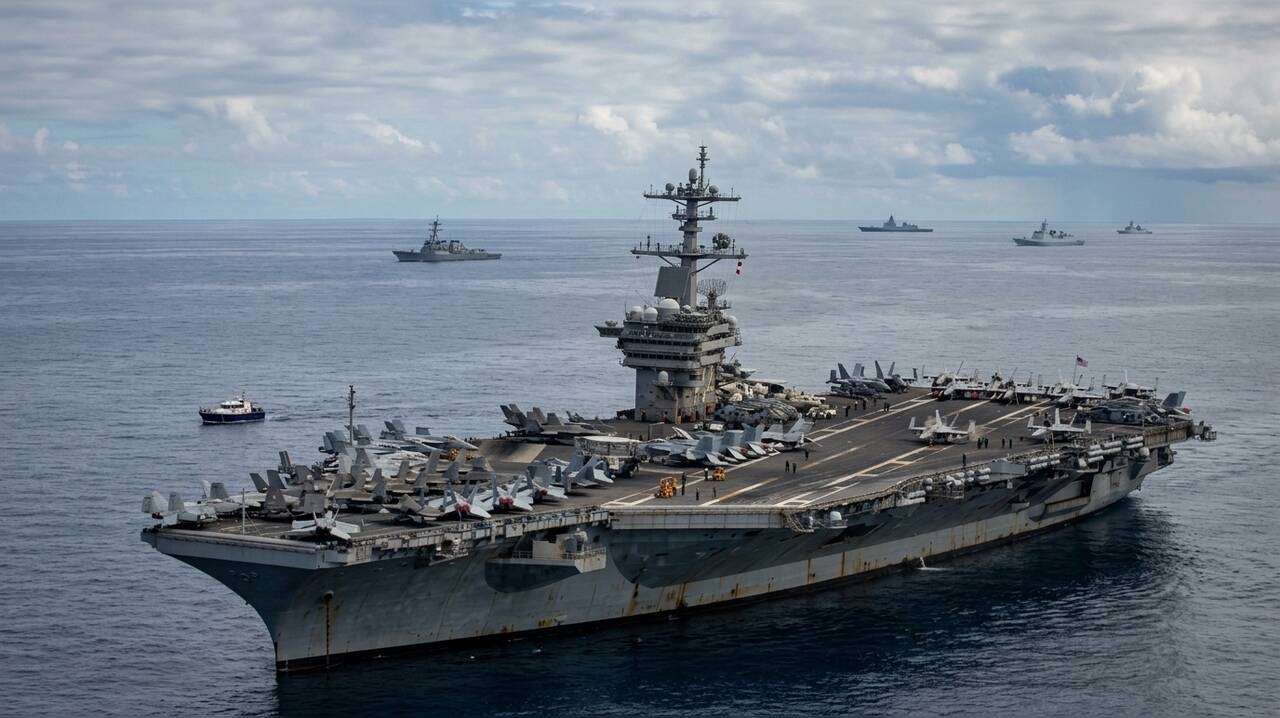
The USS George Washington departed the Pacific this week, expected to relieve USS Abraham Lincoln in the Middle East, leaving the western Pacific without a single U.S. aircraft carrier for the first time in this stretch of the Iran conflict. The swap is driven by genuine welfare concerns aboard the Lincoln, which has logged more than 240 consecutive days at sea, a record uninterrupted deployment, with its return extended well past its original May date specifically to sustain operations against Iran, amid what multiple outlets have reported as mounting mental health and supply strain among the crew. Navy officials insist the gap is temporary, and Bryan Clark, a defense analyst at the Hudson Institute, was blunt about the diplomatic optics regardless: "they're using this as part of the narrative to demonstrate to the Philippines, to Japan, to Indonesia and others that the US is not the big dog in the western Pacific anymore."

The Navy's own numbers make clear this isn't simply bad luck, it's the arithmetic finally catching up to a fleet that was already stretched thin before this rotation even began. Clark noted the Navy operates 11 carriers total and typically deploys just two or three at any given time, and this blog's earlier coverage of USS Kennedy's delayed trials already flagged that Nimitz's retirement was set to temporarily drop the total operational fleet to 10 hulls, a reduction in surge capacity that compresses the maintenance-and-deployment rotation across a smaller pool of ships precisely as demand from multiple theaters spikes simultaneously. What's happening now with the George Washington-Lincoln swap is that compression made visible in real time: an open-ended Middle East commitment eating directly into the Pacific's operational carrier presence because there simply isn't enough hull capacity to fully cover both regions when one theater refuses to wind down on schedule.

CSIS's Greg Poling captured the policy contradiction this exposes more sharply than any single military detail could: the administration has repeatedly framed the Pacific as its top strategic priority behind only the Western Hemisphere, yet is "doing the exact opposite" of its stated goal of reducing Middle East entanglement, with Poling noting regional allies are increasingly unsettled by the gap between rhetoric and actual carrier presence, while Beijing "is quite happy with U.S. distraction." That's not an abstract concern given what this blog has already documented about China's own naval trajectory during this same window, Fujian's commissioning and its KJ-600 airborne early warning trials closing a surveillance gap that previously distinguished U.S. carrier aviation, and China's shipbuilding capacity assessed at more than 200 times America's own. A carrier-free western Pacific, even a temporary one, lands at almost exactly the moment China's own carrier program has the most reason to appreciate the optics of American absence.

The Ford-class program's own struggles compound the timing further. This blog's coverage of USS Kennedy's acceptance trials already noted the ship remains roughly seven months from even preliminary acceptance, let alone the additional year or more of shakedown before actual deployment readiness, meaning the newest and most capable carrier class the Navy is counting on to eventually ease exactly this kind of scheduling strain isn't available to help right now, and won't be for some time. Meanwhile Gerald R. Ford's own most recent deployment ran 11 months, the longest since Vietnam, and included an unplanned diversion back to the Mediterranean after a laundry-space fire displaced hundreds of sailors, a maintenance-driven detour that likely tightened the broader carrier rotation schedule further still.

Chief of Naval Operations Adm. Daryl Caudle has reportedly been pushing since February to convince regional commanders to rely more on smaller, newer ships rather than defaulting to full carrier strike groups for every mission, an institutional acknowledgment that the carrier fleet's current size can't sustainably cover simultaneous Middle East, Pacific, and other global commitments the way Navy planning has traditionally assumed. Whether that shift happens fast enough to matter is a separate question from whether the underlying diagnosis is correct, and this week's Pacific carrier gap, following directly on the interceptor depletion, the delayed Kennedy delivery, and the broader shipbuilding capacity crisis this blog has tracked across the summer, reads less like an isolated scheduling hiccup and more like confirmation that America's carrier fleet, however individually dominant each hull remains, is simply too small right now to be everywhere its own strategic priorities say it needs to be.

Britain Just Became a Combatant in Everything But Name — And Its Own Air Marshals Are Saying So


 Ukraine has used two British-made drone systems for deep strikes inside Russia over the past six months, the Sunday Times reported August 15-16, citing multiple sources in Ukraine's Armed Forces and government. One is the BAE Systems Nyan, a jet-powered one-way attack drone built by BAE subsidiary Callen-Lenz in Wiltshire, tested by the Royal Navy, and boasting a range exceeding 240 kilometers; the second system's manufacturer wasn't named, reportedly for security reasons. Confirmed targets include oil refineries in Volgograd and Yaroslavl, sites deep inside Russian territory, along with a strike on Belgorod near the Ukrainian border, and Ukrainian officials described the British systems as providing successful, cheaper firepower to add to Kyiv's mass-strike campaign rather than a marginal contribution.

The reaction from British military leadership is the part of this story worth sitting with, because it's an unusually direct acknowledgment of genuine escalation risk from a country's own former commanders. Retired UK Air Marshal Greg Bagwell predicted Moscow would "sabre rattle" in response and warned that Russia now has real grounds to consider British factories, the ones actually producing the drones, legitimate military targets. That's not a hypothetical concern raised by outside critics, it's a former Air Marshal openly stating that British soil and British industrial infrastructure now sit within a plausible retaliatory target set, a considerably starker framing than the "unwavering support" language UK officials have used publicly. One senior Ukrainian source's quote to the Sunday Times captures the same tension from the other side with an almost defiant flippancy: "When we launch them, we always say Slava Ukraini and God save the King."

This drone revelation doesn't exist in isolation, it's one layer of a rapidly deepening British commitment that's been building for months. London announced its largest-ever drone package in April, including tens of thousands of long-range systems, followed by a July announcement of the Stone Cloak radar jammer, a technology-sharing initiative specifically designed to help Ukrainian drones evade Russian air defenses, and separate funding in June for 150,000 Ukrainian-produced drones by the end of 2026. Ukraine has also deployed British Rapid Ranger systems against Shahed drones domestically and UK-supplied Storm Shadow cruise missiles for its own deep strikes, meaning the newly revealed Nyan and unnamed second drone aren't really a new category of support, they're the latest rung on a ladder Britain has been climbing steadily and, until this week, mostly under the radar of public reporting given the six-month gap between first use and public disclosure.

The scale this British contribution is feeding into is genuinely enormous and has accelerated sharply through 2026. Ukraine's deep strike campaign, which began in early 2024 with a few dozen drones a month, was launching 200-300 drones against Russian targets nightly by June 2026, and CNN's tracking put cumulative strikes on Russian oil facilities alone at over 300 since the war began, with only 16 of those occurring in the war's entire first two years before the campaign's pace took off. The Sunday Times separately reported almost 700 successful deep strikes between January and June 2026 across 52 Russian regions, causing more than £35 billion in economic damage, a scale of sustained infrastructure degradation considerably beyond what most Western coverage frames as "Ukraine hitting back," this is a systematic campaign against Russian energy and industrial capacity, now with explicit, if quiet, British industrial fingerprints on part of it.

Where this connects to the broader interceptor-and-infrastructure story this blog has already tracked is the strategic logic running in both directions simultaneously. The same week these British drone revelations broke, this blog covered Russian strikes landing uncontested against Kyiv because Ukraine's own Patriot interceptor stocks are running thin, a defensive erosion happening in parallel with an offensive campaign that's degrading Russian refining and logistics capacity at an accelerating rate. Both trends point toward the same underlying reality: this war is increasingly being fought and funded through Western industrial capacity on both the offensive and defensive sides, and Britain's quiet six-month drone campaign, now suddenly public, is a reminder that the line between "supplying Ukraine" and "being a direct party to strikes on Russian soil" has been eroding for a while, whether or not London's official language has caught up to that reality yet.

Washington Just Admitted It Can't Build Its Own Warships Fast Enough Anymore


A White House Presidential Memorandum issued this month, titled "Rebuilding the United States Navy and America's Shipbuilding Industrial Base," opens the door for allied shipyards abroad to design and construct U.S. Navy surface combatants for the first time in modern history. The mechanism, dubbed the "Finland Model" after a joint U.S.-Finnish icebreaker program, lets foreign yards build the first vessels in a new class overseas to get hulls into the water quickly, while requiring the foreign contractor to simultaneously invest in American shipbuilding capacity, majority stakes, technology transfer, and new U.S.-based facilities, with all follow-on construction shifting to domestic soil once that infrastructure exists. The Secretary of War has 90 days to deliver a competitive acquisition plan for a new light surface combatant optimized for anti-submarine warfare, anti-surface warfare, and convoy escort duty, with the same foreign-build model extended to CONSOL tankers and Ro-Ro sealift vessels as well. Naval News's own coverage flags Japan's Mogami-class frigate and South Korea's Chungnam-class as the leading candidates, with Mitsubishi Heavy Industries and HD Hyundai Heavy Industries both reportedly already positioning for U.S. market entry.

The scale of what's actually driving this shift is worth stating plainly rather than treating the memorandum as a routine procurement tweak. The U.S. Office of Naval Intelligence has assessed China's shipbuilding capacity at more than 200 times that of the United States, a gap corroborated by a leaked Navy briefing slide putting the figure at 232 times, roughly 23.25 million tons of Chinese capacity against under 100,000 tons domestically. China now delivers more commercial shipping tonnage in a single year than the rest of the world combined, and the PLA Navy has already overtaken the U.S. Navy in raw hull count, with Pentagon projections putting China at 435 vessels by 2030 against a U.S. fleet the Navy's own 2026 plan hopes to grow to 381 manned ships only after temporarily dipping to roughly 287 this year. Against that backdrop, allowing foreign allies to build American warships isn't really optional anymore, it's an acknowledgment that domestic yards alone cannot close a gap this large on any timeline that matters strategically.

This also lands directly on top of the ten-carrier fleet gap and shipbuilding strain this blog has already tracked through Kennedy's five-year delayed delivery and Germany's own F126 collapse, and it's worth being honest that America's shipbuilding crisis isn't unique among its allies, it's part of a broader Western pattern. Germany's TKMS is simultaneously absorbing an €18 billion program collapse, a stretched €20.1 billion order backlog, and pending Canada and India submarine deals, while the U.S. Navy's own major programs, the Constellation-class frigate and Zumwalt-class destroyer among them, have been scaled back or cancelled amid cost overruns that Senate Armed Services Committee Chair Roger Wicker has publicly criticized as the 2026 shipbuilding budget fell from $37 billion to $20.8 billion. Reading the Finland Model against that backdrop, it looks less like a uniquely American admission of failure and more like the U.S. finally applying the same allied-burden-sharing logic this blog has already documented Japan and South Korea building export businesses around, Japan selling Mogami technology to Australia, both countries positioning aggressively for exactly this kind of American opening.

The mandate's ban on iterative custom design changes without explicit executive sign-off is arguably the more consequential structural detail buried in the memorandum, and it's aimed squarely at the actual root cause of America's shipbuilding delays rather than just capacity. Analysts across multiple assessments of the "shipbuilding doom loop" have identified constant mid-program design alterations, not merely insufficient yard capacity, as a primary driver of the cost overruns and schedule slips plaguing programs like Constellation. Buying an already-proven, combat-ready parent design off the shelf from Japan or South Korea and explicitly restricting the Navy's ability to modify it mid-build addresses that dysfunction directly, in a way that simply building more Constellation-class frigates domestically never could on its own.

Whether this memorandum survives the political friction it's certain to generate, American shipbuilding unions and protectionist constituencies have historically fought foreign-build proposals hard, and a foreign-built frontline U.S. Navy warship would be a genuine first in modern history that domestic industry stakeholders are unlikely to accept quietly. But the underlying admission driving it is the more important story regardless of how the specific policy fight resolves: after years of leaked briefing slides and CBO warnings about a shipbuilding industry in its worst state in 25 years, Washington has finally decided that closing the gap with China matters more than maintaining the fiction that American yards alone can build the fleet fast enough to do it.