Monday, August 24, 2026

Europe's Defense Industry Just Proved It Can Cooperate Without a Government Forcing It To


Geopolitics analyst Mark Fulton argues in a new opinion piece that FCAS's collapse shouldn't be read as evidence European defense industry can't cooperate across borders, pointing instead to France's decision to award its multiple-rocket-launcher replacement to a "sovereign consortium" of Safran and MBDA over a competitive Lockheed Martin HIMARS bid, alongside MBDA's Letters of Intent with Saab, the 28-partner, 18-country HYDIS2dp hypersonic missile-defense consortium MBDA is coordinating, and Leonardo's cross-border joint ventures with Airbus, Thales, and Rheinmetall. His central claim, that FCAS failed because it was "a political choice, not one made by industry," while these other partnerships succeed precisely because industrial actors chose them, is a genuinely useful reframing worth engaging with critically rather than either accepting or dismissing outright.

That distinction holds up reasonably well against this blog's own FCAS coverage, which traced the program's June 2026 collapse specifically to an irreconcilable Dassault-Airbus industrial dispute that a dedicated German mediator concluded, after formal review, made a jointly built crewed fighter no longer feasible. Fulton's framing, that this was fundamentally a top-down political arranged marriage rather than an industry-driven partnership, is consistent with what this blog's own reporting found, and it's a fair distinction between FCAS and the bottom-up industrial consortiums, MBDA's own multinational structure across five countries, the Saab collaboration building on prior Taurus and Meteor missile partnerships, that Fulton cites as counter-examples. Programs where industry itself identifies complementary capability and chooses to combine it do appear to be succeeding at a considerably higher rate than the single instance where two national governments forced a three-way marriage between companies with genuinely incompatible ownership structures and strategic priorities.

Where Fulton's piece connects most directly to this blog's own coverage is the Saab dimension specifically. This blog's reporting on Saab's Autonomous Collaborative Platform drone concept and Sweden's TAURUS missile integration both documented Stockholm building toward genuine sixth-generation capability through patient, incremental development rather than a collapsed multinational mega-program, and Fulton's piece confirms that trajectory now includes formal MBDA cooperation building on the existing Taurus and Meteor partnerships this blog's own TAURUS coverage already touched on. Read together, Saab's strategy looks less like a lone Swedish hedge against FCAS's failure and more like exactly the kind of industry-chosen, capability-driven partnership Fulton's broader argument describes, MBDA and Saab identifying specific technical complementarity and building on a track record of successful prior collaboration, rather than a government mandating a merger between companies that had never previously worked well together.

The Airbus dimension deserves a more skeptical read than Fulton's piece gives it, though, and this blog's own coverage supplies the reason why. Airbus is simultaneously positioned in Fulton's piece as a model of successful pan-European cooperation, born from French, German, and Spanish national champions setting aside competitive instincts, and as the company this blog's own reporting identified as the party actively searching for a Saab lifeline after FCAS's collapse left its own sixth-generation ambitions without a clear path forward. That's not necessarily a contradiction, a company can be a genuine cooperation success story in commercial aviation while still struggling with a specific failed defense partnership, but it does complicate Fulton's clean industry-versus-politics framing: Airbus was a full industrial partner in FCAS, not merely a political appointee forced into the arrangement, and its own struggles finding a post-FCAS path suggest the industry-driven cooperation model Fulton celebrates elsewhere didn't straightforwardly protect Airbus from the same collapse its government-mandated FCAS role produced.

The HYDIS2dp consortium's scale, 28 industrial partners and 20 subcontractors spanning 18 countries working toward Europe's first indigenous hypersonic intercept capability, a technology this blog's own coverage of China's GPS-independent hypersonic guidance research and Golden Dome's tracking challenges has already established even the U.S. hasn't fully solved, is probably the strongest single piece of evidence for Fulton's broader thesis. A genuinely distributed, industry-coordinated consortium of this size tackling a capability gap this technically demanding, without a single dominant government mandate forcing specific national champions together, is a meaningfully different model than FCAS's three-country, three-company structure, and if HYDIS2dp actually delivers a working interceptor, it would be a considerably more consequential validation of Fulton's "cooperation over political arrangement" argument than any of the smaller bilateral partnerships his piece also cites.

Pakistan's 50-Year-Old Israeli Jet Claims Are Resurfacing Right When the Mecca Pact Needs a Combat Legend


Decades-old claims that Pakistani pilots shot down multiple Israeli Air Force jets during the 1967 Six-Day War and 1973-74 Yom Kippur War have resurfaced in Pakistani social media and defense commentary this month, timed to the signing of the Mecca Joint Defence Agreement between Pakistan, Saudi Arabia, and Turkey. A recent video featuring Air Commodore Khalid Chishti reiterating the claims has circulated widely, and this blog's earlier coverage of the Mecca Pact and Cyprus's Merkava tank pursuit already established the broader regional context these claims are resurfacing inside, an intensifying Israel-versus-Turkey-Pakistan-Saudi alignment where Pakistan's own defense minister has called Israel "evil and a curse for humanity," prompting a formal rebuke from Netanyahu's office comparing the remarks to a call for Israel's destruction.

The actual claims themselves deserve the same careful, evidence-based treatment this blog has applied to every other contested combat narrative this summer. According to Pakistani accounts, Flight Lieutenant Saif-ul-Azam, flying with Jordanian and then Iraqi forces during the 1967 war despite officially being sent only in a training and advisory capacity, downed three Israeli aircraft between June 5 and 7, a Mystère over Jordan and two more, a Mirage III and a Vautour, during the costly Israeli raid on Iraq's H-3 airbase. Israeli records do confirm losses matching those dates and locations, but credit them to Jordanian or Iraqi Hawker Hunter pilots generally, without naming any Pakistani volunteer specifically, a genuine gap between confirmed loss and confirmed attribution rather than either side disputing that the aircraft were actually lost.


The 1974 claim involving Flight Lieutenant Abdus Sattar Alvi is where the evidentiary picture becomes considerably more contested rather than simply ambiguous. Alvi, flying a Syrian MiG-21 during the War of Attrition phase following the main Yom Kippur fighting, claimed to have shot down an Israeli Mirage piloted by "Captain M. Lutz" on April 26, 1974, an account Pakistan's government took seriously enough to award him the Star of Courage and display his claimed opponent's flight suit in the Pakistan Air Force Museum. But EurAsian Times' own reporting lays out a genuinely serious counter-case: Israeli Ministry of Defense casualty records contain no pilot named Lutz or any close variant killed, missing, or captured in April 1974 over the Golan, IAF historian Shlomo Aloni's authoritative record of Israeli Mirage and Nesher combat losses documents only one Mirage lost in all of 1974, on May 6 to a Syrian surface-to-air missile rather than an air-to-air engagement, and Israeli experts treat the museum flight suit as manufactured evidence rather than genuine battlefield recovery.


That's a meaningfully different evidentiary situation than most of the unverified combat claims this blog has tracked this summer, where the core dispute is usually whether an event happened at all, Russia's claimed Su-35 kills against Ukrainian Su-27s, the disputed Saab 340 AEW&C shootdown, the still-contested India-Pakistan Rafale claims from May 2025. Here, independent Israeli historical records don't simply fail to confirm the claim, they actively document a different, specific outcome for the only Mirage loss recorded that year, and flag physical evidence displayed in a national military museum as apparently fabricated. That's a considerably stronger basis for skepticism than the "neither side has independently verified this" framing this blog has applied to most contested claims, and it deserves to be treated accordingly rather than folded into the same broad "unresolved dispute" category as genuinely unsettled combat claims elsewhere.

The timing of this claim's revival is the part worth returning to directly. A Pakistani military establishment eager to project deterrent credibility against Israel at the exact moment the Mecca Pact formalizes a mutual-defense relationship explicitly read by regional analysts as aimed at deterring Iran and Israel has an obvious institutional incentive to amplify a decades-old combat legend regardless of how well that legend actually holds up to archival scrutiny. This blog's own coverage of the J-10C "Rafale Killer" narrative already established how effectively PAF has leveraged contested combat claims, whatever their underlying accuracy, as strategic messaging and export credibility; reviving 1967 and 1974-era claims against Israel specifically, right as Pakistan enters its most formal defense commitment against exactly that adversary, reads as the identical playbook applied to a considerably older, and in the 1974 case considerably more contested, set of source material.

Turkey's New Kamikaze Boat Is Chasing the Same Doctrine Ukraine Already Proved Works


ASELSAN and ARES Shipyard publicly launched TUFAN, a new kamikaze unmanned surface vessel, during TEKNOFEST Mavi Vatan 2026 at Gölcük Naval Shipyard, marking the platform's first appearance on the water after ARES confirmed on LinkedIn it had completed sea trials. The 8.1-meter vessel is built around a gasoline engine and waterjet propulsion, claimed top speed above 50 knots and a 200-nautical-mile range at 35 knots, and carries an unspecified high-explosive insensitive warhead designed to destroy its target by direct collision, an expendable strike platform rather than a reusable one. ASELSAN describes it as capable of operating individually or in coordinated "distributed swarm intelligence" groups, with vision-based navigation and obstacle avoidance, though Naval News's own reporting is careful to note publicly available material doesn't specify the communications architecture, autonomy level, sensor suite, or warhead weight, and neither company has announced procurement quantities, delivery schedules, or an entry-into-service date.

This blog's earlier coverage of Turkey's MARLIN unmanned surface vessel and its MALAMAN mine-laying trials already established the broader pattern TUFAN now extends: Turkey's state-coordinated defense-industrial pipeline, ASELSAN, Sefine, ARES, KoçSavunma, MKE, TÜBİTAK SAGE, has been building out a genuinely comprehensive portfolio of unmanned maritime systems across multiple mission sets simultaneously, mine warfare with MARLIN, and now expendable kamikaze strike with TUFAN. That earlier piece also noted Turkey occupies an uncomfortable dual position in the Black Sea, simultaneously leading regional mine-clearance efforts while developing autonomous mine-laying capability of its own; TUFAN adds a third capability to that same portfolio, a genuinely offensive strike weapon, in the exact maritime theater where Ukraine's own comparable systems have already reshaped the naval balance of power against Russia's Black Sea Fleet.

That Ukrainian precedent is the real context TEKNOFEST's celebratory framing leaves unstated but which any naval observer would immediately recognize. Ukraine's Magura-series kamikaze USVs have, over the course of this war, forced the Russian Black Sea Fleet into defensive postures no amount of traditional naval hardware fully solved, sinking and damaging multiple Russian vessels using precisely the doctrine TUFAN's specifications describe, cheap, expendable, high-speed surface drones delivering an explosive payload via direct collision rather than a guided missile. TUFAN's swarm-coordination framing, distributed sub-groups handling reconnaissance, surveillance, and strike tasks collaboratively, extends that proven concept toward genuinely coordinated multi-vessel operations rather than the more individually-operated Magura strikes documented to date, a meaningful doctrinal evolution if ASELSAN's stated capability holds up under actual testing.

The connection to this blog's broader attritable-systems throughline this summer is direct and worth naming explicitly. CENTCOM's Task Force Falcon Strike and its LUCAS drones, reverse-engineered from Iran's own Shahed-136, represented the American military formally adopting a proven cheap-drone doctrine as core capability rather than emergency improvisation; TUFAN represents Turkey doing the identical thing for naval warfare, formalizing and industrializing a strike concept Ukraine proved effective under actual wartime pressure into a purpose-built, exportable product. That's consistent with the export logic this blog's ANKA III coverage already established as Turkey's genuine competitive advantage, Baykar's roughly 65 percent global armed-drone export market share built on exactly this formula, combat-relevant concepts, refined into affordable, readily exportable hardware, sold without the political conditions that complicate American and European alternatives.

None of this confirms TUFAN will actually reach operational service in a form resembling this prototype, a single sea trial with undisclosed parameters is meaningfully short of a fielded capability, and this blog's own coverage of comparable early-stage systems, Germany's Cobra 600 interceptor drone among them, has repeatedly noted how far a successful first demonstration sits from actual production and deployment. But the underlying strategic logic, Turkey systematically building an exportable portfolio around exactly the unmanned maritime warfare concepts this war has already validated in combat, continues a pattern this blog has now documented across multiple Turkish programs this summer, and TUFAN's appearance at a state-organized technology festival, rather than as a quiet internal prototype, suggests Ankara is treating this platform's eventual export pitch as seriously as its domestic naval application.

Russia's Stealth Fighters Are Hitting Odessa From 200+ Kilometers Away — And Nothing Is Stopping the Missiles They Fire


Russian forces struck port infrastructure in Odessa and neighboring Chernomorsk overnight in early August, hitting fuel depots and a cargo-transshipment complex the Russian Defense Ministry described as supplying Ukraine's military, part of a sustained campaign against Ukraine's Black Sea logistics network. Ukrainian air defense claimed 174 drones and five loitering munitions downed during the barrage, but reported zero missile interceptions, a detail that lands directly inside the interceptor-scarcity crisis this blog has tracked extensively this summer, the same pattern this blog's coverage of the 200-missile salvo warning and Zelenskyy's "I have 1%" framing already established as a defining feature of Ukraine's current air-defense posture. Reports from Ukrainian sources tie strikes in this same theater to Su-57 and Su-34 aircraft launching Kh-59 and Kh-69 cruise missiles from standoff ranges well behind the front line, a doctrine Ukrainian monitoring has documented extending from Kursk through Crimea and the southern axes toward exactly the Odessa corridor these strikes targeted.

This connects directly to this blog's earlier coverage of the Su-57's evolving combat role, where this blog treated Russia's claimed shift from pure standoff strike toward a genuine air-superiority mission, the disputed Saab 340 AEW&C kill claim using the R-37M missile, with appropriate skepticism given the claim's thin, unverified sourcing. The Odessa strikes represent the far more consistently documented side of Su-57 employment this blog's earlier piece contrasted against that unverified claim: standoff cruise missile launches from 200 to 400 kilometers behind the front line, well outside the practical engagement envelope of most Ukrainian ground-based air defense, a considerably less dramatic but far better corroborated pattern than the contested AEW&C shootdown. Army Recognition's own analysis of this standoff pattern is explicit that these reports should be read as "Ukrainian-reported and open-source monitoring indicators, pending any official Russian acknowledgment," the same evidentiary caution this blog has applied consistently to combat claims from every side of this conflict all summer.

The specific missile choice reveals a genuine cost-consciousness worth setting against this blog's interceptor cost-exchange throughline. Bulgarian Military's earlier reporting on this same Su-57 employment pattern noted Russian forces have favored older, cheaper Kh-59 missiles over the more expensive, internally-carried Kh-59MK2 specifically because Ukraine's diminished airpower and eroded air defenses make the pricier stealth-compatible weapon unnecessary in this particular theater, a deliberate decision to conserve the more advanced munitions for a potential future NATO contingency while using the cheaper option to sustain a higher operational tempo against a weaker current opponent. That's the mirror image of the cost-exchange dynamic this blog has documented from the American and Ukrainian side all summer, where cheap Iranian drones forced expensive Patriot interceptors into a losing exchange, here Russia is deliberately choosing cheaper weapons because Ukraine's own air defense has degraded enough that expensive standoff munitions would be an unnecessary expenditure against undefended targets.

Russia's Su-57 fleet itself remains genuinely vulnerable despite this standoff-strike caution, and this blog's own summer of coverage has already documented that vulnerability directly. Ukrainian drone strikes damaged Su-57s at the Akhtubinsk airbase in 2024, and a considerably more significant April 2026 strike hit multiple Su-57s and a Su-34 nearly 1,700 kilometers inside Russia at the Shagol airfield in Chelyabinsk, with Ukrainian officials noting Russian air defenses attempting to intercept that specific attack misfired and struck a residential building instead, a friendly-fire detail that echoes the same air-defense-confusion pattern this blog's coverage of the Kuwait F-5 raid already documented in an entirely different theater. Maj. Robert Brovdi's own cost estimate, cited in that earlier strike's coverage, puts each Su-57 at $100-120 million, meaning Russia's standoff-strike caution against Ukraine isn't simply doctrinal preference, it's a rational response to a fleet that remains genuinely scarce and expensive to replace even as it inflicts damage from ranges Ukraine currently can't effectively contest.

The through-line across all of this blog's Su-57 and interceptor coverage this summer converges cleanly in this single set of Odessa strikes: an expensive, still-scarce Russian stealth fighter fleet employing deliberately cheap weapons from safe standoff range against a Ukrainian air-defense network that, per this blog's own tracking, currently cannot intercept the missiles those aircraft fire at all. Whether or not Russia's more dramatic air-superiority claims for the Su-57 ever receive independent verification, the considerably less glamorous standoff-strike role this pattern of Odessa attacks demonstrates is the one actually degrading Ukraine's logistics and infrastructure night after night, and it's proving effective for the plainest possible reason, there's currently nothing on the Ukrainian side capable of stopping it.

Why the Navy Chose the Week Before Xi Meets Trump to Send a Submarine Hunter Through the Taiwan Strait


A U.S. Navy P-8A Poseidon flew the full 110-mile length of the Taiwan Strait on August 21, its first such transit in five months, tracking along the strait's western side near the median line before turning through the Bashi Channel south of Taiwan. The 7th Fleet's statement stuck to the standard formula, the transit "demonstrates the United States' commitment to a free and open Indo-Pacific" and upholds "navigational rights and freedoms of all nations," language nearly identical to what the same command has used for every prior transit dating back years. China's Eastern Theater Command confirmed it tracked and monitored the aircraft throughout, characterizing the situation as "under control" through an unnamed military source relayed by Taiwanese outlet UDN.

The genuinely notable detail sitting inside otherwise routine language is the timing: this transit came days before Chinese President Xi Jinping's expected visit to Washington to meet President Trump, the first such visit as both sides work to stabilize a relationship strained by Taiwan, trade disputes, and technology restrictions. A five-month gap since the previous transit, and the choice to conduct this one in the immediate run-up to a high-profile diplomatic meeting rather than well before or after it, is the kind of timing that rarely happens by coincidence in U.S.-China military signaling. Reading the P-8A's flight as pure routine freedom-of-navigation activity, exactly what the 7th Fleet's boilerplate statement frames it as, undersells a genuinely deliberate signal: Washington demonstrating it retains the capability and willingness to operate through the strait on its own schedule, even, or especially, as the diplomatic track between the two capitals is actively warming.

This connects to a broader pattern this blog has documented in how the P-8A specifically operates in this exact theater. This blog's earlier coverage of the Japan Y-9FQ intercept and the TB-001 drone sighting near Okinawa established the Ryukyus-to-Taiwan corridor as a recurring site of both Chinese ISR activity and, now, American maritime patrol presence, and separate reporting on this same aircraft type documents P-8A crews conducting live Mark 54 anti-submarine torpedo operations from Kadena Air Base on Okinawa as part of routine 7th Fleet readiness, the exact base this latest transit's flight-tracking data shows the aircraft departing from. The P-8A's core mission, hunting submarines through acoustic sensors and sonobuoys, gives this transit a different character than a purely symbolic destroyer passage: it's simultaneously a diplomatic signal and a genuine intelligence-gathering opportunity, mapping the underwater acoustic environment and potentially detecting Chinese submarine activity along a strait China would very likely want to control access through in any future contingency.

The broader context of reduced U.S. transit frequency through the strait this year is itself worth flagging. USNI News's own ship-tracking coverage confirms a separate January 2026 surface transit by USS John Finn and USNS Mary Sears was "the first conducted by the U.S. in 2026," meaning American forces have visibly throttled back both surface and aerial strait transits compared to prior years' more frequent cadence, a pattern that fits this blog's own documentation of the broader Pacific fleet strain, the carrier gap driven by Iran-war resource diversion, and the Korea exercise cutback, all pointing toward an American military posture stretched thinner across the Indo-Pacific than its stated strategic priorities would suggest. A P-8A transit landing at this specific, diplomatically loaded moment, after a genuine five-month gap, reads as Washington choosing to expend one of its increasingly rationed signaling opportunities precisely where it would carry maximum weight, rather than maintaining the steadier, higher-frequency presence a less resource-constrained posture might sustain.

None of this confirms any specific message was intended beyond the routine "freedom of navigation" framing both sides have repeated for years, and Beijing's own "situation under control" response suggests neither party is treating this as a genuine crisis trigger. But a five-month gap ending in the exact week before a major bilateral summit is a pattern worth noting rather than dismissing as coincidental scheduling, and it fits comfortably alongside this blog's broader documentation this summer of an American military using increasingly deliberate, spaced-out signaling gestures in the Pacific, precisely because the underlying fleet and readiness capacity to sustain a more continuous presence appears genuinely constrained.

Israel Keeps Being Wrong About How Fast Iran Rebuilds Its Missiles — Now It's Happening a Third Time


Israeli defense and intelligence officials, including IDF and Mossad assessors, have been described by The Jerusalem Post as genuinely shocked by how quickly Iran has restored ballistic missile production capacity following the roughly 40-day war earlier this year, a conflict in which the U.S. and Israel struck more than 2,600 missile and military-industrial targets across approximately 30,000 airstrikes. Current assessments reportedly put Iran's potential rebuild rate at 100 to 300 missiles a month, a pace that could restore its full pre-war arsenal within a year or less. That arsenal itself had already demonstrated remarkable resilience through two prior rounds of strikes, growing from roughly 1,300 missiles after Israeli strikes in June 2025 to 2,500 by February 2026, despite Israel initially projecting each round of strikes had set Iranian production back by a year or more.

The pattern here is the actual story, not any single production figure. This is now the third consecutive instance in which Israeli intelligence significantly underestimated Iran's reconstitution speed, October 2024's strikes were projected to delay production by over a year and were reversed within months, June 2025's more extensive strikes against roughly 100 targets were supposed to set Iran back by multiple years and instead saw the arsenal nearly double, and now the considerably larger 40-day war's 2,600-target campaign is producing the same surprised reaction from the same intelligence apparatus. A reasonable read of that pattern is less about any specific miscalculation and more about a structural blind spot in how outside observers assess underground, hardened missile production infrastructure, reportedly including rapid bulldozer-based debris clearance at damaged subterranean facilities that let production resume faster than surface damage assessments alone would predict.

This connects directly to the interceptor cost-exchange throughline this blog has documented obsessively all summer. FDD analyst Behnam Ben Taleblue's own cautious framing, cited in RealClearDefense's coverage of this same story, is worth taking seriously as the more measured counterweight to the Jerusalem Post's more dramatic framing: there's "no significant publicly available evidence" definitively confirming the rebuild claims, and the actual constraint that limited Iran's rate of fire during both prior conflicts wasn't missile production alone, it was a finite number of transporter-erector launchers that persistent U.S. and Israeli ISR kept targeting even as underground stockpiles remained harder to fully destroy. That's a genuinely important distinction this blog's own interceptor-depletion coverage should incorporate: even a fully restocked missile arsenal doesn't automatically translate into the kind of sustained, large-volume barrages this blog covered in the 200-missile Russian salvo story, launcher availability and sortie-generation capacity may remain the tighter bottleneck regardless of how many missiles sit in reconstituted underground depots.

If the higher-end rebuild estimates hold up, though, the strategic math this blog has tracked through CSIS's Patriot and THAAD depletion figures gets considerably worse. This blog's coverage already established that the Iran war drained roughly two-thirds of America's combined Patriot and THAAD stockpile, a shortage serious enough that Zelenskyy's own "I have 1%" framing described a parallel Ukrainian crisis this summer. A reconstituted Iranian arsenal capable of firing 100 to 300 missiles monthly would be rebuilding at a pace that could outstrip the multi-year interceptor replenishment timelines this blog has documented across the PAC-3, SM-3, Tomahawk, and GMLRS production surges, precisely the scenario RealClearDefense's own analysis flags as the reason U.S. officials need a supply-side strategy targeting the North Korean, Chinese, and Russian components feeding Iranian reconstitution, not just repeated strikes against the same above-ground facilities that keep proving insufficient.

The cost economics worth flagging directly: Iran's Kheibar Shekan medium-range ballistic missile reportedly costs roughly $1 million to build, meaning even 100 missiles a month represents a production value dramatically smaller than a single Patriot battery's interceptor reload, the same asymmetric math this blog's coverage of Ukraine's own missile crisis has tracked all summer, just now applied to the theater where this blog's interceptor-shortage story actually originated. Whether Iran's rebuild ultimately reaches the higher end of these estimates or proves as overstated as some earlier Israeli assessments turned out to be inaccurate in the opposite direction, the pattern this blog has now documented three times running, hardened, underground production capacity proving more resilient to strikes than outside intelligence consistently expects, is the more durable lesson, and it applies with real force to this blog's own broader coverage of whether strike campaigns alone, without addressing the supply chains and production infrastructure enabling reconstitution, can permanently degrade capability this determined an adversary keeps proving able to rebuild.

Why "Cybersecure Weather Station" Isn't a Marketing Buzzword Anymore — The Baltic Already Proved It


Finnish sensor manufacturer Vaisala launched its AWS830 Maritime Automatic Weather Station this week, marketed as a modular, cybersecurity-hardened offshore sensor platform for naval, coast guard, research, and icebreaking fleets, combining meteorological, oceanographic, and helideck-motion data into a single system built around secure boot, signed firmware, and zero-trust network architecture. It's worth being upfront about the nature of this specific coverage: the underlying article is explicitly sponsored content from Vaisala rather than independent reporting, and this blog's own summer of coverage has generally steered away from treating vendor product launches as standalone news. What makes this one worth a genuine, independently-grounded look isn't the product itself, it's the question of whether "cybersecure by design" for maritime sensor infrastructure represents real, urgent necessity or standard marketing language, and that question has a verifiable answer this summer's independent research has already supplied.

The answer is that it's genuinely necessary, and the Baltic Sea is the clearest evidence why. A joint academic study by Gdynia Maritime University and GPS interference-tracking firm GPSPatron, using an actual research vessel operating near the Kaliningrad maritime boundary between June and October, documented sustained, tactically coordinated GPS spoofing and jamming attacks against shipping in the southeastern Baltic, including one continuous spoofing attack lasting nearly 30 hours that systematically falsified vessels' recorded positions. Denmark's own Bornholm monitoring station recorded 30 separate jamming and spoofing incidents in a single measurement window, against just 16 for the entire prior year, and a cargo ship captain's account cited in that reporting described losing GPS signal for a full day between Gdańsk and southern Gotland, with his vessel's system at one point placing his real position 20 nautical miles north of Gdańsk inside Kaliningrad itself. Thirteen European nations plus Iceland issued a formal joint warning in January 2026 over exactly this threat to maritime safety and commerce.

That context connects directly to this blog's own coverage of Russian electronic warfare capability this summer, particularly the EA-37B's deployment along the Kaliningrad border and the broader Baltic signaling pattern this blog has tracked through the Pantsir buildout around Moscow and Russia's live-fire drills near the Kurils. GNSS spoofing sophisticated enough to convincingly relocate a ship's indicated position, rather than simply blocking the signal outright, is a considerably harder attack to defend against than blunt jamming, and the same electronic warfare infrastructure believed responsible, likely including systems based in Kaliningrad, sits in the exact geography this blog has already established as an active zone of Russian military signaling. A naval or coast guard vessel operating in these waters isn't hypothetically at risk from sensor-spoofing attacks, it's operating in a region where independent researchers have already documented that risk as, in their own words, "an operational reality already affecting vessels daily" rather than a theoretical concern.

This is where the specific engineering claims in Vaisala's sponsored announcement become worth taking more seriously than routine advertorial copy, while still applying appropriate skepticism to a company describing its own product. A weather and met-ocean sensor feeding data into a ship's navigation, helideck safety, and automation systems is exactly the kind of secondary sensor infrastructure that doesn't always receive the same security scrutiny as GPS or radar directly, but that can still compromise operational safety and decision-making if it's spoofed or manipulated, particularly for helicopter operations where inaccurate wind and deck-motion data has obvious safety implications. Whether Vaisala's specific "defense in depth" and zero-trust architecture claims hold up under independent security testing is something this blog has no basis to verify from a press release alone, and readers should treat those specific technical claims with the same caution warranted for any vendor's self-description of its own product's security posture.

The honest takeaway is a split one: the underlying threat category this product claims to address, GNSS and sensor-network vulnerabilities in exactly the contested maritime environments this blog has documented extensively this summer, is real, well-documented by independent researchers, and getting worse rather than better. Whether any specific commercial product genuinely solves that problem as effectively as its own marketing claims is a separate question this blog can't answer from a sponsored placement alone, and readers evaluating offshore sensor procurement decisions should look past vendor messaging to independent security assessments before drawing conclusions about which systems actually deliver the resilience the entire product category is now built around promising.

Australia's "Milestone" Frigate Keel-Laying Comes With a $15 Billion Overrun and Three Fewer Ships Than Promised


BAE Systems Maritime Australia officially laid the keel for the Royal Australian Navy's first Hunter-class frigate at Osborne Naval Shipyard this week, with Deputy Prime Minister Richard Marles calling it "tangible progress" and Defence Industry Minister Pat Conroy highlighting Australia's "sovereign capacity to manage complex defense infrastructure projects." Construction is underway on 20 of the lead ship's 22 structural blocks, the program supports over 2,500 direct jobs plus 5,000 more across the national supply chain, and the frigate is built around a genuinely capable anti-submarine sensor suite, the Thales CAPTAS-4 variable depth sonar paired with Australian-developed CEAFAR radar and a localized interface to the U.S. Navy's Aegis Combat System.

What that celebratory framing leaves out entirely is the program's actual track record, and it's considerably rougher than a routine "milestone achieved" story suggests. Australian press coverage of this same keel-laying ceremony reports the program has already been scaled down from an original nine ships to six, running years behind schedule and costing A$15 billion more than initially budgeted, against a total program cost now reported at A$45 billion, potentially making the Hunter class the most expensive surface combatant in the world at more than $4.5 billion per hull. An earlier Australian auditor-general report was blunt about where responsibility sits, criticizing the Defence Department for failing to adequately assess whether taxpayers were getting value for money and placing blame on BAE Systems for underestimating design, combat-system, and construction costs, with extra shipyard leasing costs, inflation, and supply-chain pressure compounding the overrun further.

The weight controversy surfacing at this same ceremony is a genuinely technical concern worth taking seriously rather than dismissing as routine program friction. The Hunter design modifies Britain's Type 26 Global Combat Ship specifically to integrate the American Aegis combat system and Australia's own CEA radar, and that integration work has pushed the vessel's displacement to roughly 10,500 tonnes against the original Type 26's 8,000-tonne baseline, a substantial weight increase using the same propulsion system Type 26 was designed around. Defence analyst Marcus Hellyer's specific concern, that the added weight without a corresponding propulsion upgrade could compromise the ship's performance, is precisely the kind of engineering tradeoff that tends to surface expensively later in a program rather than at the celebratory keel-laying stage, and Minister Conroy's rejection of that criticism doesn't resolve the underlying physics question Hellyer is raising.

This connects directly to the broader Western shipbuilding-execution pattern this blog has documented extensively this summer. Denmark's own frigate replacement program, driven by the Iver Huitfeldt's documented air-defense failure in the Red Sea, is separately weighing a British-designed AH140 derivative against South Korean and other competitors specifically because European shipbuilders have repeatedly struggled to deliver on cost and schedule, this blog's TKMS coverage alone documented the F126 program's collapse from €10 billion to a projected €18 billion before Germany scrapped it outright. Australia's Hunter class, also built around a British Type 26 derivative, is now demonstrating the identical overrun-and-schedule-slip pattern, a $15 billion cost increase and a three-ship reduction, suggesting the difficulty isn't unique to any single shipyard or country but may be a more structural feature of how Western navies are currently managing complex, heavily modified frigate designs across multiple simultaneous national programs.

None of this means the Hunter class is a failed program, genuine anti-submarine capability against a real and growing regional threat, this blog's own coverage of China's naval buildout across the Fujian, the Type 054B frigate expansion, and the broader Indo-Pacific throughline underscores why Australia needs exactly this kind of dedicated ASW platform. But readers should treat this week's celebratory keel-laying framing as only half the story. A program that started at nine ships and A$35 billion and now delivers six ships at A$45 billion, carrying a weight increase its own critics warn could affect performance, is a milestone worth marking, but it's also a data point in the same execution-risk pattern this blog has tracked across nearly every major Western frigate program this summer, one where the ceremony marking genuine progress rarely gets to include the honest accounting of how much that progress actually cost relative to what was originally promised.

The Tankers Iran Threatened Over Bulgaria Just Quietly Left — Which Side Should Read That as a Win?


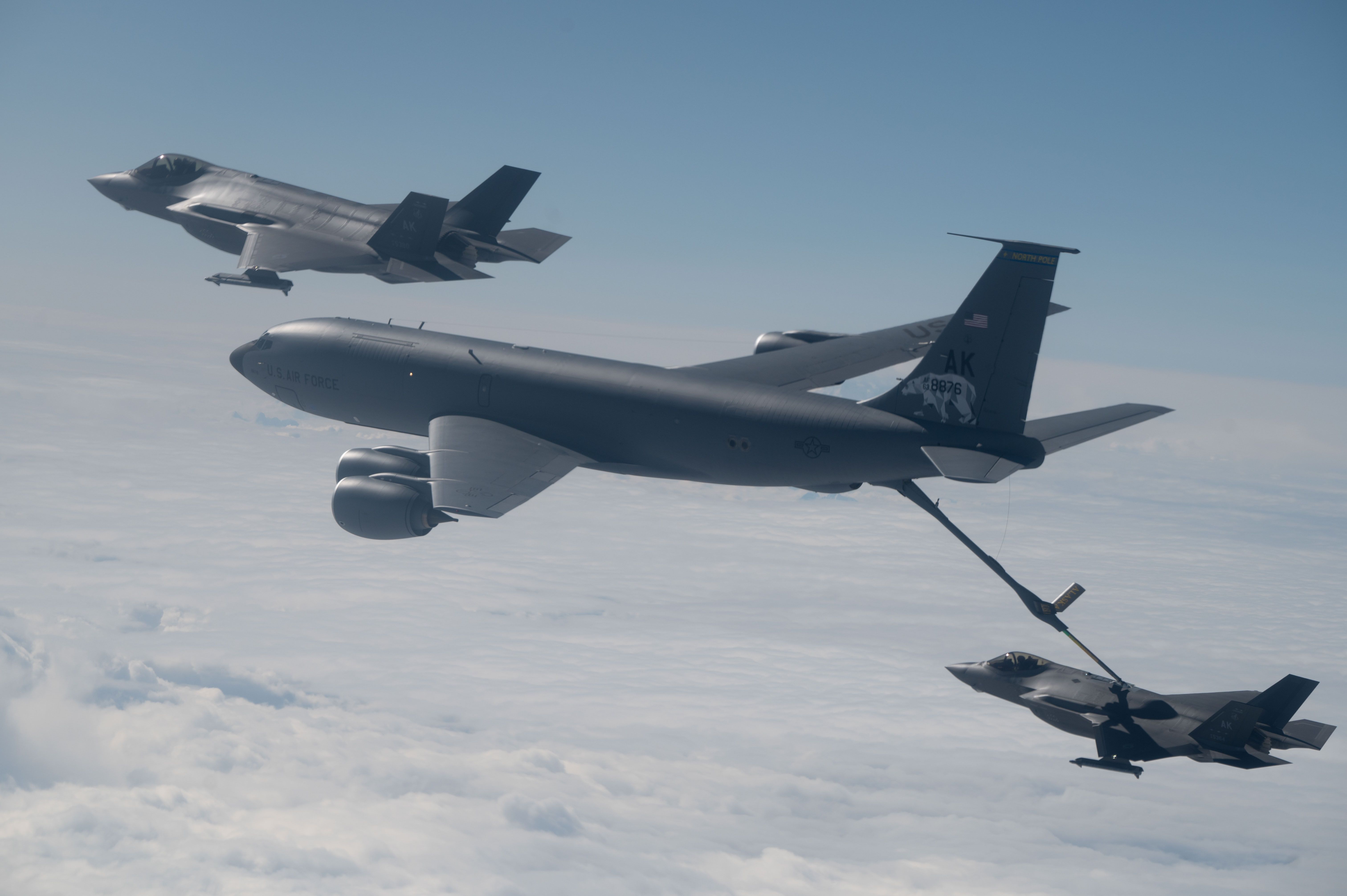
Two U.S. Air Force KC-135 refueling tankers departed Bulgaria's Bezmer air base on August 21, roughly a month after their arrival prompted Iran to warn that hosting the aircraft would constitute complicity in "aggression and war crimes." Bulgarian Defense Minister Dimitar Stoyanov confirmed the withdrawal to reporters, characterizing all flights during the deployment as training missions over allied countries and stating Sofia had "no information about direct threats to our national security." The original deployment, approved by Bulgaria's parliament on July 22, drew genuine local protests from residents near Bezmer who feared exactly the kind of Iranian retaliation this blog's coverage of Iran's contingency planning against European bases has already documented as a credible, if unconfirmed, threat category.

This connects directly to this blog's earlier reporting on Iranian assessments of potential strikes against Bulgaria and Cyprus, where sources close to the Iranian regime told the Financial Times that Sofia's approval of U.S. refueling operations from Bezmer specifically elevated the base's strategic relevance, and by extension its exposure, to any escalation. That earlier piece treated the Bulgaria threat as a live, unresolved data point in a broader pattern of Iranian signaling; this withdrawal is the first concrete update to that story, and it's genuinely ambiguous which way it cuts. Read one way, quiet departure after roughly a month of routine training missions with no reported incident looks like the threat simply didn't materialize, and Bulgaria's own calm, matter-of-fact framing supports that reading. Read another way, a temporary deployment reaching its natural end on a normal rotational timeline is exactly what you'd expect regardless of whether Iranian threats had any influence at all, meaning this withdrawal may not actually resolve the underlying question of whether Sofia's calculus about hosting U.S. assets has shifted.

Stoyanov's own statement, that Bulgaria "had prior information, which is why all our decisions were well-founded," is worth reading carefully rather than taking entirely at face value. That's the kind of confident retrospective framing any government would offer whether or not genuine security concerns factored into the deployment's actual duration, and the report offers no independent confirmation of what "prior information" specifically means or whether it changed between the July 22 approval and this August 21 departure. What is verifiable is simpler and more useful: the deployment lasted roughly a month, involved training missions rather than combat operations, and ended without incident, a genuinely unremarkable outcome that neither confirms nor refutes the broader Iranian threat assessment this blog's earlier coverage took seriously as a contingency worth tracking.

The base itself remains strategically significant regardless of this specific withdrawal, and that's the detail worth carrying forward rather than treating this story as closed. This blog's earlier coverage established Bezmer's elevated relevance came specifically from its refueling-aircraft-hosting role supporting broader American strike operations, a function that doesn't disappear simply because these particular two tankers have left. Bulgaria's parliament approved the arrangement under a standing agreement governing joint use of military facilities, meaning future deployments, of tankers or other assets, remain a live possibility rather than a one-time event now concluded. If Iran's contingency planning genuinely extends to Bulgarian targets as this blog's earlier reporting suggested, that calculus likely persists independent of which specific aircraft happen to be parked at Bezmer on any given week.

The more honest takeaway from this update is that it doesn't actually resolve much. Two tankers left a Bulgarian base after a month, nothing happened to them while they were there, and the local government characterizes the whole episode as routine and well-managed. That's genuinely good news in the narrow sense that no attack materialized, but it's also too thin a data point to confirm whether Iran's own contingency planning against Bulgaria this blog previously reported has been abandoned, deferred, or simply never advanced past the assessment stage this blog's earlier coverage was careful to describe it as. The next deployment to Bezmer, whenever it happens, will be the more informative test of whether Sofia's calm framing this time reflects genuine confidence or simply the fact that this particular rotation happened to pass without testing it.

The Navy's New 250-Mile Missile Is Built to Outrange the Exact Weapon This Blog Flagged as China's Range Advantage


The U.S. Navy and Raytheon publicly unveiled the AIM-424 Malice at the Tailhook Convention this week, a long-range air-to-air missile capable of hitting targets beyond 250 nautical miles, roughly 463 kilometers, using a 13.5-inch diameter airframe and aerodynamics Naval News describes as clearly optimized for reach. Raytheon president Phil Jasper's framing was characteristically direct, claiming the missile can "out range any threat," and a U.S. official confirmed to Naval News that both the AIM-424's range and speed exceed the already-fielded AIM-174B, itself only revealed as operational in 2024. The missile is being built for a genuinely broad aircraft pool spanning the Air Force's sixth-generation F-47 and the Navy's F-35C, F/A-18, and prospective F/A-XX, with cyber-infrastructure development work explicitly aimed at integrating the weapon across services since January.

The range figure here deserves to be read directly against the PL-15 numbers this blog has cited repeatedly this summer, first in the J-10C "Rafale Killer" refinement piece, then again in the Su-35S Kh-31PM coverage. Chinese state media and PLAAF marketing have consistently touted the PL-15's engagement envelope in the 200-300 kilometer class as a genuine advantage over the American AIM-120D AMRAAM's roughly 160-kilometer range, a gap this blog's own coverage treated as a real and meaningful Chinese capability edge worth taking seriously. The AIM-424's 463-kilometer reach doesn't just close that gap, it reverses it decisively, more than doubling even the higher end of the PL-15's most optimistic publicized range and exceeding it by a considerably wider margin than the PL-15 ever held over the AMRAAM. If Raytheon's figures hold up under actual operational testing rather than marketing framing, this is the kind of weapon that would fundamentally reset the BVR range calculus this blog has spent months documenting as tilting toward Chinese hardware.

That reversal connects directly to the J-16 "missile truck" doctrine this blog covered in detail, the PLAAF's magazine-depth-first approach built around a single multirole platform carrying up to eight PL-15s simultaneously to saturate an engagement rather than relying on any one shot's individual sophistication. A missile with nearly triple the PL-15's reach doesn't eliminate that saturation threat, a J-16 carrying eight missiles is still a genuine numbers problem regardless of what the defending side is armed with, but it does change the terms of the engagement considerably: a fighter armed with AIM-424 could theoretically engage a J-16 formation well outside the range at which the PL-15 could return fire, converting what this blog previously framed as a Chinese magazine-depth advantage into a range mismatch the PLAAF's own doctrine wasn't built to survive.

The confirmation that AIM-424 outranges and outperforms AIM-174B is itself a genuinely significant data point this blog hasn't previously covered. AIM-174B was only revealed as operationally deployed in 2024 after years of development, explicitly framed at the time as a stopgap rather than a final answer, and Adm. Keith Hash's own comment that "there are many more behind it" now reads as confirmed rather than speculative. That layered development pattern, AIM-120 as the legacy baseline, AIM-174B as an interim bridge, AIM-260 JATM still in development, AIM-424 now unveiled, and the Air Force's own 1,000-nautical-mile AFLRW program still being refined behind all of them, suggests a genuinely serious, multi-tier American investment in BVR range specifically, rather than the kind of single-program bet this blog's coverage of stalled or execution-troubled Western procurement has documented all summer.

None of this guarantees AIM-424 performs as advertised once fielded, Raytheon's own marketing language deserves the same scrutiny this blog has applied to state-sourced Chinese capability claims all summer, and a missile unveiled at a trade convention with classified deployment timelines is still meaningfully different from a combat-proven system. But if even a fraction of the range and performance figures disclosed this week hold up, this is a genuinely consequential entry into the exact BVR arms race this blog has tracked from the Chinese side for months, and it's worth remembering the next time PL-15 range gets cited as evidence of a settled Chinese air-to-air advantage: the American side was apparently building the answer to that specific claim well before this blog ever wrote about it.

Sweden Fired Its First-Ever Deep-Strike Missile the Same Week Saab Unveiled Its Next Fighter Concept


A Swedish Air Force JAS 39 Gripen C launched a live TAURUS KEPD 350 cruise missile for the first time on August 21 at the Vidsel Test Range in Norrbotten, verifying an aircraft-weapon interface that gives Sweden a genuinely new capability, striking hardened, high-value targets from beyond 500 kilometers while staying outside the range of concentrated air defenses. Swedish Air Force representative Wikman's own framing captures the scale of the doctrinal shift plainly: "we haven't had any deep-strike or offensive counter-air capabilities before... we could just put all of our money on defensive abilities, but now that is a huge shift for us." Sweden only began formally integrating and procuring TAURUS in February 2025, and the Aviationist's own reporting confirms this specific milestone arrived considerably ahead of the originally disclosed 2028 initial-operational-capability target, with the actual acceleration timeline kept undisclosed for program-sensitivity reasons.

This lands the same week this blog covered Saab's unveiling of its Autonomous Collaborative Platform drone concept, and the two announcements are worth reading together rather than as coincidental timing. That earlier piece argued Saab was positioning its ACP program as a technology on-ramp toward a future crewed Gripen successor, built through patient, spiral development rather than a collapsed multinational consortium model. This TAURUS milestone extends the same underlying story from the airframe side to the weapons side: Sweden isn't just planning its next fighter concept, it's actively transforming what its current fighter fleet can actually do, converting the Gripen from a purely defensive counter-air platform into a genuine offensive deep-strike asset within the same week Saab's own roadmap presentation was laying out where the airframe itself goes next. Both stories describe the same broader Swedish trajectory: a country rapidly expanding its military ambitions across both current hardware and next-generation concepts simultaneously, rather than choosing one focus over the other.

The strategic context behind this shift connects directly to Sweden's 2024 NATO accession, ending two centuries of formal non-alignment, and it reframes the TAURUS launch as considerably more consequential to the alliance than a single national capability upgrade. A JAS 39 Gripen C is one of the smallest, cheapest fighters in Europe, and giving it a weapon capable of holding targets at risk 500-plus kilometers inside hostile territory doesn't just benefit Sweden's own deterrent, it hands NATO's broader Northern European posture an additional, comparatively low-cost stand-off strike option against exactly the kind of command nodes, air-defense infrastructure, and hardened targets this blog's own coverage of Russian Baltic and Arctic signaling, the Kaliningrad EA-37B flight, the Kuril live-fire drills, the Pantsir buildout around Moscow, has documented all summer as increasingly relevant threat categories.

The TAURUS missile's own design logic, flying low and following terrain specifically to penetrate dense, layered air defenses, is worth setting against the Kh-31PM anti-radiation missile campaign this blog covered just days earlier, where Russian Su-35S aircraft have been documented hunting Ukrainian Patriot radar emitters specifically. Both weapons represent the same underlying doctrinal insight approached from different directions: TAURUS is built to survive a defended engagement by staying low and hard to track, while the Kh-31PM is built to actively destroy the radar infrastructure that would otherwise detect a low-flying threat like TAURUS in the first place. Reading them together illustrates the layered offense-defense contest this blog has tracked repeatedly this summer, every new stand-off strike capability invites a corresponding investment in either detecting it earlier or destroying the sensors that would.

None of this establishes that TAURUS-armed Gripens are operationally deployed today, this remains a successful test rather than declared operational readiness, and FMV's own disclosed timeline still has full Gripen E integration running through the MS20 Block 4 configuration in 2028. But a single live-fire test that took Sweden from zero deep-strike capability to a demonstrated 500-kilometer stand-off strike option, arriving the same week its own manufacturer unveiled the airframe concept meant to carry Swedish air power into the 2030s and beyond, is a genuinely significant marker of how quickly Sweden's military posture has shifted since joining NATO, a transformation this blog's own Nordic coverage, from the Norway Black Hawk sale to Sweden's own GlobalEye and Gripen export success, has been tracking build momentum across nearly every domain simultaneously.

North Korea Isn't Just Sending Missiles to Russia Anymore — Now It's Sending Drone Operators Too


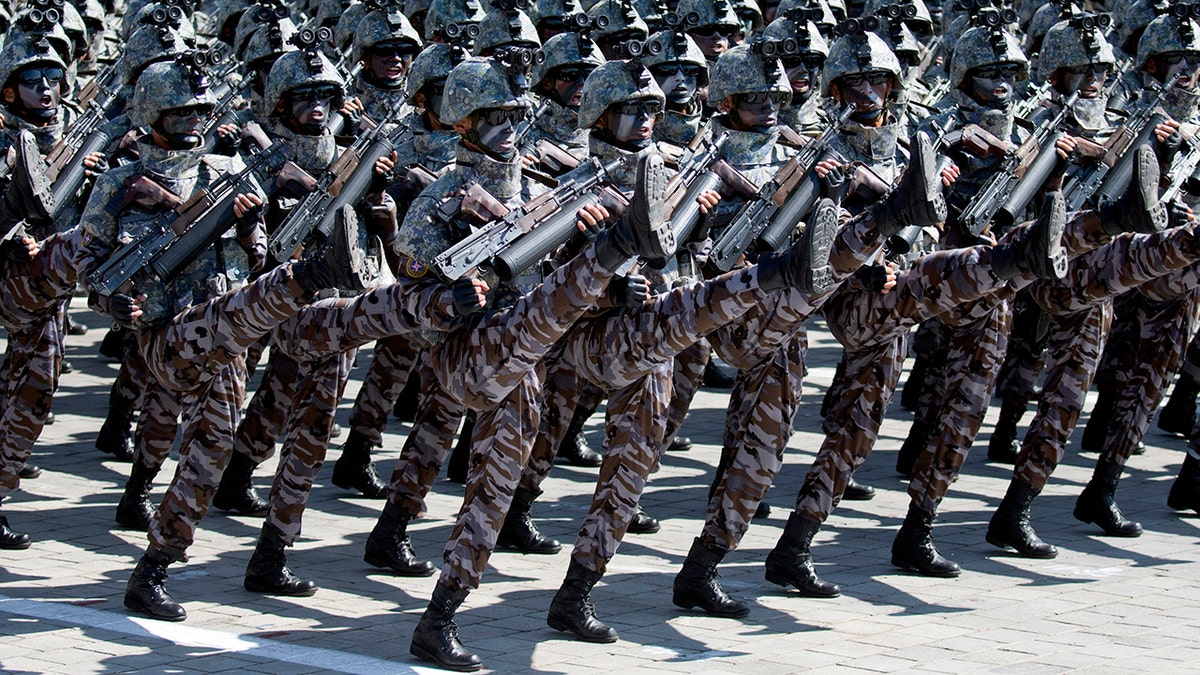
A new wave of North Korean troops in Russia, already totaling 8,500, includes roughly 400 drone operators according to Ukrainian Defense Intelligence deputy head Maj. Gen. Vadym Skibitskiy, with many of those operators having gained direct combat experience either during or as a result of North Korea's earlier deployments. CNN's reporting on Skibitskiy's briefing indicates their drones will likely be used both for reconnaissance and to strike targets inside Ukraine directly, and the current deployment, concentrated mostly in Russia's Kursk region alongside roughly 1,000 engineers and sappers, could grow by as much as 50,000 additional personnel if requested when Putin meets Kim Jong Un in September.

This connects directly to the KN-30 missile transfer this blog covered days earlier, where roughly 90 North Korean personnel were confirmed operating heavier ballistic missile launchers on Russian soil in Voronezh Oblast. That story already established a qualitative escalation past North Korea's earlier role as a munitions and expendable-infantry supplier, specialized crews now directly operating increasingly sophisticated Russian-based hardware rather than simply shipping weapons or committing troops as frontline manpower. This drone-operator deployment extends that same trajectory into a third distinct capability category within the space of a single week's reporting: North Korean personnel are now confirmed contributing missile-launcher crews, engineering and sapper units, and dedicated drone operators simultaneously, a genuinely broader technical integration into Russia's war effort than the earlier infantry-and-artillery framing this blog's prior Korea coverage captured.

The origin story behind these drone operators deserves particular attention, because it reveals something this blog's Ukraine coverage hasn't previously documented explicitly: North Korea's earlier, costlier deployments are now functioning as a training pipeline rather than simply a one-off manpower contribution. CNN's reporting notes many of the new drone operators gained their relevant experience from North Korea's initial October 2024 Kursk deployment, where an estimated 10,000 troops suffered significant casualties using mass-assault tactics against Ukrainian positions, and that wounded soldiers who returned home have since been teaching their colleagues about drone warfare and the broader tech-dominated character of the modern front line. That's a genuinely different institutional dynamic than simply sending more troops, it's North Korea converting combat losses into a domestic training curriculum, then exporting that newly built expertise back to Russia in a more specialized, technically capable form.

Skibitskiy's own characterization of what this deployment pattern reveals about Russia's underlying position is worth taking seriously as informed Ukrainian intelligence assessment, with the appropriate caveat that any single country's intelligence services have their own incentives in how they frame an adversary's capacity. His read, that repeated reliance on North Korean manpower and technical personnel is "another sign that Russia's resources are stretched thin," despite Moscow's public statements about economic resilience and military-industrial capacity, is consistent with the broader interceptor and munitions-production strain this blog has documented on the American and European side all summer, just applied to Russia's own manpower and technical-specialist pipeline instead of missile stockpiles. A country confident in its own domestic capacity doesn't typically need to import drone operators, however experienced, from a nominally junior treaty partner.

The scale question hanging over the September Putin-Kim meeting is the detail worth watching most closely going forward. A request for up to 50,000 additional North Korean personnel, on top of the 8,500 already confirmed present, would represent a genuinely different order of military integration between the two countries than anything documented to date, and Kim Jong Un's own April decision to open a domestic memorial honoring North Korea's Ukraine war dead suggests Pyongyang is treating this relationship as a durable, publicly acknowledged commitment rather than a deniable, arm's-length arrangement. Whether that scale of expansion actually materializes, or whether September's meeting produces a more modest continuation of the current pattern, this blog's own tracking of the North Korea-Russia relationship across missiles, personnel, and now drone operators suggests the trajectory, if not yet the final scale, is already reasonably clear.