
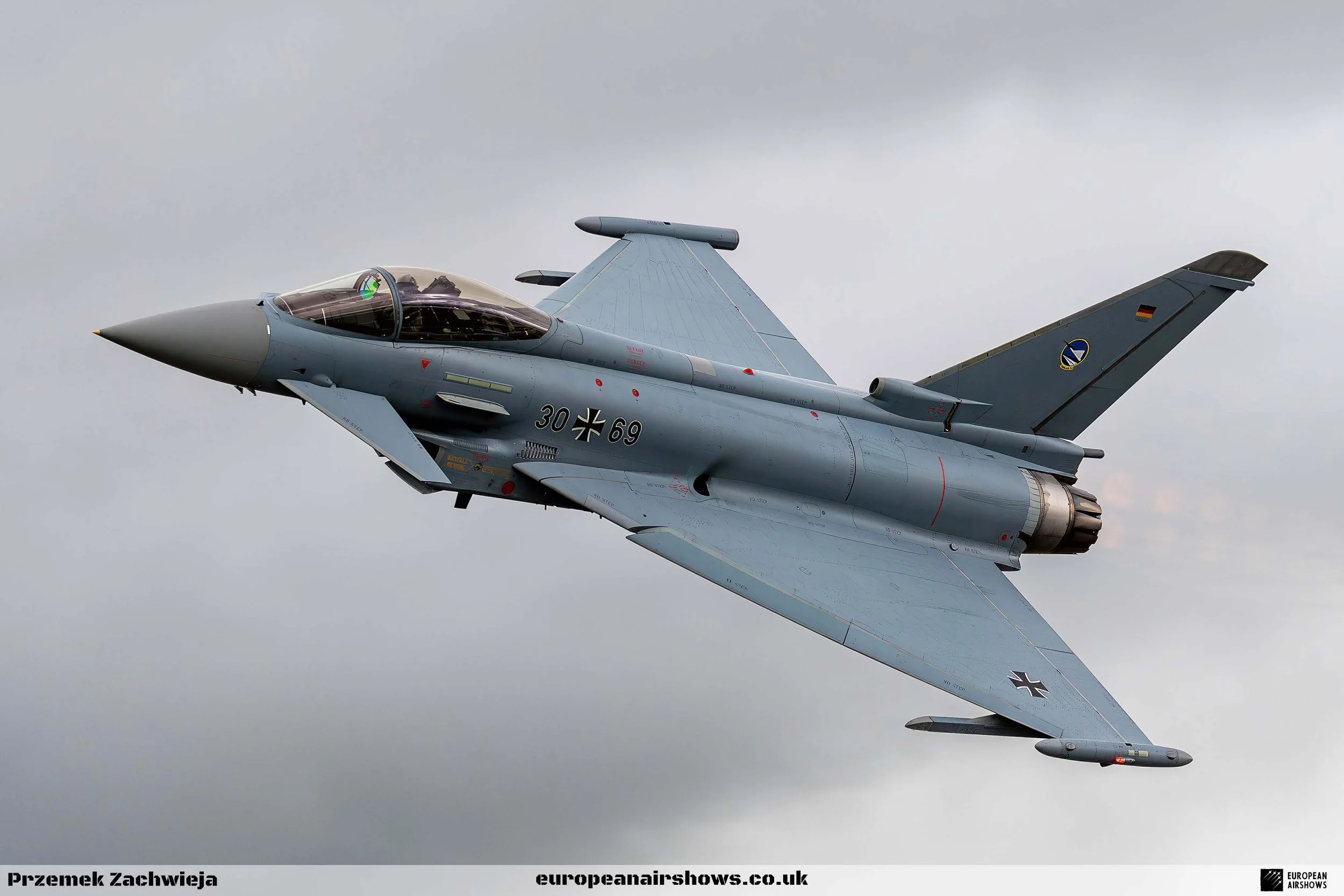
Geopolitics analyst Mark Fulton argues in a new opinion piece that FCAS's collapse shouldn't be read as evidence European defense industry can't cooperate across borders, pointing instead to France's decision to award its multiple-rocket-launcher replacement to a "sovereign consortium" of Safran and MBDA over a competitive Lockheed Martin HIMARS bid, alongside MBDA's Letters of Intent with Saab, the 28-partner, 18-country HYDIS2dp hypersonic missile-defense consortium MBDA is coordinating, and Leonardo's cross-border joint ventures with Airbus, Thales, and Rheinmetall. His central claim, that FCAS failed because it was "a political choice, not one made by industry," while these other partnerships succeed precisely because industrial actors chose them, is a genuinely useful reframing worth engaging with critically rather than either accepting or dismissing outright.
That distinction holds up reasonably well against this blog's own FCAS coverage, which traced the program's June 2026 collapse specifically to an irreconcilable Dassault-Airbus industrial dispute that a dedicated German mediator concluded, after formal review, made a jointly built crewed fighter no longer feasible. Fulton's framing, that this was fundamentally a top-down political arranged marriage rather than an industry-driven partnership, is consistent with what this blog's own reporting found, and it's a fair distinction between FCAS and the bottom-up industrial consortiums, MBDA's own multinational structure across five countries, the Saab collaboration building on prior Taurus and Meteor missile partnerships, that Fulton cites as counter-examples. Programs where industry itself identifies complementary capability and chooses to combine it do appear to be succeeding at a considerably higher rate than the single instance where two national governments forced a three-way marriage between companies with genuinely incompatible ownership structures and strategic priorities.
Where Fulton's piece connects most directly to this blog's own coverage is the Saab dimension specifically. This blog's reporting on Saab's Autonomous Collaborative Platform drone concept and Sweden's TAURUS missile integration both documented Stockholm building toward genuine sixth-generation capability through patient, incremental development rather than a collapsed multinational mega-program, and Fulton's piece confirms that trajectory now includes formal MBDA cooperation building on the existing Taurus and Meteor partnerships this blog's own TAURUS coverage already touched on. Read together, Saab's strategy looks less like a lone Swedish hedge against FCAS's failure and more like exactly the kind of industry-chosen, capability-driven partnership Fulton's broader argument describes, MBDA and Saab identifying specific technical complementarity and building on a track record of successful prior collaboration, rather than a government mandating a merger between companies that had never previously worked well together.
The Airbus dimension deserves a more skeptical read than Fulton's piece gives it, though, and this blog's own coverage supplies the reason why. Airbus is simultaneously positioned in Fulton's piece as a model of successful pan-European cooperation, born from French, German, and Spanish national champions setting aside competitive instincts, and as the company this blog's own reporting identified as the party actively searching for a Saab lifeline after FCAS's collapse left its own sixth-generation ambitions without a clear path forward. That's not necessarily a contradiction, a company can be a genuine cooperation success story in commercial aviation while still struggling with a specific failed defense partnership, but it does complicate Fulton's clean industry-versus-politics framing: Airbus was a full industrial partner in FCAS, not merely a political appointee forced into the arrangement, and its own struggles finding a post-FCAS path suggest the industry-driven cooperation model Fulton celebrates elsewhere didn't straightforwardly protect Airbus from the same collapse its government-mandated FCAS role produced.
The HYDIS2dp consortium's scale, 28 industrial partners and 20 subcontractors spanning 18 countries working toward Europe's first indigenous hypersonic intercept capability, a technology this blog's own coverage of China's GPS-independent hypersonic guidance research and Golden Dome's tracking challenges has already established even the U.S. hasn't fully solved, is probably the strongest single piece of evidence for Fulton's broader thesis. A genuinely distributed, industry-coordinated consortium of this size tackling a capability gap this technically demanding, without a single dominant government mandate forcing specific national champions together, is a meaningfully different model than FCAS's three-country, three-company structure, and if HYDIS2dp actually delivers a working interceptor, it would be a considerably more consequential validation of Fulton's "cooperation over political arrangement" argument than any of the smaller bilateral partnerships his piece also cites.

No comments:
Post a Comment