Tuesday, October 20, 2026

Indian Navy BrahMos Upgrade: Kashin and Veer-Class Ships Get New Launchers


On October 20, 2026, Naval News reported that India’s Ministry of Defence (MoD) signed a contract worth ₹661.5 crore ($68 million) with BrahMos Aerospace for BrahMos fire control systems and launchers to upgrade the Indian Navy’s ageing Kashin-class destroyers and Tarantul-derived corvettes. The MoD said on social media that the project will carry more than 68 percent indigenous content, but the press release gave no further details. A photo from the signing ceremony, however, shows the contract covers “02 Veer and 02 Ranvir class ships”. It is unclear whether the missiles themselves are part of the deal, since the contract is described as covering fire control systems and launchers.

The Rajput or Ranvir-class ships are the Soviet-built Kashin-class destroyers the Navy bought between 1980 and 1987, of which three remain in service: INS Rana, Ranvir and Ranvijay. Ranvir and Ranvijay were among the first Indian vessels fitted with BrahMos, with an eight-cell vertical launch system at the stern, but they also still carry four inclined Styx missile launchers at the bow. Rana lost its Styx launchers during a 2025 visit to Sri Lanka and serves as the test platform for the DRDO’s VLSRSAM air-defence missile. Because of that, Naval News considers it highly probable that the contract is for new inclined BrahMos launchers on Ranvir and Ranvijay. If they follow INS Rajput’s layout of four twin-cell launchers, each would carry 16 BrahMos in total, matching the load of the modern Kolkata and Visakhapatnam-class destroyers, though that is the report’s inference.

The Veer-class part is the more unusual story. The Veer class is an Indian version of the Soviet Tarantul corvette, with five imported and eight built under licence between 1987 and 2002, and seven of the Indian-built boats are still in service. INS Vidyut was seen in December 2025 with two twin-tube BrahMos launchers taken from the decommissioned INS Rajput, and Naval News thinks INS Nashak may receive the other two. The likely recipients of the new equipment, it says, are INS Prabal and Pralaya, the youngest of the class, which are currently the only ones armed with 16 Kh-35E missiles in four quad launchers. Given the missile’s size, they would probably carry only four, the same loadout planned for the six next-generation missile corvettes now under construction. That would make them the lightest vessels to carry the roughly three-ton missile.

The logic of the plan is fairly clear. Fitting BrahMos to ageing ships puts a heavier, longer-range weapon on more hulls at a modest cost, and by my arithmetic the $68 million for four ships comes to about $17 million each, though that figure only covers what the contract describes. It also fits a pattern in which the Navy has been equipping older vessels, including the Delhi class, with BrahMos during their midlife upgrades. As we noted in our post on the Fleet Support Ship Surya, India is working to modernise both its fighting ships and the logistics behind them. But Naval News itself points out that the Veer and Ranvir classes are nearing the end of their service lives, which makes the investment noteworthy and also raises the question of how long the ships can carry the weapon. That is a fair reading rather than an official judgment.

BrahMos’s export momentum is part of the background, but it is a separate story. Naval News says the Philippines has finalised a $370 million contract, Vietnam has signed for roughly $630 million and Indonesia has agreed a deal worth between $450 million and $630 million, with further orders expected. That builds on the Akash sales to Tajikistan and Turkmenistan we covered recently. Separately, on October 15 the MoD signed a ₹1,543 crore ($160 million) contract with Bharat Dynamics Limited for Varunastra heavyweight anti-submarine torpedoes, expected to cover about 40 additional units after an initial 2016 order for 73.

Ultimately, the contract is a modest but telling step in how India is stretching its existing fleet. Three things will show how far it goes: official confirmation of which ships are being upgraded and when, whether the Navy extends the work to more Kashin and Veer-class vessels, and whether the retrofitted corvettes can carry the missile without compromising stability or range. Until then, the cautious summary is that India has signed to put BrahMos launchers on four older ships, and most of the details remain to be confirmed.

China vs US Naval Shipbuilding: China Built 2.4x the Tonnage in 2024-25


On October 20, 2026, Defense News reported that China built more than twice the naval tonnage of the United States in 2024-25, according to the World Defense Shipbuilding report published by Euronaval ahead of its 2026 show in Paris. The combined tonnage of combat ships China delivered in the two years to December 2025 came to 636,208 tons, against 270,509 tons for the United States, based on data compiled by Flottes de Combat and the French maritime industry association Gican. By my arithmetic that is about 2.35 times as much. China accounted for more than a third of all naval tonnage built worldwide, and U.S. lawmakers and congressional researchers have warned that its larger shipbuilding capacity, combined with delays and bottlenecks in American yards, could undermine the U.S. ability to keep pace.

The most striking part is how quickly the position reversed. In the previous edition covering 2022-23, the United States led with 245,703 tons against China’s 202,520. China’s output has therefore roughly tripled while the United States built about 10 percent more, again by my calculation from the report’s figures. The same report shows the effect on the fleets themselves. The U.S. fleet of combat vessels above 200 tons stood at 3.11 million tons on January 1, 2026, down from 3.22 million two years earlier, while China’s rose from 1.3 million to 1.44 million tons. So the gap is narrowing, but the United States still has a fleet more than twice as large by tonnage, about 2.2 times by my calculation.

Tonnage is only one way to read it, and the value figures tell a slightly different story. The report puts the value of Chinese combat-vessel construction at $43.5 billion in 2024-25 against $26.8 billion for the United States, a ratio of about 1.6 to 1, well below the 2.35 to 1 ratio in tonnage. One plausible reading, and it is only mine, is that American yards produce more expensive tons per ship, since the U.S. programme is weighted toward nuclear-powered submarines and carriers, though the report as described does not break the figures down by ship type. It could also reflect differences in cost, accounting and how Chinese values are estimated, which are hard to verify.

The wider picture is a naval building boom. Global combat-vessel construction reached 1.47 million tons in 2024-25, up from 959,671 tons in the previous two years, and its value rose from $81.8 billion to $123.9 billion. Russia ranked third with 149,056 tons, followed by India with 76,430 tons and Italy with 53,700 tons, and Türkiye, France, Japan, South Korea and Romania completed the top 10. Philippe Missoffe, Gican’s general director, said the industry is seeing a substantial expansion of naval forces and shipbuilding, with a particular increase in capability such as nuclear-powered attack submarines. For readers following Asia, it is notable that India is fourth, in a list that also includes Japan, which we covered in our post on the seventh Taigei-class submarine, and that India’s yards are busy with ships like the Fleet Support Ship Surya.

There are limits to what the numbers show. Tonnage measures what was built, not how capable, ready or well-armed it is, and the report says nothing about crews, munitions, maintenance or the quality of the ships. A two-year snapshot is also a narrow window, and large hulls such as carriers and big destroyers can swing the totals. Chinese yards also build for a single navy, while American naval power relies on allies, and the top-10 list includes several U.S. partners, though the article does not discuss how allied shipbuilding capacity might change the balance. The Defense News piece links to a June story about Congress seeking to limit U.S. Navy ships built in foreign yards, which shows how contested that question is. That is my own reading of the context and not a finding of the report.

Ultimately, the report quantifies something analysts have long said: that China’s shipyards are now producing at a scale the American industrial base is struggling to match. Three markers will show how far it goes: whether the next edition of the report, expected around 2028, shows the gap widening or closing, whether U.S. yards resolve the delays and bottlenecks that lawmakers describe, and how quickly China’s nuclear-powered submarine and carrier programmes, including the Type 004 we covered earlier, turn tonnage into capability. Until then, the fair summary is that China is building faster, the United States still has the larger fleet, and the distance between them is shrinking.

Thursday, October 15, 2026

Liaoning Carrier Group Near Japan: J-35 Footage and the F-35C Landing Explained


On October 14, 2026, the Chinese Navy said a task group led by the carrier Liaoning had sailed into the western Pacific for routine training under its annual plan, which it said was not directed at any specific country. Japan’s Joint Staff first spotted the group on October 13 southwest of the Danjo Islands, and it passed between Okinawa and Miyako Island the next day. According to Stars and Stripes, the Liaoning launched and recovered an unspecified number of aircraft about 155 miles south of Ishigaki Island, within Japan’s exclusive economic zone, and Japan scrambled fighters and sent the destroyer Yugiri, a P-1 and a P-3C to monitor. USNI News reports that the group then headed toward the South China Sea, and the timing falls days before a major U.S.-Japan exercise.

The group is a substantial one. USNI lists the Liaoning with two Type 055 large destroyers, Anshan and Wuxi, and a further destroyer, Huainen. Military Watch also says a Type 075 helicopter carrier is part of the formation, but Japan’s reports on the group do not mention one, so I could not confirm that. The deployment follows more than 40 days of exercises in June, which Beijing accused Japan of harassing, an accusation Japan’s Joint Staff rejected. It also follows an incident last December in which Liaoning J-15 fighters locked their radar on Japanese F-15s twice southeast of Okinawa. Military Watch says that incident showed the “vast superiority” of the Chinese aircraft, but nothing in the reporting supports that. A radar lock is a risky act, not a measure of capability, and the Japan Times notes Tokyo says it will keep monitoring professionally.

The J-35 story is where the sourcing is thinnest. Military Watch says new footage shows J-35 stealth fighters integrated into the Liaoning’s air wing for the first time. That would matter, because the Liaoning and Shandong use ski-jump decks rather than the catapults on the Fujian, and the J-35 was designed for catapult launch. State media tested the aircraft aboard the Liaoning in 2024 and discussed ski-jump operations in May, so the idea is plausible. But I could only find the claim in Military Watch’s own report, there is no official PLA Navy statement, and an aircraft appearing in footage is not the same as an operational air wing. If it is confirmed, ski-jump launches generally limit fuel and weapons loads compared with catapults, though that is my own general analysis and not from the reports.

The American milestone, by contrast, is confirmed. On October 13, an F-35C from Air Test and Evaluation Squadron 23 made the first arrested landing by the type on a Ford-class carrier, the future USS John F. Kennedy (CVN 79), off the U.S. East Coast, followed by the first catapult launch the next day. The Navy took preliminary acceptance of the ship on September 29, and USNI says Congress mandated this test because lead ship USS Gerald R. Ford could not operate the Navy’s newest fighter. The new Advanced Arresting Gear and weapons elevators were behind years of Ford-class delays, and Kennedy’s delivery has slipped from July 2025 to 2027. Those delays are a legitimate criticism of the programme.

The “a year behind China” framing, however, compares unlike things. The F-35C has been operating from the Navy’s Nimitz-class carriers since the early 2020s, so the United States has long had stealth fighters at sea. What happened on the Kennedy is a compatibility test on a ship that has not yet been delivered, and Military Watch’s own account of the Fujian’s J-35 is of touch-and-go landings and “operations” from 2026. It also says the Kennedy is scheduled for “launch” in March 2027, but the ship was launched years ago, and delivery is what is scheduled. The claim that China’s sixth-generation carrier fighters will arrive close to a decade before America’s is a projection, not a fact. As we noted in our post on Boeing’s F/A-XX award, the U.S. aircraft is still in development for the 2030s.

Ultimately, these are three different stories and they deserve different levels of confidence. The Liaoning’s deployment is confirmed by all sides, the F-35C landing is confirmed by the Navy, and the J-35 footage is plausible but unofficial. Three markers will show where this goes: an official PLA Navy confirmation that J-35s operate from ski-jump carriers, how the Liaoning group behaves around Japan and in the South China Sea, and the Kennedy’s delivery and first carrier operations. Until then, the safest summary is that both navies are working to put stealth aircraft on their carrier decks, and neither has yet shown it at full scale.

France Goes Alone on ACF Fighter After FCAS Collapse: What Comes Next


On October 14, 2026, French Air and Space Force Chief of Staff Gen. Jérôme Bellanger told the National Assembly’s defence committee that France will develop the successor to the Rafale as a national programme, as reported by Defense News the next day. The aircraft, called the Avion de Combat du Futur (ACF), follows the collapse of the joint Future Combat Air System (FCAS) with Germany and Spain, which France and Germany agreed to scrap in June after years of disputes between Dassault Aviation and Airbus over specifications and industrial control. Bellanger set a target of flying conventional missions in 2040. France remains open to cooperation, he said, but only in frameworks that will not be structural to the birth of the aircraft.

The 2040 date is driven by nuclear deterrence, not by the fighter itself. Bellanger said the Rafale’s successor must be able to carry the ASN4G hypersonic nuclear cruise missile in 2050, and working back from there means it has to fly conventional missions by 2040. Going national, he argued, is the way to meet that deadline. Before then, France needs a Rafale F5 standard by 2035 that incorporates the first components of the future aircraft, including the engine, the sensors and the Stratus RS missile designed to neutralise enemy air defences. In other words, the schedule is set by the deterrent, and the Rafale F5 is the bridge.

Bellanger insisted that the FCAS years were not wasted. Work had been divided into pillars that also included a new engine, with Dassault and Airbus working on the next-generation fighter at the heart of the system, and he said progress in the aircraft, drones, stealth, connectivity and combat cloud can now be carried forward on a national basis. Dassault CEO Éric Trappier has said that, with engine partner Safran and electronics group Thales, his company has the know-how to build a next-generation fighter for well below the €50 billion ($56 billion) budget attributed to FCAS. That is the company’s own estimate, and the article does not say how France will fund the programme, so the figure should be read as a claim rather than a plan.

The cooperation that remains is telling. Bellanger said France must absolutely continue working with Germany and other countries on the combat cloud, because interoperability between European crewed platforms will be vital, so that wars are fought together rather than side by side. He described a very good working relationship with his German counterpart and said both commanders want common operational requirements for the cloud. He also said the British-Italian-Japanese Global Combat Air Programme (GCAP) is working towards almost a strategic bomber, and that cooperation there is “not all roses”. Germany, for its part, has started receiving F-35s ordered in 2022, but it has no clear successor for its Eurofighters, which leaves the two former partners in different positions.

The most interesting part of the briefing is not the fighter at all. Bellanger said France will receive its first long-range one-way munitions in the summer of 2027, with MBDA’s Deluge drone forming the basis of its first squadron of bombing and reconnaissance drones, and the force is experimenting with interceptor drones, an area we noted in our piece on the Royal Navy’s new launchers. It also plans a very-high-altitude squadron using stratospheric balloons for communications relays and intelligence sensors. The concept he described for strikes into enemy territory starts with a first wave of many disposable drones to weaken air defences, including through jamming, saturation and deception, followed by reusable but expendable drones to open a breach for crewed and uncrewed deep strikes. That makes the 2040 fighter one part of a larger system rather than the centrepiece, a theme that also runs through France’s Hypairion project.

Ultimately, France is betting that it can keep a sovereign fighter industry alive without a partner, and the evidence for that bet is still thin. Three things will show whether it works: whether the ACF programme is formally launched and funded, whether the Rafale F5 reaches its 2035 target with the first future-aircraft components, and whether any partner, within the “different frameworks” Bellanger mentioned, joins later. As we noted in our post on France’s M51.3 missile test, French planning is built around the deterrent, and the same logic is now shaping the next fighter.

Wednesday, October 14, 2026

SAS Afghanistan Inquiry: Soldiers Refuse to Answer Questions, Explained


On October 12, 2026, Lord Justice Haddon-Cave, who chairs the Independent Inquiry relating to Afghanistan, told a public hearing that a high proportion of Special Air Service (SAS) personnel approached by the inquiry had said they would rely on their privilege against self-incrimination and refuse to answer questions. The inquiry, launched in 2023, is examining allegations of extrajudicial killings by British special forces in Afghanistan between 2010 and 2013. It is also looking at claims that unlawful activity was covered up and that Royal Military Police (RMP) investigations were inadequate. The judge said notices had been sent to SAS personnel about more than 50 cases of alleged summary killings.

The inquiry has its roots in a specific set of allegations. Ministers announced it after 54 cases of Afghans killed by one SAS unit in Helmand Province between 2010 and 2011 were flagged as suspicious and possible war crimes. The judge has since widened the period to 2010 to 2013, saying it captures the allegations now being made. At the centre are deliberate detention operations (DDOs), and the inquiry has sent written requests for information, known as rule 9 requests, to numerous SAS operators linked to them. It has the power to compel witnesses and is seeking evidence from Afghan families whose relatives died in detention. It has also heard extensive evidence about concerns raised by UK special forces personnel and others about how those operations were conducted.

The most striking new detail is documentary. Haddon-Cave said the inquiry had obtained about 10,000 high-resolution photographs taken during the DDOs, which do not appear to have formed part of earlier RMP investigations. That raises fresh questions about how complete the previous inquiries were. But photographs are evidence, not conclusions, and the inquiry has not said what they show.

It is important to be careful about what the refusals mean. The privilege against self-incrimination is a legal right, and relying on it is not an admission and does not establish guilt, and the judge has not suggested otherwise. A public inquiry also cannot determine criminal or civil liability, though what it finds can lead to further action. Military Watch acknowledges that these remain allegations under investigation rather than findings against individuals, but its headline refers to “severe war crimes”, which goes further than anything the inquiry has said. The practical effect of the refusals is that there will be fewer direct accounts from those involved, which puts more weight on documents, photographs and the testimony of others.

Military Watch also compares the case with Australia, and the comparison is relevant but needs care. The Brereton inquiry, whose report was published in 2020, found credible information that Australian special forces had unlawfully killed 39 people in 23 incidents, and described practices such as “blooding” new soldiers and planting weapons on the dead. That shows an official investigation can find serious wrongdoing, but it was a separate inquiry on different facts, and it tells us nothing about what the British inquiry will conclude. Treating one as a preview of the other would be prejudging the outcome.

Ultimately, the story is about accountability and whether the system can establish what happened. Three things will show how it develops: the testimony of Afghan families at upcoming hearings, what the 10,000 photographs reveal, and whether the inquiry’s eventual report makes findings or recommendations that lead to further action. Until then, the fair summary is that a judge-led inquiry has obtained significant new material, many of the people it wants to question are declining to speak, and no findings have been made.

Drones and Tanks on NATO’s Eastern Flank: Why Europe Wants Both


On October 14, 2026, Defense News reported from the Warsaw Security Forum that European governments are encouraging their defence industries to develop and produce unmanned systems jointly with Ukrainian companies, while warning that tanks and armoured vehicles must stay in the inventory to defend NATO’s eastern flank. Dutch Deputy Prime Minister and Defence Minister Dilan Yeşilgöz-Zegerius said on October 12 that Dutch forces are training daily with Ukrainian know-how, because Ukraine has the most innovative army in Europe. At the same time, she said, the Netherlands is investing in its own defence industry, which had weakened after years of low spending, a problem she said is common across Europe.

The mix of old and new is the central theme. Lithuanian Defence Minister Robertas Kaunas told Defense News that his country’s planned purchase of six-wheel-drive Patria armoured personnel carriers from Finland is an example of allies cooperating on major land-force purchases, with the vehicles intended for the National Division, Lithuania’s main combat unit. Lithuania wants to be involved in research and development as well as assembly. Kaunas said the division, working with allies including the United States, Germany and Poland, can block an adversary near the border and then use drones and modern weapons to break it, and he argued that combining the two is crucial, as Ukraine has shown by adding anti-drone protection to its tanks.

Dovilė Šakalienė, a Lithuanian lawmaker and former defence minister, made the sharpest point, about how contracts are written. She said Europe needs “smart contracts” that deliver the newest technology, and cited Lithuania’s 2024 deal for 44 Leopard 2A8 tanks, which she signed in office. It requires that the tanks receive the latest anti-drone defence systems available at the time of assembly, not those that existed when the contract was signed. For this kind of technology, she said, three years is an eternity. That is a practical lesson from Ukraine, where drone tactics change faster than procurement cycles, and it suggests contracts with built-in technology refreshes may matter as much as the platform itself.

The same logic runs through the argument that drones cannot replace armour. Šakalienė said massive land manoeuvres cannot be completed with drones alone, and the Defense News piece shows allies bordering Russia buying heavy equipment while expanding spending on drones and counter-drone systems. It is also an industrial story. Poland, which hosted the forum, is trying to shift from buyer to exporter, and foreign manufacturers are expanding there. Boeing’s Vince Logsdon said the company already has about 1,000 employees in the country and wants many more, and is pitching its CH-47 Chinook as a complement to the 96 AH-64E Apaches Poland ordered in a deal worth around $10 billion.

There are reasons to read the forum statements with some caution. These are political remarks and sales pitches, not procurement decisions, and the article gives no numbers on how many drones will be co-produced or how the money will be divided between unmanned systems and heavy armour. Budgets are finite, so the “both” answer glosses over the real trade-off. Boeing’s Chinook offer is a commercial pitch, and Kaunas’s description of Ukrainian experience is one minister’s account. That is my own framing of the limits, not the article’s.

Ultimately, the debate is less about drones versus tanks than about how fast militaries can adapt the equipment they already have. The same lesson appears in our posts on the Royal Navy’s new interceptor-drone launchers and the Pentagon’s counter-drone pilot, where cheap drones are forcing expensive platforms to change. Three things will show whether Europe gets it right: whether joint production with Ukrainian companies moves from statements to contracts, whether technology-refresh clauses like the Leopard 2A8 one become standard, and whether defence budgets stretch to cover both the new and the heavy. Until then, the safe conclusion is that nobody is giving up on tanks, and nobody expects them to survive without protection from drones.

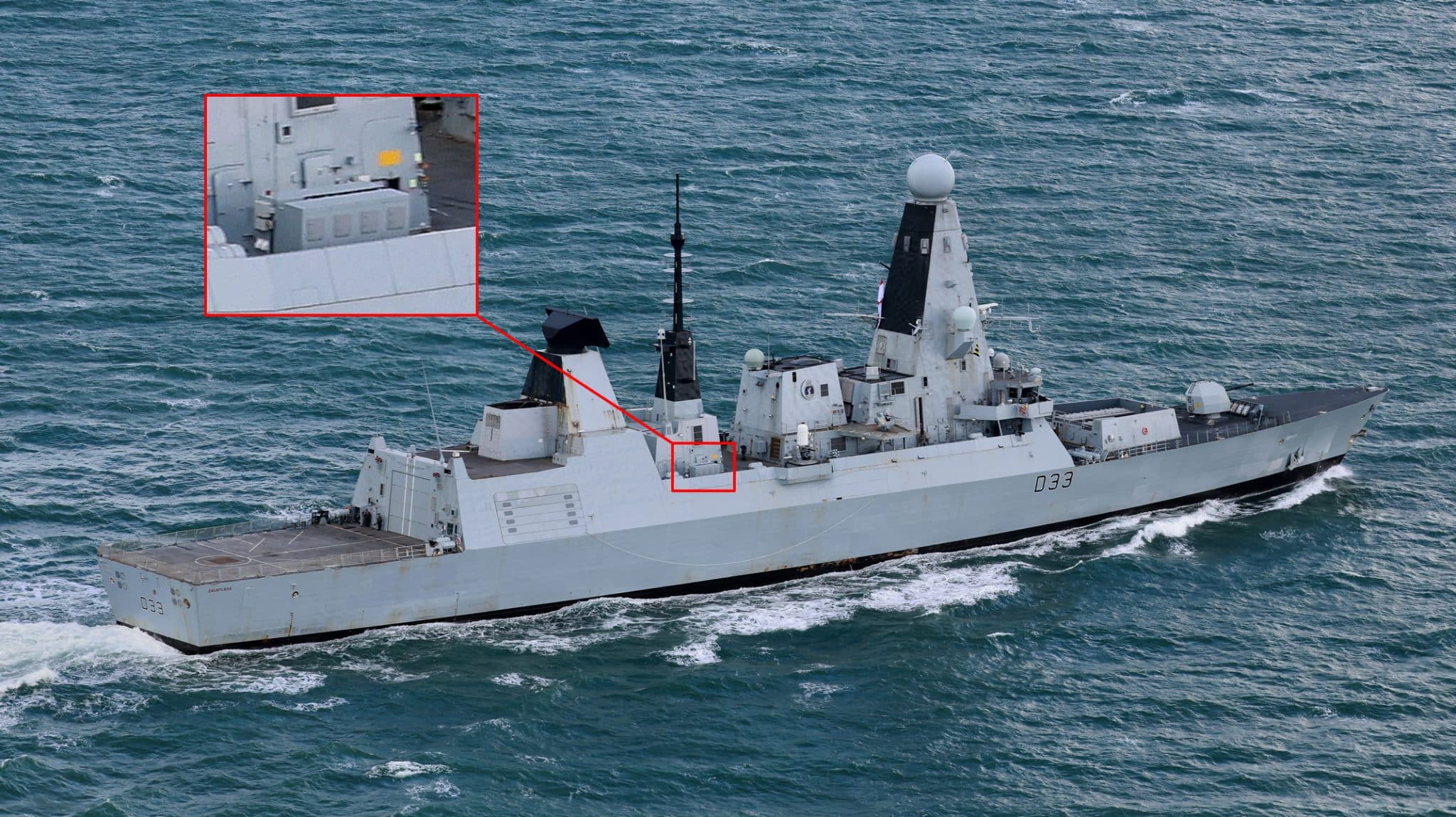
Royal Navy Type 45 Drone Interceptor Launchers Spotted on HMS Dauntless


On October 14, 2026, Naval News reported that new images released by the UK Ministry of Defence appear to show a counter-drone system fitted to the Royal Navy Type 45 destroyer HMS Dauntless (D33). The pictures, dated October 10, show the ship carrying out a passing exercise off the Isle of Wight with five Ukrainian minehunters, marking the end of Exercise Lion Protector. That exercise, which began in August, was designed to refine how the nations of the Joint Expeditionary Force protect Europe’s northern flank. The images show two mystery containers on the port and starboard sides of the destroyer’s main communications mast, and Naval News judges they are probably launchers for interceptor drones.

The reasoning behind that conclusion is worth following, because it is all inference. The containers look like purpose-built boxes rather than standard shipping containers, and measured against a nearby SOLAS life-raft canister they appear to be about two metres by one metre. Naval News suggests they house multi-cell vertical launch systems for interceptor drones, which typically need large boxes so they can fly out with their rotors spinning. The report also notes that no new sensors are visible, so the interceptors would presumably receive targeting data from the Type 45’s existing Sampson multi-function radar, the S1850M long-range radar and the electro-optical systems. If true, that would make it a mature, integrated capability rather than a quick fix. When approached, a Royal Navy spokesperson said that, due to operational sensitivities, it would not discuss the equipment fit.

The fitting also comes at a telling moment. The Royal Navy says Dauntless is preparing to escort the carrier HMS Prince of Wales when she resumes her Firecrest 2026 deployment to the High North. Sister ship HMS Dragon returned only last week from a seven-month deployment in the Mediterranean and Red Sea without the system being spotted, which suggests Dauntless may be the first Type 45 to trial it. The experience behind it is real. British ships such as HMS Diamond faced drone and missile attacks from Yemen in the Red Sea in 2024, and the Royal Navy and French Navy have since rehearsed drone swarm defence in exercises such as Sharpshooter and WildFire.

Those exercises exposed a basic problem, which is magazine depth. Naval News notes that the Type 45 and the French-Italian Horizon destroyers carry 48 vertical launch cells, and French air-defence FREMM frigates carry 32, and spending an expensive missile on every cheap drone is not sustainable. Before this, the Royal Navy had begun shifting toward other layers, including the DragonFire laser and Wildcat helicopters armed with Martlet missiles. Interceptor drones would add another layer between those two, and they let the crew match the response to the threat for much less money than a missile.

The same logic is driving counter-drone work elsewhere, as we noted in our piece on the Pentagon’s directed-energy pilot at U.S. bases. Both reflect the fact that drones have changed the economics of defence, since the attacker’s cost per shot is far lower than the defender’s. But there are limits to what can be said. We don’t know the interceptor type, its range, speed or warhead, whether it can handle fast, low-flying threats or only slow Shahed-style drones, or how many each ship will carry. An interceptor drone is also unlikely to answer a supersonic anti-ship missile, which still needs the destroyer’s long-range missiles. That last point is my own analysis rather than anything in the report.

Ultimately, this is a glimpse of a capability, not a confirmation of one. Three things would show how significant it is: an official statement from the Royal Navy on what the system is and who supplied it, evidence of whether other Type 45s receive it, and any live firing or use during the High North deployment. Until then, the fair summary is that the Royal Navy appears to be giving its most advanced air-defence destroyer a cheap answer to cheap drones.

B-52 to Carry LRASM: What the Navy’s Integration Plan Means


On October 7, 2026, the Naval Air Systems Command (NAVAIR) posted a notice that the U.S. Navy plans to negotiate a sole-source contract with Lockheed Martin Missiles and Fire Control to integrate the AGM-158C Long-Range Anti-Ship Missile (LRASM) on the Air Force’s B-52 Stratofortress, as reported by The Aviationist and Naval News. The cost-plus-fixed-fee deal covers missile software updates, associated testing, test asset repair and failure review boards, and the notice gives no timeline for fielding. It is also an intent to negotiate rather than a signed award. If completed, all three of the Air Force’s strategic bombers would be able to fire the missile, since the B-1B Lancer and B-2 Spirit already can.

The plan has been around longer than the notice suggests. Integration of the B-52 with LRASM was first discussed in 2019, then sat in limbo for several years, and The War Zone reports that the Air Force’s fiscal 2027 budget request revives it. The planned work includes folding the missiles’ software into the bomber’s baseline, validating safe separation from both wing stations and the internal launcher, updating armament interfaces and completing system-safety testing. The B-52 can carry up to 20 missiles of the AGM-158 family, 12 externally, as seen in March when B-52s left RAF Fairford loaded with JASSMs during Operation Epic Fury, and 8 on an internal rotary launcher. Naval News says an LRASM-equipped B-52 could take off with 20 of them.

The missile itself explains the interest. LRASM is derived from the JASSM-Extended Range, shares its general airframe, but is customised to strike ships in contested environments. NAVAIR says it reduces reliance on intelligence-gathering platforms, data links and GPS in an electronic warfare environment, because after launch it guides to an initial point and then uses onboard sensors to find and identify its target, with semi-autonomous algorithms. Naval News puts its range at more than 370 kilometres and notes that, before LRASM, American air-launched anti-ship strikes relied only on the Cold War-era Harpoon.

This also fits a broader pattern of showing off the weapon. LRASM was fired in at least four instances this summer around Hawaii and the Western Pacific, from bombers, maritime patrol aircraft and naval fighters, including a B-2 sinking exercise during Valiant Shield on June 27. Australia has also reached initial operating capability with LRASM and JASSM-ER on its Super Hornets, which we noted when discussing the AIM-260 on the Australian jet. According to a Tailhook 2026 presentation, the Navy plans a high-low mix of LRASM and the cheaper Blackbeard long-range strike weapon for its future carrier air wing.

The strategic logic is mass. The Aviationist argues that a group of B-52s firing a large volume of missiles from stand-off range could provide the critical mass needed to strike China’s expanding fleet and penetrate its anti-access/area-denial umbrella, and Naval News says the capability could prove crucial in a potential conflict with China. That is a fair reading of the weapon’s purpose, but there are limits. The B-52 is not stealthy, so it must survive long enough to launch, which depends on tankers, escorts and bases. The B-1B’s sudden retreat from RAF Fairford over drone threats, as we covered earlier, is a reminder that forward bases for bombers are themselves vulnerable. That last point is my analysis rather than from the reports.

Ultimately, the notice is an early step, and the real test lies in what follows. Three markers will show how far it goes: the signing of the contract and a published fielding schedule, the upgrade of the fleet to the B-52J standard, which the Aviationist says is meant to keep the bomber flying until at least 2050, and live-fire tests from a B-52 itself. Until then, the fair summary is that the Navy and Air Force are putting the pieces in place to let America’s oldest bomber join its newest ship-killing missile.

Tuesday, October 13, 2026

J-16 vs Rafale in Egypt: What Eagles of Civilization 2026 Really Showed


On October 12, 2026, Military Watch Magazine reported on comments by a Chinese pilot who took part in Eagles of Civilization 2026, the joint air exercise with Egypt, drawing on a report by state broadcaster CCTV. The pilot said Egyptian personnel were especially interested in China’s electronic warfare capabilities and long-range air-to-air missiles, and also commented on the Egyptian Rafale. The exercise ran from mid-August to early September, marked the first deployment of Chinese J-16 fighters to Africa and included the first J-16 versus Rafale training engagements. It followed an initial 2025 edition that paired lighter J-10C fighters with Egyptian aircraft.

The Chinese contingent was more than a fighter detachment. It included J-16s, a KJ-500 airborne early-warning aircraft, an electronic warfare variant of the Y-9 transport, a YY-20A tanker, Y-20A transports and Z-20 helicopters. The mission set covered air combat tactics, air superiority operations and search-and-rescue, with training progressing from one-versus-one and two-versus-two engagements to system-level operations. Chinese state media said that on the third day the drills reached a four-versus-six beyond-visual-range scenario, in which airborne surveillance and electronic jamming played major roles. The Egyptian Ministry of Defense also confirmed that the Chinese tanker refuelled Egyptian Rafales, which says as much about interoperability and logistics as about combat.

The detail that stands out comes from the same CCTV coverage. According to the Global Times, PLA Air Force pilot Wei Yuexin, who served as tower command on the first day, said the Egyptian fighters showed stronger close-combat manoeuvrability than their Chinese counterparts that day. A Chinese expert quoted in the same report said the Egyptian jets’ dogfighting edge is roughly on par with the J-10C, and Defence Security Asia headlined it as Chinese pilots acknowledging a Rafale edge in close combat. Military Watch says the pilot “praised” the Rafale’s manoeuvrability but also says the J-16 was expected to demonstrate “vast superiority”, and it describes the Rafale’s agility as far from exemplary. The Chinese side’s own account sits uneasily with that framing, and it deserves more weight than an editorial expectation.

It is also worth being careful about what an exercise like this can prove. Military Africa notes that any comparison drawn from the Egypt drills is limited by the rules of engagement, starting positions and crew experience, and Defence Security Asia says the exercise does not quantify combat effectiveness or show that the expanded detachment could operate independently in a prolonged fight abroad. Military Watch’s wider claims, that the Rafale has the world’s weakest production fighter engines, a far weaker radar and electronic warfare suite, and that China leads the world in sixth-generation fighters with service entry around 2030, are assertions without sources in the article. It also repeats that one to four Rafales were lost in May 2025 and cites a result against Qatari Eurofighters that rests on its own earlier reporting, which I could not independently verify.

What the exercise does show is more subtle, and arguably more important. China is stressing the system around the airframe. The Chinese account credits the KJ-500 and electronic warfare aircraft with offsetting the disadvantage of being outnumbered, which fits the wider story of how the J-10C and PL-15 pairing earned its reputation in May 2025, as we noted in our posts on the Indonesia and Azerbaijan deals. The pilot says Egyptian personnel admired the J-16 and the PL-15, and that matters commercially, since a customer that has flown against these aircraft and seen the network behind them is a customer for more than a jet. No Egyptian purchase of Chinese fighters has been announced in the reports I found, so that remains speculation.

Ultimately, the fair reading is that a Rafale pilot probably did well in a dogfight, and a networked Chinese package did well beyond visual range, which is how the two sides described it themselves. Three things will show whether it means more: whether Egypt announces any purchase of Chinese aircraft or weapons, whether further exercise details are released, and whether the PLA Air Force returns for a third edition. Until then, Eagles of Civilization is best seen as a demonstration of reach and networking, and not a verdict on which fighter is better.

India Sells Akash Missiles to Tajikistan and Turkmenistan: What It Means


On October 12, 2026, Defense News reported that India has sold its homegrown Akash short-range surface-to-air missile (SAM) system to Tajikistan and Turkmenistan, giving New Delhi a first foothold in Central Asia’s arms market. Defence Secretary Rajesh Kumar Singh confirmed the sales earlier this month in an interview with the news agency Asian News International (ANI), calling Akash one of India’s success stories. He did not disclose the contract value, and the report gives no details on quantities or delivery dates. According to the Defence Ministry, the system can engage multiple targets at once at ranges of up to 25 kilometres and includes protection against electronic jamming.

The buyers’ motives matter as much as the missile. Aleksei Zakharov, a fellow at the Observer Research Foundation in New Delhi, told Defense News that Central Asian states want to diversify because Russia, long the region’s main supplier, is increasingly focused on its own needs during the war in Ukraine and has less capacity to export air defence systems in large numbers. India also appears to see the region as a place to balance China, which has become a major arms supplier in Central Asia in recent years. For small states with modest budgets, a lower-cost Indian system is an appealing option, and Zakharov describes Akash as cost-effective.

The sale also builds on a record that is real but still young. Armenia became Akash’s first foreign customer in 2022 and has since become India’s largest buyer of military equipment, signing contracts worth nearly $2 billion since 2020 for items including multiple-launch rocket systems, counter-drone systems and anti-tank missiles. More broadly, India’s defence exports rose about 62 percent in the last financial year to $4.1 billion, with Indian firms selling missiles, drones, armoured vehicles, ammunition and aircraft components to more than 80 countries. The BrahMos supersonic cruise missile, developed with Russia, remains the headline export, with the Philippines receiving a shore-based anti-ship system, a deal signed with Vietnam and talks under way with Indonesia.

The most interesting claim concerns combat use. Indian defence officials say Akash was used effectively during the four-day conflict with Pakistan in 2025, and Zakharov says the “battle-tested” label has boosted confidence and could encourage Central Asian buyers to consider other Indian equipment such as artillery and radars. That reputation is based largely on Indian accounts, and independent verification of what any air defence system achieved during that clash is limited, so the claim should be read as a sales point rather than an audited record. The same caution applies to the opposite side’s claims about their own systems, as we noted in our earlier pieces on the J-10C.

There are also reasons to read the “foothold” language carefully. A short-range missile with a 25-kilometre reach is a modest capability, and a first export deal with two small buyers says little about whether India can compete on larger systems. The details that would show how significant this is, namely quantities, value and delivery schedules, have not been published. Long-term success for an arms exporter also depends on spare parts, training and support, and India has no direct land route to Central Asia, which makes logistics a practical question. That last point is my own analysis rather than anything in the report.

Ultimately, the Akash sale is an encouraging first step for Indian exports rather than a breakthrough. Three markers will show how far it goes: the disclosure of contract values and delivery timelines, the arrival and operation of the systems in Tajikistan and Turkmenistan, and any follow-on orders for Indian radars, artillery or other equipment. Until then, India has sold missiles to two new customers in a region where Russia is stretched and China is expanding, and the next sales will show whether it becomes a lasting supplier.

Sunday, October 11, 2026

South Korea’s First Hypersonic Glide Vehicle Test Explained


On October 8, 2026, South Korea conducted the first test launch of a domestically developed hypersonic glide vehicle (HGV), with President Lee Jae Myung observing from the Anheung Proving Ground, run by the Agency for Defense Development (ADD). According to the presidential office, the vehicle separated from its booster at the planned altitude, flew under hypersonic conditions, hit its designated target and made irregular manoeuvres in both the vertical and horizontal planes after descending to a lower altitude. Seoul describes the weapon as still under research and development. The Korea Herald notes it was Lee’s first known attendance at a missile test, and afterward he inspected the Hyunmoo-5 high-yield ballistic missile.

The technology is a boost-glide design. A rocket accelerates the vehicle to high speed and altitude, it separates, and it then glides through the upper atmosphere, which can allow it to manoeuvre and make interception harder than for a conventional ballistic missile that follows a predictable arc. South Korea said the test was meant to verify materials that can withstand extreme heat, guidance and control, and the ability to change trajectory at low altitude. The reports I found give no figures for range, speed or altitude, and further trials are expected to establish how consistently the system performs, so it is too early to judge how capable it is.

The timing is political as well as technical. The test came days after North Korea announced the AI-assisted launch of an intermediate-range hypersonic missile, and amid tension over a border land-mine blast that injured three South Korean soldiers, which Seoul blamed on the North, which denied. The Korea Times describes the launch as an apparent show of force, and notes that Lee’s government, which is pursuing rapprochement with Pyongyang, has been criticized for a passive response to the blast. That is a reminder that a public, presidential-level test serves a domestic audience as much as a military one, though that reading is the Korea Times’ and my own, not an official statement.

Military Watch frames the story as South Korea launching its first glide vehicle “five years behind the North”, and the date is right, since North Korea first flew a glide vehicle in September 2021. But the framing needs care. South Korean military assessments have repeatedly judged the North’s claims to be exaggerated, including its January 2024 report on a solid-fuelled hypersonic missile, so it is hard to measure how far ahead Pyongyang really is. The article also says North Korea has brought multiple types of such missiles into service and that Iran’s Fattah-2 proved the concept in combat against Israel’s air defences. I could not independently verify the Iranian claim, and I’d treat both as assertions rather than established fact.

What the test does show is where South Korea is heading. The Hyunmoo-5, with its very large warhead, is designed to hold deeply buried, hardened targets in North Korea at risk, and a glide vehicle would add a way to reach well-defended targets quickly while complicating missile defences. As we noted in our post on Japan’s Type 25 HVGP, which has already entered service, glide weapons are now part of the regional picture on several sides. But one successful test is a first step, and a usable weapon also needs repeatable flights, accuracy, targeting data and integration with the rest of the force.

Ultimately, this is a milestone for South Korea’s programme rather than a new capability on the ground. Three markers will show how far it goes: whether Seoul releases performance data from later tests, how quickly it moves from research to operational deployment, which Lee has called for, and how North Korea responds. Until then, the fair summary is that South Korea has shown it can build and fly a glide vehicle, and the rest is still to come.

US Army Artesh Recognition Poster: Is a Ground War With Iran Coming?


On October 9, 2026, Defense News reported that the U.S. Army has published a “Know the Threat” recognition guide for soldiers of the Islamic Republic of Iran Army, known as the Artesh. The poster, released on September 24, shows a bearded soldier in sunglasses and a green beret, with captions describing the weapons he might carry and the uniforms he might wear. The headline suggests a new enemy, and the timing, nearly eight months into the U.S. conflict with Iran, invites speculation about a ground war. The report itself is more measured, and its first point is that having such a guide does not mean the United States will invade.

The context supports that caution. The Army’s Training and Transformation Command keeps a library of graphical recognition posters for the armies of many nations, including China’s People’s Liberation Army, so the Iran guide fits an existing series rather than marking a change in plans. The conflict so far has been fought with aircraft, missiles and drones, though the possibility of ground action has always hovered in the background, for example seizing Iranian oil facilities on Kharg Island. Military Times reported in late March that the Pentagon was reportedly preparing for weeks of ground operations in Iran. A poster is cheap to produce and says nothing about whether such a plan has been approved.

What is interesting is the choice of force. The poster covers the Artesh, not the Islamic Revolutionary Guard Corps (IRGC), which grabs most headlines and controls many of the weapons fired at American forces and Iran’s neighbors, including ballistic missiles, drones and fast-attack boats. The Artesh is mainly a conscript force of about 350,000 personnel, according to the Institute for the Study of War, comprising armored, infantry, special forces, air defense, aircraft and naval units. It is Iran’s regular military, which dates to the Shah’s era. The regime does not fully trust it, and as in other authoritarian states, there is a deliberate rivalry between the regular army and the politicized force, with the IRGC getting the best equipment.

The soldier on the poster looks fairly ordinary, which may be the point. He wears a special forces green beret and can be armed with an AKM, Masaf-2 or Heckler & Koch G3A6 rifle, an MG3 machine gun or an RPG-7, along with grenades, body armor, a rucksack, canteen and gas mask. The graphic shows five different camouflage uniforms, including khaki and woodland, three camouflage patterns for special forces and the rank insignia of officers and enlisted soldiers. That mix of Soviet, Western and Iranian gear tells its own story about a force built from decades of different supply sources, and a recognition guide matters because such a force can look unlike a single, uniform enemy. My own reading is that the guide is aimed as much at avoiding mistakes as at identifying targets, but the article does not say so.

The report also points to weaknesses. There have been numerous accounts of low morale and harsh conditions for Artesh soldiers, including shortages of food and medical care, and one former draftee wrote in a 2022 Atlantic Council essay that most conscripts do menial work rather than combat training. Those accounts come from exile and think-tank sources and are hard to verify, so they should be treated as indications rather than a measurement of fighting quality. In any ground scenario, American soldiers would likely face both the regular army and the IRGC, which is why recognising who is who would matter. As we noted in our posts on the Al Udeid dispute and the B-1B retreat from RAF Fairford, much of this war has been about missiles and drones striking bases, and a ground fight would be a very different contest.

Ultimately, the poster is best read as routine preparation rather than a signal. Three things would show whether it means more: any official statement on ground operations, further Army training products on Iran, and any deployment of ground forces to the region beyond current levels. Until then, the safest summary is that the Army is making sure its soldiers know what an Iranian soldier looks like, and nothing public says it plans to meet one on the ground.

Saturday, October 10, 2026

Indonesia J-10CE Delivery: What We Know and What We Don’t


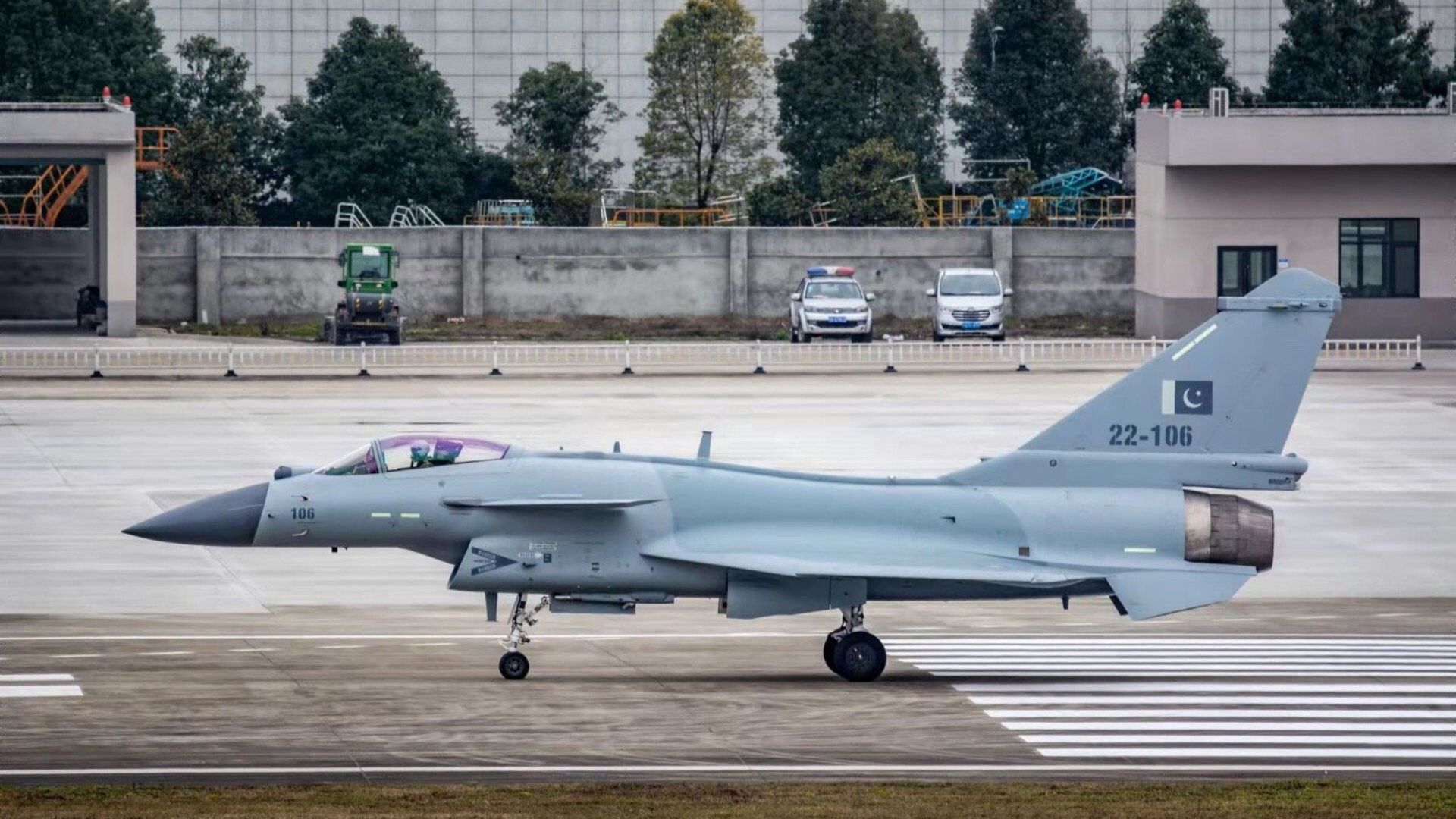
On October 5, 2026, Indonesian outlet Republika reported, citing sources, that Indonesia expects to receive its first Chengdu J-10CE fighters in roughly six months, which would make it the third foreign operator of the aircraft after Pakistan and Uzbekistan. Military Watch Magazine and the South China Morning Post picked up the story. Asked about the arrival at military headquarters in East Jakarta, Air Chief Marshal Mohamad Tonny Harjono declined to give details and told the public to “just wait”. The report did not say how many aircraft would arrive first, and a delivery around April 2027 would fit the six-month window.

What is on the public record is more solid than in many export stories. Defence Minister Sjafrie Sjamsoeddin said in October 2025 that Indonesia would acquire Chinese fighters and that they would soon fly over Jakarta, and the finance minister has reportedly approved a budget of about $9 billion for 42 aircraft. China’s Ministry of National Defense confirmed the broader procurement discussion without giving a quantity or schedule. Even so, no contract text or official delivery timetable has been published, and the six-month figure comes from a media report rather than a government schedule. Military Watch adds that local sources in June reported the order had been doubled to 84 aircraft. I found no corroboration for that, so treat it as unconfirmed.

The J-10 purchase fits Indonesia’s pattern of buying from everywhere. It ordered 42 Dassault Rafales in 2022 in a deal reported at $8.1 billion, with the first aircraft arriving in January 2026. It also signed for 48 Turkish KAAN fifth-generation fighters in 2025, remains a reduced partner in South Korea’s KF-21 programme and has reportedly held talks on the U.S. F-15EX. Its current fleet includes American F-16s and Russian Su-27s and Su-30s, and a 2018 contract for Su-35s remains suspended amid Western pressure. The J-10CE would be the first Chinese combat aircraft to enter service with a Southeast Asian air force, which is why analysts read the deal as a statement of strategic independence as much as a procurement decision.

The J-10C’s rise as an export fighter owes a great deal to May 2025. Pakistan Air Force J-10Cs armed with PL-15 missiles brought down at least one Indian Rafale, a loss that US officials told Reuters about and that France’s air chief said he had seen evidence of. India has never publicly acknowledged the Rafale loss, and Pakistan’s higher claims remain unverified, but the result handed the J-10C and PL-15 pairing a combat reputation no other Chinese export fighter can match, and prospective buyers noticed. Indonesia’s decision came months later, though its officials have not said the combat record drove the choice. Military Watch also argues that the J-10C costs under a third as much as a Rafale, and by some estimates closer to a sixth, without citing a source. The reported figures point the other way: Indonesia’s 42 Rafales were reported at $8.1 billion, while the budget approved for 42 J-10CEs is about $9 billion. Those are not like-for-like numbers, since packages differ in weapons, support and training, but it suggests the headline unit-cost gap may shrink once everything needed to operate the aircraft is included.

There is also a practical question that headlines rarely cover. If Indonesia ends up flying Rafales, KAAN, F-16s, Su-27/30s and J-10CEs, it will need to manage training, spare parts, munitions and data links across very different supply chains. That is my own analysis rather than anything in the reports, but fleets this varied usually raise sustainment costs and complicate integration. It is also not yet clear whether the package includes weapons such as the PL-15 missile, or where pilots and technicians will be trained.

Ultimately, the Indonesia deal looks real, but its details are not yet public. Three markers will show how far it goes: an official statement on the delivery date and number of aircraft, the arrival of the first J-10CEs at an Indonesian base, and whether the reported expansion beyond 42 aircraft materialises. Until then, “within six months” is an expectation, and the interesting part is how a country that buys from everywhere plans to keep it all flying.

Al Udeid Access Row: Senator Murphy vs Pentagon Over Iran War Damage


On October 8, 2026, Defense News reported that Sen. Chris Murphy, a Connecticut Democrat who sits on the Senate Foreign Relations and Defense Appropriations committees, was denied access to Al Udeid Air Base in Qatar during a recent congressional delegation trip. Al Udeid is the largest U.S. military installation in the Middle East, with about 10,000 personnel, and it was damaged by Iranian drone strikes during the war that began on February 28, 2026. Murphy called the denial an “unprecedented” cover-up, accusing the Pentagon of withholding damage information, slow-walking casualty reports and blocking visits to hide the true cost of the war.

The Pentagon says the decision had nothing to do with concealment. A senior Defense Department official told Military Times that Murphy’s office was told before the trip that he would not receive Department of War support to reach Al Udeid, in line with the Secretary of War’s March 3, 2026 directive on travel restrictions in the region, and that the decision was communicated in advance by the legislative affairs office. The official said the guidance is applied evenly. In early March, the State and Defense departments also advised Americans to leave parts of the region and recommended against travel to certain countries, including Qatar. The State Department supported Murphy’s trip to the region, which he says shows the Pentagon’s refusal was selective, while the Pentagon says it shows the restriction was a standing rule.

What the record shows so far is limited. Both sides agree he asked through a letter and a direct appeal to U.S. Central Command (CENTCOM) leadership and was refused, and that he was also unable to receive a briefing from American military officials in the region. They disagree about why. The article offers no evidence that the restriction was applied in order to conceal anything, and Murphy’s claim that Republican senators are being denied access too is his own statement, not something the report verifies. His strongest first-hand evidence concerns another site, the U.S. Embassy in Riyadh, where he says two Iranian drones hit multiple floors on March 3 and left part of the building uninhabitable. No injuries were reported, and he links the lack of repairs to a long-planned new embassy compound.

The dispute is also a question about institutions. Murphy is preparing language that would require the Defense Department to grant members of Congress access to overseas military bases under all circumstances, and he concedes it will not pass before the end of the year, intending it as part of next year’s appropriations and defense authorization debates. His argument is that Congress funds and authorizes wars and so needs to see their consequences, noting that lawmakers visited operating bases during the Iraq and Afghanistan wars. The counterargument, which the article does not make but is a common one, is that commanders at bases under threat need discretion over visits, since delegations add security and logistical burdens. That is my own framing of both sides rather than the Pentagon’s stated position.

The underlying subject, base vulnerability, is a real and growing issue regardless of who is right. As we noted in our piece on the B-1B bombers leaving RAF Fairford, cheap drones are forcing a rethink of how exposed forward bases are, and a contracting notice reportedly points to new hardened underground facilities at Al Udeid. The dispute also lands weeks before the November 3 midterm elections, which will color how each side’s claims are read.

Ultimately, there is a verified denial of access with a contested motive. Three things will show whether the “cover-up” charge gains traction: whether the Pentagon publishes fuller damage and casualty reporting, whether any lawmakers, including Republicans, confirm similar denials, and whether Murphy’s access language reaches the defense bills. Until then, the safest summary is that a senator was barred from a damaged base, the Pentagon says a standing travel rule explains it, and the question of intent is unresolved.

Friday, October 9, 2026

US Army 4th Multi-Domain Task Force: Lessons From Ukraine and South Asia


On October 8, 2026, the U.S. Army activated the 4th Multi-Domain Task Force (MDTF) at Fort Carson, Colorado, as reported by Defense News. The unit is one of five task forces the Army has set up or is developing, and its stated focus is synchronizing long-range precision fires in the Indo-Pacific to "deny, disrupt and disaggregate" adversary capabilities. It has four battalions and is planned to grow to 2,100 soldiers, under Col. Hugh W.A. Jones. The task force reports to the 7th Infantry Division at Joint Base Lewis-McChord, which in June absorbed the 1st MDTF to become the 7th Infantry Division (Multi-Domain Command-Pacific), tasked with integrating fires, air defence, cyber, space, electronic warfare, intelligence, unmanned systems and sustainment across the Pacific.

The Army activated the 2nd MDTF in Germany in 2021 and the 3rd in Hawaii in 2022, with a fifth planned for Fort Bragg, North Carolina, and a goal of five by 2028 according to a Congressional Research Service report. The idea behind them is that long-range fires, electronic warfare and cyber should work as a single connected package instead of separate specialties. That sounds abstract until you look at how recent wars have actually been fought, and two cases are worth examining.

The first is the India-Pakistan conflict of May 2025, where "multi-domain" is a contested label. Pakistan's military and many commentators there describe their response as an example of integrated defence, combining airpower, missiles, drones, electronic countermeasures and narrative management, and The National Interest notes that Pakistan has increasingly emphasized this kind of approach. The Stimson Center observes that it was the first conflict involving a military with modern Chinese weapons, including the HQ-9 air defence system, the PL-15 missile and the J-10 fighter, and the first in which both sides used drones with the intent to cause damage. India, for its part, showed it could deliver precise stand-off strikes across large areas of Pakistan, and Stimson assesses that India likely lost several aircraft on the first day. Neither side sought air dominance, relying instead on stand-off strikes and networked targeting. Some commentators credit Pakistan with effective electronic warfare and cyber operations, but those claims are hard to verify independently, and the information fog was thick, with recycled images and misinformation circulating on both sides. The fair summary is that Pakistan showed it could knit a Chinese-supplied kill chain together, and that both countries claimed success.

The second case is Russia and Ukraine, where the lessons point the same way. Ukraine's Operation Spiderweb on June 1, 2025 used low-cost drones to strike Russian air bases far from the front, destroying at least 10 bombers parked in the open, as we noted in our post on the B-1B's retreat from RAF Fairford. It combined cheap mass, careful planning and information management, while both sides rely heavily on drones, electronic warfare and open-source intelligence to see and strike the battlefield. The common thread with South Asia is that integration and cost-exchange mattered more than any single advanced platform, and that information, cyber and electronic warfare shaped outcomes alongside missiles.

What should a reader take from this for the new task force? First, the announcement does not say what weapons the unit will use, where it will deploy or when it will reach full strength, and "synchronizing" fires is not the same as owning missiles. Second, both of those wars were fought on or near the adversaries' borders with short supply lines. The Pacific is a much larger theatre, and a task force based in Colorado will have to deploy across it, with long-range fires depending on allies agreeing to host them. That is my own analysis, not something in the report. It also fits with allied moves such as Japan's Type 25 HVGP, which we covered earlier, since precision long-range strike is now a regional feature rather than a purely American one.

Ultimately, the 4th MDTF is an institutional milestone whose value depends on what follows. Three markers will show how serious it becomes: whether it reaches 2,100 soldiers, what weapons and supporting units it is given, and whether allied access arrangements make its fires usable in practice. The recent wars suggest the winners will be the forces that connect sensors, shooters and information quickly and cheaply, and that is the test this task force will have to pass.

Thursday, October 8, 2026

Indian Navy FSS Surya Launched: What India's Fleet Support Ships Mean


On October 6, 2026, Hindustan Shipyard Limited (HSL) launched Surya, the Indian Navy's first Fleet Support Ship (FSS-1), at Visakhapatnam, with Defence Minister Rajnath Singh as chief guest, as reported by Naval News. The same day, HSL laid the keel of the fifth ship in the class, FSS-5, and inaugurated upgraded facilities, including an improved slipway able to build and launch ships of up to 45,000 deadweight tonnes (DWT) and a 300-tonne Goliath crane built by L&T Geostructure. FSS-1 is expected to be inducted in mid-2027. The five-ship contract was signed in August 2023, and the first keel was laid in November 2024.

The Fleet Support Ships are about logistics, which is rarely glamorous but decides how far a navy can operate. They are intended to provide at-sea replenishment and sustained support to naval operations, with larger cargo and fluid capacity, first-line maintenance workshops, a helicopter deck able to support Multi-Role Helicopter operations, and self-defence systems. The published specifications are a length of 222.8 metres, a width of 31.5 metres, a draught of 9.5 metres and a complement of 214. The range is 12,000 nautical miles at 16 knots, or 9,000 nautical miles at 20 knots. Naval News says that once commissioned, the class will be the largest in the Indian Navy by displacement, exceeding even the aircraft carriers.

For an Indian Navy that wants to operate far from its coasts, this matters more than the headline suggests. As we noted in our piece on China's Type 004 carrier, a flat-top is only one part of a strike group, because escorts and aircraft all depend on fuel and stores delivered at sea. The FSS class, with systems from Bharat Electronics Limited (BEL) including a combat management system, communications and electronic warfare equipment, will let task forces stay on station longer. That is a quieter but real increase in reach, particularly across the Indian Ocean Region.

The shipyard angle is equally significant. The upgraded slipway and crane are part of a Ministry of Defence effort to improve the performance of a state-owned yard that is central to naval work at Visakhapatnam. L&T's shipbuilding arm is also building components for two of the ships under a contract with HSL, which shows a growing role for private industry alongside the public-sector yard. That is a sensible approach, since capacity at HSL has long been a constraint, though the article does not say how the remaining ships will be scheduled.

There are also reasons to read the milestone carefully. A launch is not a delivery, and the report gives an induction date only for the first ship, not for FSS-2 to FSS-5. The program also lost its original foreign design partner. Türkiye's TAIS was meant to help in the late 2010s, but deteriorating relations between India and Türkiye put that partnership on hold, and HSL then designed the ships with SEDS as prime consultant. Indigenous design is a strength in the long run, but a first-of-class design carries risk, and the proof will come in trials rather than at a launch ceremony.

Ultimately, Surya is a milestone for naval self-reliance more than a headline weapon system. Three markers will show whether it pays off: the first ship's sea trials and induction in mid-2027, the pace at which FSS-2 to FSS-5 follow, and whether the upgraded Visakhapatnam facilities help HSL deliver on schedule for later programs. For a navy with growing ambitions, the quiet ships that keep the fleet at sea may end up mattering as much as the ones that fight.

Japan Launches Shogei: 7th Taigei-Class Submarine and the Nuclear Debate


On October 8, 2026, Mitsubishi Heavy Industries (MHI) launched "Shogei", the seventh Taigei-class diesel-electric attack submarine for the Japan Maritime Self-Defense Force (JMSDF), at its Kobe shipyard, as reported by Naval News. The boat, pennant number SS-519, displaces about 3,000 tonnes and measures 84 metres in length with a 9.1-metre beam. It costs roughly 80.5 billion yen ($509 million) and is due for delivery to the JMSDF in March 2028. The name means "Soaring Whale", and it is the first time the JMSDF has used it. Like the fourth boat, Raigei, and its successors Chogei and Sogei, Shogei will use new, higher-output Kawasaki 12V 25/31 diesel engines.

The Taigei class is a conventional design, but a capable one. It uses large lithium-ion batteries for better underwater endurance, carries Japan's newest Type 18 torpedo and a torpedo countermeasure system taken from the last four Soryu-class boats, and can fire the UGM-84L Harpoon Block II anti-ship missile, reported to have a range of 248 kilometres. For readers following Japan's naval build-up, the more interesting point is the steady cadence. A seventh launch shows a production line running reliably, which is not something every navy can claim.

The headline, however, is the nuclear propulsion debate, and it deserves careful reading. The case for nuclear boats is clear. A diesel-electric submarine must periodically raise a snorkel to recharge its batteries, which raises the risk of detection, and its batteries drain quickly during sustained high-speed operation. A nuclear boat can combine speed, long transits and extended submerged operations, which matters as the Chinese Navy expands its activity in the Western Pacific. Defence Minister Shinjiro Koizumi said on September 11 that Japan would not rule nuclear-powered submarines out as it considers revisions to its three national security documents by the end of this year.

But "not ruling out" is a long way from deciding. The Naval News report stresses that Japan has made no decision, and Koizumi himself listed the drawbacks: higher costs, larger hulls, the need for specialized expertise and potentially a greater underwater acoustic signature than conventional boats. Adopting nuclear propulsion would also mean tackling reactor safety, personnel training, maintenance infrastructure and long-term operation of naval reactors. A September 2025 expert panel recommended research into "next-generation propulsion" without explicitly calling for nuclear. In my own reading, there are probably legal and political hurdles as well, given Japan's long-standing sensitivities around nuclear technology, though the article does not address those.

What is actually funded is more modest. On July 6, 2026, the Acquisition, Technology & Logistics Agency (ATLA) awarded MHI a contract worth about 3.9 billion yen ($24.6 million) for research into the total-ship optimization design of a next-generation submarine with vertical launching systems (VLS), running from fiscal 2026 to 2029. The aim, under the 2022 security documents, is a submarine that can launch long-range stand-off missiles, which fits the wider counterstrike build-up we covered in our look at the Type 25 HVGP. Adding VLS, better sonar and unmanned underwater vehicles could require a larger hull and more onboard power, and that power demand is exactly where the nuclear argument comes from.

Ultimately, Shogei's launch is the visible part of the story, and the real decision comes later. The central question, as the report puts it, is what missions Japan's future submarine force should perform and which propulsion best serves them. Three markers will show the answer: whether the year-end revision of the national security documents commits to nuclear propulsion or keeps studying it, how the ATLA design research develops through 2029, and the delivery of Shogei in March 2028. Until then, Japan's submarine fleet remains conventional, and the nuclear question is still an open one.

Wednesday, October 7, 2026

B-1B Bombers Leave RAF Fairford: Why Hardened Aircraft Shelters Matter


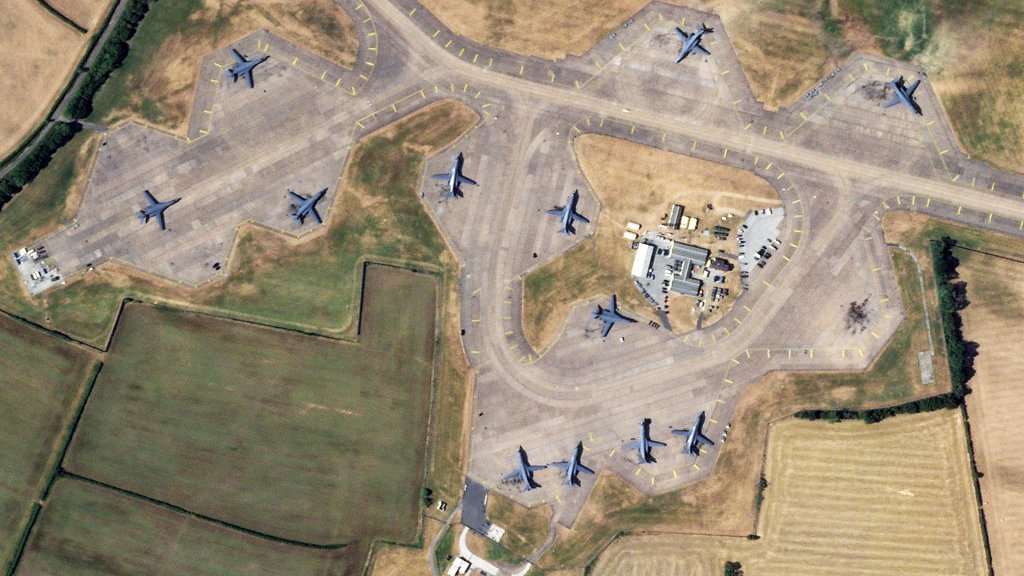
Over the weekend of October 3-4, 2026, U.S. Air Force B-1 Lancer bombers abruptly left RAF Fairford in the United Kingdom, and multiple reports say the reason was the threat of an Iranian-directed drone attack, as The War Zone (TWZ) reported on October 7. The bombers had been based there continuously since March, first in support of Operation Epic Fury against Iran, and the base has hosted B-52s, B-1s and other strategic aircraft. ITV News first reported the link to a possible attack along the lines of Ukraine's Operation Spiderweb, citing an unnamed source, and other outlets then reported similar details, all sourced to anonymous U.S. and British officials. The exact nature and imminence of the threat remain unconfirmed.

The official remarks suggest there was something behind the move without explaining what. President Trump said the bombers did not leave by accident and that there were some threats. Vice President J.D. Vance said Defense Secretary Pete Hegseth acted out of an abundance of caution to protect personnel, while Secretary of State Marco Rubio declined to tie the move directly to recent events and said all bases could theoretically be threatened at any moment. The Air Force said it would not discuss intelligence or specific force protection measures. One more detail is worth noting: on September 27, British police arrested five men on suspicion of driving bomb-laden vans toward the base. They were released on bail after no explosives were found in the vehicles, though officials have raised the possibility of an Iranian link.

What makes the scenario plausible is Operation Spiderweb, in which Ukraine used explosive-laden quadcopter-type drones to hit airbases across Russia, destroying at least 10 Russian bombers parked in the open. A Planet Labs satellite image from July 29 showed 12 B-1s parked relatively close together in open spaces at Fairford, and TWZ notes that the parking areas sit close to the perimeter, with photographers lining the fence in March. Low-cost drones with automated targeting can strike known parking spots using only map coordinates, so the barrier to entry is low. There are only 45 B-1s left in service, so losing a dozen at once would have major strategic consequences.

This is where the debate over hardened aircraft shelters comes in, and it is worth presenting both sides. TWZ argues the Pentagon has dragged its feet. The Air Force's top officer, Gen. Kenneth Wilsbach, takes the opposite view, arguing that shelters are costly and can be destroyed by precision weapons unless built deep underground, and that the economics favour active defences that stop incoming threats. That is a serious argument, since shelters are not invulnerable to missiles and building them is expensive. But the counterargument is that shelters force an adversary to spend better weapons and to treat every shelter as occupied. And even Wilsbach has endorsed cheap protective netting, which shows how much of the real choice lies in the middle ground between concrete bunkers and doing nothing.

That middle ground is where the more practical lessons sit. Shorter-range drone attacks tend to use small warheads, so even light or temporary cover could blunt them, and the Joint Interagency Task Force 401 (JIATF-401) has already issued guidance on netting and cables around bases. A contracting notice in March also pointed to plans for new hardened underground facilities at Al Udeid Air Base in Qatar. But there is still no department-wide push, while Russia, China, North Korea and Iran continue to build shelters, and Russia is now constructing large ones for its bomber force. Active defences have their own limits, since interceptors are expensive and stockpiles were strained by the conflict with Iran. By contrast, air forces in South Asia generally keep fighters in hardened shelters at many bases, which makes the U.S. approach look like an outlier.

Ultimately, the real lesson of Fairford is that a dozen bombers were moved out of a key forward base without an adversary firing a shot. Moving them is itself costly, as it takes aircraft, crews, weapons and fuel, and few bases can support sustained bomber operations. Three things will show whether anything changes: whether the Air Force funds shelters or cheaper protective measures beyond nets, whether the bombers return to Fairford or stay dispersed, and whether officials ever explain what the threat actually was. Until then, the safest conclusion is that the threat was serious enough to act on, while the details remain unverified.

US Counter-Drone Pilot: Pentagon Picks 4 Laser and Microwave Weapons


On October 6, 2026, Defense News reported that the Pentagon had named four directed-energy weapons for a homeland counter-drone pilot, the first such systems the military will field and test at U.S. bases under a program ordered by Congress. The four are AeroVironment's Palletized High-Energy Laser, Epirus's Leonidas high-powered microwave, Kord's Firefly high-energy laser and Boeing's Compact Laser Weapon System. The pilot is run by Joint Interagency Task Force 401 (JIATF-401), the Army-led organization set up last year to coordinate counter-drone work across the military and other federal agencies. It will run for a year, with service members operating and maintaining the weapons, and it aims to measure performance, cost and what it takes to keep the systems running.

The test sites were chosen in May: Fort Huachuca in Arizona and Fort Bliss in Texas, both tied to the southern border mission, plus Naval Base Kitsap in Washington, Grand Forks Air Force Base in North Dakota and Whiteman Air Force Base in Missouri. The Pentagon release does not say which system goes where, how many will be fielded or what the pilot will cost, and operations are expected to begin later this year. That is typical for an announcement of this kind, and it means the real story is still ahead. What has been decided is the list of competitors, not which technology will win.

The four systems are not interchangeable. A laser must dwell on one drone until it burns through, while a high-powered microwave can disable a swarm in one burst by overwhelming electronics, though its wider footprint raises concern about effects on nearby systems. Among the lasers, AeroVironment's is a palletized version of its LOCUST system that the company says tracked and defeated target drones aboard the carrier George H.W. Bush in October 2025. Boeing's is a lower-power system that needs longer on target but is smaller and easier to move, and Kord says its truck-mounted Firefly typically needs a few seconds to down a small drone. Leonidas is the only microwave in the pilot and is the basis of the Army's prototype system for defending against swarms.

Cost is the main selling point, and also the claim most worth treating carefully. A shot from a laser or microwave costs a fraction of a missile or even a gun round, and leaves no unexploded ordnance. But the task force director, Army Brig. Gen. Matt Ross, said in August that he is skeptical of per-shot arithmetic alone, pointing out that a system costing $6 million that fires once a year cannot honestly be said to cost pennies per shot. The performance figures in the article are also company-reported, including Boeing's claim of nearly 500 drones defeated in testing and Epirus's claim that Leonidas disabled all 61 target drones in a 2025 demonstration. They are encouraging, but they come from vendors, and the pilot's purpose is to produce independent data.

The pilot also follows a rough start. In February, the FAA briefly closed the airspace over El Paso, Texas, after a counter-drone laser was used near Fort Bliss without proper coordination, and the FAA later said a safety review found the laser systems tested, with safety controls in place, did not pose undue risk to passenger aircraft. That episode is a reminder that the hard problems at home are not only technical but regulatory, since these weapons must operate in busy civilian airspace. It also sits within a larger push. On September 29, JIATF-401 awarded 10 contracts worth up to $4.15 billion for sensors, optical sights and gun-based systems under the Domestic Shield effort to protect priority sites, and the Army gave AeroVironment a $464.8 million contract in September to produce LOCUST X3 lasers.

Ultimately, this pilot is a test of whether directed energy can move from demonstration to dependable base defence. Three markers will show how it goes: the December shoot-off at Dugway Proving Ground, where additional laser and microwave systems will compete and good performers could receive purchase orders quickly, the data on real operating costs once service members run the systems for a year, and whether the FAA coordination holds up. If it works, directed energy becomes one layer of a mixed defence that still relies on guns, sensors and interceptors.

Tuesday, October 6, 2026

China Type 004 Nuclear Carrier: Flight Deck Sections Added at Dalian


On October 6, 2026, Military Watch Magazine reported that Dalian Shipyard had installed three more flight-deck sections on China's first nuclear-powered aircraft carrier in about five days. The ship is widely called the Type 004, though Beijing has not confirmed that designation or released any specifications. The report points to rapid modular assembly, with large external structures recently attached to the port side and two sponson-like additions visible in late September imagery. By August, satellite imagery showed the hull at roughly 320 metres long and 46 metres wide at its widest visible point, before the bow and full flight deck were complete.

The most useful figures come from independent satellite analysis. Janes reported that imagery from September 4 shows work on the bulbous bow, which suggests a completed hull length of 336 to 339 metres. That would put it level with, or marginally longer than, the U.S. Navy's Gerald R. Ford class at 333 metres. Analysts have estimated a displacement of 110,000 to 120,000 tons, though length alone cannot establish displacement, because beam, hull depth and internal arrangement all matter. The carrier is being built in the same Dalian dry dock that produced the Liaoning and Shandong, and it follows the Fujian, China's first catapult-equipped carrier, which entered service in 2025.

The nuclear question is where a skeptical read helps. Satellite imagery from November 2025 showed two compartments of about 15 by 15 metres inside the hull, which Janes assessed could accommodate two reactors, and several analysts have since called the ship almost certainly nuclear-powered. The War Zone noted in August, however, that this has still not been definitively confirmed. That distinction matters because the Military Watch article and some other coverage describe it flatly as a nuclear supercarrier. The evidence is strong and consistent, but it remains inference from imagery rather than an official statement.

The "three sections in five days" headline also needs context. Modern shipbuilding relies on prefabricated blocks assembled in the dock, so a burst of installations shows a well-organised yard and supply chain, which is real but not the same as a ship nearing completion. Analyst Eric Wertheim noted that the Fujian took six years from construction start to launch, and if the Type 004 follows a similar schedule, a launch around 2032 is plausible, although China could compress that. Fitting reactors, propulsion and the flight-deck systems, then testing them, is the slow part, and none of it is visible from space.

What a nuclear carrier would change is endurance and power. A reactor removes the need to refuel the ship itself, and analysts point out that the electrical generation could matter as much as propulsion, powering catapults and sensors. But a carrier is only one part of a strike group. It still needs escorts, aircraft and replenishment ships for the air wing's fuel and munitions, and nuclear engineering demands trained crews and a safety culture that China's navy has not yet shown at carrier scale. The article's claim that China is years ahead of the United States in integrating sixth-generation fighters into carrier air wings is an assertion that I found no independent support for.

Ultimately, the Type 004 looks like a serious and fast-moving program, and the open evidence points to China building its first nuclear carrier at industrial speed. Three markers will show whether that holds: an official confirmation of the propulsion and designation, the launch date, and the first sea trials. Until then, the safest summary is that Dalian is assembling what looks like the world's longest carrier, while its propulsion, timeline and capability remain inferred from imagery.