Tuesday, August 25, 2026

The Navy's New Torpedo Wants to Fly at 60,000 Feet — Explicitly Because China's Submarines Are Getting Better


The Navy issued a Request for Information for the Silent Anvil Air-Launched Torpedo, exploring two design paths, a new torpedo built to glide from an aircraft into the water before acoustically homing on target, or a glide kit retrofitted onto an existing torpedo, with a September 29 deadline for industry responses. The specifications are genuinely demanding: compact enough to fit a standard BRU-61/A bomb rack in a form factor comparable to the GBU-39 Small Diameter Bomb, no more than 268 pounds and 70 inches long, launchable across a speed range from Mach 0.25 to 0.85 and an altitude band running from just 10 feet up to a striking 60,000 feet, well above even the P-8 Poseidon's operating ceiling and closer to the MQ-4C Triton drone's altitude envelope. The Navy's own language on water time is unusually precise, the weapon should "maximize aerial flight endurance while minimizing aquatic immersion time," restricting its time actually in the water to the absolute minimum needed to complete the engagement.

Defense News's own reporting states the strategic driver plainly, and it's worth taking that framing at face value: Silent Anvil comes explicitly as China expands both the size and sophistication of its submarine fleet, including large, long-range unmanned undersea vehicles. This blog's earlier coverage of the Orca XLUUV program already established that exact capability gap in detail, China pursuing a more diversified, faster-scaling unmanned undersea vehicle program across at least five distinct designs simultaneously, against a single-design American Orca program this blog assessed as playing catch-up rather than leading. Silent Anvil is the air-delivered weapons-side response to the same underlying threat, a next-generation anti-submarine torpedo built specifically to extend engagement range and altitude flexibility against exactly the kind of larger, more sophisticated Chinese underwater assets, crewed and uncrewed alike, this blog's Orca coverage already flagged as an accelerating capability gap.

The 60,000-foot altitude requirement is the detail worth dwelling on longest, because it signals something beyond simply "a better torpedo." Pairing an anti-submarine weapon with an MQ-4C Triton-class high-altitude drone rather than confining it to the P-8 Poseidon's lower operating envelope connects directly to this blog's coverage of the Air Force's target-drone RFI from earlier this summer, where the underlying theme was American forces training and equipping against threat profiles considerably more demanding than legacy hardware assumed. A torpedo genuinely built for high-altitude, long-standoff delivery would let unmanned platforms conduct ASW strikes from well outside the detection and counter-fire range that increasingly capable Chinese submarine sensor and weapons systems might otherwise threaten a lower-flying P-8 with, extending the same "survive by staying outside the adversary's engagement envelope" logic this blog's coverage of Japan's submarine-hypersonic program and the AIM-424 Malice's extreme range both identified as a consistent, cross-domain American and allied design philosophy this year.

The parallel Long Range Antisubmarine Warfare weapon this article mentions in passing, extending rocket-launched ASW torpedo reach from vertical launch tubes on surface ships, suggests Silent Anvil isn't an isolated program but one piece of a genuinely coordinated multi-platform ASW modernization effort, air-launched glide weapons and ship-launched rocket-boosted torpedoes both independently extending American anti-submarine reach at the same moment. Read against this blog's coverage of the UUV-based submarine resupply concept from RIMPAC 2026, which argued the Navy was building a coherent Pacific submarine-endurance strategy across multiple separate programs, Silent Anvil extends that same "coherent strategy assembled from individually announced programs" pattern into the anti-submarine strike domain specifically, magazine depth on the offensive side, this time, rather than the defensive resupply problem that earlier coverage addressed.

The 18-month prototype timeline followed by 180 all-up-round prototypes within three years is genuinely ambitious relative to the execution record this blog has documented across so much of this year's procurement coverage, and it's worth applying the same measured skepticism here that this blog extended to GMLRS's rocket-motor supply crunch and the broader munitions-production throughline. An RFI is an early information-gathering step, not a funded program of record, and this blog's own tracking of similarly ambitious announced timelines, AHEL's cancellation chief among them, suggests real caution is warranted before assuming Silent Anvil reaches fielded capability on anything close to its currently stated schedule. But the underlying strategic logic, matching China's expanding and increasingly sophisticated submarine fleet with a genuinely extended-range, altitude-flexible anti-submarine weapon rather than continuing to rely on legacy Mark 54 torpedo employment profiles, is a coherent and reasonable response to exactly the threat trajectory this blog's Orca coverage already documented Beijing pursuing.

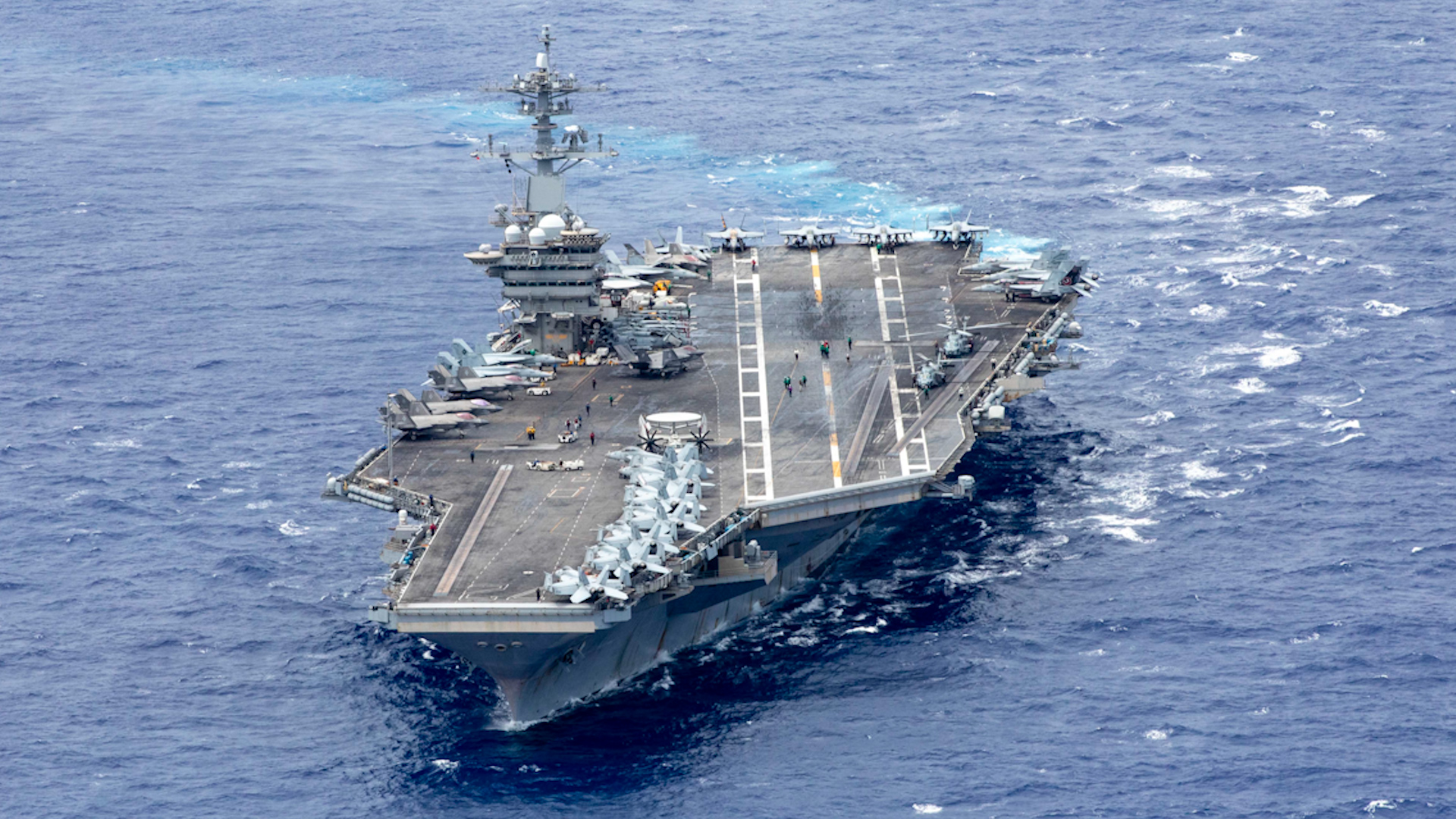
USS Lincoln Finally Gets Its Port Call — More Than 200 Days and a Public Crisis Later


USS Abraham Lincoln will dock in eastern Thailand next week for what Thai officials describe as a routine rest and recuperation stop, according to a Thai Navy spokesperson, following the carrier's departure from the Middle East on August 22 after a deployment that left it without a single port visit for more than 200 consecutive days, a modern-day record according to Democratic lawmakers. The roughly 5,000 sailors and Marines aboard will receive what the Thai Navy called logistical support and rest, with no exercises planned during the visit and neither the specific date nor the accompanying strike group's vessel names disclosed, citing security concerns.

This is the resolution, or at least the next chapter, of a story this blog has tracked in real depth this summer. This blog's coverage of the joint Military Times and Defense News investigation into Navy operational tempo documented Lincoln's extended deployment in detail, and family members told Military Times this month that multiple sailors had attempted to go overboard amid declining morale aboard the ship, reporting Defense Secretary Hegseth publicly described as having "completely misrepresented" actual shipboard conditions. This blog's separate coverage of the Pacific carrier gap traced the direct operational consequence of Lincoln's extended deployment, USS George Washington being pulled from the Pacific specifically to relieve Lincoln, leaving the western Pacific without a single American carrier for the first time during this stretch of the Iran conflict, a gap this blog's reporting connected directly to the same resource strain driving Lincoln's own prolonged time at sea.

The uncomfortable question this port call doesn't fully resolve is which account of Lincoln's condition Thailand's routine, security-conscious framing actually supports. A "rest and recreation" stop after 200-plus days at sea is precisely the kind of relief this blog's Navy tempo coverage suggested the crew badly needed, and the fact that it's happening at all is a genuinely positive development regardless of how the underlying dispute over shipboard conditions is eventually resolved. But the framing itself, brief, security-restricted, details withheld, sits somewhat awkwardly next to Hegseth's public insistence that reports of the ship's condition were overstated; a genuinely routine port call wouldn't typically need this level of information control, and the gap between "this is standard logistics" and "sailors reportedly attempted to go overboard" remains as unresolved after this announcement as it was before it, this reporting simply confirms the ship is finally making a stop, not which account of why that stop is needed is more accurate.

Thailand's own position as host carries strategic weight worth setting against this blog's broader Indo-Pacific coverage this summer. As the only U.S. treaty ally in mainland Southeast Asia, a status dating to 1954 and reinforced by major non-NATO ally designation in 2003, Thailand's willingness to host a carrier strike group whose deployment has become a genuine domestic political controversy in Washington is itself a modest vote of confidence in the broader alliance relationship, even as the visit's low-profile, no-exercises framing suggests Bangkok is deliberately avoiding the kind of high-visibility engagement that might otherwise accompany a carrier port call. That restraint fits a pattern this blog's coverage of stretched American Pacific posture, the Korea exercise cutback, the reduced Taiwan Strait transit frequency, has documented all summer, allies and the U.S. military alike appearing to manage an increasingly resource-constrained relationship with lower-key gestures rather than the more prominent displays a less strained posture might otherwise produce.

If there's a throughline connecting every piece of this blog's carrier-strain coverage this summer to this single port call, it's this: Lincoln's crew getting genuine rest after 200-plus days at sea is unambiguously good news, and this blog is glad to report it as such. Whether that relief arrived because the fleet's operational tempo crisis is easing, or simply because a single ship finally reached the end of an unsustainable deployment cycle documented in exhaustive, uncomfortable detail this summer, remains the open question this blog's continued Navy coverage will need to keep answering as the broader fleet-strain story this port call is only one chapter of continues to unfold.

The Navy Just Created a Bureaucratic Office to Fix the Problem That's Run Through Nearly Every Post This Blog Has Written This Summer


The U.S. Navy announced August 25 it is standing up a new defense industrial base office, appointing Andrew Magliochetti, previously director of the Navy's Office of Small Business Programs, as the first deputy assistant secretary of the Navy for the defense industrial base. His mandate, as laid out in the Navy's own release, is to "expand the domestic manufacturing ecosystem, mitigate supply chain vulnerabilities, and integrate dual-use commercial technologies," reporting to Assistant Secretary William F. Mahan with responsibility for revitalizing the maritime industrial base and accelerating private-sector technology transition into the fleet. The fiscal 2027 numbers behind this appointment are genuinely stark: the Navy currently operates just over 290 battle force ships against a legally mandated requirement of 355, with a stated goal of reaching 395 vessels in fiscal 2027 and 450 by fiscal 2031, an expansion target that would require nearly doubling the current fleet within five years.

That 290-versus-355 gap is worth sitting with as the clearest single statistic this blog has encountered summarizing the shipbuilding crisis documented across dozens of posts this year. This blog's coverage of the Finland Model memorandum already established the strategic logic driving Washington to open U.S. Navy warship construction to allied shipyards in Japan and South Korea for the first time in modern history, and this blog's separate coverage of the broader GAO facilities backlog report documented a related but distinct problem, a $285 billion maintenance backlog across military installations, including naval facilities directly supporting shipbuilding and fleet sustainment. This new industrial base office is the organizational response sitting between those two stories, an attempt to address the underlying domestic manufacturing capacity gap that made the Finland Model necessary in the first place, rather than simply outsourcing around it or letting existing infrastructure keep deteriorating.

The GAO's own prior assessment, cited in this reporting, that U.S. shipbuilding has been in "a perpetual state of triage" for nearly two decades, ships not being built in sufficient numbers, newly constructed vessels failing to perform as expected, deliveries running up to three years late, reads as a direct institutional confirmation of the pattern this blog has documented program by program all summer: USS Kennedy's five-year cumulative delay, the Constellation-class frigate cancellation that freed up SPY-6 radar hardware for export this blog's Raytheon coverage flagged, the AUKUS Pillar I submarine production rate stuck at 1.1 to 1.2 boats annually against a two-boat-per-year target. Magliochetti's office is essentially being asked to solve, through a single deputy assistant secretary position, the aggregate of every individual program failure this blog has covered as a separate story this year.

Whether a single office, however well-mandated, can meaningfully reverse two decades of documented decline is a genuinely open question this announcement doesn't answer, and it's worth applying the same skepticism this blog has extended to comparable bureaucratic fixes throughout the summer. This blog's coverage of the GAO facilities report already noted the Pentagon accepted GAO's methodology critique while explicitly rejecting a recommendation for strengthened oversight, citing insufficient staff to implement it, a pattern of acknowledging a problem's scale while declining the accountability structure needed to actually fix it. A new office focused on "dual-use commercial technologies" and supply-chain resilience is a reasonable organizational response to a genuine problem, but this blog's own documentation of Ghost Robotics' struggle to compete with Chinese manufacturing scale, covered through the Unitree robot-dog investigation, already established that America's innovation-to-manufacturing-scale gap runs considerably deeper than any single Navy office's mandate can address on its own.

The more honest framing, consistent with how this blog has treated similar announcements all summer, is that Magliochetti's appointment represents a genuine institutional acknowledgment of the problem rather than a solution to it. Doubling the fleet from 290 to 450 ships within five years while the shipbuilding base has spent two decades failing to meet even its existing, smaller targets is an extraordinarily ambitious goal, and whether a dedicated industrial-base office, dual-use technology integration, and the parallel Finland Model foreign-shipyard opening together add up to enough institutional change to actually close a gap this wide is a question this blog's coverage will need to keep tracking rather than one this single announcement resolves.

Poland Gave Away Its Patriots — Now It's Selling Everyone Else Its Own Missiles Instead


Poland, Norway, Lithuania, and Latvia signed a framework agreement worth more than 8 billion zloty ($2.2 billion) to jointly procure Piorun man-portable air-defense systems from Polish state-run PGZ, covering several thousand missiles and several hundred launchers with deliveries running through 2030. Poland leads the four-nation consortium and will receive more than 80 percent of the acquired hardware, financed through the EU's €43.7 billion SAFE low-cost loan scheme. Deputy Defence Minister Magdalena Sobkowiak-Czarnecka's own framing captures what's structurally new here, this marks the first time Poland's Armament Agency has procured hardware not just for its own military but directly on behalf of allied forces simultaneously.

This lands directly on top of the domestic political crisis this blog covered just days ago, where Poland's government faced genuine backlash after secretly transferring its own operational Patriot interceptors to Ukraine and voluntarily surrendering its place in the U.S. production queue to do so. Read together, the two stories describe a genuinely coherent, if uncomfortable, Polish defense strategy: give away scarce, foreign-sourced strategic air-defense systems to Ukraine's more urgent need, while simultaneously building out domestic production capacity in a lower-tier, shorter-range weapons category Poland actually manufactures itself and can scale without depending on anyone else's production queue. Piorun is precisely the kind of system Warsaw controls end-to-end, MESKO's own Skarżysko-Kamienna plant has already expanded dedicated production capacity from 300 to 1,500 units annually with a stated goal of exceeding 2,000, a growth curve this blog's coverage of the GMLRS rocket-motor supply crunch and the failed 155mm shell components facility would recognize as genuinely rare execution discipline against this summer's broader pattern of American and European production shortfalls.

Norway's participation connects directly to this blog's coverage of its own $2.3 billion UH-60M Black Hawk purchase from days earlier, both procurements addressing the same Arctic and High North mobility-and-survivability gap this blog traced through Operation Polar Dagger's Arctic infrastructure asymmetry. A short-range, man-portable air-defense system is a natural complement to exactly the kind of rapidly deployable, dispersed force posture this blog's Black Hawk coverage identified Norway building toward, forces moving quickly across difficult northern terrain need man-portable air defense precisely because they can't always rely on fixed installations or larger, less mobile systems for cover. Piorun's proven combat record in Ukraine, and PGZ's marketing built explicitly around that "proven in Ukraine" label this blog's own reporting has referenced before, gives Norway a genuinely combat-validated option rather than an unproven design for exactly the contested northern-flank scenario its Black Hawk purchase is also preparing for.

The Baltic dimension ties this into the broader Kaliningrad and NATO-signaling throughline this blog has tracked extensively this month, the EA-37B's Kaliningrad-border flight, Russia's live-fire anti-ship drills near the Kurils, and the escalating rhetoric around British involvement in Ukraine. Lithuania and Latvia, the two Baltic states in this consortium, sit directly along NATO's most exposed frontier with Russia, and a jointly procured, rapidly scalable, genuinely proven MANPADS supply gives them exactly the kind of distributed, low-cost air-defense layer this blog's coverage of the interceptor-scarcity crisis has repeatedly argued matters more for sustained resilience than any single exquisite system. This is the low end of the same air-defense-layering logic this blog has documented at the high end through the NSPO SeaSparrow consortium, PGZ's export success to the U.S., Japan, and Indonesia already establishing Piorun's credibility well beyond just its four consortium partners.

None of this resolves the deeper structural tension this blog's Poland Patriot coverage already flagged, Warsaw remains dependent on American production queues for its highest-tier strategic air defense regardless of how much domestic capacity it builds in the MANPADS category. But a genuinely successful, scaling domestic weapons program, one four allied nations are now pooling resources to buy directly from Polish industry rather than each sourcing independently, is a meaningful counterweight to the execution risk this blog has documented dominating so much of this summer's procurement coverage, and it suggests Poland's answer to giving away its Patriots wasn't simply absorbing the loss, it was doubling down on the one category of air defense it can actually manufacture and deliver on schedule itself.

Ukraine Just Found a Way Around the Interceptor Math This Blog Has Tracked All Summer: Stop Needing Interceptors


Fire Point, Ukraine's largest defense company, confirmed its FP-7 ballistic missile will be combat-ready by the end of September, months ahead of its original late-2026 timeline, CEO Iryna Terekh announced at DALO Industry Days in Denmark. The FP-7, a lower-cost analogue to the American ATACMS, can strike targets up to 300 kilometers away carrying a warhead up to 150 kilograms. Zelenskyy tied the missile's acceleration directly to what he called Putin's "ballistic terror" in his Independence Day address, repeating his call for allies to help close Ukraine's air-defense and weapons-production gap, the same appeal this blog's coverage of his "I have 1%" interceptor framing already documented in stark detail.

The strategic logic Defense News lays out here, "shoot the archer, not the arrow," is the clearest articulation this blog has encountered of an alternative to the interceptor math dominating nearly every post this blog has published this summer. Rather than trying to out-produce Russia's missile salvos with more Patriot and THAAD interceptors, a race this blog's coverage of the 200-missile salvo warning already established Ukraine is losing badly, destroying Russian launchers and production sites on the ground converts the problem from intercepting a small, fast-moving target racing through contested airspace into destroying a truck-sized, stationary one before it ever fires. That's a genuine paradigm shift rather than an incremental fix, and it directly addresses the interceptor scarcity this blog has documented as the defining constraint of Ukraine's entire air-defense posture this year.

This connects to the "extraterritorial MIC" offshoring pattern this blog covered through Russia's own state-aligned characterization of Ukraine's Western-partner production relocation, and through the independently confirmed onshoring deals with Germany, the UK, and now Finland's Patria-General Cherry partnership. Fire Point's own accelerated FP-7 timeline and its next-generation FP-9, an 855-kilometer-range missile capable of reaching Moscow itself according to United24's reporting, this blog hasn't previously covered, represent the domestic-production half of that same broader strategy, indigenous Ukrainian long-range strike capability developing in parallel with the NATO-territory drone manufacturing this blog has already documented. Between offshored drone production and accelerated domestic ballistic missile development, Ukraine's defense-industrial strategy increasingly looks like a genuinely diversified portfolio rather than a single bet on any one capability or supply chain.

The three-part rationale Defense News attributes to Ukrainian officials and strategists, striking launchers Ukraine can no longer reliably intercept, holding Russian cities at the same risk Ukrainian ones face, and generating leverage for any eventual negotiation, deserves to be read against this blog's own coverage of the UK's SCALP technology transfer to Ukraine and France, covered just one day earlier. Both stories point toward the same underlying strategic pivot: Western and Ukrainian planners increasingly treating offensive, deep-strike capability, rather than purely defensive interception, as the more sustainable long-term answer to Russia's missile campaign. This blog's coverage of Britain's SCALP localization and now Fire Point's accelerated ballistic missile timeline both represent the same bet, that degrading Russia's capacity to launch strikes in the first place is a more achievable and cost-effective goal than matching Russia's launch volume interceptor-for-interceptor indefinitely.

The negotiating-leverage dimension is worth taking seriously as a distinct rationale from the purely military one, and it connects to the broader diplomatic throughline this blog has tracked through Iran's own missile reconstitution and the pattern of strikes continuing around nearly every diplomatic milestone this year. Zelenskyy's own framing, that Russia "must be brought to the negotiating table" through pressure serious enough to make Moscow "howl," suggests Ukrainian officials view the FP-7 and FP-9 programs as much as instruments of coercive diplomacy as battlefield tools, mirroring the exact logic this blog's Su-57 Odessa coverage already identified in Russia's own standoff-strike campaign against Ukrainian infrastructure, sustained pressure calibrated to shape an eventual settlement rather than purely to achieve battlefield victory in isolation. Whether Ukraine's own version of that strategy proves more effective than Russia's remains to be tested once the FP-7 actually reaches combat use next month, but the accelerated timeline itself signals how urgently Kyiv now views offensive deterrence as the answer the interceptor shortage this blog has documented all summer cannot provide on its own.

The Dutch Navy Just Named the Exact Problem This Blog Has Spent All Summer Documenting


The Royal Netherlands Navy announced August 24 it will equip its fleet with a new counter-UAS capability built around Destinus's Hornet B2 interceptor drone, with development, integration across several warships, and progress toward initial operating capability slated for completion in the second quarter of 2027. The Dutch Ministry of Defence's own framing is refreshingly direct about the underlying problem, "the threat of drones at medium range is increasing," confirmed by both operational analysis and the current threat picture during maritime operations, language that reads almost like a summary of this blog's entire summer of coverage compressed into a single sentence. Destinus CEO Mikhail Kokorich's own quote states the economics even more bluntly, "low-cost aerial threats have inverted the economics of naval air defense: no navy can sustainably trade multimillion-euro missiles against low-cost threats arriving at volume."

That's the interceptor cost-exchange argument this blog has made across dozens of posts this summer, stated as plainly and completely as any source has offered it. The Hornet B2 itself is a rocket-boosted interceptor deploying wings and transitioning to electric-powered cruise flight, using electro-optical and infrared sensing with AI-based terminal processing, at a cost per engagement Destinus describes as "far below" traditional interceptor missiles. That's structurally the same solution this blog's coverage of Italy's APKWS-II purchase already documented, converting an expensive missile-based intercept into a considerably cheaper alternative, just built from the ground up as a dedicated interceptor drone rather than a guidance kit retrofitted onto an existing rocket.

The U.S. Navy precedent this article mentions almost in passing deserves more weight than a single sentence. Raytheon's Coyote interceptor is already installed on Arleigh Burke-class destroyers, meaning the American Navy has already fielded a broadly comparable low-cost counter-drone interceptor, and the real story here isn't that this technology category is new, it's that a second major NATO navy is now moving to field its own version specifically because the underlying threat, per the Dutch MoD's own language, has become acute enough to require fleet-wide protection rather than remaining a niche American capability. Reading this alongside this blog's coverage of the U.S. Navy's own tempo crisis, and the broader pattern of American shipbuilding and munitions strain documented all summer, a second country independently reaching the same procurement conclusion validates the underlying threat assessment considerably more than either country's decision would on its own.

The Ukraine-to-NATO technology transfer dimension worth flagging directly: this article states plainly that Ukraine's own use of low-cost interceptor drones to defeat one-way attack UAVs is offering "a potential solution for Western navies that have found themselves firing expensive missiles at relatively cheap Houthi drones in the Red Sea," a direct confirmation of the pattern this blog's coverage of the Cobra 600 interceptor drone already documented, Western defense industry formalizing tactics first proven or improvised in active combat, whether Ukrainian counter-drone doctrine or Russia's own Geran-with-missile improvisation, into purpose-built NATO procurement programs. The Dutch Navy joining that pattern for naval air defense specifically extends this blog's documentation of the trend into a fourth distinct military domain, land-based counter-drone through APKWS-II and Cobra 600, and now dedicated naval point defense.

The collaborative development structure Destinus describes, the Dutch Navy contributing direct operational expertise throughout development to shape requirements before fielding rather than adapting after the fact, is a genuinely sensible acquisition approach worth setting against this blog's extensive documentation of procurement dysfunction this summer, the failed 155mm shell components facility, GMLRS's rocket-motor supply crunch, AHEL's outright cancellation. A navy actively involved in specifying requirements alongside the manufacturer, rather than receiving a finished system built to generic specifications and discovering gaps later, is precisely the kind of iterative, operator-informed development this blog's coverage of South Korea's disciplined PKX-B patrol craft program already identified as a meaningful contrast to the execution risk running through so much of this summer's other procurement stories. Whether the Netherlands hits its Q2 2027 target remains to be seen, but the underlying approach, at minimum, gives this specific program a better foundation than most of what this blog has tracked this year.

Everyone's Asking What China Learns From Flying Against Egypt's Rafales — Nobody's Asking What Egypt Learns From China's J-16


This blog has now covered the China-Egypt "Eagles of Civilization 2026" exercise from two angles, the transit corridor through Pakistan and the doctrinal significance of China deploying its heavier J-16 rather than last year's J-10C, and the India-proxy-training angle this pairing represents given Egypt's Rafales sharing a manufacturer, if not a configuration, with India's own frontier-deployed fleet. Nearly every outlet covering this story, Bloomberg, EurAsian Times, AeroTime, this blog's own prior posts included, has framed the exercise overwhelmingly around what China stands to learn about the Rafale. That's a reasonable framing given the genuine stakes this blog has already laid out, but it leaves a real question sitting almost entirely unaddressed: what does Egypt actually get out of exposing its own frontline fighter to a PLAAF heavy multirole platform it has never faced before?

The answer connects to something this blog's own coverage of Egypt's strategic hedging already established but didn't fully develop. Egypt operates a genuinely unusual, deliberately diversified fighter mix, American F-16s, French Mirage 2000s and Rafales, Russian MiG-29s, a fleet structure this blog's earlier reporting noted exists specifically to avoid single-supplier dependency in an increasingly contested regional arms market. Training directly against a PLAAF J-16, a twin-engine, twin-seat 4.5-generation strike fighter this blog's coverage has already established is built around AESA radar, PL-15/PL-17 long-range missiles, and a genuinely heavy weapons load across 12 hardpoints, gives Egyptian pilots something none of their existing platforms can simulate: direct, realistic exposure to the specific radar signature, BVR engagement profile, and close-in maneuvering characteristics of the actual aircraft increasingly populating air forces across Egypt's own strategic neighborhood, Pakistan already operating export J-10Cs, with Bangladesh, Iran, and others this blog has covered as prospective Chinese-hardware customers.

That's a genuinely different and arguably more immediately practical benefit for Cairo than the more abstract "strategic autonomy signaling" framing this blog's earlier coverage emphasized. An air force that might plausibly face Chinese-derived hardware in a future regional contingency, whether flown by an adversary or simply encountered during a contested airspace transit, benefits considerably from having actually flown against the real aircraft under realistic conditions rather than relying purely on open-source specifications and simulator modeling. The Diplomat's own analysis of last year's inaugural exercise, cited in earlier reporting this blog has drawn on, noted the PLAAF's own force package, Y-20 transports, KJ-500 AEW&C, aerial tankers, represented an early "system-based operations model" China was still developing integration experience for; this year's addition of the J-16 specifically suggests China selected a platform whose electronic warfare suite and long-range missile integration Egypt's own commanders would find genuinely instructive to study up close, a mutual information exchange rather than a one-directional Chinese intelligence-gathering exercise.

The reciprocity framing also fits the broader "system of systems" integration language Chinese state media has used to describe this exercise series, language this blog's earlier coverage flagged without fully unpacking its implications for the host nation. If China is genuinely using Eagles of Civilization to practice integrated air operations, fighters, AEW&C, tankers, transports, all coordinating under realistic conditions, Egypt's own air force gets direct observational access to how a peer air power actually executes that kind of integration in practice, a genuinely valuable data point for a country whose own force structure remains considerably less unified across its four different supplier nations' hardware and doctrine.

None of this displaces the India-proxy dimension this blog's earlier coverage already established as the more geopolitically consequential angle, China plausibly gathering usable Rafale performance data ahead of any future India contingency remains the higher-stakes strategic story. But treating this exercise purely as a one-way Chinese intelligence-collection opportunity, the framing nearly every outlet including this blog's own prior coverage has defaulted to, undersells what Cairo is actually getting from the arrangement, and a bilateral exercise that only benefited one side wouldn't have reached its second annual iteration with an even more capable Chinese platform added to the mix.

The APKWS Deal This Blog Already Covered Just Got Its First Confirmed Combat Use — Over Latvia


This blog's earlier coverage of Italy's $364 million APKWS-II Foreign Military Sale approval treated the deal as a genuinely encouraging entry in a summer dominated by interceptor scarcity and procurement dysfunction, a cheap, combat-proven counter-drone weapon actually matching its threat rather than another expensive system straining to adapt. This latest reporting confirms that assessment with a concrete, dated example this blog's original coverage didn't yet have: an Italian Eurofighter flying a NATO Baltic air-policing mission shot down an unidentified drone that crossed into Latvian airspace this month, using exactly the kind of engagement this blog's earlier piece argued APKWS-II was purpose-built to handle more cheaply than a full air-to-air missile.

The mechanics Defense News lays out here add useful technical precision to what this blog's earlier coverage described more generally. The APKWS-II guidance kit inserts between an unguided rocket's warhead and motor, adding four fold-out wings each carrying a laser seeker, converting a rocket costing under €100,000 into a genuinely precision-guided weapon, a roughly tenfold cost reduction against the AMRAAM this blog's earlier piece cited at more than $1 million per round. Italian sources told Defense News no contract has actually been signed yet, the technology remains under evaluation, a useful reminder that a State Department Foreign Military Sale approval, the same milestone this blog's original coverage was built around, is a necessary but not sufficient step toward an actual fielded capability.

The RAF precedent this reporting surfaces is the detail worth dwelling on longest, because it's a genuinely rare data point in an entire summer of coverage otherwise dominated by execution delay and procurement dysfunction. Britain went from decision to actual operational deployment on its own Eurofighter fleet in two months, a acquisition timeline this blog's coverage of GMLRS's execution risk, the failed 155mm shell components facility, and countless multi-year European frigate and fighter delays would treat as genuinely remarkable by comparison. The RAF's own stated rationale, that APKWS-II gives pilots "a highly accurate option to destroy aerial targets" at "a fraction of the cost of traditional air-to-air missiles," is close to a verbatim restatement of the cost-exchange argument this blog has made across a dozen posts this summer, except this time backed by an actual two-month fielding timeline rather than a multi-year production surge still working toward first delivery.

That RAF-to-Italy sequencing also connects to a broader alliance-level pattern worth naming: APKWS-II is rapidly becoming the default NATO answer to exactly the drone-incursion problem this blog's coverage of the Kaliningrad EA-37B flight, the Poland Patriot-transfer scandal, and Russia's own Pantsir buildout around Moscow has documented as an increasingly routine feature of the current European security environment. A weapon proven on RAF Typhoons, now confirmed in actual combat use on an Italian Eurofighter over Latvia, with Saudi Arabia's own larger $1.96 billion package and ongoing discussions with Germany and Spain this blog's earlier piece already flagged, is consolidating into something close to a standard Eurofighter-fleet-wide counter-drone fit across the alliance, a genuinely coherent multinational response to a shared threat rather than each country solving the same problem independently and expensively.

The Latvian airspace incursion itself deserves a brief note of its own: an unidentified drone crossing into NATO territory and being engaged by an allied aircraft on an air-policing mission is precisely the kind of ambiguous, low-signature threat this blog's coverage of the VanHerck authority-gap pattern, running through the Kuwait F-5 raid, the Langley drone incursions, and now this Baltic engagement, has documented as a defining and recurring vulnerability. That this particular incident apparently resolved cleanly, with a successful engagement rather than a missed intercept or an authority dispute, is worth reading as a genuinely positive counterexample to that broader pattern, even as it confirms the underlying threat environment those earlier posts described is very much still active along NATO's eastern edge.

Ukraine's Drone Industry Just Found Its Third European Home — This Time in Finland


Finnish defense firm Patria and Ukrainian drone manufacturer General Cherry signed a letter of intent on August 23 to jointly develop unmanned systems and begin drone production in Finland, combining General Cherry's small-drone expertise, its products currently in use with more than 200 Ukrainian military units, with Patria's broader unmanned-technology and defense-industrial experience. Patria executive Mikko Leino framed the partnership as reinforcing the company's existing unmanned-systems ambitions, while General Cherry co-founder Stanislav Hryshyn's own language was more pointed, describing Ukraine's "unique battlefield experience" combined with Patria's technological capability as something that "can help drive a fundamental transformation of the European and global security architecture." Neither company has disclosed which specific General Cherry models will move to Finnish production or when that production might actually begin.

This is now the third distinct instance this blog has tracked of a Ukrainian drone maker establishing production inside a NATO member state, and the pattern deserves to be named explicitly rather than treated as three unrelated business stories. This blog's earlier coverage of Helsing's partnership with Japanese conglomerate Rakuten documented a European drone maker breaking into an allied market using a local broker to navigate unfamiliar procurement systems, a different structural problem than this Finland deal solves, but the same underlying reporting also noted the article itself references German Chancellor Friedrich Merz's December announcement to produce various Ukrainian drones domestically, and separately flags Ukrainian manufacturers Skyeton and Ukrspecsystems partnering and investing directly in the UK. Patria-General Cherry makes Finland the third confirmed NATO country actively onshoring Ukrainian drone production capability within roughly nine months.

That pattern connects directly to the "extraterritorial MIC" concept this blog covered through Russian analyst Alexander Stepanov's characterization of Western partners building Ukrainian defense-industrial capacity on NATO soil specifically to insulate it from the sustained Russian strike campaign against Ukraine's own domestic industrial base, the same campaign this blog documented hitting the ArcelorMittal steel plant and Ukraine's broader munitions production chain. Where that earlier framing came from a Russian-state-aligned source and deserved treatment with appropriate caution, the Patria deal, alongside Germany's and the UK's parallel moves, is independent, Western-sourced confirmation that the underlying dynamic is real regardless of how a Russian commentator chooses to characterize it: Ukraine's most combat-proven drone manufacturers are systematically relocating production capacity to countries Russian missiles cannot reach.

Finland's own strategic position adds a dimension worth flagging against this blog's Arctic and Baltic coverage this summer. This blog's reporting on Operation Polar Dagger and Russia's Baltic GNSS spoofing campaign, documented independently through the Gdynia Maritime University and GPSPatron research this blog cited in its Vaisala coverage, already established Finland's immediate neighborhood as an active zone of Russian hybrid pressure, sharing NATO's longest border with Russia since joining the alliance in 2023. A Ukrainian combat-drone manufacturer establishing Finnish production isn't simply a convenient EU manufacturing base, it's placing genuinely combat-tested unmanned systems technology directly inside the country most likely to need exactly that capability first if Russian pressure along NATO's northeastern flank ever escalates past its current hybrid-warfare phase.

The commercial logic underlying all three of these onshoring deals, Germany, the UK, and now Finland, is straightforward and mutually reinforcing: Ukrainian manufacturers get production capacity safe from Russian strikes and direct access to NATO defense budgets and export markets, while host nations get battle-tested designs and manufacturing expertise considerably faster than developing comparable capability indigenously. That's the same value-transfer logic this blog's Helsing-Rakuten coverage identified in Japan, foreign combat expertise meeting a host country's budget and market access, just running through a formal industrial partnership rather than a brokerage relationship. Whether Patria's actual production timeline and specific product lineup materialize on any predictable schedule remains genuinely unclear from this announcement alone, but the broader trend it confirms, Ukraine's drone industry increasingly operating as a distributed, NATO-embedded manufacturing network rather than a purely domestic one, is by now well past the point of being a single company's story.

Britain's New PM Chose Ukraine as His First Foreign Trip — And Brought Missile Blueprints With Him


Andy Burnham, Britain's new prime minister following his election as Labour leader, traveled to Ukraine on August 24 for his first overseas trip since taking office, co-chairing a Coalition of the Willing meeting and meeting President Zelenskyy directly. The substantive announcement accompanying the visit is genuinely significant: Britain has agreed to let European missile manufacturer MBDA release classified information on British-made components used in the SCALP long-range cruise missile, technical data that will let France and Ukraine establish local SCALP assembly lines using shared British and French technology. Burnham's own framing was direct, "Ukraine's security is our security," and his government would stand by Kyiv "for as long as it takes," continuing a pattern this blog has documented extensively, Britain positioning itself as Ukraine's most consistently forward-leaning European backer since 2022, having been first to supply Western tanks and first to supply long-range cruise missiles.

This connects directly to this blog's coverage of the British drone deep-strikes story from two weeks earlier, where former UK Air Marshal Greg Bagwell warned that British factories producing the Nyan and other drones now striking targets inside Russia could become legitimate Russian retaliatory targets given the escalation those strikes represent. That warning has already been at least rhetorically validated, this blog's more recent coverage of Kremlin propagandist Vladimir Solovyov's on-air call to "hit them with Poseidon" against British arms factories directly confirmed Bagwell's assessment was prescient rather than alarmist. This report's own "Reassurance of UK Support" section adds a fresh, direct data point to that same escalation ladder: Moscow warned London last week of unspecified "consequences" for supplying drones to Kyiv, explicitly citing the same British drone deep-strike revelations this blog covered in detail, meaning Burnham's Ukraine visit and its missile-technology transfer announcement is happening in the immediate aftermath of a formal Russian threat rather than in a diplomatic vacuum.

The SCALP technology-sharing decision itself deserves to be read against the interceptor and munitions-production throughline this blog has tracked obsessively all summer. Where this blog's coverage of the stalled U.S.-Ukraine Patriot licensing negotiations documented American reluctance rooted partly in competitive fear, Lockheed and Raytheon hesitant to help Ukraine build interceptors that might eventually undercut their own production, Britain's SCALP decision runs in the opposite direction entirely: releasing classified component data specifically to help establish independent French-Ukrainian production capacity, a genuinely different posture toward technology-sharing than the American side has shown on Patriot. That contrast is worth sitting with, Britain appears considerably more willing to distribute its own defense-industrial knowledge to allies than the American defense-industrial base has been on its comparably sensitive systems, even accounting for the different strategic stakes between an interceptor and a strike missile.

The strategic logic behind localizing SCALP production inside Ukraine and France rather than continuing to ship finished missiles connects to the same offshoring hedge this blog documented through Russian analyst Alexander Stepanov's characterization of Ukraine's "extraterritorial MIC project," building defense-industrial capacity on NATO territory specifically to insulate it from the sustained Russian strikes against Ukraine's own domestic defense industry this blog covered just days ago, the ArcelorMittal steel plant strike and the broader campaign against Ukrainian arms manufacturing. A SCALP assembly line built partly on French soil, rather than concentrated entirely inside Ukraine, is a direct structural answer to exactly that vulnerability, production capacity Russian long-range strikes genuinely cannot reach.

Burnham's own political position adds a layer worth noting briefly: this is a newly installed prime minister choosing Ukraine, rather than Washington, Brussels, or any other more conventional destination, for his very first foreign trip, following Zelenskyy's own visit to Britain as Burnham's first international guest weeks earlier. That sequencing, an incoming government explicitly prioritizing the Ukraine relationship above the traditional diplomatic calendar, reinforces this blog's broader documentation of Britain's unusually deep, and increasingly technically substantive, commitment to Ukraine's war effort, one that now extends from drones and Storm Shadow missiles to the classified engineering data underlying Ukraine's own emerging domestic long-range strike production.

China's J-16 Is Practicing Against Egyptian Rafales — Because India Won't Let It Practice Against Its Own


Chinese J-16 heavy fighters flew nearly 6,000 kilometers, a nine-hour journey requiring mid-air refueling, to reach Egypt for Eagles of Civilization 2026, where they're now conducting medium- and close-range air combat drills directly against Egyptian Air Force Rafales, the first time this specific pairing has occurred. This blog's earlier coverage of China's J-16 deployment to Egypt already covered the transit corridor through Pakistan and the broader missile-truck doctrine this platform represents; what's new in this second wave of reporting is the specific adversary China is now training against, and the reason that adversary matters goes well beyond Egypt's own air force.

The connection EurAsian Times draws explicitly, and which this blog's own coverage of France's Rafale export success already set up, is that Egyptian Rafales are the closest thing available to a live-fire training proxy for the aircraft India is simultaneously operating along its own contested border with China. India currently flies 36 Rafales with 26 more Rafale M variants ordered, is finalizing a roughly $38 billion deal for 114 additional aircraft with 94 built locally, and has explicitly forward-deployed its existing Rafale fleet to bases in Ladakh and other frontier locations specifically to maintain deterrence along the Line of Actual Control. China obviously cannot train directly against Indian Rafales, but Egypt's 36 delivered aircraft, a smaller fleet with different weapons configuration, electronic warfare suite, and pilot training than India's, gives the PLAAF a genuine, if partial, proxy dataset on the platform's flight characteristics and sensor fusion, exactly the kind of real-world exposure this blog's own coverage of China's export marketing struggles has established Beijing values highly regardless of how imperfect the substitute.

This is also where this blog's coverage of India's own FCAS outreach becomes directly relevant in a way the EurAsian Times piece only gestures toward. This blog's earlier reporting on India's engagement with France's sixth-generation program, in the vacuum left by Germany's June 2026 withdrawal, framed that outreach primarily around India's F414 engine dependency and DRDO's chronic indigenous-timeline slippage. But there's a second, more immediate strategic logic worth adding: deepening the France-India defense relationship through both the 114-aircraft Rafale deal and prospective FCAS participation gives New Delhi a genuine interest in how well France's own export customers, Egypt among them, protect operational details about the aircraft India depends on for its own China-facing deterrence. Every Egyptian Rafale sortie against a PLAAF J-16 is, in effect, information India can't fully control leaking to the same adversary its own Rafale fleet exists to deter.

Egypt's own calculus, hedging between American, French, Russian, and now Chinese suppliers while weighing an invitation to join the Mecca Pact, fits the broader pattern this blog has tracked across multiple regional powers this summer, the Philippines' multi-vendor fighter competition, Uzbekistan's shift toward Chinese hardware, Vietnam's indigenous frigate program, all mid-sized states deliberately avoiding single-supplier dependency in an increasingly contested multipolar arms market. Cairo's willingness to let Chinese pilots fly directly against its French-built Rafales, even as it maintains close defense ties with Washington, is a particularly vivid example of that hedge in action, using the exercise itself as a strategic-autonomy signal to all its major suppliers simultaneously rather than treating any single relationship as exclusive.

The Pakistan-Qatar precedent EurAsian Times cites, JF-17s training against Qatari Rafales during 2021's Anatolian Eagle exercise, months before the still-contested May 2025 India-Pakistan Rafale claims this blog has engaged with critically more than once this summer, is worth flagging as a genuine pattern rather than a one-off parallel: China-aligned air forces appear to be systematically accumulating direct exposure to Rafale flight characteristics through third-country partners years before any actual India-China contingency, exactly the kind of patient information-gathering this blog's coverage of China's broader ISR buildout, the Y-9FQ intercept, the TB-001 near Okinawa, has documented as a consistent PLAAF institutional habit well beyond the fighter-training context alone.