Wednesday, August 5, 2026

U.S. Navy Reclassifies 19 Virginia Payload Module-Equipped Submarines as Guided Missile Submarines (SSGNs)


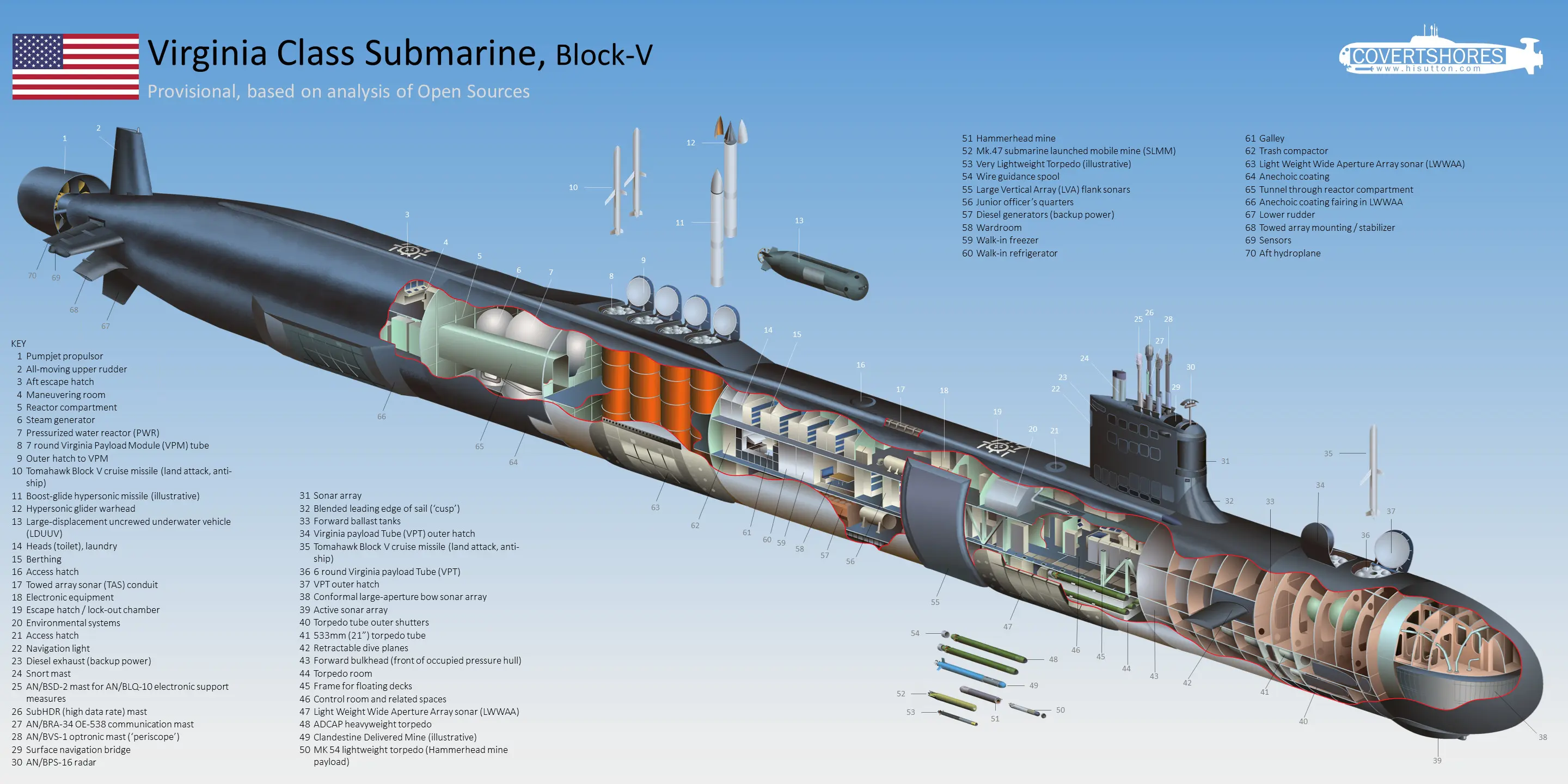
 In a significant strategic alignment designed to modernize its undersea warfare architecture, the U.S. Department of the Navy has officially announced the reclassification of 19 planned Virginia-class attack submarines equipped with the Virginia Payload Module (VPM). Transitioning these specialized platforms from standard fast-attack submarines (SSNs) to dedicated guided-missile submarines (SSGNs) marks a vital doctrinal and operational shift. The redesignation formally recognizes the extraordinary strike capacity and strategic reach these advanced platforms bring to the fleet, setting them apart from traditional attack boats.

The sweeping classification change specifically targets upcoming Block V and Block VI hulls, which feature an extended mid-body hull design incorporating four large-diameter payload tubes. This engineering modification substantially increases the vessel's length and weapon payload capacity. Each reclassified SSGN will be capable of carrying an additional 28 Tomahawk cruise missiles, bringing the submarine's total combined missile payload to an impressive 40 tubes.

Beyond legacy cruise missiles, these high-volume payload tubes are specifically engineered to accommodate next-generation strategic strike weapons. This includes integration capabilities for the Navy's upcoming hypersonic Conventional Prompt Strike (CPS) system, granting undersea forces unprecedented conventional deterrence and prompt global strike options. By operating silently within contested environments, these platforms provide regional combatant commanders with a survivable, highly lethal forward-presence option.

Chief of Naval Operations Adm. Daryl Caudle highlighted that the new classification accurately reflects the evolved mission profiles of these undersea leviathans. The announcement arrives as the U.S. Submarine Force begins the formal inactivation process for its aging fleet of Ohio-class converted guided-missile submarines, such as the USS Georgia. Transitioning to VPM-equipped Virginia-class SSGNs ensures a seamless, uninterrupted bridge in undersea strike capability as the legacy boats reach the end of their operational service lives.

The first submarine slated to debut with both the integrated VPM configuration and the new SSGN designation is the future USS Arizona (SSGN 803), the second Block V hull currently projected for delivery in fiscal year 2029. Fleet deliveries spanning the 19 reclassified boats will continue steadily through 2038. This multi-decade acquisition pipeline anchors the core of the Navy's Distributed Maritime Operations, ensuring that the U.S. undersea enterprise maintains an unassailable technological and tactical edge across global oceans.

Saudi Arabia’s Multi-Mission Surface Combatant (MMSC) Program Hit by Fresh Design Fixes and Further Delays


The high-profile Multi-Mission Surface Combatant (MMSC) program destined for the Royal Saudi Navy has encountered yet another major roadblock. According to a newly disclosed contract issued by the U.S. Department of Defense, all four warships under construction are facing mandatory design modifications and engineering overhauls. The additional work stems from newly identified technical discrepancies and critical deficiencies found in trial cards used to document shipboard issues, further stretching an acquisition timeline that has already lagged several years behind schedule.

The corrective engineering efforts and structural updates will directly impact all four hulls, including the lead ship HMS Saud (820), which was launched at Fincantieri Marine Group’s shipyard in Marinette, Wisconsin. Alongside resolving newly uncovered technical inconsistencies, the multi-year remediation contract aims to complete previously approved engineering changes that were left unfinished prior to the initial vessel rollouts and launch ceremonies.

The troubled program has suffered from continuous setbacks since its inception, driven by a combination of early pandemic disruptions, skilled workforce shortages, teething design hurdles inherited from the U.S. Navy’s Freedom-class Littoral Combat Ship architecture, and numerous custom design modifications requested by Riyadh. Consequently, initial delivery targets have slipped significantly, and current program estimates project that final system integration, post-shakedown availabilities, and industrial maintenance windows will extend out to 2031, pushing the total shipbuilding and outfitting span to well over a decade.

The MMSC platform—procured under Saudi Arabia's strategic Tuwaiq Project—represents a formidable evolution of the base Freedom-class hull, displacing approximately 4,000 tons and outfitted with advanced combat systems. Key enhancements include MBDA’s Sea Ceptor system utilizing 32 Common Anti-air Modular Missiles (CAMM) packed into Mk-41 vertical launch cells, Harpoon Block II anti-ship missiles, KNDS Narwhal 20mm remote weapons stations, Saab's Ceros 200 fire control radar, and Indra’s Rigel electronic support measures.

The remediation work will be primarily distributed across specialized U.S. facilities, including locations in Moorestown, New Jersey, and operational hubs near Naval Station Mayport in Florida. While the MMSC program is ultimately intended to drastically elevate the operational capabilities and tactical reach of the Royal Saudi Navy, these latest design fixes underscore the complex industrial and engineering hurdles inherent in tailoring first-of-their-kind foreign military sales surface combatants.

U.S. Navy Awards Saildrone $16.3 Million Task Order to Expand Unmanned Counter-Narcotics Operations


 The U.S. Navy has officially awarded maritime drone manufacturer Saildrone a $16.3 million task order extension to continue deploying its advanced unmanned surface vessels (USVs) for counter-narcotics and counter-illicit trafficking operations. Operating under the umbrella of U.S. Naval Forces Southern Command and the U.S. Navy Fourth Fleet, the expanded initiative deploys a fleet of autonomous systems to bolster maritime security across the Caribbean Sea and the Eastern Pacific Ocean through 2027.

The contract extension directly supports the ongoing counternarcotics efforts of the Joint Interagency Task Force South (JIATF-S), aligning closely with broader administration directives to clamp down on illicit maritime smuggling routes. Since 2023, Saildrone’s 33-foot Voyager USVs have operated continuously in critical regional chokepoints—including waters near Panama, the Galapagos Islands, and traditional maritime approaches to the southern U.S. border—providing persistent, long-dwell surveillance that frees up crewed warships for active interdictions.

The tactical utility of the autonomous fleet was underscored by the recent public disclosure that a Saildrone Voyager directly enabled a major counter-drug operation in October 2025. By maintaining persistent surface and subsurface surveillance, the USV successfully tracked and located a drug-smuggling vessel in the Caribbean, allowing U.S. naval assets to execute a decisive interdiction that resulted in the seizure of more than $81 million worth of cocaine.

Company leadership emphasized that the successful interception proves the operational value of unmanned systems is no longer merely theoretical. Designed for months-long deployments without requiring human intervention or refueling, the Voyager vessels function simultaneously as an unblinking surveillance alarm and a strategic deterrent against illicit maritime networks operating across expansive oceanic domains.

The expanded task order forms a core component of the Navy's broader "hedge strategy," which heavily emphasizes investing in autonomous platforms for sea denial, persistent domain awareness, and distributed maritime operations. As the Navy increasingly leverages U.S. Southern Command as an operational testbed for tailored, non-traditional force packages, the integration of autonomous surface drones marks a fundamental evolution in modern border and maritime security enforcement.

Taiwan Launches Annual Han Kuang Exercises to Test Decentralized Command and Wartime Resilience


 Taiwan has officially kicked off its largest and most comprehensive military exercises of the year, launching the 10-day annual Han Kuang drills. Designed to evaluate the armed forces' readiness against potential cross-strait contingencies, the sweeping exercises place a heavy emphasis on testing decentralized command structures, adaptive battlefield decision-making, and whole-of-society defense resilience as Beijing continues to ramp up military pressure around the island.

The multi-day exercise commenced following an operational directive issued from an underground command center in Taipei, immediately triggering emergency deployments across the island. Core tactical maneuvers include the rapid dispersal of fighter jets to underground hangars and regional highway strips, the execution of emergency naval sorties, and widespread armor movements through urban centers. In a notable first for the Han Kuang drills, the military has also incorporated temporary limitations on mobile internet speeds and communications networks to simulate severe electronic warfare attacks and communications blackouts.

Drawing critical tactical lessons from recent conflicts in Eastern Europe, this year’s exercises focus intensively on decentralizing authority. Senior defense officials noted that subordinate units are being pushed to operate autonomously when higher command nodes are severed or disrupted. To ensure absolute operational clarity across fragmented echelons, the military has adopted a U.S.-style "backbrief" protocol, requiring junior officers receiving directives to restate mission parameters back to senior leadership to guarantee unity of effort.

The training schedules also feature extensive integration of asymmetric capabilities, including joint reconnaissance and attack drone operations forming rapid kill chains, alongside deployments of Taiwan-developed surface-to-air missile systems and mobile artillery platforms. Furthermore, the drills incorporate civil defense evaluations, testing the operational capacity of air-raid shelters, emergency supply distribution stations, and the wartime relocation of industrial manufacturing hubs.

As regional observers and military attachés closely monitor the exercises from Taipei, the drills underscore Taiwan's urgent push to modernize its defense posture. By testing innovative tactical doctrines, empowering frontline commanders, and hardening civilian infrastructure against high-intensity gray-zone pressures, the Han Kuang exercises serve as a stark demonstration of the island's resolve to deter aggression and safeguard its sovereign security.

France Taps National Automotive Sector to Mass-Produce Military Drones and Build Industrial Surge Capacity


Moving aggressively from political declarations to industrial reality, France is officially enlisting its massive automotive sector to mass-produce military drones and loitering munitions. Driven by urgent operational lessons from the war in Ukraine and mounting pressure from allies to strengthen domestic defense capabilities, the French Ministry of the Armed Forces has orchestrated a series of high-profile partnerships linking traditional automotive giants, specialized suppliers, and defense contractors. The strategic shift aims to bypass the limited output capabilities of traditional defense startups and harness factory floors designed for high-volume commercial production.

At the heart of this industrial transformation is a groundbreaking collaboration between Renault Group and defense tech firm Thales. The partners are actively redesigning Thales's Toutatis loitering munition to leverage automotive-style manufacturing techniques. By replacing expensive, slow 3D-printed components with high-volume injection-molded plastic parts and reducing the total number of parts and fasteners by roughly 40 percent, the initiative aims to slash per-unit costs and scale production to an anticipated 1,000 units per month beginning in 2027.

Parallel manufacturing pushes are rapidly expanding across the country's industrial ecosystem. Drone manufacturer Delair has partnered with German automotive supplier Schaeffler to establish a dedicated French production line projected to turn out approximately 100 tactical drones per day. Simultaneously, automotive supplier Valeo is gearing up to manufacture electric motors for Harmattan AI systems, while Forvia is expanding its industrial footprint to build AI-powered interceptor drones and counter-UAS technologies designed to neutralize hostile aerial threats.

French defense procurement officials emphasize that the primary objective of these initiatives is not to flood active military inventories with stockpiles that risk rapid technological obsolescence, but rather to build robust, scalable "surge capacity." By integrating mature production lines, deep supply chains, and advanced logistics expertise from the automotive sector, Paris hopes to establish an industrial safety net capable of scaling up to tens of thousands of drones annually should a major continental conflict erupt.

The sweeping pivot highlights a broader global trend across Western defense planning, where the ultimate center of gravity is shifting away from isolated technological invention toward mass-manufacturing integration and trusted industrial execution. As European nations race to secure sovereign supply chains in an increasingly volatile security environment, France's conversion of car factories into defense production hubs stands as a bold blueprint for modern military industrial policy.

Lockheed Martin Initiates Talks for Domestic Critical Minerals to Comply With New White House Supply Chain Directives


 Responding directly to intense pressure from the White House and tightening export restrictions from Beijing, aerospace giant Lockheed Martin has entered advanced negotiations to secure long-term domestic supplies of vital critical minerals. According to industry sources familiar with the discussions, the world's largest defense contractor is actively pursuing supply agreements with North American mining firms to acquire scandium and germanium—two essential components heavily relied upon for advanced military hardware, including F-35 fighter components, Patriot interceptor guidance systems, and high-performance infrared sensors.

The urgent pivot toward domestic sourcing comes on the heels of a stringent executive order signed by President Donald Trump last month. The directive systematically tightens waiver mechanisms, making it significantly harder for major defense contractors to continue utilizing foreign suppliers—particularly Chinese entities—for raw materials integral to national security systems. For years, defense firms have relied on waivers to acquire foreign minerals due to lower market costs, leaving the U.S. defense apparatus acutely vulnerable to geopolitical supply disruptions and trade retaliations.

As part of this strategic realignment, Lockheed has reportedly reached a preliminary framework agreement with Colorado-based NioCorp Developments to secure roughly 15 metric tons of scandium annually. The material is slated to be sourced directly from NioCorp's upcoming Nebraska mining operation, which is projected to open by 2028 and scale up to an annual output of 100 metric tons. Because the United States has not domestically mined scandium since 1969, locking in a domestic supplier represents a major step toward establishing an independent rare-earth pipeline for lightweight, corrosion-resistant aerospace alloys.

Concurrently, Lockheed is engaged in complex, long-running negotiations with Canadian firms Teck Resources and 5N Plus to secure stable supplies of germanium, a crucial material utilized in thermal imaging and targeting sensors. Teck mines zinc and germanium concentrates at its Red Dog facility in Alaska, while 5N Plus has recently leveraged Pentagon funding to scale up processing capabilities in Utah using recycled feedstock. Despite the clear strategic necessity of these domestic pipelines, negotiations have faced traditional hurdles, including pricing discrepancies and cost differentials when compared to historically cheaper Chinese market alternatives.

The unfolding supply negotiations underline the severe structural challenges facing the U.S. defense industrial base as it attempts to untangle decades of foreign dependency. With the Trump administration enforcing strict compliance timelines and demanding absolute supply chain security from prime contractors, the race to build a self-sustaining domestic critical minerals ecosystem has become a top-tier national security priority.

U.S. Military Depletes Global Stockpiles of Long-Range Precision Missiles During Five-Month Campaign Against Iran


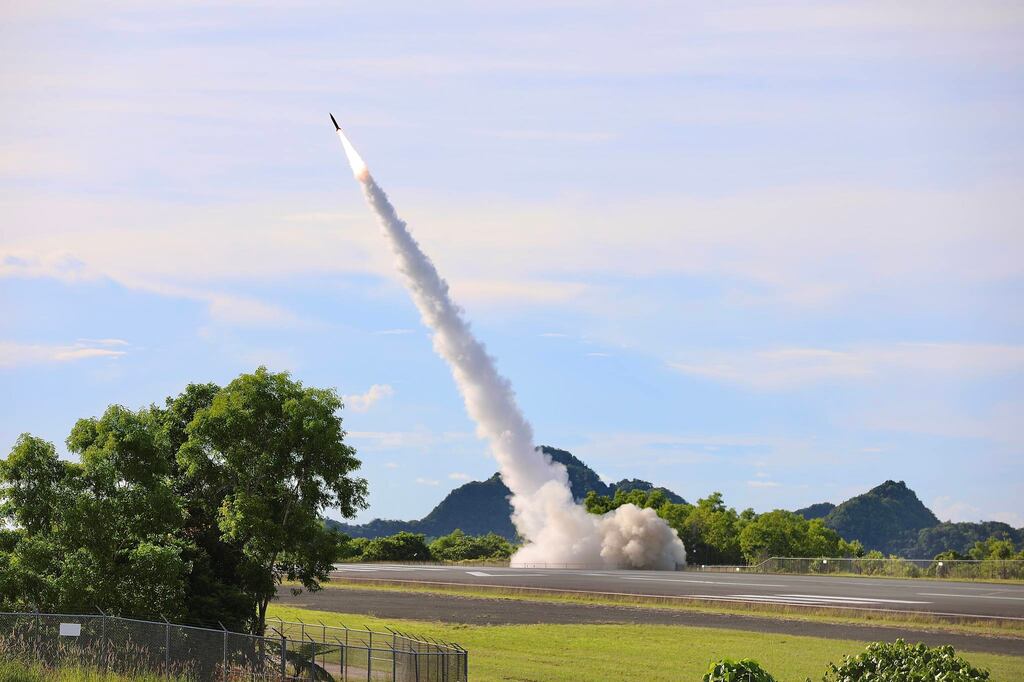
A sweeping intelligence and defense data assessment has revealed that the U.S. military has expended virtually all of its global inventory of premier surface-to-surface long-range precision missiles during the five-month conflict with Iran. According to multiple sources familiar with internal Pentagon tracking, the heavy combat expenditures have severely drained stockpiles of the Army Tactical Missile Systems (ATACMS) and the newer, advanced Precision Strike Missiles (PrSM).

The unprecedented consumption rate highlights the steep industrial and strategic toll of Operation Epic Fury. To minimize pilot exposure and avoid risking manned aircraft in heavily defended airspace across the Persian Gulf, military planners leaned heavily on these surface-to-surface weapons, which cost in excess of $1 million per unit. The heavy reliance on ATACMS and PrSM allowed U.S. forces to strike high-value Iranian infrastructure from safe standoff distances, but it has left domestic arsenals precariously depleted.

The exhaustion of these key missile inventories has sparked intense internal debate within the administration and defense circles regarding overall military readiness for potential future conflicts against peer adversaries like China or Russia. Because the newer PrSM inventory is still ramping up through initial production phases and ATACMS production is winding down, military analysts warn that rebuilding the nation's surface-to-surface strike depth will take years, even with emergency industrial acceleration.

Compounding the problem are sharp declines across other critical defensive and offensive munitions lines. Recent independent watchdog assessments, including reports from the Center for Strategic and International Studies (CSIS), indicate that the military has burned through roughly 65% of its Patriot interceptors and at least 38% of its THAAD missile inventory between February and July. Furthermore, naval forces have expended slightly less than half of the global inventory of Tomahawk cruise missiles.

While the White House and Pentagon leadership have downplayed the shortages—insisting that domestic defense contractors are expanding production at record rates and that U.S. Central Command can manage regional deterrence—the stockpile crisis underscores the widening chasm between high-intensity conventional conflict consumption and the industrial base's current manufacturing velocity.

U.S. Army Launches Next-Generation C-sUAS Missile Program to Counter Small Drone Threats


 The U.S. Army has officially issued an urgent Sources Sought notice for the Next Generation C-sUAS Missile (NGCM) project, seeking an advanced, high-performance surface-to-air interceptor tailored specifically to eliminate small unmanned aircraft systems. As modern battlefields across Eastern Europe and the Middle East continue to be saturated by cheap, highly effective loitering munitions and reconnaissance drones, military planners are striving to close critical capability gaps where traditional air defense effectors prove economically unsustainable or operationally mismatched.

The core objective of the new initiative is to rapidly field an extended-range, quick-response missile optimized to defeat Group 2 and Group 3 small unmanned aerial systems. According to the Department of Defense classification framework, Group 2 encompasses platforms weighing between 21 and 55 pounds—such as Boeing's ScanEagle—operating at lower altitudes and speeds, while Group 3 includes larger tactical models like Insitu's RQ-21 Blackjack weighing up to 1,320 pounds. To effectively neutralize these agile threats, initial baseline specifications require the new missile to intercept targets flying at an altitude of 6 kilometers at ranges exceeding 16 kilometers, with an ultimate developmental threshold targeting targets up to 8 kilometers high and 25 kilometers out.

Engineering specifications dictate that the missile must be engineered for rapid employment, achieving a launch reaction time of under five seconds from the moment an operator issues a fire command. Furthermore, the NGCM must integrate seamlessly into the existing Coyote Launcher system with minimal to no structural modifications, serving as a powerful technological step up while preserving backward compatibility. The weapon must also interface cleanly with prominent tactical air defense radars, including the Sentinel A3/A4, LTAMDS, and TPQ-53 sensor suites.

To maximize operational flexibility across diverse tactical environments, the Army envisions fielding the NGCM system in two distinct configurations. A fixed-site variant will rely on a comprehensive matrix of stationary sensors to protect vital infrastructure, logistics nodes, and forward operating bases. Simultaneously, a mobile version will be mounted directly on combat and tactical vehicles, enabling units to execute counter-drone missions both while halted and while moving on-the-move at the tactical edge.

Cost containment and aggressive industrial timelines form the bedrock of the procurement strategy. The Army is targeting an individual unit cost of under $150,000 for a massive bulk procurement objective of 5,000 missiles. While significantly more expensive than the low-cost drones they are built to destroy, the missiles offer all-weather operational reliability that complements experimental directed-energy weapons, which remain vulnerable to adverse atmospheric conditions. Under the ambitious acquisition schedule, the service aims to reach Technology Readiness Level 7 with field prototype testing by the end of fiscal 2027, requiring industry partners to deliver 50 operational assessment missiles by early 2028.