Thursday, May 30, 2024

Ukrainian Military Criticizes US Abrams Tanks: Vulnerabilities and Battlefield Challenges Revealed


 The reputation of the US-supplied Abrams tanks, once considered a game-changer for Ukraine’s military, is now under heavy scrutiny. Ukrainian soldiers have reported weaknesses and flaws in these American vehicles, raising doubts about their effectiveness in the ongoing conflict with Russian forces.

Initially, the deployment of Abrams tanks, specifically the M1A1 models, was intended to bolster Ukraine's resistance. In January 2023, following persistent lobbying by Ukrainian officials, the US agreed to send 31 Abrams tanks. Each costing approximately $10 million, these tanks were expected to breach Russian defensive lines. By October 2023, all 31 tanks had arrived in Ukraine, igniting hopes for a strategic advantage.

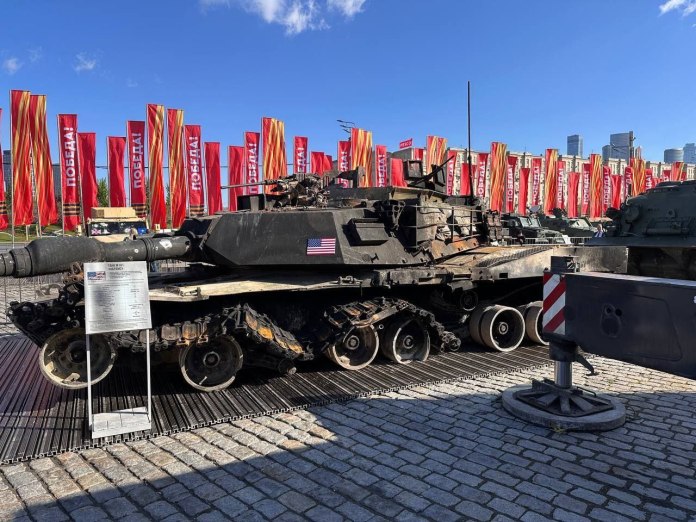
However, battlefield experiences have revealed significant challenges. At least five Abrams tanks have been destroyed by Russian attacks, particularly from drones, undermining their anticipated impact. Ukrainian tank crews trained in Germany expressed concerns about the tanks’ armor, stating it is not strong enough to protect against modern weapons.

"The tank’s armor is not sufficient for this moment," said one crew member, known as Joker. "It doesn’t protect the crew. For real, today, this is the war of drones. So now, when the tank rolls out, they always try to hit them." Another crew member, Dnipro, highlighted that Abrams tanks have become the "number one target" on the battlefield, emphasizing the high risk to soldiers.

Despite reports suggesting a withdrawal of Abrams tanks from the front lines, officials from the 47th Mechanized Brigade confirmed that all Abrams tanks remain near the eastern front. Technical issues have further compounded the tanks' challenges. During a CNN visit, one tank was immobilized due to an engine problem despite being newly shipped from Poland. Additionally, rain or fog can cause condensation, potentially damaging the vehicle's electronics.

The crews also face ammunition issues, with the current supplies being unsuitable for their combat needs. "What we have is more for direct tank-to-tank fights, which happens very rarely," Joker explained. "More often, we work as artillery. You need to take apart a tree line or a building. We had a case when we fired 17 rounds into a house, and it was still standing."

Why Are Abrams Tanks Facing Challenges?

Main Battle Tanks (MBTs) play a critical role in modern high-intensity land warfare. The conflict between Russia and Ukraine has shown that large-scale offensive operations require an adequate supply of these powerful machines. However, several factors have contributed to the struggles of US-supplied Abrams tanks on the Ukrainian frontlines.

Some Western sources have criticized Ukrainian leadership for poor operational planning. However, Ukraine's armed forces are at a severe disadvantage against a well-armed and deeply entrenched Russian Army. The effectiveness of Abrams tanks has also been hindered by the lack of crucial aerial support, which is vital for modern armored warfare. Ukrainian tank crews noted the critical difference between NATO and Ukrainian battlefield conditions. Abrams tanks were designed for a NATO style of warfare, which heavily relies on air power and artillery to prepare the battlefield before tanks and infantry advance. Kyiv has often expressed frustration over the lack of adequate artillery and air power.

Joker, a Ukrainian tank crew member, explained that NATO soldiers would never undertake similar advances without air support. "Call the aviation, call the artillery," he mimicked a NATO soldier, pointing out that Ukraine has neither adequate aviation nor artillery, only tanks.

Entrenched defenses can only be breached with decisive airpower and massing heavy armor. Without airpower, this tactic requires numerous tanks, but Kyiv's current arsenal is a patchwork of different vehicles. While Washington has supplied 31 Abrams tanks to Ukraine, experts argue that at least two brigades of Abrams tanks—approximately 200—are needed in a coordinated effort to make an impact on the battlefield.

Despite their advanced design and capabilities, the limited number of Abrams tanks cannot overcome the well-fortified Russian defenses. Ukraine has become a graveyard for tanks, as even these advanced vehicles succumb to the harsh realities of the battlefield.

Sweden Donates AEW&C Aircraft to Ukraine, Enhancing F-16 Capabilities Amid Threats from Russian MiG-31BM


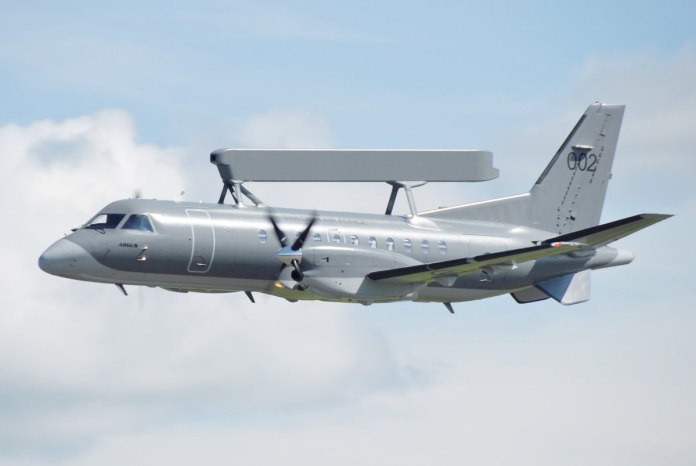
In a major and unexpected move, Sweden has announced it will supply Ukraine with two Saab 340 airborne early warning and control (AEW&C) aircraft as part of a new SEK 13.3 billion ($1.25 billion) military aid package. This aid marks Sweden's largest support package to date, aiming to bolster collective air defense capabilities. The announcement came on May 29, when the Swedish government detailed its "Military Support Package 16," with the Saab 340 AEW&C aircraft, also known as the S 100D Argus or ASC 890, being the central component.

The Swedish Ministry of Defense stated that these aircraft would provide Ukraine with a new capability for airborne radar reconnaissance and combat control against air and sea targets, significantly enhancing Kyiv's long-range detection and targeting abilities. Equipped with advanced Erieye radars based on Active Electronically Scanned Array (AESA) technology, these aircraft will revolutionize Ukraine’s surveillance capabilities.

Currently, the Swedish Air Force operates only two of these sophisticated surveillance planes. The aid package indicates that one or both of these planes will be transferred to Kyiv, temporarily reducing Sweden’s AEW&C capability. To address this, Stockholm will expedite the acquisition of an additional Saab GlobalEye platform and accelerate the delivery of two units already on order, with the first new aircraft expected by 2027.

Sweden’s Minister of Defense, Pal Jonson, noted that sending the planes followed intensive discussions with coalition countries and emphasized that the ASC 890 aircraft would significantly bolster Ukrainian air defense. These advanced aircraft will complement the F-16 fighter jets to be supplied by Belgium, Denmark, Norway, and the Netherlands, forming a robust air force coalition for Ukraine. The timeline for the delivery of the ASC 890 aircraft has not been specified.

AEW&C Aircraft for Ukraine

The deployment of these AEW&C aircraft holds significant strategic value. They offer extensive overhead surveillance, crucial for detecting low-flying threats like Russian drones and cruise missiles that often evade conventional radar systems. The Saab 340 AEW&C will play a vital role in coordinating F-16 fighter operations by detecting, prioritizing, and guiding targets for interception, thus enhancing Ukraine's defense posture.

Valerii Romanenko, a leading researcher at the National Aviation University of Ukraine, emphasized the transformative impact of these aircraft, highlighting their ability to unlock the full potential of the multi-role F-16 fighters. The Saab 340’s integration with the NATO-standard Link 16 datalink communications system ensures seamless coordination with allied air defense systems, providing a comprehensive air defense picture and targeting data to compatible systems both airborne and on the ground.

Russian Threats and AEW&C Vulnerability

Despite their operational advantages, AEW&C systems are vulnerable to hostile actions. Earlier this year, the Russian Air Force lost two Beriev A-50 AWACS planes to Ukrainian missile attacks, underscoring the strategic importance and susceptibility of these aircraft. The Saab 340 AEW&C, with a detection range of up to 450 km, would need to operate within Ukrainian airspace to be effective, making them targets for Russian MiG-31BM and Su-57 fighters armed with R-37 air-to-air missiles, which have a range of 300 kilometers.

While the MiG-31BM presents a detectable threat, the Su-57’s advanced stealth capabilities pose a significant detection challenge. Additionally, the R-37M missiles are exceedingly difficult to evade. The Mikoyan MiG-31BM interceptors near the Russia-Ukraine border extend the threat radius across Ukrainian airspace, often forcing Ukrainian fighter pilots to abort missions. The relatively slower and less agile Saab 340 is more vulnerable compared to the four-engine A-50, which can reach higher speeds and altitudes.

Conclusion

The introduction of Saab 340 AEW&C aircraft to Ukraine’s military will significantly enhance its surveillance and defense capabilities. However, these gains come with increased vulnerability to advanced Russian fighter jets and missile systems. The balance of power in the region will be closely monitored as these developments unfold. 

Global Advances in Sixth-Generation Fighter Jets: Emerging Technologies and International Collaboration


 Most fighter jets in service worldwide belong to the 4th and 4.5th generations, with over 1,500 fifth-generation fighters currently operational. Numerous fifth-generation aircraft programs are now integrating sixth-generation technologies, which are still developing and are expensive due to their cutting-edge nature. These advancements include enhanced communications, Internet of Things (IoT) capabilities, and extensive data sharing across platforms. A global look at the efforts to develop sixth-generation fighter aircraft reveals various international collaborations.

Many nations, unable to fund these expensive programs independently, are forming consortiums. The F-35 program exemplifies such partnerships. Some countries aim to enhance their defense industries and reduce reliance on American programs. The Global Combat Air Program (GCAP), involving Italy, Japan, and the UK, is a notable example.

The term "generation" in jet fighters refers to stages in design, performance, and technological evolution, though there are no official definitions. Understanding the fifth and sixth generations is crucial.

Fifth-Generation Fighters: The fifth generation began with the F-22 Raptor in 2005, designed for a network-centric combat environment. These fighters have advanced low-observable features, multifunction AESA radars, and integrated sensors for superior situational awareness. Key features include advanced electronic warfare systems, stealth technology, thrust vectoring for enhanced maneuverability, and internal weapon bays to maintain low radar visibility. Examples include the F-35, Russia's SU-57, and China's Chengdu J-20 and Shenyang J-31.

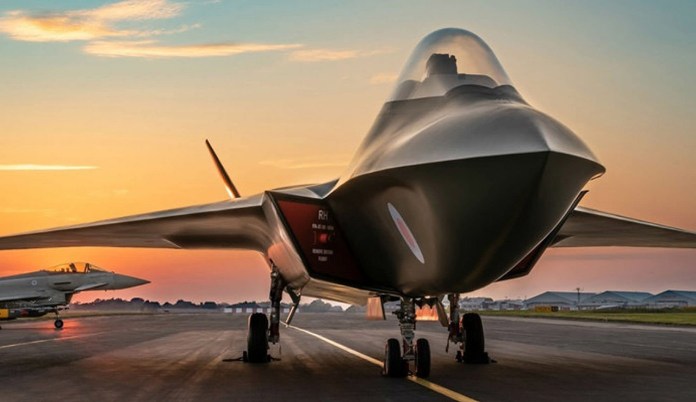
Sixth-Generation Technologies: These include advanced networking, AI, data fusion, cyber warfare capabilities, and modular designs allowing rapid upgrades. New stealth airframes, high-capacity networking, and integration with various platforms are expected. The Tempest program, led by the UK, Italy, and Sweden, exemplifies these technologies, including AI-supported operations and advanced radar systems.

Global Collaborations: The GCAP aims to merge efforts from the UK, Japan, and Italy to develop a sixth-generation fighter, combining the BAE Systems Tempest and Mitsubishi F-X programs. Development is set to start in 2025, with service induction around 2035. Challenges include harmonizing capabilities across partner nations and ensuring cost-effectiveness.

US NGAD Program: The USAF's Next Generation Air Dominance (NGAD) program aims to succeed the F-22 Raptor with a family of systems, including manned and unmanned aircraft, expected to be operational by the 2030s.

Chinese and Russian Programs: China is advancing its sixth-generation aircraft development, aiming for completion by 2035. Russia, despite the incomplete operationalization of the Su-57, is also pursuing sixth-generation technology, emphasizing AI and automation.

Overall, the development of sixth-generation fighter jets is marked by international collaboration, cutting-edge technology integration, and the aim to maintain air superiority in future combat environments.