Sunday, July 7, 2024

Iranian Navy’s IRIS Sahand Frigate Sinks Mysteriously in Bandar Abbas Port


 The Iranian Navy recently suffered a significant loss when the frigate IRIS Sahand [F-74] unexpectedly sank at the port of Bandar Abbas. Reports from Iranian and Russian sources indicate that the cause of the sinking remains unclear. The frigate, docked at the southern Iranian port on the Persian Gulf, was found lying on its left side, with parts of its starboard side and conning tower visible above the waterline. Iranian media have acknowledged the "incident" but have not provided detailed explanations, referring to it as an accident.

The IRIS Sahand [F-74] is relatively new, having joined the fleet on December 1, 2018. It was constructed at the Shahid Darvishi Marine Industries shipyard in Bandar Abbas, near the Strait of Hormuz. Sahand is the third vessel in the Mowj project lineup, following its predecessors, Jamaran and Damavand.

Named after a volcano, the IRIS Sahand carries the legacy of its predecessor, a British-built Vosper Mk. 5 light frigate that was lost during combat with American forces in Operation Praying Mantis in 1988. The current IRIS Sahand made headlines in 2021 by traveling from the Persian Gulf to the Baltic Sea to participate in the Main Naval Parade of the Russian Navy.

The IRIS Sahand is a Moudge-class frigate, domestically produced in Iran. It was launched in November 2012 and entered service in December 2018. The vessel measures approximately 94 meters (308 feet) in length and 11 meters (36 feet) in beam, with a draft of about 3.25 meters (10.7 feet). These dimensions enable it to perform a variety of naval operations across different maritime environments.

Powered by four diesel engines, the IRIS Sahand can reach speeds of up to 30 knots and has a range of about 3,700 nautical miles when cruising at 15 knots. With a displacement of around 1,500 tons, it is classified as a light frigate but is equipped with advanced systems and weaponry, making it a versatile and formidable part of the Iranian Navy.

The frigate features an array of systems, including radar, sonar, and electronic warfare capabilities, enhancing its ability to detect, track, and engage various threats. Its advanced communication systems enable seamless coordination with other naval units.

The IRIS Sahand typically has a crew of around 140 personnel, including officers, sailors, and specialized technicians responsible for operating and maintaining the ship’s diverse systems and weaponry. The crew size ensures efficient operations and readiness for various missions.

In terms of armaments, the IRIS Sahand is well-equipped with anti-ship missiles like the Noor and Qader, capable of striking enemy vessels over long distances. For defense against multi-spectrum threats, it is armed with torpedoes, naval guns, and surface-to-air missiles. Additionally, it features close-in weapon systems (CIWS) for point defense against incoming missiles and aircraft.

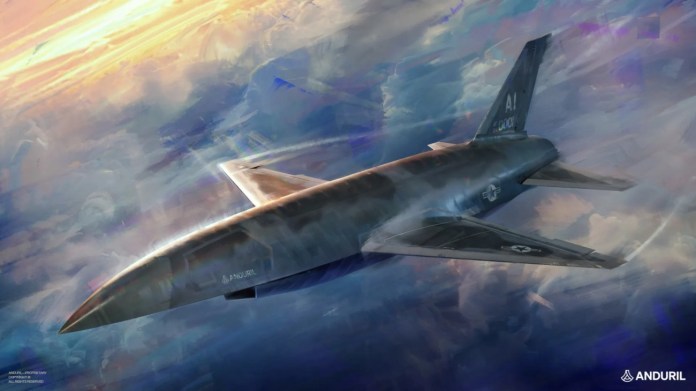
US Air Force Advances Next-Gen Air Dominance with Anduril and General Atomics CCA Funding


 The US Air Force (USAF) has decided to continue funding Anduril and General Atomics for detailed design, manufacturing, and testing of near-prototype platforms under the Collaborative Combat Aircraft (CCA) program. This marks a significant step towards enhancing the Air Force's next-generation air dominance capabilities. The CCA program is a critical part of the USAF’s Next Generation Air Dominance (NGAD) Family of Systems, which aims to maintain air superiority with a mix of manned and unmanned systems, reducing human risk, lowering costs, and increasing efficiency.

CCA is a US program for unmanned combat air vehicles (UCAVs) designed to work in tandem with next-generation manned aircraft, such as sixth-generation fighters and bombers like the Northrop Grumman B-21 Raider. Unlike traditional UCAVs, CCAs incorporate artificial intelligence (AI) to enhance their battlefield survivability, offering a more affordable alternative to manned aircraft with similar capabilities.

From 2023 to 2028, the USAF plans to invest over $6 billion in CCA programs. Success in this initiative could reduce the need for additional manned squadrons, balancing affordability with capability. CCAs will elevate human pilots to mission commanders, with AI handling tactical control of cost-effective robotic craft. These multi-role aircraft can be modular, performing various tasks such as sensors, shooters, and weapons carriers, and potentially acting as decoys or aerial refuelers.

The CCA program will integrate AI and autonomy to complete missions without constant human intervention, enhancing situational awareness, lethality, and survivability in contested environments. DARPA’s Longshot UAV, which extends mission range and reduces risks to manned aircraft, is an example of such technology.

Two years ago, the USAF announced its intent and broad requirements for the desired CCA. As part of the 2024 budget, contracts have been awarded to Anduril and General Atomics, with nearly twenty other companies remaining as potential industry partners. The program aims to make production decisions by 2026 and operationalize the systems by 2030, including international partnerships to achieve economies of scale and interoperability with NATO and other allies.

Initial production contracts could include at least 1,000 CCAs, potentially pairing two CCAs with each of the 200 NGAD platforms and the 300 F-35s. The CCAs will enhance the USAF’s capability to counter growing aerial threats, particularly from China, by performing complex tasks such as electronic warfare and aerial combat.

DARPA’s Air Combat Evolution (ACE) program is a key contributor to the CCA initiative. ACE aims to increase trust in combat autonomy through human-machine collaborative aerial engagements. It applies AI to realistic dogfighting scenarios and scales autonomous dogfighting to more complex, multi-aircraft operational-level simulations, preparing for future live experimentation in Mosaic Warfare.

General Atomics plans to build the CCA using components from the MQ-9 Reaper, with the project still in its initial stages. Anduril, which acquired Blue Force Technologies and its “Fury” stealthy aggressor drone program, is another major player. Their designs, such as General Atomics’ “Gambit” and Anduril’s “Fury,” will leverage digital engineering and AI to enhance air dominance.

The CCA program represents a pivotal shift in aerial combat, leveraging AI and autonomous systems to create a cost-effective, powerful air force. With a planned investment of $6 billion through 2028, the USAF aims to deploy CCAs at a large scale, enhancing the safety and performance of current and future fighter fleets in response to proliferating hostile stealth fighters.