Tuesday, May 21, 2024

US Military Academy Report Reveals Three Strategies to Counter Kamikaze Drones

 The ongoing conflict in Ukraine has highlighted the impact of inexpensive drones causing significant damage to advanced, costly targets. This insight, combined with the effectiveness of Hamas's drone attack on Israel on October 7, has spurred the anti-drone industry to innovate technologies to combat drone threats on the battlefield.

Recently, Russia has deployed new AI-powered anti-drone systems, Abzats and Gyurza, in Ukraine. Abzats, a mobile jamming platform, uses AI to autonomously execute electronic warfare tasks, jamming frequencies utilized by UAVs. Similarly, Gyurza's AI selectively jams frequencies used by Ukrainian drones, neutralizing them. Oleg Zhukov, CEO of Geran, a Russian research company, affirmed the effectiveness of AI in electronic warfare for automatically suppressing enemy drones.

Ukraine, meanwhile, is receiving various counter-drone systems from the U.S., such as counter-drone gun trucks and laser-guided rockets. Additionally, Ukraine has acquired several CORTEX Typhon systems from Norway's Kongsberg, which detect drones via radar and shoot them down with missiles. Ukraine has also developed its own EW systems like the Brave1 and the L3Harris VAMPIRE, a laser-guided missile launcher used effectively against Iranian-produced Shahed drones.

Israel is a key player in the counter-drone sector with systems like Rafael's Drone Dome and Elbit's ReDrone, which detect drones and emit jamming signals to disrupt their operation. These systems are used by various countries to protect critical infrastructure and are considered highly effective.

The counter-drone market is growing rapidly, projected to reach $14.6 billion by 2031 from $1.3 billion in 2021, driven by key players like Lockheed Martin, Dedrone, and Raytheon Technologies. However, the cost imbalance between cheap drones and expensive countermeasures poses a significant challenge. Experts argue that the industry has yet to develop universally applicable, scalable solutions.

Brett Velicovich, CEO of Drone Experts, noted the vast number of counter-drone technologies, but no single solution guarantees complete protection against drones. The real challenge lies in creating an affordable, effective system adaptable to various situations.

There are four main categories of counter-drone systems: Tracking, Jamming, Kinetic, and Hybrid/Cyber approaches. Tracking and jamming systems locate and disrupt drone signals, while kinetic systems destroy drones with projectiles. However, these systems' effectiveness varies based on location and situation, especially against multiple drone attacks.

As drone technology advances, new vulnerabilities in sensors and radar coverage are exploited. Consequently, there is growing emphasis on building impenetrable shelters like bunkers against drone attacks.

A report from the "Modern War Institute" at the US Military Academy outlines three primary defense strategies against one-way attack drones: shooting them down, using electronic interference, or seeking shelter. Despite expensive technologies, simple measures like sandbags and concrete remain effective. Bunkers, combined with radars and concrete T-walls, provide essential protection, although overhead coverage is crucial against precise attacks.

In conclusion, counter-drone operations require a multi-layered defense combining active and passive measures. A single, simple solution is not feasible, and the ongoing conflict will continue to see evolving tactics between drones and counter-drone technologies.

Ukraine Unveils Advanced Decoy Missile ADM-160 MALD to Counter Russian Air Defenses


 As Ukraine awaits the arrival of Dutch F-16 fighter jets, a notable image has surfaced online, showing a Ukrainian MiG-29 equipped with an ADM-160 Miniature Air-Launched Decoy (MALD). This photograph, taken from a low pass by a Ukrainian Air Force MiG-29 of the 114th Tactical Aviation Brigade, marks the first time these US-supplied decoys have been publicly seen on a MiG-29 Fulcrum.

Despite their deployment to Ukraine in 2023, the Armed Forces of Ukraine (AFU) did not officially acknowledge the ADM-160 MALDs until May 2023, when debris from one was found in Luhansk. Observers had speculated on the launch platform, with possibilities including the MiG-29 or Su-27, both previously outfitted with American weapons like the JDAM-ER smart bombs and AGM-88 HARM missiles.

The ADM-160 MALD, an autonomous, programmable flight system, mimics US or allied aircraft to confuse enemy Integrated Air Defense Systems (IADS). While lacking an explosive warhead, its role is significant in offensive operations. Trent Telenko, a former US Department of Defense official, described the MALD as a small cruise missile designed to jam radars and simulate larger aircraft, highlighting its importance to Ukraine’s arsenal.

MALDs deceive enemy air defenses by mimicking aircraft and missile radar signatures, diverting attention and resources from genuine threats. Reports suggest Ukraine uses these decoys in conjunction with long-range Storm Shadow or SCALP-EG missiles, leveraging their ability to reach targets beyond the range of these missiles.

Weighing under 300 pounds, MALDs can be programmed to replicate various aircraft and missile radar signatures, effectively deceiving Russian air defenses. In January, Russian military sources claimed to have destroyed two ADM-160 MALD missiles, highlighting their strategic deployment. The MALD is likely used first to neutralize radars, followed by attacks on land targets with Storm Shadows.

The MALD’s deployment, featuring folded wings and a GPS-enabled inertial navigation system (INS), allows pilots to adjust its course up to the point of launch. Given their cost of up to $300,000 each, Ukraine reserves these decoys for high-value missions, making their appearance rare and significant.

The image of the MiG-29 with a MALD comes amid intensified fighting between Russia and Ukraine. As Russia escalates its offensive, Ukrainian President Volodymyr Zelensky has called for direct NATO involvement, emphasizing the need for at least 120-130 planes to counter Russian air dominance. With the expected arrival of F-16s, Zelensky urged NATO to use the planes to target Russian missiles, even if immediate supply to Ukraine is not feasible.

Zelensky also disclosed ongoing discussions with other countries about using their armed forces to attack Russian military assets, though he reaffirmed commitments to avoid using allied weapons inside Russia. Describing the battlefield situation as "one of the most difficult," Zelensky highlighted the intense fighting in Donbas and the control regained in Kharkiv after aggressive Russian operations.

Saudi Arabia Eyes F-35 Stealth Fighters in Historic US Defense Deal Amidst China’s Rising Influence


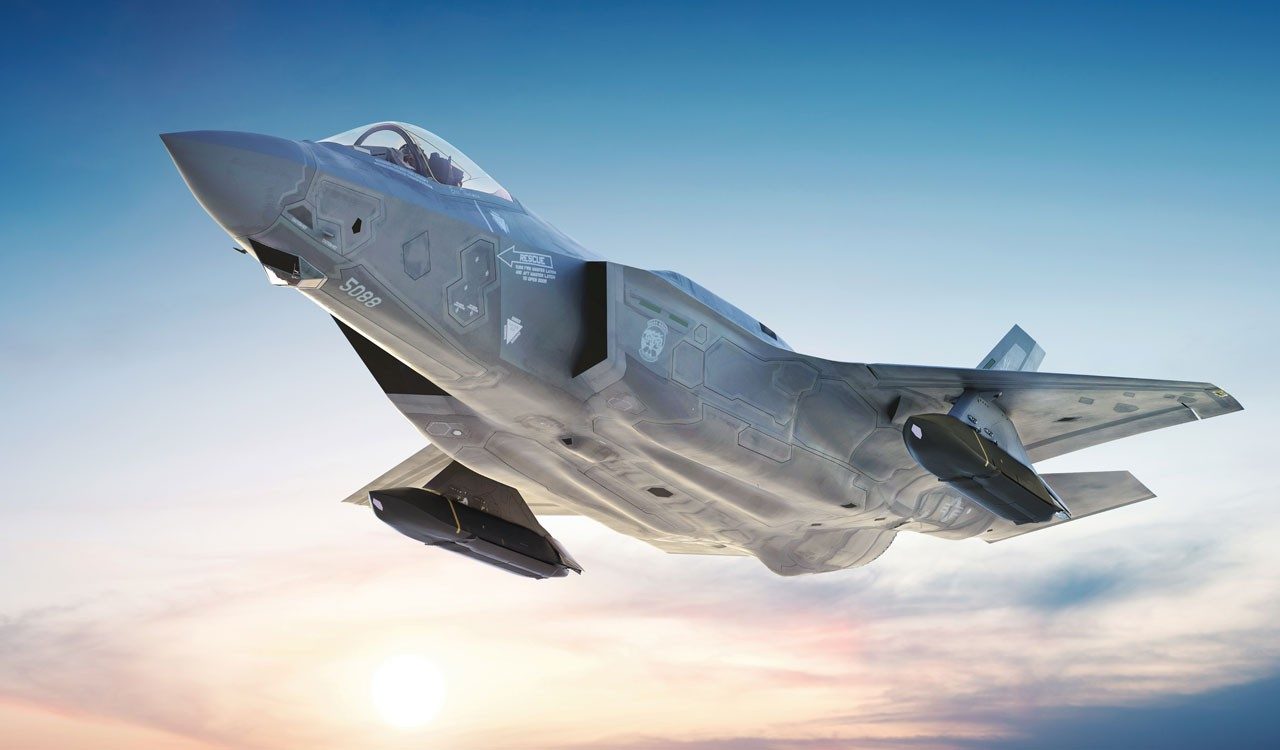
Saudi Arabia is on the brink of securing a landmark defense deal with the United States, potentially involving the purchase of F-35 Lightning II stealth fighters. This development comes as the US seeks to counter China's growing influence in the Persian Gulf.

On May 20, the White House announced significant progress in negotiations between US national security officials and Saudi Arabia, edging closer to finalizing a bilateral defense agreement. John Kirby, the White House national security spokesperson, indicated that both nations are "closer than we’ve ever been" to reaching a near-final agreement.

While specifics of the deal remain undisclosed, it is believed that the agreement could include a formal US commitment to defend Saudi Arabia in return for Riyadh limiting or suspending arms purchases from China. An American official hinted that discussions about supplying F-35 fighter jets and other weapons to Saudi Arabia are part of the talks, though no definitive promises have been made.

Historically, a major barrier to selling F-35 jets to Saudi Arabia has been the US's obligation to maintain Israel’s military superiority in the region. This agreement ensures that US-supplied weapons to Israel remain superior to those sold to neighboring countries. Consequently, Saudi Arabia and other Gulf states have considered alternative fighter jets like the French Dassault Rafale or the Eurofighter Typhoon.

Analysts believe that a sale of F-35s to Saudi Arabia could reinforce US commitment to the region's security, ensuring Saudi dependence on US training, maintenance, logistics, and interoperability. Despite these potential benefits, maintaining Israel's air superiority remains a critical factor.

The US's interest in securing this deal is driven by concerns over China's expanding footprint in the Middle East. Since the launch of China’s Belt and Road Initiative (BRI) in 2013, China has increased its economic and military presence in the region. In 2022, Saudi Arabia reportedly signed $4 billion in arms deals with China, including drones and missile systems, but not high-value assets like fighter jets.

China and Saudi Arabia's military cooperation has intensified, evidenced by their joint naval drills in 2023. Additionally, China brokered a détente between Saudi Arabia and Iran, highlighting its growing diplomatic influence.

US officials worry that China’s increasing influence is filling a void left by strained US-Saudi relations, worsened by incidents like the murder of journalist Jamal Khashoggi and disagreements over oil production during the Ukraine war.

Speculation is growing that the impending US-Saudi defense pact might not match a NATO-style agreement but will still involve substantial military cooperation. Reports suggest the deal could include sharing advanced technology like artificial intelligence and quantum computing, as well as supporting Saudi Arabia’s civilian nuclear program.

The Biden administration’s negotiations also seek to address Israel and Palestinian issues, aiming for regional stability. Last year’s attempts to broker peace between Saudi Arabia and Israel failed following renewed conflict in Gaza.

While optimism surrounds the potential defense deal, challenges remain, particularly Saudi demands for Israel to cease actions against Hamas and progress towards an independent Palestinian state. Kirby noted that while an exact timeline for the deal is uncertain, talks are on a positive trajectory.