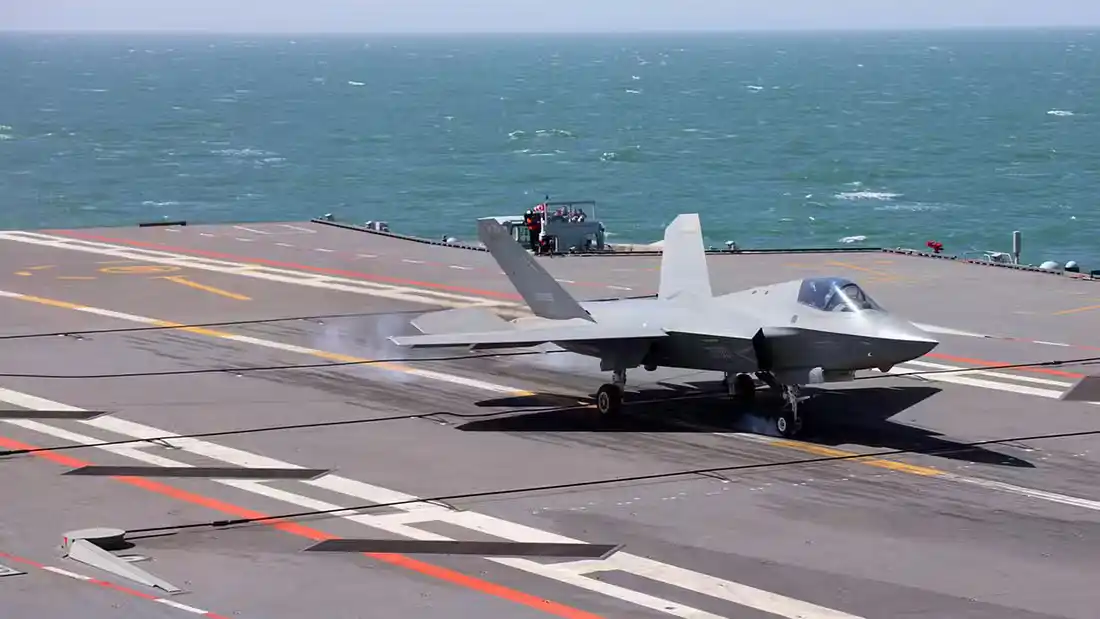
Photographs circulating since mid-August show a Chinese PLA Navy J-35 carrier-based stealth fighter with an unusually reflective, silver-like skin, catching light like polished metal rather than the subdued matte grey typically associated with fifth-generation low-observable coatings. Chinese online commentators have nicknamed the aircraft "Galaxy Battleship," and the resemblance to prior American experimental treatments has driven genuine international speculation about whether Beijing has developed an advanced new signature-management coating combining radar suppression, infrared reduction, and improved corrosion resistance for sustained carrier operations.
The most useful voice in this entire story, and one worth foregrounding rather than burying, is Chinese military commentator Da Ivan Channel, who argued directly on August 18 that the silvery effect most likely reflects camera angle and sunlight rather than an actual coating change, a skeptical read coming from inside China's own military-commentary ecosystem rather than from a Western analyst dismissing the claim reflexively. That's worth taking seriously precisely because this blog has spent the summer applying consistent scrutiny to unverified Chinese capability claims, the JY-27V's real combat failure in Venezuela, the AI infrared missile-seeker study whose "97% accuracy" figure quietly became "about 90%" on mockups when the lead author was pressed directly, and this instance is a rare case where a prominent voice within China's own commentary sphere is making the skeptical argument before Western outlets even needed to.
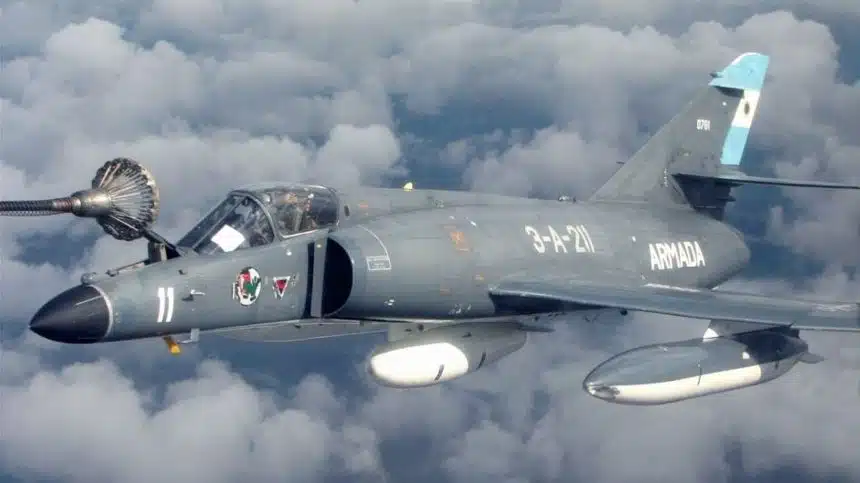
The historical precedent both Defence Security Asia and migflug's own reporting cite independently is genuinely informative rather than incidental: a U.S. F-22A Raptor was photographed over Nevada in November 2021 wearing a nearly identical highly reflective silver treatment in place of its standard grey low-observable coating, and the U.S. Navy has separately shown F-35Cs with comparable mirror-like finishes. Those American experiments are understood to represent genuine attempts at managing an aircraft's signature against infrared search-and-track sensors and lasers, not merely radar, meaning if the J-35's silver finish is real rather than a photographic artifact, China would be pursuing a technically legitimate and already-precedented research direction rather than inventing something without any Western analog. That's a meaningfully different framing than most "China's new stealth breakthrough" coverage implies, this would be China following an established American research thread, not surpassing it with something genuinely novel.
The carrier-durability angle several outlets raise deserves real weight independent of whether this specific photograph shows an actual new coating. Defence Security Asia's own analysis correctly identifies the genuine engineering problem carrier-based stealth aircraft face, salt fog, ultraviolet exposure, humidity, thermal cycling, and intensive flight-deck handling all degrade radar-absorbent coatings over time, and migflug's reporting adds a concrete, verifiable data point worth citing directly: U.S. F-35Cs deployed aboard USS Abraham Lincoln in the Arabian Sea have shown visible aging and discoloration, a real, documented maintenance burden this blog's own coverage of Lincoln's extended deployment and crew-welfare strain already touched on from a different angle. If China is genuinely working toward a more maintainable, corrosion-resistant coating optimized for exactly this kind of sustained carrier deployment, that would represent a real logistics and sortie-generation advantage worth taking seriously, independent of whether the current viral photograph actually depicts it.
The honest bottom line, consistent with this blog's treatment of the J-35's earlier "palm-sized radar cross section" claim, credited by Chinese state media to shaping and metamaterial coatings but explicitly flagged by independent defense analysts as remaining a largely unverified "black box," is that a single set of photographs taken under specific sun angle and camera exposure conditions cannot establish anything definitive about an actual materials change. Da Ivan Channel's skepticism, the F-22 and F-35C precedent, and the genuine carrier-coating durability problem all point toward a more mundane, if still analytically interesting, explanation than the "Galaxy Battleship" nickname implies. Until Beijing offers an official technical explanation, which it has not, or independent imagery analysis under controlled conditions settles the question, the responsible read is the same one this blog has applied to nearly every Chinese capability claim this summer: plausible, worth tracking, and not yet confirmed.