Friday, August 21, 2026

China Just Flew Its Missile-Truck Fighter to Egypt — Through a Corridor That's Making India Nervous


 Six PLAAF J-16 fighters, a KJ-500 airborne early warning aircraft, a Y-20 transport, and a Y-9LG electronic-warfare and intelligence aircraft transited through Karachi, Pakistan this week en route to Egypt for Eagles of Civilization 2026, marking the first time China has deployed its heavier J-16 platform to this specific exercise, a substitution from the J-10Cs and J-10S trainers used in last year's inaugural edition. The exercise itself, running mid-August through early September, focuses on air combat tactics, air superiority operations, and combat search and rescue, and represents a genuine capability escalation over 2025's iteration, the J-16's roughly 3,000-4,000 kilometer ferry range makes the approximately 3,500-kilometer Karachi-to-Egypt sector operationally viable following ground refueling in Pakistan, exactly the kind of extended-range power projection a lighter J-10C package wasn't built to demonstrate.

The aircraft substitution matters beyond simple range figures given this blog's own recent coverage of what the J-16 specifically represents doctrinally. This blog's earlier analysis of the J-16 "missile truck" configuration, images showing the aircraft carrying eight PL-15 and two PL-10 missiles simultaneously, established that Beijing is deliberately organizing its air-superiority doctrine around magazine depth and distributed kill chains rather than pure platform performance. Deploying that specific airframe to Egypt, rather than the smaller J-10C, gives Cairo direct exposure to exactly the heavier, missile-truck-capable platform this blog flagged as central to China's evolving Indo-Pacific air-combat doctrine, extending that same demonstration to a Middle Eastern and African audience rather than keeping it confined to China's immediate regional theater.

The transit corridor itself is generating real anxiety in a country this exercise never officially involves. Indian security analysts, according to reporting from Indonesian outlet Indomiliter, have been closely tracking a broader pattern of increased Chinese and Turkish military aircraft traffic through Pakistani airspace and bases, with Turkish military flights carrying combat drones and defense support equipment reportedly detected alongside this same Chinese deployment window. That's worth reading directly against this blog's own coverage of Pakistan's deepening defense relationships this summer, the Mecca Pact trilateral defense agreement with Saudi Arabia and Turkey, and the Uzbekistan J-10C export story that established Pakistan as China's demonstration case for converting combat narrative into regional market share. A Chinese J-16 detachment routing through Karachi for refueling and technical support isn't simply logistics, it's a visible reinforcement of exactly the China-Pakistan military interoperability this blog has already documented, now extended into a genuinely global power-projection exercise rather than a bilateral training relationship.

Pakistan's own role here extends beyond passive geography. Defence Security Asia's analysis notes that Pakistan functions as more than a refueling stop precisely because prior interoperability, the Shaheen exercise series and shared operational experience with Chinese aircraft types, gives Islamabad a working foundation for handling Chinese combat formations transiting its territory, even if the exact scope of direct operational support during this specific deployment remains undisclosed. That interoperability is the same infrastructure this blog's coverage of the May 2025 India-Pakistan conflict already established as operationally significant, Pakistan's J-10C fleet and its associated Chinese support relationship weren't built from scratch for that conflict, they're the product of exactly this kind of sustained bilateral exercise and basing familiarity accumulating over years, now visibly repurposed to support Chinese global reach well beyond South Asia.

None of this necessarily signals Chinese basing ambitions in Egypt or a formal alliance shift, Eagles of Civilization remains officially framed as bilateral training focused on tactical coordination and mutual trust-building rather than a strategic partnership announcement. But the specific combination on display, China's most missile-dense air-superiority platform, flown through a Pakistani corridor already under close Indian scrutiny, to demonstrate extended-range power projection to a new African and Middle Eastern partner, is a genuinely more consequential signal than last year's smaller J-10C deployment, and it's the kind of steadily accumulating pattern, one exercise, one platform substitution, one transit-route normalization at a time, that tends to matter more in aggregate than any single iteration suggests on its own.

North Korea Just Gave Russia a Bigger Missile — And Sent Its Own Soldiers to Fire It


Ukraine's Defense Intelligence agency reported this week that Russia has received KN-30 ballistic missiles from North Korea for the first time, a heavier, previously untransferred variant known domestically as the Hwasong-11C, carrying a claimed 2.5-tonne warhead over a roughly 600-kilometer range from a dedicated 10x10 wheeled transporter-erector-launcher. As of July, Russia's inventory of North Korean-supplied ballistic missiles across three variants, KN-23, KN-24, and now KN-30, stood at roughly 50 total, alongside a comparable stockpile of Kinzhal aeroballistic missiles. Ukrainian intelligence separately confirmed something more operationally significant than the hardware transfer itself: approximately 90 North Korean military personnel and technical specialists have been deployed to Russia's Voronezh Oblast specifically to operate up to six of the new launchers, meaning this isn't simply a weapons sale, it's North Korea directly crewing systems now capable of striking Ukrainian territory.

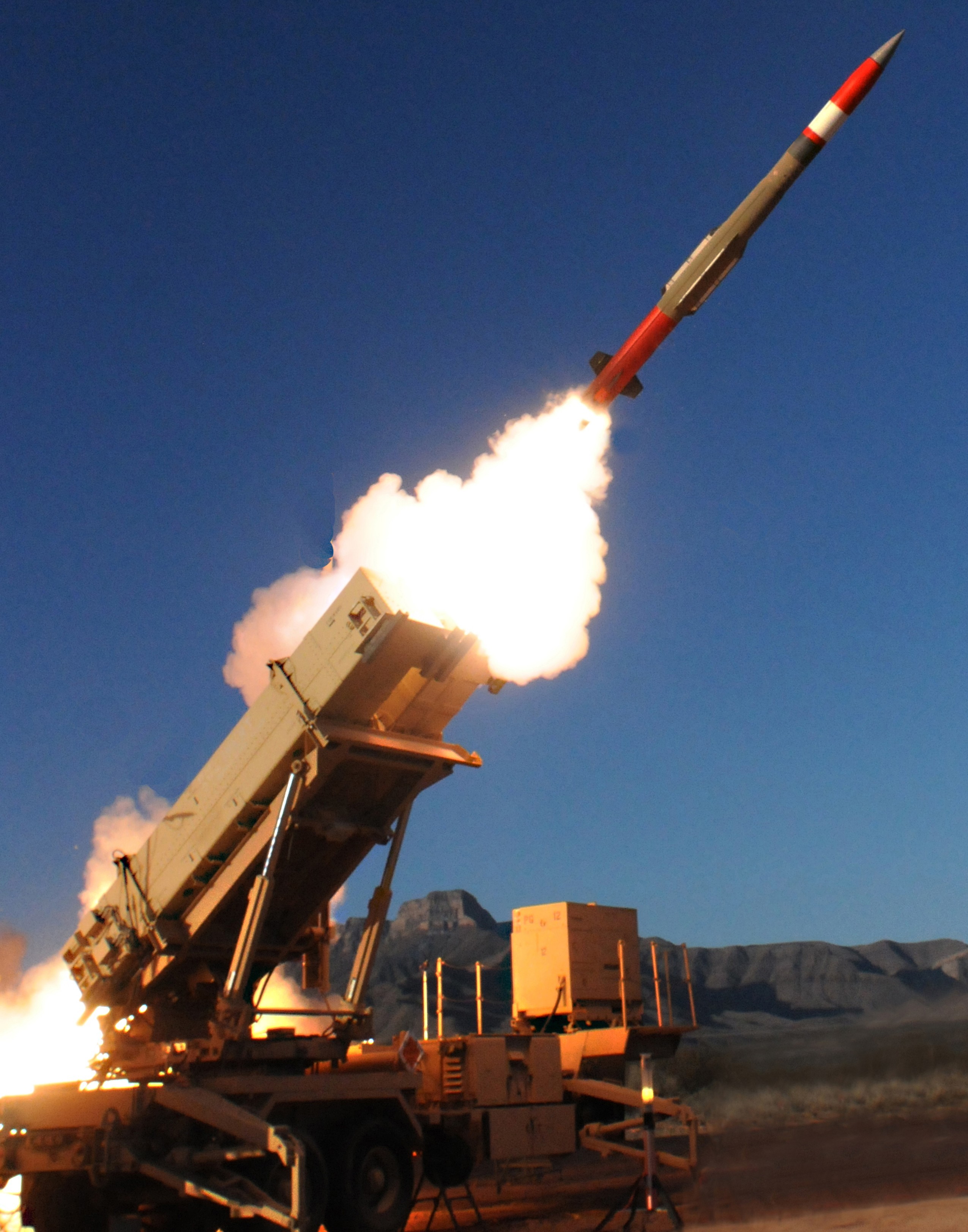
That combination, new hardware paired with the personnel to actually operate it, connects directly to the 200-missile salvo warning this blog covered just days ago, where Maj. Robert "Magyar" Brovdi described Russia racing to nearly triple its largest simultaneous missile barrage specifically to overwhelm Ukrainian air defenses in a single strike rather than spreading pressure across multiple attacks. A heavier-payload North Korean missile entering that same salvo calculus adds real mass to exactly the kind of barrage this blog's earlier coverage already established Ukraine's own interceptor stocks, at "1%" of what Zelenskyy says is actually needed, cannot adequately counter. Whether the KN-30's claimed 2.5-tonne warhead figure holds up, Ukrainian intelligence itself flagged North Korean payload claims as likely overstated, the missile's mere presence in Russia's arsenal expands the total volume of ballistic threats Ukraine's already-depleted Patriot batteries have to account for.

The detail worth sitting with longer than the missile specifications themselves is the parallel Russian decision this same reporting surfaces: Moscow has reportedly suspended production of its own Kh-47 Kinzhal aeroballistic missiles and Kh-32 anti-ship missiles, redirecting that manufacturing capacity elsewhere, even as it imports North Korean ballistic missiles to fill the resulting gap. That's a genuinely interesting mirror of the production-capacity story this blog has tracked on the American and European side all summer, PAC-3, SM-3, Tomahawk, and GMLRS all representing surge attempts to match wartime consumption. Russia appears to be managing an analogous capacity constraint through the opposite mechanism, outsourcing production to North Korea rather than surging its own domestic lines, a strategy only available to Moscow because it has a willing, sanctions-immune supplier next door that the U.S. and its NATO partners simply don't have an equivalent to.

This also extends the North Korea-Russia military relationship well past the artillery and infantry contributions this blog has referenced only briefly through earlier Korea coverage. Ukrainian intelligence has previously documented North Korea supplying more than 100 KN-23 and KN-24 missiles as early as late 2024, alongside hundreds of M1989 and M-1991 artillery systems and, per past reporting from Ukraine's DIU chief, North Korean infantry deployed into Kursk Oblast, described in that earlier reporting in notably dehumanizing terms as expendable manpower rather than a genuine strategic partner's contribution. The KN-30 transfer and its accompanying technical personnel represent a qualitative escalation past that earlier pattern, this isn't just munitions and disposable infantry anymore, it's specialized crews operating increasingly sophisticated hardware directly on Russian soil, a level of technical integration considerably closer to a genuine military alliance than a simple arms-for-cash or arms-for-diplomatic-cover transaction.

Whether this specific transfer meaningfully shifts the underlying interceptor math this blog has tracked all summer is a separate question from whether it represents a significant escalation in the North Korea-Russia relationship, and the honest answer on the numbers is that roughly 50 additional North Korean-origin missiles, even a heavier-payload variant among them, is a marginal addition against the hundreds of missiles Russia is already firing monthly per this blog's own recent coverage. But the personnel detail, North Korean soldiers now directly crewing strike systems aimed at Ukraine rather than simply supplying the hardware from a distance, is the piece of this story most likely to compound over time, and it's a considerably harder trend to reverse through sanctions or diplomatic pressure than a one-time weapons shipment would be.

Poland Secretly Gave Ukraine Its Own Patriot Missiles — Then Its Own Government Wouldn't Explain Why


 Poland's ruling government faces a genuine domestic political crisis over confirmed disclosures that it secretly transferred Patriot interceptor missiles from its own operational air-defense inventory to Ukraine in spring 2026, a transfer only officially acknowledged on August 7 after weeks of opposition pressure. Deputy Sejm Speaker Krzysztof Bosak of the Confederation party revealed that Warsaw handed over scarce, expensive interceptors originally purchased to build Poland's own multi-layer air-defense shield, and Defense Minister Władysław Kosiniak-Kamysz, after mounting outcry, ordered the declassification of all military aid Poland has provided Ukraine since 2022. Former Defense Minister Mariusz Błaszczak's characterization of the fallout was blunt: the decision risks "Polish skies, Polish security." Poland's Ministry of National Defense has since pushed back publicly, insisting its Wisła program, the domestically integrated Patriot system, still maintains coverage across cities, critical infrastructure, and troop concentrations despite the transfer.

What makes this genuinely consequential, rather than simply a domestic political spat, is what Poland reportedly gave up alongside the missiles themselves: its place in the U.S. Patriot production queue. According to the same reporting, Warsaw voluntarily surrendered its position in line for replacement interceptors, meaning Polish forces now face a wait of months to years longer than they otherwise would have to restore the exact capability they just donated away. That's a materially different decision than a routine aid package, it's Poland accepting a direct, self-inflicted degradation of its own national air-defense timeline specifically to help Ukraine in the near term, a tradeoff serious enough that it's since triggered a formal parliamentary and public accounting of Poland's entire wartime aid history.

This connects directly to the Patriot production and licensing story this blog has already tracked in detail, the stalled U.S.-Ukraine domestic production agreement, Lockheed and Raytheon's competitive hesitation, and the broader CSIS-documented finding that the U.S. itself has burned through more than half of its own combined Patriot and THAAD inventory fighting Iran. Poland's transfer sits inside that same global scarcity picture from the supply side rather than the demand side: this blog's coverage of Zelenskyy's own "I have 1%" framing captured how desperate Ukraine's interceptor position has become, and Poland's decision to sacrifice its own stockpile and queue position is a direct, costly response to exactly that desperation, one European ally choosing to absorb real strategic risk rather than watch Kyiv's air defenses collapse further. The RFE/RL reporting on this same period notes that when Ukraine failed to intercept any missiles during an overnight attack, several EU Patriot-operating nations, Germany, Romania, the Netherlands, either declined to comment or said they'd already given what they could spare, making Poland's willingness to go further, and to do so quietly rather than publicly, a genuine outlier among Patriot-operating NATO members.

The broader structural problem underlying this entire episode, a Swiss Patriot order running four to five years behind schedule, U.S. State Department warnings to European partners about looming munitions delivery disruptions, is the same interceptor-production bottleneck this blog has documented across PAC-3, SM-3, Tomahawk, and GMLRS this summer, just now visibly straining alliance cohesion rather than only U.S. domestic stockpiles. GLOBSEC's own analysis flags Poland as an unusually clean test case specifically because Warsaw has been NATO's most aggressive spender, committing to exceed 4 percent of GDP on defense in 2026, and still finds itself facing years-long delivery delays for the exact system it's now donated pieces of to a neighboring war. Even the most committed, best-funded ally in the alliance can't spend its way around a genuinely constrained global interceptor production base.

Poland's own counter-offer, revealed in the same reporting window, that Warsaw proposed building Patriot components domestically alongside the U.S. and Ukraine, is worth reading as this blog's earlier Patriot-licensing coverage would predict, another attempt to solve a production bottleneck through distributed manufacturing rather than relying solely on Lockheed and Raytheon's already-strained capacity. Whether that offer gains real traction matters considerably for how this specific political crisis resolves, but the underlying lesson extends well past Poland's borders: when even a NATO member spending more on defense than almost anyone else in the alliance has to choose between its own air-defense timeline and a neighbor's immediate survival, the global Patriot shortage this blog has tracked all summer has stopped being an abstract production statistic and become a genuine test of how much strategic risk individual allies are willing to personally absorb.

China's "Missile Truck" J-16 Reveals a Numbers Strategy This Blog Already Saw the Air Force Preparing For


Images circulating since July 12 show a Shenyang J-16 configured with eight PL-15 beyond-visual-range missiles and two PL-10 short-range weapons, a loadout defense analysts have taken to calling "beast mode," a theoretical-maximum air-superiority configuration rather than a routine patrol arrangement. The J-16 is a twin-engine, twin-seat 4.5-generation multirole fighter derived from the Su-30 Flanker family, and Army Recognition's own analysis frames the significance correctly: this isn't really about any single aircraft's individual lethality, it's a doctrinal signal that the PLAAF is organizing around magazine depth, distributed kill chains, and sustained missile volume rather than betting everything on platform-by-platform performance, integrated with J-20 stealth fighters and KJ-500 airborne early warning aircraft into what amounts to a numbers-first approach to contesting Indo-Pacific airspace.

That doctrinal shift connects directly to a story this blog covered from the opposite side of the same problem: the U.S. Air Force's target-drone RFI, which explicitly called for training systems capable of replicating "the most advanced adversary fighter" threats, supersonic, low-observable, electronic-attack-capable targets, because the service's existing BQM-167A and QF-16 target fleet bears little resemblance to what a modern adversary actually fields. A J-16 carrying eight PL-15s at once is precisely the kind of threat profile that RFI was implicitly built around, an adversary optimized to overwhelm a defender's missile-defense and countermeasure capacity through sheer salvo density rather than any single missile's individual sophistication. Reading the two stories together, America's own training infrastructure gap and China's own doctrinal signal are two sides of the identical strategic problem, whether U.S. pilots are actually training against realistic massed-missile scenarios before they have to face one.

Defence Security Asia's analysis draws a useful American parallel worth taking seriously rather than dismissing as a coincidence, the U.S. Air Force's own F-15EX program is increasingly envisioned as a high-capacity airborne missile carrier within a networked warfare ecosystem, the same magazine-depth logic applied to American hardware. That comparison matters because it undercuts any framing of China's J-16 loadout as a uniquely alarming or asymmetric innovation, both air forces are independently converging on the same insight, that a single stealthy platform's sensor and targeting advantage becomes considerably more decisive when paired with a separate, heavily armed missile carrier that doesn't need low observability of its own, since the stealthy platform (J-20 or F-35) finds and tracks while the missile truck (J-16 or F-15EX) actually fires the volume of shots needed to saturate a defender's response.

Where China's version of this doctrine carries genuinely disproportionate weight, per Defence Security Asia's own framing, is production scale and geographic concentration rather than the concept itself. This blog's coverage of China's J-10C export struggles already established that Beijing's aircraft production and export marketing consistently outpaces actual signed sales abroad, but domestic PLAAF fielding is a different question entirely, and the same 2026 open-source tracking this blog has referenced elsewhere puts total PLAAF combat aircraft at over 2,000 airframes, with J-16 and J-10C numbers continuing to displace older J-7 and J-8 legacy interceptors at real scale. A missile-truck doctrine only works if there are enough missile trucks to actually generate the salvo density the concept assumes, and China's production volume, concentrated geographically close to Taiwan and the South China Sea rather than distributed globally the way U.S. airpower is, gives this doctrine a home-field advantage American or allied forces would need to specifically plan around rather than simply match platform-for-platform.

The caveat worth applying here, consistent with the skepticism this blog has extended to other Chinese capability claims this summer, is that a photographed loadout configuration is not the same as demonstrated combat employment. Defence Security Asia's own analysis is careful to describe this as a "theoretical maximum" posture rather than a routine operational arrangement, and this blog's earlier coverage of China's anti-stealth infrared-seeker claims already established the pattern of Chinese capability announcements outrunning independently verified real-world performance. An eight-missile J-16 flying for a photo opportunity demonstrates the airframe can physically carry that load; it doesn't confirm the targeting, datalink, and sustained-sortie infrastructure needed to actually employ eight PL-15s effectively against a contested, actively defending adversary formation. The doctrinal signal is real and worth taking seriously as a planning assumption, the specific image shouldn't be mistaken for proof the PLAAF has already solved the harder integration problem that doctrine actually requires. 

Green Berets Just Sank a Ship 100 Miles From Taiwan — With Weapons Meant to Stay There


U.S. and Philippine special operations forces sank a target vessel, the decommissioned corvette MV Manfil, in the Luzon Strait on April 24 during Maritime Strike-North, part of the broader Balikatan 2026 exercise that brought together 17,000 troops from the U.S., Philippines, Australia, Canada, France, and Japan. The operation's actual mechanics are what make it notable: special operators built a real-time kill chain off Itbayat island, feeding targeting data from airborne surveillance into a strike package combining a Marine Corps NMESIS anti-ship missile system, an Army HIMARS launcher, unmanned surface vessels, and shaped charges, all flown in and extracted by Air Force C-130s rather than arriving via any fixed, permanent installation. The target sat roughly 100 miles south of Taiwan, placing this demonstration directly astride the Luzon Strait chokepoint that would function as a critical reinforcement and transit route in any Taiwan contingency.

This is the same broader deployment this blog would recognize from its own coverage of the region's escalating force posture: Task Force 107's missile systems deployed to a remote Luzon Strait island during this exact exercise window, described by regional analysts as capable of "holding U.S. reinforcement routes from Guam and the wider Pacific at risk in any Taiwan or South China Sea contingency," a counter-intervention framing that applies with equal force to the anti-ship capability demonstrated in this sinking exercise. What distinguishes the special operations dimension of Balikatan 2026 from a standard bilateral drill is the deliberate emphasis on rapid infiltration and extraction rather than fixed basing, NMESIS and HIMARS units airlifted in, employed, and pulled back out within the same operational window, a posture explicitly designed to complicate Chinese targeting by never letting these systems sit as fixed, mappable installations for long.

China's own response during the same exercise window sharpens the stakes considerably. The PLAN deployed the aircraft carrier Liaoning and an unspecified Type 075 landing helicopter dock into waters near the Philippines concurrent with Balikatan 2026, prompting one regional security analyst's assessment that Beijing was "signalling it can apply pressure on multiple axes simultaneously." That's worth reading directly against this blog's earlier coverage of the Philippines' own fighter-acquisition competition and the Eurofighter budget-gap analysis, where PAF Chief Lt. Gen. Arthur Cordura was quoted acknowledging Manila "cannot be at par with China even 10 to 20 years from now." The special operations, rapid-infiltration model demonstrated in this Luzon Strait exercise is functionally the American answer to that same asymmetry, since Washington and Manila together clearly can't match China's conventional naval buildout ship-for-ship in the near term, the strategic logic instead leans on dispersed, hard-to-target, rapidly emplaced strike capability that raises the cost of any Chinese move through the strait without requiring platform parity.

The broader missile buildout across this year's Balikatan drills reinforces that this was not an isolated special-operations vignette. Naval News's own tracking of the exercise documented an extensive network of long-range fire potential distributed across the Philippine archipelago, HIMARS batteries conducting live-fire events near Chinese artificial island bases in the South China Sea, additional NMESIS and Japanese Self-Defense Force missile launchers participating in a separate sinking exercise near Ilocos Norte involving American, Japanese, and Philippine forces simultaneously. Taken together with the Luzon Strait special operations demonstration, this year's Balikatan wasn't a single high-profile stunt but a genuinely comprehensive rehearsal of distributed, allied, rapid-strike area-denial capability spanning the exact geography, the Luzon Strait, the South China Sea approaches, the first island chain, that this blog's coverage of Japan's own counterstrike buildout and the broader Indo-Pacific throughline has repeatedly identified as the critical terrain in any future contingency.

None of this guarantees deterrence actually holds if tested, exercises demonstrate capability and intent, not combat performance, and China's own simultaneous carrier and amphibious deployment is itself evidence Beijing isn't especially deterred by a single sinking exercise regardless of how sophisticated the kill chain behind it. But the specific tactical model on display here, elite forces inserting scarce, high-value anti-ship systems into contested terrain for a short window rather than defending fixed installations indefinitely, is a genuinely different answer to the capability gap this blog has documented across the Philippines' broader defense posture, and it's one that trades platform numbers for unpredictability, a trade this blog's coverage suggests the Philippines and its allies may have little choice but to keep making for the foreseeable future.

Russia's Bombing Campaign Against Ukraine's Arms Industry Just Hit the One Target That's Hardest to Replace


 Russian long-range strikes against Ukraine's defense-industrial base have run continuously for years now, but the campaign's target selection through 2026 shows a deliberate shift from generic infrastructure toward the specific inputs Ukraine's weapons production actually depends on. The most consequential recent strike hit ArcelorMittal's Krivoy Rog steel plant overnight on August 15-16, damaging key energy and blast-furnace facilities at a foreign-owned steelmaking and mining operation that, according to Russian analyst Alexander Stepanov speaking to Sputnik, is "primarily focused on supplying the MIC with rolled steel," not just for Ukraine's own military but for European buyers as well. That framing, targeting a single steel plant specifically because it's a rolled-steel supplier for armored vehicles, artillery, and other systems, rather than a general industrial or energy target, reflects a more surgical approach than the broadly distributed strikes on drone factories, logistics hubs, and ammunition plants that have characterized this campaign since 2022.

The scale of what Russia is hitting alongside that steel plant makes clear this is a genuinely sustained, multi-target effort rather than an isolated strike. Russian strikes have hit the Mayak plant in Kyiv, which produces warheads, detonators, and launch boosters for attack drones, the Vishnevoye logistics hub handling UAV component distribution, and drone-production and repair facilities across Lvov and other regions, alongside interdiction strikes on cargo vessels ferrying military supplies through Black Sea ports near Odessa. That's a campaign explicitly aimed at the full production chain, raw material inputs like steel, component manufacturing, assembly and repair facilities, and the logistics network moving finished weapons to the front, rather than any single node Ukraine could plausibly work around by rerouting through an alternate facility.

Ukraine's own response, at least as characterized by the same Russian analyst source, is instructive about how this pressure is actually being absorbed rather than simply endured. Stepanov's assessment describes Ukraine's European partners implementing what he terms an "extraterritorial MIC project," establishing defense-industrial clusters, including long-range missile and drone production, physically inside NATO member states rather than inside Ukraine itself, explicitly to insulate production capacity from exactly this kind of sustained Russian strike campaign. That's worth reading with real caution given the source, a Russian-state-aligned framing of Western support has an obvious incentive to describe NATO involvement as escalatory "distributed proxy-hybrid war," but the underlying claim, that production offshoring to NATO territory is a genuine countermeasure to strikes like this, is independently plausible and consistent with the broader pattern this blog's own coverage has documented, British firms like BAE Systems supplying drones for deep strikes into Russia, and European coalition partners building the Freyja interceptor program specifically outside Ukraine's own more exposed industrial base.

This connects directly to the interceptor and munitions-depletion throughline this blog has tracked extensively this summer. Ukraine's own ballistic-missile interceptor crisis, covered here just days ago through Zelenskyy's stark "I have 1%" framing, is a defensive-side resource shortage; this steel-plant and defense-industry strike campaign is the offensive-side mirror of the same pressure, degrading Ukraine's ability to manufacture the systems that would otherwise reduce its dependence on scarce allied interceptor transfers in the first place. A country that could produce more of its own armor, artillery, and drone components domestically would need fewer imported systems to fill the gap; a sustained campaign against exactly that domestic production capacity keeps Ukraine more dependent on external supply precisely when that external supply, per this blog's own Patriot-licensing and interceptor-stockpile coverage, is already strained thin.

Whether the "extraterritorial MIC" hedge Stepanov describes can actually offset losses like the Krivoy Rog steel plant fast enough to matter is a genuinely open question this reporting doesn't resolve, standing up new production capacity inside NATO states takes years, not months, and Ukraine's front-line forces need steel, components, and finished systems now rather than after a multi-year European industrial buildout matures. But the strategic logic behind both sides of this exchange is clear enough: Russia is trying to make Ukraine's war economy structurally dependent on foreign supply by degrading domestic capacity, and Ukraine's partners are responding by trying to move that domestic capacity somewhere Russian missiles can't easily reach, a contest this blog's own coverage suggests is currently running in Russia's favor on speed, even if the long-term trajectory eventually favors the harder-to-strike alternative.

Taiwan's F-16Vs Are Eight Years Late — And the Wait Says More About Lockheed's Factory Than About Taipei's Patience


Taiwan's Defense Minister Wellington Koo has acknowledged that completing delivery of all 66 F-16V Block 70 fighters ordered from Lockheed Martin in 2019 by the end of 2026 will be "challenging," and as of this reporting, not a single aircraft under this specific $8 billion contract has actually reached Taiwanese soil. The original schedule called for deliveries beginning in 2023 and wrapping by 2026; that timeline has now slipped repeatedly, first to software integration issues, then supply-chain disruption, then production-line relocation, with the most recent projections pushing full completion into 2027 or later. Fifty of the jets are reportedly under construction at Lockheed's Greenville, South Carolina facility, with contractors running two 20-hour shifts a day specifically to compress the remaining schedule.

The consistent thread across six years of slipping deadlines isn't any single point failure, it's Greenville's own production capacity being stretched across a genuinely long queue of foreign F-16 customers simultaneously, a constraint this blog's earlier coverage of Pakistan's F-16 fleet already touched on from a different angle. That earlier reporting established that Pakistan's F-16s have been operationally superseded by the J-10C for reasons specific to Islamabad, an End-Use Monitoring restriction and a doctrinal shift toward Chinese hardware. Taiwan's situation is structurally different, there's no legal restriction on Taipei's F-16 use and no comparable indigenous alternative waiting in the wings, but the throughline connecting both stories is the same underlying reality: the F-16 production line, whether serving an active combat fleet in South Asia or a deterrence-critical modernization program in the Taiwan Strait, remains a genuine industrial bottleneck rather than a mature, on-demand manufacturing pipeline, regardless of how urgently any individual customer needs its jets.

Taiwan's own broader arms backlog makes the F-16V delay considerably more consequential than an isolated program slip. The same reporting that documents this delay also notes AGM-154C Joint Standoff Weapon glide bombs and Mk-48 torpedoes have similarly moved from 2026 to 2027-28 delivery windows, while Harpoon missiles and Patriot air defense systems remain pending. This blog's own coverage of America's interceptor and munitions production strain, PAC-3, SM-3, Tomahawk, and GMLRS, documented a defense-industrial base struggling to simultaneously supply Ukraine, the ongoing Iran conflict, and domestic U.S. stockpile replenishment; Taiwan's stalled F-16V and munitions deliveries are the same capacity constraint showing up in a fourth theater, a Pacific ally whose deterrence posture depends on exactly the kind of American production surge this blog has documented struggling to keep pace with demand everywhere else it's needed.

The timing pressure behind this specific delay is genuinely different in kind from a routine schedule slip, though, given what this blog's own Taiwan coverage has already documented about the island's defensive planning this year. The tunnel and bridge blockade exercises this blog covered as part of this year's Han Kuang drills reflect a military establishment increasingly focused on urban and chokepoint defense precisely because it can't assume air superiority will be available if Beijing moves, a defensive posture that becomes considerably more necessary, not less, the longer Taiwan's F-16V modernization remains undelivered. A fighter fleet that was supposed to reach full modernized strength this year and instead sits at zero deliveries under this specific contract is exactly the kind of capability gap that reinforces, rather than substitutes for, Taiwan's parallel investment in ground-based urban defense doctrine.

None of this means the F-16V program is failing outright, Lockheed's overtime shifts and Koo's own acknowledgment that the outlook is "already improving" suggest genuine institutional effort to close the gap, and Taiwan retains the option to seek compensation from Lockheed over the delay under its existing contract terms. But six years of slipping deadlines on a deal originally meant to modernize Taiwan's air power well before now is the kind of delay that compounds strategic risk quietly, each additional year of delay is a year Taiwan's frontline air fleet remains more dependent on its existing, less capable F-16A/B and Mirage 2000 aircraft precisely during the period this blog's own coverage shows Beijing's own airpower, from the J-10C to the J-36 and J-50 prototypes, continuing to advance without any comparable production bottleneck of its own.

Japan's Hypersonic Submarine Plan Borrows Its Core Logic From an Unlikely Source: Russia's Poseidon


 Japan's Ministry of Defense plans to begin developing an underwater-launched hypersonic missile under its fiscal 2027 defense program, according to Kyodo News and TASS reporting from August 19, building on existing Mitsubishi Heavy Industries work on submarine-launched guided missiles and a separate hypersonic research program running through fiscal 2031. Army Recognition's own detailed analysis is appropriately careful about what remains unconfirmed, range, propulsion, warhead, and carrier submarine class are all undisclosed, and the piece correctly frames the project's real significance around what it calls a "survivability premium," the strategic value of an adversary simply being unable to confirm whether a concealed, missile-carrying submarine remains available to retaliate after an initial strike.


That survivability logic is worth naming directly, because this blog has already covered its most extreme expression in an entirely different context: Russia's Poseidon nuclear-powered underwater drone, which this blog's Khabarovsk sea-trials coverage described as designed specifically to sidestep missile-defense architecture by operating in a domain conventional intercept systems were never built to detect. Japan's submarine-hypersonic concept runs on a considerably more restrained version of the identical underlying principle, concealment as the primary defense rather than speed or armor alone, forcing an adversary to solve an expensive detection problem before any missile-defense problem even becomes relevant. That two such different actors, a NATO-adjacent democracy building an explicitly defensive counterstrike system and an authoritarian state building a doomsday deterrent, are independently converging on submarine concealment as the answer to increasingly capable missile-defense architectures says something real about how thoroughly detection, not just interception, has become the actual center of gravity in modern strategic weapons design.

The detection-problem framing also connects directly to this blog's coverage of China's celestial-navigation research and its implications for Golden Dome, where the core argument was that Golden Dome's entire design premise assumes hypersonic threats are hard to intercept because they're hard to track, making anything that further degrades tracking confidence a disproportionately valuable investment for an adversary. Japan's submarine-hypersonic concept applies that same insight defensively rather than offensively: Army Recognition's own analysis notes the pre-launch problem, an adversary needing to conduct a wide-area anti-submarine search and maintain a continuous track before a hypersonic weapon is ever fired, is arguably the harder and more resource-intensive challenge, a "two consecutive defensive burdens" framing this blog's own Golden Dome coverage would recognize as the mirror image of the offensive tracking problem hypersonic glide vehicles already pose.

Where this story sharpens considerably is in comparison to the parallel Indo-Pacific defense-industrial throughline this blog has tracked all summer through India's own procurement record. India's Virupaksha AESA radar and AMCA engine programs, both covered here in detail, illustrate a chronic pattern of Indian defense timelines running a decade or more behind initial projections, DRDO's own institutional overconfidence about how quickly indigenous high-technology programs mature. Japan's approach looks structurally different: building on Mitsubishi Heavy Industries work that began in 2023, a parallel hypersonic research track already running since the same year, and a fiscal 2027 target for beginning, not completing, submarine-hypersonic integration specifically, a considerably more incremental and realistically staged approach than India's tendency to announce ambitious end-state capabilities years before the underlying technology is mature. Neither country's approach guarantees success, Japan's own program remains entirely unconfirmed in its technical specifics, but the institutional discipline evident in how Tokyo is sequencing this announcement, layering onto existing programs rather than declaring a clean-sheet breakthrough, is a useful contrast worth registering.

This also extends the alliance and burden-sharing throughline this blog's Japan white paper coverage already established, Tokyo's 400-Tomahawk purchase and Type-12 missile deployment to Hokkaido both represent the same broader shift toward offensive-capable counterstrike systems, now potentially extending underwater. Army Recognition's analysis is careful to note Japan's defense documents describe alliance cooperation on counterstrike operations without confirming this specific program depends on U.S. targeting infrastructure, a genuinely open question given how thoroughly integrated Japan's broader ISR and space-based surveillance investments already are with American systems. Whether this submarine-hypersonic capability ultimately operates as a genuinely independent Japanese deterrent or as one more node in an increasingly interconnected U.S.-Japan targeting architecture may end up mattering as much for regional stability as the missile's own speed and range, questions this early-stage reporting simply can't yet answer.

A US Antarctica Supply Flight Turned Back Over Russia — This Was Bureaucracy, Not Confrontation


A U.S. Air Force C-17A Globemaster III took off from Christchurch, New Zealand on a routine Antarctic resupply mission this week and turned back to the airport roughly two and a half hours later, after New Zealand's Civil Aviation Authority issued a Notice to Airmen warning of "potentially hazardous" space activity. The chain of events, laid out plainly by a CAA spokesperson, is considerably less dramatic than the headline framing suggests: the Russian Air Traffic Management Corporation notified New Zealand's aviation authority of a planned missile launch creating a potential hazard within New Zealand's Oceanic Flight Information Region, the CAA issued a standard danger-area NOTAM in response, exactly the kind of alert that "does not prevent aircraft from flying through the area" but exists purely to inform operators making their own flight-planning decisions. The flight, callsign ICE28, was part of the Air Force's annual WinFly period, delivering advance teams and cargo to McMurdo Station ahead of Antarctica's main research season under Operation Deep Freeze.

It's worth being precise about what actually happened here versus what a headline pairing "Russian" and "hazardous space activity" invites readers to assume. This wasn't a hostile act, a deliberate provocation, or even an unusual occurrence, it was routine, mutually recognized international airspace coordination of the kind Russia, the U.S., and every other spacefaring nation conduct constantly as a matter of standard practice, notifying civil aviation authorities ahead of missile and rocket launches so aircraft operators can route around temporary hazard zones. New Zealand's own CAA was explicit on this point, describing the notification-and-NOTAM process as "normal practice for Airspace Authorities and Air Traffic Service Providers." The roughly 30 million square kilometers of international waters and airspace New Zealand's Oceanic FIR covers, spanning the South Pacific, Southern Ocean, and Tasman Sea, sits directly beneath the kind of high-inclination, polar-orbit trajectories Russia's Plesetsk Cosmodrome regularly launches into for military satellite and GLONASS navigation missions, making an occasional overlap between a Russian launch window and this specific flight corridor a mechanical inevitability rather than a targeted signal.

That said, dismissing this as a total non-story would miss the genuinely interesting operational detail buried in an otherwise procedural news item: a routine, unclassified civil aviation notification from Russia was enough to divert a U.S. military logistics flight, at real cost in fuel, crew time, and schedule disruption to an already tightly timed Antarctic resupply window. That's not evidence of hostile intent, but it is evidence of how thoroughly interconnected international airspace management remains even during a period of genuinely heightened U.S.-Russia friction, this blog's own coverage of the EA-37B's Kaliningrad-border flight and Russian state media's Poseidon threats against Britain both documenting real escalatory signaling elsewhere this same month. A Russian ATC notification routing a PACAF C-17 back to Christchurch is the ordinary, cooperative infrastructure of international flight safety continuing to function normally even as the two countries' military postures toward each other sharpen in nearly every other domain this blog has tracked this summer.

The Pacific Air Forces spokesperson's own comment, calling Christchurch "the gateway to Antarctica" for both U.S. and New Zealand operations, is a useful reminder that this entire story sits inside a genuinely cooperative, decades-old scientific and logistics partnership, one this brief disruption didn't meaningfully threaten. The flight landed back in Christchurch a little over two hours after departing and presumably resumed its WinFly mission on a revised schedule, exactly the kind of minor, apolitical friction international airspace coordination is specifically designed to absorb without incident.

The more accurate headline for this story isn't "Russia threatens U.S. Antarctic flight," it's "routine Russian launch notification briefly delayed a U.S. cargo flight, exactly as the system is supposed to work," a genuinely less exciting framing, but a considerably more honest one, particularly in a summer where this blog has documented plenty of actual, deliberate U.S.-Russia signaling that deserves the "escalation" label far more than a NOTAM-triggered flight diversion does.

Qatar Is Buying $4.5 Billion in American Tankers for the Same Base Iran Has Already Hit Twice


The U.S. State Department approved a possible $4.5 billion Foreign Military Sale to Qatar this week for up to four KC-46A Pegasus aerial refueling aircraft, eight Pratt & Whitney PW4062 engines, radar warning receivers, and infrared countermeasure systems, with Boeing, RTX, and Northrop Grumman as principal contractors. The State Department's own framing leans entirely on standard alliance-management language, enhancing Qatar's "capability to meet current and future threats," strengthening interoperability with American forces, and reinforcing Doha's role as a "strategic regional partner." That framing isn't wrong, but it's also notably bloodless given what's actually driving Qatar's urgency to expand exactly this kind of capability right now.

Al Udeid Air Base, the facility this sale is fundamentally meant to support, isn't a hypothetical target this deal is hedging against, it's a base Iran has already struck twice in the past fourteen months. On June 23, 2025, Iran launched roughly 14 ballistic missiles at Al Udeid in direct retaliation for the U.S. strikes on its nuclear facilities, and while Qatari and American officials reported no casualties, satellite imagery later confirmed one missile penetrated air defenses and destroyed a sensitive communications hub, a Modernization Enterprise Terminal installed in 2016, deep inside the base. A second, less-publicized strike hit Al Udeid again in March 2026, with Qatar's own Defense Ministry confirming one of two missiles fired "got through air defense systems" before impacting the base. This is the largest U.S. military installation in the Middle East, hosting the headquarters of the 9th Expeditionary Task Force and the Combined Air Operations Center, and it has now demonstrated twice that Iranian ballistic missiles can, at least partially, get through its defenses.

That history connects directly to this blog's coverage of Iranian contingency planning to expand strikes toward European bases in Bulgaria and Cyprus should the conflict escalate further. If Tehran is genuinely weighing strikes on NATO members' facilities in Europe, a base it has already hit twice in the Gulf remains, by any reasonable threat assessment, a considerably more proven and immediate target than anywhere in Europe currently under discussion. Qatar expanding its own tanker fleet and associated defensive systems, radar warning receivers and Large Aircraft Infrared Countermeasures among the specific equipment named in this sale, reads less like routine capability modernization and more like a country whose primary American-hosting facility has a demonstrated, repeated vulnerability making concrete investments in resilience.

The sale's broader significance also fits the interoperability logic this blog has tracked through the NSPO SeaSparrow consortium program covered days earlier, American willingness to deepen allied partners' access to frontline U.S. platforms as part of an integrated regional defense posture rather than treating capability-sharing purely as a one-way export transaction. The KC-46A specifically extends fighter and bomber range and sortie generation across exactly the kind of dispersed, contested Gulf operating environment this blog's coverage of Task Force Falcon Strike and the broader Iran conflict has already established as increasingly hard to sustain with existing infrastructure, Al Udeid included.

The Air Force One footnote buried at the end of the State Department's own announcement is worth flagging as a separate, if related, thread: Qatar's earlier donation of a modified jet for U.S. presidential use remains under active security review, with Trump announcing plans to have it "maxed out" for upgrades. Two very different Qatar-U.S. transactions, a $4.5 billion tanker sale addressing a real, twice-demonstrated regional threat, and a politically fraught aircraft gift still working through its own security concerns, are both unfolding on parallel tracks this same week, a reminder that the U.S.-Qatar relationship currently spans genuine strategic necessity and considerably messier diplomatic optics simultaneously.

Zelenskyy: "I Have 1%" — The Interceptor Math This Blog Has Tracked All Summer Just Got Its Starkest Number Yet


 Russia is racing to nearly triple its largest single missile salvo, from 77 missiles fired at once to a targeted 200, according to Maj. Robert "Magyar" Brovdi, commander of Ukraine's Unmanned Systems Forces, a barrage built specifically to overwhelm air defenses in one shot rather than spread pressure across days. Russia fired a record 351 missiles at Ukraine in July alone, with factories running at 110-120 percent of monthly targets and already hitting annual production goals for Zircon and Oniks missiles by early August. An overnight strike on Kyiv this week, a fraction of the salvo size Brovdi is warning about, still killed at least 15 people and damaged a school, a children's hospital, and a kindergarten.

The interceptor numbers behind this warning update, and sharpen considerably, figures this blog has tracked since Lt. Gen. Rafferty's SMD Symposium disclosures first flagged the scale of the problem. CSIS now puts the combined U.S. Patriot and THAAD stockpile at fewer than 1,000 missiles, down from more than 2,700 before the Iran war, a two-thirds reduction that's measurably worse than the 750-830 figure this blog cited from earlier CSIS tracking in July. Zelenskyy's own account to CNN is the starkest distillation of what that shortage means on the ground: Ukraine now fields two and a half times fewer interceptors than in 2025, while Russia fires twice as many ballistic missiles a month, with allied deliveries running at a third of last year's pace. His framing to reporters last week, "If [the United States] can sell us 5%, we will go through the winter and save people's lives. If they can sell us 10%, we will destroy all the Russians' ballistic missiles. I have 1%," is about as concrete a number as this entire summer's interceptor-depletion story has produced.

The morale detail buried in this reporting deserves real attention alongside the raw statistics: Ukraine's Air Force stopped publishing ballistic-missile intercept tallies in early August specifically because low interception rates were being weaponized by Russian media and demoralizing to a domestic audience already living through this blog's earlier-documented pattern of uncontested strikes, the August 5 attack where zero of 29 incoming missiles were intercepted being the clearest prior example. Spokesperson Yurii Ihnat's own account, that reporting a 28-0 intercept result gets amplified domestically as total failure and celebrated by Russian media as vindication, is a genuinely difficult communications bind for a country trying to sustain both public morale and international pressure for more interceptors simultaneously.

This also connects directly to the Su-35 Sumy incursion this blog covered days ago, where a Russian fighter penetrated Ukrainian-controlled airspace unchallenged for the first time in years. Read alongside this reporting's confirmation that ballistic-missile interceptor stocks are at their lowest levels in years, that incursion looks less like an isolated sector-specific gap and more like a predictable consequence of the same nationwide interceptor math driving this 200-missile salvo warning, an adversary that can reasonably calculate reduced resistance across multiple threat categories simultaneously, not just against the ballistic missiles this specific reporting focuses on.

The three tracks Ukraine is pursuing to close this gap, the Patriot co-production negotiations this blog's earlier coverage already flagged as stalling amid Lockheed and Raytheon's competitive hesitation, the Freyja cheaper-interceptor coalition with European partners, and continued appeals for allied stockpile transfers, all share the same timeline problem: licensed Patriot production remains 24 to 30 months away by expert estimates, and Freyja's first intercept isn't planned until late 2027. Both are genuine long-term fixes to the structural cost-exchange problem this blog has documented all summer. Neither helps Ukraine survive the winter Zelenskyy is actually worried about, which is precisely why his own framing keeps returning to percentages of existing allied stockpiles rather than future production timelines, the only lever that could plausibly matter before Russia's 200-missile salvo capability, whatever fraction of it Moscow actually manages to field, arrives at Ukrainian cities already stretched to a documented one percent of what's needed.

Britain Wants to Build Denmark's Next Frigate — It's Competing Against South Korea, Not Just Winning by Default


Babcock International and the Danish industrial consortium Danske Flådeskibe signed a Letter of Collaboration this week at DALO Industry Days in Herning, formalizing a joint UK-Danish industrial approach to Denmark's future frigate program. DFS itself is a genuinely substantial grouping, bringing together shipbuilder OMT, defense electronics firm Terma, pension fund PensionDanmark, and Semco Maritime, and Babcock's own estimate puts the proposed industrial model at supporting roughly 2,000 direct and indirect Danish jobs. Sir Nick Hine's framing, that Babcock is "offering Denmark far more than a ship," a genuine industrial partnership rather than a straightforward export sale, is standard positioning language for exactly this kind of program, but the announcement itself, presented without competitive context, obscures how contested this specific frigate contract actually is.

That contest is worth laying out plainly, because it's genuinely a multi-nation field rather than a two-party negotiation Babcock is simply finalizing. South Korea's Hyundai Heavy Industries has separately pitched its HDF-6000 and smaller HDF-4000 designs directly to Copenhagen, explicitly marketing faster delivery and lower cost than its European rivals despite South Korea's non-NATO status raising real integration questions Danish officials have publicly acknowledged. Reporting through 2025 also placed the UK's Type 31, the design underlying this Babcock-DFS agreement, in direct competition with rival European offerings, and the Danish Parliament's own April 2025 agreement language explicitly left the ship count, price, and eventual supplier unresolved even while committing to the broader air-defense frigate investment. This week's Letter of Collaboration is best read as Babcock deepening its bid inside that still-open competition, not as Denmark having already settled on a British answer.

The urgency behind Denmark's frigate replacement decision also deserves more weight than the announcement's forward-looking industrial framing gives it. HDMS Iver Huitfeldt, one of the three frigates this program is meant to eventually replace, suffered a serious operational failure during a March 2024 engagement with Houthi drones in the Red Sea as part of Operation Prosperity Guardian, a leaked Danish Defence Command investigation later revealing that every layer of the frigate's air-defense system, radar, missile systems, close-in defenses, failed at various points during the engagement, leaving the ship and its roughly 175-person crew at considerably greater risk than initial government messaging had disclosed. The fallout was serious enough to cost Denmark's Chief of Defence his position and trigger multiple official investigations, and it's the kind of documented combat-readiness failure that reframes this frigate competition from routine fleet modernization into a genuinely urgent capability gap Copenhagen is racing to close.

That urgency connects directly to the broader Baltic security picture this blog has tracked extensively this month, the EA-37B's Kaliningrad-border flight, Russia's escalating Pantsir rooftop buildout around Moscow, and Russian naval activity shadowing LNG shipments through the same waters Denmark's navy operates in daily. Denmark sits directly astride the Danish Straits, the choke point controlling naval access between the Baltic and North Seas, giving its frigate fleet outsized strategic relevance to NATO's broader Baltic posture regardless of the ships' individual combat record. A Danish air-defense frigate fleet whose flagship vessel demonstrably failed against a comparatively unsophisticated Houthi drone threat is a genuinely uncomfortable data point to sit alongside NATO's own growing concern about Russian escalation risk in exactly the waters those frigates are meant to help secure.

None of this means Babcock's bid is weaker for facing real competition, a UK-Danish industrial partnership building meaningful domestic capacity and jobs is a genuinely attractive offer regardless of how many rivals are also pitching Copenhagen. But reading this announcement without the Iver Huitfeldt failure or the South Korean and other competing bids risks treating a competitive industrial pitch as a settled outcome, when the more accurate picture is a genuinely open contest for a program whose urgency is measured in a documented combat failure, not just an aging hull's eventual retirement date.

This Blog Spent the Summer Documenting Navy Fleet Strain Piece by Piece — This Investigation Confirms All of It at Once


A joint Military Times and Defense News investigation published this week, drawing on congressional leaders, retired officers, and currently deployed sailors, lays out in comprehensive detail what this blog has been assembling incrementally across a dozen separate stories this summer: the U.S. Navy's operational tempo crisis is real, longstanding, and has been sharply compounded by decisions made during the Iran war. The reporting's central statistic, drawn from a 2013 congressional statement by Rear Adm. Thomas Moore, is the clearest single articulation of the fleet-math problem this blog's own coverage has circled repeatedly, the Navy is an eleven-carrier force trying to meet what Moore then called fifteen-carrier demand, and thirteen years later, with Nimitz retiring by year's end, that number is poised to drop to ten. Retired Vice Adm. Fozzie Miller's framing of the tradeoff facing the service captures the same binary this blog's Pacific carrier-gap coverage already identified independently: more ships or less operational tempo, because a global navy with global responsibilities can't indefinitely sustain both demand and undersized supply.

The specific carrier-by-carrier accounting this investigation lays out reads like a direct expansion of ground this blog has already covered. USS Gerald R. Ford's 326-day deployment, a post-Vietnam record, and USS Harry S. Truman's own extended Houthi-driven deployment both sit alongside the USS Abraham Lincoln's 250-plus days without a port visit this blog's coverage of the Pacific carrier gap already documented in detail, and USS John C. Stennis remains in a years-long overhaul while USS Ronald Reagan only became deployable again after seventeen months of repairs. That's not four isolated maintenance stories, it's the same pattern this blog's USS Benfold coverage already flagged as a fifth data point, a fleet where nearly every available hull is simultaneously overdue, overextended, or under repair, leaving the rotation this investigation describes as fundamentally unable to sustain current global commitments without breaking something, whether that something is a ship's generators or a sailor's mental health.

The logistics failure this investigation surfaces is a genuinely new piece of the picture this blog hasn't covered directly, and it deserves real weight: Iranian strikes damaged the Navy's Bahrain logistics hub in February, forcing a shift to Naval Support Facility Diego Garcia, more than 2,000 miles from Middle East carrier strike groups, a distance serious enough that one littoral combat ship sailor described needing to place food orders 30 days in advance, with actual resupply often reduced to salvaging whatever could be pulled from replenishment-at-sea oilers instead. That detail connects directly to this blog's earlier Iran war coverage of the interceptor cost-exchange problem and Task Force Falcon Strike, a war that has already strained America's munitions and interceptor stockpiles severely enough to reshape procurement across five separate weapons programs also damaged the physical logistics infrastructure needed to feed and supply the sailors fighting it, a compounding failure this blog's munitions-focused coverage hadn't fully captured until this reporting connected the two.

The accountability gap this investigation documents through Defense Secretary Hegseth's October 2025 communications restriction memo and his refusal to answer Sen. Ossoff's direct question about Iran's military status is worth reading against this blog's own repeated documentation of authority and transparency gaps across multiple stories this summer, retired Gen. VanHerck's warnings about ambiguous base-defense authority following the Kuwait F-5 raid and Langley drone incursions, and this blog's Korea drill-cutback coverage noting that neither government's own officials knew about Trump's exercise order in advance. A pattern spanning base defense, alliance management, and now direct congressional oversight of an active war effort suggests the transparency and accountability problems this blog has tracked aren't confined to any single domain, they're a consistent feature of how this administration manages military information across land, sea, and diplomatic channels alike.

The human cost this investigation centers, sailors averaging 5.25 hours of sleep against a Navy standard of 7.5, food quality sailors describe as "undercooked, overcooked or unrecognizable," and the genuine stigma keeping struggling service members from seeking help because it might mean removing them from an already understaffed watch rotation, is the piece no procurement statistic or interceptor count can fully capture, and it's worth letting stand on its own rather than folding entirely into this blog's more system-level throughline. But Parker Moore's own observation, that these problems have "always" existed at some level even as this specific deployment cycle made them measurably worse, is a useful corrective to any reading of this summer's Navy coverage, this blog's included, as documenting a sudden crisis rather than a chronic condition that a demanding war finally stopped letting the service quietly absorb.

China's "97% Accuracy" Stealth-Killer Claim Quietly Admits It's Actually 90% on Mockups, Not Real Jets


 Researchers at the Beijing Institute of Technology, working with the China Airborne Missile Academy and a national key laboratory for near-surface detection, published a study describing a lightweight AI system designed to let heat-seeking air-to-air missiles recognize the infrared signatures of advanced fighter jets in milliseconds, distinguishing an aircraft's genuine heat signature from decoy flares released to break a missile's lock. The headline figure widely reported from the study, 97.1 percent recognition accuracy against mock-up F-22 and F-35 targets, comes from a training set of 3,245 infrared images captured by a missile-borne scanning system, with the model compressed to just 16.1 percent of the parameter count and 19.2 percent of the computational requirements of previous approaches, fitting onto a Zynq7020 hardware accelerator costing only a few hundred yuan and drawing just 2.2 watts, achieving inference in roughly 1.5 milliseconds.

That engineering achievement, genuinely fitting a functional AI recognition system into a power and size envelope small enough for missile integration, is real and worth taking seriously as legitimate technical progress. What's worth reading much more carefully, though, is what happens when EurAsian Times' own reporting pressed lead author An Jiangshan specifically on how that number applies to actual F-22s and F-35s rather than the training mockups. An's answer walked the headline figure back considerably: asked about real fifth-generation fighter identification, he said the relevant test data involved "confidentiality issues" and couldn't be disclosed, before adding that "for the simulated targets in the current test data set, the recognition rate can reach about 90 percent." That's a meaningfully different number than the widely circulated 97.1 percent, and the gap between the two, plus the fact that both figures apply to simulated mockups rather than any confirmed test against real F-22 or F-35 infrared signatures, is exactly the kind of caveat that tends to disappear between a research paper's careful hedging and the headline built from it.

This blog has now built a specific track record worth applying consistently here: earlier coverage of a Chinese MANPADS anti-stealth demonstration traced the drill's underlying premise back to an unverified Iranian F-35 claim the Pentagon never actually confirmed, and that same reporting cataloged a repeating pattern of Chinese anti-stealth announcements, bistatic space radar, the JY-27V meter-wave radar, BeiDou-based refraction detection, an IRST system claimed to track a B-2 from 150 kilometers, none independently verified and several directly contradicted by real-world performance. This new study's own source article supplies a particularly sharp data point in that pattern: the JY-27V radar this blog previously flagged as an unverified claim was actually tested in real combat conditions during the January 2026 U.S. raid that captured Venezuelan President Maduro, and it failed. Venezuela's entire layered air-defense network, JY-27V radars integrated alongside Russian S-300VM systems, collapsed as American aircraft operated freely through contested airspace, a direct, real-world refutation of exactly the kind of anti-stealth claim this new infrared study is now inviting similar confidence in.

The honest technical read here, distinct from the skepticism about verification, is that this specific approach addresses a genuinely real physics problem rather than a fabricated one. Stealth aircraft can reduce but not eliminate their heat signature, engine exhaust and aerodynamic friction heating remain physically present regardless of radar cross-section reduction, and a missile seeker sophisticated enough to distinguish that specific signature from decoy flares in under two milliseconds would represent a genuine, non-trivial threat to current countermeasure doctrine if it worked as described against real aircraft rather than mockups. The researchers themselves were notably candid about the study's limits, restricting their claims to close-range air-to-air fuzes, explicitly flagging that "the effect on surface-to-air missiles remains to be verified," and acknowledging more testing and data are needed, a level of hedging considerably more careful than the "97% accuracy against F-35s" framing that spread from it.

Reading this study against the JY-27V's actual combat failure and this blog's established pattern of treating unverified Chinese anti-stealth claims with real caution, the reasonable position isn't dismissing the underlying research, a functional, low-power AI infrared classifier is a genuine and useful engineering result, but it is refusing to extend that legitimate technical achievement into an unearned claim about operational capability against real F-22s and F-35s that even the study's own lead author, when pressed directly, wasn't willing to make.

The Navy's Next Interceptor Isn't Just American — And That's Deliberate This Time


 The U.S. Navy issued a Sources Sought notice this week for a next-generation Evolved SeaSparrow Missile, developed not as a purely American program but on behalf of the 12-nation NATO SeaSparrow Project Office consortium, with white papers due October 19. The requirement itself reads as a direct response to the salvo-warfare lessons this blog has tracked all summer: the NSV needs to handle threats spanning sea-skimming to high-diving trajectories, non-maneuvering to high-G targets, operate through jamming and contested RF/EO/IR environments, and specifically defend against massed missile salvos rather than isolated engagements, with a Navy-released graphic depicting carriers targeted simultaneously by a dozen missiles and torpedoes alongside aircraft and helicopters. The NSPO wants a complete, modular, open-architecture missile system, no more than 10 inches in diameter, fitting inside existing Mark 41 vertical launch tubes, from whichever contractor can deliver it.

This is now the sixth major interceptor or munitions production initiative this blog has documented in a single summer, following PAC-3 seekers, SM-3 components, the $22.9 billion Tomahawk deal, 133,000 GMLRS rockets, and the broader pattern this blog's coverage has traced back repeatedly to the same root cause, Iran's sustained missile and drone campaign drawing down American and allied interceptor stocks faster than peacetime production planning anticipated. Defense News's own reporting makes that connection explicit here too, noting Raytheon doubled ESSM production to more than 350 missiles in 2025 specifically amid Persian Gulf operations where interceptor stocks have been dwindling against sustained Iranian pressure, the same CSIS-documented depletion this blog has tracked since Lt. Gen. Rafferty's SMD Symposium disclosures.

What genuinely distinguishes this program from the other five, though, is the burden-sharing structure baked into its requirements from the outset. The notice explicitly demands the missile and its full technical data package, source code included, be releasable to the entire NSPO consortium, Australia, Belgium, Canada, Denmark, Germany, Greece, the Netherlands, Norway, Portugal, Spain, Turkey, and the U.S., plus Thailand and the UAE as additional users, a genuinely open, multinational co-development model rather than a purely domestic American production surge. That's worth setting directly against this blog's coverage of the Canada AWACS dispute, where Washington used tariff leverage to pressure Ottawa away from its own preferred foreign supplier and toward an American platform instead. The NSPO SeaSparrow effort runs the opposite direction, deliberately building broad allied access and interoperability into a next-generation interceptor from day one, demonstrating that the U.S. is capable of genuine multinational defense-industrial cooperation when it serves an integrated NATO air-defense mission, even as it simultaneously pressures individual allies toward American-only solutions in bilateral disputes over higher-profile platforms like AWACS aircraft.

The open-architecture, software-modular design philosophy the notice specifies also connects directly to the E-2D Hawkeye Block II approach this blog covered days earlier, building maximum government data rights and interface flexibility into a weapon system from the start specifically to simplify future upgrades and outpace evolving threats, rather than locking in a fixed configuration that becomes progressively harder to modernize as adversary capabilities advance. Reading the NSV requirement alongside Block II's Open Mission Systems architecture suggests this modular-by-design philosophy is becoming a consistent Navy-wide procurement principle rather than an isolated choice on any single program, a genuinely encouraging pattern set against this blog's parallel documentation of hardware-locked systems like EMALS and Kennedy's Advanced Weapons Elevators struggling precisely because they weren't built with that same flexibility from the outset.

None of this guarantees the NSV program avoids the execution risk this blog's GMLRS coverage already flagged as a real concern across the broader munitions-surge pattern, a shared rocket-motor supply base straining under simultaneous demand from PAC-3, SM-3, Tomahawk, and GMLRS programs, and a components facility that recently produced literally nothing despite a dedicated manufacturing investment. A twelve-nation consortium adds coordination complexity even as it distributes cost and demand signal across a broader industrial base than any single country could sustain alone. But a next-generation naval interceptor built from inception around multinational access, open technical data, and modular upgradability is a meaningfully different, and arguably more sustainable, model than the go-it-alone production surges this blog has spent the summer documenting, and it's worth watching whether this NSPO-led approach becomes the template for the Navy's next several interceptor generations, or remains the exception inside a broader pattern still dominated by unilateral American scale-up under wartime pressure.