Sunday, August 16, 2026

Cyprus Isn't Just Shopping for a Tank — It's Picking a Side in an Active Eastern Mediterranean Standoff


Cyprus is pressing Israel to release a significant number of Merkava Mk3 or Mk4 main battle tanks to replace its aging, Russian-origin T-80U fleet, according to Cypriot daily Phileleftheros, a deal that would make Cyprus the first-ever foreign operator of Israel's most closely guarded armored platform. The renewed push follows Cyprus's rejection of a Greek offer of 75-90 Leopard 1A5 tanks from army surplus stocks, a proposal a Cypriot National Guard delegation inspected firsthand in Greece before concluding, as reported June 7, that the vehicles couldn't meet operational requirements even as an interim solution. That's a meaningful detail: Cyprus didn't dismiss the Leopard option sight unseen, it sent a delegation, ran an actual evaluation, and still walked away, which makes its continued pursuit of a considerably harder-to-obtain Israeli platform, one Israel has never exported as a complete tank to any foreign military, read as a deliberate preference rather than a fallback.

What the procurement framing leaves out entirely is the geopolitical terrain this decision sits inside, and it's considerably more charged than a simple hardware upgrade. Cyprus's Merkava interest isn't happening in isolation, it's the latest data point in a rapidly hardening Israel-Greece-Cyprus security bloc that crystallized at a December 2025 trilateral summit in Jerusalem, where the three governments moved from energy-focused cooperation toward genuine defense coordination, joint operations, special-forces training, and strategic dialogue, formalized through a Joint Action Plan and a separate Greece-Israel Military Cooperation Program for 2026. Cyprus already received an Israeli-made air defense system worth tens of millions of dollars back in September 2025, with further deliveries expected, meaning a Merkava deal wouldn't be Cyprus's first major Israeli acquisition, it would be the continuation of an accelerating defense relationship that predates this specific tank negotiation by nearly a year.

Turkey's reaction to that bloc has been anything but quiet, and it's the missing context that gives the Merkava story its real weight. President Erdogan has explicitly accused Israel of using Cyprus and the broader Eastern Mediterranean security architecture to threaten Turkish interests, at one point describing Greece and Cyprus as having "boarded Israel's boat of mischief" and taken on the role of "Zionist subcontractors" pursuing "pipe dreams" in the region. Turkey has separately signed a 2026 economic and financial cooperation agreement with the breakaway Turkish Republic of Northern Cyprus worth roughly $453 million, explicitly framing the island's partition as a strategic front line connected to the wider arc of tension running through Gaza, Iran, and the Eastern Mediterranean, and has announced plans for a 101-kilometer subsea pipeline to Northern Cyprus specifically designed to compete with the Greek-Israeli energy corridor the trilateral bloc has been building.

That's the actual stage a completed Merkava deal would walk onto. This isn't a case of Cyprus simply modernizing an aging armored fleet, it's a divided island, still split between the internationally recognized Republic of Cyprus in the south and Turkish-backed Northern Cyprus, deepening its heaviest possible ground-combat commitment to precisely the country Turkey has identified as its primary regional antagonist, while Ankara simultaneously escalates its own economic and infrastructure commitments to the other half of the same island. A Merkava sale would be a Republic of Cyprus procurement decision on paper, but in the current regional context it functions as a visible alignment choice, deepening Nicosia's military dependence on Israel at the exact moment Erdogan is publicly framing that same Israeli regional presence as an existential threat to Turkish interests.

None of this means the deal is imminent, Phileleftheros itself reports that opinion inside Israel remains genuinely divided, with some officials favoring a Cypriot export and others wanting to retain every available Merkava for IDF reserve formations following the sustained operational tempo since October 2023. But if the deal does eventually clear, it won't just mark Israel's first Merkava export or Cyprus's exit from Russian-sourced armor, it will land as a fairly unambiguous signal in a regional contest that already has energy pipelines, air defense sales, and a formal 2026 cooperation agreement with Northern Cyprus stacked on the table, and every side of that standoff will read it that way regardless of how narrowly Nicosia or Tel Aviv frame the announcement when it comes.

Polar Dagger Reveals the Real Arctic Story: Small U.S. Teams Testing Ground Russia Has Already Fortified


U.S. Special Operations Command North deployed personnel across six locations in western Alaska between August 15 and 31 for Operation Polar Dagger 2026, an annual exercise testing how quickly small teams can establish and sustain a forward presence along the Bering Strait. The most exposed site is Little Diomede Island, sitting just a few kilometers from Russia's Big Diomede across the strait, with Wales, Tin City, St. Lawrence Island, Nome, and Point Hope rounding out a dispersed chain running from the Bering Sea into the Chukchi Sea. The exercise builds directly on Exercise Tundra Merlin, which staged F-35As, F-16s, a HIMARS launcher, and an AN/TPQ-53 radar through Nome in late July, and SOCNORTH has framed the pairing as testing whether small, forward-positioned teams can extend situational awareness into terrain too vast and remote for larger formations to hold continuously.

What that framing understates is just how asymmetric the underlying Arctic infrastructure picture actually is between the two sides this exercise is implicitly testing readiness against. The United States has never maintained a permanent military base within the Arctic Circle on its own soil, according to reporting cited by Business Insider's Arctic infrastructure review, despite Alaska extending well into it; American Arctic presence runs through a small number of installations like Eareckson Air Station's early-warning radar rather than a distributed base network. Russia's posture across the same stretch of water is the mirror opposite: CSIS has documented a deliberate buildup dating to 2014 that reopened 50 former Soviet-era Arctic bases, added 13 air-defense radar stations, and established a dedicated Northern Fleet Joint Strategic Command, with specific facilities at Wrangel Island, Cape Schmidt, and Kotelny Island sitting directly across the Bering Strait from Alaska. The Ushakovskoye facility on Wrangel Island alone, roughly 480 kilometers from Alaska, reportedly houses dual Sopka-2 air-surveillance radars and supporting infrastructure, and CNN reporting citing Maxar satellite imagery has separately documented bombers, MiG-31BM interceptors, and underground storage facilities distributed across Russia's Arctic coastline.

That contrast reframes what Polar Dagger is actually testing. This isn't primarily an exercise about projecting new American capability into unclaimed Arctic space, it's an exercise about whether small, temporary U.S. teams can establish situational awareness in a region where the other side already operates permanent, hardened installations with dedicated radar coverage and combat aircraft on continuous or near-continuous alert. Russia's provocations in the immediate vicinity aren't hypothetical either: the National Interest has reported nuclear-capable Russian bombers flying off Alaska's coast as recently as within the past year, activity Pentagon officials have characterized as a serious and closely monitored threat pattern rather than routine patrol traffic.

The dispute over Wrangel Island itself adds a genuinely unresolved legal wrinkle to this asymmetry that rarely makes it into coverage of exercises like Polar Dagger. The United States formally claimed the island in 1881 under the Guano Islands Act and never explicitly renounced that claim, even as Russia has administered and now militarized it as part of Chukotka since the Soviet era, a dormant sovereignty dispute that gives Washington a technical, if practically unenforceable, historical basis to contest Russian military construction there. Whether or not that claim carries any real diplomatic weight today, it underlines how much of the current Arctic military geography, radar sites, bomber bases, disputed islands, was largely settled by Russian infrastructure investment over the past decade while American Arctic posture stayed comparatively minimal until relatively recently.

Polar Dagger and Tundra Merlin together suggest that calculus is now shifting, layering special operations forces, fighter aircraft, long-range fires, and radar coverage into the same western Alaska geography in a way that at least begins addressing the infrastructure gap CSIS and other Arctic analysts have flagged for years. But a two-week exercise testing whether small teams can establish and sustain contact from remote islands is still a meaningfully different starting position than the permanent, radar-equipped, bomber-capable network Russia has spent over a decade building directly across the strait, and closing that gap will require considerably more than an annual August deployment to genuinely change the underlying Arctic balance this exercise is quietly testing itself against.

Japan Already Hit Its "2% by 2027" Target Early — The White Paper's Real News Is What Comes After


Sumit Ahlawat's analysis in EurAsian Times traces a genuinely useful arc through Japan's postwar security posture: from the one-sided 1951 security treaty that gave Washington broad basing rights without an explicit defense commitment, through the more balanced 1960 mutual security treaty that remains the alliance's foundation today, to the Yoshida Doctrine's decades-long bet that Japan could outsource its security to the U.S. and focus purely on economic growth. That bet paid off spectacularly, turning a pacifist, constitutionally war-renouncing country into the world's second-largest economy for four decades, and it's the backdrop against which this week's Defense White Paper marks a genuine rhetorical shift: Tokyo committing that "by FY2027, Japan will strengthen its defense capability to the point where Japan is able to take primary responsibility for dealing with invasions against its nation."

What that framing leaves underexplored is just how far Japan has already moved past the planning stage into actual budget execution, and on a timeline that's arguably ahead of what the white paper's own language implies. Japan set its 2%-of-GDP defense spending target back in December 2022 under then-Prime Minister Kishida, originally slated for fiscal 2027, and Prime Minister Takaichi's government actually hit that target two years early, in fiscal 2025, pushing total defense-related spending to roughly ¥11 trillion, about $70 billion, through a supplementary budget rather than waiting out the original schedule. That's a genuinely significant acceleration CSIS itself flagged as earning "plaudits in Washington," and it means the white paper's own FY2027 language is describing a target Tokyo has functionally already cleared, not one it's still working toward.

The hardware specifics behind that spending are where the "primary responsibility" language gets concrete rather than aspirational, and they connect directly to this blog's earlier coverage of Putin's Kuril Islands visit. Japan is purchasing 400 American Tomahawk cruise missiles, a roughly $2.35 billion acquisition running through fiscal 2027, alongside continued deployment of the domestically developed Type-12 surface-to-ship missile with extended range, the same system this blog noted being fielded specifically to Hokkaido, the island closest to Russia's fortified southern Kuril chain. Read together with the white paper's own framing, Japan isn't simply building generic deterrence capacity, it's fielding offensive-capable missile systems within reach of the exact contested waters both Russia and China have separate interests in, which is precisely why Tokyo's white paper names Russia specifically as a factor in its Far East security calculus alongside its primary China focus.

The white paper's diplomatic hedging, doubling down on the Japan-U.S. alliance as "essential" while simultaneously building out Quad ties with India and Australia, co-developing the GCAP sixth-generation fighter with the UK and Italy rather than simply buying another American jet, and selling Mogami-class frigate technology to Australia in an 11-ship joint production deal, reads less like Japan hedging against American reliability specifically and more like a country diversifying its security architecture the way any economically capable state eventually does once a genuinely threatening near-abroad reasserts itself, a pattern this blog has now tracked across Vietnam's indigenous frigate program, the Philippines' fighter competition, and now Japan's own moves, all mid-sized Indo-Pacific powers responding to a larger neighbor's buildup through expanded self-reliance and diversified partnerships rather than simply matching capability head-on.

What the "free ride is over" framing risks overselling, though, is how sustainable this spending trajectory actually is. CSIS's own analysis flags Japan's debt-to-GDP ratio at nearly 240 percent, the highest among advanced economies, alongside a massive ¥21.3 trillion domestic stimulus package competing for the same fiscal space, real constraints that don't disappear simply because Tokyo hit its 2% target ahead of schedule. Whether Japan can sustain, let alone accelerate beyond, its current defense trajectory while carrying that debt load and facing pressure from Washington and regional allies for even higher spending, some NATO members and South Korea are now discussing figures as high as 3.5 percent, is a genuinely open question the white paper's confident language doesn't resolve. Japan has clearly ended the pure free-ride era Ahlawat's piece describes; whether it can afford to keep funding what comes after it is the harder question still being worked out in Tokyo's next budget cycle rather than in this week's white paper.

Taiwan Just Rehearsed Turning Its Own Highway Tunnel Into a Chokepoint Against China


Taiwan's military conducted a blockade exercise on August 13 in Yilan County simulating the sealing of the Hsuehshan Tunnel, a roughly 13-kilometer highway tunnel connecting Yilan to the Taipei metropolitan area, specifically to prevent Chinese forces from using it to advance on the capital. The drill, part of the annual Han Kuang exercises running August 5-14, brought together the Freeway Bureau's Northern Region Branch Office with military units to set up three sequential barriers under a scenario in which enemy forces attempted to force their way through, though the exercise itself was staged in an open area near the bureau's Toucheng branch rather than inside the tunnel due to heavy summer traffic. Officials described the coordination protocol plainly: civilian authorities repair infrastructure damage and hand control of the highway to the military once a threat scenario begins.

That single exercise sits inside a considerably broader shift in how this year's Han Kuang drills are structured, one that moves well past the fighter jets and warships that typically dominate coverage of Taiwan's military posture. The same week produced a bridge-blockade drill at Taipei's Guangfu Bridge, where military police built a four-tier obstacle course of Jersey barriers, Czech hedgehogs, barbed wire, and gabions to create what commanders explicitly called a "kill zone" at the bridge's Taipei-side intersection, alongside separate exercises where heavily armed troops rode Taipei's subway system carrying Stinger missiles and grenade launchers, training simultaneously to fight from underground rail infrastructure and to use it for rapid troop transfer across the city. Institute for National Defense and Security Research analyst Su Tzu-yun has been explicit about why this year's drills lean so heavily into urban terrain, arguing complex city environments favor defenders and that future exercises need to incorporate anti-armor weapons, up to and including Javelin missiles, specifically for chokepoints like tunnels and bridges where an armored column has no room to maneuver around a blockade.

The doctrine underlying all of this, using tunnels, bridges, and subway systems as deliberate defensive bottlenecks rather than simply infrastructure to protect, reflects lessons Taiwanese planners have drawn directly from Ukraine, where narrow urban terrain and destroyed river crossings repeatedly slowed Russian armored advances far more effectively than open-field engagements. It also connects to Taiwan's much older and more extensive subterranean defense tradition, the Chiashan Air Base complex carved into a granite mountain in Hualien, capable of sheltering roughly 200 fixed-wing aircraft including F-16Vs behind blast doors engineered to survive strikes short of specialized earth-penetrating munitions, and Taipei's network of more than 4,600 designated air-raid shelters, repurposed subway stations, basement car parks, and underground shopping concourses capable of sheltering over four times the capital's population. Where Chiashan represents decades-old, purpose-built hardened infrastructure, this year's tunnel and bridge blockade drills represent something newer: teaching military and civilian agencies to rapidly convert ordinary daily infrastructure into defensive terrain on short notice, a considerably more distributed and harder-to-target form of resilience than a single fortified mountain base.

What makes this defensive posture especially pointed is what's known about how China has been rehearsing the opposite side of exactly this scenario. Reporting reviewed by the American Enterprise Institute, drawing on satellite imagery and leaked footage, describes PLA training facilities built around full-scale mockups of Taiwan's government buildings, connected by a reported 280-kilometer tunnel network specifically designed to simulate scenarios in which Taiwanese leadership attempts to flee underground during a decapitation strike, alongside separate live-fire testing of anti-ship ballistic missiles and targeting systems against those same government-building replicas. Read together, both sides are training around the same underlying assumption: that a Taiwan contingency wouldn't be decided purely by naval blockade or missile exchange, but by which side controls Taipei's actual physical chokepoints, tunnels, bridges, and underground infrastructure, once ground forces are already inside the city's approaches.

None of this year's specific exercises suggests Taipei expects an imminent invasion; the Han Kuang drills are annual, and this year's heavier emphasis on urban and subterranean defense reflects a multi-year doctrinal shift toward what officials increasingly frame as "whole-of-society resilience" rather than any single new intelligence trigger. But the specificity of rehearsing a real tunnel with a real name, real Freeway Bureau officials, and a real handover protocol between civilian and military control is a meaningfully different signal than generic readiness messaging, it's Taiwan quietly mapping out, road segment by road segment, exactly where it intends to make an advancing force pay the highest possible price for every kilometer gained toward the capital.

Turkey's "Drone Carrying Drones" Demo Matters Less for the Tech Than for Who's Already Buying Turkish UAVs


Turkish Aerospace Industries released flight footage on August 14 showing its ANKA III stealth combat drone carrying two smaller, jet-powered SÜPER ŞİMŞEK unmanned aircraft beneath its wings, the latest and most visible milestone in a program that already demonstrated an actual in-flight release of a SÜPER ŞİMŞEK back in April 2025. The architecture being built here goes well beyond simple weapons carriage: ANKA III is emerging as a low-observable mothership capable of ferrying, launching, and coordinating smaller autonomous effectors that can pose as decoys, jammers, electronic-warfare platforms, or one-way strike weapons depending on the mission, while a parallel concept unveiled at World Defense Show 2026 envisions a crewed KAAN fighter eventually commanding formations of ANKA IIIs above that, layering three tiers of autonomy into what Turkish Aerospace's own analysis has described as a "nested" combat architecture.

That's a genuinely sophisticated technical concept, and the specifics, the mission-phase observability tradeoff of carrying external stores, the way multiple SÜPER ŞİMŞEK identities complicate an adversary's targeting decisions, the eventual KAAN-ANKA III-SÜPER ŞİMŞEK hierarchy, are worth understanding on their own terms if you want the full engineering picture. What's more useful to add here, though, is a question the technical coverage of this demo doesn't really engage with: does Turkey have a credible path to actually fielding this concept at scale and exporting it, or is this another impressive prototype destined to stay a prototype? On that question, Turkey's track record is genuinely unlike most other countries pursuing collaborative combat aircraft concepts right now, and it's worth taking seriously rather than dismissing as marketing footage.

Baykar, Turkey's other major drone manufacturer, closed 2025 with $2.2 billion in UCAV exports, its third consecutive record year, and now holds signed export agreements with 37 countries for the Bayraktar TB2 and Akıncı platforms alone, a client list ranging from Poland and Kyrgyzstan to Kuwait, Indonesia, and Ukraine. By one industry estimate, Turkey now controls roughly 65 percent of the global armed and combat drone export market, ahead of China's 26 percent and the United States' 8 percent, built on a formula of combat-proven systems, real affordability relative to Western alternatives, and, as War on the Rocks has noted, an export regime that prioritizes strategic influence over the kind of end-use restrictions that complicate American and European drone sales. That's not a marginal capability, it's arguably the single most successful defense-export business model of the past decade, built entirely around exactly the kind of jet-powered, modestly priced, combat-flexible unmanned systems the ANKA III-SÜPER ŞİMŞEK architecture represents a more advanced evolution of.

This matters directly for how seriously to weigh Turkish Aerospace's own reported plans for ANKA III, an initial Turkish Air Force order exceeding 50 aircraft, with the program's critical design review already complete and its configuration frozen as of early 2026. A 50-aircraft domestic order is a meaningful production run on its own, but Baykar's export history suggests the more consequential number, if ANKA III and SÜPER ŞİMŞEK mature into export-ready products, is whatever figure gets added on top of that once Turkey starts pitching the concept to the same 37-country client base already primed by a decade of TB2 and Akıncı purchases. Countries that bought Bayraktar systems specifically because they wanted capable combat drones without the political strings attached to American or European alternatives are a natural first audience for a system that promises to multiply a single airframe's battlefield presence into several coordinated effects.

None of this guarantees ANKA III replicates Baykar's export success, a stealth-shaped mothership carrying autonomous sub-drones is a considerably more complex and expensive proposition than the relatively simple, rugged TB2 that built Turkey's drone-export reputation in the first place, and complexity has a way of eroding the cost advantage that made Turkish systems attractive to budget-constrained buyers. But the right frame for evaluating this week's flight footage isn't just "is the engineering impressive," it's "does the country behind it have a demonstrated ability to turn impressive engineering into fielded, exported hardware faster than its competitors." On that specific question, unlike most nations chasing loyal-wingman and collaborative combat aircraft concepts right now, Turkey has already answered it once, and the client list it built doing so is exactly the list ANKA III's export pitch would draw from next.

Kennedy "Successfully" Finished Sea Trials — Here's What That Milestone Actually Doesn't Mean


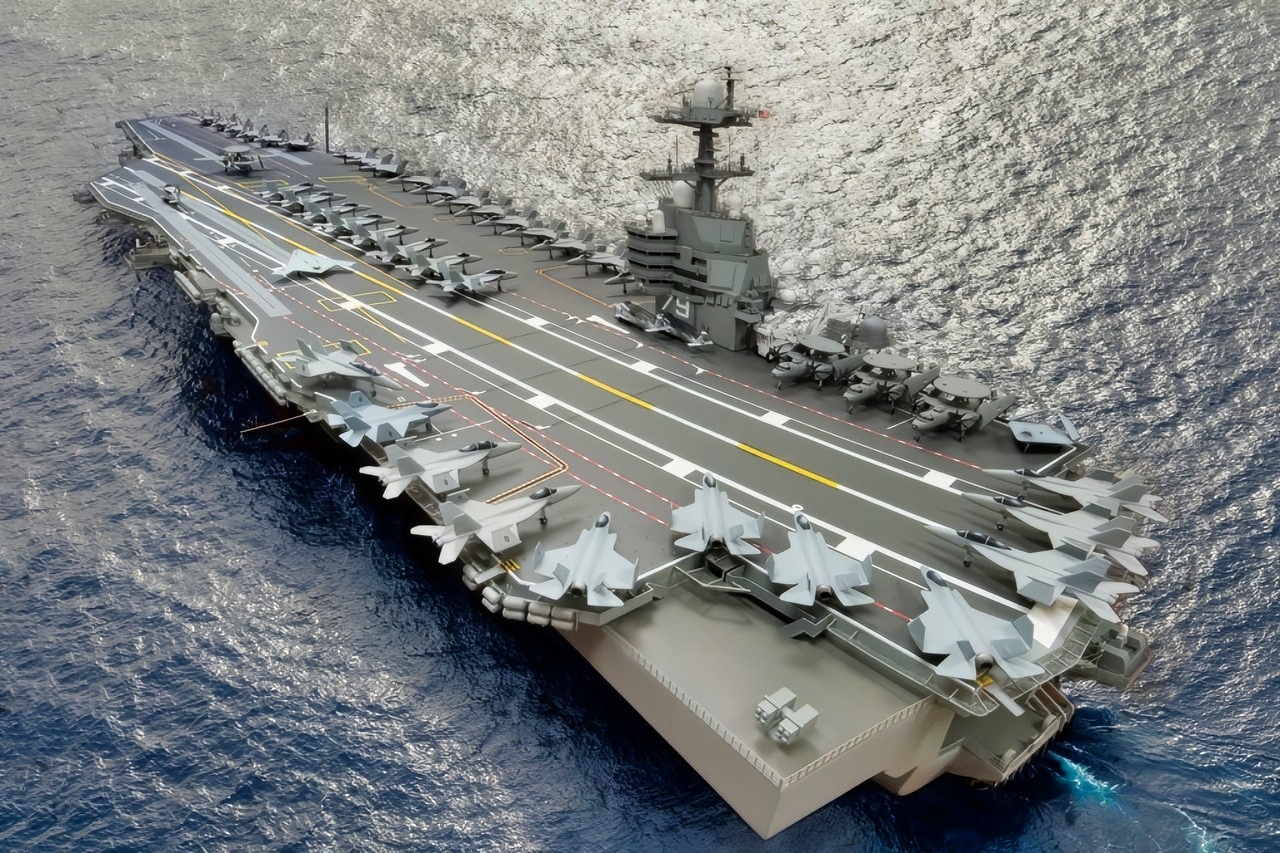
HII's Newport News Shipbuilding division announced August 16 that the future USS John F. Kennedy (CVN-79) has completed acceptance sea trials, the carrier's second and more consequential round of at-sea testing following eight days of builder's trials back in February. "It is an honor to take Kennedy to sea to demonstrate the quality work and commitment by our shipbuilders," said Derek Murphy, NNS vice president of new construction aircraft carrier programs, in HII's press release, which runs to barely four short paragraphs and offers no detail on what was actually tested, what results were recorded, or whether any deficiencies were noted during the trials. Kennedy now returns to the shipyard, with preliminary acceptance, allowing the Navy to begin its own underway test and evaluation, as the stated next step.

That last detail is worth sitting with, because "successfully completed acceptance sea trials" and "ready for delivery" are two entirely different milestones, and coverage running purely off the press release risks conflating them. This blog covered Kennedy's trials when they began on August 12, noting the carrier's history of schedule slips tied to Advanced Arresting Gear certification and Advanced Weapons Elevator integration, the same two subsystems that pushed delivery from an original July 2025 target to the current March 2027 date. The Aviationist's coverage of the trials' start is explicit that commissioning "will not mean the ship will then be ready for active operational service," and The National Interest's reporting goes further, noting that even after formal March 2027 delivery, Kennedy likely won't begin actual operational duties until at least 2028, with months of additional post-delivery testing, shakedown cruises, and air wing integration still required before the ship deploys anywhere.

The press release's brevity also glosses over just how contested "successful" is as a description for this program's track record. Kennedy's own schedule has slipped from an original 2022 delivery target to July 2025, then to the current March 2027 date, a five-year cumulative delay driven specifically by the same AAG and AWE systems this trial phase was meant to validate. USNI News and the Government Accountability Office have both previously flagged continuing AWE construction delays as a direct risk to even the current, already-slipped schedule, and while HII's announcement frames this trial phase as validating "the quality work and commitment by our shipbuilders," it notably doesn't specify whether AAG and AWE performance during these trials met certification standards or whether further remediation work remains before preliminary acceptance can actually proceed. A press release built around institutional pride is a normal and expected communications choice from a shipbuilder, but it's a different document than an engineering status report, and readers treating the two as equivalent risk assuming problems are resolved that the release simply doesn't address either way.

There is a genuinely positive, substantive detail buried in the broader reporting around this milestone that HII's own release doesn't emphasize: Congress mandated, specifically to avoid repeating USS Gerald R. Ford's post-delivery retrofit problems, that Kennedy be delivered capable of operating F-35C Lightning IIs from its first deployment, including reinforced jet blast deflectors and specialized equipment the Ford still lacks years after its own delivery. That's a real, concrete lesson-learned improvement baked into Kennedy's construction rather than deferred to an expensive post-delivery modification period, and it's arguably a more meaningful marker of program maturity than the trials announcement itself.

Set against the fleet-availability story this blog has already tracked, Nimitz's retirement dropping the Navy to 10 operational carriers until Kennedy arrives, this trial completion is genuinely good news worth reporting, just not the finish line HII's framing implies. The realistic timeline running from here is preliminary acceptance, formal delivery around March 2027 assuming no further AWE-related slippage, and then a further year or more of shakedown and integration before Kennedy is actually available to reduce the strain the temporary ten-carrier fleet is placing on Pacific, Middle East, and Mediterranean deployment rotations simultaneously. The ship cleared a real hurdle this week; it has not yet cleared the ones that have already cost this specific program five years.

The Whiteman AFB Sentencing Is the Fourth Case Like This in a Year — And That's the Actual Story


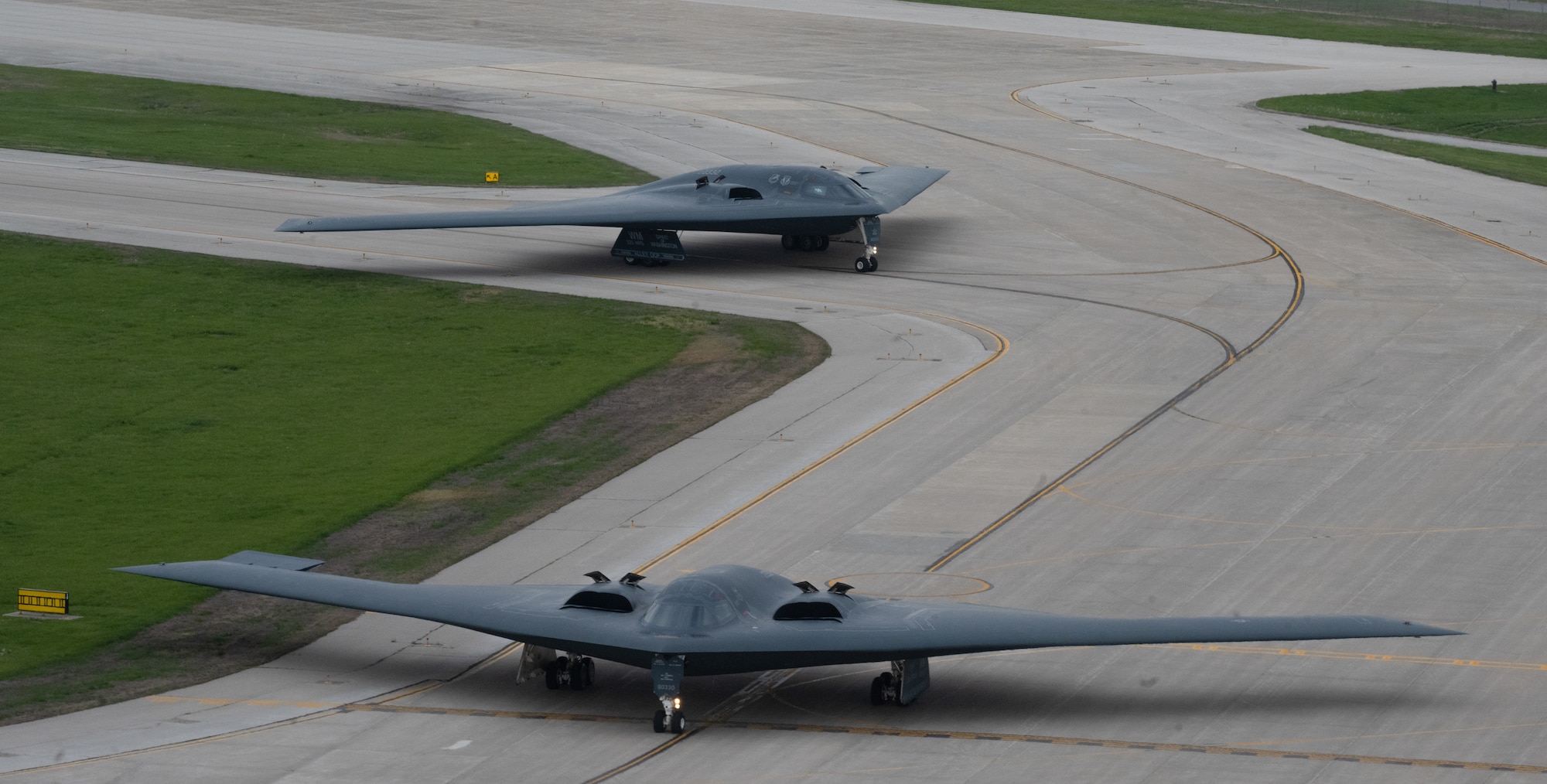
A U.S. Magistrate Judge in Kansas City sentenced Chinese national Qilin Wu to six months in federal custody on August 13, closing a case that began nearly nine months earlier when members of the 509th Security Forces Squadron found Wu in a minivan with Massachusetts plates near the perimeter of Whiteman Air Force Base, Missouri, home to the entire B-2 Spirit stealth bomber fleet. What distinguished Wu's case from the routine plane-spotting the Air Force Office of Special Investigations was careful to note is generally lawful, according to its own press release, was his conduct after being warned: told on December 2, 2025 not to photograph the base, Wu returned the next day and kept shooting, ultimately capturing 18 images and videos covering not just the aircraft but base infrastructure and equipment, going well beyond what AFOSI described as ordinary aviation photography. He'd previously entered the U.S. illegally near Nogales, Arizona in June 2023, was briefly detained by ICE and released due to a lack of detention space, and admitted to photographing additional, unspecified locations in Florida and Virginia as well.

Prosecutors leaned on a genuinely unusual legal foundation to secure the conviction: Executive Order 10104, signed by Harry Truman in February 1950 to designate military installations subject to photography restrictions, paired with Section 795 of Title 18 of the U.S. Code, which criminalizes unauthorized photographs of vital military equipment. That a Cold War-era framework built for a very different intelligence environment is now the operative tool against a 2020s-era case says something about how far behind current statute has fallen relative to the actual threat picture, a gap AFOSI Region 8 commander Col. David Bethel addressed directly: "it's about recognizing that the operating environment has changed," he said, describing a shift from clear-cut overseas threats to "more ambiguous activity around military installations inside the United States."

What Bethel's quote undersells, though, is just how un-isolated Wu's case actually is. Within the same twelve-month window, federal prosecutors charged Tianrui Liang, a 21-year-old Chinese national, with photographing Air Force planes at Offutt Air Force Base, Nebraska, home to U.S. Strategic Command, after he had also visited Ellsworth Air Force Base, South Dakota, in the days beforehand, crossing from Canada on a valid visa and later attempting to flee to New York before his arrest at JFK Airport. Separately, the Justice Department charged Yuance Chen, a Chinese national, and Liren "Ryan" Lai, a U.S. legal permanent resident, in 2025 with acting as agents for China's Ministry of State Security, allegedly tasked specifically with collecting intelligence on U.S. Navy service members and military installations. That's at least four documented cases targeting distinct, strategically significant American bases, Whiteman's nuclear-capable stealth bombers, Offutt's strategic command function, and Navy personnel more broadly, inside roughly a single year, a pattern considerably harder to dismiss as coincidental individual curiosity than any one case examined alone.

This connects directly to the same institutional gap this blog has already tracked through retired Gen. Glen VanHerck's remarks at the SMD Symposium regarding the Langley AFB drone incursions and the reported Iranian F-5 raid on Camp Buehring: authority and detection frameworks built around a fence-line boundary and a clear foreign-versus-domestic threat distinction are visibly struggling against activity that's neither clearly criminal trespass nor clearly foreign military action, but something ambiguous in between, individuals with no formal military or diplomatic status conducting apparently deliberate, repeated intelligence-gathering-adjacent activity around sensitive American installations. Bethel's own framing of the "operating environment" having changed is functionally the same diagnosis VanHerck offered for drone incursions and base-defense authority, just applied to human intelligence collection rather than unmanned aerial systems.

None of the four cases cited here has been publicly tied to a broader, centrally coordinated Chinese intelligence operation, and Wu's own conduct, illegal entry followed by fixated, repeated photography after an explicit warning, reads as consistent with an individual acting largely on his own initiative rather than as confirmed evidence of state direction. But whether any single case reflects formal tasking or independent behavior matters less than the aggregate pattern federal prosecutors have now documented across multiple states and multiple sensitive installations in rapid succession, and it's that pattern, not any one six-month sentence, that represents the actual story Wu's case is one data point within.

India's AMCA Engine Race Just Got a Third Runner — The "Rolls-Royce vs Safran" Framing Is Already Outdated


Retired Air Marshal Anil Chopra, former director-general of India's Centre for Air Power Studies, published a pointed analysis this week arguing India squandered a head start on China in high-thrust jet engine development despite both countries launching indigenous programs in the mid-1980s. His core argument, drawn from decades of firsthand experience in the IAF, is worth taking seriously as expert opinion rather than dismissing or treating as settled fact: China spent an estimated $42 billion on its aero-engine program since 1986 against India's roughly $239 million on the Kaveri effort, pursued a patient 25-to-30-year roadmap with consistent state backing, and pragmatically reverse-engineered Russian AL-31F engines while building indigenous expertise, ultimately fielding the WS-15 in serial production to power the J-20. India, by contrast, tried to leapfrog straight to a competitive high-thrust engine, hit a metallurgical wall on turbine blades capable of surviving temperatures above 1,500°C, and, according to Chopra, spread the effort across multiple agencies without the institutional focus China applied.

That comparison holds up reasonably well against the historical record, and it's worth noting India did eventually clear the metallurgical hurdle Chopra describes: the Defence Metallurgical Research Laboratory in Hyderabad achieved indigenous single-crystal turbine blade production in 2021, and the dry, non-afterburning Kaveri derivative now produces roughly 46-48 kN of thrust, enough to power the DRDO Ghatak unmanned combat aircraft even if it never became competitive for the Tejas itself. But Chopra's piece, framed around a binary choice between Rolls-Royce and Safran for the AMCA's future high-thrust engine, is already behind the pace of what's actually unfolding, and the more current picture is considerably more interesting than a two-way vendor competition.

What Chopra's framing misses is that India isn't actually choosing between Rolls-Royce and Safran in the way his piece implies, it's running two parallel tracks that emerged at different times through different channels. The Gas Turbine Research Establishment already established a joint venture with Safran at the end of 2025 to co-develop a 120 kN-class engine, built around a reported $7 billion commitment, and that government-to-government track was reportedly nearing final Cabinet Committee on Security approval right around the same week Chopra's piece published, positioned as a symbolic Independence Day milestone for India's self-reliance push. Reliance Industries and Rolls-Royce, meanwhile, announced their own separate strategic partnership just two days before Chopra's piece appeared, proposing a dedicated Aerospace Gas Turbine Complex and a full technology-transfer, IP-ownership offer of its own, explicitly entering the field as a private-sector challenger to the already-advancing GTRE-Safran government track rather than as a settled alternative to it.

That timing matters because it changes the actual strategic question India faces from the one Chopra's piece poses. It's not simply "which foreign partner should India pick," it's "does India let an already-advancing government joint venture proceed, or does a well-funded private entrant with its own full-IP-ownership pitch actually displace it," a genuinely live and unresolved competition between a state-run and privately-backed track that didn't exist in this form even a few months ago. The urgency behind both offers also has a dimension Chopra's historical China comparison doesn't dwell on: India's current AMCA Mark-1 batches will fly on American GE F414 engines under a licensing deal, and that dependency carries real geopolitical exposure since ITAR export controls give Washington end-use monitoring rights and theoretical leverage over spare-parts supply during any future diplomatic disagreement, a vulnerability neither the Rolls-Royce nor Safran pitch would fully eliminate on the AMCA Mark-1 but which both are explicitly designed to end for the Mark-2 generation.

None of this undercuts Chopra's underlying historical argument, which remains a fair and well-informed account of why China's aero-engine program succeeded where India's struggled for decades. But readers should treat his piece as one veteran analyst's assessment of the past rather than a complete picture of where things stand right now, since the actual competitive landscape for India's engine sovereignty shifted meaningfully in the 48 hours before and after his analysis published, and the real story this week isn't Rolls-Royce versus Safran, it's a state-backed joint venture nearing approval running headlong into a fresh, well-capitalized private challenger for the same prize.

China's Frigate Didn't Get 50% More Firepower — It Got 50% More of the Same Two Weapons


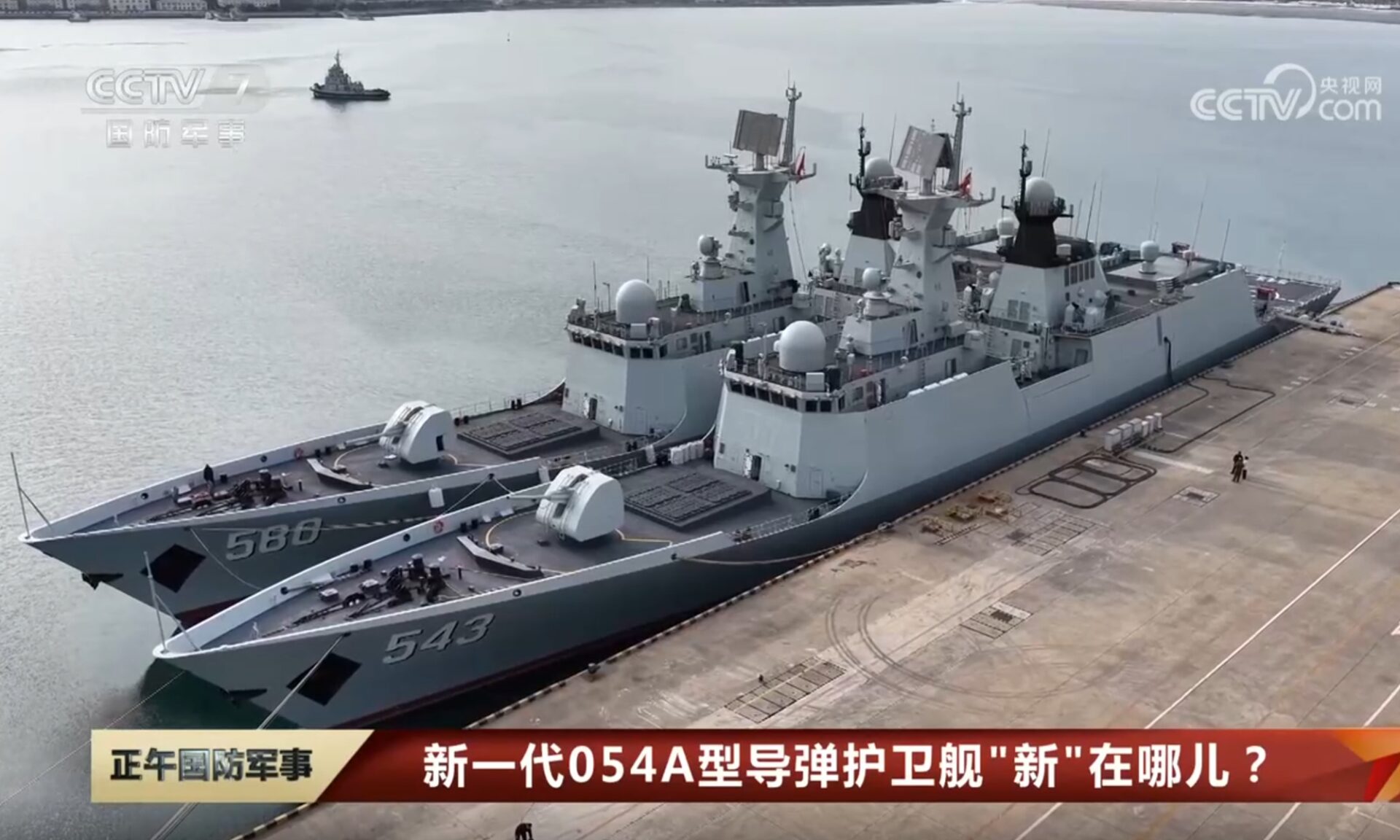
 Satellite imagery captured by U.S. intelligence firm Vantor on June 28 shows the third Type 054B frigate under construction at Shanghai's Hudong-Zhonghua shipyard fitted with six modules of eight-cell vertical launch units at its bow, up from the four-module, 32-cell arrangement on the first two ships in class, the Luohe and Qinzhou. If that configuration holds through fitting-out, it would give the vessel 48 VLS cells, a 50 percent increase over its sister ships, and outlets from Bloomberg to the South China Morning Post to Interesting Engineering have run with variations of the same framing: China is closing the missile-capacity gap with the U.S. Navy, one frigate at a time.

That framing isn't wrong exactly, but it obscures a more precise point buried deeper in the coverage, one that Meta-Defense's analysis draws out explicitly while most other outlets gloss over it: the additional 16 cells wouldn't add any new weapon type or mission capability to the Type 054B, they'd simply increase the reserve of the exact same two systems the ship already carries, the HHQ-16 surface-to-air missile and the Yu-8 rocket-assisted anti-submarine torpedo. Critically, the cells reportedly wouldn't be lengthened to accommodate the longer HHQ-9 surface-to-air missile or the YJ-anti-ship ballistic missile family China's destroyers carry, meaning this upgrade doesn't turn the 054B into a longer-range air-defense combatant, it just lets an already-capable frigate carry more of what it could already shoot.

Chinese military commentator Song Zhongping's own explanation for the change, cited across multiple outlets, actually supports this narrower reading rather than the "firepower boost" headline: he framed the expansion around a magazine-depth problem, arguing the original 32-cell configuration could restrict available weapons during sustained combat, giving commanders less flexibility to balance air-defense rounds against anti-submarine rounds before the ship needs resupply. That's a real and legitimate design fix, but it's a sustainment and endurance improvement, not a leap in capability the way "50 percent more firepower" implies to a casual reader. A ship that can now fire 48 of the same two missile types before returning to port is meaningfully different from a ship that can suddenly threaten a wider range of targets or engage at longer ranges, and conflating the two overstates what satellite imagery of empty missile tubes can actually tell you before the vessel has even entered service.

Where this upgrade does matter strategically is less about any single frigate's punch and more about what it signals for PLAN fleet architecture at scale. Army Recognition's coverage of the broader Type 054B production ramp places the class within an increasingly coherent layered escort doctrine: Type 055 destroyers handling high-end area air defense and command functions, Type 052Ds contributing multirole firepower, and Type 054B frigates thickening the screen around carrier, amphibious, and replenishment formations, freeing higher-value destroyers from routine escort duty. A 48-cell 054B fits that role considerably better than a 32-cell one, not because it individually outguns anything, but because it lets the PLAN distribute magazine depth across a larger number of moderately capable hulls rather than concentrating all of it in a smaller number of expensive destroyers, complicating an adversary's targeting calculus by multiplying the number of vessels worth defending against or accounting for in a strike package.

It's also worth registering the pushback offered by more skeptical American commentary on this same story: analysis from outlets like The Gateway Pundit has characterized the Type 054B broadly as a genuine but incremental improvement relevant mainly within China's near-seas operational envelope, one that doesn't meaningfully close the overall gap with a U.S. Navy that retains carrier air wings, allied interoperability, and roughly seven times the aggregate fleet displacement by some rankings. Both readings can be true simultaneously: the VLS expansion is a real, sensible fix to a genuine endurance limitation in the original design, and it still leaves the Type 054B a moderate-tonnage escort frigate rather than the kind of platform that shifts the broader naval balance on its own. The accurate headline here isn't "China boosts frigate firepower 50 percent," it's "China fixed a magazine-depth problem on a ship that was already a reasonable design," a considerably less dramatic but more precise description of what the satellite imagery actually shows.

China Flew a Sixth-Generation Fighter First — That Milestone Is Less Decisive Than It Looks


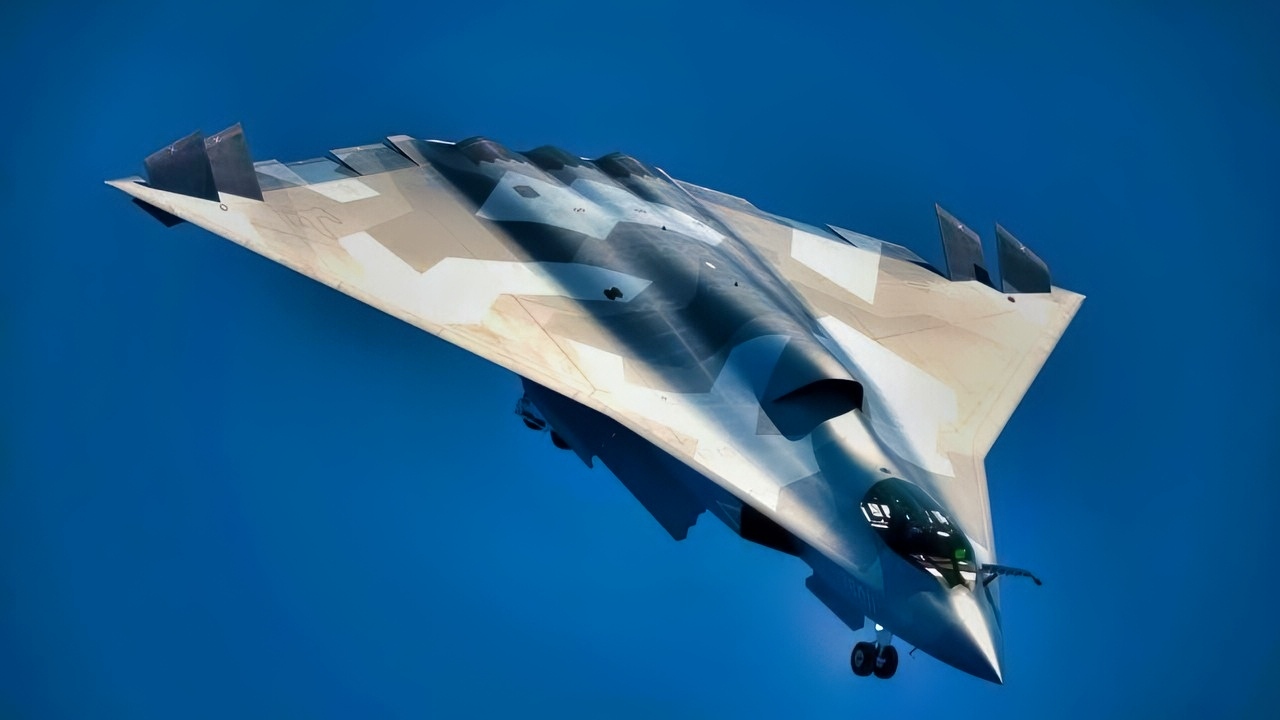
Chinese state media offered its clearest public acknowledgment yet of the aircraft popularly known as the J-36 on June 28, 2026, featuring a tailless silhouette and the nickname "Little Six" in a PLA-produced anniversary video for the Y-20 transport, and footage since then has shown the jet executing genuinely tight, sustained maneuvers rather than the short experimental hops that characterized its first sightings. That's a real milestone: since the aircraft first appeared over Chengdu in December 2024, at least four to five distinct prototypes have flown, cycling through at least three major configuration changes to intakes, exhaust arrangement, and landing gear, an unusually fast iteration pace that Chengdu Aircraft Design Institute engineer Yang Shuifeng has publicly credited to a "revolutionary process" for building sixth-generation airframes quickly. A second, smaller tailless design from Shenyang, unofficially designated the J-50 and believed aimed partly at carrier operations, has been flying in parallel, giving China two competing sixth-generation prototype lines simultaneously.

Set against Boeing's F-47, the U.S. Air Force's selected NGAD platform, which remains under construction in St. Louis with a first flight not expected until 2028, the optics genuinely favor Beijing, and multiple outlets, along with Chinese state-linked commentary, have leaned hard into a "China is flying, America is still drawing" framing. That framing is worth taking seriously, but it also skips past two structural realities that matter more than which country's jet left the runway first.

The first is that first flight and operational readiness are not the same milestone, and the gap between them has historically run over a decade even for successful programs. The F-22 took roughly fifteen years to go from its YF-22 prototype to operational status, and the Pentagon's own assessment, according to reporting from 19FortyFive, places China roughly a decade from turning the J-36 or J-50 into a fielded, combat-ready fighter with trained pilots, mature weapons, and a functioning sustainment system behind it, despite the flying prototypes being a genuine and significant achievement in their own right. Beijing's own history offers a useful data point in the other direction, though: the J-20 went from first flight to operational service in roughly six years, considerably faster than the American pattern, which is precisely why analysts aren't dismissing China's timeline outright even while cautioning against reading first-flight footage as evidence of near-term fielding.

The second, and more concrete, reality is propulsion, and it's the area where the "China is ahead" narrative runs into the most direct technical pushback. What engine is actually powering the J-36 and J-50 prototypes remains publicly unclear, and multiple outlets covering China's aviation industry have specifically flagged mature jet engine technology as a persistent, unresolved weak point even as airframe development has moved at genuine speed. That's not a minor caveat for a sixth-generation design; both American competing engine programs under the Next Generation Adaptive Propulsion effort, General Electric's XA102 and Pratt & Whitney's XA103, are built around variable-cycle, adaptive propulsion specifically because sixth-generation range, persistence, and thermal management requirements exceed what conventional engines can deliver, and both have already passed Assembly Readiness Reviews and moved toward physical hardware. If China's flying prototypes are currently powered by interim or non-adaptive engines while final propulsion remains unresolved, and available reporting suggests exactly that ambiguity, the airframes photographed performing tight maneuvers this summer may be considerably further from their eventual operational configuration than the maneuvering footage alone suggests.

None of this should be read as dismissing what China has actually accomplished, flying two independent sixth-generation prototype lines from separate design bureaus simultaneously is a genuine demonstration of aerospace-industrial depth that rivals, and in raw prototype-to-flight speed currently exceeds, America's own program. But the more accurate framing than "world's first sixth-generation fighter" is that China has won the opening lap of a race whose finish line, a fielded, combat-sustainable aircraft with resolved propulsion and proven reliability, is still roughly a decade out by the Pentagon's own estimate, and where America's classified X-plane flight-test history, running back to 2015 and accumulating hundreds of undisclosed flight hours before the F-47 competition was even announced, means the public visibility gap between the two programs is considerably larger than the actual capability gap it's often assumed to represent.

Calling the Reaper the War's "MVP" After Losing 46 of Them Is the Same Math Problem in a Different Uniform


The Washington Post reported this week that at least 45 MQ-9 Reapers have been shot down or crashed since Operation Epic Fury began on February 28, and a day after that report, the U.S. may have lost a 46th near the Strait of Hormuz, with wreckage photos circulating on social media and the shootdown attributed to IRGC forces over Hormozgan province. If the Washington Post's figures hold, that's roughly a quarter of the entire Reaper fleet destroyed in under six months, a sharp acceleration from the 24 losses a May 2026 Congressional Research Service report documented and the roughly 30 a defense official cited in early July, meaning losses have nearly doubled in the five weeks since fighting resumed over control of the Strait of Hormuz. At $30-50 million per airframe, the tally puts direct losses north of $1.3 billion, and that's before adding the 15-20 additional Reapers Yemen's Houthi movement claims to have downed in a separate campaign between 2023 and 2025.

USAF Chief of Staff Gen. Kenneth Wilsbach's response to this attrition rate has been to publicly defend the platform rather than reassess it, calling the MQ-9 the war's "Most Valuable Player" and noting "no other platform is even close" in terms of strikes conducted against Iran, all without putting a pilot's life at risk. That's not an unreasonable point on its own terms, an unmanned platform absorbing this level of attrition instead of a crewed aircraft is a genuine trade worth making. But the "MVP" framing sidesteps the more uncomfortable question the loss rate actually raises: why a platform originally built for permissive, low-threat counterterrorism environments has kept flying repeated missions into one of the most densely defended airspaces in the world, IRGC coverage layered with Russian S-300s, the indigenous Bavar-373 and Khordad systems, and a thick web of radar-guided SAMs, without a survivability upgrade to match the threat environment it's actually operating in.

The Reaper's specific vulnerabilities read almost like a checklist of everything that gets punished in high-intensity, contested airspace rather than the low-threat counterinsurgency work it was designed for: a large radar cross-section with no meaningful stealth shaping, minimal onboard electronic countermeasures, low speed and low-to-medium operating altitude to keep its sensors effective, and heavy reliance on satellite datalink and GPS that makes it a natural target for jamming and spoofing, a vulnerability the Washington Post's own reporting ties directly to several of the confirmed losses through communications failures rather than direct kinetic kills. None of these weaknesses are new or secret; they're the well-understood tradeoffs of a drone optimized for over a decade of counterterrorism work in Afghanistan, Iraq, and the Sahel, airspace where nobody was shooting back with a layered, radar-guided air defense network.

This connects directly to the broader munitions-and-platform attrition story this blog has tracked since Rafferty's SMD Symposium disclosures on Patriot and THAAD stockpiles, and it's not a coincidental parallel, it's the same underlying economics playing out in a different domain. Reuters has separately reported the Pentagon has used nearly all of its long-range precision munitions during this same conflict, and CNN's reporting on depleted air defense interceptors matches the CSIS stockpile figures already covered here. Whether the platform in question is a Patriot interceptor costing millions per shot or a Reaper costing tens of millions per airframe, the pattern is identical: expensive, exquisite systems built for a different threat environment are being consumed faster than they can be replaced once they meet an adversary with a genuinely capable, layered defense network, rather than the permissive environments most of America's post-9/11 procurement was optimized against.

The USAF's own quiet acknowledgment of this problem is arguably the most telling detail buried in the reporting: the service has already begun defining requirements for a cheaper Reaper successor, explicitly built to be produced rapidly at scale and to accept higher attrition rates as a feature rather than a failure. That's the same logic already driving CENTCOM's Task Force Falcon Strike and its LUCAS drones, a platform reverse-engineered from Iran's own Shahed-136 specifically to be attritable and cheap rather than exquisite and irreplaceable. Read together, the MQ-9's mounting losses and the Air Force's response to them aren't really a Reaper story at all, they're the latest data point in a broader institutional realization that this blog has now tracked across interceptors, drones, and now manned-adjacent unmanned strike platforms alike: America's post-9/11 generation of exquisite, expensive hardware wasn't built for the kind of contested, high-intensity fight it's now being asked to survive, and no amount of "MVP" framing changes the production math that keeps forcing the point.