Friday, September 11, 2026

The Missile That Sank the Moskva Just Hit Three More Russian Warships in Port


Two Neptune missiles sank the Moskva in April 2022, the Slava-class cruiser that had been the Black Sea Fleet's flagship, making it the first major Russian maritime loss of the full-scale invasion. That was the original, shorter-range version of the missile. On September 9, an upgraded variant called Long Neptune, stretched and fitted with extra fuel tanks to push its range from roughly 300 kilometers past 500, struck three more Russian vessels moored at Novorossiya: the frigates Admiral Essen and Admiral Makarov, and a Buyan-M class corvette. It's the first time this longer-ranged version has been used against a ship rather than a target on land.

Satellite imagery, published by open-source tracker Exilenova+ a day after Ukraine's navy first announced the strike, shows just how much damage was actually done. The Buyan-M took the worst of it, everything aft of the superstructure, including its entire vertical launch missile bank, appears to have burned and structurally collapsed, with debris scattered across the stern. Both Grigorovich-class frigates sustained moderate to severe damage near their own launch cells and forward superstructures, likely stripping both ships of any remaining ability to fire either air-defense or anti-ship missiles. Naval News, which has been tracking this specific mooring site since a mid-August drone strike hit some of the same vessels, noted Russia had apparently rearranged how its ships were parked in the meantime, presumably to make them harder to target. It didn't work well enough this time; this round of damage looks considerably worse than August's.

The bigger picture is what makes this single strike matter beyond three damaged hulls. Naval News's own tally puts Russia's entire Kalibr-capable surface and submarine fleet across the Black Sea and Caspian at a theoretical maximum of 17 vessels, three Grigorovich frigates, four Buyan-M corvettes, three Karakurt corvettes, and seven Kilo-class submarines. Of the nine vessels actually accounted for in the current tally, six are now out of service from damage: two Grigorovich frigates, one Karakurt, one Buyan-M, and two Kilo-class submarines. Three more ships, the remaining Grigorovich and two Kilos, are separately stuck outside the Black Sea entirely because Turkey has kept the Bosphorus closed to warships since the war began. Add it up and Russia's actual working inventory of ships capable of launching Kalibr cruise missiles from this theater has been reduced to a fraction of what it started the war with.

What makes Neptune specifically dangerous to that remaining fleet is less its punch and more its supply. Ukraine has far more Neptunes available, and far fewer restrictions on how it can use them, than it does with donated Western weapons like Storm Shadow, which come with usage conditions attached by the countries that supplied them. A domestically produced missile with no strings attached and a demonstrated 400-kilometer-plus reach against moving maritime targets is a genuinely harder problem for Russia's navy to plan around than an occasional Western-supplied strike would be, precisely because Ukraine controls its own production and its own rules of engagement for using it.

None of this means the Black Sea Fleet is finished as a fighting force, ships can be repaired, and Russia has shown it can still surge replacement vessels and adapt its mooring patterns in response to previous strikes. But the trend line across just the past month, an August drone raid followed by a considerably more damaging September missile strike using a longer-range weapon making its combat debut against ships, points in one direction. Whatever capacity the Black Sea Fleet has left to actually launch cruise missiles at Ukraine keeps shrinking, and Ukraine keeps finding new ways to make sure it shrinks further.

An American Startup Is Building a Missile for Germany With Almost No American Parts In It


Less than five percent of the components in Covenant's German-built Anthem missile come from outside Europe. That's according to the company's own CEO, and it's a genuinely unusual thing for an American defense startup to say out loud, let alone build a factory around. Covenant's stated goal is to push that number to zero entirely. For a US-Israeli company two years old, founded in 2024, that's a striking bet on where European defense-buying preferences are actually heading, and it explains why Berlin is talking to a company almost nobody outside the industry had heard of a few months ago.

The timing only makes sense once you see the hole Germany is actually trying to fill. Berlin's only current standoff strike weapon is the Taurus cruise missile, roughly 600 in stock, and Defense News's own reporting lays out just how shaky the rest of that arsenal actually looks: a new Taurus variant is still years from being fielded, promised American Tomahawk deliveries look uncertain after the missile got used heavily in the Iran war, and Europe's own collaborative long-range strike program, ELSA, only just got started. Anthem isn't competing against a healthy portfolio of alternatives, it's being evaluated because Germany's existing options are each individually compromised in some way.

What Covenant is actually offering solves a different problem than raw performance specs. Anthem carries a warhead over 200 kilograms with a reported range past 1,500 kilometers, but the real pitch is volume and price: a per-missile cost in the "mid-six figures," considerably cheaper than a Raytheon Tomahawk, aimed at production rates up to 1,000 missiles a year. CEO Michael Kaufman's framing of why that scale matters is blunt: countries like Germany would need tens of thousands of long-range missiles to actually threaten a country the size of Russia, and expensive, hand-built high-end missiles were never going to get anyone to that number. "If our stockpiles run thin," he said, "so does our deterrence." That's the same underlying math driving cheaper interceptor and drone programs across NATO all year, mass beats sophistication when the alternative is running out of weapons entirely.

The factory itself is a real, opened facility, not a pitch deck, 110,000 square feet near Leipzig airport, a site that's also a military logistics hub, alongside Covenant's original Texas plant and a smaller Israeli facility. A Leipzig media report noted the German site won't handle explosives on-site, a regulatory choice that lets it operate under lighter industrial rules than a full munitions plant would require. Serial production is set for early 2027, with the company saying at least two unnamed European customers, not just Germany, will receive their first missiles that same quarter.

The competition Anthem is actually up against fits neatly into the pattern this same reporting describes elsewhere in Germany's evaluation process: Ukraine's own Fire Point, maker of the Flamingo cruise missile, is reportedly one of the other systems on Berlin's shortlist for this same "cheaper, mass-producible" category. That's genuinely notable, a wartime Ukrainian defense company and a two-year-old Silicon Valley-backed startup both being seriously considered by one of Europe's largest militaries, ahead of the continent's own more established, legacy missile makers. Whether that reflects how urgently Germany needs volume right now, or how unusually open European procurement has become to unconventional suppliers this year, the practical result is the same: a startup nobody had heard of in January is now on track to be manufacturing cruise missiles on German soil by spring.

India Just Approved $11.6 Billion in Military Orders. Approval Isn't the Hard Part.


Ninety-eight percent. That's the share of a freshly approved ₹1.10 lakh crore, roughly $11.6 billion, defense procurement package that India's government says will go to domestic manufacturers rather than foreign suppliers. Ten years ago, closer to two-thirds of India's military equipment was imported. If this ratio holds, India will have essentially flipped that dependency in a decade. The list itself spans all three services: CBRN reconnaissance vehicles, mine-laying systems, and Advanced Light Helicopters for the Army; naval radars and marine gas turbines for the Navy; electronic warfare systems and secure-access technology for the Air Force.

What the government's own approval, technically called Acceptance of Necessity, actually represents is worth being precise about, because "approved" and "delivered" are two very different milestones in Indian defense procurement. This is the administrative starting gun, not a signed contract, let alone hardware reaching a unit. Analysis from The420.in flagged exactly this gap in its own coverage of the announcement: developing advanced systems, completing trials, and delivering equipment on time are separate tasks from obtaining administrative approval, and the same reporting noted the September 7 release doesn't even specify enough detail to confirm whether a long-discussed Su-30MKI upgrade is actually part of this package or not.

The bigger structural story sitting underneath this single announcement is a genuine industrial rebalancing that's been building for a couple of years. State-owned defense companies, DPSUs, brought in ₹21,071 crore in exports last fiscal year, up 151 percent year-on-year, overtaking private firms' ₹17,353 crore and reversing the prior year's order, when private companies had actually led. Private industry still produced nearly a quarter of India's total defense equipment output last year, worth roughly $20 billion, manufacturing radars, artillery systems, armored vehicles, missiles, ammunition, drones, small arms, and maritime systems. Neither sector is winning outright, they're both growing, with the government's own procurement policy functioning as the demand signal keeping both expanding simultaneously.

Financial markets have already started placing their bets on who benefits most. Macquarie named Bharat Electronics its top pick; Jefferies favored Hindustan Aeronautics while also flagging Astra Microwave, Data Patterns, and Solar Industries as beneficiaries. Both firms' analysts were careful to add the same caveat, though: exports and greater reliance on Indian-made systems could genuinely help the sector, but actual stock performance and company execution remain uncertain. That's a polite way of saying the same thing The420's own reporting flagged, an approved procurement list is a demand signal, not a guarantee any specific company delivers on time or at the promised scale.

Context worth remembering here is that this policy direction isn't new, it's been running since at least 2020, when the Defence Ministry published its first "Negative Import List," progressively banning imports of 101 categories of military equipment, artillery guns, assault rifles, warships, sonar systems, transport aircraft, light combat helicopters, starting that December. Six years on, this week's ₹1.10 lakh crore approval is less a sudden shift than the latest, largest installment of a policy India committed to years ago and has been building toward steadily since. Whether the equipment on this specific list actually reaches soldiers, sailors, and pilots on anything close to its stated timeline is the question that will actually determine whether this announcement means what its headline number suggests, or simply adds one more approved-but-unrealized order to a list India has been building since 2020.

This Is at Least the Second Time Iran Has Hit the Same Jordanian Base This Year


One A-10 Thunderbolt II lost a wing. Roughly eight F-15s took light damage and were reportedly able to fly again afterward. That's the accounting a US official gave Reuters for what Iranian strikes did this week to Muwaffaq Salti Air Base in Jordan, near the town of Azraq, a facility that's served as a key hub for American airpower operations against Iran since the current war began in February.

This isn't the base's first time being hit, and it's worth being clear about that pattern rather than treating this strike as an isolated event. Iran targeted Muwaffaq Salti on the opening day of the conflict, February 28, part of a coordinated wave of drone and missile attacks against American and allied facilities across the region. Jordanian air defenses reportedly intercepted 108 of the incoming projectiles that day, though debris from the intercepted weapons still caused injuries and damage. The base was struck again in July, an attack serious enough to kill three American Army soldiers and wound 29 more. Tehran has, according to multiple outlets, targeted the facility "numerous times" since the war started, which makes this week's strike a continuation of a running campaign rather than a new front opening up.

The broader damage accounting the Congressional Research Service put together back in May gives a sense of scale beyond this single base: 42 US military aircraft lost or damaged in the conflict by that point, more than two dozen drones destroyed, and additional losses from ordinary accidents layered on top of combat damage, a reminder that not every aircraft this war has cost the US actually died in combat. Eighteen American service members have been killed since February, and more than 800 injured, figures that Reuters' own reporting places alongside this week's strike without suggesting they're final.

What's actually driving this latest round is the broader standoff over the Strait of Hormuz. The US military struck three Iranian oil tankers on September 5 as both sides fight for effective control over the strait, and Iran's attack on Muwaffaq Salti this week reads as the direct retaliatory response to that. Trump has separately claimed the US is "winning" the Iran war and asserted control of the Hormuz Strait, a characterization that sits awkwardly next to a week that included American tanker strikes, Iranian retaliation against a US airbase, and reports that Iran is simultaneously building out a new network of regional proxies specifically to keep pressure on America's Gulf allies. Those don't read like the closing moves of a war one side has already won.

None of this is happening in a vacuum for Jordan either, a country that's been absorbing repeated strikes on its own soil as a consequence of hosting American forces, with its own air defense systems doing real work intercepting incoming fire even when some of it still gets through. Whatever the strategic framing coming out of Washington, the practical reality on the ground at this one air base is now a documented pattern: struck in February, struck in July with fatal American casualties, and struck again this week, with an A-10 missing a wing to show for it.

Putin Told Trump Russia Won't Attack Europe. The Same Week, Reuters Revealed Why That's a Live Question.


Vladimir Putin called Donald Trump on Tuesday and told him Moscow has no intention of attacking Europe. Trump has been repeating that reassurance publicly himself, saying as recently as last week that "Putin is not looking to attack NATO territory." The same week, Reuters revealed exactly why some Western officials don't believe that reassurance at face value: this spring, near Norway's remote Svalbard archipelago, a joint British-Norwegian-American operation caught Russian submarines rehearsing how to sever the undersea cables that keep large parts of Europe connected to the internet and its own financial system.

The unit behind it, per two Western officials who described the operation to Reuters, was Russia's GUGI, the Main Directorate for Deep Sea Research, a specialized undersea warfare directorate that used deep-sea submersibles to simulate deploying what's described only as a "secret weapon," sophisticated enough to disable cables without leaving physical evidence behind. Nobody involved would explain how the technology actually works. What made it worth confronting at sea rather than just monitoring quietly was the deliberate design goal behind it: sabotage that preserves the Kremlin's plausible deniability, exactly the kind of ambiguous, hard-to-attribute act that's harder for NATO to respond to under Article 5 than an obvious military strike would be.

The specific cables at risk aren't abstract infrastructure. Two 1,400-kilometer fiber-optic lines connect Svalbard to mainland Norway, running as deep as 2,700 meters, carrying satellite data downloaded at SvalSat, the world's largest satellite ground station and part of NASA's Near Space Network. Cutting cables like these has a track record going back further than most people assume, undersea telegraph lines were deliberately targeted in both World Wars specifically because whoever controlled them controlled how fast military orders could actually move.

Norway's defense minister, Tore Sandvik, described the aftermath in terms clearly meant for Moscow's ears as much as anyone else's: "We have made it unequivocally clear to Russian authorities that any attempt to target our critical infrastructure will be detected and met with consequences." British and Norwegian officials reportedly went a step further, taking their findings directly to Moscow specifically to signal they knew about the new technology, hoping that simply proving awareness of it might make Russia think twice before actually using it. Russia's Defense Ministry didn't respond to Reuters' request for comment, consistent with the Kremlin's standing position of denying it conducts sabotage operations in NATO countries at all.

There's a separate, quieter thread running through this story that connects to something already reported elsewhere: CIA Director John Ratcliffe visited his Moscow intelligence counterparts in August, in part specifically to warn Russia against escalating sabotage operations in Europe, according to two people familiar with the matter, though Reuters couldn't confirm whether the undersea cable operations came up in that particular conversation. Whether or not Ratcliffe's warning was aimed at this specific incident, it fits the same broader pattern, American and allied officials trying to signal deterrence through back channels while the public conversation stays limited to reassurances that nothing serious is actually happening.

The wider data on suspicious maritime activity gives the Svalbard incident real context rather than treating it as an isolated event. Maritime risk analytics firm Windward tracked a 52 percent jump in "drifting," ships moving slowly over or near sensitive undersea infrastructure to map its exact location, across the North Sea last year, with a similar pattern showing up in the South China Sea. Poland, Lithuania, and Romania have all separately confirmed incidents of Russian activity near their own infrastructure or airspace. And the reference point everyone in this story keeps returning to is 2022's Nord Stream pipeline attacks, still unresolved in terms of formal responsibility, with German prosecutors having indicted a Ukrainian man while Kyiv denies any government role. Four years later, nobody has definitively answered who did that. This time, at least, NATO says it caught the rehearsal before anything actually got cut.

Iran Already Did This Once, With a Stealth Drone. Now It Has a Submarine to Take Apart.


In 2011, Iran brought down an American RQ-170 Sentinel stealth reconnaissance drone and refused to give it back. Then-President Obama personally asked Tehran to return it. Iran didn't, and within a few years it was showing off domestically built drones that looked like they'd borrowed heavily from the captured design. That history is the reason analysts are now saying Iran's capture of a US Navy underwater drone this week isn't just a propaganda moment, it's an opportunity, however limited, to take apart American hardware and learn from it.

The vehicle in question is a Dive-LD, an autonomous underwater drone built by Anduril for long-range surveillance and other undersea missions, part of a newer generation of unmanned systems designed to operate for days at a time with minimal human oversight. US Central Command's own explanation downplays the loss considerably: Navy Capt. Tim Hawkins called it "an older model" drone that "neither collected sensitive data nor carried any classified sonar or radar equipment," suffering a malfunction and left "dead in the water" before Iranian forces recovered it. Anduril, notably, tells a different story about the same product line in its own marketing, describing the Dive-LD as "the most reliable and flexible" large autonomous underwater vehicle available, rated for up to 10 days in demanding conditions. Having the manufacturer's sales pitch and the customer's damage-control statement contradict each other this directly, on the exact same platform, isn't a great look for either party.

What Iran can actually extract from the hardware is a genuinely open technical question rather than a settled one. Bryan Clark, a senior fellow at the Hudson Institute, said Iranian engineers "could definitely reverse-engineer the mechanical systems," pointing to Tehran's own track record with captured American aircraft as the reason to take that seriously. But he also noted the drone's software carries built-in defenses, meaning prying open the hull is one thing and actually extracting useful data or code is a considerably harder problem. Farzin Nadimi of the Washington Institute for Near East Policy framed the real payoff more narrowly: even without cracking the software, examining the physical design "can help the IRGC make better versions of their own designs," an incremental engineering benefit rather than a wholesale technology transfer.

Iran's diplomatic corps has treated the whole episode as a gift regardless of its actual technical value. The country's embassy in Ghana posted on X that its forces picked up the submersible in "a strait controlled by people who can hear a shrimp sneeze," adding that "our guys picked it up like a plastic bottle in a fishing net. Fully intact. Still blinking like an idiot. Condolences to whoever was holding the joystick." Iran's embassy in Hyderabad chimed in with its own promise: "Unboxing ceremony by our reverse engineers, tomorrow morning!" That's not the tone of a country treating this as a minor mechanical failure, whatever Washington's own statement says.

Mona Yacoubian, who directs the Middle East program at CSIS, put her finger on why Tehran is leaning into the mockery so hard: "This is something that Iran has proven very adept at exploiting for its own benefit in terms of seeking to frame the narrative as one of US, in this case, ineptitude and their ability to sort of retain control over the Strait of Hormuz." That's really the core of what this incident costs Washington, regardless of whether Iran ever extracts a single useful engineering insight from the hardware itself. The US Navy has, at points in the past, moved fast to physically stop Iran from taking possession of unmanned maritime technology, in 2022 a Navy ship and helicopter intervened after an Iranian vessel tried towing away a Saildrone in the Gulf. This time, the drone was already sitting dead in the water when Iran arrived, and no amount of after-the-fact messaging about "older model" hardware changes the plain fact that an American Navy asset ended up in Iranian hands, photographed, and mocked, in the middle of an active war over who actually controls the strait it was found in.

Ukrainian Ground Crews Are Tracking Missile Shipments Like Packages, Because a Late Delivery Means Pilots Fly With Just a Gun


Ukrainian personnel are reportedly tracking new air-to-air missile shipments the moment they cross the border, "counting not just the hours but the minutes" until they arrive. That detail, relayed by a journalist who spoke with a senior Ukrainian Air Force commander, says more about the state of Kyiv's F-16 fleet than any single statistic could. When missiles run out, and Reuters separately reported Ukraine went more than three weeks with only "a handful" of AIM-9 Sidewinders available, pilots on some daytime sorties go up with nothing but the jet's built-in cannon.

The officer who confirmed this, callsign "Phantom," commands Ukraine's 107th Wing, and his response when asked directly about the shortage was unambiguous: "any aircraft without weapons is useless." His F-16s spend most of their time on a specific, unglamorous mission, hunting Russian drones and cruise missiles before they reach Ukrainian cities and infrastructure, work that eats through missile stocks fast precisely because it's defensive and constant rather than the occasional dogfight most people picture when they think of fighter jets in combat.

Using the M61A1 Vulcan cannon instead of a missile isn't a like-for-like substitute, it's a considerably more dangerous fallback. A gun requires the F-16 to close to much shorter range than a missile would, which means more exposure to whatever else might be in the area, enemy fighters, ground-based air defenses, other threats a pilot would rather engage from a safe distance. It's also genuinely harder to hit anything with, particularly a small or slow target, and considerably riskier at night. Ukraine's own pilots have already shown this works under pressure, in May 2025 one pilot reportedly destroyed three aerial targets with the cannon and was engaging a fourth before an emergency forced him to eject, proof the tactic can succeed but also a reminder of exactly how close to the edge that kind of engagement runs.

Part of what's changed is the plumbing behind how these missiles actually reach Ukraine in the first place. The Trump administration replaced the Biden-era system of direct US military aid with something called PURL, the Prioritized Ukraine Requirements List, and it's not clear from public reporting how much of the current shortage traces back to that transition specifically versus simple wartime demand outstripping supply. What is clear is that Ukraine is now competing for the same finite pool of American-made munitions that the US military and its Gulf allies are also drawing down fast, amid sustained Iranian drone and missile pressure in the Middle East. A limited global supply chain doesn't get bigger just because two different conflicts need it at the same time.

Ukraine's own stopgap has been APKWS II, a laser-guided rocket originally built for ground-attack work that's since been adapted for air-to-air use against slow-moving drones, with the first known footage of an F-16 downing a Shahed-type drone using one surfacing in February. It's a genuinely clever workaround, cheaper and more available than a proper air-to-air missile, but it's not a full replacement, and nothing in current reporting suggests it was rushed to Ukraine specifically to cover the Sidewinder shortfall rather than developed on its own separate track. Phantom's own ask, delivered plainly in his interview, was for more than just faster resupply: he wants Ukraine to localize missile production domestically or somewhere else in Europe, so the country isn't stuck depending entirely on a supply chain it doesn't control and can't speed up on its own, watching shipments cross the border minute by minute because the alternative is pilots flying combat missions unarmed in every way that matters.

Russia Is Building Concrete Bunkers for Bombers It Mostly Isn't Flying


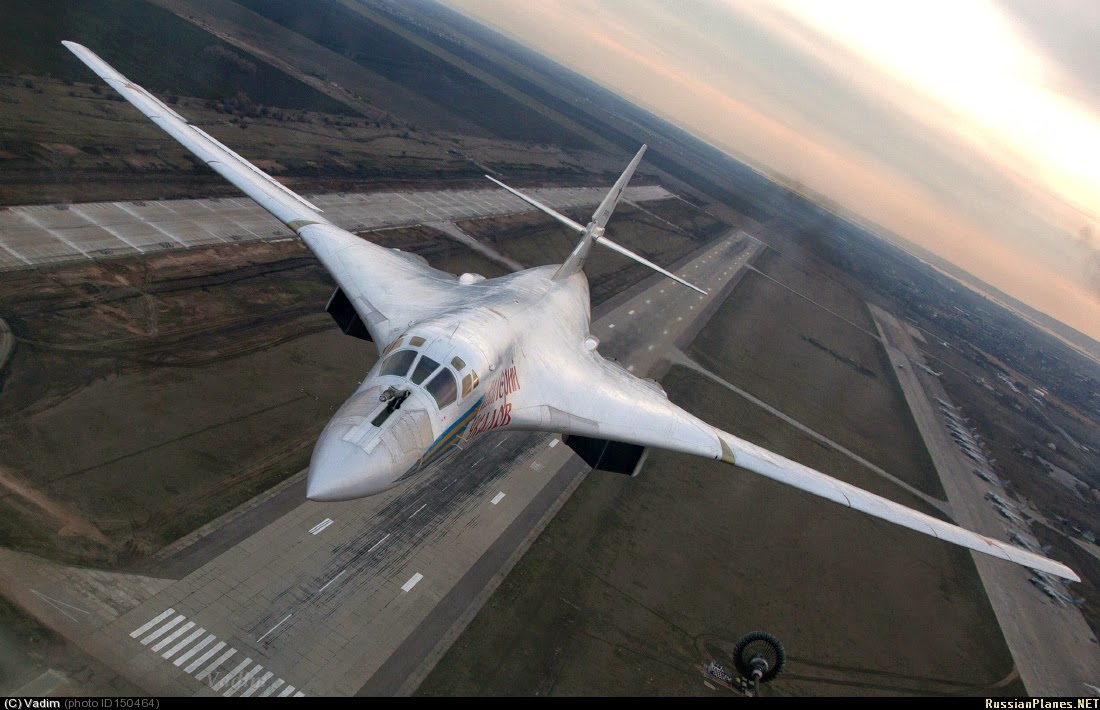
The attack that started all of this happened in December 2022, when a Ukrainian drone reached Engels Air Base and damaged parked aircraft, killing several personnel. Russia's response has taken nearly four years to reach its current form: satellite imagery now shows several massive new hangars nearing completion at Engels-2, roughly 63 by 63 meters, walls seven meters high, peaking at 17 meters, large enough to swallow a Tu-160 or Tu-95MS whole. Ukraine's follow-on strikes since 2022 have mostly failed to hit the bombers themselves, destroying surrounding infrastructure instead, but Moscow clearly isn't willing to bet that streak continues indefinitely.

The scale of what's actually being built is worth putting in real terms. Defense Express, tracking the same satellite imagery, counted at least 17 hangars under construction, enough covered space for roughly a quarter of Russia's entire strategic bomber fleet, both the Tu-160M and the considerably larger Tu-95MS force. That's a meaningful upgrade from what came before: a model shown to Russia's defense minister back in June 2025 described a lighter, tent-like shelter meant mainly to keep weather off the aircraft, not the kind of hardened, high-wall structure that would meaningfully complicate a drone strike. Whatever's going up now looks like a considerably more serious answer to the actual threat than that earlier concept was.

Here's the detail that complicates the whole story, though: analysts tracking Russia's bomber fleet put only seven of its 18 Tu-160M aircraft on active combat rotation against Ukraine at any given time, flying primarily out of Ukrainka Air Base rather than Engels itself. The rest, roughly two-thirds of the fleet, are tied up in testing, training, maintenance, or ongoing modernization work, much of it happening at the Kazan production facility rather than Engels. Satellite images from earlier this year showed Tu-160M aircraft still sitting in open air outside Kazan's newly built production hall as recently as April, exposed regardless of how fortified Engels eventually becomes.

That gap matters because it means hardened hangars at one base don't actually protect most of the fleet most of the time. A bomber sitting exposed at a production facility during a modernization cycle, or parked in the open at Ramenskoye near Moscow, where satellite imagery has separately caught Tu-22M3, Tu-95, and Tu-160 aircraft alongside yet another round of new hangar construction, is just as vulnerable as it would have been before Engels got its concrete walls. Russia appears to be building shelter capacity across multiple sites simultaneously rather than concentrating everything at one base, which suggests officials understand this themselves, but it also means the fortification effort is playing out considerably slower and more piecemeal than a single dramatic construction project might suggest.

There's a broader pattern here worth connecting to Russia's own home-front defense posture more generally. Mi-26 helicopters have separately been used to airlift Pantsir-SMD-E air defense systems directly onto Moscow rooftops, and combined with the layered hangar-construction effort now underway at multiple bomber bases, the picture is one of a country visibly, if slowly, reorganizing its air defense and infrastructure protection around the specific reality that long-range drones can now reach targets deep inside Russian territory that were, for most of the war's first two years, treated as effectively untouchable. The hangars at Engels are a genuine hardening effort. They're also, by the numbers, only ever going to cover a fraction of a bomber fleet that spends most of its life somewhere else.