Thursday, July 30, 2026

Türkiye’s Bayraktar Kızılelma Unmanned Fighter Achieves Historic Internal Bay Precision Strike Milestone


 Turkish defense manufacturer Baykar has achieved a monumental milestone in next-generation military aviation with the successful internal weapons bay precision strike test of its flagship Bayraktar Kızılelma uncrewed combat aerial vehicle. Conducted as part of an expanding flight-test campaign, the milestone trial demonstrated the stealth-optimized platform’s ability to deploy precision-guided munitions directly from its internal bays against designated ground targets. This critical capability validation brings the jet-powered autonomous fighter significantly closer to full operational deployment with the Turkish Armed Forces.

Designed from the ground up to operate in heavily contested airspace, the Kızılelma incorporates a low-radar-cross-section airframe that relies heavily on internal carriage configurations to maintain its low-observable profile. By successfully releasing precision-guided munitions without compromising its aerodynamic stealth signature, the aircraft addresses one of the most demanding engineering challenges associated with modern unmanned combat platforms. This capability ensures that the UCAV can penetrate sophisticated integrated air defense systems and strike high-value targets while remaining virtually undetected.

The successful strike evaluation follows a rapid sequence of technological breakthroughs for the Kızılelma program, including advanced beyond-visual-range air-to-air missile engagements and autonomous close-formation flight tests. Furthermore, recent collaborative initiatives—such as the K-SWARM trials pairing the platform with crewed Leonardo M-346 aircraft—highlight the rapid maturation of Baykar's smart fleet autonomy algorithms. These joint trials prove that the uncrewed fighter can execute complex tactical tasks seamlessly while responding to commands issued from airborne command posts.

Equipped with cutting-edge domestic avionics, including Aselsan’s MURAD active electronically scanned array radar and advanced electro-optical targeting suites, the Kızılelma represents a comprehensive national combat aviation ecosystem. Its structural layout is specifically optimized for short-runway operations, enabling potential deployment from amphibious assault ships like the TCG Anadolu. This carrier compatibility dramatically expands the tactical reach and power-projection capabilities of Turkish maritime aviation across regional and global theaters.

As serial production ramps up and international interest surges—including recent export agreements and expanding European partnerships—the Kızılelma is rapidly redefining the future of global air power. By bridging autonomous flight control with true strike capability, the platform offers a formidable template for future loyal-wingman concepts. Ultimately, these continuous developmental achievements underscore Türkiye's rising prominence as a primary innovator in autonomous military aviation.

Chinese People’s Liberation Army Air Force Reassigns Early Production J-20 Stealth Fighters to Himalayan Air Defense Unit


 The Chinese People’s Liberation Army Air Force (PLAAF) has officially reassigned its unique, early production Chengdu J-20 fifth-generation fighter aircraft to the 99th Air Brigade. Operating from a strategically critical high-altitude theater, this specialized air defense unit is tasked with reinforcing sovereign airspace along rugged border regions. The relocation highlights how the Chinese military systematically cascades older baseline stealth airframes to secondary and high-priority frontier commands as advanced, highly upgraded variants enter service in core coastal brigades.

The newly transferred aircraft originate from the initial low-rate initial production batches of the J-20 program, which relied on interim engine configurations and earlier avionics suites before manufacturing lines transitioned to mass-producing advanced variants. While newer frontline units closer to the Taiwan Strait and East China Sea have been re-equipped with heavily enhanced J-20A variants featuring indigenous next-generation powerplants, these early production jets still provide an exponential leap in combat capability. Integrating fifth-generation stealth assets into high-altitude sectors grants regional commanders unprecedented situational awareness and dominant radar capabilities.

Stationed along the Himalayan frontier, the 99th Air Brigade faces unique operational challenges characterized by extreme weather, rugged terrain, and complex geopolitical friction points with neighboring nuclear-armed states. Operating advanced stealth fighters in these elevated environments places severe demands on life-support systems, maintenance protocols, and sensor calibration. However, the J-20's powerful active electronically scanned array radar and expansive internal weapons bays allow the unit to project formidable air dominance across difficult mountainous corridors.

This strategic reallocation reflects the maturation and vast expansion of China’s domestic fifth-generation fighter ecosystem. With the J-20 now being procured on a scale far surpassing any other heavy fighter program globally, the PLAAF can afford to distribute its pioneering airframes outward to harden secondary strategic directions. Older legacy fourth-generation platforms previously assigned to these frontier sectors are concurrently being phased out or pushed further down the chain to modernize training and reserve units.

Ultimately, integrating early production J-20s into Himalayan air defense operations underscores the comprehensive nature of China's aerial modernization strategy. By ensuring that every operational theater benefits from low-observable technology, Beijing continues to close capability gaps across all regional frontiers. As these stealth units settle into their new high-altitude bases, they will serve as an unyielding deterrent against any potential aerial incursions along the border.

U.S. Fighter Units Leverage Israeli Air Bases for Strikes on Iran as Forward Gulf Facilities Face Growing Vulnerabilities


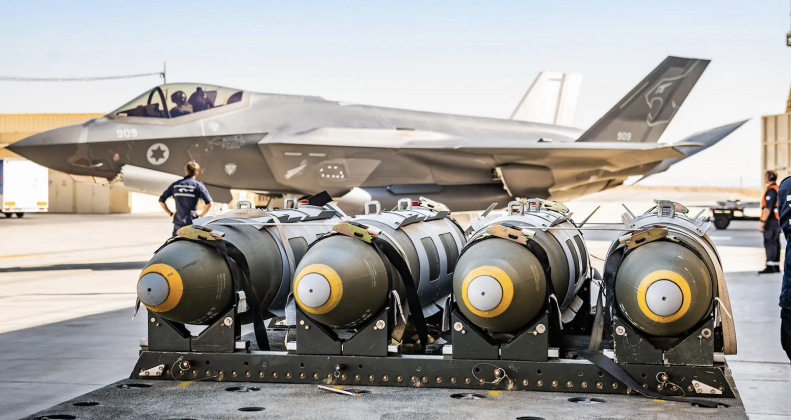
 Israeli Defence Minister Israel Katz recently provided the first official confirmation that United States combat aircraft have been actively operating from military bases within Israel to conduct strikes against Iran. Speaking publicly on Channel 14 television, Katz noted that U.S. fighter jets are regularly taking off from Israeli soil to execute missions, and confirmed that Iranian authorities are fully cognizant of this strategic arrangement. This operational shift reflects a major adaptation as traditional forward-deployed facilities across the Persian Gulf encounter mounting threats and heavy attrition.

The utilization of Israeli air bases offers vital strategic advantages for the U.S. military during ongoing regional hostilities. Facilities such as Nevatim Air Base feature extensive hardened aircraft shelters, robust integrated air defense networks, and highly developed logistics infrastructure that provide superior security compared to exposed Gulf installations. Furthermore, decades of close bilateral military cooperation mean that American and Israeli forces share exceptionally high levels of technological interoperability and compatible command systems.

This deep integration allows coalition planners to seamlessly coordinate complex strike packages, aerial refueling operations, electronic warfare missions, and real-time intelligence sharing. Open-source reporting and satellite imagery previously highlighted the forward deployment of specialized U.S. Air Force assets—including fifth-generation F-22 fighters and critical support aircraft—to Israeli airfields preceding major joint operations. By shifting operational weight away from vulnerable Gulf hubs like Al Udeid in Qatar or Prince Sultan Air Base in Saudi Arabia, the U.S. reduces its exposure to retaliatory missile and drone attacks.

Despite the enhanced security and advanced infrastructure provided by Israeli host facilities, regional air defense networks continue to experience severe strain. Ballistic missile penetrations and ongoing munitions expenditures have tested the limits of allied shield capabilities, underscoring the high-intensity nature of the ongoing conflict. At the same time, political frictions persist behind the scenes; while Israeli leadership has openly expressed a desire to expand operations toward Iranian energy infrastructure, Washington has reportedly opposed such escalation at this stage.

Ultimately, the integration of U.S. tactical aviation units into Israel's defense ecosystem highlights the shifting geography of air power in the Middle East. As traditional forward operating bases face persistent operational challenges, leveraging secure and highly interoperable allied territory ensures that the U.S. military can maintain sustained pressure. Navigating these strategic alliances and operational boundaries will remain a central determinant of the campaign's trajectory moving forward.

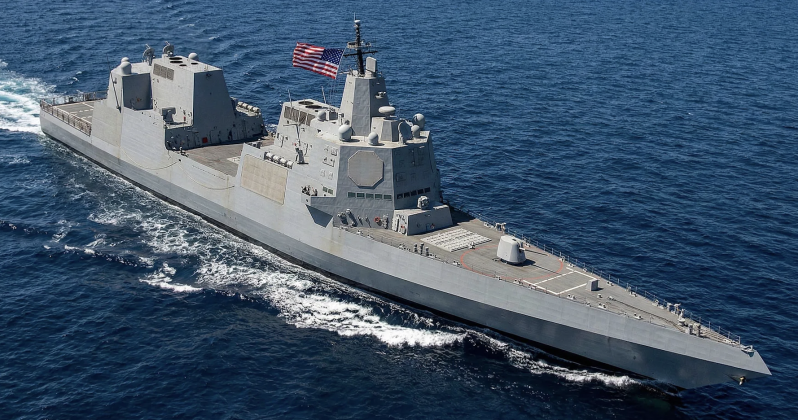
U.S. Navy’s Ambitious BBG(X) Nuclear Battleship Program Sparks Intense Debate Over Industrial Strain and Fleet Priorities


The U.S. Navy's formal launch of the BBG(X) program to procure 15 nuclear-powered surface combat ships has ignited widespread discussion across defense circles. Projected to cost up to $700 billion—with an estimated lifetime cost of $46.6 billion per hull—the initiative aims to introduce colossal warships displacing between 35,000 and 41,000 tons. While these massive dimensions will make them by far the largest surface combatants in operation globally, the sheer scale of the project has raised serious concerns regarding whether the nation's overstretched industrial base can support it without jeopardizing other vital fleet requirements.

Congressional scrutiny has intensified sharply as lawmakers demand assurances that the capital-intensive battleship program will not disrupt existing naval modernization priorities, particularly the production of Virginia-class and Columbia-class submarines. The Navy currently treats boosting annual output for its nuclear submarine fleet as its absolute highest industrial priority. However, persistent labor shortages, supplier bottlenecks, and constrained shipyard capacities have consistently caused production targets to fall short. Introducing a demanding new nuclear-powered surface fleet risks creating severe bottlenecks across shared industrial supply chains.

Furthermore, the BBG(X) initiative is perceived as a direct competitor to the long-anticipated DDG(X) next-generation destroyer program, which was meant to replace aging late Cold War-era Arleigh Burke-class destroyers. Because nuclear-powered surface warships demand complex reactor servicing, specialized depot maintenance, and extensive dry-dock modernizations, they introduce unique logistical burdens. Critics and analysts warn that funding such an expensive class could siphon critical resources away from traditional surface combatants and next-generation destroyer research.

The program also introduces a profound strategic debate regarding the future balance between heavy missile ships and aircraft carriers, which have anchored U.S. naval power projection since the Second World War. Advocates for the battleship concept argue that the proliferation of advanced hypersonic missiles and long-range precision weapons makes heavily armed, survivable surface combatants increasingly indispensable in the Pacific. Conversely, given the severe delays and cost overruns that have plagued the Gerald R. Ford-class supercarrier program, some speculate that successful development of the BBG(X) could trigger intense political pressure to reallocate funds away from future carriers.

Ultimately, whether the U.S. shipbuilding ecosystem can successfully absorb the BBG(X) program remains a central question for military planners. With domestic destroyer and submarine output already lagging behind international competitors like China, the path forward requires a delicate balancing act. Navigating these industrial realities will determine if the nuclear battleship can fulfill its promise as a Pacific deterrent or stretch American naval resources to a breaking point.

Japan Prepares to Commission the World’s Largest Destroyer to Counter China’s Type 055 Class Ships


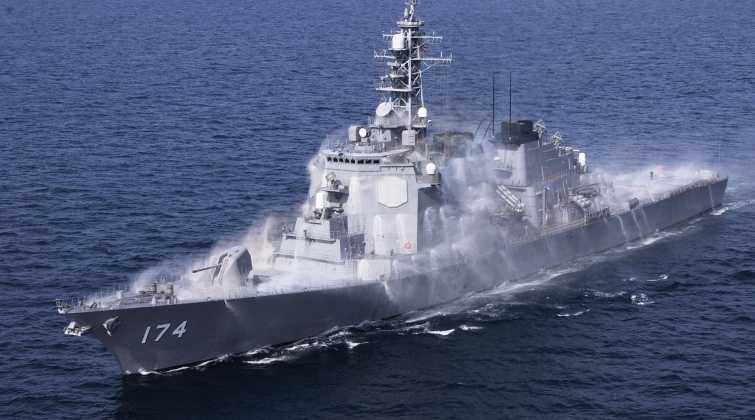
 The Japan Maritime Self-Defense Force (JMSDF) is scheduled to commission a colossal new surface combatant into service in 2027 under its Aegis System Equipped Vessel (ASEV) program. Originally envisioned with a 20,000-tonne displacement, the finalized design scales to roughly 14,000 tonnes with a 190-meter length and a 25-meter beam. These dimensions will make the specialized warships the largest and most heavily armed destroyers in the world, surpassing competing international surface combatants.

This monumental shipbuilding effort represents a direct strategic response to the rapid expansion and operational deployment of China's Type 055 "super destroyers". Displacing roughly 13,000 tonnes, the ten active Type 055 vessels currently in service have established a benchmark for heavy firepower and advanced sensor integration in the Indo-Pacific region. By fielding a larger and more densely equipped platform, Tokyo aims to reinforce its maritime missile defense architecture amidst an increasingly volatile security environment.

At the core of the ASEV combat system is the advanced AN/SPY-7 active electronically scanned array (AESA) radar, replacing older legacy variants used on previous destroyer classes. Positioned high above the bridge, these large radar arrays are specifically optimized to provide superior line-of-sight tracking against complex ballistic projectiles and low-altitude, sea-skimming anti-ship threats. This sophisticated sensor suite ensures elite situational awareness across multiple demanding operational domains simultaneously.

In terms of raw firepower, the new Japanese warships will integrate an unprecedented 128 vertical launch system cells utilizing the standard Mk 41 architecture. This layout provides a distinct capacity advantage, carrying sixteen more missile cells than the Chinese Type 055 class. The expansive magazine depth allows the vessels to concurrently execute layered air defense, anti-surface warfare, ballistic missile defense, and long-range land-attack operations using advanced munitions like Tomahawk cruise missiles.

Furthermore, the design is structured to accommodate next-generation defensive weapons, including Glide Phase Interceptors (GPI) currently being developed jointly by the United States and Japan. These specialized interceptors are engineered to neutralize maneuvering hypersonic glide vehicles during their vulnerable midcourse flight phase. As regional competitors continue fielding advanced high-speed strike systems, Tokyo's new leviathans will serve as an unyielding maritime shield.

Russia Fortifies Key Forward Airbase with Protective Shelters to Safeguard Tactical Aviation Assets


 Recent satellite imagery has confirmed that the Russian Aerospace Forces have completed the construction of multiple protective aircraft shelters at the Marinovka Air Base in the Volgograd Region. As one of the country's principal military installations supporting tactical reconnaissance operations over the Ukrainian theater, the base plays a vital operational role. These newly erected hardened structures are specifically engineered to improve the survivability of high-value aircraft as opposing forces continue expanding their long-range strike capabilities against Russian military airfields.

The strategic base primarily hosts specialized Su-24MR tactical reconnaissance aircraft alongside Su-34 strike fighters configured for dedicated reconnaissance missions. The addition of protective hangars directly addresses the rising frequency of long-range drone and missile attacks targeting aviation infrastructure deep inside Russian territory. While these reinforced shelters are primarily designed to shield parked jets from blast effects, shrapnel, and loitering munitions rather than direct hits from heavy precision weapons, they provide a crucial layer of defense against secondary damage.

Military analysts note that constructing these protective enclosures reflects a broader nationwide push by the Russian military to harden vital aviation facilities. Over the past two years, intensified drone strikes—often backed by extensive intelligence sharing from NATO member states—have targeted strategic bombers, transport assets, and fighter fleets. By implementing rapid fortification measures across key operational hubs, Moscow aims to mitigate attrition and maintain consistent sortie rates.

The urgency behind these defensive upgrades has been heavily emphasized by Western military officials who view Russian airbases as legitimate targets for preemptive strikes. German Army Major General Christian Freuding previously highlighted the strategic utility of degrading Russian air power directly at its source through long-range aerial warfare assets. In response, similar rapid construction efforts have been documented at other critical defense facilities, including the Komsomolsk-on-Amur Aviation Plant where advanced fifth-generation fighters are produced.

Ultimately, fortifying forward nodes like Marinovka highlights the evolving nature of modern air combat, where ground-based asset protection is just as critical as airborne performance. As long-range unmanned systems and precision munitions continue to reshape tactical planning, establishing robust physical defenses will remain a top priority for preserving national air power.

Singapore Explores Early Discussions to Join the Global Combat Air Programme (GCAP) for Future RSAF Modernization


The Republic of Singapore has officially entered early, exploratory discussions regarding a potential future association with the Global Combat Air Programme (GCAP). Brought to light by recent defense intelligence reports, the preliminary talks mark the first known indication that Singapore is formally examining strategic links to the trilateral sixth-generation fighter initiative. Spearheaded jointly by the United Kingdom, Japan, and Italy, GCAP aims to merge advanced stealth technologies, cutting-edge sensor suites, and artificial intelligence into a unified combat air system targeted for operational service by 2035.

While these initial inquiries highlight growing international interest in the Tempest-based platform, defense officials emphasize that the conversations remain strictly exploratory. Singapore has made no formal commitments to join the program as a core partner, nor has it finalized any long-term procurement decisions. This cautious approach aligns seamlessly with the nation's historical defense acquisition strategy, which typically involves years of meticulous evaluation regarding advanced technologies, industrial workshare opportunities, and long-term regional security implications before committing public capital.

The exploration of a sixth-generation architecture runs parallel to Singapore's ongoing modernization of the Republic of Singapore Air Force (RSAF). The island nation is currently preparing to integrate a fleet of 20 Lockheed Martin F-35 Lightning II aircraft—comprising both F-35B short-takeoff and vertical-landing jets and conventional F-35As—to replace its aging legacy F-16 platforms. Because fifth-generation deliveries are scheduled to roll out across the coming years, looking toward GCAP reflects forward-thinking force structuring rather than immediate fleet substitution.

For the trilateral partnership, expanding the program’s outer orbit to include highly capable regional players like Singapore underscores the strong export potential and global appeal of the GCAP ecosystem. Similar to Canada’s recent entry as a program observer, any prospective involvement by Singapore could eventually offer valuable insights into future governance and technological interoperability. However, full participation or formal integration would depend heavily on complex security frameworks, intellectual property sharing, and the ongoing evolution of the program's export guidelines.

Ultimately, examining future sixth-generation options ensures that Singapore maintains a flexible posture as geopolitical and technological conditions shift across the Indo-Pacific theater. As the RSAF transitions into fifth-generation operations with its incoming F-35 fleet, keeping a window open on advanced concepts like GCAP guarantees that military planners remain at the forefront of aerospace innovation. Whether these exploratory talks mature into a formal partnership over the next decade will depend on how the program's development milestones unfold ahead of its 2035 deployment target.

Bulgaria Explores Second-Hand Fighter Options Amid F-16 Delivery Delays


The Bulgarian Ministry of Defence has officially confirmed that it is actively evaluating options to acquire second-hand fighter aircraft to bridge a growing operational capability gap. The strategic review was triggered by persistent delays in the delivery timeline for the second batch of F-16 Block 70 jets ordered from the United States. With the transition from the aging Soviet-era MiG-29 fleet taking longer than anticipated, military leadership faces mounting pressure to ensure the Bulgarian Air Force can maintain continuous airspace security and fulfill vital NATO Air Policing commitments.

Recent discussions intensified after Polish Defense Minister Władysław Kosiniak-Kamysz indicated that Warsaw's legacy MiG-29 fighters could potentially be made available to Sofia. However, the Bulgarian Ministry of Defence clarified that it is examining a broad spectrum of alternatives rather than committing to a single platform or pursuing only one source. Formal inquiries have been dispatched to multiple partner nations—including Poland and Hungary—to assess the availability of aircraft, technical support, and critical spare parts.

Alongside legacy Soviet platforms, Sofia is exploring opportunities to procure pre-owned Western hardware, including previously operated F-16 airframes and Saab JAS 39 Gripen fighters. Defense analysts note that a leased or second-hand Gripen force could provide a relatively rapid, NATO-compatible solution to sustain pilot proficiency and operational readiness. Nevertheless, ministry officials stressed that these efforts remain strictly in the exploratory phase, with no formal negotiations initiated or final procurement decisions rendered.

The interim fighter dilemma underscores the heavy logistical and infrastructure challenges confronting eastern flank NATO members as they modernize complex military aviation ecosystems. While Bulgaria has already taken delivery of its initial batch of F-16s, the broader fleet is not projected to reach full operational readiness until 2028. Until those advanced platforms come online, the Ministry of Defence must carefully balance constrained resources to keep its skies secure without compromising long-term defense transformation goals.

As defense planners weigh the financial and operational trade-offs of bridging platforms, public debate remains split over whether to invest in short-term legacy fixes or accelerate structural airbase upgrades. Critics argue that diverting resources toward older systems drains capital away from critical modern infrastructure, while supporters maintain that uninterrupted air policing is an absolute prerequisite for national security.

Ultimately, resolving this transitional bottleneck will dictate how effectively eastern NATO members can safeguard their sovereign airspace against rising regional threats. The outcome of current inquiries across Warsaw, Budapest, and other partner capitals will shape Bulgaria's tactical posture for the remainder of the decade as the air force works toward a fully modernised, interoperable fleet.

U.S. Army Strikes Historic $58.6 Billion Patriot Missile Deal with Lockheed Martin to Replenish Depleted Stockpiles


 In a landmark defense procurement action, the U.S. Army has officially awarded Lockheed Martin a massive contract worth up to $58.6 billion to scale up the production of Patriot interceptor missiles. Announced by the Pentagon, the multi-year agreement converts a previous one-year deal valued at $4.7 billion into a comprehensive seven-year framework spanning fiscal years 2026 through 2032. This decisive industrial expansion comes in direct response to severe inventory strains caused by heavy munitions expenditures during recent conflicts in Ukraine and ongoing operations involving Iran.

Recent defense analyses, including assessments from the Center for Strategic and International Studies (CSIS), indicate that continuous combat operations have significantly drawn down key U.S. air defense stockpiles, leaving remaining supplies at critical lows. By locking in long-term procurement stability, Pentagon leadership aims to accelerate output and rebuild vital defense reserves. Prime contractor Lockheed Martin noted that the substantial funding will back a broader initiative to invest $8 billion to $9 billion through 2030 to modernize over 20 domestic manufacturing facilities and triple PAC-3 MSE production capacity.

The multi-year agreement is also designed to drive workforce expansion across the defense supply chain, including a projected 50% increase in jobs at Lockheed's plant in Camden, Arkansas. Defense officials emphasize that establishing predictable, multi-year demand signals is essential for overcoming chronic manufacturing bottlenecks and ensuring that the industrial base can support both domestic readiness and allied security requirements.

The administration of President Donald Trump has steadily increased pressure on defense contractors to prioritize production output over shareholder payouts. Under executive orders designed to monitor industrial performance, the Pentagon is leveraging multi-year frameworks to ensure defense contractors actively deliver on national security obligations without compromising manufacturing speed.

As global security pressures persist and interceptor consumption rates outpace historical baselines, this historic investment marks a monumental shift toward securing long-term missile defense superiority. Rebuilding these essential arsenals will take several years of sustained factory output, making this multi-year commitment a critical anchor for future military readiness.

U.S. Air Force Confirms F-47 Sixth-Generation Fighter Program is on Schedule for 2028 Maiden Flight


 The United States Air Force's ambitious sixth-generation combat aircraft initiative has officially advanced into its engineering and manufacturing development phase, with production lines actively building initial test articles. Speaking at a keynote address during the Life Cycle Industry Days event in Dayton, Ohio, Gen. Dale White confirmed that the program is maintaining a rigorous timeline toward its targeted 2028 flight milestone. Designated as the F-47 and developed by prime contractor Boeing, the revolutionary fighter platform enters this critical engineering phase exhibiting what leadership describes as unprecedented technical maturity.

The newly designated F-47 program is intended to directly replace the aging F-22 Raptor fleet, with current service projections aiming to procure at least 185 operational airframes. The ongoing development phase focuses heavily on maturing, testing, and integrating all onboard subsystems, sensors, and structural components while manufacturing a specialized batch of test aircraft for rigorous evaluation. Furthermore, the contract structure incorporates priced options for subsequent low-rate initial production, ensuring a seamless transition from prototype testing to full-scale manufacturing.

Emerging from the broader Next Generation Air Dominance (NGAD) architecture, the F-47 is envisioned as the centerpiece of a comprehensive "family of systems" designed to guarantee absolute air supremacy in highly contested environments. Defense officials emphasize that the aircraft's modular design philosophy will allow for rapid integration of emerging technologies, advanced electronic warfare suites, and long-range strike payloads. Additionally, the manned platform will operate in tandem with advanced Collaborative Combat Aircraft (CCAs) to multiply tactical options across complex operational theaters.

Financial backing for the high-priority initiative reflects its central standing in national defense planning, supported by a $3.45 billion funding allotment in fiscal 2026 and a requested budget exceeding $5 billion for fiscal 2027. Military leadership has expressed total confidence that the advanced fighter will take to the skies during the current administration, signaling a major leap in speed, maneuverability, and stealth capabilities. As manufacturing work presses forward, the F-47 stands ready to redefine the future of American air power against emerging global threats.

Ongoing Conflict with Iran Heavily Depletes U.S. Patriot Missile Stockpiles, Raising Major Readiness Concerns


Recent defense analyses indicate that the United States has expended roughly two-thirds of its pre-war Patriot missile interceptor inventory during ongoing military engagements with Iran. According to a comprehensive assessment published by the Center for Strategic and International Studies (CSIS), this massive drawdown leaves fewer than 1,000 interceptors remaining in active national stockpiles. Analysts Mark Cancian and Chris Park note that U.S. inventories of Terminal High Altitude Area Defense (THAAD) interceptors have similarly declined by about 38%, leaving a critically thin remaining cushion of roughly 234 to 278 units.

The severe depletion stems from the intense volume of air-defense munitions required to protect regional military bases, coalition infrastructure, and partner nations against incoming ballistic missile threats. While Patriot and THAAD batteries successfully intercepted numerous inbound strikes during operations, the high expenditure rate far outpaces baseline production capabilities. Defense experts emphasize that there are currently no immediate operational alternatives capable of replacing the ballistic defense coverage provided by these two elite systems.

This extensive inventory drain exposes a critical strategic vulnerability regarding the U.S. military's ability to respond to another high-intensity contingency in a separate theater. Because specialized missile interceptors require years of meticulous manufacturing, testing, and assembly, current stockpiles cannot be rapidly replenished overnight. Consequently, military commanders may be forced to accept heightened operational risks or prioritize only the highest-value defensive targets if multiple global crises flare up concurrently.

In response to these compounding readiness pressures, the U.S. Army recently awarded Lockheed Martin a multiyear contract worth up to $58.6 billion to scale up production of Patriot Advanced Capability-3 Missile Segment Enhancement (PAC-3 MSE) interceptors through fiscal 2032. However, industry leaders caution that manufacturing bottlenecks and lengthy supply chains mean newly funded missiles will take several years to roll off production lines. This multi-year procurement lag leaves a precarious medium-term window where U.S. air defense capacity remains uncomfortably constrained.

Ultimately, the heavy expenditure of advanced interceptors highlights the unsustainable cost-to-consumption ratio of modern missile defense against proliferating regional adversaries. As the Pentagon works alongside defense contractors to accelerate factory output, military planners must carefully balance ongoing Middle Eastern commitments with strategic deterrence requirements worldwide. Navigating this delicate inventory deficit remains one of the most pressing hurdles facing American defense strategy moving forward.

LATEST TRENDS IN STEALTH TECHNOLOGY ----------Sqn.Ldr(R) Ali Hamza


Introduction


Ladies and Gentlemen: From the dawn of human civilization man has tried to gain advantage over its enemy through gathering information and achieving surprise. One of the techniques employed in this regard was achieved by deception employed by camouflaging and attacking the enemy when least expected. The famous Trojan horse is the oldest documented event where a well-guarded and unconquered city was brought to ashes just by mere deception. This art of being invisible was taught to the humans by nature. Like many other animal who camouflage themselves in their environment the chameleon can change its color and very well merge with the background and deceive its enemy. The initial technique of humans to hide them was based on the same principles and thus the method of camouflage evolved. Over the period of centuries this technique was very effective and resulted in gaining decisive edge in the conflicts. With the invention of the radar and subsequent emergence of the thermal sensors both the man and the machine were again left exposed.


Thus by the end of World War research boomed to find ways and means to hide military hardware especially the aircrafts from the enemy sensors. The research lead to a widely known technology called Stealth. And even today scientists are busy in bringing about revolutions in this technology. This brings me to the topic of my today’s presentation. Latest trends in stealth technology and its counter measures.


Aim


The aim of this article is to appraise the house about the Stealth Technology, its countermeasures and latest development in this field


The sequence of my presentation will be as flashed.


STEALTH TECHNOLOGY


“The use of special radar absorbent materials, flat angular surface design and other techniques to minimize the amount of radiation reflected to a radar installation, causing an aircraft or other vehicle to appear as a much smaller signal or not at all.”


RELATED TERMS


Ladies and Gentlemen: Before going into the detail of my topic I think it’s necessary to give some basic knowledge of the related terms which I will be using during my presentation first of all is the:-


RCS

The size of an aircraft’s image on radar is measured by the Radar Cross Section or RCS. Imagine a metal plate of area A square meters held perpendicular to the beam of radar transmitter. It reflects most of the radar energy back to the source, and thus is easily detected. It is said to have an RCS of A square metres. If this plate is tilted, the amount of energy reflected directly back to the transmitter is reduced, as some of it is reflected to the sides, so the RCS is reduced and the value will be less than A. The concept of stealth employs the same principle, so it does not make an aircraft invisible but rather redesigns the vehicle to reduce its observability.

Radar Absorbing Material (RAM)


“A material that is designed to reduce the reflection of electromagnetic radiation by a conducting surface  is called RAM”


Facet

Facets are any of the small, polished plane surfaces of a cut gem


Scattering

Creation of Electro-Magnetic waves after scattering from aircraft edges


History

During the World War 1, the Germans experimented with the use of Cellon (Cellulose acetate), a transparent covering material, in an attempt to reduce the visibility of military aircraft. Single example is the Fokker E.III , In fact, sunlight glinting from the material made the aircraft even more visible. Celon was also found to be quickly degraded both by sunlight and in-flight temperature changes so the attempt to make transparent aircraft was not proceeded with.

Nearly two decades later, a more serious attempt at "invisibility" was tried with the Horten Ho 229 flying wing fighter-bomber, developed in Germany during the last years of World War

In the closing weeks of WWII the US military initiated "Operation Paperclip", an effort by the US Army to capture as much advanced German weapons research as possible. A Horten glider and the nearly complete Ho 229 V3 third prototype airframe were secured and sent to Northrop Aviation for evaluation in the United States, who much later used a flying wing design for the B-2 stealth bomber.

In 1975, engineers at Lockheed found that an aircraft made with faceted surfaces could have a very low radar signature. Lockheed built a model called "the Hopeless Diamond”, reduced radar cross section is only one of factors the designers addressed to create a truly stealthy design such as the F-117 in June 1981 and B-2 in July 1989.


TYPES OF STEALTH TECHNOLOGY


Ladies and Gentlemen: stealth technology being used is not limited to the aircraft but it is also being used at all four Platforms i.e.

·       Airborne

·       Satellite based

·       Land based &

·       Sea based

But I will restrict myself to Aircraft features only and let’s discuss the design features used in Stealth Technology:-


Design features

The general design of a stealth aircraft is always aimed at reducing radar and thermal detection. It is the designer's top priority to satisfy the following conditions:-

    1. Reducing radar detection by altering some general configuration (like introducing     the split rudder)
    2.  Reducing thermal emission from thrust
    3. Reducing infra-red and radar detection during adverse weather conditions


Airframe Design


The conventional airframe design is the best platform for RADAR waves to be reflected and identified at the scope. So in order to make the aircraft invisible to the RADAR it must be reshaped. The first innovation in this field which found employment was the F-117 Night Hawk with Canted Vertical Fins which deviated the RADAR waves away from their intended path. Subsequently taking the leaf from the Nazi war machine the United States invented the Horton of the modern era The B-2 spirit. Its wing like shape reflects very little amount of waves back and the Radar Cross Section is disregarded as clutter.


Faceting


Faceting  is a process in which ordinarily smooth surface of the airframe is broken up into a series of trapezoidal or triangular flat surfaces arranged in such a way that the vast majority of the radar waves on the aircraft will be scattered away at odd angles, leaving very little to be reflected directly back into the receiver. On most aircraft the leading and trailing edges are straight or near straight, so the reflected energy will be concentrated over a narrow range of angles. By curving the leading edge as those employed in the F-22 and the JSF, the designer arranges a method that the reflected energy is not all returned in the same direction.


Effects of Wing Sweep


Effects of wing sweep on RCS are shown on the slide in front of you. The most effective out of all these is the compound sweep, as you can see that energy reflected from compound sweep is scattered in few chosen directions. In this slide the effect of compound sweep in RCS of aircraft is clearly visible as energy is reflected in different directions.


Canopy Design


One of the most troublesome cavities on an aircraft is the cockpit. Virtually as transparent to radar energy as it is to light, the canopy allows radar energy to reflective cockpit interior. One way of preventing this is to apply a thin layer of gold to the canopy transparency. This will have a minimum effect on visibility but will not be painted by the radar as being electrically conductive surface rather than a transparency. This technique is used on F–16, F-22 Raptor and EA - 6B prowler.


Cavities


Creation of a practical stealth aircraft requires a meticulous attention to detail if RCS is to be minimized. Cavities such as air intakes have high RCS. Conventional ramp – type are ideal radar reflectors as it traps and strongly reflects radar energy. So all cavities like inlets and exhausts are required to be redesigned to be less reflective to radar energy. Use of half cone / cantered body, long sinuous serpentine zigzag intakes with or without ram coating will help in reduction of re – entrant effect.


Composites


Another RCS reduction feature of the stealth aircraft is to use where ever possible of composite materials rather than metal. Several types of composite type materials are now used in aircraft construction. Radar energy striking at a composite structure has a hard job setting up the electrical and magnetic currents which radiate energy.


Radar Absorbing Material


Radar-absorbent material, or RAM, is a class of materials used in stealth technology to disguise a vehicle or structure from radar detection. A material's absorbency at a given frequency of radar wave depends upon its composition. RAM cannot perfectly absorb radar at any frequency, but any given composition does have greater absorbency at some frequencies than others; there is no one RAM that is suited to absorption of all radar frequencies.

  A common misunderstanding is that RAM makes an object invisible to radar. A radar-absorbent material can significantly reduce an object's radar cross-section in specific radar frequencies, but it does not result in "invisibility" on any frequency.


IR Screening


Given present day sensor technology,  IR offers the only realistic option to RADAR for the long range detection of the target aircraft. With the growing use of IR sensors as a radar substitute, measure must be taken to reduce the thermal signatures of a stealth aircraft. The main sources of IR energy are hot metal components of the engine turbine and the exhaust nozzles, which have been heated up to 1000-1300*C. If the engine uses an after burner, the IR emissions are increased up to 50 times. For this reason all the first generation stealth aircraft F-117A and B-2 make use of non A/B engines. The IR signature can be reduced by using the aircraft aft fuselage and / or vertical tail surfaces to shield the jet pipes. The other source of IR signature is exhaust plume, which must be cooled quickly with the cooler by pass air. The same phenomenon is shown on the view foil and one can easily differentiate between exhaust plume and that of mixed with cool air.


Engine Noise


Some  stealth aircraft are  subsonic. Most of the noise created by an aircraft is because of the engine. Stealth aircraft have anti-IR engine bay liners which are also thought to play a sound absorbing role. It is reported that the engine noise from a taxing F-117 was barely audible at ranges of more than a few hundred meters.


COUNTERMEASURES AGAINST STEALTH TECHNOLOGY


Ladies and Gentlemen: To counter the stealth technology various methods are in use. I will be talking about them one by one.


Satellite Based Method


The battlefield can be looked down upon from satellites equipped with radar sensors. Although satellites would be relatively far away from the battlefield  a couple of hundred miles away, or even more they would be able to remain out of range of most hostile weapons, and thus would not run much risk of being shot down, as might aircraft. Also, satellites would be able to cover a much larger area of the battlefield, thus being in a position to locate and track virtually all hostile stealth craft.


Longer Wavelength Radar

VHF radar systems have wavelengths comparable to aircraft feature sizes and should exhibit scattering in the resonance region rather than the optical region, allowing most stealth aircraft to be detected. Despite the advantages offered by VHF radar, their longer wavelengths result in poor resolution compared to comparably sized X-band radar array. As a result, these systems must be very large before they can have the resolution for engagement radar. Russian KB radar is an example.

The Dutch company Thales Nederland, formerly known as Holland Signaal, developed a naval phased-array radar called SMART-L, which is operated at L-Band and has counter-stealth.

Radio Telescope Radars


The Radio Telescope scans the sky at high apertures with high sensitivity. Whether in the day, night or during bad weather, radio signals from the stars reach the radar installations uninterrupted. Since the radio map of the stars is by now very well known, it may be assumed that if any star is not observed on the detecting screen or output device, that particular star must be eclipsed by some aircraft flying above the installation somewhere along the line of sight between the installation and that particular star.


And with very sensitive radio-astronomical equipment, virtually every part of the sky is observed to be covered with stars! Therefore at almost every instant in time, the stealth aircraft would be eclipsing one or another known star.


OTH Radars


One of the most promising methods of detecting stealth is by using Over the Horizon Radars (OTH). These radars aim at detecting the targets which are masked from the view of conventional radars by the curvature of earth’s surface. These radars direct a powerful sky wave towards the earth’s ionosphere. This is refracted and is returned towards the earth’s surface, illuminating a distant path of terrain or sea. Any target present in this area create radar echoes which follow the reverse route back up to the ionosphere and thus back to the receiver of the OTH radar. OTH can also pick up scattered signals from stealth. The RADAR is dependent on the environmental condition and for the constant detection and tracking of the aircraft the frequency of the RADAR has to be consistently readjusted.


Bi-Static Sanctuary Radar Concept


The other promising counter measure to stealth is Bi-Static radar. In a normal (mono Static) radar, the receiver and transmitter are at same location and often share the same antenna. In Bi-Static radar, they are located some distance apart and several receivers may share a single transmitter. The suitable location for the transmitter can be high flying aircraft or a geostationary satellite. This technique involves radar energy scattered by stealth in directions away from the transmitter by the receivers of Bi-Static radar.


LATEST DEVOLPMENTS

stealth technology has been constantly evolving and a lot of technological advancement have been made in this field such as


Plasma Stealth


It has been always emphasized that stealth is necessarily a design feature and a conventionally built aircraft cannot be converted into a stealth aircraft. However, the Russians have developed a bolt on kit with approximately 100 kg of weight which claims to reduce the RCS of an aircraft by creating a cloud of plasma around the airframe.  The Russians and Americans have been working on plasma theory for very long time now but only the Russians have been able to develop something in this regard.


The idea arose from the fact that a space shuttle while re entering the atmosphere faces an electromagnetic blackout due to the cloud of plasma being created around the shuttle while passing through the ionosphere. This blackout cuts off all the radio and radar contact of the shuttle from the ground station and it becomes invisible for this time period. The kit when switched ON creates a layer of plasma ions around the aircraft body. This field partially consumes electromagnetic energy of hostile radar or causes it to bend around the aircraft. Radar energy tends to pass around a plasma cloud rather than penetrate it, and the energy that does penetrate interacts with the plasma charged particles, and is partially absorbed reducing the aircraft RCS by up to 100 times. Plasma stealth is being incorporated in the MiG-35 "Super Fulcrum / Raptor Killer".


There would obviously be some adverse effects on the performance of the aircraft subsystems like radio transmissions, limitations on radar emissions and other sensors, but the second and third generation kits are being designed to take care of these problems.


Active Cancellation


Another method under consideration for the RCS reduction is the Active cancellation of the incoming Electromagnetic wave. Sophisticated and complex signal processing equipment would be installed on the aircraft. This equipment, upon receiving the EM signal would analyze the frequency, waveform, strength and direction of the incoming wave and send a similar but out of phase wave in the same direction, thus canceling the overall effect. This technique is being researched by French designers and is most likely to be incorporated on the “Rafael”.


Cloaking Technology


Up till now the advancements in stealth technology in electromagnetic spectrum have been discussed. Now I would introduce a new horizon in denying visual acquisition. This advancement could be well categorized as the camouflage technique or the Cloaking technology. One such advancement is in meta-materials; artificially engineered structures tailored to have specific electromagnetic properties. In particular, they can bend light around an object, making it appear to an observer as though the waves have passed through empty space.


A stealth technology system being developed at Advanced American Enterprises utilizes a form of electro-optical camouflage (referred to also as chameleonic camouflage or cloaking technology) which, according to them renders an object, person, or vehicle 85-100% invisible to the human eye or video camera in the visible spectrum as soon as you flip the switch to "on", even while the cloaked item is moving. But at the moment the operational distance is at least 20ft.

Analysis

Instability of design

Early stealth aircraft were designed with a focus on minimal radar cross section (RCS) rather than aerodynamic performance. Highly-stealth aircraft are aerodynamically unstable and thus rely on onboard computers for aerodynamic stability.

Electromagnetic emissions

The high level of computerization and large amount of electronic equipment found inside stealth aircraft are often claimed to make them vulnerable to passive detection.

Vulnerable modes of flight

Stealth aircraft are still vulnerable to detection during, and immediately after using their weaponry. Since stealth payload (reduced RCS bombs and cruise missiles) are not yet generally available

Reduced payload

Fully stealth aircraft carry all fuel and armament internally, which limits the payload. This requires the deployment of additional aircraft to engage targets that would normally require a single non-stealth attack aircraft. This apparent disadvantage however is offset by the reduction in fewer supporting aircraft that are required to provide air cover, air-defense suppression and electronic counter measures, making stealth aircraft "force multipliers".

Sensitive skin

Stealth aircraft often have skins made with Radar-absorbent materials or RAMs. Some of these contain Carbon black particles, some contain tiny iron spheres. There are many materials used in RAMs, and some are classified, particularly the materials that specific aircraft use and are sensitive to ambient conditions.

Cost of operations

Stealth aircraft are typically more expensive to develop and manufacture. An example is the B-2 Spirit that is many times more expensive to manufacture and support than conventional bomber aircraft. The B-2 program cost the U.S. Air Force almost $45 billion.

Conclusion


Ladies and Gentlemen: Stealth is a promising technology which gives the operator a capability to sneak in any kind of defended environment and inflict damage to the enemy with an intensity which was not possible otherwise. All this is achieved with minimum or zero attrition. We, being a part of resource constraint nation might not be able to fight out the super power’s technological advancements, but here we have to remember that nothing is impossible in this world. Counters to stealth technology were born the same day once the first stealth aircraft was produced.


Author Bio

            Squadron Leader Ali Hamza is a retired PAF pilot with 20 years of experience, defence analyst, airpower expert, gold medallist in MSc DSS (Defence & Strategic Studies) from QAU, currently doing MPhil IR from NUML, Rawalpindi and has a keen interest in modern airpower’s role in the geopolitics at global and regional levels.

YouTube: https://www.youtube.com/@AeronautIR

X (twitter): https://x.com/AliHamzaAwan1