
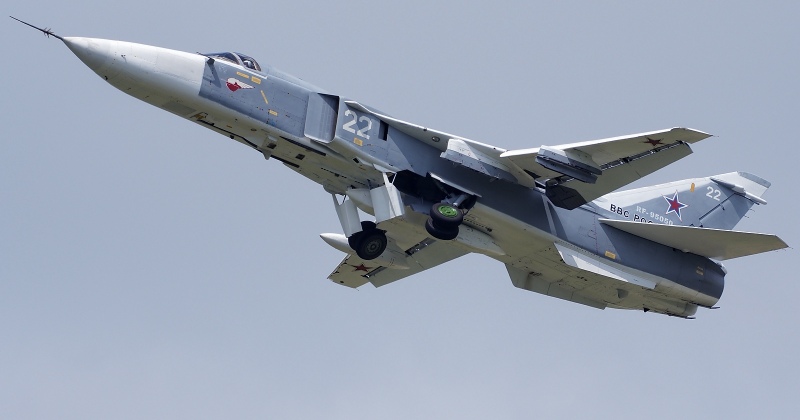
Recent satellite imagery has confirmed that the Russian Aerospace Forces have completed the construction of multiple protective aircraft shelters at the Marinovka Air Base in the Volgograd Region. As one of the country's principal military installations supporting tactical reconnaissance operations over the Ukrainian theater, the base plays a vital operational role. These newly erected hardened structures are specifically engineered to improve the survivability of high-value aircraft as opposing forces continue expanding their long-range strike capabilities against Russian military airfields.
The strategic base primarily hosts specialized Su-24MR tactical reconnaissance aircraft alongside Su-34 strike fighters configured for dedicated reconnaissance missions. The addition of protective hangars directly addresses the rising frequency of long-range drone and missile attacks targeting aviation infrastructure deep inside Russian territory. While these reinforced shelters are primarily designed to shield parked jets from blast effects, shrapnel, and loitering munitions rather than direct hits from heavy precision weapons, they provide a crucial layer of defense against secondary damage.
Military analysts note that constructing these protective enclosures reflects a broader nationwide push by the Russian military to harden vital aviation facilities. Over the past two years, intensified drone strikes—often backed by extensive intelligence sharing from NATO member states—have targeted strategic bombers, transport assets, and fighter fleets. By implementing rapid fortification measures across key operational hubs, Moscow aims to mitigate attrition and maintain consistent sortie rates.
The urgency behind these defensive upgrades has been heavily emphasized by Western military officials who view Russian airbases as legitimate targets for preemptive strikes. German Army Major General Christian Freuding previously highlighted the strategic utility of degrading Russian air power directly at its source through long-range aerial warfare assets. In response, similar rapid construction efforts have been documented at other critical defense facilities, including the Komsomolsk-on-Amur Aviation Plant where advanced fifth-generation fighters are produced.
Ultimately, fortifying forward nodes like Marinovka highlights the evolving nature of modern air combat, where ground-based asset protection is just as critical as airborne performance. As long-range unmanned systems and precision munitions continue to reshape tactical planning, establishing robust physical defenses will remain a top priority for preserving national air power.

No comments:
Post a Comment