
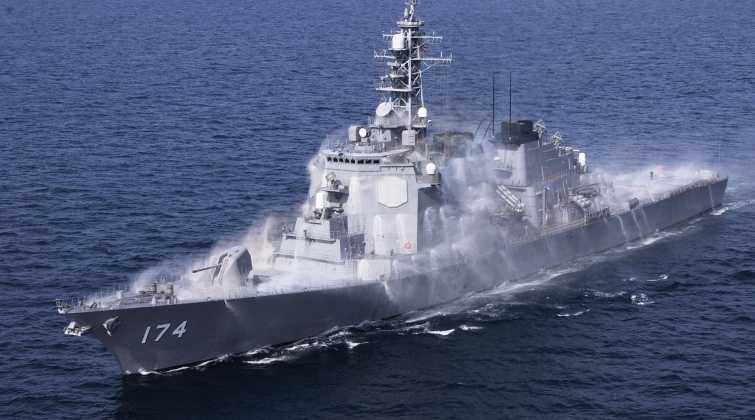
The Japan Maritime Self-Defense Force (JMSDF) is scheduled to commission a colossal new surface combatant into service in 2027 under its Aegis System Equipped Vessel (ASEV) program. Originally envisioned with a 20,000-tonne displacement, the finalized design scales to roughly 14,000 tonnes with a 190-meter length and a 25-meter beam. These dimensions will make the specialized warships the largest and most heavily armed destroyers in the world, surpassing competing international surface combatants.
This monumental shipbuilding effort represents a direct strategic response to the rapid expansion and operational deployment of China's Type 055 "super destroyers". Displacing roughly 13,000 tonnes, the ten active Type 055 vessels currently in service have established a benchmark for heavy firepower and advanced sensor integration in the Indo-Pacific region. By fielding a larger and more densely equipped platform, Tokyo aims to reinforce its maritime missile defense architecture amidst an increasingly volatile security environment.
At the core of the ASEV combat system is the advanced AN/SPY-7 active electronically scanned array (AESA) radar, replacing older legacy variants used on previous destroyer classes. Positioned high above the bridge, these large radar arrays are specifically optimized to provide superior line-of-sight tracking against complex ballistic projectiles and low-altitude, sea-skimming anti-ship threats. This sophisticated sensor suite ensures elite situational awareness across multiple demanding operational domains simultaneously.
In terms of raw firepower, the new Japanese warships will integrate an unprecedented 128 vertical launch system cells utilizing the standard Mk 41 architecture. This layout provides a distinct capacity advantage, carrying sixteen more missile cells than the Chinese Type 055 class. The expansive magazine depth allows the vessels to concurrently execute layered air defense, anti-surface warfare, ballistic missile defense, and long-range land-attack operations using advanced munitions like Tomahawk cruise missiles.
Furthermore, the design is structured to accommodate next-generation defensive weapons, including Glide Phase Interceptors (GPI) currently being developed jointly by the United States and Japan. These specialized interceptors are engineered to neutralize maneuvering hypersonic glide vehicles during their vulnerable midcourse flight phase. As regional competitors continue fielding advanced high-speed strike systems, Tokyo's new leviathans will serve as an unyielding maritime shield.

No comments:
Post a Comment