Friday, October 2, 2026

AIM-260 JATM on Australian Super Hornet: What It Means for the RAAF


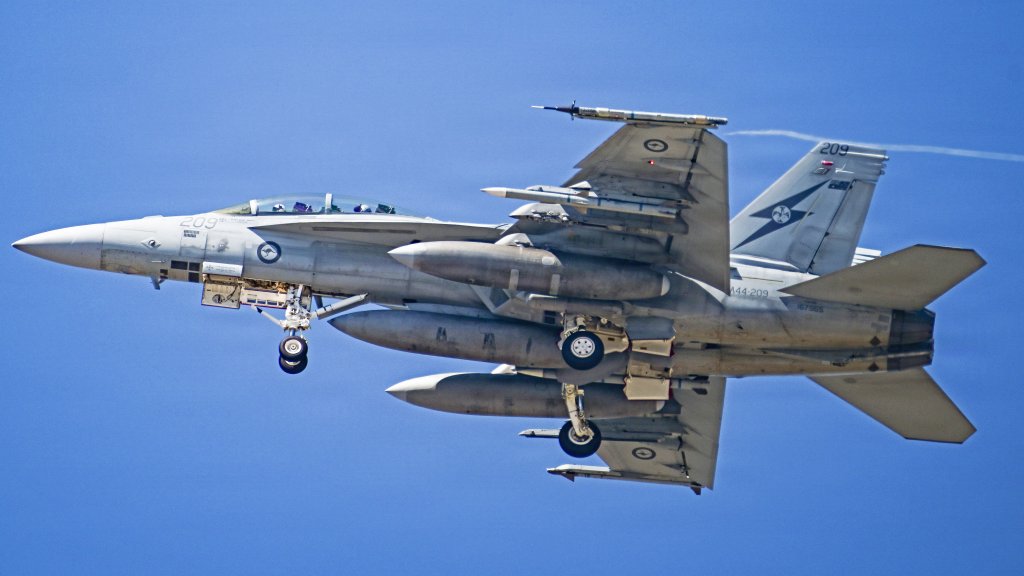
On October 1, 2026, The War Zone (TWZ) reported that a Royal Australian Air Force F/A-18F Super Hornet had been photographed carrying an inert AIM-260 Joint Advanced Tactical Missile (JATM) during a major U.S. Navy test event in California. The photo, released by the Navy, shows an aircraft from No. 1 Squadron taking off from Naval Base Ventura County Point Mugu on September 11 during Gray Flag 2026. Alongside the JATM it carried an inert CATM-9X and CATM-120, three external fuel tanks, an ATFLIR targeting pod and a Tactical Combat Training System (TCTS) pod. The sighting arrives only weeks after Canberra announced it would buy the missile, with its Super Hornets the first RAAF aircraft to receive it.

Gray Flag itself is part of the story. The Navy describes it as the naval aviation test community's flagship large-force event, and 2026 was its largest edition, with more than 3,000 personnel from over 150 organizations flying over 750 sorties and logging more than 2,000 flight hours. It is used to test how sensors, weapons, aircraft and networks work together as part of larger kill chains, which is exactly where a new long-range missile needs to be proven. Carrying the weapon there suggests that integration on the RAAF's Super Hornet fleet has progressed beyond paperwork, and it is the first apparent glimpse of an Australian JATM in any context.

The procurement behind it is significant. TWZ reported in August that Australia is set to become the first country outside the United States to operate the AIM-260 through a roughly $480 million Foreign Military Sales (FMS) deal. The missile is planned for the F/A-18F first, followed by the F-35A and EA-18G Growler, with the MQ-28 Ghost Bat collaborative combat aircraft (CCA) a possible future candidate. Australia gave no delivery schedule or in-service date. That fits a wider pattern of U.S.-Australian cooperation on air-launched weapons, including Australian Super Hornets being integrated into the Hypersonic Attack Cruise Missile (HACM) effort.

The reason the missile matters is the threat it answers. The AIM-260's exact specifications are classified, but it is intended to offer much greater range than the AIM-120 AMRAAM while keeping a similar form factor, which allows internal carriage on aircraft such as the F-22 and F-35. It was developed in response to long-range Chinese missiles such as the PL-15. Official range figures have not been released, although earlier reporting suggests at least 120 miles and possibly considerably more. As we noted in our J-10C piece, the PL-15's reputation is part of what sells Chinese fighters abroad, so a credible Western answer matters for export competition as much as for air combat.

A few cautions are needed. The photo shows a training round, and blue bands on the body confirm it is inert, so it says nothing about the missile's performance. TWZ also points out that it does not establish whether the round was Australian-owned, a U.S. test asset or part of a specific integration activity. The program has a history of delay, since the missile was originally due to enter service years ago, and the September framework agreement between the Pentagon and Lockheed Martin lays groundwork for a future multiyear deal without disclosing quantities, costs or deliveries. And a longer-range missile is only one link in a kill chain, because it still depends on sensors, networks and targeting data.

Ultimately, this is a milestone for the RAAF rather than proof of a new capability. Three markers will show how quickly it becomes real: a confirmed delivery schedule, a first live firing from an Australian aircraft, and the details of the U.S. production agreement. For Indo-Pacific air forces watching, the message is that long-range air-to-air missile competition is now a matter of fielding, integration and numbers as much as headline range.

Azerbaijan J-10C Deal at ADEX 2026: Contract or Sales Pitch?


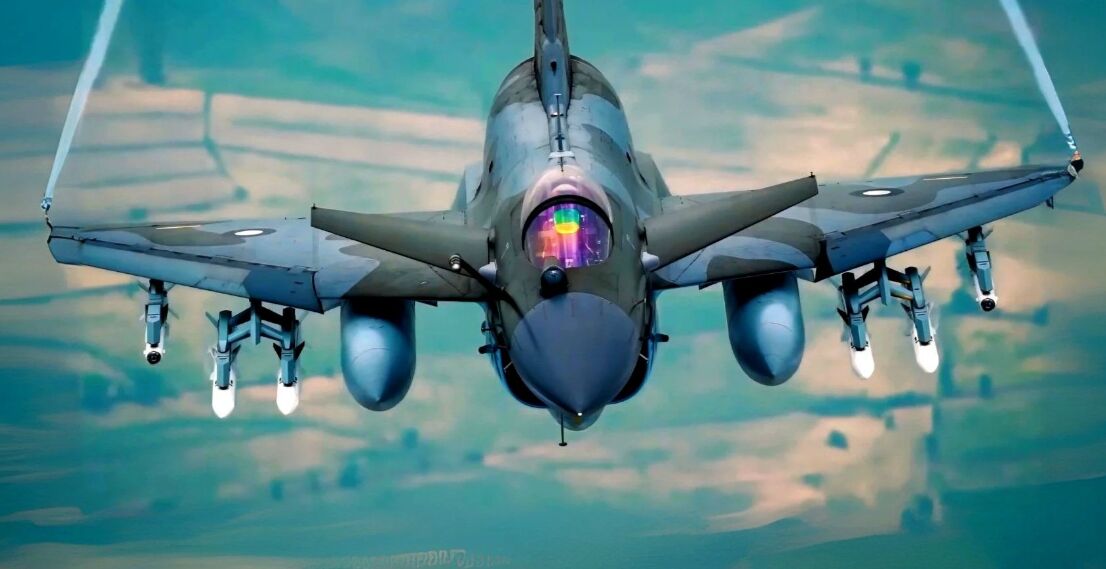
On October 1, 2026, Military Watch Magazine reported that China had displayed a full-scale J-10C fighter model in Azerbaijani Air Force markings at the ADEX 2026 defence exhibition in Baku, amid reports that a contract to export the aircraft had been signed. Its headline calls it a sale. Other coverage is more careful. Azerbaijani outlet AzerNews and Defence Security Asia both note that what was shown is a livery-marked replica of the J-10CE, the export variant, and that neither Baku nor Beijing has publicly confirmed a purchase agreement. The model reportedly carries the signature of President Ilham Aliyev, who toured the exhibition on opening day. A signed model is a strong marketing image, but it is not the same thing as a signed contract.

That gap matters because the signals around it are real. Azerbaijan's Air Force commander inspected the J-10C at Airshow China in Zhuhai in 2024, and Baku has since inducted the Chinese-Pakistani JF-17 Block III, with the first aircraft shown publicly in July 2026. The JF-17 gives Azerbaijan operating experience with Chinese-developed combat aviation, and a mockup in national colours suggests Beijing sees a genuine prospect. AzerNews argues Baku offers a better chance than the dozen-odd other countries AVIC has pitched the J-10CE to over the years. Even so, the only confirmed foreign operators are Pakistan and, more recently, Uzbekistan, which is a thin export record for a fighter that has been marketed for years.

The main selling point behind these pitches is the J-10C's reported combat debut. In May 2025, Pakistan Air Force J-10Cs are widely reported to have shot down at least one Indian Rafale. Reuters cited US officials for this, and France's air chief reportedly said he had seen evidence of the loss, though India has never confirmed a Rafale was downed and Pakistan's higher claims remain unverified. Export customers can still be swayed by that reputation, and Bangladeshi officials reportedly cited it in their interest. But a single contested engagement, in which the missile and the surrounding kill chain may have mattered as much as the airframe, is a marketing asset rather than an audited performance record.

Readers should also weigh the sourcing of the original report. The article describes Azerbaijan as a Central Asian state, when it sits in the South Caucasus, and its statement that the fighter "was signed by" the president is garbled. Its claim that the J-10C would give Azerbaijan a clear advantage over Armenia's Su-30SM and Iran's Su-35 is asserted rather than demonstrated, and avionics and missiles alone do not decide an air campaign. Military Watch also tends to present Chinese systems in the most favourable light, and its report of a 9-0 simulated win over Qatari Eurofighters rests on its own earlier reporting, so I treat it as unverified.

The broader context is Azerbaijan's balancing act. ADEX 2026 was its largest edition, with more than 270 companies from 29 countries. Türkiye was the biggest exhibitor, reflecting the close defence relationship with Ankara, and some major American contractors, Lockheed Martin among them, attended for the first time. Azerbaijan is also positioning itself as a seller rather than just a buyer. That looks less like a country choosing a single patron than one keeping several suppliers in play, and a J-10C order would add a Chinese option alongside Turkish, Pakistani and Western ones. My reading is that the mockup is as much a negotiating signal as a purchase announcement.

Ultimately, the Baku display should be treated as a strong signal rather than a settled deal. Three things would confirm it: an official statement from the Azerbaijani Ministry of Defence or AVIC, delivery or contract details such as numbers and timelines, and the first aircraft appearing in service. Until then, the safest summary is that China has put a J-10CE in Azerbaijani colours in front of the president, and the sale itself is still unconfirmed.

France Hypairion Project: Loyal Wingman Flight Planned for 2028


On October 2, 2026, Defense News reported that the French Air Force, working with the Directorate General of Armament (DGA) and the Ministerial Agency for Defence AI (AMIAD), plans to fly crewed fighter jets alongside AI-enabled combat drones in 2028. The effort, called Hypairion, aims to build an open, modular architecture for combat aircraft and a sovereign AI capability, so that the state keeps control of critical technology instead of depending on contractors. The first hardware step is already under way, with two Mirage 2000 fighters being modified at Mont-de-Marsan airbase as AI test beds. A new onboard computer will let engineers begin trials by the end of this year.

What stands out is how modest the opening phase is. The drone due to fly in 2028 is a test platform, and it may not be the wingman eventually planned for the Rafale F5 standard. The first stage will not necessarily deliver an operational capability and will instead examine matters like energy consumption and system interfacing. The initial use cases under consideration are optimizing flight paths and supporting tactical decisions such as when to employ air-to-air or air-to-ground weapons. AMIAD describes mission autonomy as AI that assists pilots with planning, in-flight decisions and post-mission analysis. In other words, France is treating this as an experiment in how to build the system, not a rushed race to field a drone.

The sovereignty angle is the real story. Most loyal wingman programs, whether from General Atomics and Anduril in the United States or Airbus and BAE Systems in Europe, are driven by companies. Hypairion is designed so the French state owns the overall architecture and can bring in startups and industrial partners that come and go, while the core capabilities stay in-house. The model is borrowed from the Army's Pendragon robotics project. French officers describe future fighters as "flying computers" whose software could be updated between morning and afternoon sorties to counter a new enemy measure, with flight-safety functions kept separate from mission functions. My reading is that the prize here is the speed of software updates, since whoever controls the architecture controls how quickly a countermeasure can be answered.

This also has to be read against the collapse of the Franco-German-Spanish Future Combat Air System (FCAS), which reporting says fell apart in June 2026 after mediation between Dassault and Airbus failed. That makes the Rafale F5 France's main path forward, with a first version targeted for 2033 and a stealth combat drone launched in 2024 to accompany it after 2030. The Rafale's F4 standard already includes a tablet linked to the mission system, and the DGA says this will allow crews to control autonomous platforms from the Rafale before F5 arrives. Hypairion therefore reads as the software layer for a hardware plan that is still being assembled.

There are reasons for caution. On hardware, the United States already has loyal wingman prototypes flying and rolling off production lines, so France is betting that architecture matters more than being first. Funding is another question mark, since reporting suggests F5 costs are now falling largely on France alone. And "open architecture" is easier to promise than to keep, since the DGA itself acknowledges that France relies on Dassault and other major partners for AI in the Rafale's key systems. France also says it does not foresee an all-unmanned future, and that the decision to use weapons stays with a human.

Ultimately, Hypairion is less a drone program than an argument about who owns the brains of the next air force. Three markers will show whether it works: the results of the Mirage 2000 test-bed trials after they begin at the end of 2026, the full-scale trial of drones flying with fighters in 2028, and whether the platform for the Rafale's future wingman is chosen later in the decade without the architecture being compromised by industrial interests. If it holds, a fighter squadron in 2040 may look quite different, and the Air Force itself notes that computer scientists, rare in squadrons today, could one day be commonplace.