Sunday, August 9, 2026

New Abrams Tank Exercises Highlight Republic of China Army’s Rapidly Adapting Defence Doctrine


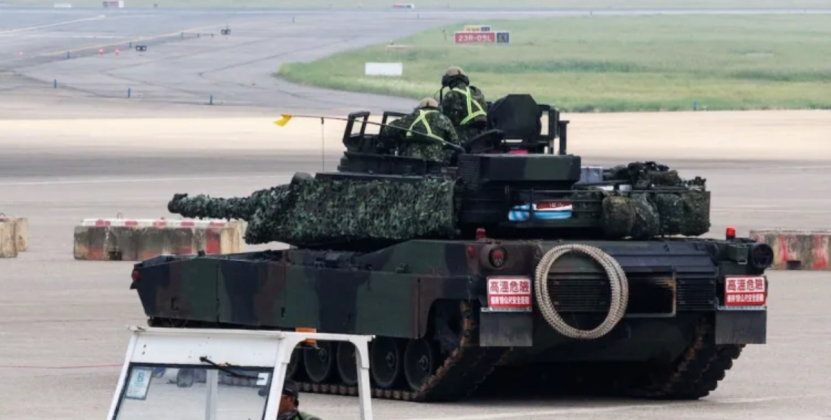
A strategic defense assessment published by Military Watch Magazine (compiled by their editorial staff) examines the landmark integration and combat readiness deployment of the Republic of China Army’s newly procured M1A2T Abrams main battle tanks. Centered around high-visibility operations during expanded military exercises—such as the Immediate Combat Readiness drills and the annual Han Kuang exercises—the deployment marks a critical evolution in how armored formations are being folded into island-wide defensive postures.

The deployment saw armored units move out of permanent garrisons to occupy concealed firing positions, secure critical infrastructure like major transportation hubs and airports, and coordinate with combat engineers establishing layered anti-vehicle obstacles. Military planners noted that these drills represent a decisive shift toward more realistic, rapid-mobilization training designed to counter potential beachhead landings and fast-moving armor incursions. By replacing aging Cold War-era platforms like the M60 and CM-11, the M1A2T introduces vastly superior thermal optics, digital situational awareness, and heavy kinetic firepower to frontline units.

However, the integration of 74-ton heavy armor has also sparked intense debate among defense analysts regarding utility and survivability. Given the mountainous and heavily urbanized terrain of the island, critics argue that heavy main battle tanks face severe maneuver constraints and heavy logistical burdens, particularly regarding fuel consumption and bridge-load limits. Furthermore, the lack of integrated active protection systems (APS) on the M1A2T variant leaves the vehicles heavily reliant on passive composite armor and tactical concealment.

To address vulnerabilities highlighted by modern conflicts—such as ubiquitous drone surveillance and AI-assisted aerial targeting—recent exercises revealed that forces are heavily utilizing irregular camouflage nets. Rather than stopping projectiles directly, these asymmetrical visual nets are engineered to distort thermal and geometric signature profiles, confusing automated machine-recognition algorithms deployed by modern reconnaissance loitering munitions.

Ultimately, the incorporation of the Abrams fleet highlights a transitional phase for the Republic of China Army as it attempts to balance traditional heavy armor doctrines with the realities of asymmetric, high-tech warfare. As operational testing and tactical evaluations continue, military commanders are actively refining how heavy armored reserves can be preserved, concealed, and deployed effectively to counter rapid amphibious breakthroughs in any future Strait conflict.

Kratos Awarded U.S. Army Contract to Develop Next-Generation Enhanced Seeker for Javelin Missile System


A defense acquisition report published by Army Recognition details a strategic contract awarded to Kratos Defense & Security Solutions by the U.S. Army Combat Capabilities Development Command (DEVCOM) C5ISR Center. Valued to address critical component obsolescence, the agreement tasks Kratos with developing, building, and testing an advanced Enhanced Seeker for the iconic FGM-148 Javelin anti-tank guided missile system. The development program is designed to sustain the weapon's tactical dominance and ensure operational lethality across close-combat infantry formations through the next decade.

The core objective of the new seeker program is to completely modernize the Javelin's guidance and infrared imaging section, replacing aging legacy architecture that faces dwindling supply chain availability. While the Javelin Joint Venture (JJV)—the historic partnership between Lockheed Martin and RTX—manages the broader missile ecosystem, bringing in Kratos introduces fresh manufacturing capacity and vertically integrated production methodologies. Work on the next-generation seeker will be anchored at Kratos’ Advanced Manufacturing Center in Birmingham, Alabama, with rigorous evaluation scheduled at U.S. Army test facilities.

The performance demands placed on the new seeker are exceptionally high, given the combat lessons learned from high-intensity conflicts such as the war in Ukraine, where the Javelin proved devastatingly effective against armored columns. The upgraded infrared guidance system must maintain the missile's signature "fire-and-forget" capability while drastically improving target acquisition, tracking stability, and resistance to sophisticated electronic warfare and thermal countermeasures. Furthermore, the new assembly must integrate seamlessly with existing launcher interfaces, flight control software, and propulsion elements without requiring a disruptive overhaul of the entire inventory.

This seeker modernization initiative coincides with other major capability enhancements across the Javelin enterprise, including the ongoing fielding of the Lightweight Command Launch Unit (LWCLU), which slashes system weight by 25% while doubling target detection and recognition ranges. By streamlining production-ready hardware that avoids legacy bottlenecks, the Kratos program directly supports broader Pentagon priorities aimed at expanding the domestic munitions industrial base and accelerating delivery timelines for frontline forces.

Ultimately, the introduction of an advanced, cost-effective seeker ensures that the Javelin will remain the premier shoulder-fired anti-armor asset in the Western arsenal. As Kratos moves forward with prototype fabrication and environmental testing, the initiative highlights a broader industry shift toward agile subsystem redesigns—allowing aging weapon families to adapt rapidly to the digital and electronic complexities of modern battlefield environments.

Assessing the Strategic Implications of Reported North Korean Military Deployments to Russia


An investigative defense assessment published by Military Watch Magazine (compiled by their editorial staff) has examined explosive intelligence disclosures regarding a potential major expansion of North Korean military involvement in the Russia-Ukraine war. According to statements highlighted from Ukrainian leadership, Moscow is reportedly preparing to receive between 30,000 and 50,000 North Korean military personnel. If realized, this substantial mobilization would mark a dramatic escalation from earlier smaller-scale deployments, transforming bilateral defense cooperation into a major operational factor on the European continent.

The core motivation driving Pyongyang's expanding footprint involves gaining invaluable, real-world experience in modern high-intensity warfare. Modern combat in Ukraine—defined by ubiquitous drone reconnaissance, electronic warfare saturation, and persistent aerial surveillance—offers the Korean People's Army a rare laboratory to study contemporary tactics, test command-and-control networks, and refine counter-drone measures. Military analysts note that while North Korean ground units possess formidable artillery assets, adapting their operational doctrine to the realities of 21st-century digital and attritional warfare carries profound long-term implications for stability across the Asia-Pacific region.

Even if a large portion of the incoming personnel are utilized in supportive capacities—such as bolstering border security in secondary sectors, executing critical engineering and mine-clearing operations, or managing logistics hubs—their presence indirectly alters force allocation. By absorbing rear-area security duties, these deployments enable Moscow to free up seasoned Russian frontline combat units for high-intensity offensive operations along primary axes. Furthermore, the deep integration of North Korean munitions, including advanced ballistic missile inventories and heavy artillery systems, underscores a tightening industrial-military alignment between the two isolated states.

The prospective deployment has inevitably triggered sharp geopolitical shockwaves across Western and Indo-Pacific capitals. Neighboring South Korea is closely monitoring the partnership, particularly given reciprocal reports that Moscow is transferring advanced aerospace technology, air defense components, and electronic warfare assets to Pyongyang in exchange for military hardware. This technological quid pro quo threatens to accelerate North Korea's domestic weapons programs, intensifying security dilemmas for Seoul, Tokyo, and Washington alike.

Ultimately, the reported scaling of North Korean personnel inside the Russian theater highlights how localized European conflicts are increasingly drawing in cross-continental alliances. As intelligence agencies attempt to verify the exact composition and timeline of the deployments, the evolving nexus between Moscow and Pyongyang signals a dangerous new chapter in international security, where trans-regional military exchanges actively reshape the balance of power on multiple fronts.

Ukraine Accelerates Development of FP-7.x Interceptor Missile to Offset Severe Global Patriot PAC-3 Shortages


 A comprehensive defense analysis published by Army Recognition highlights an aggressive domestic push by Ukraine to fast-track the production of the FP-7.x interceptor missile. Developed by the Ukrainian defense enterprise Fire Point, the specialized system is engineered specifically to counter high-speed incoming ballistic threats. This emergency development initiative arrives as severe, cumulative global shortages of U.S.-made Patriot PAC-3 air defense missiles—heavily aggravated by concurrent high-intensity missile engagements in the Middle East—leave Ukrainian airspace increasingly vulnerable.

The FP-7.x serves as the core interception weapon for Freyja, an ambitious pan-European air defense framework designed to integrate Ukrainian missile technology with advanced radar, command-and-control, and electro-optical complexes supplied by continental partners. Fire Point has rapidly secured industrial cooperation agreements with over a dozen major European defense firms—including Norway’s Kongsberg and Germany’s Diehl Defence—to integrate critical components such as tracking radars and sophisticated infrared seekers into the interceptor's architecture.

A primary driving factor behind the rapid development timeline is the stark cost-efficiency disparity compared to western high-end interceptors. While a single Patriot missile package requires multi-million dollar outlays and faces extensive manufacturing bottlenecks, Fire Point aims to produce each FP-7.x interceptor for under €1 million, making it vastly more sustainable for high-volume attrition warfare. Company leadership noted that the engineering teams are attempting to compress a development cycle that typically spans decades into a matter of just a few years.

Parallel to the dedicated interceptor variant, the broader FP-7 family includes a ground-attack variant derived from modified legacy architecture that has already undergone extensive flight testing and Ministry of Defence certification. Meanwhile, preparations are underway for the larger FP-9 long-range system. With initial serial production and component integration lines scaling rapidly, developers anticipate hitting critical milestones toward achieving operational anti-ballistic interception capabilities.

Ultimately, the emergence of the FP-7.x project underscores a broader paradigm shift in modern conflict, where localized defense ecosystems are forced to innovate rapidly to bypass international supply chain constraints. By establishing sovereign production lines for specialized anti-ballistic interceptors, Ukraine and its European allies are attempting to build an independent, cost-effective shield capable of mitigating chronic shortages of premier Western air defense assets.

U.S. and Ukraine Launch Joint S-300 Missile Modernization Initiative to Mitigate Severe Patriot Interceptor Shortages


A detailed operational analysis published by Army Recognition examines a strategic joint initiative between the United States and Ukraine to refurbish and upgrade legacy Soviet-designed S-300 air defense missiles. Highlighted by military analysts following disclosures on national security broadcasts, the collaborative program is engineered to establish operational capability by late 2026. The urgent push comes as massive international expenditures—particularly resulting from high-intensity engagements in the Middle East and Persian Gulf—have severely depleted Western stockpiles of advanced Patriot PAC-3 interceptors, leaving Kyiv facing an acute capability crunch.

The primary objective of the S-300 upgrade program is not to immediately replace the specialized anti-ballistic role fulfilled by Patriot batteries, but rather to create a reliable, high-volume tier for intercepting cruise missiles, uncrewed aerial vehicles, and tactical aircraft. By leveraging existing Ukrainian launch infrastructure, engagement radars, and decades of maintenance familiarity, the joint engineering effort focuses on two parallel tracks: extending the service life of aging rocket motors and developing modernized variants compatible with surviving fire-control architecture. Projected output is estimated at 100 to several hundred interceptors annually.

The strategic pivot is heavily necessitated by a broader global inventory crisis. Defense experts note that U.S. stockpiles of Patriot interceptors have dropped significantly due to high-consumption regional conflicts, forcing Washington to carefully preserve remaining assets for multiple global theaters. Although long-term industrial contracts have been initiated to scale up future U.S. and allied production lines, significant deliveries from those new frameworks are not anticipated until near the end of the decade. Consequently, utilizing existing Soviet-era infrastructure offers an immediate, pragmatic avenue to supplement dwindling air defense assets without requiring an entirely foreign training and logistics transition.

Parallel to the U.S.-backed S-300 modernization track, domestic and European defense initiatives—such as the development of specialized anti-ballistic interceptors utilizing legacy 48N6 component foundations—highlight a broader industrial push toward home-grown resilience. While limited initial production volumes mean the upgraded S-300 systems will take time to reshape the frontline balance, they represent a vital adaptation. By separating lower-tier aerial threats from missions demanding high-end Patriot performance, Ukraine and its allies aim to preserve scarce interceptors for high-speed ballistic targets as the war of attrition continues.

Ultimately, this joint modernization enterprise underscores how regional conflicts are compelling military planners to rethink legacy weapons integration. By injecting modern guidance components and fresh propulsion systems into older platforms, the partnership bridges a critical gap in European air defense architecture. While challenges remain regarding scaling output and matching the exact interception envelope of newer Western systems, the initiative offers a vital blueprint for maximizing existing defense assets during periods of severe global supply constraints.

Boeing Secures Inaugural Production Contract for Jet-Powered JDAM-ER Variant


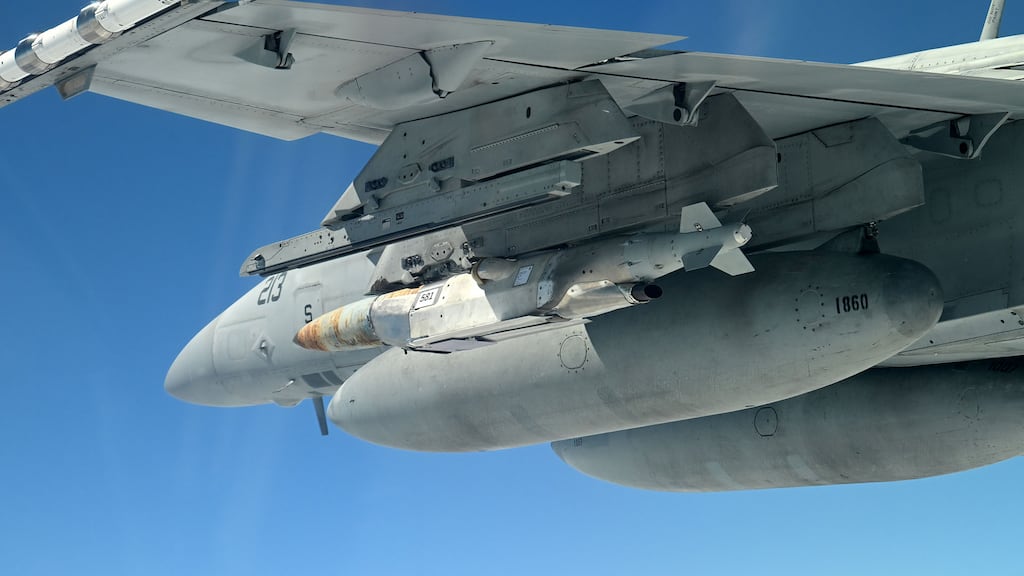
 In a significant expansion of the U.S. military's long-range precision-strike inventory, Defense News (authored by defense acquisition correspondent Jen Judson) reports that Boeing has been awarded its first official low-rate initial production (LRIP) contract for the jet-powered Joint Direct Attack Munition Extended Range (JDAM-ER). The award, valued at approximately $280 million, mandates the production of several hundred units of the new variant, specifically engineered to provide tactical aircraft with an affordable, high-volume, stand-off strike capability capable of penetrating heavily contested airspace.

The jet-powered JDAM-ER represents a transformative evolution of the classic precision-guided glide bomb. By integrating a small, low-cost turbojet engine with the proven modular guidance tail-kit, the munition’s operational range is extended dramatically compared to the baseline wing-kit variants. According to the report, the engine integration allows the weapon to maintain a high-subsonic cruise speed, providing operators with a flight envelope that can circumvent traditional point-defense radars and reach targets located well beyond 200 kilometers, depending on launch altitude and release velocity.

A primary driver for the accelerated procurement is the urgent need to replenish stockpiles depleted by high-intensity combat operations and to counter the proliferation of sophisticated Integrated Air Defense Systems (IADS). As modern adversaries increasingly employ long-range, area-denial weapon systems, tactical aircraft have been forced to release munitions from further away. The new variant provides a critical middle-ground capability, offering a much more cost-effective alternative to expensive, stealth-optimized cruise missiles while delivering significantly greater standoff range than conventional guided bombs.

Industry experts note that the contract award also signals a victory for modular defense architecture. Because the jet-powered conversion relies on the existing JDAM supply chain and shares the vast majority of its electronic components with current guidance kits, the integration process for existing fighter inventories—such as the F-15EX, F/A-18E/F, and the F-16—is expected to be seamless. This "plug-and-play" compatibility allows military commanders to rapidly scale up long-range strike capacity without requiring extensive modifications to aircraft weapon management systems.

The production timeline outlined by the Department of Defense suggests that the initial batches will be prioritized for rapid field deployment to key theater combatant commands. As Boeing ramps up manufacturing at its St. Louis facilities, the contract includes options for potential follow-on orders, reflecting the Pentagon's long-term commitment to fielding mass-producible, standoff-capable smart weapons. The initiative underscores a broader industrial shift toward fielding "affordable mass" to overwhelm sophisticated enemy defenses, ensuring that strike forces can sustain operational tempo even under high-attrition scenarios.

Malaysia Completes Launch Sequence for Littoral Mission Ship Batch II Corvette Program in Türkiye


 A comprehensive report published by Naval News (authored by naval defense journalist Tayfun Ozberk) has detailed the official launch of the Royal Malaysian Navy’s third and final Littoral Mission Ship Batch II (LMSB2) corvette, Tunku Osman Jewa (pennant number 143). Held at the Istanbul Shipyard in Türkiye, the high-profile naming and launch ceremony successfully completed the core construction staging phase for Malaysia’s three-ship procurement program. The milestone event was attended by prominent dignitaries, including the Sultan of Kedah and senior military leadership from both nations.

The newly launched corvette is named in honor of the late General Tan Sri Tunku Osman bin Tunku Mohammad Jewa, a revered member of the Kedah royal family and Malaysia's first native-born Chief of Defence Forces. Built under the primary contracting of Turkish defense engineering powerhouse STM (Savunma Teknolojileri Mühendislik ve Ticaret A.Ş.), the vessel shares a robust design lineage with the Turkish Navy's proven Ada-class corvettes. The program represents a landmark government-to-government defense agreement between Kuala Lumpur and Ankara, marking Türkiye's first successful corvette export to the Asia-Pacific region.

Technically, the modern corvettes feature an overall length of roughly 99.56 meters, a maximum beam of 14.42 meters, and a displacement hovering near 2,500 tonnes. Powered by a robust Combined Diesel and Diesel (CODAD) propulsion arrangement, the platforms are engineered to achieve maximum speeds exceeding 26 knots with an operational range surpassing 4,000 nautical miles at cruising speed. Their combat architecture includes a 76mm main gun, anti-ship missile launchers, secondary remote-controlled weapon stations, surface-to-air missile systems, and comprehensive electronic warfare suites.

With the completion of the launching sequence for all three ships—following the earlier launches of Tunku Laksamana Abdul Jalil and Raja Laut within a compressed four-month window—the project now transitions into parallel outfitting phases. Over the coming months, shipyard specialists and naval technical teams will focus on internal mechanical outfitting, sensor and combat system integration, and rigorous harbor and sea acceptance trials.

Malaysian and Turkish defense officials confirmed that the multi-role corvettes remain firmly on schedule for final delivery by the end of 2027. Once operational, the advanced warships will spearhead the phased retirement and replacement of aging surface assets, significantly boosting the Royal Malaysian Navy's multi-domain deterrence and maritime security capabilities across its strategic territorial waters.

Analyzing the Civil-Military Chasm: The Deepening Rift Between India’s Bureaucracy and Armed Forces


 A probing analysis published by The Eurasian Times (authored by defense and strategic affairs commentator Prakash Nanda) has cast a sharp spotlight on the persistent structural and cultural friction plaguing India’s national security apparatus. Titled India’s Military Setup, Rank & Power: The Toxic Rift Between Babus & Soldiers, the commentary dissects the deeply entrenched disconnect between the nation’s civilian bureaucracy—colloquially known as "babus"—and the uniformed military leadership, arguing that administrative apathy and bureaucratic gatekeeping continue to undermine India's defense preparedness.

At the heart of the critique is the historical and systemic imbalance in civil-military relations within New Delhi's corridors of power. The article highlights how India's civil service bureaucracy maintains an administrative monopoly over defense policy formulation, budget allocation, and structural reforms, frequently sidelining military professionals from critical decision-making loops. Despite sweeping modern geopolitical challenges and the creation of higher integration offices like the Chief of Defence Staff (CDS), bureaucratic red tape continues to treat the armed forces as a subordinate department rather than an equal stakeholder in national strategy.

The commentary points out that this institutional friction manifests sharply in matters of equipment acquisition, pay parity, status equivalence, and defense procurement timelines. Bureaucratic oversight—often devoid of domain expertise or direct operational experience—frequently results in debilitating procedural delays, leaving front-line formations waiting years for critical ammunition, modern sidearms, and high-altitude gear. Furthermore, persistent bureaucratic reluctance to grant military personnel true functional autonomy and appropriate civil-service equivalence status has severely bruised morale within the officer corps.

Compounding this external administrative friction are internal legacy challenges within the military establishment itself, including rigid colonial-era protocols that exacerbate hierarchical alienation. The author notes that bridging the structural chasm requires a radical transformation of India's national security decision-making matrix, moving away from bureaucratic paternalism toward genuine integration. Without empowering military commanders and dismantling the rigid walls erected by civil servants, India risks hobbling its strategic potential just as regional security pressures in the Indo-Pacific reach unprecedented highs.

Ultimately, Nanda argues that true military modernization cannot be measured solely by the procurement of advanced fighter jets, submarines, or sixth-generation platforms, but must begin with sweeping administrative reform. Unless New Delhi bridges the cultural and structural divide separating the civil secretariat from the military command structure, systemic inefficiencies will continue to hamper operational readiness. The comprehensive review serves as an urgent wake-up call for policymakers to foster a truly collaborative defense ecosystem capable of meeting the demands of modern warfare.

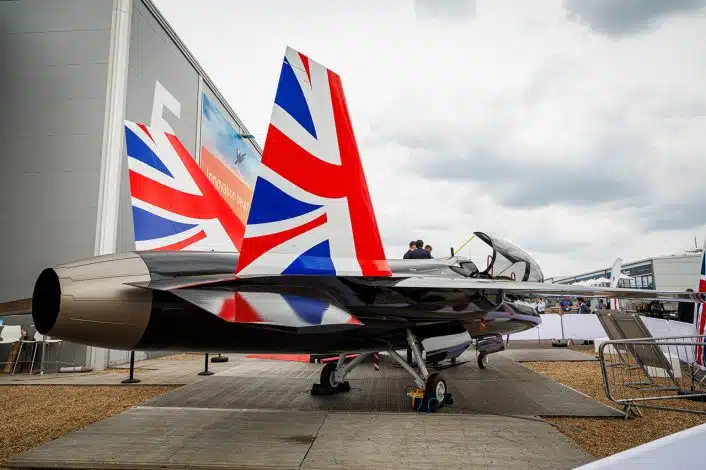
United Kingdom Issues Official Request for Information to Replace Royal Air Force Hawk Trainer Fleet


 The United Kingdom Ministry of Defence has officially launched the formal acquisition process for a next-generation military training ecosystem by issuing a comprehensive Request for Information (RFI). Listed under project code 700004994-RFI, the market engagement initiative aims to source a unified replacement platform for both the Royal Air Force's advanced Hawk T2 fast-jet trainers stationed at RAF Valley and the venerable Hawk T1 airframes utilized globally by the iconic Red Arrows display team.

The move follows long-standing serviceability challenges, low-pressure compressor engine defects, and escalating maintenance costs that have plagued the existing Hawk fleet. Senior leadership within the Royal Air Force have actively pushed to retire the platforms ahead of their original lifespans, aligning with the recently published Defence Investment Plan (DIP). Crucially, the RFI stipulates that any chosen successor must bridge the tactical gap toward modern fifth- and sixth-generation air combat systems, ensuring student pilots transition smoothly into advanced combat environments like the F-35B Lightning II and Typhoon.

A core mandate outlined in the market solicitation is the requirement for a significant domestic industrial footprint and UK workshare. Defense manufacturing giants are already positioning themselves to capture the lucrative contract. BAE Systems has teamed up with Boeing and Saab to pitch the T-7 Red Hawk, with prospective plans centered around local final assembly at BAE’s Warton facility. Meanwhile, rival contenders such as Leonardo are heavily promoting their M-346 platform, which offers a proven hybrid design bridging basic training capabilities and light combat utility.

The search for a unified trainer also takes on urgent symbolic importance following the collapse of domestic start-up Aeralis, which had previously hoped to deliver an all-British modular jet trainer before entering administration earlier this year. With homegrown design options currently off the table, the MoD is leaning heavily on mature international designs capable of meeting tight operational timelines. The current RFI acts purely as an information-gathering precursor ahead of a formal tender, with interested industrial partners given a submission deadline of September 11, 2026.

As international suppliers finalize their proposal packages, the transition marks the end of an era for British military aviation training. With the Red Arrows' Hawk T1 airframes slated for retirement around the turn of the decade and the advanced training syllabus undergoing a complete overhaul, the selected platform will define the future cockpit experience for generations of British military aviators.

Aselsan Unveils and Successfully Tests TOLUN-P Hardened-Target Munition to Deepen Türkiye’s Smart Strike Capabilities


Turkish defense electronics giant Aselsan has officially announced the operational readiness and successful live-fire testing of its newly developed TOLUN-P precision-guided bunker-busting munition. Integrated and tested directly from Baykar’s advanced Bayraktar Akıncı unmanned combat aerial vehicle (UCAV), the milestone marks a major leap forward for Ankara’s sovereign air combat ecosystem. The 250-pound-class weapon is engineered specifically to deliver high-precision, deep-strike capabilities against heavily fortified surface and underground installations without risking high-value crewed platforms.

The TOLUN-P stands out due to its specialized design optimized for defeating hardened infrastructure, including reinforced concrete bunkers, underground command posts, and protected aircraft hangars. Equipped with a high-kinetic-energy penetrating nose cone, the munition is capable of smashing through up to 1 meter of reinforced concrete before detonating. Furthermore, it features an advanced electronic safety fuse with cockpit-programmable time delays, granting tactical operators exact control over detonation timing based on the structural depth and layout of the target.

A core tactical advantage of the TOLUN system lies in its carriage versatility through Aselsan’s proprietary Smart Pneumatic Quad Rack (SPQR / SADAK-4T) launcher. This multi-payload rack allows platforms like the Akıncı, ANKA-III, and future indigenous fighter assets to carry multiple munitions simultaneously, enabling a single aircraft to execute synchronized, multi-target salvo engagements. The weapon utilizes integrated GPS/INS navigation supported by a 4-channel anti-jam CRPA antenna and robust anti-spoofing software, ensuring high accuracy even within heavily contested electromagnetic and electronic warfare environments.

With an extended standoff range facilitated by deployable diamond-shaped wings, the guided munition can glide up to 55 nautical miles (approx. 102 kilometers) when launched from high-altitude fighter jets, or up to 31 nautical miles (57 kilometers) from medium-altitude UAV platforms. This standoff distance keeps delivery platforms safely outside the engagement envelopes of most short- and medium-range air defense systems, drastically enhancing the survivability of the striking unit while maintaining pinpoint strike precision.

The successful introduction of the TOLUN-P reinforces a broader strategic shift within the Turkish defense sector toward indigenous, cost-effective smart munitions that reduce reliance on foreign supply chains. As Aselsan continues to expand the broader TOLUN product family—which includes laser-guided, electronic warfare, and infrared-seeking variants—the ecosystem provides regional commanders with a multi-dimensional, low-collateral toolbox capable of neutralizing high-value strategic assets across complex modern battlefields.