
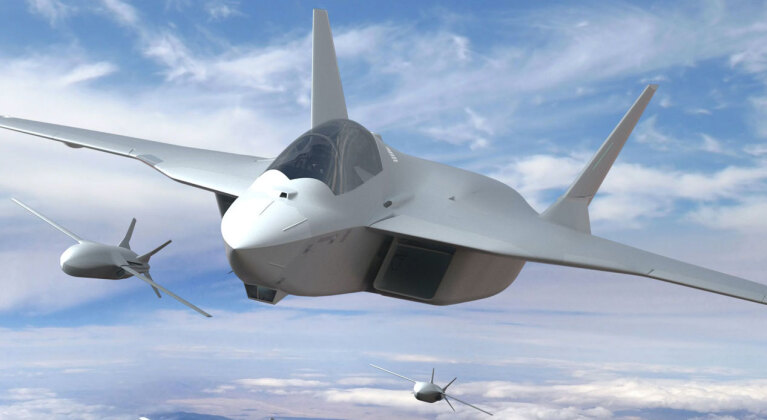
In a major strategic evolution for its long-term defense planning, India has officially initiated concerted efforts to join the French-led Future Combat Air System (FCAS) sixth-generation fighter aircraft program. Disclosed in an Action Taken Report tabled by the Parliamentary Standing Committee on Defence, the move signals New Delhi's determination to secure an active co-development and co-manufacturing foothold in next-generation military aviation rather than remaining a downstream buyer of finished foreign military hardware.
The diplomatic and industrial pivot arrives at a critical juncture for the FCAS initiative, which has undergone significant restructuring following divergent industrial visions between Paris and Berlin. While the trilateral program originally encompassed France, Germany, and Spain, ongoing disagreements over core design metrics—such as aircraft carrier operability and nuclear delivery integration—pushed the project into a transitional phase. Because French military doctrine requires both naval compatibility and a nuclear strike capability, India's established expertise in carrier aviation and strategic delivery platforms aligns seamlessly with Paris's operational roadmap.
By opting to engage with the French-led consortium over the rival British-Italian-Japanese Global Combat Air Programme (GCAP), Indian defense planners aim to access bleeding-edge technologies that extend well beyond the architecture of domestic projects. Sixth-generation systems are conceived as a comprehensive "system of systems," uniting advanced manned fighters, swarming remote carrier drones, artificial intelligence, cyber-warfare tools, directed-energy weapons, and secure digital "combat clouds." Participation in the program promises to inject advanced multidisciplinary engineering capabilities directly into the Indian aerospace ecosystem.
Crucially, defense ministry officials emphasized that exploring an international partnership with France will run parallel to, rather than replace, India's domestic fifth-generation Advanced Medium Combat Aircraft (AMCA) project. As the AMCA transitions from its completed design phase toward production discussions under the Aeronautical Development Agency, the government intends to leverage external collaboration to accelerate technical readiness without sacrificing indigenous self-reliance goals. Previous bitter experiences, such as New Delhi's 2018 withdrawal from the Fifth Generation Fighter Aircraft initiative with Russia, have underscored the strict requirement for equitable workshare and true technology transfer.
The parliamentary panel has welcomed the proactive steps taken by the Ministry of Defence while requesting a comprehensive status report, a clearly defined acquisition roadmap, and tentative delivery timelines. As global military powers race to field sixth-generation capabilities to counter rapidly expanding peer threats, India's push to co-join the FCAS enterprise represents a calculated bet to future-proof its air combat architecture for the mid-21st century.

No comments:
Post a Comment