Sunday, September 13, 2026

North Korea Fired Its Biggest Rocket the Same Week America Pulled Its Missile Shield Out of South Korea


One day after the United States, South Korea, and Japan wrapped up Freedom Edge 26, a five-day exercise covering missile defense, air-defense communications, cyber, and maritime operations, North Korea answered with its own live-fire demonstration on September 12. That timing isn't a coincidence, Pyongyang has a long, consistent history of responding to allied exercises with weapons tests, and this one used the country's most consequential recent artillery acquisition to make the point.

The system involved, the KN-25, is a 600mm multiple rocket launcher that South Korean assessments say fired precision-guided rounds roughly 250 kilometers into waters east of the Korean Peninsula on this occasion, though the system's demonstrated range has run considerably further in past tests, up to 358.5 kilometers in a January exercise, and analysts consider it the longest-ranged rocket artillery system in the world. Kim Jong Un's own description of the weapon, delivered when 50 units were formally handed to combat units in February, captures why Western analysts have struggled to cleanly categorize it: it "perfectly combines the accuracy and destructive power of tactical ballistic missiles with the firing speed of multiple rocket launchers," using AI targeting and a combined guidance system Kim said lets it conduct "strategic level" attacks. That blurred line between conventional artillery and ballistic missile is deliberate. A 600mm guided rocket hits with a warhead and precision closer to a short-range ballistic missile than anything traditionally called artillery, while still firing in rapid salvos the way rocket launchers do.

What the range actually threatens is the more sobering part of this story. At 250 to 400 kilometers depending on the exact test, the KN-25 can reach military bases, airfields, command centers, and logistics infrastructure across a large share of South Korean territory, not just border areas, from launch positions well inside North Korea's own territory. A dozen launchers firing in coordination, as North Korea demonstrated in an earlier March drill using 12 systems simultaneously, can deliver dozens of guided rockets in a single salvo, a saturation-strike capability aimed specifically at overwhelming whatever point defenses are covering a given target.

The detail that gives this particular test its sharper edge is what's missing from South Korea's own air defense picture right now. The United States withdrew its Patriot and THAAD ballistic missile defense systems from South Korea earlier this year, redeploying them to the Middle East amid the broader war with Iran that's strained American interceptor stockpiles across every theater simultaneously. That's not a footnote, it's the actual strategic backdrop this launch landed against: North Korea demonstrating a longer-range, harder-to-intercept precision strike system at almost exactly the moment South Korea's own missile-defense coverage against it has gotten measurably thinner, because the interceptors that would normally help stop something like a KN-25 salvo are currently sitting in a different theater entirely.

None of this means South Korea is suddenly defenseless, its own indigenous air defense architecture, KAMD and L-SAM among the systems it's continued building out, remains in place regardless of the American systems' redeployment. But the timing here is genuinely unforgiving for anyone hoping to read it charitably: an American ally's missile shield got thinner this year for reasons entirely unrelated to North Korea, and Pyongyang picked almost exactly that moment to demonstrate the one weapon in its arsenal best designed to exploit precisely that kind of gap.

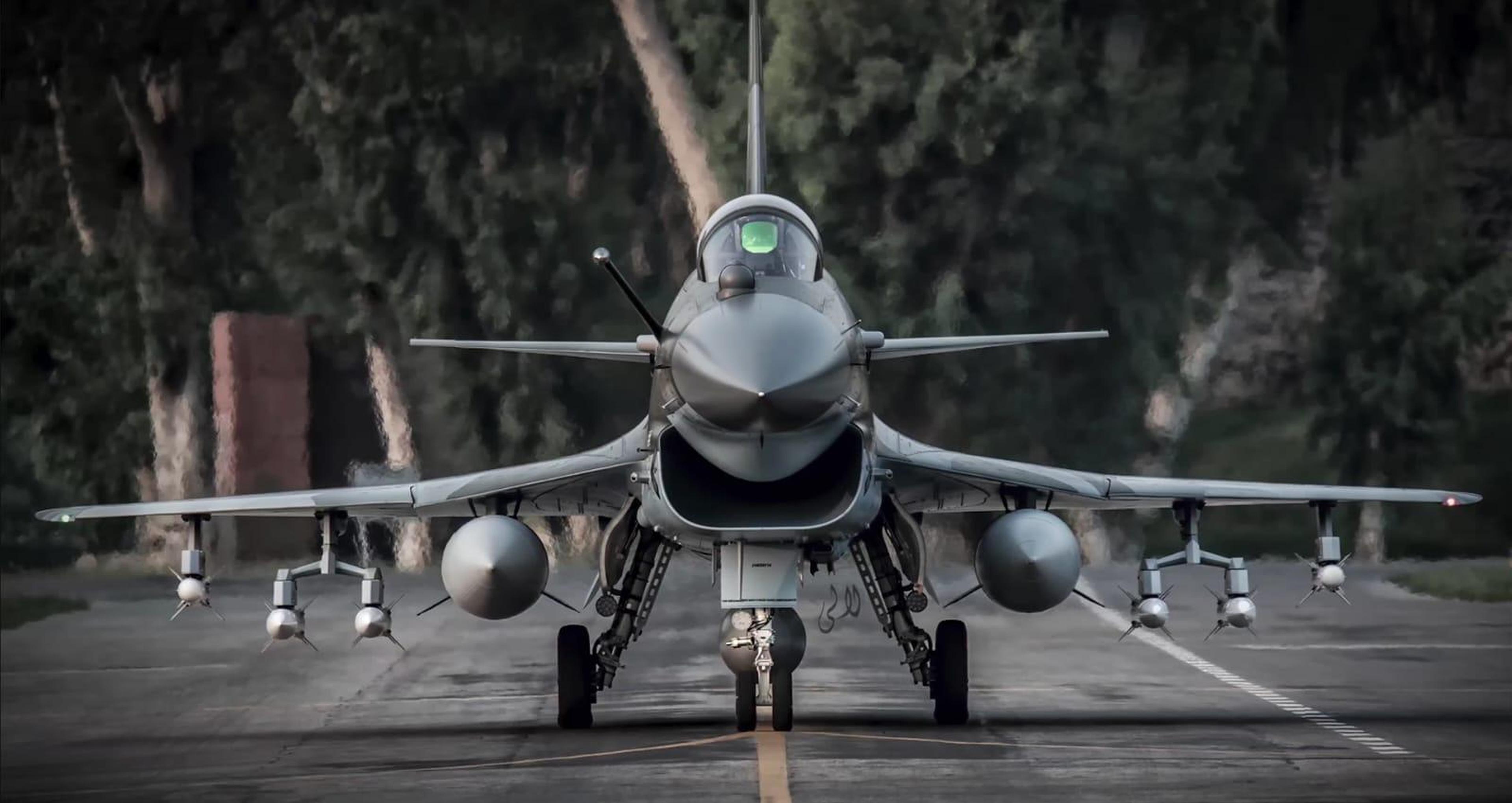
"Completely Incomparable." A Pakistani Pilot Just Said the Quiet Part About the F-16.


"The J-10C leads the F-16 by a generation. In terms of radar, avionics, electronic warfare systems, and especially the weapon systems using PL-15 missiles, the F-16 is completely incomparable to it." That's a Pakistan Air Force pilot, in a recent interview, ranking his own service's two frontline fighter types against each other. For most of the past four decades, saying anything close to that about the F-16 inside PAF would have been unthinkable. The aircraft was the crown jewel of Pakistan's air arm for so long that Washington's on-and-off willingness to sell it, and later to sanction Islamabad and freeze deliveries entirely, became one of the defining diplomatic flashpoints of the US-Pakistan relationship. Now a serving pilot is saying it's simply outclassed by a jet Pakistan didn't build and doesn't fully control the supply chain for either, just a different country's supply chain.

The comparison itself is fair on paper. Both aircraft are single-engine, lightweight, broadly comparable in size and role, which is exactly what makes a head-to-head assessment meaningful rather than apples to oranges. The J-10C carries an AESA radar and the PL-15 beyond-visual-range missile, both genuine generational upgrades over the mechanically scanned radars and older missile types equipping Pakistan's Cold War-era F-16 variants. Even the newer F-16 Block 50/52s in PAF service, delivered decades after the originals, don't close that specific gap; PAF's own force structure puts the J-10C ahead of essentially the entire F-16 fleet regardless of which sub-variant is being flown.

There's a slower-moving story behind this single quote that makes it less surprising than it might first appear. The F-16 was actually overtaken inside PAF's own fleet years before the J-10C arrived, first by the JF-17 in the 2000s, then decisively by the JF-17 Block III in the early 2020s, an aircraft built domestically at the Pakistan Aeronautical Complex in Kamra using a mix of Chinese and Pakistani technology. The J-10C's arrival, with roughly 36 delivered by early 2026 under two separate Chinese contracts, is really just the latest and most dramatic step in a fleet-wide shift that's been underway for two decades: PAF steadily building its combat power around Chinese-origin airframes and homegrown assembly lines, rather than remaining dependent on the American aircraft it once treated as irreplaceable.

The practical constraints still attached to the F-16 make this shift look less like preference and more like necessity. Pakistan's F-16 fleet operates under US end-use restrictions that limit how and where it can actually be employed, a legacy of decades of on-and-off American sanctions tied to Pakistan's nuclear program and broader foreign policy disputes. A fighter jet a country can't freely deploy however its own military judges necessary is a fighter jet with a permanently capped ceiling on its usefulness, regardless of how capable its avionics might otherwise be. The J-10C, whatever geopolitical strings come attached to a Chinese-sourced weapons relationship instead, doesn't carry that specific baggage.

None of this means PAF is walking away from the F-16 anytime soon, roughly 57 to 75 of them, depending on which recent count you use, remain in active service, and the US State Department has approved continued sustainment support for the fleet. But PAF's own officers are now saying openly what the fleet's actual force structure has implied for a while: the F-16 is no longer the aircraft PAF builds its air-superiority doctrine around. That role now belongs to a Chinese jet, flying Chinese missiles, guided by a Chinese-designed radar, in an air force that spent the better part of fifty years fighting to keep American fighters in its inventory at all.

Two Robot Boats Fought Each Other in the Black Sea. One of Them Won With a Machine Gun.


For three years, naval drones in this war have mostly done one thing: carry an explosive charge toward a target and detonate. What happened in the Black Sea this week was different. A Ukrainian Sargan-3000 drone, cued onto its target by Ukraine's military intelligence directorate, found a Russian uncrewed surface vessel and sank it, not with a warhead, but by firing a 12.7mm machine gun mounted on a Kongsberg remote weapon station. Two unmanned boats fought each other in open water, and the one carrying a gun beat the one carrying a bomb.

The Russian craft has been identified as an improved Orcan type, also called Zefir or Zephyr in some Russian sources, a small, fast drone built around an internally mounted jet-ski-style water jet, conceptually close to Ukraine's own earliest Magura V3 and V5 designs. It was almost certainly carrying a ramming charge, built to explode on contact rather than fight back, which meant it had essentially no way to defend itself once the Ukrainian drone had it in its sights. Russia has been basing these craft in northwestern Crimea, including a purpose-built facility on Lake Donuzlav with revetments dug directly into the shoreline to shelter the boats before they launch, and they typically operate in coordination with Geran, Russia's version of the Iranian Shahed, which flies overhead and can extend a surface drone's radio range by acting as an airborne relay.

The Ukrainian Sargan-3000, also known as Seawolf and built by Nordex, is a genuinely different kind of vehicle than the drone it just sank. Ukrainian Navy spokesperson Dmytro Pletenchuk summed up the shift in a single line worth repeating: naval drones are "becoming platforms." That's the real distinction. A platform carries a mission-specific payload that can be swapped depending on what the moment calls for, a gun for this engagement, a Sea Dragon air-defense system, essentially a modified R-73 or AIM-9 Sidewinder mounted on a boat, for a different one, or a rocket artillery pod for something else entirely. A warhead-only drone only ever does one thing, and once that's obsolete against a target that can shoot back, it has nothing else to offer.

It's worth applying real caution to the Sargan-3000's own combat résumé, because its reputation has outrun what's actually been confirmed. Ukraine's Navy has credited a Sargan-3000 with sinking the Russian FSB patrol ship Izumrud at Gelendzhik in July, but independent tracking of that claim found the identification "rests on the Ukrainian Navy's statement alone," with satellite imagery confirming the ship was destroyed but unable to distinguish which specific drone type, or how many craft, actually did it. This week's USV-on-USV engagement appears better documented, tied to a specific HUR-directed interception rather than a post-hoc claim about a already-sunk ship, but it's a useful reminder that even genuinely significant naval drone stories in this war often rest on one side's account rather than independently verified evidence.

H.I. Sutton, the naval analyst who broke this story, made the more interesting point last: losing one drone, on either side, barely registers as an attrition event, these vehicles are built to be expendable and cheap enough to lose regularly. What matters is that this specific kill happened at all, and how. Both sides now have documented proof that an armed USV can hunt and destroy another USV in open water, which means the next design decision on both sides isn't just "how do we sink more ships," it's "how do we keep our own drones from being hunted by theirs." That's a genuinely new tactical problem this war hadn't had to solve until this week, and it's the kind of problem that tends to reshape a weapons category fast once it's actually been demonstrated in combat rather than just theorized about.

The Navy's Newest Robot Boats Might Just Be Whatever Boat Was Sitting There Already


Ten components. Less than a week to install. That's what it takes, according to Sea Machines' own description of its retrofit kits, to turn an ordinary boat into one that can operate autonomously. No new hull, no purpose-built unmanned vessel, no years-long shipbuilding program. Just an existing craft, wherever it happens to be, converted on-site. That's the capability US Special Operations Forces just locked in for the next five years under a new Indefinite Delivery Indefinite Quantity contract, and it's a meaningfully different bet than the industry's usual approach of designing unmanned vessels from the keel up.

The Boston-based company calls its approach "vessels of opportunity," a phrase doing a lot of work in the contract description. Rather than building or buying a fleet of dedicated unmanned boats, the idea is to keep autonomy kits ready to drop into whatever vessel is already available in a given theater, tailoring a capability on short notice rather than pre-positioning specialized hardware years in advance. Sea Machines' pitch is that its Autonomous Command and Control system works across "a multitude of craft that range in size and performance specifications," meaning the same kit could plausibly go into a small patrol boat in the Arabian Gulf or something considerably larger elsewhere, depending on what the mission and the moment actually call for.

This isn't a new company chasing its first government contract, and that track record matters for how seriously to take this specific award. Sea Machines has spent a decade, since its 2015 founding, and more than $50 million in venture funding building out its autonomy stack, and its history with the Pentagon goes back at least to 2020, when the Defense Innovation Unit contracted it to develop autonomous barge systems capable of self-propelling into position to refuel VTOL aircraft, a genuinely different mission from this new SOF award but built on the same underlying software. More recently, the company has been in the final competitive evaluation phase for the Navy's Modular Attack Surface Combatant program, a considerably more ambitious effort building purpose-designed autonomous warships rather than retrofit kits. Winning the SOF contract while still competing for that larger program suggests Sea Machines is positioning itself across the full spectrum of naval autonomy, both the fast, flexible retrofit option and the dedicated new-build option, rather than betting everything on one approach.

The specific mission set named in the contract, expeditionary logistics, intelligence and surveillance work, and maritime security "at the tactical edge," fits a pattern that's shown up across every theater the US military currently treats as a live maritime concern: the Arabian Gulf, where a shooting war with Iran has made unmanned assets considerably more attractive than risking sailors, the broader Indo-Pacific, and the Baltic, where subsea infrastructure and grey-zone activity have made persistent, low-cost maritime presence increasingly valuable. A kit deployable in hours rather than a vessel that takes years to build is a genuinely useful capability across all three of those environments, precisely because the actual craft needed might look completely different depending on which theater it's going into.

What the contract doesn't resolve is how a "vessel of opportunity" actually gets sourced in practice, whether that means military craft already in inventory, chartered civilian vessels, or something improvised in the field. Erik Hedval's own statement leaned on the flexibility angle without specifying operational detail: the goal is letting Special Operations Forces "rapidly extend command and control" and "reduce risk to personnel," language that's honest about the intent but light on how the actual sourcing and deployment process works day to day. For a five-year IDIQ contract, that ambiguity is probably the point, keeping the arrangement open enough to adapt to whatever specific boat, and whatever specific mission, comes up next.

The Pentagon Wants AI That Decides If Something's a Missile in Two Seconds. A Wrong Guess Costs Millions Either Way.


Two seconds. That's the aggressive end of the target the Defense Innovation Unit has set for a new AI system meant to tell a human operator whether the object showing up on their screen is actually a threat, with five seconds as the more forgiving ceiling. The solicitation, called the Space Threat Intelligence Synthesis Engine, closes September 24. What it's actually trying to fix is a problem that's gotten measurably worse since February: existing tools, per DIU's own language, "struggle to distinguish closely spaced objects, track emerging threats, and keep threat models current," at the exact moment America's war with Iran has made every single interceptor decision more expensive to get wrong.

The technical ask is genuinely broad. The system needs to fuse live video, satellite imagery, radar and sensor feeds, geospatial data, and classified intelligence reports into one continuously updated picture, then output what DIU calls "actionable, confidence-scored alerts" that a human analyst, a human-supervised operation, or a fully automated workflow could all act on. That last category, automated workflows, is worth sitting with for a second: the Pentagon isn't only asking for a tool to help a person decide faster, it's leaving room for a version of this system where a machine's own confidence score triggers a response without a human in that specific loop at all.

The economic logic driving the two-second target is blunt and connects directly to a shortage this war has made impossible to ignore. Since fighting with Iran began in February, American forces have burned through a meaningful share of their Patriot and THAAD interceptor stockpiles, systems that take years to rebuild once expended. Firing one of those interceptors at an object that turns out to be debris, a decoy, or nothing at all wastes a round that might be needed against a real threat minutes later. Waiting too long to be sure costs something different but equally unaffordable, the seconds needed to actually intercept something real. DIU's synthesis engine is explicitly built to shrink that decision window without increasing the rate of expensive false positives, a problem interceptor scarcity turns from an inconvenience into something closer to a resource crisis.

Three companies look positioned to compete hard for this, and each brings a different piece of the puzzle. Anduril and Palantir have already been working together on software for Golden Dome, the administration's roughly $185 billion missile defense program, and Anduril separately holds a Space Force contract for space surveillance networking work that's already grown from an initial $99.7 million award to a $100.3 million modification this past May, giving it existing Pentagon access this kind of contract tends to reward. Palantir brings the data-integration reputation the fusion requirement demands. Shield AI's pitch centers on autonomy, relevant given DIU's own language leaves room for automated decision workflows. Northrop Grumman and Camgian, and separately BAE and Scale AI, have their own parallel partnerships already underway in adjacent integrated air and missile defense work, meaning this specific award is landing inside an already-crowded field of companies racing to own the AI layer of American missile defense.

There's a tension worth naming plainly here that the solicitation itself doesn't address: a system built to compress human decision time on lethal-adjacent calls is being built at the same moment independent oversight of how well Pentagon weapons systems actually perform has been quietly scaled back, this outlet has already covered the removal of the Pentagon's own public weapons-testing reports earlier this month. Whether a system this consequential gets the same level of rigorous, publicly visible testing that catching a bad missile-defense algorithm before it fields would require is a genuinely open question, one this solicitation's own confident language about turning "battlefield confusion" into two-second certainty doesn't answer on its own.