
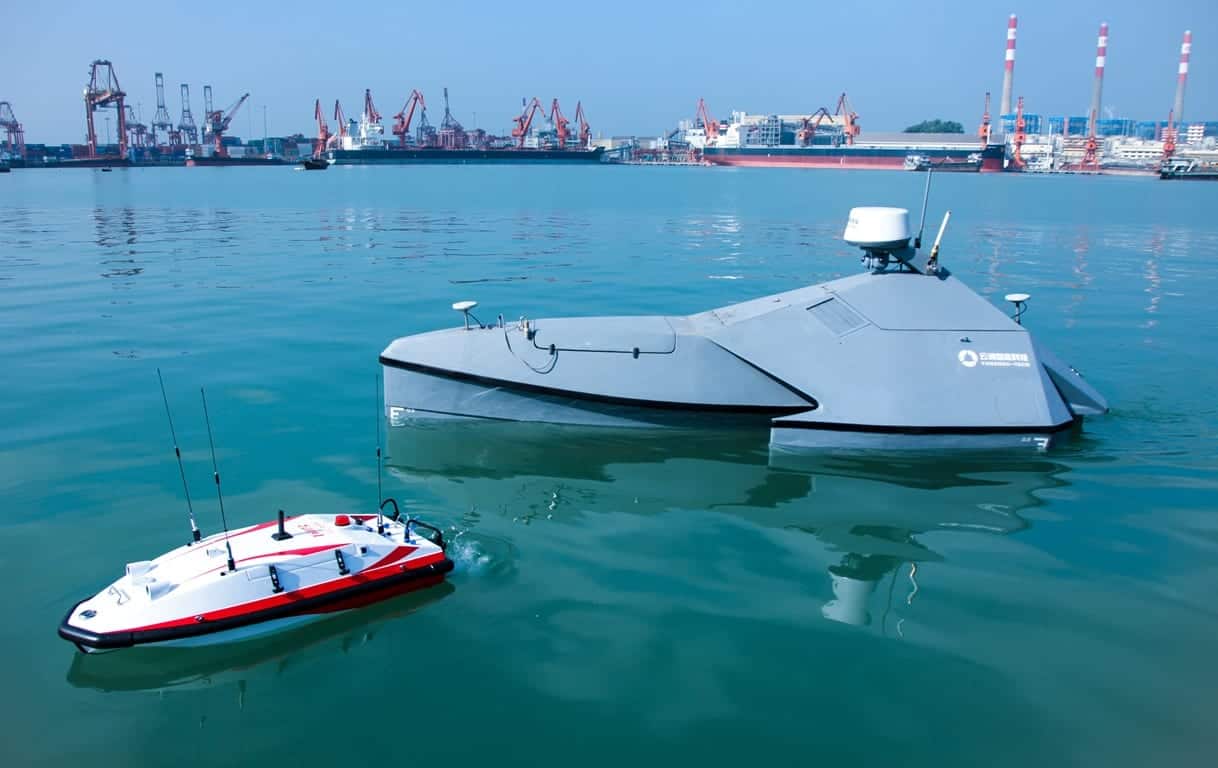
Ten components. Less than a week to install. That's what it takes, according to Sea Machines' own description of its retrofit kits, to turn an ordinary boat into one that can operate autonomously. No new hull, no purpose-built unmanned vessel, no years-long shipbuilding program. Just an existing craft, wherever it happens to be, converted on-site. That's the capability US Special Operations Forces just locked in for the next five years under a new Indefinite Delivery Indefinite Quantity contract, and it's a meaningfully different bet than the industry's usual approach of designing unmanned vessels from the keel up.
The Boston-based company calls its approach "vessels of opportunity," a phrase doing a lot of work in the contract description. Rather than building or buying a fleet of dedicated unmanned boats, the idea is to keep autonomy kits ready to drop into whatever vessel is already available in a given theater, tailoring a capability on short notice rather than pre-positioning specialized hardware years in advance. Sea Machines' pitch is that its Autonomous Command and Control system works across "a multitude of craft that range in size and performance specifications," meaning the same kit could plausibly go into a small patrol boat in the Arabian Gulf or something considerably larger elsewhere, depending on what the mission and the moment actually call for.
This isn't a new company chasing its first government contract, and that track record matters for how seriously to take this specific award. Sea Machines has spent a decade, since its 2015 founding, and more than $50 million in venture funding building out its autonomy stack, and its history with the Pentagon goes back at least to 2020, when the Defense Innovation Unit contracted it to develop autonomous barge systems capable of self-propelling into position to refuel VTOL aircraft, a genuinely different mission from this new SOF award but built on the same underlying software. More recently, the company has been in the final competitive evaluation phase for the Navy's Modular Attack Surface Combatant program, a considerably more ambitious effort building purpose-designed autonomous warships rather than retrofit kits. Winning the SOF contract while still competing for that larger program suggests Sea Machines is positioning itself across the full spectrum of naval autonomy, both the fast, flexible retrofit option and the dedicated new-build option, rather than betting everything on one approach.
The specific mission set named in the contract, expeditionary logistics, intelligence and surveillance work, and maritime security "at the tactical edge," fits a pattern that's shown up across every theater the US military currently treats as a live maritime concern: the Arabian Gulf, where a shooting war with Iran has made unmanned assets considerably more attractive than risking sailors, the broader Indo-Pacific, and the Baltic, where subsea infrastructure and grey-zone activity have made persistent, low-cost maritime presence increasingly valuable. A kit deployable in hours rather than a vessel that takes years to build is a genuinely useful capability across all three of those environments, precisely because the actual craft needed might look completely different depending on which theater it's going into.
What the contract doesn't resolve is how a "vessel of opportunity" actually gets sourced in practice, whether that means military craft already in inventory, chartered civilian vessels, or something improvised in the field. Erik Hedval's own statement leaned on the flexibility angle without specifying operational detail: the goal is letting Special Operations Forces "rapidly extend command and control" and "reduce risk to personnel," language that's honest about the intent but light on how the actual sourcing and deployment process works day to day. For a five-year IDIQ contract, that ambiguity is probably the point, keeping the arrangement open enough to adapt to whatever specific boat, and whatever specific mission, comes up next.

No comments:
Post a Comment