Wednesday, September 30, 2026

Boeing Wins Navy F/A-XX Contract: One Company, Two Sixth-Gen Fighters


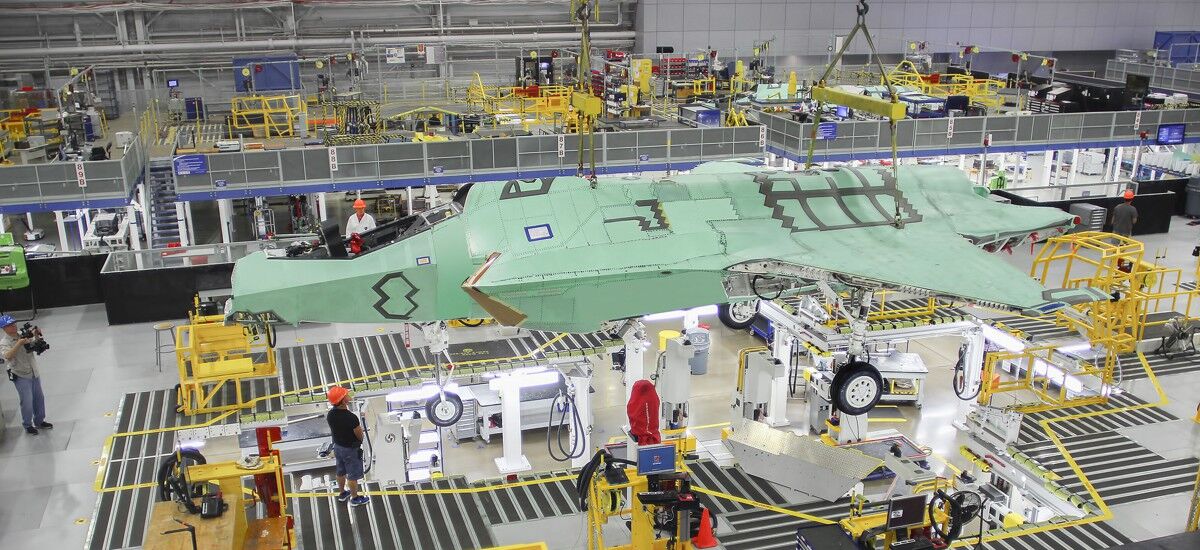
 On September 29, 2026, the U.S. Navy selected Boeing to build the F/A-XX, its first sixth-generation carrier-based strike fighter, as reported by Defense News. The contract, valued at $20 billion for full-scale development, procures multiple test aircraft for ground, airworthiness, systems and weapons integration testing. It also eliminates Northrop Grumman, the last rival standing after Lockheed Martin was cut from the competition in March 2025. The F/A-XX is expected to begin augmenting and eventually replacing the F/A-18E/F Super Hornet and EA-18G Growler fleets in the 2030s, operating alongside the F-35C and uncrewed Collaborative Combat Aircraft (CCAs), with Boeing promising extended range and manned-unmanned interoperability.

The selection ends a long stretch of indecision. The Navy's search for a Super Hornet successor stretches back to a 2012 request for information, but the program stalled in mid-2025 after Boeing won the Air Force's Next Generation Air Dominance (NGAD) contract, when the Pentagon questioned whether the industrial base could support two sixth-generation fighters at once. Congress kept funding the effort, and a choice between Boeing and Northrop was finally approved in October 2025 without a winner being named. The Navy has not published its evaluation, so the public cannot see what tipped the decision, but the history strongly suggests that industrial capacity mattered as much as airframe design.

That brings us to the real story, which is concentration. Boeing now holds both of America's crewed sixth-generation fighter programs, the Air Force's F-47, which entered engineering and manufacturing development this summer with first flights targeted for 2028, and the Navy's F/A-XX. As covered in our earlier analysis of the F-47 assembly line, the company is already expanding its St. Louis footprint, reportedly including a $1.8 billion Advanced Combat Aircraft Facility. The same day as the award, Boeing also received a contract of roughly $16.7 million to plan the shutdown of the Super Hornet and Growler production lines, meaning the same factory and workforce must wind down one generation of fighters while ramping up two others.

Northrop's loss is significant beyond the balance sheet. The company is deep into the B-21 Raider bomber program and had been chasing its first primary Navy fighter contract since the F-14 Tomcat. With Lockheed Martin also out of both sixth-generation competitions, the United States has effectively narrowed its next-generation crewed fighter design to a single prime contractor. There are efficiencies in that, including shared digital engineering, tooling and supplier networks across two programs. But it also creates a single point of failure, and any labor shortage, supply chain snarl or engineering setback at Boeing could now ripple across both the Air Force and the Navy at the same time. That reading is my analysis rather than an official assessment.

A $20 billion figure also needs careful reading, because it buys development rather than fleets. The jets are not expected in service until the 2030s, so the Navy must keep its existing carrier air wings viable while a program with a history of funding disputes, engineering concerns and supply chain worries matures. The F/A-XX's integration with CCAs is another concept still to be proven at sea, where deck space, launch and recovery cycles and networking under jamming conditions add complexity that land-based programs do not face. The risk lies less in whether the aircraft can be designed than in whether it arrives on schedule and in numbers.

Ultimately, the Boeing award marks the end of one uncertainty and the start of another. For Indo-Pacific planners, a carrier fighter with greater reach is exactly the kind of capability the theatre's distances demand, but the timeline means it addresses tomorrow's problem rather than today's. Three markers will show whether this bet pays off: the first flights of the test aircraft, the pace of Super Hornet line shutdown relative to F/A-XX progress, and whether Northrop finds a follow-on role that keeps a second fighter-design team alive.

Tuesday, September 29, 2026

Industrial Scaling for Sixth-Gen Dominance: USAF Signals Imminent F-47 Assembly Line Milestone


On September 29, 2026, senior U.S. Air Force leadership signaled that a full-rate production line for the Boeing F-47 sixth-generation fighter is "not too far away," as reported by The War Zone. The announcement coincides with rapid progress on Boeing’s multi-billion-dollar infrastructure expansion in St. Louis, Missouri, where advanced combat aircraft assembly facilities, hangar doors, and central utility structures have recently reached major construction milestones. Following Boeing’s engineering and manufacturing development contract award under the Next Generation Air Dominance (NGAD) initiative, this physical expansion reflects a deliberate transition from experimental flight-test prototypes toward establishing serial production capacity for the world's first operational sixth-generation combat jet.

The drive toward an active assembly line highlights a central dilemma facing modern defense procurement: balancing rapid technological iteration with finite aerospace manufacturing capacity. Developing a sixth-generation stealth platform requires specialized automated tooling, precision composite fabrication bays, and high-capacity cleanrooms to apply radar-absorbent materials across airframes without introducing manufacturing flaws. Furthermore, industrial base bottlenecks have ripple effects across sister services. The Pentagon previously paused momentum on the U.S. Navy’s F/A-XX program specifically over concerns that simultaneous full-scale procurement would trigger zero-sum competition for specialized defense aerospace labor, advanced flight-control tooling, and high-end supply chain components.

From a tactical standpoint, accelerating F-47 production readiness is essential for maintaining air superiority against rapidly evolving Indo-Pacific air threats. Designed with a combat radius exceeding 1,000 nautical miles and high-dash supersonic performance, the F-47 is engineered to overcome the vast geographical constraints of the Western Pacific theatre where legacy short-legged fighters struggle. Acting as a central node within a broader network-centric family of systems, the F-47 will pair with uncrewed Collaborative Combat Aircraft (CCAs), utilizing advanced sensor fusion and artificial intelligence to command drone swarms, penetrate dense enemy Integrated Air Defense Systems (IADS), and prosecute targets deep inside contested airspace.

The timeline for transition comes at a delicate juncture for the U.S. Air Force’s existing air dominance architecture. As aging F-22 Raptors undergo expensive, multi-faceted modernization programs to remain viable through the decade, the service faces tight operational margins to prevent a capability dip in stealth fighter inventory. Fielding the planned baseline fleet of 185 F-47s requires Boeing to successfully transition from low-rate initial assembly to high-yield output without suffering the supply chain snarls and cost overruns that historically dogged previous fifth-generation fighter rollouts.

Ultimately, establishing an active production line for the F-47 marks a pivotal shift in modern defense manufacturing from conceptual design to physical force projection. While first flight tests remain targeted for 2028 ahead of planned operational deployment in the late 2020s, building out the physical tooling infrastructure today ensures that the U.S. defense industrial base can serial-produce sixth-generation airpower at scale. For Western air force planners, bringing the F-47 production line online is not merely an industrial victory, but a fundamental prerequisite for sustaining long-term military deterrence against peer adversaries in an increasingly contested global security environment.

The Power Vacuum in Mesopotamia: Strategic Consequences of the U.S. Military Exit from Iraq


On September 29, 2026, U.S. forces initiated their final operational drawdown from military installations across Iraq, concluding a continuous 23-year footprint that began with the 2003 invasion and evolved into Operation Inherent Resolve. Under the bilateral timeline negotiated between Washington and Baghdad, all remaining American combat troops are set to vacate key bases—including outposts in Erbil and Anbar province—by September 30, formally transitioning the U.S. presence into a standard, non-combat diplomatic and advisory partnership. This milestone concludes over two decades of direct U.S. kinetic involvement in Iraqi territory, shifting responsibility for national defense entirely onto the Iraqi Security Forces (ISF) while exposing major structural vulnerabilities across the Levant.

The immediate beneficiary of the Coalition's departure is Tehran, which views the operational vacuum as an unprecedented strategic opening to consolidate its "Axis of Resistance". For years, U.S. military bases functioned as physical tripwires and counterweights against the expansion of Iran-backed Popular Mobilization Forces (PMF), such as Kata'ib Hezbollah and Asa'ib Ahl al-Haq. Without American boots on the ground or immediate organic ISR integration from U.S. command hubs, these paramilitary factions are positioned to deepen their penetration into Iraq’s state security apparatus, weaponize intelligence channels, and establish unhindered land corridors linking Tehran directly through Baghdad to Damascus and Beirut.

The operational risk extends beyond Iranian influence to the potential resurgence of Islamic State (ISIS) remnants. While the ISF has made notable strides in conventional urban security, it remains heavily dependent on Western intelligence fusion, air-to-ground integration, and specialized logistics for complex counter-terrorism operations. In rural, topographically harsh sectors like the Hamrin Mountains and the Syrian borderlands, security gaps are likely to widen rapidly. Without continuous, real-time aerial surveillance from coalition assets, sleeper cells retain the freedom of movement necessary to reconstitute command networks and execute asymmetric hit-and-run campaigns against vulnerable local infrastructure and religious minorities.

The withdrawal also introduces acute geopolitical friction for autonomous regional actors, particularly the Kurdistan Regional Government (KRG) in northern Iraq. Erbil has long relied on the American posture as a protective shield against both federal overreach from Baghdad and aggressive incursions by armed militias. The departure of U.S. anti-drone and air defense batteries previously guarding Erbil International Airport leaves Iraqi Kurdistan exposed to un-vectored drone strikes and political coercion. As Washington’s physical deterrence recedes, the KRG will be forced to make difficult political concessions to Baghdad and Tehran to preserve its internal stability and economic autonomy.

Ultimately, the conclusion of the U.S. military mission in Iraq signals a definitive shift toward a multi-polar, highly volatile Middle Eastern security architecture. By removing its physical forces from the Mesopotamian core, Washington is attempting to pivot limited strategic resources elsewhere, but the move risks replicating past power vacuums that invite secondary crises. As Iran moves to cement its political and military hegemony across the region, Iraq enters a precarious era where sovereign defense depends on its ability to navigate intense proxy rivalries without the security net of a Western military presence.


Monday, September 28, 2026

Subsurface Counterbalance: Pakistan Navy Demonstrates Combat Readiness with Maiden Hangor-Class Missile Firing


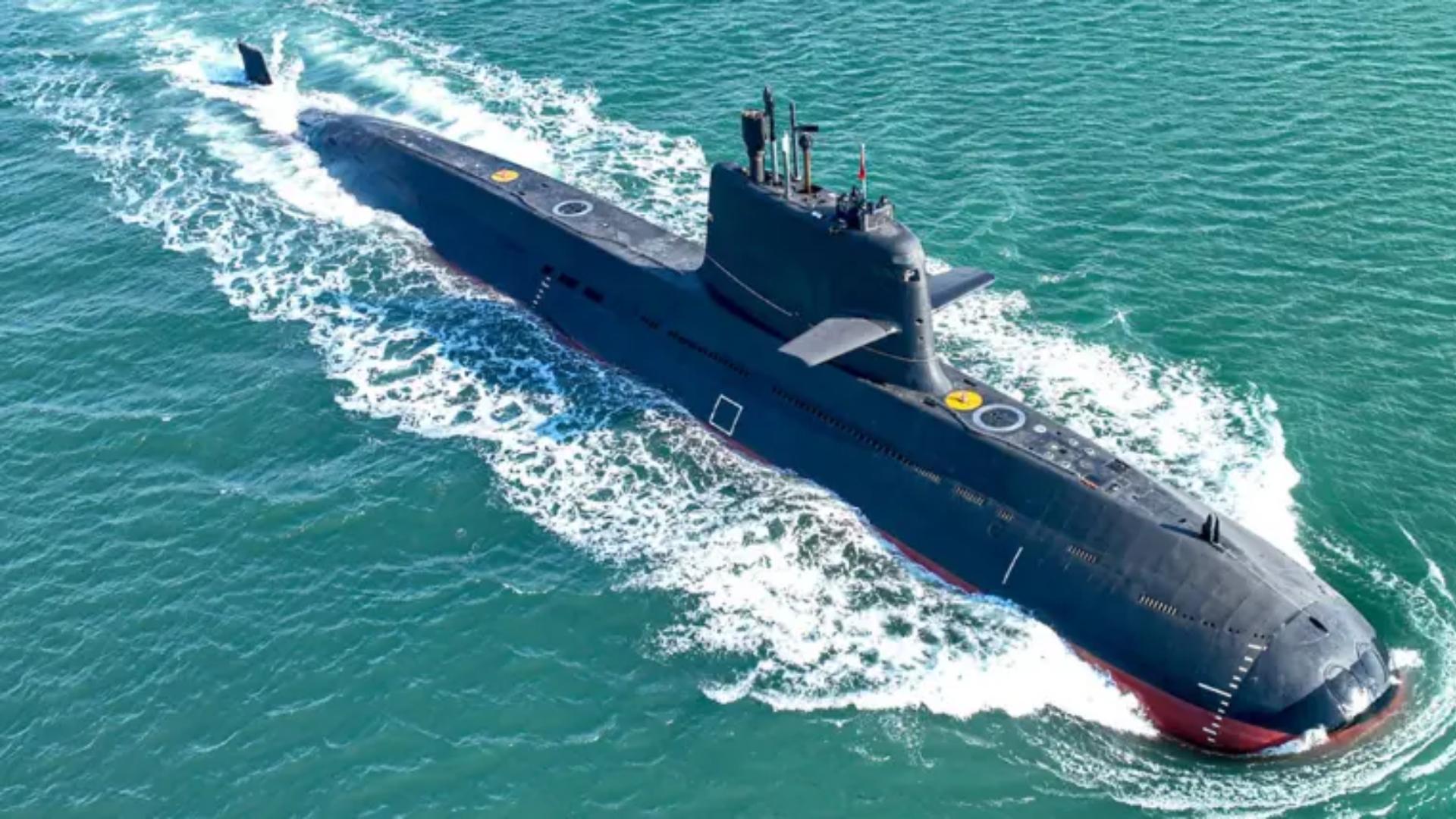
On September 26, 2026, the Pakistan Navy successfully executed the maiden live weapon firing from its first Hangor-class submarine, PNS/M Hangor, in the North Arabian Sea. Witnessed at sea by Chief of the Naval Staff Admiral Naveed Ashraf, the operation involved the precision engagement of a long-range surface target using an anti-ship cruise missile. Fired only months after the lead boat completed its delivery voyage from China to Karachi following commissioning, this live-fire validation confirms that the platform’s combat system, sensors, and weapons integration are fully operational, marking a significant milestone in Pakistan's multi-billion-dollar effort to modernize its underwater fleet.

The integration of the Hangor-class—a custom variant of China's Type 039B/041 Yuan-class diesel-electric submarine—directly addresses the growing numerical and qualitative asymmetry in the Indian Ocean Region (IOR). Under a landmark eight-boat procurement agreement with China, four hulls are being constructed at China Shipbuilding Trading Company (CSTC) yards, while the remaining four are being assembled locally at Karachi Shipyard & Engineering Works (KS&EW). Equipped with Air-Independent Propulsion (AIP) systems, these platforms provide significantly extended underwater endurance compared to legacy Agosta 90B boats, allowing the Pakistan Navy to maintain covert, persistent sea-denial patrols along critical maritime chokepoints and coastal approaches without the frequent need to snorkel.

Beyond standard surface-warfare capabilities, the operationalization of the Hangor class enhances Pakistan’s strategic deterrence posture at sea. While the recent drill validated long-range anti-ship cruise missile targeting, the platform’s large-diameter torpedo tubes and modern combat management system also provide the structural foundation for deploying the Babur-3 submarine-launched cruise missile (SLCM). The capability to launch nuclear-capable, low-flying cruise missiles from concealed subsurface positions provides Islamabad with a survivable second-strike vector, reinforcing its doctrine of full-spectrum deterrence against potential adversary pre-emptive strikes or blockades.

From a tactical perspective, the arrival of AIP-equipped stealth submarines fundamentally alters anti-submarine warfare (ASW) dynamics in the Arabian Sea. Operating in the shallow, acoustically complex littoral waters off the coastline, the Hangor class's reduced acoustic signature makes passive sonar detection exceptionally difficult for opposing surface task forces and airborne maritime patrol platforms. By distributing strike options across multiple AIP-enabled submarines, the Pakistan Navy forces regional opponents to allocate disproportionate ASW assets for screening capital ships, complicating adversary operational planning and raising the threshold for hostile naval intrusions.

Ultimately, the successful missile engagement by PNS/M Hangor signals that the Pakistan-China naval partnership is transitioning from industrial delivery to real-world combat capability. As additional hulls undergo fitting-out and trial phases in both Wuhan and Karachi, the progressive induction of all eight Hangor-class submarines over the coming years will establish a formidable underwater barrier. For the Pakistan Navy, achieving combat readiness on its flagship AIP submarine ensures a robust sea-denial capability, safeguarding vital sea lines of communication while preserving a delicate strategic balance across the northern Indian Ocean.

Britain's Newest Submarine Took Two Years to Go From "Launched" to "Actually at Sea"


HMS Agamemnon was launched in December 2024. It didn't actually leave Barrow-in-Furness for its first sea trials until this month, nearly two years later. For a submarine already built and named, sitting in the water, that's a genuinely long gap between "exists" and "does the thing it exists to do," and Naval News's own reporting doesn't paper over what that gap represents: it "underscores the industrial challenges facing BAE Systems," with the sixth Astute-class boat unlikely to reach full operational capability before late 2027, three years after its own launch ceremony.

The submarine itself, once it clears trials, is a genuinely serious platform. Astute-class boats run Rolls-Royce PWR2 reactors that never need refueling across a 25-year service life, carry Tomahawk cruise missiles and Spearfish heavyweight torpedoes, and are built to hunt other submarines, escort carrier strike groups, and gather intelligence with a sonar suite BAE Systems and the Royal Navy both describe as capable of detecting threats from hundreds of miles away. HMS Agamemnon specifically has been built with what the program calls "enhanced capabilities" over its five Astute-class predecessors, though neither this reporting nor the Royal Navy's own public statements specify exactly what's changed.

What makes the delay worth dwelling on is where it sits inside a much larger, much higher-stakes production pipeline. Barrow-in-Furness isn't just building six Astute-class attack submarines, it's simultaneously the site meant to deliver the follow-on Dreadnought-class ballistic missile submarines and, under the AUKUS pact, contribute to the SSN-AUKUS program that's supposed to eventually produce a new submarine roughly every 18 months across both British and Australian construction. A single Astute boat needing close to three years between launch and full operational readiness is a data point worth taking seriously against that considerably more ambitious future cadence, the same shipyard, the same workforce, and the same industrial base are being asked to hit a pace substantially faster than what Agamemnon's own timeline just demonstrated.

The money being poured into fixing exactly this kind of bottleneck gives some sense of how seriously the problem is being treated. The UK's Defence Investment Plan allocates £46.9 billion specifically to the submarine enterprise as part of a broader £298 billion equipment program, and £15 billion has already gone toward expanding sovereign nuclear warhead production. That's real, substantial money aimed at exactly the industrial capacity questions Agamemnon's own delay raises, but pouring money into a shipyard's capacity doesn't compress workforce training, supply chain maturity, or testing timelines overnight, and those are precisely the constraints that produced a two-year gap between this submarine's launch and its first trip to sea.

None of this means Agamemnon itself is a troubled boat, once operational it will be a genuinely capable addition to the Royal Navy's submarine fleet, and delays between launch and full service are common enough across submarine programs generally that this one shouldn't be read as uniquely alarming on its own. But as a single data point inside a program that's about to be asked to build submarines considerably faster than it currently does, for two navies simultaneously under AUKUS, Agamemnon's own three-year runway from launch to operational readiness is exactly the kind of detail worth watching closely rather than filing away as a routine milestone.

Saturday, September 26, 2026

Everyone's Worried About the Same Saudi F-35 Deal, Just for Opposite Reasons


Israel is worried Saudi Arabia getting F-35s erodes its own qualitative military edge in the region. American lawmakers are worried Saudi Arabia getting F-35s hands China a back door into the West's most sensitive fighter jet technology. Those are two very different anxieties about the exact same $24.3 billion sale, and the fact that both are being raised simultaneously, by different constituencies with different interests, is arguably more revealing than either concern taken alone.

The formal announcement came during Crown Prince Mohammed bin Salman's Washington visit, with the deal reported to include up to 48 F-35A fighters as its centerpiece alongside other advanced military equipment. Trump has publicly praised Saudi Arabia's own defense spending and framed the sale as rewarding a partner making real investments in the relationship. That's the deal's simplest reading: a wealthy Gulf state that's been asking for F-35s for years finally getting a green light, joining a client list that already includes Israel and most of NATO.

The Israeli objection is the more familiar one, and it's rooted in a specific, legally codified American commitment. Washington has maintained Israel's qualitative military edge as formal US policy for decades, a guarantee that Israel retains a technological advantage over any other country in the region regardless of what else gets sold nearby. A Gulf state operating the same fifth-generation stealth fighter Israel flies doesn't necessarily violate that guarantee on its own, edge is about the totality of capability, not any single platform, but it's the kind of sale that reliably triggers Israeli pushback regardless of the specific terms attached, and previous rounds of exactly this same debate accompanied the UAE's own on-again, off-again F-35 negotiations.

The China angle is the less expected complication, and it comes from inside Washington rather than from Israel. Reporting has surfaced specific congressional concern that Saudi Arabia's deepening security and technology ties with Beijing could create exposure for sensitive F-35 systems, precisely the kind of technology-leakage risk that's driven years of restrictions on which countries get access to the jet's most advanced capabilities in the first place. That's a genuinely different worry than qualitative military edge, it's not about Saudi Arabia having the plane, it's about whether Saudi Arabia's other relationships make it a secure enough custodian of the plane's own secrets.

Both of these concerns connect to something this outlet has already tracked closely this year: the Mecca Pact, the trilateral defense agreement linking Saudi Arabia, Pakistan, and Turkey that analysts read as aimed at deterring Iran and Israel simultaneously, alongside Riyadh's own steadily deepening economic and technology relationship with Beijing. A Saudi Arabia embedded in that web of relationships isn't a neutral F-35 customer in the way, say, Poland or the Netherlands would be, it's a country actively building parallel security architecture with partners the US and Israel both view warily, which is exactly the backdrop that makes both the Israeli edge concern and the American China concern land with more weight than they might for a more conventional buyer.

None of this has stopped the deal from moving forward, and Trump's own framing suggests the administration sees it as a diplomatic win worth the friction. Whether the final sale includes real safeguards addressing either concern, restricted software configurations, monitoring provisions, sequencing tied to other conditions, isn't yet clear from public reporting. What is clear is that a fighter jet sale rarely generates simultaneous alarm from Israel and US congressional China hawks for genuinely unrelated reasons, and that overlap is probably the most honest signal available right now about how complicated Saudi Arabia's current position in the region actually is.

Friday, September 25, 2026

India's New Missile Boat Carries Half the Missiles It Was Originally Supposed To


Eight BrahMos missiles. That's what India's Navy originally specified back in a 2015 Request for Information for its Next Generation Missile Vessel program. The ship whose keel Cochin Shipyard just laid carries four. That halving isn't a footnote, it's the actual story behind a program that took roughly a decade to go from initial requirement to steel actually being cut, and it says something honest about the tradeoffs a navy makes when a fast, cheap coastal vessel and a genuinely potent missile ship turn out to be harder to combine than the original wish list assumed.

The ship itself is built around speed and stealth rather than raw firepower. At approximately 900 tonnes and 78 meters, it's meant to operate primarily in coastal and near-shore waters, hunting fast attack craft and other missile boats rather than contesting blue-water engagements far from India's own coastline. Design elements borrowed from India's existing Kamorta-class corvettes should help keep its radar signature low, and the eight ships on order, six being built at Cochin Shipyard and two at Garden Reach Shipbuilders and Engineers in Kolkata, replace India's aging Veer and Khukri-class missile vessels, some of which have been in service since the late 1980s.

Even at half the originally envisioned missile count, four BrahMos launchers is still a serious punch for a ship this size. BrahMos is a supersonic anti-ship and land-attack cruise missile, developed jointly with Russia, capable of striking well beyond visual range with a warhead heavy enough to seriously damage or sink a considerably larger vessel than the NGMV itself. A small, fast, low-signature ship carrying that kind of reach is a genuinely useful asset for exactly the kind of missile-boat duels and coastal defense missions this class is built around, even if it's not the eight-missile arsenal originally floated.

The decade-long gap between the 2015 requirement and this week's keel-laying fits a pattern that's shown up repeatedly in India's own naval and defense procurement this year. This outlet has already covered how India's approved procurement lists routinely take years longer to translate into delivered hardware than their initial announcements suggest, and the NGMV's own trajectory, an RFI a decade ago, a scaled-back final specification, and construction only now beginning, follows that same slow arc. What makes this particular case notable is that the delay produced an actual design compromise rather than just a slipped date, the Navy apparently concluded that packing eight BrahMos launchers onto a fast 900-tonne hull wasn't achievable without sacrificing something else the ship needed to do its actual job.

Delivery of the lead vessel isn't expected before the early 2030s given typical Indian warship construction timelines, meaning the gap between this week's keel-laying ceremony and an operational NGMV actually joining the fleet will likely stretch several more years beyond the decade this program has already taken just to reach construction. For a navy explicitly building this class to replace missile vessels approaching forty years in service, that timeline leaves a real question hanging over how much longer those aging Veer and Khukri-class ships will need to keep serving in the meantime.

Thursday, September 24, 2026

Compromised Stealth: The Strategic Implications of Misrouted F-35 Airframe Components


In late September 2026, defense analysts and Western security officials raised alarms after sensitive structural components from a Royal Australian Air Force (RAAF) F-35A fighter—including a cockpit canopy and weapons-bay door—were unexpectedly diverted to Hong Kong while en route to the United States for repair, ultimately falling into Chinese hands according to reporting by Military Watch Magazine. Transported via commercial air freight on behalf of prime contractor Lockheed Martin, the diverted shipment contained unserviceable hardware heavily reliant on proprietary radar-absorbent materials (RAM). While the Pentagon’s F-35 Joint Program Office confirmed it is working alongside international partners to retrieve the items and investigate the logistics failure, the physical exposure of these airframe sections represents one of the most severe operational breaches in the history of the fifth-generation program.

The core issue driving Western anxiety is not avionics or software exposure, but rather the physical vulnerability of low-observable (LO) material engineering. The F-35’s cockpit canopy utilizes specialized multi-layer dielectric coatings to prevent radar waves from reflecting off internal flight displays and pilot equipment, while the weapons-bay doors feature precision-engineered composite seams and radar-attenuating treatments designed to preserve structural stealth during weapons release. While Beijing has aggressively pursued technical schematics through cyber espionage for over a decade, access to physical physical specimens allows Chinese defense labs to directly analyze the chemical composition, layer thickness, and degradation rates of Western radar-absorbent coatings. Such material analysis yields crucial intelligence to refine counter-stealth radar algorithms, optimize ground-based radar frequencies, and benchmark China's own manufacturing techniques.

This logistics security breakdown exposes a structural vulnerability inherent in modern defense supply chains that rely on civilian freight forwarders for intermediate transit. The F-35 enterprise operates across a complex global sustainment hub, where structural assemblies and unserviceable spares are routinely moved between international operators and central overhaul facilities in North America. Relying on commercial shipping contractors for trans-Pacific movements introduces exploitable seam points in custody tracking. The unaccounted diversion of physical airframe parts to a Chinese Special Administrative Region underscores the urgent need for defense ministries to implement government-monitored chain-of-custody protocols for sensitive composite materials, rather than treating structural parts as standard commercial cargo.

From an operational perspective in the Indo-Pacific theatre, even partial intelligence regarding the F-35’s stealth profile alters the tactical balance against China’s People's Liberation Army Air Force (PLAAF). China currently serial-produces two distinct stealth fighters—the heavy air-superiority J-20 and the carrier-capable J-35—and is rapidly advancing ground-based early warning radar architectures. If Chinese material scientists manage to determine the exact radar cross-section (RCS) degradation and frequency response of Western radar-absorbent materials, PLAAF integrated air defense systems (IADS) like the HQ-9B or ground-based VHF anti-stealth radars could adjust detection thresholds, narrowing the tactical margin of low-observability that allied pilots rely on to survive in contested airspace.

Ultimately, this incident highlights that maintaining a qualitative military edge requires equal parts technological innovation and secure logistical execution. As the F-35 remains the primary multi-role combat platform for the U.S. and its Pacific allies, the potential compromise of its exterior radar-absorbing coatings forces planners to assume that adversary tracking networks will adapt faster than anticipated. Moving forward, the Pentagon and allied defense ministries will likely face immense political and operational pressure to tighten defense logistics, re-evaluate material security standards, and accelerate next-generation countermeasures to preserve air dominance across the Pacific.

Naval Group and Royal IHC Contract Finalized: The Strategic Implications of the Orka-Class Accommodation Deal


On September 15, 2026, French shipbuilder Naval Group and Dutch maritime technology firm Royal IHC signed their initial contract under the Replacement of the Netherlands Submarine Capability (RNSC) Programme. The order specifically tasks Royal IHC with the detailed design, subsequent production, and installation of the onboard accommodation modules for the Royal Netherlands Navy’s four future Orka-class submarines—Orka, Zwaardvis, Barracuda, and Tijgerhaai. While fitting out living quarters might appear on the surface to be a minor industrial milestone, it represents the first concrete, work-share transaction converting France and the Netherlands’ broader bilateral commitments into actual physical hardware. This step moves the project out of procurement discussions and directly into localized maritime engineering.

The integration of Royal IHC within "Team Orka" directly addresses the core tension that has dogged European naval defense acquisition for decades: balancing sovereign industrial preservation with cross-border technological procurement. Under the Industrial Cooperation Agreement (ICA) brokered with the Dutch Ministry of Economic Affairs, Naval Group committed to routing roughly €1 billion of high-value work back into the Dutch domestic industrial and technological base. Submarine design is notoriously space-constrained, requiring living quarters, electrical conduits, piping, and structural bulkheads to align seamlessly inside a pressurized hull with zero room for error. By assigning module engineering to local shipbuilders, the Dutch Ministry of Defence ensures that local yards retain critical intellectual property and hands-on familiarity with the boats—knowledge that will prove indispensable when these submarines undergo deep refits and modernizations over their multi-decade lifespans.

This industrial momentum arrives at a critical juncture for the Royal Netherlands Navy as it manages the operational sunset of its aging Walrus-class fleet. With the decommissioning of HNLMS Walrus and HNLMS Dolfijn, the Dutch Submarine Service is working with a constrained fleet, placing immense pressure on the delivery timelines for the incoming platform. The first two Orka-class boats are scheduled to be delivered within ten years of the initial September 2024 contract signature, serving as a direct stopgap against a capability gap in European expeditionary subsurface warfare. For NATO’s northern flank, the introduction of a conventional diesel-electric design derived from Naval Group’s ocean-going Barracuda lineage offers vital long-endurance, deep-water, and shallow-water surveillance capabilities at a time when Russian underwater activity across the North Atlantic and Baltic regions continues to escalate.

Beyond the hull and module layout, the broader Orka-class ecosystem is being outfitted with advanced sensor suites and weapons packages designed to give the Dutch military a distinct qualitative edge. Thales was selected to supply a comprehensive sonar suite—derived directly from France’s Suffren-class nuclear attack submarines—featuring double-line flank arrays and advanced passive towed arrays to yield exceptional acoustic detection capabilities. Combined with planned integrations for long-range strike weapons like the Tomahawk cruise missile, the Orka class will transition the Dutch fleet from a primarily surveillance-oriented submarine arm into a multi-domain strike and deterrence vector capable of land-attack, anti-submarine warfare (ASW), and covert special operations insertion.

Looking at the broader European naval defense industry, this partnership serves as a practical model for joint defense initiatives across the continent. Rather than relying on off-the-shelf imports that starve domestic shipyards or attempting costly, fully sovereign builds, the French-Dutch arrangement leverages Naval Group's main yard expertise while embedding local Dutch industrial powerhouses directly into the supply chain. As construction of Royal IHC's specialized accommodation modules gets underway in the Netherlands, the program demonstrates how European allies can build integrated warfighting capabilities, sustain national industrial bases, and reinforce NATO's underwater posture in contested maritime environments.

Tuesday, September 22, 2026

China Sent Four Research Ships Into US Arctic Waters This Year. Last Year It Was Five. The Coast Guard Is Still Worried.


Four Chinese research vessels operated in US Arctic waters so far in 2026. Last year the total was five. By raw count, that's not an escalation, it's roughly flat, maybe even down slightly. Yet Rear Adm. Bob Little, commander of the Coast Guard's Arctic District, told Reuters this week that Washington is watching China's Arctic presence "very closely" out of genuine concern for homeland security. The apparent mismatch between a shrinking number and rising alarm is worth sitting with, because it says something real about what's actually driving the concern, and it isn't the vessel count.

What's actually bothering Little is where these ships go and how they behave once they're there. The vessels sailed through the maritime zones off Alaska, including the Aleutian Islands, into the Bering Strait, and as far north as the Pole itself, operating inside America's exclusive economic zone and over its extended continental shelf without notifying Washington through diplomatic channels first, the kind of advance notice that would be standard courtesy between nations operating near each other's sovereign waters. When Coast Guard assets challenge these ships and ask what they're doing, Little said the answer is consistently one of two lines: international waters, or scientific research. Whether that's the whole truth or a convenient answer is exactly the ambiguity that's impossible to resolve from the outside, and it's the same ambiguity this outlet has already covered in a different Arctic context, the demonstrated Russian submarine rehearsals near Svalbard that used ostensibly civilian-adjacent cover for what turned out to be a cable-sabotage exercise.

The dual-use nature of Arctic research vessels is precisely what makes this hard to dismiss either way. A ship mapping seafloor terrain or studying ice conditions can produce data with genuine scientific value and simultaneously generate exactly the kind of information a military would want before operating submarines or other assets in the same waters later. Little's own framing captured that tension without resolving it: legitimate research and quiet military reconnaissance can use identical equipment, identical routes, and identical public justifications, and there's no way to definitively separate the two categories from a distance based on the ship's own account of itself.

A separate, considerably more dramatic story adds real weight to why the Pentagon is paying attention regardless of this particular count staying flat. The War Zone reported NORAD and NORTHCOM are separately monitoring an unprecedented simultaneous deployment of five Chinese icebreaking vessels near Alaska, a fleet roughly two and a half times the size of the entire US Coast Guard's current icebreaker capacity in the whole Arctic region, with another Chinese icebreaker scheduled for commissioning imminently and plans underway for dozens more. That's the story that actually explains the anxiety in Little's comments better than the research-vessel count does on its own: China isn't just sending occasional research ships north, it's building the sustained icebreaking capacity to operate there year-round at a scale the United States currently can't match.

That capacity gap connects directly to the broader Arctic infrastructure asymmetry this outlet has already covered through Operation Polar Dagger, where CSIS documentation showed Russia had reopened dozens of Soviet-era Arctic bases while American permanent presence in the same region stayed comparatively minimal. China's own approach looks different, an icebreaker fleet and periodic research deployments rather than land-based military infrastructure, but it points toward the same underlying pattern: multiple US rivals building out genuine year-round Arctic operating capacity while America's own presence, in bases, icebreakers, or otherwise, continues to lag behind what either country is actually fielding. Little named Russia directly as his other Arctic neighbor worth watching closely for exactly this reason, and Moscow's own denial that its research vessels pose any threat is, notably, close to the identical language China uses to explain its own activity in the same waters.

Monday, September 21, 2026

Germany Asked for Its Missiles Faster. Washington Told Them to Expect a Five-Year Wait Instead.


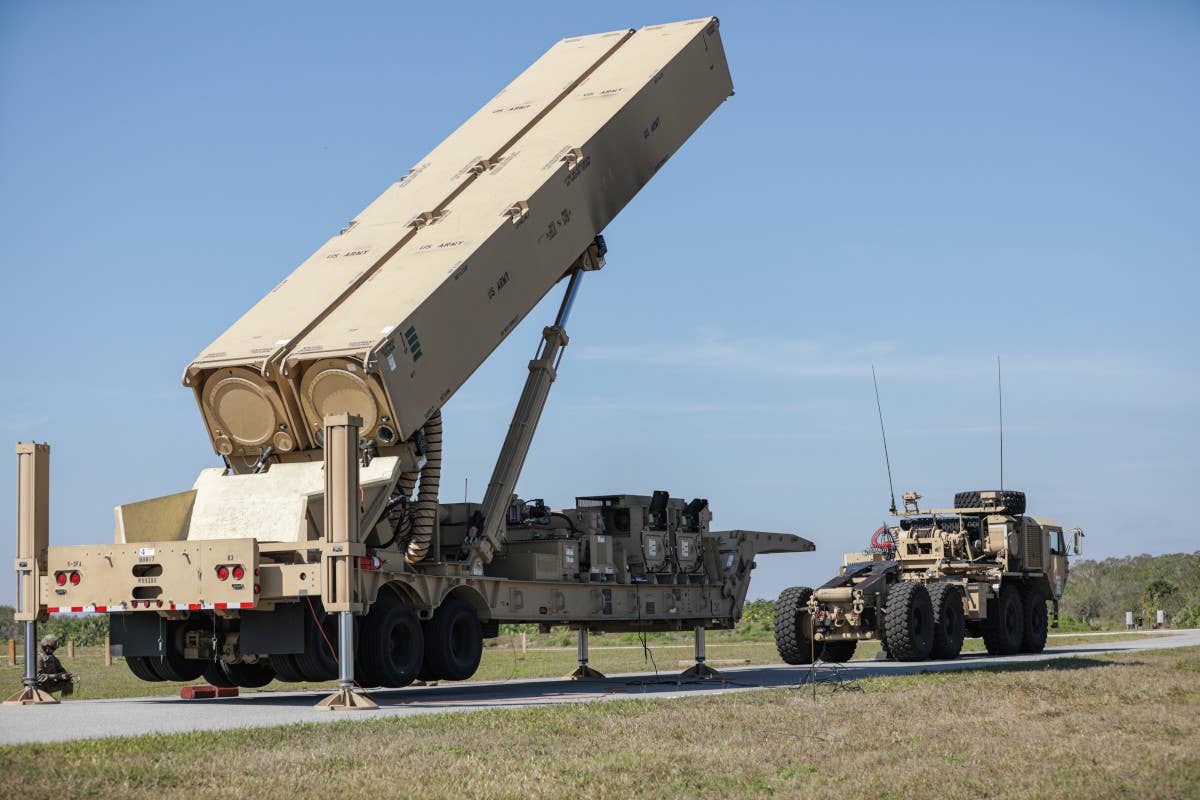
Germany wanted its Tomahawk cruise missiles and Typhon ground launchers sooner, not later, and asked Washington to speed up delivery. The answer, according to Bloomberg's sourcing from multiple US officials, was close to the opposite of what Berlin asked for: Raytheon's own production lines likely can't fulfill the order within the next five years at all. That's not a delay measured in months, it's a delay that could outlast an entire German government's term in office, and Germany isn't the only ally hearing some version of it.

The scope runs wider than one country's frustrated request. Several Eastern European nations dependent on American hardware started experiencing their own delivery slowdowns not long after the US entered combat operations against Iran in February, and Japan was separately notified back in April that its own contracted Tomahawk deliveries would slip by two years. What connects all of it is the same underlying cause: Washington has decided replenishing its own depleted stockpiles takes priority over honoring the delivery schedules it had already promised allies, a genuinely blunt ordering of priorities for the world's largest arms exporter to admit out loud.

The numbers behind that decision are stark enough to make the choice at least explicable, even if it's not comforting to the countries waiting. The Congressional Budget Office estimates the US may have burned through as much as two-thirds of its missile-defense interceptor stockpile since last June. That's the same crisis this outlet has tracked across a run of recent production announcements, Lockheed's plan to more than triple PAC-3 MSE output from roughly 600 to 2,000 units a year, L3Harris's $4.7 billion propulsion expansion, the framework deals meant to scale AIM-260 and Blackbeard production. Every one of those stories describes the fix already in motion. This story describes what happens in the meantime, while the fix is still years from actually closing the gap.

Ukraine is where that gap is landing hardest and most visibly. President Zelenskyy said last month that Kyiv's backers delivered roughly a third as many air-defense missiles this year as they did over the same stretch in 2025, and Ukrainian forces have on multiple occasions publicly acknowledged failing to intercept a single Russian missile during an overnight attack, a level of defensive failure that would have been treated as a genuine crisis a year earlier and is now simply a recurring data point. European leaders are reportedly planning to press Trump directly on more Patriot deliveries for Ukraine at UN meetings next week, an ask that arrives at almost exactly the moment US officials are telling other allies to expect years-long waits on comparable systems.

The response some European governments are pursuing tells you how seriously they're taking Washington's own message that the wait is real. Rather than simply lobbying harder for faster delivery, EU officials are reportedly seeking US licenses that would let European countries manufacture Patriot missiles themselves, the same domestic-production instinct this outlet has already tracked through Sweden's Saab-Lockheed munitions arrangement and Ukraine's own push to build Storm Shadow components locally with British technical support. A five-year delay isn't just a scheduling problem for the countries hearing it, it's becoming the argument for why depending on a single foreign supplier for critical air-defense hardware was never a fully sound strategy in the first place, war or no war.

Sunday, September 20, 2026

North Korea Didn't Test a Missile This Time. It Tested Whether All Its Missiles Can Talk to Each Other.


"This was not a test of a single weapon system but a demonstration of an integrated strike network." That's Lim Eul-chul, a professor at Kyungnam University's Institute for Far Eastern Studies, summarizing what actually made North Korea's September 12 drill different from the dozens of missile launches Pyongyang runs every year. Four distinct weapon categories fired together, drones, cruise missiles, ballistic missiles, and heavy rocket artillery, all coordinated through a single command structure rather than as separate, individually announced tests. North Korea's own state media called it a "joint firepower attack drill," and the emphasis in its own language wasn't on any single weapon's range or accuracy, it was on getting five different artillery and missile units to fire as one system rather than as five.

The timing follows a pattern this outlet flagged just days earlier covering the KN-25 rocket test: North Korea firing a major demonstration almost immediately after the United States, South Korea, and Japan wrap up a joint exercise. This time it was Freedom Edge, a five-day trilateral drill that concluded September 11 after expanding air-defense communication and refining real-time data-sharing between the three countries. North Korea's drill came the very next day. KCNA's own official language framed the exercise around internal readiness, "getting familiar with the procedure for the operation of the integrated firepower control system" and improving "the specialty of the integrated automatic firepower control," but South Korean analysts reading the same statement concluded it was also, unavoidably, a direct answer to what the three allied militaries had just spent five days practicing together.

What actually got tested is harder to pin down than KCNA's own celebratory framing suggests, and that gap is worth being honest about. State media claimed every system involved hit its target with "100 percent accuracy," achieving what it called "unity and simultaneity." But KCNA didn't name a single specific weapon type, no missile designations, no drone models, no confirmed launch site beyond a general reference to the Wonsan area. South Korea's Joint Chiefs of Staff detected the underlying ballistic missile launches independently and reported them factually, without endorsing Pyongyang's own accuracy claims one way or the other. A drill this deliberately vague on specifics, while confident and specific about its overall success, is a familiar pattern in North Korean military messaging, real capability demonstrated, real details withheld, wrapped in language calibrated for maximum political effect rather than technical transparency.

Context from earlier this year gives the "integrated" framing more weight than a standalone press release would carry on its own. North Korea held a delivery ceremony handing over launchers for 1,000 KN-24 ballistic missiles to frontline units stationed near the demilitarized zone, a scale of deployment that only makes strategic sense if those systems can actually be coordinated efficiently across multiple units rather than fired independently and somewhat redundantly. Major General Yu Chang-son, who also oversaw this September drill, described its purpose as strengthening "strategic response posture and rapid-reaction capability," language that reads less like a one-off show of force and more like doctrine development, testing whether a genuinely centralized fire-control system can actually manage drones, cruise missiles, ballistic missiles, and rocket artillery as one coordinated strike package rather than as separate arsenals that happen to belong to the same military.

Whether North Korea's command-and-control actually performs as advertised under real combat conditions is impossible to verify from a state media announcement claiming perfect results. What's harder to dismiss is the underlying trend line: after the KN-25 test that landed almost exactly when American missile-defense systems were pulled out of South Korea for redeployment to the Middle East, and now this integrated strike demonstration timed to the day after a trilateral exercise wrapped, North Korea's recent testing calendar reads less like routine sabre-rattling and more like a military deliberately choreographing its own demonstrations around the exact moments its adversaries are watching most closely.

America Has Had a Submarine Built for Tapping Ocean-Floor Cables Since the 1970s. Meet the Next One.


USS Halibut started it in the late 1960s, splicing recording devices onto a Soviet undersea communications cable in the Sea of Okhotsk under a program called Ivy Bells. USS Parche carried the mission for two more decades after that. USS Jimmy Carter took over in 2005, a Seawolf-class hull stretched by 100 feet specifically to fit a chamber for launching divers, remotely operated vehicles, and Navy SEALs onto the seafloor. Now the Navy and General Dynamics Electric Boat are quietly building the next link in that chain: the future USS Baltimore, a late-Block V Virginia-class submarine being converted into what job postings for the program call a "Subsea and Seabed Warfare" platform.

The paper trail Naval News pieced together stretches back further than this week's announcement suggests. An Electric Boat job listing from August, seeking a systems engineering test lead in Groton, Connecticut, describes the mission plainly: "the largely unexplored seafloor is the latest battle space," and SSW is "a new capability targeted for a single, late-Block-V Virginia Class submarine... with strong Navy and Congressional support." Navy budget documents corroborate the timeline. Fiscal year 2025 budget language called for beginning "SSN 812 Subsea Seabed Warfare platform unique Non-Propulsion Electronics System integration and test plans," and this year's fiscal 2027 request continues funding the same effort. The underlying concept traces back even further, to a 2023 unveiling by then-General Dynamics president Kevin Graney, with slides reportedly dating to early 2022, meaning this program has been quietly under development for more than four years before this week's reporting confirmed which specific hull it's landing on.

What Jimmy Carter has actually been doing, insofar as any of it is public, gives a sense of what Baltimore is inheriting. The submarine earned a Presidential Unit Citation for a still-classified 2013 operation known only as "Mission 7," an eight-week deployment widely believed to have involved tapping undersea cables somewhere in the Pacific for intelligence collection, the crew reportedly returning to port flying a Jolly Roger flag, the traditional signal for a successful covert mission. That's the kind of work a 100-foot Multi-Mission Platform, extra berthing for SEALs, and precision maneuvering thrusters built for hovering motionless over a target on the ocean floor are actually for, quietly finding, tapping, and sometimes disabling the fiber-optic and power cables that carry the overwhelming majority of the world's actual data traffic.

The Navy's own language around this program has become notably less coy than the decades of official silence surrounding Jimmy Carter's missions. Vice Adm. Richard Seif, commander of submarine forces, told an audience at Combined Naval Event Europe this year that the Navy is "deploying seabed warfare capability" right now, for both defensive attribution work and offensive operations, describing it as "a growth area" where the goal is achieving what he called "seabed superiority." That's a considerably more direct public framing than any American official has previously offered for this mission set.

It's also a framing that reads differently against something this outlet covered just last week: the joint British-Norwegian-American operation that caught Russian submarines near Svalbard rehearsing exactly this kind of cable-severing mission, using undisclosed technology built to disable cables without leaving physical evidence behind. Seif's "seabed superiority" comments and the Svalbard confrontation aren't directly connected in any of the reporting on either story, but they describe the same underlying contest from opposite sides: both Washington and Moscow are now openly building and rehearsing capability to manipulate, tap, or sever the infrastructure sitting on the ocean floor, and neither government is being especially quiet about it anymore. Naval News's own technical assessment suggests converting Baltimore for this mission may require sacrificing some of the extended missile capacity Block V hulls are otherwise built around, a real tradeoff the Navy is apparently willing to make for a single hull, prioritizing this specific, still mostly unexplained mission over standard multi-role strike capacity, exactly the kind of institutional priority Jimmy Carter's own decades of classified deployments have quietly enjoyed since 2005.

Saturday, September 19, 2026

A Washington Think Tank's Pitch: Stop Protecting Carriers. Start Hunting China's Instead.


Britain and Germany didn't build dreadnoughts before World War I purely because their admirals thought battleships would win the next war. They built them because a great power without the biggest ship in the world wasn't taken seriously as a great power at all. That's the comparison a new CSIS report draws to explain why China is racing to field a carrier fleet in the first place, and it's the foundation for a genuinely pointed recommendation: if Chinese carriers are prestige projects as much as military assets, the US should stop treating them as an unstoppable threat and start treating them as an exploitable weakness.

The report, titled "Flip the Script," makes its core argument in a single sentence worth quoting directly: "China's expanding carrier force presents a strategic vulnerability that the United States and its allies can exploit, rather than merely a challenge to U.S. dominance." That's a real reframing of a debate that's mostly been about American carriers getting more vulnerable to Chinese missiles and submarines. CSIS is asking the opposite question, why hasn't Washington spent equal effort making Chinese carriers just as vulnerable to American and allied weapons.

The recommended toolkit reads like a checklist of every capability this outlet has already covered building out across the Pacific this year. Submarines and heavier torpedo investment. Air-launched anti-ship missiles cued by satellite surveillance, the same LRASM category the Royal Australian Air Force just declared operational. Land-based anti-ship missiles positioned from Japan down through the Philippines, threatening exactly the chokepoints a Chinese carrier group would have to pass through en route to the Philippine Sea or the South China Sea. Unmanned surface vessels adding pressure directly around Chinese ports and naval facilities. Cyber and electronic operations aimed at disrupting the command and communications networks a carrier group depends on to function as a coordinated force at all. None of these are new concepts individually, what's new is proposing them explicitly organized around one target set, China's own flattops, rather than as a general-purpose deterrent.

The fleet mix CSIS proposes to actually execute this is a real departure from how the Navy currently thinks about shipbuilding: roughly 300 crewed vessels and 300 uncrewed ones, a genuinely radical ratio for a Navy that's spent decades building around a comparatively small number of enormously expensive, heavily crewed platforms. That's the same "distributed, expendable mass" logic this outlet has tracked across the Massed Modular Aircraft program and the Navy's various drone-boat initiatives, just scaled up to the level of the entire fleet structure rather than a single weapons category.

The scale of what this strategy would actually be up against keeps growing. China operates three carriers today, Liaoning, Shandong, and the newly commissioned Fujian, and a 2025 Pentagon study projected the PLAN building six more by 2035, up to nine total, with satellite imagery already showing early hull construction on a fourth-generation Type 004 carrier at Dalian that analysts expect to outweigh even America's own Gerald R. Ford by 10 to 20 percent. A strategy built around making each individual carrier too costly to risk gets proportionally harder to execute the more carriers there are to track and threaten simultaneously.

It's worth being clear about what this report actually is: one think tank's proposal, not a Pentagon strategy document or a funded program. CSIS doesn't set naval policy, and "Flip the Script" is exactly the kind of paper meant to shape a debate rather than announce a decision that's already been made. Whether the Navy's own leadership adopts anything resembling a 300-crewed, 300-uncrewed fleet structure, or simply borrows individual pieces of the targeting logic while keeping its existing force design largely intact, is the actual question this report raises without answering, the same gap that sits between every ambitious defense proposal and whatever the Pentagon eventually decides is affordable enough to actually build.

Friday, September 18, 2026

The Pentagon Just Told Lockheed to Build More of a Secret Missile — Without Actually Paying for It Yet


No new money. No missile count. No delivery date. That's what the Pentagon and Lockheed Martin actually signed on Thursday for the AIM-260 Joint Advanced Tactical Missile, and it's worth being precise about that from the start, because "framework agreement to boost production" sounds like a purchase order and isn't one. Officials described it plainly as a demand signal, a way of telling Lockheed and its suppliers to start investing in factory capacity, workforce, and manufacturing efficiency now, on the expectation that a real multiyear procurement contract, one that actually commits dollars, will follow once Congress approves it.

That gap between signal and funding isn't abstract, it's already sitting in the budget request working through Congress right now. The services want roughly $2.9 billion for JATM in fiscal 2027, up sharply from $894 million the year before, a more than threefold jump that hasn't been authorized yet. The Air Force has previously disclosed buying 144 of the missiles across 2024 and 2025 combined, with at least 112 more planned, numbers that give some sense of scale even though the program itself remains genuinely secretive, developed largely out of public view over roughly six years. Under Secretary of Defense for Acquisition and Sustainment Michael Duffey's own quote leaned hard into that same message rather than any concrete commitment: "Speed, scale, and stability drive acquisition excellence, and these gears must turn in unison."

What JATM is actually built to do connects directly to the same beyond-visual-range arms race driving America's other recent missile announcements. Reuters has reported the program is explicitly aimed at outranging increasingly capable Chinese long-range air-to-air threats, including weapons associated with the J-20, the same PL-15 and PL-17 family this outlet has already covered as the reason the Navy fielded the AIM-174B Gunslinger and unveiled the even longer-ranged AIM-424 Malice. JATM is positioned as the direct successor to the aging AIM-120 AMRAAM specifically for fighter-carried BVR combat, meaning the US now has at least three separate long-range missile programs, Gunslinger, Malice, and JATM, all racing to answer the same underlying Chinese range advantage from slightly different platforms and price points.

The export dimension is where this framework agreement actually has something concrete attached to it. Australia announced on August 6 it would spend roughly $520 million buying JATM for the Royal Australian Air Force, becoming the missile's first confirmed international customer, with integration planned first on F/A-18F Super Hornets, then F-35As and EA-18G Growlers, and potentially down the line on the MQ-28 Ghost Bat drone, which can already fire AIM-120s. That order is a fraction of what Washington has actually cleared for future sale, having separately approved a potential deal for up to 450 JATMs and associated test articles worth $3.16 billion. Real allied money changing hands for a missile the US itself hasn't finished funding at home is a genuinely unusual sequence, and it says something about how confident Lockheed and the Pentagon are that congressional approval for the domestic multiyear buy is coming, even if the paperwork hasn't caught up yet.

None of the coverage of this announcement, and there's been a lot of it in the past 24 hours, includes a production target, contract value, or firm timeline, and that's consistent across every outlet that's reported on it rather than one publication simply withholding detail. For a program this secretive, that opacity is probably by design as much as by circumstance. What's left for outside observers is the same pattern this outlet has now tracked across multiple 2026 missile programs: an announcement built around signaling intent and locking in supplier confidence, with the actual dollars, and the actual missiles, still waiting on a Congress that hasn't yet said yes.

The Navy's $200 Million Hypersonic Missile Deal Has About $44 Million of Actual Missiles In It


Two hundred million dollars is the number in every headline. Forty-three million is what's actually funded right now, covering an initial batch of 444 all-up rounds, according to Defense Department contract filings. That gap between ceiling and committed spending isn't unusual for how the Pentagon structures these deals, but it's worth keeping in view rather than letting the bigger number do all the talking: this is a real production order, the first of its kind for this specific missile, just not yet a $200 million one.

What makes it a genuine milestone regardless of the exact dollar figure is what it represents in the program's own timeline. Castelion, a startup that's been building Blackbeard from scratch as an air-launched hypersonic strike weapon for carrier aviation, got its first Navy delivery order back in June, just 50 Early Operational Capability prototype rounds worth $23.4 million. This week's award, placed through the Navy's Portfolio Acquisition Executive Aviation office and its aptly named Rapid Capabilities Cell, moves the missile past prototype status into an actual production lot meant for the fleet, not just further testing. CEO Bryon Hargis's own framing leaned into that speed: "That's how you get capability to the fleet fast, clear red tape, and partner with industry."

The industrial pitch behind Blackbeard is really about what happens after this specific order, not the order itself. Castelion has said it's targeting a per-unit cost around half a million dollars, a genuinely low figure for a hypersonic weapon, built around what the company calls a vertically integrated production line designed from day one for volume manufacturing rather than a handful of exquisite, hand-built rounds. The Pentagon signaled in July it wants up to 12,000 Blackbeards over a five-year procurement plan, a number that only makes sense if the "affordable mass" framing in the Navy's own announcement actually holds up once real production ramps past this first lot.

Two details point toward where this program is trying to go beyond a single carrier-based weapon. An earlier $89.99 million award from August specifically funded Defense Exportability Features, groundwork meant to let Blackbeard eventually be sold to foreign militaries, though no export customer has been named yet. And Castelion has separately confirmed a partnership with Saronic to fire Blackbeard from a containerized launcher aboard the Marauder, an unmanned surface vessel, with that integration targeted for 2027. A missile that can launch from a Super Hornet today and potentially from an uncrewed boat in a couple of years is a considerably more flexible weapon than a single-platform program, and it's the kind of dual-track development that only makes financial sense if the underlying per-unit cost genuinely stays low enough to justify buying it in the thousands.

The strategic framing running through nearly every account of this deal is the same one driving hypersonic investment across the Navy generally: giving carrier aircraft a longer-range strike option specifically so they can hit targets from farther outside the range of increasingly capable adversary air defenses, without needing more launch platforms to do it. Whether Blackbeard actually delivers that at scale depends on whether the 444-round order at roughly $98,000 apiece by the filed contract figures, a number that sits oddly far below Castelion's own stated $500,000 target and is worth treating as an early, partial figure rather than the missile's true unit cost, holds up once the program moves toward the full 12,000-round ambition the Pentagon has floated. Initial operational capability aboard the Super Hornet remains targeted for 2027, which gives this specific gap between announced ceiling and funded reality about a year to close before the program has to prove it can actually build hypersonic weapons at the price and pace its own marketing promises.

Thursday, September 17, 2026

China Pulled Back Troops From the Border With India. It Didn't Pull Back the Roads.


Sixty thousand. That's roughly how many PLA troops India estimated were massed in the Ladakh sector alone at the height of the standoff that followed the deadly 2020 Galwan Valley clash. India's Defense Ministry now says that number has fallen to somewhere between 40,000 and 50,000 troops spread across the entire Line of Actual Control, with a similar number held further back in training areas rather than forward-deployed. That's a genuine, documented reduction, and it's the kind of detail that tends to get read as good news. Whether it actually changes the underlying situation is a separate question the same report answers more cautiously.

The reduction is landing amid a real, sustained diplomatic thaw between the two countries. Prime Minister Modi and President Xi met in Kazan back in October 2024, an encounter that opened the door to the current disengagement process, and the two leaders met again this past weekend on the sidelines of the BRICS summit in New Delhi, where Modi told Xi directly that peace along the frontier remains "essential" to the broader relationship. Border Personnel Meetings between the two militaries have continued across all sectors throughout the year, described in India's own report as conducted in a "cordial environment."

What the same 323-page annual report doesn't do is treat this as a settled matter. It states plainly that Indian Army deployment across the LAC remains "robust, well poised, and prepared to deal with any emerging contingency," language that's carefully calibrated to welcome the reduction without signaling any actual relaxation of India's own posture in response to it. A separate assessment of the same report put it more directly: the reduction in Chinese troop deployment is significant, but "does not represent a complete change in the strategic equation along the LAC." That's not boilerplate caution, it reflects a specific asymmetry the report itself highlights, India continuing to accelerate construction of tunnels, roads, and other all-weather infrastructure across the Himalayas, explicitly framed as critical for rapidly moving troops, equipment, and supplies to the border whenever they're actually needed rather than keeping them permanently forward-deployed.

That infrastructure emphasis is the more revealing detail in the whole report, because it suggests both sides may be converging on a similar underlying logic even as the headline story is about troop numbers going down. A large standing force parked directly on a disputed frontier is expensive to sustain and, as the four-year Ladakh standoff demonstrated, genuinely dangerous to keep in close proximity for years at a time. Investing instead in the roads, tunnels, and logistics networks that let a smaller garrison force scale up fast if a crisis actually develops is a different kind of deterrence, one that doesn't require thousands of soldiers staring at each other across a disputed line every single day. If China's own troop drawdown reflects a comparable shift in its own posture, rather than a genuine reduction in overall military commitment to the frontier, then fewer soldiers in the field today doesn't necessarily mean either side is actually less prepared for a rapid escalation than it was during the standoff's peak.

The report also folds in a reference to Operation Sindoor, India's own military action described in the document as "not just an operational success but a strategic statement," a detail that's easy to miss inside a story framed around India-China de-escalation, but worth noting as a reminder that India's broader defense posture this year is being shaped by multiple fronts simultaneously, not just its relationship with Beijing. Whatever the actual trajectory of China's own troop levels turns out to be over the coming year, the same report that announces the reduction takes real care to make sure nobody reads it as India lowering its own guard in response.

Germany Said No to an Engine Export. Now Pakistan's Entire Submarine Fleet Runs on Chinese Parts Instead.


Pakistan wanted German-made MTU diesel engines for its new Hangor-class submarines. Germany refused to approve the export. China supplied its own engines instead, and that single substitution is a fairly clean illustration of how Pakistan ended up with a submarine fleet that will run almost entirely on Chinese subsystems, from propulsion through weapons, sensors, and communications equipment, rather than the mixed-supplier arrangement Islamabad has relied on for most of its submarine history.

That history is worth laying out because the shift is genuinely significant against it. Pakistan built its submarine force almost entirely on French hardware for four decades, French Daphne-class boats starting in the 1960s, then the larger Agosta-70 and Agosta-90B classes, the latter incorporating French AIP technology and real technology transfer that let Pakistani shipyard KS&EW in Karachi build two of the three Agosta-90B hulls domestically. Even after that relationship cooled, Pakistan turned to Turkey, not China, for its 2016 Agosta modernization contract, work that STM has spent a decade completing. China's arrival as Pakistan's submarine supplier is comparatively recent, dating to a 2015 contract signed only after an earlier attempt to buy German Type 214 submarines fell through in 2011.

The Hangor-class itself is a genuinely large order by any historical standard, eight submarines total, an export adaptation of China's own Type 039B, roughly 2,600 tons submerged, half again larger than the Agosta-90B it's replacing. Four boats are being built at Wuchang Shipbuilding in China, with the first commissioned this past April at a ceremony held, notably, in Sanya rather than in Pakistan itself. The other four are under construction at KS&EW in Karachi, though Pakistani-built deliveries will likely stretch well into the 2030s. Once complete, this single contract will represent the largest submarine modernization in Pakistan Navy history, giving Islamabad seven modern AIP-equipped boats with real blue-water range by the end of this decade.

It's worth being upfront about what kind of piece this analysis is drawing on, because it shapes how to read its framing. The Naval News feature underlying this story is explicitly labeled a sponsored feature, produced in partnership with the Gulf Defence Industry Initiative, written by Alex Luck, a credentialed analyst with a genuine specialization in Chinese naval programs. That doesn't make the underlying facts, contract dates, shipyard assignments, tonnage figures, unreliable, but a sponsored placement is a different category of source than independent reporting, and its analytical framing deserves the same scrutiny any single analyst's interpretation would.

The dependency argument the piece makes is the part worth taking seriously regardless of sponsorship. Technology transfer language in defense contracts routinely overstates how much genuine industrial autonomy actually results, because even domestically assembled hardware typically still needs the original supplier's approval and support for deep maintenance, major repairs, and future upgrades. Pakistan hedged against exactly that kind of single-supplier lock-in before, when it brought in Turkish STM to modernize its French-sourced Agosta boats after the relationship with Paris cooled. Doing the same thing with Chinese-sourced Hangor-class submarines down the road would be a considerably harder problem, given how comprehensively Chinese systems now run through the entire boat, propulsion, weapons, sensors, and communications alike, leaving Islamabad with few plausible third parties capable of servicing a fully Chinese naval ecosystem if the relationship with Beijing ever soured.

There's a smaller, more universal pattern sitting inside the German engine story too, one this same dynamic has produced elsewhere with entirely different countries and hardware. A Western export refusal doesn't just block one transaction, it can permanently redirect a customer toward a supplier with no comparable restriction, and once that substitution happens at the component level, unwinding it later gets progressively harder the deeper it runs through a platform's overall design. Germany said no to one engine order. What it got in return wasn't Pakistan doing without, it was Pakistan's entire next-generation submarine fleet built around Chinese equivalents instead, a substitution now baked into eight hulls that will serve for decades.

Wednesday, September 16, 2026

Lockheed Just Spent Its Own Money Building Five Drones the Air Force Never Asked For


The Air Force didn't order this. Lockheed Martin isn't working under contract. Every dollar spent building five Vectis prototypes, instead of the one originally planned, is coming out of the company's own pocket, a bet that a design philosophy the service already passed over once will eventually be the one it wants to pay for.

That earlier rejection matters for understanding why this expansion is happening at all. Back in April 2024, the Air Force picked General Atomics and Anduril for the first round of its Collaborative Combat Aircraft program, the "loyal wingman" drones meant to fly alongside crewed fighters. Lockheed wasn't among them. General Atomics' YFQ-42A first flew last August, Anduril's YFQ-44A followed in late October, and Anduril's own Fury variant has already live-fired an AMRAAM missile and flown in formation with F-35s during testing. Those two companies have real hardware in the air right now. Lockheed is still more than a year from Vectis leaving the ground.

What Lockheed is betting the extra year buys is a fundamentally different design philosophy than what its rivals already won with. Ron Fehlen, the Skunk Works vice president running the program, was asked directly whether Vectis follows the low-cost, attritable approach competitors have pursued, aircraft cheap enough that losing them in combat is an acceptable cost of doing business. He said no: Lockheed is optimizing propulsion and other systems around a competitive price point while maximizing capability, rather than accepting the performance tradeoffs that usually come with a fully attritable design. Fehlen wouldn't compare Vectis's stealth directly to the F-22 or F-35, but confirmed survivability sits at the core of what the aircraft is built around. The company's underlying argument is that losing even moderately priced drones at real scale isn't actually sustainable, so a more survivable, harder-to-detect aircraft pays for itself by simply surviving more missions than a cheaper one would.

The physical aircraft, roughly 34 feet long with a 38-foot wingspan, sits in the Air Force's Group 5 category, more than 1,320 pounds and built to fly above 18,000 feet, the same weight class as the two CCA designs already fielded. Lockheed says it went from first drawing to wind-tunnel testing in under two months and finished an initial digital build in six, and picked a proven commercial engine, a Williams International FJ44-4 producing more than 3,600 pounds of thrust, specifically to avoid the schedule risk of developing new propulsion from scratch. None of that engineering speed changes the more basic fact that Vectis still doesn't have a customer.

The actual test of whether any of this pays off arrives with the Air Force's requirements document for CCA Increment 2, still being finalized, with concept refinement running through nine vendors into mid-2027 and as many as six designs expected to advance to prototyping. If lessons from flying the Increment 1 drones convince the service it needs something that can enter contested airspace without adding to a formation's radar signature, survivability over cost, Vectis is built to be the answer sitting ready. If the Air Force instead leans further into cheap and expendable, the exact approach Fehlen said Lockheed deliberately avoided, five self-funded prototypes become a very expensive lesson in betting against where a customer's own thinking was actually headed. Lockheed is also positioning Vectis's software stack, tied to the same open architecture already controlling the Navy's MQ-25 Stingray tanker drone, as a hedge that could matter in naval CCA competitions regardless of which airframe eventually wins there, one way of making sure this bet pays off in more than one arena even if the Air Force says no.