
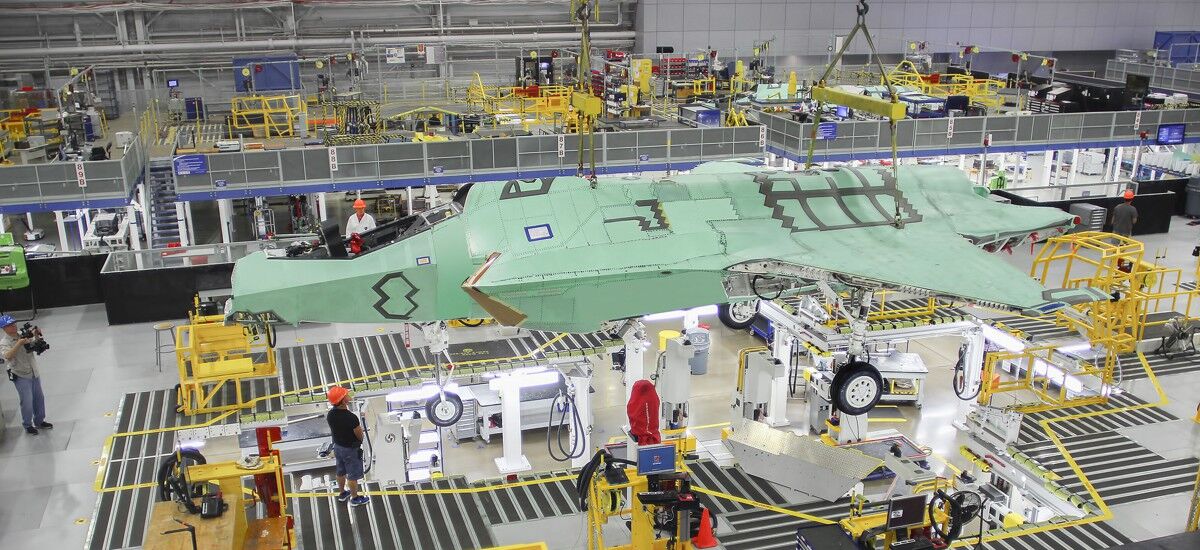
In late September 2026, defense analysts and Western security officials raised alarms after sensitive structural components from a Royal Australian Air Force (RAAF) F-35A fighter—including a cockpit canopy and weapons-bay door—were unexpectedly diverted to Hong Kong while en route to the United States for repair, ultimately falling into Chinese hands according to reporting by Military Watch Magazine. Transported via commercial air freight on behalf of prime contractor Lockheed Martin, the diverted shipment contained unserviceable hardware heavily reliant on proprietary radar-absorbent materials (RAM). While the Pentagon’s F-35 Joint Program Office confirmed it is working alongside international partners to retrieve the items and investigate the logistics failure, the physical exposure of these airframe sections represents one of the most severe operational breaches in the history of the fifth-generation program.
The core issue driving Western anxiety is not avionics or software exposure, but rather the physical vulnerability of low-observable (LO) material engineering. The F-35’s cockpit canopy utilizes specialized multi-layer dielectric coatings to prevent radar waves from reflecting off internal flight displays and pilot equipment, while the weapons-bay doors feature precision-engineered composite seams and radar-attenuating treatments designed to preserve structural stealth during weapons release. While Beijing has aggressively pursued technical schematics through cyber espionage for over a decade, access to physical physical specimens allows Chinese defense labs to directly analyze the chemical composition, layer thickness, and degradation rates of Western radar-absorbent coatings. Such material analysis yields crucial intelligence to refine counter-stealth radar algorithms, optimize ground-based radar frequencies, and benchmark China's own manufacturing techniques.
This logistics security breakdown exposes a structural vulnerability inherent in modern defense supply chains that rely on civilian freight forwarders for intermediate transit. The F-35 enterprise operates across a complex global sustainment hub, where structural assemblies and unserviceable spares are routinely moved between international operators and central overhaul facilities in North America. Relying on commercial shipping contractors for trans-Pacific movements introduces exploitable seam points in custody tracking. The unaccounted diversion of physical airframe parts to a Chinese Special Administrative Region underscores the urgent need for defense ministries to implement government-monitored chain-of-custody protocols for sensitive composite materials, rather than treating structural parts as standard commercial cargo.
From an operational perspective in the Indo-Pacific theatre, even partial intelligence regarding the F-35’s stealth profile alters the tactical balance against China’s People's Liberation Army Air Force (PLAAF). China currently serial-produces two distinct stealth fighters—the heavy air-superiority J-20 and the carrier-capable J-35—and is rapidly advancing ground-based early warning radar architectures. If Chinese material scientists manage to determine the exact radar cross-section (RCS) degradation and frequency response of Western radar-absorbent materials, PLAAF integrated air defense systems (IADS) like the HQ-9B or ground-based VHF anti-stealth radars could adjust detection thresholds, narrowing the tactical margin of low-observability that allied pilots rely on to survive in contested airspace.
Ultimately, this incident highlights that maintaining a qualitative military edge requires equal parts technological innovation and secure logistical execution. As the F-35 remains the primary multi-role combat platform for the U.S. and its Pacific allies, the potential compromise of its exterior radar-absorbing coatings forces planners to assume that adversary tracking networks will adapt faster than anticipated. Moving forward, the Pentagon and allied defense ministries will likely face immense political and operational pressure to tighten defense logistics, re-evaluate material security standards, and accelerate next-generation countermeasures to preserve air dominance across the Pacific.

No comments:
Post a Comment