Wednesday, August 12, 2026

U.S. Army's 1,400-Plus Interceptions Expose a Deeper Problem Than Just Empty Magazines


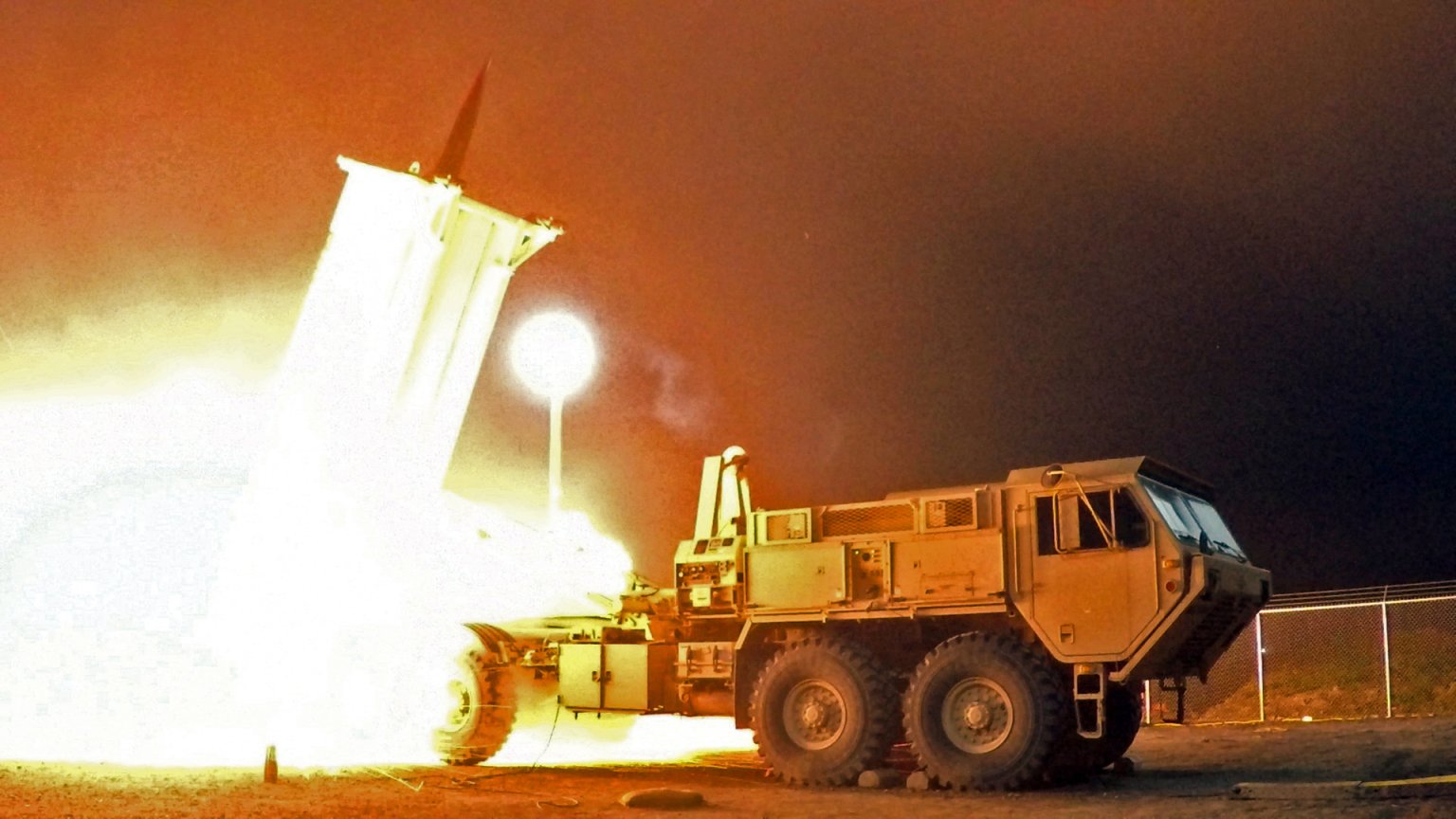
With Operation Epic Fury and the 12-Day War now behind it, at least for the moment, the U.S. Army's air and missile defense community has been busy tallying the scale of what it just fought through. Lt. Gen. John Rafferty, commander of Army Space and Missile Defense Command, Joint Functional Component Command for Integrated Missile Defense, and Joint Task Force-Gold, disclosed at the Space and Missile Defense (SMD) Symposium in Huntsville that the 32nd Army Air and Missile Defense Command (AAMDC), operating out of Fort Bliss, Texas, engaged 125 ballistic missiles during the 12-Day War between Israel and Iran and neutralized over 1,200 additional ballistic, cruise, and UAS (Unmanned Aerial System) threats during Epic Fury, bringing the Army's standalone total past 1,400 intercepts across a fourteen-month stretch he described as the largest sustained air and missile defense fight in U.S. history. THAAD (Terminal High Altitude Area Defense) and Patriot batteries carried the bulk of this load, with counter-UAS systems handling the drone-heavy portion of Iranian salvos, and Rafferty was quick to credit both the operators and the industry partners behind these platforms for adapting under sustained pressure.

Aside from the sheer volume of engagements, the more consequential figure is what each of those intercepts actually cost relative to what it was shooting down. PAC-3 (Patriot Advanced Capability-3) and THAAD interceptors run anywhere from roughly $4 million to $12 million per unit depending on variant and buyer, while a substantial share of what they were intercepting were Iranian Shahed-class drones and older ballistic missiles priced in the tens of thousands of dollars. This produces cost-exchange ratios that swing heavily in Iran's favor, with some estimates placing the disparity well north of 100-to-1 for drone engagements. Tehran does not need to win a single engagement to bleed the defending coalition; it only needs to keep forcing seven-figure interceptors to be expended against five-figure threats until production and budget cycles can no longer keep pace with the burn rate.

CSIS (Center for Strategic and International Studies) tracking of the actual drawdown makes the scale of that pressure explicit. Patriot inventories fell from roughly 2,300 interceptors before Epic Fury to somewhere between 759 and 827 by late July, a reduction of well over half in little over a year. THAAD interceptors, a far scarcer resource to begin with given their limited production rate, dropped from 452 to as low as 232 around the time of the ceasefire before only partially recovering. Rafferty did not dispute any of this at SMD; rather than offering granular numbers on expenditure, he pivoted toward framing interceptors as just one layer of a broader missile defeat architecture, pointing to electronic warfare, directed energy, and faster top-secret-to-unclassified data pipelines as the pieces that will need to absorb more of the load going forward.

That pivot is already visible in industry's response. Lockheed Martin's PAC-3 ACE (Adapted Capability Effector), aimed at roughly half the unit cost of the in-production PAC-3 MSE (Missile Segment Enhancement) while leveraging existing Patriot fire-control and IBCS (Integrated Battle Command System) architecture, is a direct acknowledgment that the premium-interceptor-for-everything model that carried the Army through Epic Fury is not something the defense industrial base can sustain indefinitely. The Army's own stated ambition for a sub-$1 million interceptor, even if PAC-3 ACE falls short of it, signals that a cheaper second tier is no longer optional but a near-term procurement priority.

What remains conspicuously unaddressed, both by Rafferty at SMD and in the broader public accounting so far, is how this same interceptor-heavy model would hold up against an adversary with substantially greater missile production capacity and depth than Iran. China's PLARF (People's Liberation Army Rocket Force) fields a missile inventory that dwarfs Tehran's in both diversity and scale, and a Pacific contingency would stretch engagement ranges and salvo sizes well beyond what Epic Fury demanded. If fourteen months against Iran consumed more than half of America's pre-war Patriot stockpile and a comparable share of its THAAD inventory, the same interceptor pipeline would face proportionally steeper strain in a China scenario, absent a faster-fielded low-cost interceptor tier and a genuinely diversified non-kinetic layer. Epic Fury and the 12-Day War may end up remembered less for the 1,400-plus successful intercepts than as the stress test that forced the Pentagon to confront just how thin its magazine depth runs against a peer adversary with real industrial reserves.

NASA Deploys Specialized WB-57 High-Altitude Research Jet to Iceland for Solar Eclipse Tracking


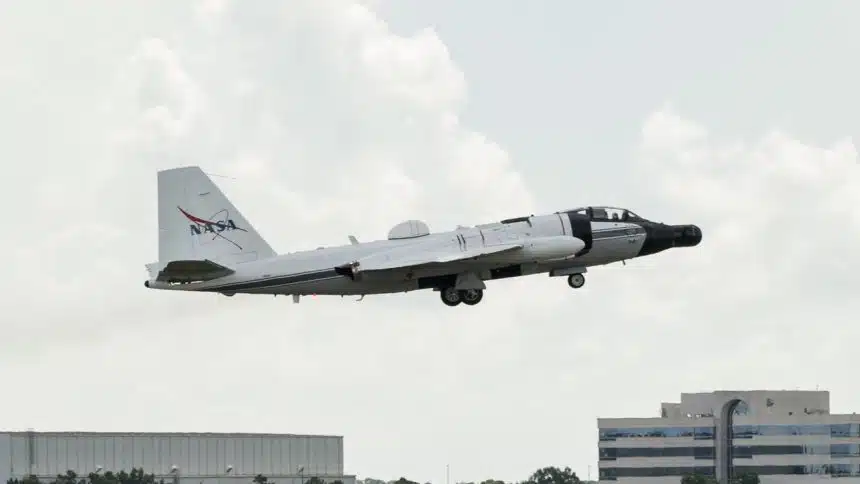
 As recently reported by The Aviationist, one of NASA’s rare and highly modified WB-57F high-altitude research aircraft has arrived at KeflavĂ­k Airport in Iceland to undertake a unique scientific mission. Operating under the callsign 'NASA926', the specialized jet made the transatlantic trek from Ellington Field, Texas, via Bangor, Maine, positioning itself to intercept the path of a total solar eclipse. While European deployments of the iconic twin-engine Canberra derivative are exceedingly rare, the mission highlights the unmatched utility of high-altitude platforms in capturing critical atmospheric and solar data.

The primary objective of the deployment is to launch the aircraft directly into the eclipse’s shadow path to study solar phenomena from an altitude exceeding 50,000 feet. Flying far above the dense layers of tropospheric water vapor, atmospheric haze, and low-level turbulence gives the jet's onboard sensor suites a pristine window for observation. Operating at high altitudes allows specialized optical instruments to record sharper images and capture electromagnetic wavelengths—particularly in the infrared spectrum—that are ordinarily absorbed or distorted before reaching ground-based telescopes.

Furthermore, utilizing a high-performance aircraft like the WB-57 radically extends the observation window compared to stationary ground stations. By flying along the trajectory of the Moon's shadow, the jet can keep pace with the celestial alignment, effectively increasing the duration of totality data collection by a significant margin. This dynamic tracking capability proved invaluable during previous solar eclipse campaigns in 2017 and 2024, enabling researchers to gather high-resolution imagery of the Sun's faint outer atmosphere, or corona, and measure shifting ionization levels in the upper atmosphere.

The aircraft itself—managed by NASA’s Johnson Space Center—retains the baseline configuration of the classic British-designed Martin B-57, modified with a high-aspect-ratio wing spanning over 122 feet to sustain flight in the thin air of the stratosphere. Powered by dual Pratt & Whitney TF33 turbofan engines, the platform can loiter above 60,000 feet for hours while carrying heavy scientific payloads. Because NASA maintains a very small operational fleet of these airframes, deploying the active jet overseas underscores the high scientific priority placed on capturing multi-spectral data from rare celestial events.

As the aircraft prepares for its eclipse-intercept sortie, the mission serves as a striking reminder of how specialized military-heritage platforms continue to drive cutting-edge civilian research. By lifting sophisticated sensors far above the weather-bound constraints of the Earth's surface, NASA ensures that researchers can peer deeper into the Sun-Earth connection with unprecedented clarity.

U.S. Must Fuse Missile Warning and Defense to Counter Evolving Threats, Says SPACECOM Deputy Commander


As recently reported by The War Zone (TWZ), the United States military must radically overhaul how it handles incoming aerial hazards by breaking down traditional institutional barriers between early detection and interception. Speaking at the annual Space and Missile Defense (SMD) Symposium in Huntsville, Alabama, U.S. Space Command (SPACECOM) Deputy Commander Lt. Gen. Rick Zellman emphasized that the rapid evolution of modern missile technology has rendered legacy defense concepts functionally obsolete.

The core vulnerability, according to Zellman, lies in the historical separation of missile warning and missile defense into distinct, stovepiped operational networks. Traditionally, legacy space-based sensors existed purely to flash an early warning alert that a launch had occurred—affording personnel time to take cover—while separate ground and naval missile defense operators scrambled to acquire high-fidelity tracks to shoot the weapon down. Today, however, traditional ballistic trajectories have been largely eclipsed by highly maneuverable, complex weapon systems like hypersonic boost-glide vehicles.

Because modern threats can alter their flight paths unpredictably, the military can no longer afford to treat warning and tracking as isolated milestones. "The lexicon that we're starting to see is missile tracking," Zellman stated during the symposium panel. With early warning data and defense firing solutions merging into a continuous data stream, the historical dividing line between the two missions has vanished.

Achieving this seamless fusion requires leveraging agile acquisitions partners like the Space Development Agency (SDA) to field proliferated low-Earth-orbit constellations capable of maintaining uninterrupted custody of targets throughout their entire flight cycle. Furthermore, SPACECOM is actively utilizing its role as a global sensor manager to dynamically task multi-mission assets—such as upgraded early warning radars and long-range discrimination systems—to handle space domain awareness, warning, and tracking simultaneously within the exact same duty cycle.

Ultimately, as adversarial arsenals pivot toward complex volleys of swarming drones and maneuvering hypersonics, bridging these operational gaps is vital to ensuring that interceptors like THAAD, Patriot, and SM-3 receive the precise, real-time data flow necessary to neutralize incoming attacks before defenses are overwhelmed.

Golden Dome Missile Defense Shield Faces Potential Stoppage Due to Budget Impasse


As recently reported by The War Zone (TWZ), the ambitious "Golden Dome" continental missile defense shield is facing a severe budgetary bottleneck that threatens to bring development to an abrupt halt. Speaking at the annual Space & Missile Defense (SMD) Symposium in Huntsville, Alabama, U.S. Space Force General Michael Guetlein—the top officer overseeing the initiative—warned that despite solid technical progress and active contracts for radars, launchers, and space-based interceptors, the program could grind to a standstill if a critical funding impasse is not resolved.

The core of the dilemma stems from how the multi-layer defense architecture has been funded since its inception. While General Guetlein remains steadfast that the program can deliver its core capabilities within a stated baseline of $185 billion—pushing back against independent Congressional Budget Office (CBO) estimates projecting costs upwards of $1.2 trillion—the immediate obstacle is structural rather than developmental. Much of the project's financial pipeline relies on non-standard defense spending streams secured via congressional reconciliation rather than traditional baseline top-line appropriations. Without a breakthrough on these mandatory resource allocations, the initiative risks running out of liquid operational funding.

Despite these looming financial hurdles, the program's aggressive timeline remains officially unchanged, with operational elements scheduled to begin coming online in mid-2028. Contractors have already let major construction and hardware contracts, and engineers are actively pushing forward with space data networks and hypersonic tracking layers. However, as Guetlein bluntly emphasized during the symposium, "if they don't figure it out, there is no Golden Dome because there is no funding".

The structural reliance on legislative reconciliation packages creates a uniquely fragile fiscal ecosystem. While traditional defense programs can fall back on standard continuing resolutions (CRs) to maintain baseline operational momentum during budget stalemates, the Golden Dome lacks a conventional top-line funding category to anchor against. Because approximately 95 percent of the initial $24 billion allocated through past reconciliation bills has already been firmly obligated toward active hardware contracts, the program possesses very little financial cushion to absorb extended legislative delays.

As defense planners weigh contingency options—including potential internal budget redistributions across other military services—the looming fiscal showdown marks the first major watershed moment for one of the most expensive and expansive defense projects in modern American history. Navigating this political deadlock will ultimately test whether Washington can sustain the unprecedented industrial mobilization required to bring a continental-scale shield from blueprint to reality.

How Export Controls and Tech Restrictions Pushed Japan Toward the GCAP Sixth-Gen Fighter


 Japan's landmark pivot toward the trilateral Global Combat Air Programme (GCAP)—alongside the United Kingdom and Italy—highlights a calculated strategy to escape the restrictive ecosystem of traditional foreign military sales. For decades, Tokyo relied heavily on American defense acquisitions, anchoring its regional air defense with advanced platforms like the F-35. However, strict export limitations, rigid software governance, and heavy oversight regarding maintenance and source-code access have consistently complicated sovereign military operations. These tight administrative leashes ultimately catalyzed Japan's determination to co-develop a domestic-led sixth-generation fighter free from external choke points.

The core friction behind traditional U.S. procurement models involves end-user restrictions that prohibit buyers from independently executing major software upgrades, structural modifications, or sensor integrations without direct authorization from Washington. For a nation like Japan—facing an increasingly aggressive security environment in the Indo-Pacific and planning for the systematic retirement of its aging F-2 fleet—relying on foreign permission for rapid combat modifications introduces unacceptable strategic delays. Consequently, joining forces with European industrial partners under the GCAP framework offers Tokyo an avenue to share astronomical development costs while retaining absolute intellectual property control and customization rights over its future frontline interceptor.

At the same time, transitioning to a next-generation program carries its own structural hurdles. The ambitious timeline to field the aircraft by 2035 demands seamless synchronization between Mitsubishi Heavy Industries, BAE Systems, and Leonardo. Any engineering bottlenecks or political misalignments risk leaving operational capability gaps, forcing Japanese defense planners to carefully balance stopgap measures—such as localized upgrades to existing platforms—with long-term sixth-generation ambitions.

Ultimately, Japan's investment in GCAP represents much more than a standard aircraft replacement cycle; it is a profound declaration of defense industrial independence. By pooling technological expertise with trusted allies, Tokyo is ensuring that its future air arm possesses the autonomy, advanced stealth, and network-centric architecture required to secure its airspace on its own terms.

Beyond the Supercarrier: How Doctrine Shapes the U.S.-China Naval Rivalry----------Sqn.Ldr(R) Ali Hamza


More than a century has passed since the U.S. Navy commissioned its first aircraft carrier, the USS Langley, on March 20, 1922. Compare that milestone to China's first operational flat-top, the Liaoning, which entered service on September 25, 2012. Despite its fascinating backstory as a nearly converted casino ship on a decommissioned Soviet hull, that roughly 90-year generational gap speaks volumes about the fundamentally different strategic doctrines guiding Washington and Beijing today.

Granted, the Langley was not in the same league as the Liaoning, and the U.S. Navy's modern supercarriers—like the nuclear-powered Nimitz and Ford classes equipped with electromagnetic catapults—remain the undisputed heavyweights of the open ocean. Even China’s flagship Fujian, while featuring advanced electromagnetic catapults and operational fifth-generation J-35 stealth fighters alongside the formidable J-15, relies on conventional propulsion.


However, measuring modern naval parity purely by propulsion type or hull counts misses the forest for the trees. The goal of comparing these fleets is not to diminish the rapid, impressive rise of the People's Liberation Army Navy (PLAN), nor is it to downplay the devastating effectiveness of China’s anti-access/area-denial (A2/AD) strategy in the Western Pacific. Rather, the core of the matter lies in understanding the stark contrast between America's global power projection requirements and Beijing's doctrine of regional deterrence, particularly concerning core territorial objectives like Taiwan.

Unlike the U.S. Navy, which operates as an independent offensive force designed to project power across the globe, the PLAN functions as a vital, integrated component of a broader regional strategy. Its primary mission is consolidating power in East Asia through combined kinetic operations involving the navy, air force, and rocket force, heavily backed by non-kinetic domains such as cyber, space, and electronic warfare. Furthermore, emerging technologies like artificial intelligence, quantum computing, and autonomous drone swarms are increasingly woven into operations across the South and East China Seas.

At the same time, it would be a mistake to view the PLAN as strictly confined to home waters. The service has demonstrated its expanding reach through long-range deployments and exercises stretching out toward the second island chain and near the coast of Australia.

Yet, comparing the PLAN directly to an established superpower that has projected carrier-based air power since World War II—drawing on historic naval battles, the skies of Vietnam, and more recent conflicts in the Middle East—only tells half the story. The U.S. Navy's enduring global deployments in the Mediterranean, Arabian Sea, and Pacific remain the ultimate modern testament to Alfred Thayer Mahan's classic doctrine of sea control.

Yet, for all that unmatched global might, the theater of operations immediately adjacent to mainland China is rapidly becoming an impossible target. Through a deeply integrated regional network, Beijing is proving that you do not need to match the U.S. supercarrier fleet ship-for-ship to successfully contest control of your own backyard.


Author Bio

            Squadron Leader Ali Hamza is a retired PAF pilot with 20 years of experience, defence analyst, airpower expert, gold medallist in MSc DSS (Defence & Strategic Studies) from QAU, currently doing MPhil IR from NUML, Rawalpindi and has a keen interest in modern airpower’s role in the geopolitics at global and regional levels.

YouTube: https://www.youtube.com/@AeronautIR

X (twitter): https://x.com/AliHamzaAwan1

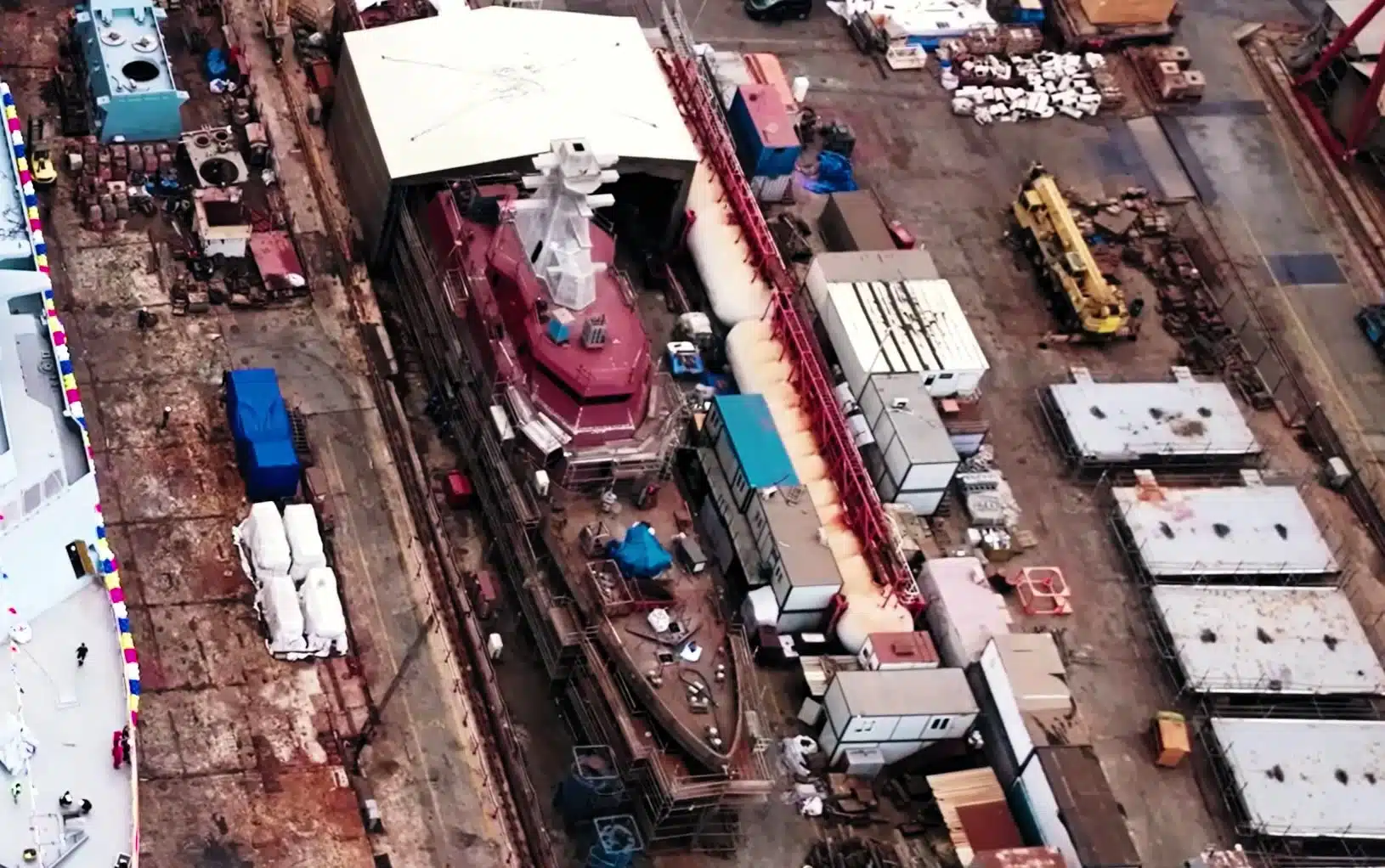
Turkish Navy's Next-Generation Fast Attack Craft Takes Shape at Istanbul Naval Shipyard


The Turkish Navy’s sweeping fleet modernization effort is hitting another major industrial milestone, with construction of its future National Fast Attack Craft (FAC) accelerating at the historic Istanbul Naval Shipyard. Designed to replace aging legacy missile boats, the new class of high-speed surface combatants highlights Ankara's ongoing drive toward complete defense self-sufficiency, leveraging advanced domestic combat systems, stealth-oriented hull geometries, and heavy firepower tailored for operations in the confined, contested waters of the Aegean and Eastern Mediterranean.

The new Fast Attack Craft program is engineered to provide the Turkish Naval Forces with exceptional agility, high-end punch, and superior electronic warfare resilience. Built around a low-radar-cross-section hull form, the vessels prioritize high top speeds and superior seakeeping capabilities to execute rapid hit-and-run strike tactics, coastal patrols, and sea-denial missions. Unlike traditional missile boats of earlier decades, these modern platforms integrate deeply into network-centric architectures, functioning as distributed nodes capable of sharing real-time sensor data with larger surface combatants, airborne early-warning assets, and shore-based defense batteries.

A defining feature of the new FAC class is its heavy reliance on indigenous Turkish defense technology. Rather than depending on foreign subsystems, the corvettes are slated to feature domestic combat management systems (GENESIS-ADVENT), advanced local radar suites, and heavy anti-surface striking power—specifically Korkut air defense systems and domestically produced anti-ship missiles like the Atmaca. This integration ensures that the vessels remain insulated from international supply chain bottlenecks while giving the Turkish military absolute sovereign control over software updates, tactical programming, and weapon maintenance.

The visible progress at Istanbul Naval Shipyard coincides with an exceptionally busy era for Turkish state and private shipbuilders, who are simultaneously juggling dozens of complex military projects—including MİLGEM corvettes, new-generation submarines, offshore patrol vessels, and international export orders. As the first hulls of the Fast Attack Craft take shape on the slipways, they reinforce a broader maritime doctrine focused on establishing absolute regional deterrence and protecting the nation's vital maritime jurisdiction, colloquially known as the "Blue Homeland".

As outfitting and structural fabrication continue, the introduction of these agile, heavily armed craft will significantly elevate the operational flexibility of the Turkish fleet. By pairing high-speed maneuverability with cutting-edge indigenous missile technology, the Turkish Navy is systematically ensuring that its littoral combat capabilities remain unmatched in the evolving security landscape of the Mediterranean basin.

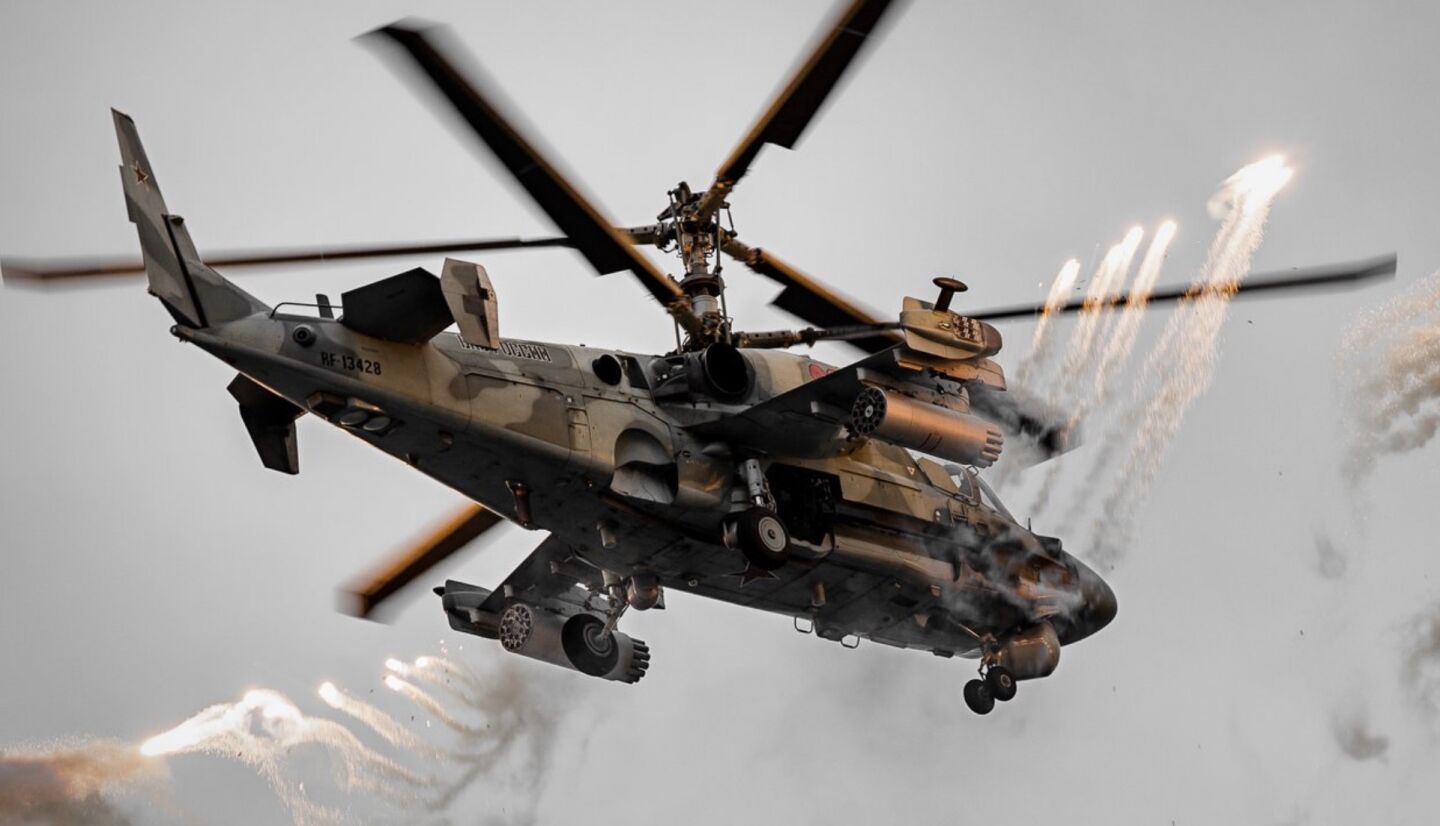
Russia Adapts Ka-52 and Mi-28 Attack Helicopters for Anti-Drone Air Defense Roles


 The Russian Aerospace Forces are actively reconfiguring their premier rotary-wing fleets to address the escalating threat of asymmetric unmanned aviation, a tactical shift recently analyzed by Military Watch Magazine. As persistent, large-scale drone strikes strain conventional ground-based air defense networks—prompting extreme measures like positioning stationary air defense systems onto city rooftops—military planners are increasingly turning to attack helicopters to hunt and neutralize low-signature aerial threats.

The tactical evolution centers heavily on upgrades to Russia's most capable combat rotorcraft: the coaxial-rotor Ka-52 Alligator and the heavy-armor Mi-28NM Night Hunter. While traditionally optimized for close-air support and anti-armor missions, these platforms are receiving specialized hardware and ordnance modifications designed to turn them into effective airborne interceptors capable of countering enemy drones operating beyond the reach of static ground defenses.

For the Ka-52, the anti-drone conversion relies on enhanced Vikhr-M laser beam-riding missiles outfitted with newly integrated proximity fuzes. While the supersonic missile was originally developed as an anti-tank weapon capable of striking targets up to 10 kilometers away, the addition of non-contact target sensors allows the multi-purpose warhead to effectively shred incoming unmanned aircraft. Furthermore, the Ka-52’s distinctive coaxial rotor design provides exceptional hover stability, rapid yaw turns, and precise low-speed maneuverability, giving pilots a crucial edge when tracking slow-moving, erratic drones.

Simultaneously, the advanced Mi-28NM has been outfitted with comprehensive electronic warfare (EW) packages to counter the persistent threat of hostile FPV and loitering munitions. Recent frontline modifications showcase newly added antenna housings across the nose, stub-wing pods, and tail booms, providing wide-angle coverage designed to simultaneously detect, identify, and jam the radio frequencies controlling enemy drones. This electronic suppression complements the helicopter's onboard optics, 30mm automatic cannon, and precision-guided rockets, creating a multi-layered defense capability.

This growing reliance on attack helicopters for counter-drone operations mirrors parallel adaptations within Western militaries, where U.S. Army AH-64E Apache units have similarly emphasized anti-drone warfare training and operational deployment. By leveraging the superior loitering endurance, high firepower, and flexibility of modern attack helicopters, military forces are finding vital new ways to protect high-value assets and plug critical gaps in modern air defense architectures.

China's Z-19 Helicopter Integration Highlights Evolution into Airborne Control Node for Combat Drones


 The tactical application of rotary-wing aircraft is undergoing a fundamental transformation, a tactical evolution recently analyzed by Army Recognition, as demonstrated by recent footage of China's Harbin Z-19 attack helicopter operating in close coordination with advanced uncrewed systems. Filmed flying alongside specialized KVD002-class drone integration platforms, the light reconnaissance and attack helicopter is increasingly showcasing capabilities that point toward a future where manned platforms act as airborne command and control nodes for collaborative drone swarms.

The operational concept relies heavily on manned-unmanned teaming (MUM-T) architectures, allowing front-line attack crews to offload high-risk reconnaissance, target acquisition, and localized strike tasks to autonomous wingmen. By establishing secure, low-latency datalinks between the Z-19's cockpit and nearby loitering munitions or scouting drones, human operators can direct tactical maneuvers, designate coordinates, and execute precision strikes from a safer standoff distance. This approach minimizes exposure to heavy enemy air defenses while maximizing the battlefield footprint of smaller, expendable systems.

A key enabler for this operational shift is the Z-10 and Z-19 family's existing digital infrastructure, which features advanced helmet-mounted sights, millimeter-wave fire control radar systems, and modular electronic warfare suites. While traditional scout helicopters were constrained by line-of-sight optics and the physical limits of organic ordnance loads, integrating aerial drone control exponentially multiplies their situational awareness. Crew members can leverage feeds from multiple autonomous platforms simultaneously, effectively turning a single reconnaissance airframe into the center of a networked tactical cell.

This development mirrors a broader global push toward distributed, network-centric warfare as seen in parallel Western and Russian military experiments. Modern combat doctrine increasingly dictates that surviving high-intensity, contested environments requires dispersing combat power across interconnected nodes rather than concentrating capabilities in single, expensive platforms. By turning nimble scout helicopters into airborne quarterback stations for swarming munitions, military planners are fundamentally altering how close-air support and tactical reconnaissance are executed.

Ultimately, the growing synergy between platforms like the Z-19 and uncrewed aerial assets highlights China's aggressive pursuit of advanced tactical networking within its army aviation units. As these manned-unmanned integration frameworks mature from developmental demonstrations into standard combat routines, they promise to redefine the speed, lethality, and survivability of modern rotary-wing operations on the digital battlefield.

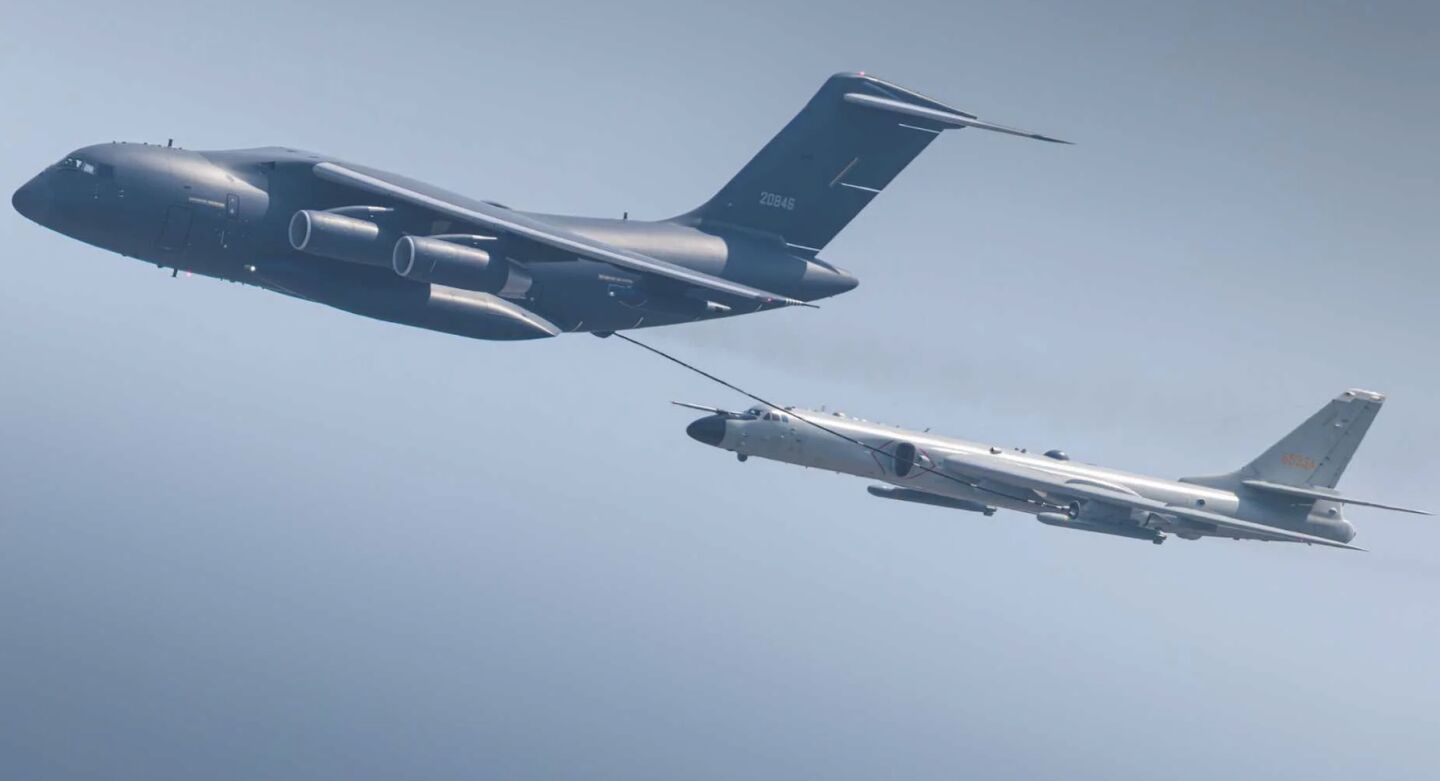
China Expands Strategic Airlift Fleet with Modular Y-20B Heavy Transports and Tanker Variants


 China's heavy military transport aviation is undergoing a massive evolutionary leap, a strategic development recently analyzed by Military Watch Magazine, centered around the expanding production and operational flexibility of the Y-20B strategic airlifter. Recent broadcasts by state media outlet CCTV have highlighted the platform's advanced modular design, revealing that the heavy transport can rapidly transition between standard cargo delivery and specialized aerial refueling duties. By utilizing interchangeable mission equipment and specialized pods, Beijing is systematically transforming its premier heavy lifter into a highly adaptable multi-role asset designed to support long-range power projection.

The driving force behind this enhanced operational capability is the successful integration of domestically developed WS-20 high-bypass turbofan engines, which have replaced the legacy Russian D-30KP-2 powerplants used on early production models. The new indigenous engines provide significantly greater thrust while reducing overall fuel consumption, yielding a measurable increase in both payload capacity and maximum operational range. Furthermore, eliminating reliance on foreign propulsion systems has allowed state-run manufacturing facilities to accelerate production output, cementing the Y-20B as the largest strategic transport currently rolling off active assembly lines anywhere in the world.

Military analysts point out that the ability to convert transport airframes into tactical tankers—designated as the YY-20 configuration—offers unprecedented strategic flexibility during periods of heightened operational tempo. Rather than maintaining entirely segregated fleets of specialized refueling aircraft, the People’s Liberation Army Air Force can reconfigure transport airframes to support deep-penetration fighter escorts and bombers during crisis scenarios, and quickly pivot them back to standard logistics roles during peacetime. This modular philosophy blurs traditional operational boundaries, allowing a single basic airframe design to anchor diverse missions ranging from aerial refueling to electronic warfare and airborne early warning.

This industrial expansion was recently underscored by a major show of force featuring a ten-ship "elephant walk" of Y-20B heavy transports, demonstrating the growing numerical strength and high state of readiness within the active fleet. As these heavy airlifters assume an increasingly central role in global logistics and regional deterrence, they provide the strategic backbone necessary to reinforce distant theaters and sustain multi-domain combat operations far beyond domestic borders.

Ultimately, the maturation of the Y-20B program highlights China's growing self-sufficiency in high-end aerospace engineering. By pairing indigenous propulsion technology with a highly adaptable, multi-role airframe architecture, Beijing is building an agile and resilient strategic transport ecosystem capable of supporting global military operations for decades to come.

Denmark Contracts Rheinmetall to Upgrade Frigate Fleet with Advanced MASS Decoy Systems


The Royal Danish Navy is significantly upgrading the survivability and electronic warfare capabilities of its surface fleet, a modernization initiative recently reported by Naval News. Under a new procurement contract awarded by the Danish Acquisition and Logistics Organization (DALO), defense contractor Rheinmetall Waffe Munition is set to equip the nation's primary surface combatants—including the Absalon and Iver Huitfeldt classes—with the advanced Multi-Ammunition Softkill System (MASS). The agreement spans five cutting-edge decoy protection launchers alongside a comprehensive 20-year framework agreement covering maintenance, training, and ongoing ammunition supply.

The MASS platform is designed to provide comprehensive defense against modern, highly sophisticated anti-ship missiles and sensor-guided torpedo threats by generating an effective multi-spectral soft-kill signature. Unlike traditional decoy dispensers that rely on rigid deployment patterns, MASS operates as an automated, programmable system capable of countering advanced radar, infrared, laser, and electro-optical guidance systems simultaneously. By launching intelligent programmable ammunition that mimics the radar cross-section and thermal signature of the host ship, the system creates realistic decoy clusters that confuse incoming weapon seekers.

This integration addresses critical operational lessons learned from contemporary maritime conflicts, where asymmetric threats and advanced anti-ship cruise missiles pose an escalating danger to surface combatants. The Absalon and Iver Huitfeldt frigates serve as the absolute backbone of Denmark's blue-water power projection and regional air defense, making their protection against precision electronic suppression a top priority. Retrofitting these multi-role platforms with modern soft-kill technology ensures they can safely operate in high-threat environments without relying solely on hard-kill interceptors.

The multi-decade partnership framework highlights a broader strategic shift within European defense procurement toward long-term operational readiness and supply chain security. By locking in a 20-year sustainment model with Rheinmetall, the Danish military ensures that its frigates will continuously receive software updates, hardware modernization, and ammunition replenishment tailored to counter evolving electronic warfare tactics over the lifespan of the vessels. This proactive lifecycle management minimizes fleet downtime and maintains seamless interoperability with allied NATO naval forces.

As European navies accelerate fleet-wide defensive enhancements in response to rising geopolitical instability, the adoption of advanced soft-kill suites highlights a vital pillar of modern maritime survivability. By marrying high-performance decoy automation with reliable industrial frameworks, Denmark is systematically hardening its premier warships to face the complex missile threat matrix defining contemporary naval warfare.

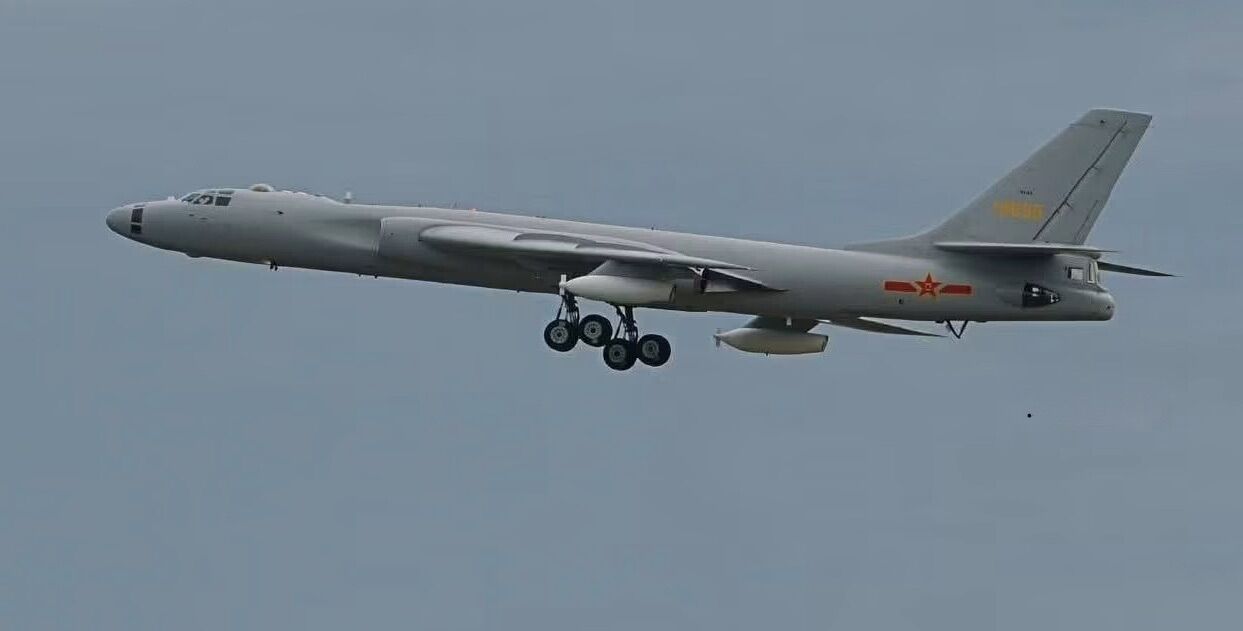
Chinese Air Force Deploys H-6 Variant to Thailand for Falcon Strike Drills


 The People's Liberation Army Air Force has drawn intense regional attention following the reported deployment of an H-6 airframe to Thailand, a strategic development recently analyzed by Military Watch Magazine. Initially flagged by local Thai defense sources as the arrival of a Chinese strategic bomber for the ninth iteration of the bilateral Falcon Strike 2026 exercises, subsequent photographic evidence clarified that the aircraft is actually the specialized H-6U aerial refueling tanker variant. This deployment marks a notable milestone in security cooperation between Beijing and Bangkok, highlighting expanding tactical engagements across Southeast Asia.

The participation of the H-6U tanker alongside other advanced assets—such as Y-9LG electronic warfare aircraft and KJ-500 airborne early-warning systems—provides crucial logistical backing for joint operations. Developed in the 1990s, the H-6U modification replaced the classic bomber's glazed glass nose and targeting radar with a solid radome and dual underwing hose-and-drogue refueling pods. While it is fundamentally limited by older turbojet fuel consumption rates compared to modern transport-derived tankers, the platform effectively extends the operational combat radius of accompanying fighter escorts during complex international drills.

Strategic analysts note that deploying support assets like the H-6U rather than frontline nuclear-capable missile bombers reflects a calculated balancing act by Beijing. Because Thailand maintains longstanding defense ties with Western nations, China frequently limits its international exercise footprint to older-generation platforms or support variants. This deliberate curation prevents sensitive technological data regarding its most advanced stealth fighters and cruise missile systems from leaking to foreign observers, while still achieving meaningful interoperability training with regional partners.

For the Royal Thai Air Force, hosting the joint exercises offers valuable exposure to integrated air defense tactics, electronic warfare simulations, and large-scale command structures. Although Thailand operates a modest fleet of modernized legacy fighters, training alongside sophisticated PLA airborne warning and electronic support packages allows Thai commanders to evaluate modern network-centric warfare concepts firsthand. These interactions underscore how regional air arms are adapting to increasingly complex multi-domain operational environments.

Ultimately, the deployment of the H-6 support variant to Thailand underscores the growing depth of Chinese defense diplomacy across the Indo-Pacific. By pairing tactical fighter maneuvers with long-range logistical support demonstrations, Beijing continues to project cooperative security engagement while carefully safeguarding its most sensitive military technologies from foreign intelligence collection.