
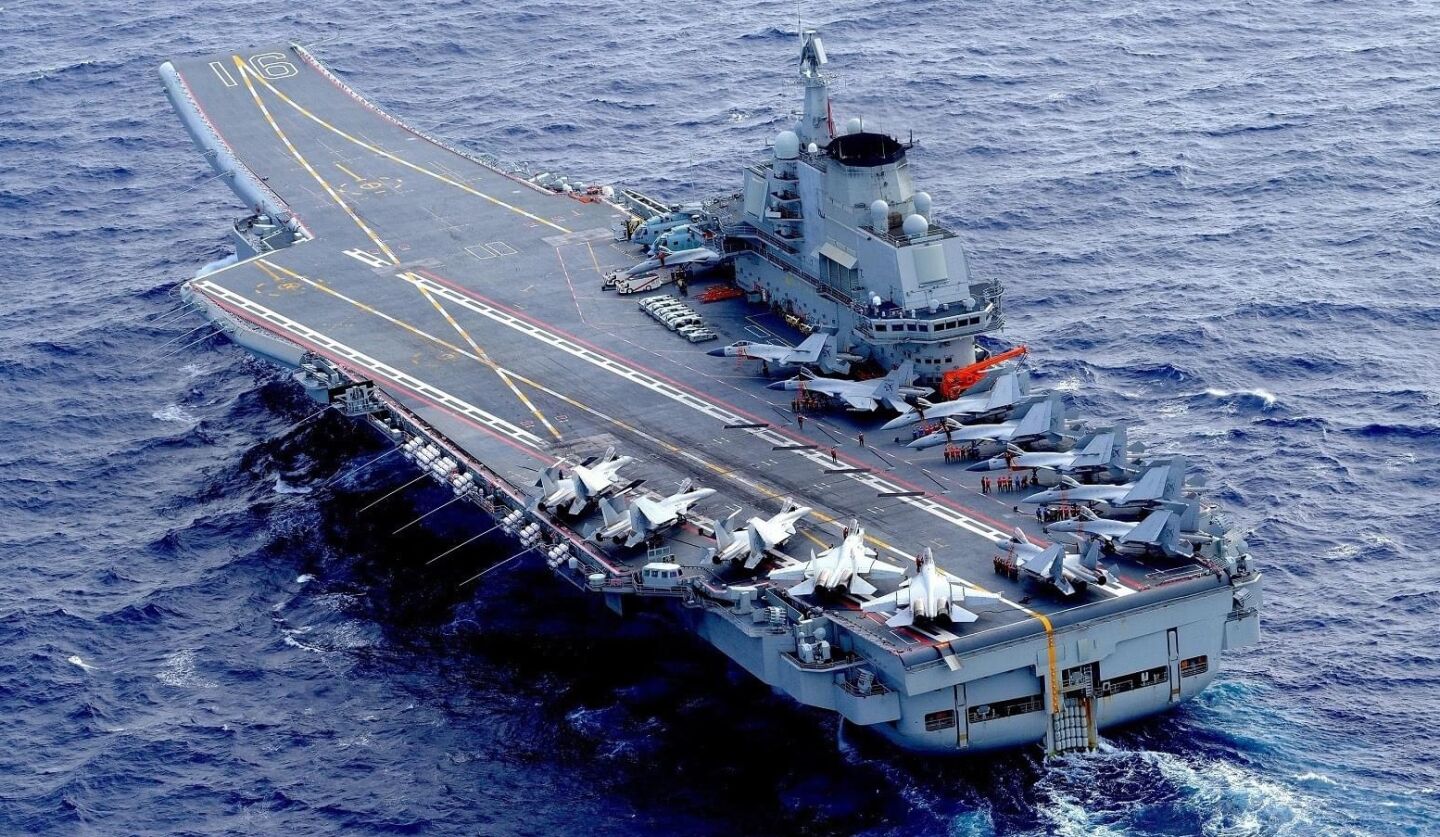
The People's Liberation Army Navy is rapidly refining its maritime strategy, a distinct developmental trajectory recently analyzed by Military Watch Magazine, by shaping an aircraft carrier doctrine that diverges sharply from traditional American paradigms. Rather than replicating the U.S. model of deploying standalone, globally roaming supercarriers designed for independent power projection, Beijing is integrating its growing carrier fleet into a comprehensive, land-backed defensive architecture. This approach treats surface combatants as an extension of a vast regional matrix composed of shore-based air power, long-range anti-ship ballistic missiles, and advanced sensor networks engineered to deny adversary access to near-seas domains.
The conceptual foundation of this doctrine stems from the unique geographic and strategic challenges facing China in the Western Pacific. While U.S. carrier strike groups function as self-contained expeditionary hubs designed to project force thousands of miles from domestic bases, Chinese carrier battle groups are optimized to operate under the protective umbrella of land-based aviation, anti-air missile batteries, and coastal rocket forces.
A critical element of this evolving strategy involves the structural integration of carrier groups with the People’s Liberation Army Rocket Force (PLARF). By synchronizing carrier deployments with long-range anti-ship ballistic and hypersonic missile systems, Beijing aims to create a multi-layered offensive and defensive grid that complicates adversary operational planning. Where an American carrier concentrates the vast majority of its strike mass within its embarked air wing, Chinese naval doctrine leverages a distributed combat model where land-based assets share the heavy lifting of regional deterrence and sea-denial missions.
This doctrinal divergence is mirrored in ongoing structural adjustments within naval leadership and training pipelines. Unlike the U.S. Navy, where operational command of a carrier is traditionally reserved exclusively for elite naval aviators, the PLAN has historically drawn a significant portion of its carrier commanders from the surface warfare branch.
As the PLAN transitions decisively into a multi-carrier operational era with advanced flat-tops like the electromagnetic-catapult-equipped Fujian, the implications for global naval strategy are profound.

No comments:
Post a Comment