The Russian Aerospace Forces are actively reconfiguring their premier rotary-wing fleets to address the escalating threat of asymmetric unmanned aviation, a tactical shift recently analyzed by Military Watch Magazine. As persistent, large-scale drone strikes strain conventional ground-based air defense networks—prompting extreme measures like positioning stationary air defense systems onto city rooftops—military planners are increasingly turning to attack helicopters to hunt and neutralize low-signature aerial threats.
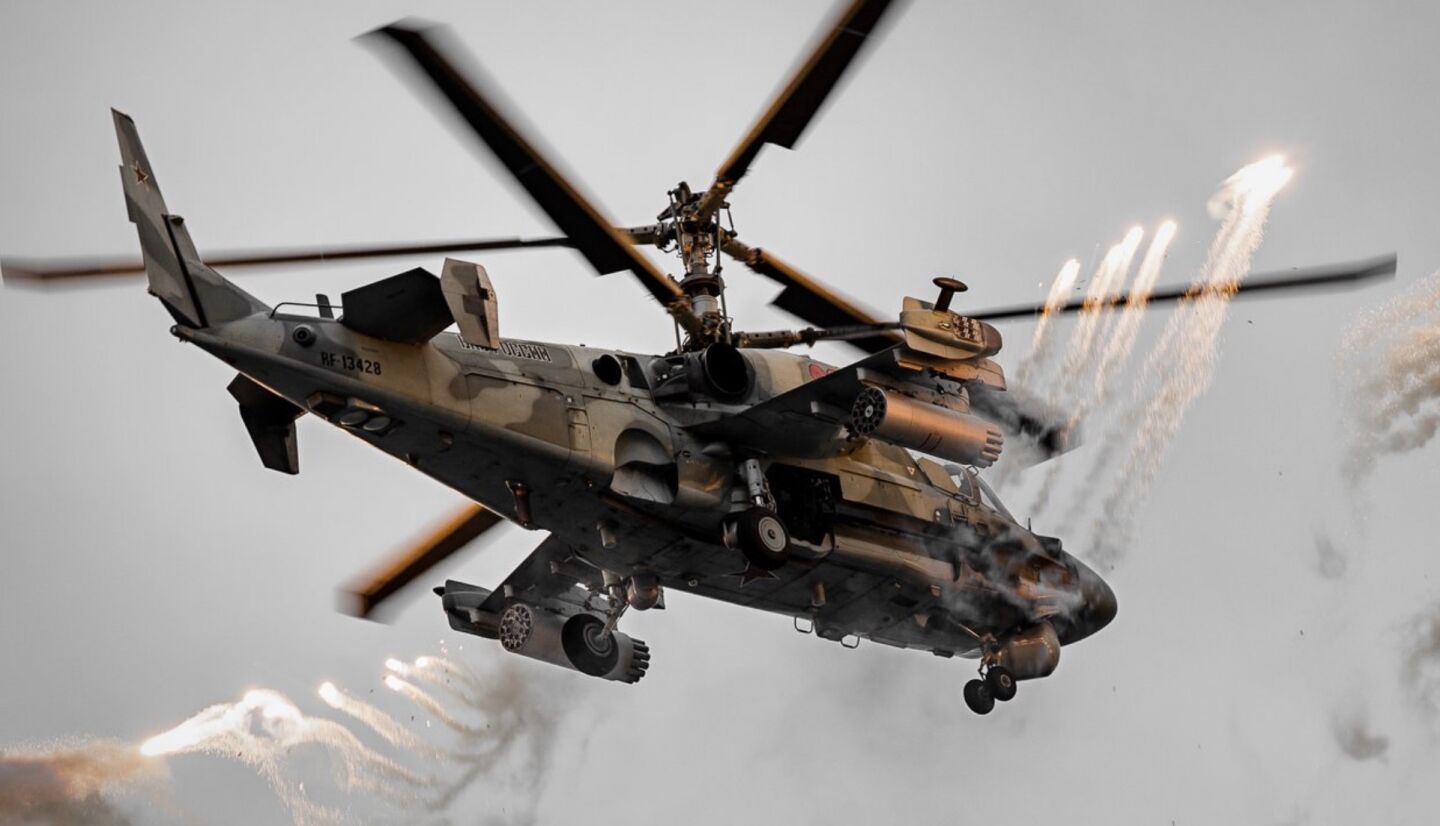
The tactical evolution centers heavily on upgrades to Russia's most capable combat rotorcraft: the coaxial-rotor Ka-52 Alligator and the heavy-armor Mi-28NM Night Hunter. While traditionally optimized for close-air support and anti-armor missions, these platforms are receiving specialized hardware and ordnance modifications designed to turn them into effective airborne interceptors capable of countering enemy drones operating beyond the reach of static ground defenses.
For the Ka-52, the anti-drone conversion relies on enhanced Vikhr-M laser beam-riding missiles outfitted with newly integrated proximity fuzes. While the supersonic missile was originally developed as an anti-tank weapon capable of striking targets up to 10 kilometers away, the addition of non-contact target sensors allows the multi-purpose warhead to effectively shred incoming unmanned aircraft. Furthermore, the Ka-52’s distinctive coaxial rotor design provides exceptional hover stability, rapid yaw turns, and precise low-speed maneuverability, giving pilots a crucial edge when tracking slow-moving, erratic drones.
Simultaneously, the advanced Mi-28NM has been outfitted with comprehensive electronic warfare (EW) packages to counter the persistent threat of hostile FPV and loitering munitions. Recent frontline modifications showcase newly added antenna housings across the nose, stub-wing pods, and tail booms, providing wide-angle coverage designed to simultaneously detect, identify, and jam the radio frequencies controlling enemy drones. This electronic suppression complements the helicopter's onboard optics, 30mm automatic cannon, and precision-guided rockets, creating a multi-layered defense capability.
This growing reliance on attack helicopters for counter-drone operations mirrors parallel adaptations within Western militaries, where U.S. Army AH-64E Apache units have similarly emphasized anti-drone warfare training and operational deployment. By leveraging the superior loitering endurance, high firepower, and flexibility of modern attack helicopters, military forces are finding vital new ways to protect high-value assets and plug critical gaps in modern air defense architectures.


No comments:
Post a Comment