

More than a century has passed since the U.S. Navy commissioned its first aircraft carrier, the USS Langley, on March 20, 1922. Compare that milestone to China's first operational flat-top, the Liaoning, which entered service on September 25, 2012. Despite its fascinating backstory as a nearly converted casino ship on a decommissioned Soviet hull, that roughly 90-year generational gap speaks volumes about the fundamentally different strategic doctrines guiding Washington and Beijing today.
Granted, the Langley was not in the same league as the Liaoning, and the U.S. Navy's modern supercarriers—like the nuclear-powered Nimitz and Ford classes equipped with electromagnetic catapults—remain the undisputed heavyweights of the open ocean. Even China’s flagship Fujian, while featuring advanced electromagnetic catapults and operational fifth-generation J-35 stealth fighters alongside the formidable J-15, relies on conventional propulsion.
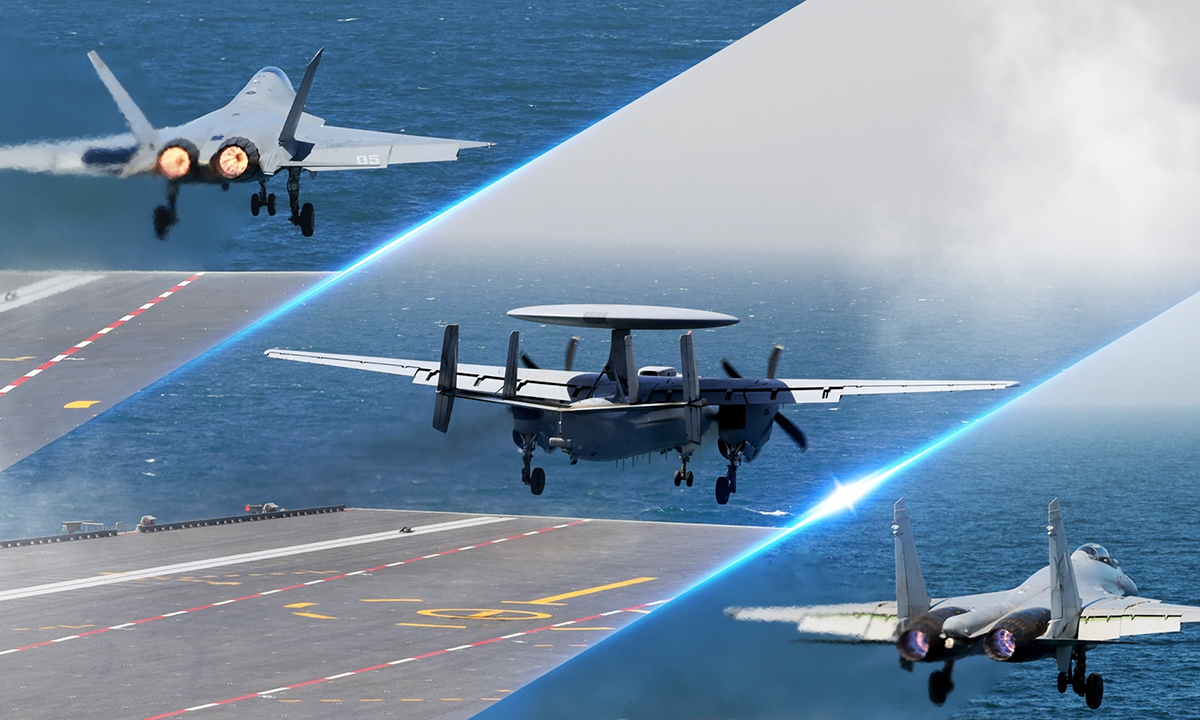
However, measuring modern naval parity purely by propulsion type or hull counts misses the forest for the trees. The goal of comparing these fleets is not to diminish the rapid, impressive rise of the People's Liberation Army Navy (PLAN), nor is it to downplay the devastating effectiveness of China’s anti-access/area-denial (A2/AD) strategy in the Western Pacific. Rather, the core of the matter lies in understanding the stark contrast between America's global power projection requirements and Beijing's doctrine of regional deterrence, particularly concerning core territorial objectives like Taiwan.
Unlike the U.S. Navy, which operates as an independent offensive force designed to project power across the globe, the PLAN functions as a vital, integrated component of a broader regional strategy. Its primary mission is consolidating power in East Asia through combined kinetic operations involving the navy, air force, and rocket force, heavily backed by non-kinetic domains such as cyber, space, and electronic warfare. Furthermore, emerging technologies like artificial intelligence, quantum computing, and autonomous drone swarms are increasingly woven into operations across the South and East China Seas.
At the same time, it would be a mistake to view the PLAN as strictly confined to home waters. The service has demonstrated its expanding reach through long-range deployments and exercises stretching out toward the second island chain and near the coast of Australia.
Yet, comparing the PLAN directly to an established superpower that has projected carrier-based air power since World War II—drawing on historic naval battles, the skies of Vietnam, and more recent conflicts in the Middle East—only tells half the story. The U.S. Navy's enduring global deployments in the Mediterranean, Arabian Sea, and Pacific remain the ultimate modern testament to Alfred Thayer Mahan's classic doctrine of sea control.
Yet, for all that unmatched global might, the theater of operations immediately adjacent to mainland China is rapidly becoming an impossible target. Through a deeply integrated regional network, Beijing is proving that you do not need to match the U.S. supercarrier fleet ship-for-ship to successfully contest control of your own backyard.
Author Bio
Squadron Leader Ali Hamza is a retired PAF pilot with 20 years of experience, defence analyst, airpower expert, gold medallist in MSc DSS (Defence & Strategic Studies) from QAU, currently doing MPhil IR from NUML, Rawalpindi and has a keen interest in modern airpower’s role in the geopolitics at global and regional levels.
YouTube: https://www.youtube.com/@AeronautIR
X (twitter): https://x.com/AliHamzaAwan1

No comments:
Post a Comment