Saturday, August 8, 2026

Indonesian Navy Debuts Indigenous One-Way Attack Unmanned Surface Vessel During Major Joint Exercise


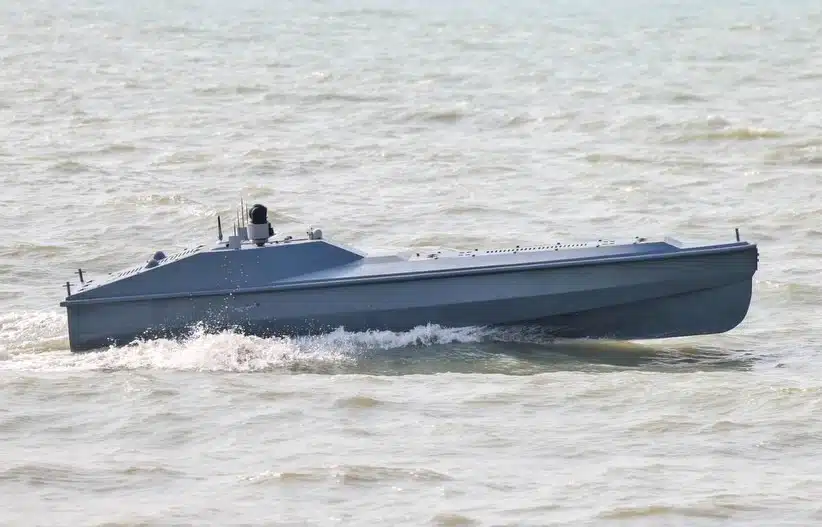
 Marking a major milestone in its military modernization, the Indonesian Navy officially debuted its first domestically built one-way attack unmanned surface vessel (USV) during the large-scale 2026 Integrated TNI Exercise held off Dabo Singkep in the Riau Islands. Developed by state-owned defense enterprise PT PAL Indonesia, the compact kamikaze drone was showcased within a complex joint operational scenario involving nearly 13,000 personnel. The public operational debut underscores Jakarta's strategic transition from experimental autonomous research toward distributed, asymmetric maritime strike capabilities tailored for the world's largest archipelagic state.

During the multi-domain exercise, the uncrewed platform was deployed from the well deck of the Indonesian Navy hospital ship KRI dr. Soeharso, demonstrating an innovative mothership-based deployment concept. This approach allows existing auxiliary and large surface vessels to transport and launch autonomous strike craft far beyond fixed coastal bases, significantly extending the operational reach of Indonesia's unmanned fleet. Following release, the USV successfully navigated toward a simulated shoreline target, providing defense leadership with a clear proof-of-concept for mothership-integrated strike operations.

While the demonstration was conducted without a live explosive payload—leaving the test craft structurally intact post-impact—PT PAL revealed ambitious performance targets for the production variant. Designers intend for the final configuration to achieve high-speed maneuvers exceeding 55 knots while carrying a substantial 150-kilogram warhead. Visually, the vessel features an angular, low-observable grey hull designed to minimize radar cross-sections, paired with a raised stern section housing internal combustion engine exhausts and a mast-mounted electro-optical sensor package for remote guidance and target acquisition.

The kamikaze USV's debut formed part of a broader, multi-layered strike demonstration that also featured the launch of domestically produced KI-50 aerial loitering munitions from a naval flight deck alongside live firings of C-705 anti-ship missiles. According to defense officials, the surface drone shares underlying command-and-control architecture with PT PAL's ongoing autonomous submarine (KSOT) development program. Future upgrades will incorporate artificial intelligence capabilities designed to allow the autonomous craft to independently classify friendly and hostile contacts.

By integrating low-cost, expendable surface drones into its joint tactical doctrine, Indonesia is actively positioning itself to counter peer and gray-zone threats across its vast maritime domain. While unvalidated capabilities such as swarm coordination and electronic warfare resilience remain to be tested, the successful deployment highlights a growing regional trend across the Indo-Pacific toward leveraging affordable autonomous mass to complicate adversary naval planning.

Boeing and Northrop Grumman Successfully Demonstrate Manned-Unmanned Teaming Between P-8A Poseidon and MQ-4C Triton


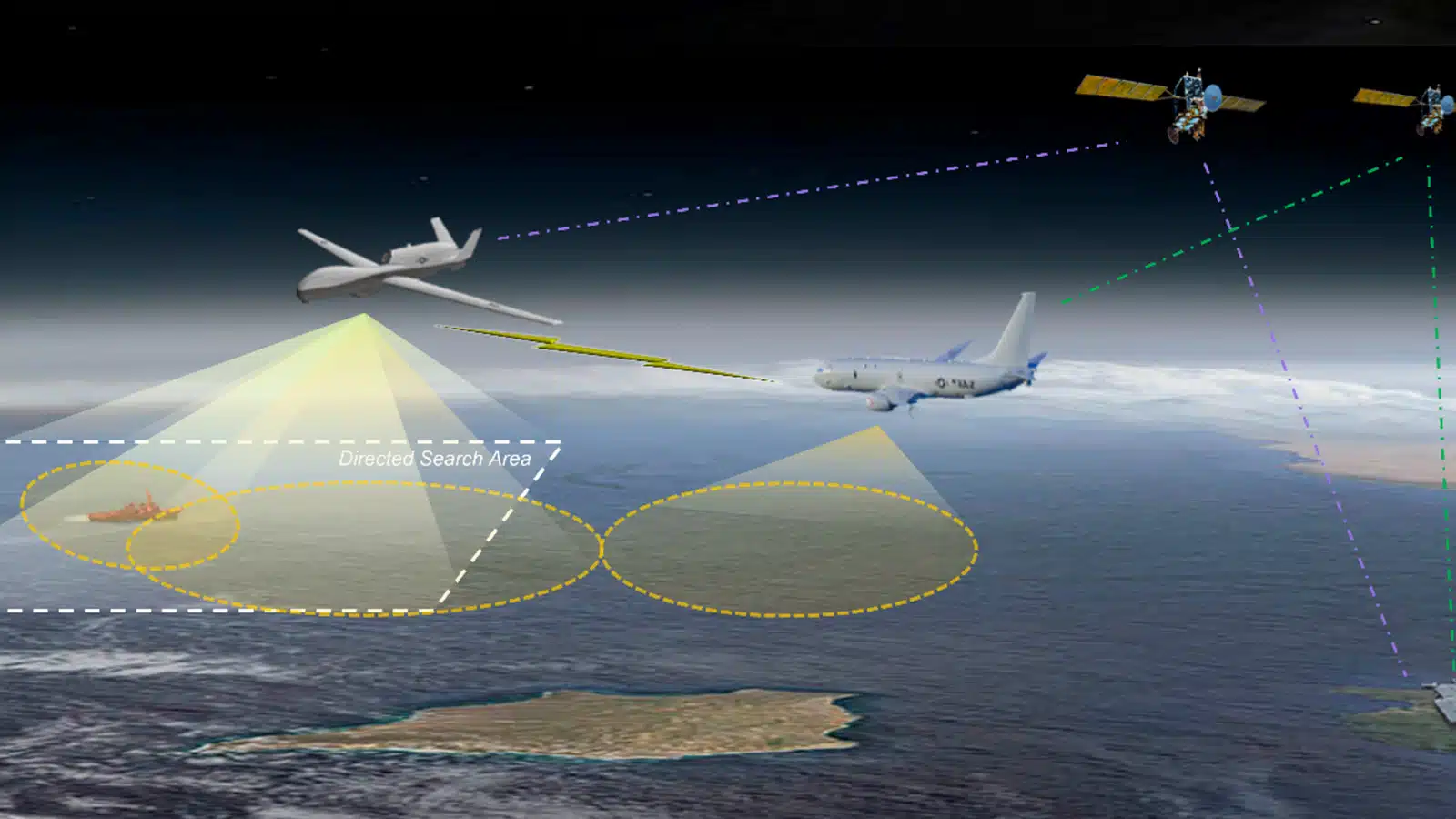
 In a major milestone for naval aviation technology, defense primes Boeing and Northrop Grumman have successfully completed a joint demonstration validating advanced manned-unmanned teaming between the crewed P-8A Poseidon maritime patrol aircraft and the high-altitude, long-endurance MQ-4C Triton uncrewed aerial system. Conducted in a rigorous laboratory environment designed to mimic complex operational networks, the test showcased the ability of the two flagship systems to communicate, share intelligence, and execute synchronized missions without relying on traditional ground-based control intermediaries.

The collaborative breakthrough was achieved by leveraging open-architecture standards, specifically utilizing Open Mission Systems (OMS) and the Universal Command and Control Interface (UCI). Instead of depending on bespoke, point-to-point connections, the demonstration utilized machine-to-machine data exchanges routed partly through simulated satellite relays. This open-standard framework allows diverse military platforms to seamlessly talk to one another, paving the way for significantly faster, cheaper, and lower-risk software integrations across existing and future naval inventories.

During the simulated operational scenario, an operator aboard the P-8A Poseidon transmitted direct, machine-readable mission tasking to the MQ-4C Triton. Upon receiving the digital prompt, the Triton autonomously planned its transit route to a designated surveillance area, adjusted its onboard sensor suites to scan the target zone, and processed the gathered intelligence using embedded artificial intelligence algorithms. The drone then transmitted its findings straight back to the Poseidon, establishing a closed-loop intelligence cycle directly inside the air combat team.

The operational implications of eliminating ground station intermediaries are profound for future maritime warfare. By allowing airborne tactical crews to dynamically retask high-altitude drones on the fly, the navy can drastically compress decision-making cycles and distribute mission workloads more efficiently. The P-8A—packed with anti-submarine torpedoes, sonobuoys, and surface strike weapons—can now act as an immediate director for the Triton's persistent, wide-area surveillance eye, creating an unyielding hunter-gatherer pairing across expansive ocean domains.

Defense industry executives emphasized that the successful demonstration provides immediate, real-world capability enhancements for the U.S. Navy and key international allies, such as the Royal Australian Air Force, which operate both platforms concurrently. As global competitors expand their naval reach and gray-zone maritime challenges multiply, the successful integration of crewed patrol aircraft and autonomous drones marks a pivotal evolutionary leap for modern maritime reconnaissance and strike architectures.

North Korea Deepens Direct Military Involvement in Ukraine with Specialized Missile Units and Troop Deployments


 Marking its most significant foreign military intervention since the 1950s, North Korea has drastically expanded its direct support for Russia's war in Ukraine, moving well beyond basic artillery supplies to deploy specialized tactical missile units and thousands of combat personnel. According to recent intelligence assessments released by Ukrainian military authorities, a specialized North Korean ballistic missile unit has begun deploying to western Russia, signaling a dangerous new phase in bilateral military cooperation between Moscow and Pyongyang.

The newly identified deployment consists of roughly 90 North Korean personnel establishing operations in Russia's Voronezh region. Intelligence officials indicate the unit could eventually be equipped with up to 120 ballistic missiles and six specialized launchers designed for strikes inside Ukraine. Reports reveal that Pyongyang has already supplied approximately 40 ballistic missiles to Russian forces, with at least two of these systems utilized in recent high-casualty urban strikes.

This missile deployment builds upon a massive, multi-tiered reinforcement effort that began in late 2024, when North Korea dispatched between 14,000 and 15,000 elite soldiers—primarily from the Korean People’s Army's 11th Corps—to Russia's Kursk region. These forces played a vital operational role in helping Russian troops repel Ukrainian counter-incursions. Although thousands of North Korean troops have suffered casualties, subsequent rotations, engineering detachments, and military construction personnel have continued to flow into the theater to clear minefields and restore damaged infrastructure.

In exchange for personnel, munitions, and millions of artillery shells that have sustained Russian frontline operations, Pyongyang is reaping massive strategic dividends. Analysts note that the deployment provides North Korean military leadership with invaluable real-world combat data on modern drone warfare, electronic countermeasures, and integrated artillery tactics. Simultaneously, the partnership delivers critical economic relief, oil imports, and advanced military technology transfers from Moscow, cementing an anti-Western axis that poses profound security challenges for both European and Indo-Pacific defense planners.

Rheinmetall Warns That Ramping Up ATACMS Production Will Take Years as Washington Struggles to Replenish Stockpiles


 German defense giant Rheinmetall has issued a sobering reality check regarding international munitions manufacturing, cautioning that significantly scaling up production of the Army Tactical Missile System (ATACMS) will be a lengthy, complex endeavor. The warning comes directly on the heels of the company's recent memorandum of understanding with Lockheed Martin to establish the first-ever overseas ATACMS production line at Rheinmetall’s Unterlüß facility in northern Germany—a strategic partnership heavily backed by both Washington and Berlin to address persistent supply chain bottlenecks across NATO.

However, according to Rheinmetall CEO Armin Papperger, bridging the capability gap left by heavy wartime expenditures will take considerable time. While component production—including rocket motors and guidance systems—is projected to begin at the Unterlüß site by 2027, the joint venture does not expect to generate its first official revenue from completed missile deliveries until 2028. Papperger emphasized that turning political agreements into fully scaled industrial output cannot happen overnight, warning that satisfying the immense demand required to rebuild depleted U.S. and European arsenals will stretch well into the next decade.

The timeline underscores the acute industrial strain facing Western defense infrastructure following intense high-end missile consumption. Recent disclosures reveal that the U.S. military burned through virtually its entire global inventory of premier long-range surface-to-surface missiles during the recent five-month conflict with Iran. While the White House has publicly downplayed the shortages, insisting that domestic manufacturers are expanding production capacity at record speeds, defense analysts and industry leaders warn that replacing thousands of expended ATACMS and newer Precision Strike Missiles (PrSM) will require sustained, multi-year industrial mobilization.

The planned European co-production facility is intended to serve as a long-term regional center of excellence, targeting an estimated European and Ukrainian demand of 600 to 800 units annually while securing allied supply autonomy. Even so, the stark assessment highlights a fundamental mismatch between modern high-intensity conflict consumption rates and the slow velocity of defense industrial expansion. As Rheinmetall and Lockheed Martin work to finalize regulatory approvals and launch the joint venture, the global race to replenish strategic missile depth remains one of the most pressing hurdles confronting Western military planners.

Iran Issues Stark Warning to Gulf States, Threatening Energy and Infrastructure Targets Unless U.S. Strikes Halt


Escalating regional tensions to a precarious new level, Iran has launched an aggressive diplomatic offensive across the Middle East, issuing an explicit warning to Gulf Arab nations: persuade President Donald Trump to halt American military strikes or face devastating retaliatory attacks on regional oil, power, and water infrastructure. According to senior regional officials, the explicit threat encompasses vital strategic assets across Washington's closest Arab allies, including oil fields, refineries, electricity grids, water desalination plants, and core transport networks.

The high-stakes ultimatum was conveyed following recent threats from the White House targeting Iran's energy grid and infrastructure. In response, Iranian Foreign Minister Abbas Araghchi initiated a flurry of high-level diplomatic contacts with counterparts in Saudi Arabia, Qatar, and Turkey, as well as military leadership in Pakistan. During these discussions, Tehran urged regional capitals to leverage their diplomatic influence with President Trump to dissuade him from launching renewed military operations, warning that any further U.S. aggression would trigger massive retaliatory strikes against U.S. assets and regional economic hubs.

The aggressive diplomatic posture highlights how Tehran is actively seeking to exploit Gulf economic vulnerabilities as strategic leverage. By threatening severe disruption to the infrastructure underpinning the economies of Washington's partners, Iran aims to force regional governments into pressing Washington for a negotiated political settlement rather than a prolonged military campaign. Iranian officials emphasized that while they prefer a diplomatic off-ramp to prevent the region from turning into a "fireball," their military doctrine dictates a decisive "eye for an eye" response if domestic infrastructure is damaged.

The warning has placed Gulf leaders in a tense diplomatic bind, prompting immediate behind-the-scenes counter-efforts. Following the exchanges, Saudi Crown Prince Mohammed bin Salman reportedly spoke directly with President Trump, strongly urging him to delay further military action, secure a ceasefire, and pursue renewed diplomatic negotiations. Alongside Oman and Qatar, Riyadh has consistently pressed Washington to avert an all-out regional conflagration that would jeopardize global energy markets.

As the White House weighs its next strategic moves against the backdrop of heavily depleted domestic missile stockpiles, the unfolding crisis underscores the immense volatility gripping the Persian Gulf. With Tehran drawing a hard line and warning that any state facilitating U.S. operations will be treated as a legitimate target, the path toward durable regional stability remains razor-thin.