
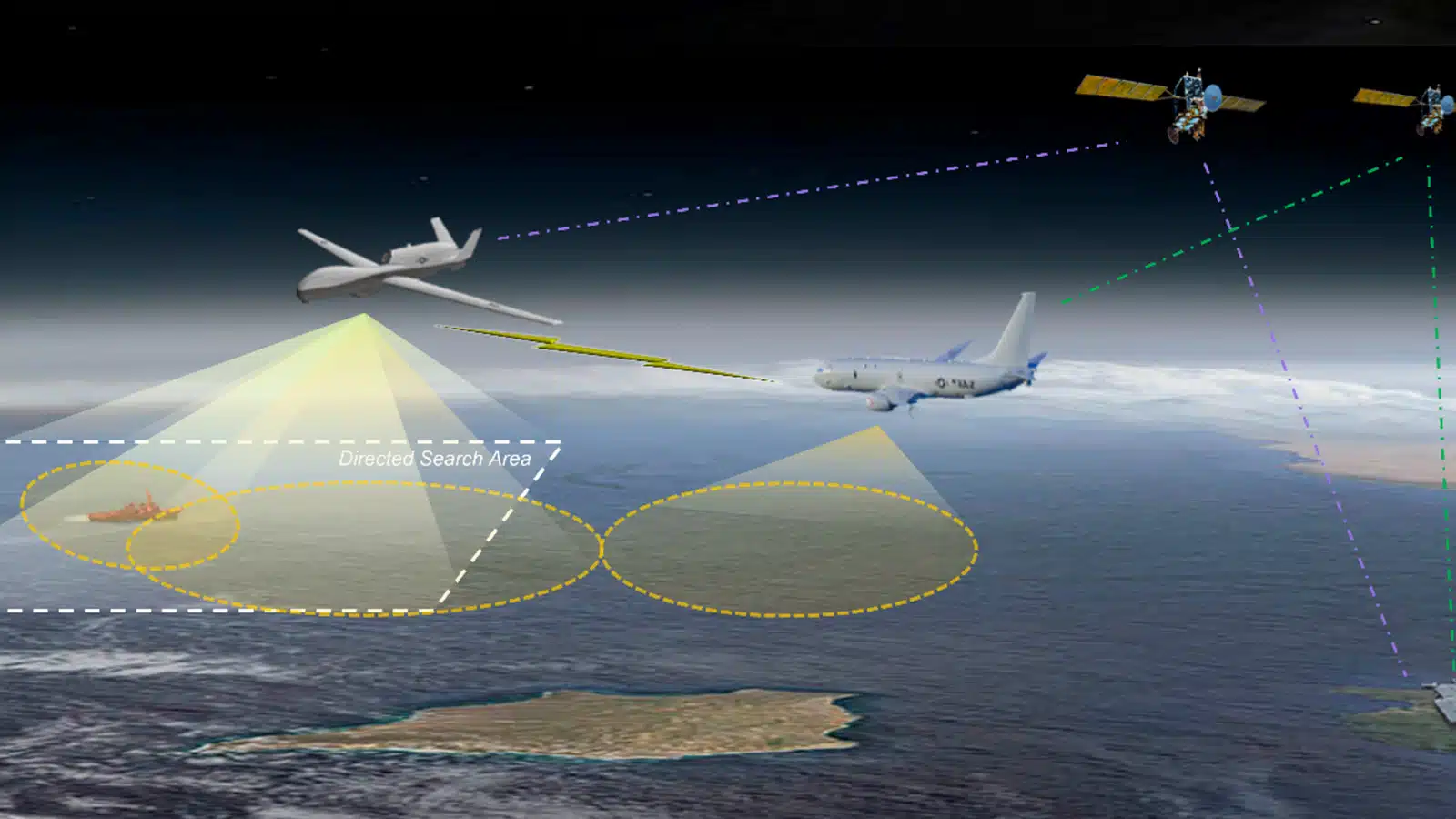
In a major milestone for naval aviation technology, defense primes Boeing and Northrop Grumman have successfully completed a joint demonstration validating advanced manned-unmanned teaming between the crewed P-8A Poseidon maritime patrol aircraft and the high-altitude, long-endurance MQ-4C Triton uncrewed aerial system. Conducted in a rigorous laboratory environment designed to mimic complex operational networks, the test showcased the ability of the two flagship systems to communicate, share intelligence, and execute synchronized missions without relying on traditional ground-based control intermediaries.
The collaborative breakthrough was achieved by leveraging open-architecture standards, specifically utilizing Open Mission Systems (OMS) and the Universal Command and Control Interface (UCI). Instead of depending on bespoke, point-to-point connections, the demonstration utilized machine-to-machine data exchanges routed partly through simulated satellite relays. This open-standard framework allows diverse military platforms to seamlessly talk to one another, paving the way for significantly faster, cheaper, and lower-risk software integrations across existing and future naval inventories.
During the simulated operational scenario, an operator aboard the P-8A Poseidon transmitted direct, machine-readable mission tasking to the MQ-4C Triton. Upon receiving the digital prompt, the Triton autonomously planned its transit route to a designated surveillance area, adjusted its onboard sensor suites to scan the target zone, and processed the gathered intelligence using embedded artificial intelligence algorithms. The drone then transmitted its findings straight back to the Poseidon, establishing a closed-loop intelligence cycle directly inside the air combat team.
The operational implications of eliminating ground station intermediaries are profound for future maritime warfare. By allowing airborne tactical crews to dynamically retask high-altitude drones on the fly, the navy can drastically compress decision-making cycles and distribute mission workloads more efficiently. The P-8A—packed with anti-submarine torpedoes, sonobuoys, and surface strike weapons—can now act as an immediate director for the Triton's persistent, wide-area surveillance eye, creating an unyielding hunter-gatherer pairing across expansive ocean domains.
Defense industry executives emphasized that the successful demonstration provides immediate, real-world capability enhancements for the U.S. Navy and key international allies, such as the Royal Australian Air Force, which operate both platforms concurrently. As global competitors expand their naval reach and gray-zone maritime challenges multiply, the successful integration of crewed patrol aircraft and autonomous drones marks a pivotal evolutionary leap for modern maritime reconnaissance and strike architectures.

No comments:
Post a Comment