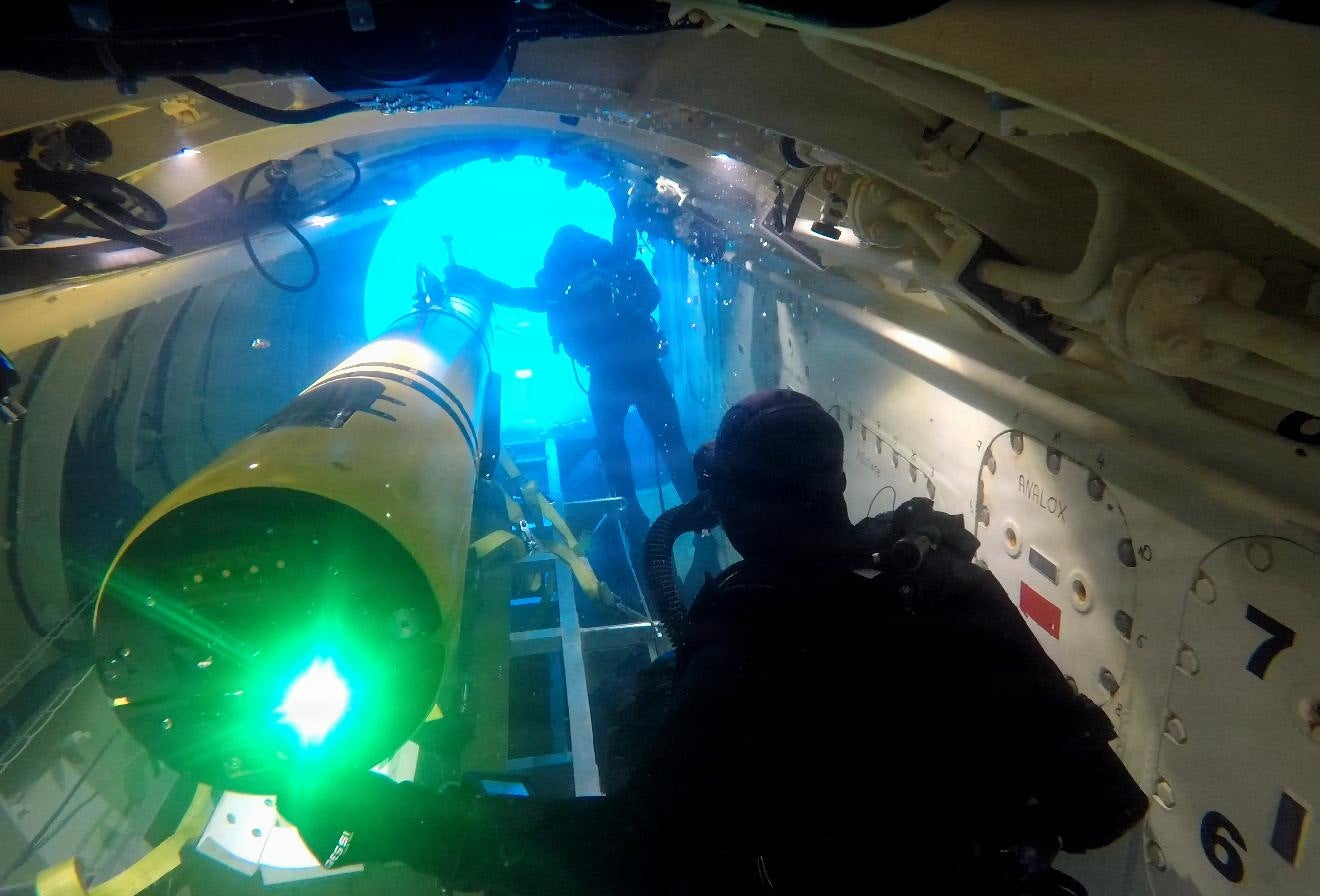
Red Cat Holdings' maritime division, Blue Ops, announced a partnership with autonomy software firm Havoc this week to integrate Havoc's collaborative autonomy and command-and-control software across Blue Ops' family of uncrewed surface vessels, starting with the Variant 7 USV. The pitch, laid out by Blue Ops president Barry Hinckley and Havoc co-founder Paul Lwin in the announcement, is straightforward: Blue Ops brings a Modular Open Systems Architecture designed for rapid integration of new sensors and payloads, Havoc brings collaborative autonomy software already deployed operationally for the U.S. Department of War, and together the companies plan to enable coordinated multi-vessel operations while cross-marketing each other's technology to their respective government and allied customer bases. Operational fleets are planned at both companies' headquarters, in Rhode Island and Florida respectively, for demonstrations and joint customer evaluation.
What the press release itself doesn't mention, and what genuinely matters for reading this partnership correctly, is how the market actually reacted to it. Red Cat shares slid roughly 4 percent the same day this deal was announced, a drop 24/7 Wall St. attributed specifically to the release disclosing no contract value, no dollar figure, no committed government customer, just a framework for future technical integration and joint marketing. That's a meaningfully different signal than a funded Pentagon award, and the market treated it accordingly, erasing part of a 21 percent weekly run Red Cat had posted just days earlier on unrelated news. For a company whose stock has swung from up 22 percent year-to-date in June to down 26 percent in a single month by late July, per multiple financial outlets tracking the volatility, an unpriced partnership announcement reads as exactly the kind of headline that generates coverage without necessarily generating revenue.
That volatility isn't unique to Red Cat, it's characteristic of the entire small-cap defense drone sector this partnership sits inside. AeroVironment, Kratos, and Red Cat have all traded down through 2026 even as their order backlogs and Pentagon-funded contract pipelines have grown, a divergence Yahoo Finance's own coverage attributes to investors treating "execution", actually converting backlog into delivered, profitable production, as the real test rather than headline contract announcements. Red Cat's own Q1 results illustrate exactly that execution question: revenue up 849 percent year-over-year sounds dramatic, but gross margin only just turned positive at 12.7 percent against a 30 percent target, and CEO Jeff Thompson's own public estimate that a real deployment would need 10,000 to 17,000 Black Widow-style sensor drones supporting 350,000 FPV attack drones underscores just how much scaling remains between current production and the volumes the Pentagon's own stated drone-dominance ambitions require.
Set against this blog's earlier coverage of the Unitree robot-dog investigation, and the broader American innovation-versus-manufacturing-scale gap it revealed, Red Cat's situation looks like a smaller-scale version of the identical structural challenge. The underlying technology here, collaborative multi-vessel autonomy, modular open architecture for rapid payload integration, is genuinely sound and addresses real Pentagon priorities; this blog's coverage of Task Force Falcon Strike and the broader shift toward attritable, mass-producible systems already established why the Pentagon wants exactly this kind of low-cost, scalable maritime autonomy. But a partnership announcement with no attached contract value, from a company whose own margins are still climbing toward profitability and whose stock has proven this volatile on headline news alone, is a reminder that "the Pentagon wants this capability" and "this specific company can reliably deliver it at scale" remain two different claims, and the market's skeptical reaction to this exact announcement suggests investors are increasingly unwilling to treat the first as proof of the second.
None of this means the Blue Ops-Havoc partnership won't eventually produce real, funded, fielded capability, collaborative autonomy across coordinated USV fleets is a genuinely valuable direction for exactly the kind of contested-waters missions this blog's coverage of Baltic cable protection and Pacific undersea infrastructure has already flagged as urgent. But reading this announcement without its market context, a same-day stock decline driven specifically by the absence of a dollar figure, would miss the more honest read on where this partnership actually sits: a promising technical framework still waiting for the funded contract that would make it something more than a press release.