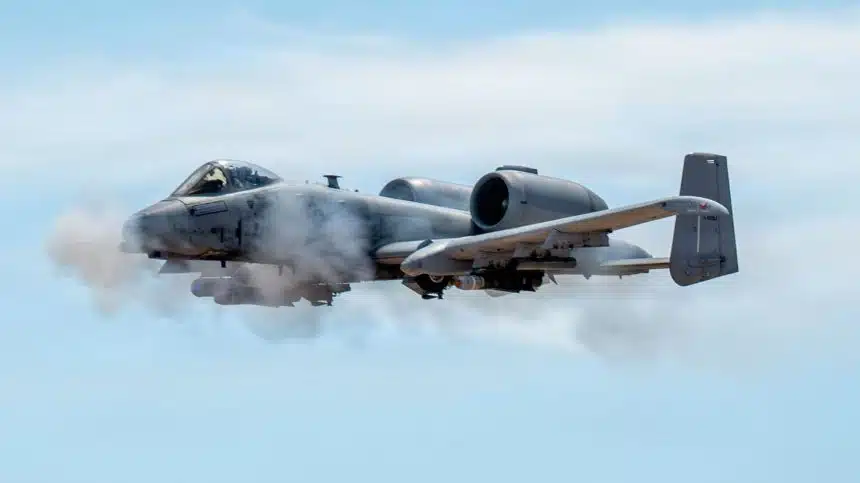
A bipartisan coalition of U.S. lawmakers has formally introduced legislative measures aimed at halting the planned retirement of the iconic A-10 Thunderbolt II until a fully certified, dedicated replacement is operational, as detailed in recent reporting by Stefano D'Urso for The Aviationist. Spearheaded by Representative Abe Hamadeh alongside co-lead Representative Don Davis, the proposed Bolstering Recognition, Resurgence, Retention, and Remembrance of the Thunderbolt (BRRRRT) Act seeks to mandate the maintenance of a viable Warthog fleet through Fiscal Year 2033 while protecting essential support infrastructure from being dismantled.
Named affectionately after the distinctive auditory signature produced by its heavy GAU-8/A Avenger 30mm cannon, the legislation addresses ongoing friction between congressional oversight committees and Air Force leadership regarding close air support capabilities. The military branch has long sought to divest itself of the legacy airframe in favor of multirole platforms like the F-35A Lightning II, but persistent combat effectiveness demonstrated during recent operations in the Middle East has fueled intense legislative pushback. Lawmakers argue that prematurely retiring the specialized jet without a true equivalent risks leaving frontline ground troops exposed during critical engagements.
Under the specific provisions outlined in the bill, the Air Force would be required to maintain an active inventory of at least 126 aircraft, effectively reversing recent drawdown trajectories and potentially drawing stored airframes back from the boneyard at Davis-Monthan Air Force Base. Furthermore, the legislation mandates that within ninety days of enactment, military leadership must submit a comprehensive restoration plan covering depot-level maintenance, specialized pilot training pipelines, and flight testing protocols. Crucially, any future replacement aircraft would only qualify if close air support remains its primary and uncompromised mission profile.
The prolonged debate over the Warthog underscores a wider doctrinal dilemma facing modern air arms as they attempt to balance next-generation technological integration with proven legacy capabilities. While future air dominance initiatives heavily lean toward stealth platforms, electronic warfare systems, and autonomous collaborative combat aircraft, the rugged survivability of the A-10—bolstered by its titanium cockpit bathtub and redundant flight control systems—remains unmatched for low-altitude battlefield support. Recent combat deployments have proven that specialized firepower still holds immense tactical value in asymmetric and regional conflicts.
Whether the BRRRRT Act ultimately secures passage through the rigorous congressional legislative process remains to be seen, but the initiative has already successfully forced a recalibration of near-term military aviation planning. As the Department of Defense weighs budgetary constraints against actual operational demands in contested environments, the future of the legendary Warthog continues to hang in the balance. For now, the push to keep the aircraft flying reflects an unwavering commitment to preserving specialized combat power until a truly viable successor takes to the skies.