Thursday, August 13, 2026

Manila's Eurofighter Pitch Looks Serious — Its Budget Numbers Say Otherwise


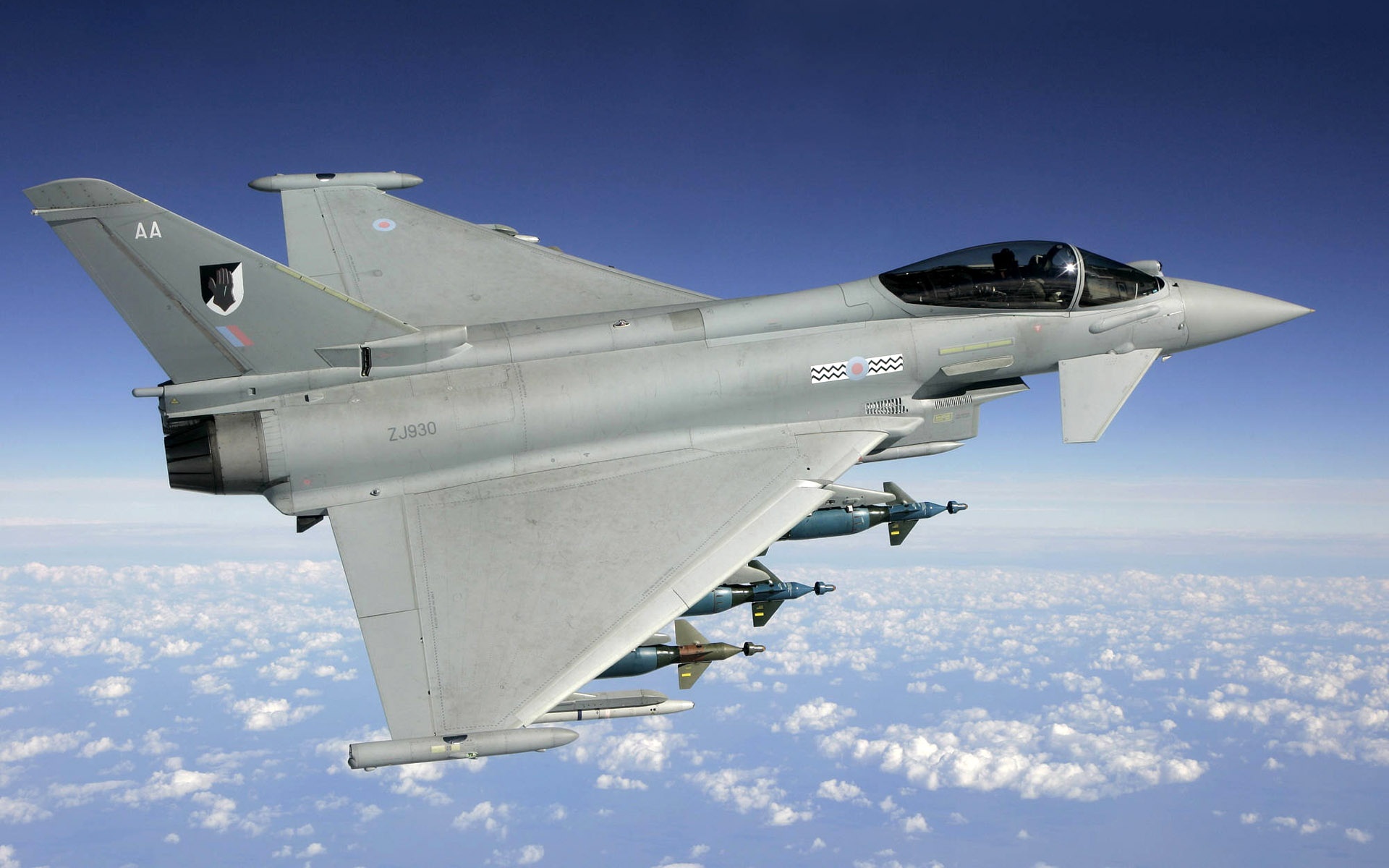
Leonardo has sharpened its sales pitch to the Philippines, with Enrico Fossatti, head of the company's Eurofighter Export Campaigns, telling the Philippine News Agency on August 11 that the consortium is prepared to tailor the Typhoon's configuration specifically to Manila's tropical, maritime operating environment, building on an offer of up to 32 Tranche 5 aircraft first floated in September 2025. The pitch is part of a five-way competition for the Philippine Air Force's Multi-Role Fighter (MRF) program that also includes Sweden's Gripen-E/F, South Korea's KF-21 Boramae, Lockheed's F-16V, and the Dassault Rafale, all vying to replace a PAF fleet still centered on the FA-50PH light fighter, an aircraft with neither the range nor the beyond-visual-range weapons load to seriously contest Chinese airpower over the South China Sea.

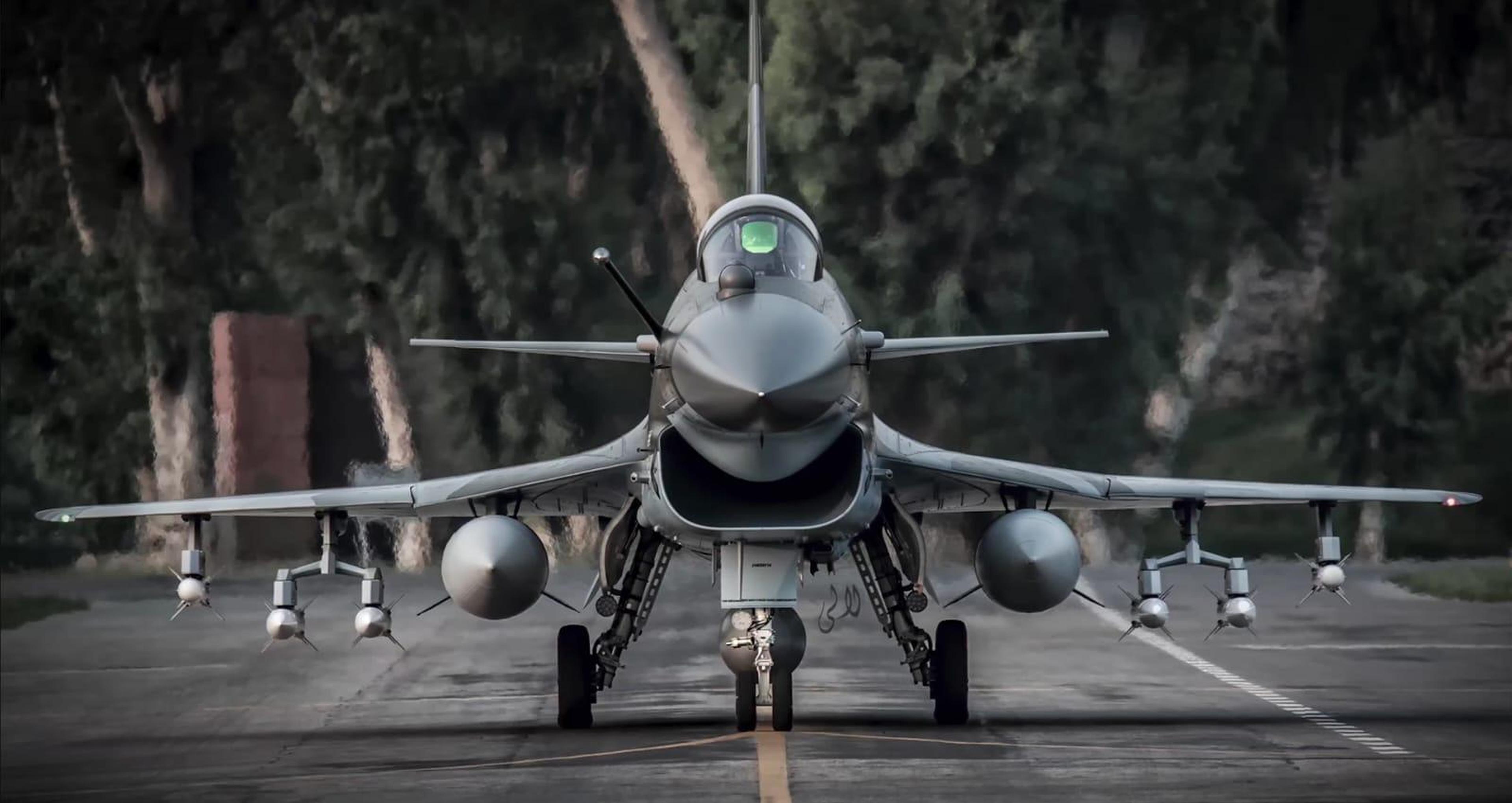
The timing of Leonardo's push is notable for a reason the source coverage doesn't dwell on: China has been actively working to undercut exactly this kind of European sales pitch, with Chinese state broadcaster CCTV claiming in May 2026 that a Pakistani J-10CE swept a Qatari Eurofighter Typhoon squadron 9-0 in a 2024 joint exercise, four BVR engagements and five dogfights, all reportedly won by the Chinese-origin jet. PLA analyst Rick Joe, among others, has offered a plausible read on that result that doesn't require dismissing it outright: Pakistan's air force had likely absorbed fresh PLAAF tactics and training specifically tailored to exploit the Eurofighter, making a lopsided outcome believable in that specific matchup without it necessarily meaning the J-10C is broadly superior, especially given the Eurofighter's own history of besting the F-22 in Red Flag exercises back in 2012. Whatever the exercise's true tactical significance, Beijing's decision to publicize it two years after the fact, right as the Philippines nears a fighter decision, reads as a deliberate attempt to seed doubt about the European option.

The bigger obstacle facing Leonardo's bid, though, isn't Chinese messaging, it's arithmetic. The Philippines' Department of National Defense has pegged the MRF program's budget at roughly PHP 60 billion to PHP 100 billion, somewhere around $1 billion to $1.7 billion, a figure that sits awkwardly against the cost of 32 Eurofighter Typhoons, aircraft that typically run well above $100 million apiece once weapons, spares, and support packages are included, putting a full-fleet purchase in the $4 billion-plus range even before Manila's stated preference for bundling in AWACS and aerial tanker platforms alongside the fighters themselves. That gap isn't a minor rounding error; it's the difference between what's been pitched and what's actually been appropriated; it's the difference between the headline offer and what Manila appears able to fund under current budget lines.

This funding pattern is not new to the Philippines' modernization effort, it's arguably the defining feature of it. Defense Secretary Gilberto Teodoro has previously told lawmakers that only about 10 percent of the first Horizon phase, running 2013-2018, and roughly 53 percent of the second, 2018-2022, were actually completed, prompting the government to restructure the entire program into the current $35 billion, ten-year Re-Horizon 3 framework specifically because the original paradigm had proven unworkable. Against that track record, an MRF budget line covering perhaps a quarter to a third of what a 32-aircraft Eurofighter order would actually cost looks less like an anomaly and more like the same structural funding gap that has trailed Philippine military modernization for over a decade, reappearing in a new procurement cycle with a new aircraft type attached.

None of this means the Eurofighter bid, or the broader MRF competition, is doomed; PAF Chief Lt. Gen. Arthur Cordura has been explicit that the goal was never parity with China's air force, "we cannot be at par with China even 10 to 20 years from now," he said in June, but rather credible deterrence, a threshold a much smaller fighter order could plausibly meet. But credible deterrence still requires aircraft that actually arrive, and the honest reading of Leonardo's expanded pitch is that it's competing less against the Gripen, the KF-21, or Chinese propaganda about a 2024 exercise, and more against a budget appropriation that, as written, doesn't yet cover the offer on the table.

China's Star-Tracking Missiles Are Solving the One Problem Golden Dome Was Counting On


 Researchers at China's Guangdong Aerospace Research Academy published findings on August 10 describing a prototype celestial navigation system designed to guide hypersonic vehicles when GPS and BeiDou satellite signals are jammed, spoofed, or otherwise denied, according to reporting picked up by the Hong Kong-based South China Morning Post. The approach uses stars as fixed reference points, the same principle sailors relied on with sextants for centuries, adapted to function through the shock layer and plasma sheath a hypersonic vehicle generates at Mach 5 and above, an environment that bends starlight like frosted glass and floods sensors with infrared radiation bright enough to overwhelm faint stellar signals. To solve that twofold interference problem, the researchers built dedicated radiation models, a specialized star sensor, and supporting databases, reporting a star-pattern recognition rate above 99 percent in clean conditions and better than 80 percent even under significant aerodynamic radiation interference, with attitude measurement accuracy better than 5 arcseconds.

The significance of this isn't really about hypersonic speed or maneuverability, both of which China has already demonstrated at scale; it's about closing the one dependency that has historically made even the fastest, most maneuverable hypersonic weapons potentially vulnerable to disruption. GPS and BeiDou signals can be jammed or spoofed, a fact well established by the Russia-Ukraine war's heavy use of electronic warfare against satellite-guided munitions, and inertial navigation systems that don't rely on external signals still accumulate drift error over time and distance. A functioning celestial navigation layer, paired with inertial guidance as backup, would give a hypersonic glide vehicle a genuinely self-contained targeting solution immune to the electronic warfare countermeasures that represent one of the few practical, low-cost tools a defender has against an otherwise nearly unstoppable weapon.

That matters enormously for the credibility of the layered defense architecture the U.S. is currently building specifically to counter this threat category. Golden Dome, the Pentagon's roughly $175 billion to $831 billion homeland missile shield depending on whose cost estimate is used, is explicitly designed around the premise that hypersonic glide vehicles are hard to intercept because they're hard to track, not because they're impossible to disrupt through other means. The program's Hypersonic and Ballistic Tracking Space Sensor (HBTSS) satellites and the broader Proliferated Warfighter Space Architecture exist to maintain custody of a maneuvering target across an unpredictable flight path specifically so interceptors have a fire-control-quality track to engage, and separately, U.S. and allied planners have long treated electronic warfare and signal denial against an adversary's own guidance systems as a genuine, if partial, layer of defense against precision-guided threats generally. A hypersonic vehicle that no longer needs GPS or BeiDou to hit its target removes one of the few soft-kill options available against it, pushing the entire defensive burden onto Golden Dome's space-based tracking and glide-phase interceptor layers, which remain unproven at the scale and precision this mission requires.

This is also a fairly direct rebuttal, even if unintentional, to the assumption embedded in a lot of Western missile-defense planning that adversary guidance systems represent an exploitable seam. Russia's development of fiber-optic-guided drones in Ukraine, explicitly built to defeat GPS jamming by eliminating any wireless signal dependency at all, already demonstrated one workaround to satellite-denial countermeasures for slower, shorter-range systems; China's celestial navigation research extends that same logic to weapons traveling at hypersonic velocity across intercontinental distances, a considerably harder engineering problem that the reported test results suggest China's Guangdong team may have meaningfully cracked, at least in prototype form.

It's worth treating the specific numbers here, the 99 percent recognition rate, the 5 arcsecond accuracy, with the same caution applied to any single-source claim from a state-linked research institute rather than an independently verified, peer-reviewed result; China has an obvious strategic incentive to publicize hypersonic advances that widen the perceived gap with Washington, and prototype lab results don't always translate cleanly into fielded operational systems. But even taken as a directional signal rather than a settled capability, it reinforces a pattern that should concern planners building Golden Dome around the assumption that tracking, not disruption-proofing, is the primary battleground: China isn't just building faster and more maneuverable missiles, it's systematically closing the small number of vulnerabilities that gave defenders any non-kinetic options at all.

A Single Su-35 Pilot Claims Two Su-27 Kills — And Ukraine's Own Numbers Show Why That Would Hurt So Much


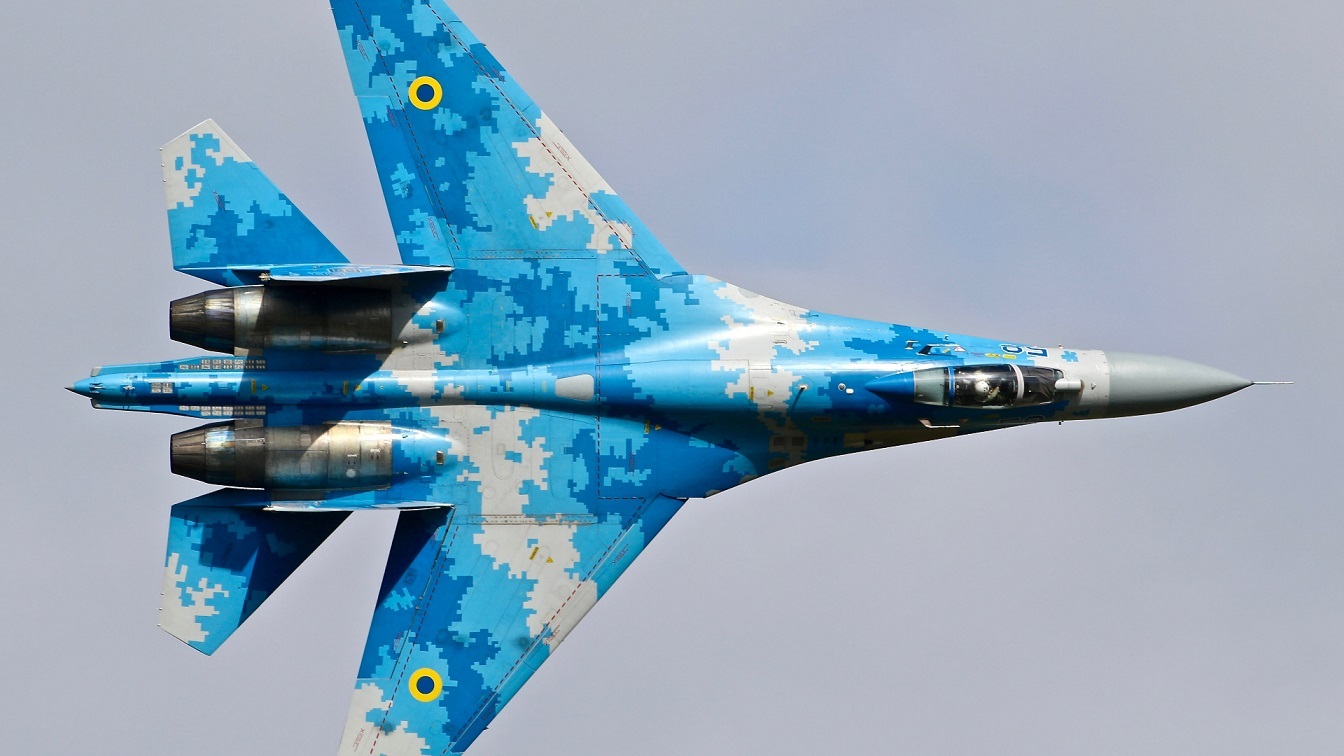
 Russian Aerospace Forces Deputy Commander-in-Chief Sergey Kobylash announced this week that a Russian Su-35S pilot destroyed two Ukrainian Su-27 fighters in a single engagement, firing three missiles after what Kobylash described as skillfully maneuvering into an advantageous tactical position. The claim was made through Russian state media and has not been independently confirmed by Ukraine's Air Force or General Staff, and as with most Russian Ministry of Defence combat claims throughout this war, it should be treated as an assertion pending corroboration rather than an established fact; Moscow has a documented track record of overstating Ukrainian losses, just as Kyiv has periodically overstated Russian ones.

What makes the claim worth examining seriously regardless of whether it's eventually verified, though, is how it lands against Ukraine's already-documented Su-27 scarcity. Reporting from March 2026 citing military blogger sources put Ukraine's operational heavy Su-27 fleet, including training variants, at just five aircraft, alongside five Su-25 attack jets, following the loss of a Su-27 flown by a highly decorated brigade commander to a Russian Su-35's long-range R-37M missile. If that five-aircraft figure was even roughly accurate five months ago, and Ukraine has not received a significant infusion of additional airframes since, and there's no public evidence it has, then a genuine two-aircraft loss in a single engagement would represent a substantial proportional hit to what was already a critically thin fleet, rather than a marginal one.

The Su-27 was the Soviet Union's premier air superiority fighter when it entered service in 1984, and Ukraine inherited its share as one of four post-Soviet successor states alongside Russia, Belarus, and Uzbekistan. Four decades on, it remains in Ukrainian service not because it's still competitive against modern Russian fighters, but because Ukraine has had no alternative supply of comparable heavy air-superiority airframes; the F-16s and Mirage 2000-5s it has received from NATO members are lighter, different-role aircraft rather than direct Su-27 replacements. Russian officials have repeatedly emphasized the Su-35's role in systematically hunting down what remains of Ukraine's Soviet-legacy fighter fleet, using R-37M missiles with reported ranges up to 350 kilometers, sometimes extending further when fired by the even faster MiG-31BM, specifically to engage Ukrainian aircraft from well outside the range at which Ukrainian pilots can effectively respond.

This pattern connects directly to the broader fixed-wing attrition problem already visible across Ukraine's fleet this year, non-combat losses like the recent MiG-29 "hung missile" crash over Odesa, combat losses to Su-35s and R-37M missiles, and a total inventory that open-source tracking places at somewhere between 89 and 137 aircraft depending on the count, spread thin across multiple incompatible airframe types. A heavy air-superiority asset like the Su-27 sits at a particularly sensitive point in that math: unlike drones or ground-based interceptors, there is no meaningful production pipeline anywhere in the world still manufacturing new Su-27s, meaning every airframe lost, confirmed or claimed, is one Ukraine cannot replace in kind, only substitute with a different, generally lighter type from a completely different logistics and training pipeline.

Whether Kobylash's specific two-kill claim holds up to independent scrutiny or joins the list of Russian MoD assertions that were later disputed or quietly walked back, the underlying trend it's consistent with is not really in dispute: Ukraine's Su-27 fleet has been shrinking steadily throughout 2026 under sustained R-37M pressure from Su-35s, Su-57s, and MiG-31BMs, and every additional loss, whether it's one aircraft or genuinely two in a single dogfight, pushes what was already described as a five-airframe fleet closer to operational irrelevance rather than merely smaller.

USS John F. Kennedy's Trials Are Good News That Still Can't Hide a Bad Year for Navy Carrier Availability


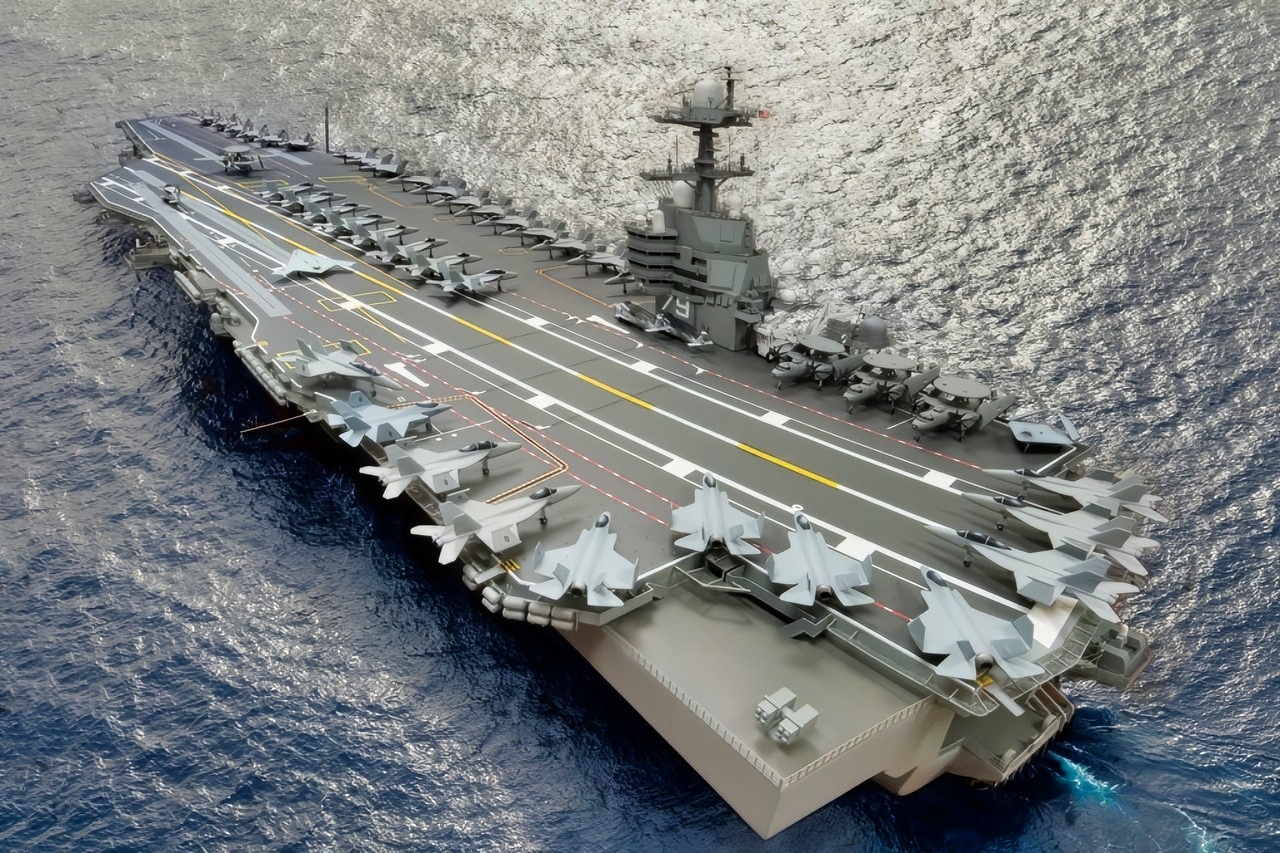
 The future USS John F. Kennedy (CVN-79) departed Huntington Ingalls Industries' Newport News Shipbuilding division on August 12 to begin acceptance trials, the Navy's second Ford-class carrier's critical at-sea evaluation before formal delivery, following eight days of builder's trials completed back in February. Seven of the carrier's 11 Advanced Weapons Elevators (AWE) are now complete, providing access to all weapons magazines and allowing crew training to proceed on the remaining four, according to information USNI News obtained from congressional reporting. Delivery remains scheduled for March 2027, a date the Navy has already revised more than once, most recently a two-year slip from an originally planned July 2025 handover tied to certification of the carrier's Advanced Arresting Gear (AAG) and continued AWE integration work.

That framing, trials as forward progress, is accurate but incomplete without the context of just how costly and prolonged the road to this point has been. CVN-79's estimated procurement cost has grown to roughly $11.5 billion, a $2.3 billion increase of about 25 percent over original projections, and the ship has already slipped five years from its initial planned delivery, with earlier Government Accountability Office reviews recommending the Navy delay even signing the construction contract until CVN-78's programmatic shortfalls were resolved, a recommendation the service didn't fully heed. The Senate Armed Services Committee, reviewing the broader Ford-class program in an earlier hearing, put the combined cost overrun across CVN-78 and CVN-79 at $4.7 billion and more than five years behind schedule, with lawmakers from both parties characterizing many of the underlying problems as foreseeable rather than unavoidable engineering surprises.

The timing of Kennedy's delay carries a specific operational cost the source coverage of this trial milestone doesn't fully spell out: it lands almost exactly when USS Nimitz (CVN-68), commissioned in 1975, is retiring after 50 years of service, which will leave the Navy operating just 10 aircraft carriers for roughly a year rather than the 11-ship fleet it has maintained for decades. That's a meaningful reduction in surge capacity even accounting for the reality that only around six carriers are typically underway or forward-deployed at any given time, since it compresses the maintenance, workup, and deployment rotation cycle across a smaller pool of hulls precisely during a period of sustained operational tempo across the Middle East, the Eastern Mediterranean, and the Indo-Pacific simultaneously.

That Indo-Pacific dimension is where the geopolitical stakes sharpen considerably. China's Fujian, commissioned November 5, 2025, is China's first carrier equipped with electromagnetic catapults rather than the ski-jump configuration used by the Liaoning and Shandong, and it has already conducted launch and recovery operations involving the J-15T fighter, the J-35 low-observable fighter, and the KJ-600 fixed-wing airborne early warning aircraft, the last of which meaningfully closes a surveillance-depth gap that previously distinguished U.S. carrier aviation from China's. The Ford class retains real structural advantages Fujian doesn't share, nuclear propulsion enabling unlimited-range operations without refueling the propulsion plant, roughly 2.5 times the electrical generation capacity of the Nimitz class for future radar and directed-energy growth, and decades of accumulated U.S. experience in sustained sortie generation and multi-carrier coordination that China is still building. But those advantages matter only when the carriers themselves are actually available, and a temporary ten-carrier fleet during a five-years-late, quarter-over-budget delivery is a less favorable moment for that comparison to be drawn than the Navy would likely choose.

None of this diminishes what Kennedy's acceptance trials genuinely represent, real technical progress on the two subsystems, AAG and the weapons elevators, that have driven most of the class's cost growth and delay in the first place, and HII has noted that later hulls like Enterprise (CVN-80) and Doris Miller (CVN-81) are already benefiting from lessons learned that came too late to help Kennedy's build. But the more useful way to read this milestone isn't simply "second Ford-class carrier nears delivery," it's "the carrier the Navy most needs to offset a temporary fleet contraction is arriving years late and a quarter over budget at the exact moment China's carrier program has closed one of the last remaining technical gaps between the two forces."

Langley to Kuwait: The Same Authority Gap Keeps Showing Up Three Years Apart


 When mystery drones swarmed Langley Air Force Base for weeks starting on the evening of December 6, 2023, the general responsible for defending American skies wasn't surprised — he was validated. "There were no surprises, at least for myself and the team at NORAD/NORTHCOM and others," retired Gen. Glen VanHerck, former head of NORTHCOM (U.S. Northern Command) and NORAD (North American Aerospace Defense Command), told a panel at the Space and Missile Defense (SMD) Symposium in Huntsville this week. "We've been articulating — my predecessors had been articulating — that this threat was here, it was real, it was now, and we weren't ready for it." VanHerck disclosed that two full years before Langley, on December 16, 2021, he had personally told then-Defense Secretary Lloyd Austin that he lacked the domain awareness to do his mission, warning that the U.S. was "not set up to fight in and from our own land" because military planning assumed conflict would happen somewhere else.

What actually paralyzed the response at Langley wasn't a missing sensor or interceptor, it was a jurisdictional dead zone. VanHerck explained that individual services' authority to act against drones "stopped at the fence line at the base, and immediately thereafter, it was really unclear to everybody whose responsibility and authority was it just outside the base." Installation commanders, he said, didn't feel empowered to act even when they detected a threat, caught between uncertainty over whether shooting down what might be a hostile drone, or might just as easily be a hobbyist's quadcopter, would get them covered or court-martialed. That paralysis persisted even as public pressure mounted following the so-called "Jersey Drone" panic of November 2024, a monthslong wave of sightings across New Jersey that VanHerck's own command later found showed no visual evidence of any real mass drone incursion at all, with most reports traceable to misidentified aircraft, stars, and planets.

This is precisely the same structural failure that shows up in VanHerck's separate remarks at the same SMD panel regarding the reported Iranian F-5 bombing run against Camp Buehring in Kuwait, where he described "two services pointing fingers at each other, and nobody made a decision on whose mission and role responsibility that was." Langley in December 2023 and Camp Buehring in March 2026 sit more than two years and an ocean apart, involve completely different threat types, and produced very different consequences, but they trace back to the identical root cause: a defense architecture where individual installations' authority ends at the fence line and nobody owns the space just beyond it. That the same general is describing the same organizational gap at both incidents, separated by over two years, suggests the fixes applied after Langley didn't fully close the seam VanHerck had been flagging since 2021.

Some of that gap has genuinely narrowed. Under VanHerck's successor, Gen. Gregory Guillot, NORTHCOM was given a formal role synchronizing the military's domestic drone response across bases like Wright-Patterson and Picatinny Arsenal, INDOPACOM received a similar mandate for the Pacific, and VanHerck credited current Defense Secretary Pete Hegseth with clearing up "a lot of the responsibility [and] authority" issues, pointing to the military's expanding use of directed-energy lasers against cartel drones along the southern border and the federal Safer Skies law, which extended limited domestic drone-mitigation authority to DHS (Department of Homeland Security), DOJ (Department of Justice), and select state, local, and tribal agencies. Those are real institutional changes, not cosmetic ones, and they represent exactly the kind of policy work VanHerck says he was pushing for in the memos he described writing years before Langley ever happened.

What VanHerck's own closing assessment makes clear, though, is that the authority question the Langley incursions exposed domestically is the same one still surfacing overseas: "We still have gaps and seams, and we need an integrated, layered approach driven by specific policy on what you must defend," he said, adding that "we're seeing some of this play out not only in our homeland. We're seeing some of it play out forward as well." Read alongside his Kuwait remarks from the same event, that's a direct acknowledgment that the fence-line authority problem never fully resolved, it just relocated. Fixing sensor coverage and fielding more counter-drone hardware, the technical half of this problem, is visibly underway across the services; fixing who is actually allowed to pull the trigger before or after a threat crosses an arbitrary boundary is the harder, slower half, and VanHerck's account suggests it's still being worked out in real time, incident by incident, rather than settled once and for all.

Three 1970s-Era F-5s Just Exposed the Same Gap the Army's $12M Interceptors Can't Fix


 Retired Gen. Glen VanHerck, former head of NORTHCOM (U.S. Northern Command) and NORAD (North American Aerospace Defense Command), used a panel at the Space & Missile Defense (SMD) Symposium in Huntsville to give new credibility to one of the more embarrassing reported episodes of the U.S.-Iran conflict earlier this year: a low-level bombing run by three Iranian F-5 Kowsar jets against Camp Buehring in Kuwait. "We got our rear-end handed to us," VanHerck told the panel, calling the episode "embarrassing as an airman." The U.S. government has still not officially confirmed the attack, which reportedly occurred around March 1, three days into the combined U.S.-Israeli strikes on Iran, but Iranian state broadcaster PressTV aired a segment in June featuring interviews with the pilots involved, describing a mission flown at times below 50 feet of altitude at high speed specifically to defeat radar coverage, including from E-3 Sentry AWACS (Airborne Warning and Control System) aircraft overhead.

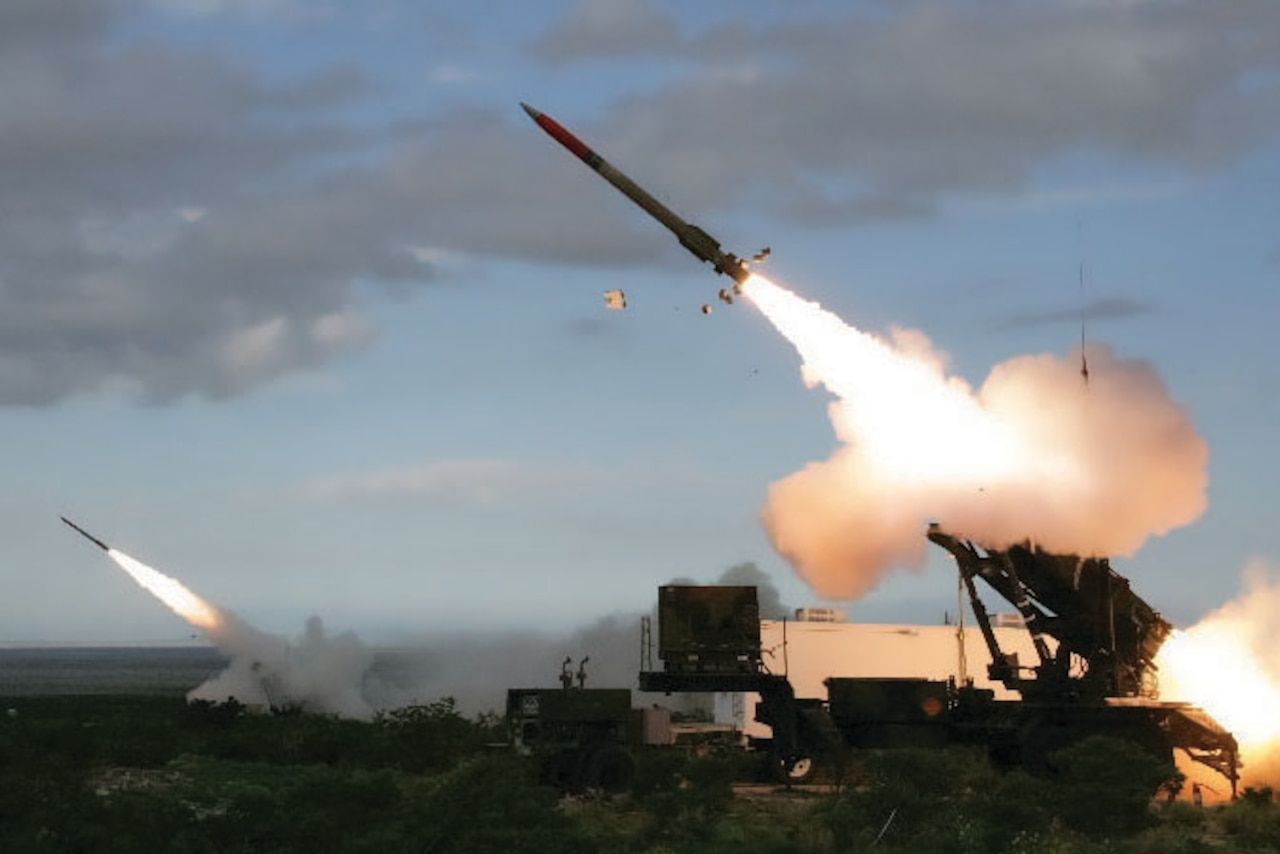
What makes this episode genuinely significant isn't the sophistication of the attacking aircraft, it's the near-total absence of it. Iran's F-5 fleet traces back to roughly 166 F-5E/Fs acquired from the United States in the 1970s under the Shah, and the aircraft that reportedly flew this mission were locally refurbished Kowsar variants of an airframe design now well over five decades old, flying unguided bomb runs rather than anything resembling a precision strike. That an attack profile this unsophisticated could reportedly penetrate Kuwaiti and U.S. airspace, strike a base that has hosted American forces continuously since 2003, and depart without being intercepted is precisely the "wake-up call" framing VanHerck applied, and it echoes almost exactly the ground-based radar coverage gap TWZ has separately reported as a known Patriot limitation: the system has documented difficulty engaging low-altitude threats approaching from unconventional vectors or those that have already passed overhead, and ground-based air defense more broadly cannot see past the horizon or intervening terrain without a dedicated look-down sensor layer.

VanHerck's more pointed criticism, though, wasn't about hardware at all. "We had two services pointing fingers at each other, and nobody made a decision on whose mission and role responsibility that was, candidly," he said, referring to a still-unresolved ambiguity between the Air Force and Army over which service leads base-defense responsibility, a division rooted in the 1947 split that gave the Army the historical lead on defending both services' installations from aerial attack. That organizational gap, not a missing interceptor type, is what VanHerck argues allowed risk to go unmanaged rather than merely undefended, and it is only now beginning to close, with the Air Force's own chief reportedly stepping forward to take on more of that mission alongside the Army's existing Patriot and THAAD (Terminal High Altitude Area Defense) architecture, and the Marine Corps separately expanding its own lower-tier air defense and counter-UAS (Unmanned Aerial System) forces.

This is where the Camp Buehring episode connects directly to the interceptor stockpile strain already reshaping Army posture following Epic Fury and the 12-Day War. Whatever base-defense reorganization emerges from VanHerck's criticism, it will still ultimately lean on the same finite pool of Patriot and THAAD interceptors the Army has been racing to replenish after drawing its Patriot stockpile down by more than half against Iran, and VanHerck's own warning about a "bifurcated solution" where Patriots, THAADs, and counter-drone systems operate without fused data and shared command and control is a direct articulation of the same magazine-depth and integration problem this blog has tracked since Rafferty's disclosures at this same SMD Symposium. A three-jet F-5 raid succeeding not because Iran fielded something new, but because U.S. and partner forces hadn't resolved who owned the mission of stopping it, is arguably a more damning data point than the cost-exchange imbalance driving the Patriot shortfall in the first place: cheap, old hardware didn't need to beat expensive, modern interceptors technically, it just needed nobody to be responsible for using them.

The unresolved friendly-fire incident referenced alongside this story, in which a Kuwaiti F/A-18 reportedly shot down three U.S. F-15E Strike Eagles amid the chaos and confusion the F-5 raid is said to have contributed to, without any official explanation offered to date, is its own separate indictment of how poorly coordinated the regional air picture was during this period. Taken together with the F-5 raid and VanHerck's criticism, the picture that emerges from Camp Buehring is less about any single capability gap and more about integration: a defense architecture built around exquisite, expensive systems can still be beaten by three 1970s jets and an unresolved org chart, and no amount of additional PAC-3 (Patriot Advanced Capability-3) production alone will fix that if the command and control question stays unanswered.

Ukraine Just Lost Another Fighter to Its Own Weapons — And That's the Real Story


Ukraine's Air Force confirmed the loss of a MiG-29 Fulcrum on August 10 after the aircraft caught fire mid-air during a counter-UAS (Unmanned Aerial System) sortie over Odesa Oblast and crashed, with the pilot ejecting safely and being recovered. The service has not officially confirmed a cause, but open-source analysts examining crash footage and multiple military commentators have converged on a "hung missile" explanation: the pilot triggered an air-to-air missile launch, the weapon's solid-rocket motor ignited as intended, but the rail failed to release it from the wing, leaving a live, burning missile attached to the airframe. Indian Air Force veteran Group Captain Johnson Chacko, speaking to EurAsian Times, attributed the likely culprit to Ukraine's aging stock of Soviet-era R-73 or R-27 missiles rather than the Western-sourced AGM-88 HARMs the fleet has been adapted to carry, noting that degraded propellant or a firing-sequence fault in older ordnance becomes more likely to cause exactly this kind of failure under sustained high-tempo operations. Ukraine's State Investigation Bureau has opened a criminal case and is searching for the aircraft's flight recorder to establish the actual cause.

Mechanically, this is a well-understood failure mode rather than a mysterious one; the same "hung ordnance" dynamic destroyed a U.S. Navy F-14 prototype in 1973 and forced a tense emergency landing for a USAF F-15E after an April 2024 mission against Iranian drones over Israel, where the crew had to fly home not knowing whether the still-attached missile would detonate. What makes the Odesa incident notable isn't the failure mode itself, though, but where it sits in a growing tally of Ukrainian fixed-wing combat losses that have nothing to do with enemy fire. In the eleven months preceding this crash alone, Ukraine lost an F-16 to an in-flight emergency on July 29, a MiG-29 over Poltava Oblast on June 26 to what was initially attributed to a Russian long-range air-to-air missile, a Su-24 bomber in Khmelnytskyi Oblast on June 16, and, going back further, at least three additional F-16s across April, May, and June of 2025 and Ukraine's first Mirage 2000-5 in July 2025.

Set against Ukraine's total available fighter inventory, that loss rate is significant rather than incidental. Open-source tracking puts Ukraine's active fighter fleet at somewhere between 89 and 137 combat-capable fixed-wing aircraft depending on how the count is drawn, spread across an unusually fragmented mix of MiG-29 Fulcrums, Su-27 Flankers, Su-24 strike aircraft, F-16AM/BMs, and a small Mirage 2000-5F contingent. Every one of those types except the F-16 is either out of production entirely or reliant on secondhand transfers from NATO members retiring their own aging fleets, which is precisely why Warsaw's recent offer of four retired Polish MiG-29s, after months of Ukrainian requests, was treated as newsworthy rather than routine. A fleet this size cannot easily absorb a loss cadence running at roughly one fixed-wing combat aircraft every six to eight weeks without either shrinking meaningfully or leaning harder on whatever replacement pipeline still exists.

The deeper issue the Odesa crash points to is sustainment rather than survivability. Ukraine's F-16s and Mirage 2000-5s, its two most capable Western types, have themselves suffered multiple non-combat losses despite representing the newest hardware in the fleet, which suggests the strain runs through maintenance tempo, pilot fatigue, and munitions age across the whole force rather than being isolated to any single airframe's design flaws. A MiG-29 flying counter-drone intercept missions on aging R-73s procured or manufactured well before Ukraine's independence is operating exactly the kind of stockpile Chacko flagged as prone to anomalous ignition, and Ukraine has limited ability to simply manufacture fresh replacements for Soviet-era air-to-air missiles the way it can request additional airframes from allies.

None of this is likely to feature prominently in ceasefire negotiations the way territorial or security-guarantee questions do, but it belongs in the same picture as the interceptor shortages already straining Ukraine's ground-based air defenses. A fighter fleet losing aircraft to its own aging ordnance at a steady clip, on top of whatever Russia manages to shoot down directly, is eroding Ukraine's air power through attrition that has nothing to do with the state of the front line — and unlike a ceasefire, that kind of wear cannot be paused by a diplomatic agreement once it's already baked into the hardware still in service.

Russia's Strikes on Ukraine Aren't Pausing for Peace Talks — And Ukraine's Interceptor Shortage Is Why They're Landing


Diplomatic momentum and battlefield intensity have moved in opposite directions for most of 2026, and early August has made that divergence unusually stark. On August 1, Russia launched a barrage of ballistic missiles and drones into Kyiv that killed at least nine people, two days after a separate attack had already killed ten and wounded more than fifty. Four days later, on August 5, Russian forces struck Kyiv and the surrounding region with 29 missiles and 115 drones, killing 17 and wounding 44, in an assault Ukrainian President Volodymyr Zelenskyy said mainly targeted warehouses, infrastructure, and a railway station rather than military positions. None of the missiles used in that August 5 attack were intercepted, a detail Zelenskyy pointed to directly, warning that lives could have been saved had allies replenished Ukraine's stock of missile interceptors sooner.

That framing is worth pausing on, because it isn't just rhetorical. CNN's reporting on the escalation, drawing on ACLED (Armed Conflict Location & Event Data Project) tracking, describes both sides' offensive capabilities as now outstripping their air defenses, meaning more strikes are reaching their targets, more infrastructure is being destroyed, and casualties are climbing on a weekly basis even as the front line itself remains largely static. This is not a story about Russia suddenly launching more missiles; it's a story about interception rates falling as available interceptor stocks run down relative to the volume of what's being fired, which is precisely the dynamic that has been reshaping U.S. Army posture on the other side of the world following Epic Fury and the 12-Day War against Iran.

The parallel is not incidental. Ukraine's air defense architecture leans heavily on the same Patriot systems the U.S. Army has been drawing down against Iranian threats, and both theaters are demonstrating the same underlying vulnerability: a defender's ability to intercept mass missile and drone salvos is gated by a finite, expensive interceptor supply that simply cannot be replenished at the pace modern salvo warfare consumes it. Where the U.S. still has a domestic production base and a defense secretary publicly disputing the severity of its own shortfall, Ukraine has neither cushion, and the practical result shows up directly in casualty figures: a zero-interception outcome against a 29-missile attack is not a sign Russian missile technology has leapt forward, it's a sign the air defense magazine behind it has been drawn down faster than it can be refilled.

This is also precisely why the "peace talks continue despite strikes" framing that's dominated headlines through 2026 understates what's actually happening strategically. The pattern has repeated across nearly every reported negotiating round this year, from February's Geneva trilateral talks through the June exchange of open letters between Zelenskyy and the Kremlin to the current round of shuttle diplomacy, with Russian strikes continuing or intensifying around nearly every diplomatic milestone rather than pausing for it. Whether that reflects genuine indifference to the diplomatic track or a deliberate effort to extract maximum battlefield leverage before any ceasefire locks in current territorial and capability positions, the effect on the ground is the same: Moscow's ability to keep striking productively depends less on the state of negotiations than on whether Ukraine's air defenses can still intercept what's being thrown at it, and as of early August, that capacity is visibly eroding.

What happens next likely hinges less on the negotiating table than on whether Ukraine's Western backers treat interceptor resupply with the urgency the U.S. Army has been forced to apply to its own post-Epic Fury shortfall. A ceasefire signed while Ukraine's Patriot batteries are running near-empty locks in a much weaker negotiating position than one signed while its skies are actually defended, and every strike landing uncontested, like the August 5 attack, is both a humanitarian toll and a data point Moscow can read as confirmation that waiting out the diplomatic process costs it little while Kyiv's ability to protect its own cities keeps shrinking.

Su-57's Air Superiority Role Gets Its First Real Test Case — With a Major Asterisk


For most of its combat history in Ukraine, Russia's Su-57 has operated less like an air superiority fighter and more like a cautiously employed standoff strike platform, launching Kh-59 and Kh-69 cruise missiles from deep behind Russian lines while avoiding penetration into Ukraine's denser air defence coverage. That pattern held through 2022-2025, with the type's most notable close-in engagement being a 2024 mission in which a Su-57 reportedly used a short-range R-74 missile to destroy a malfunctioning S-70 Okhotnik unmanned stealth aircraft before it could be captured, itself a defensive rather than air-to-air superiority mission. Reports emerging in May 2026, however, point to a materially different employment: a claimed Su-57 shootdown of a Ukrainian Saab 340 AEW&C (Airborne Early Warning and Control) aircraft using a long-range R-37M missile, which, if accurate, would represent the type's first confirmed genuine air-to-air kill and its most direct evidence yet of an actual air superiority mission profile.

The claim itself warrants real caution before being treated as established fact. It originated with Greek and Turkish outlets citing unnamed sources rather than an official Russian Ministry of Defence or Ukrainian General Staff statement, and as of the reporting available, neither Kyiv, Moscow, nor Stockholm has confirmed or denied it. What lends the claim some technical plausibility, rather than proof, is that the R-37M (also designated RVV-BD) is purpose-built for exactly this kind of engagement: a 300-400km-range, Mach 6-capable missile developed specifically to threaten high-value, low-maneuverability targets like AWACS aircraft and tankers, and it is already integrated on the MiG-31BM and Su-35S, making Su-57 compatibility a logical rather than surprising extension. Sweden transferred two Saab 340 AEW&C aircraft to Ukraine as part of a 2024 aid package, with the first confirmed sighting of one operating in Ukrainian service occurring in March 2026, so the target type and rough timeline at least line up with what's being claimed.

If the kill is eventually verified, its significance goes well beyond a single airframe. AEW&C aircraft are the kind of asset that materially degrades an air force's broader combat effectiveness when lost, since they provide the airspace awareness and control functions that everything else in a modern integrated air operation depends on; losing even one of Ukraine's two Saab 340s would represent a disproportionate blow relative to the platform count involved. It would also validate, in actual combat rather than in marketing material, Russia's design intent behind pairing the Su-57's low-observable characteristics with the R-37M's stand-off reach: a fighter that doesn't need to be detected to threaten a high-value target from outside the reach of most fighter-carried air-to-air missiles. That combination is precisely the sales pitch Rostec has been making to prospective Su-57E export customers, and Russian officials have been explicit that combat performance in Ukraine, however limited in scale, is central to that pitch.

The export angle matters because, despite years of promotion, the Su-57E has secured just one confirmed customer to date in Algeria, a country already operating a Russian-sourced fleet of Su-30MKAs, MiG-29s, and MiG-25s, meaning it represents a continuation of an existing relationship rather than a genuinely contested win against Western or Chinese fifth-generation competitors. A verified AWACS kill, even a single one, would be a materially stronger marketing data point than the vague "combat-tested" language Russia has relied on so far, particularly for prospective buyers weighing the Su-57E against China's J-35 or continuing to evaluate it as a hedge against delays in indigenous programs.

That last dynamic has real relevance beyond Russia's immediate export list. India has periodically revisited its own interest in the Su-57 over the past decade even as it pursues its indigenous AMCA fifth-generation fighter on a mid-2030s operational timeline, and any evidence of proven long-range air-to-air performance would feed directly into that evaluation, particularly given India's own doctrine of pairing long-range AAMs with airborne early warning assets across a contested Himalayan and maritime frontier. Whether the Saab 340 claim holds up to verification or quietly disappears the way several earlier unconfirmed Su-57 combat claims have, the more durable story here is the direction Russia is pushing the aircraft's operational narrative: from a scarce asset kept deliberately out of harm's way, toward a platform Moscow wants the world to believe can win the air superiority fight it was originally designed for.

Is the F-16 Still Relevant for PAF in a Fight With India? The May 2025 War Already Answered That


 Whether Pakistan's F-16 fleet remains a credible frontline asset against India is no longer a hypothetical debate; it was effectively settled by how PAF (Pakistan Air Force) actually employed its aircraft during the four-day conflict of May 7-10, 2025. Despite operating somewhere between 75 and 80 F-16s, PAF's counter-offensive against the Indian Air Force (IAF) during Operation Sindoor and the subsequent Pakistani response was carried out predominantly by JF-17 Thunders and Chinese-supplied J-10C fighters, with Pakistani officials publicly confirming to the United States that no F-16s were flown or shot down during the engagement at all. That is not incidental. It reflects both a legal constraint and an operational judgment that together explain why Islamabad's most numerically significant fighter type sat out its own country's largest air battle in decades.

The legal constraint is the End-Use Monitoring (EUM) agreement attached to every Foreign Military Sales (FMS) transfer of F-16s to Pakistan, reinforced by a $397 million Technical Security Team program approved by Washington in February 2025 specifically to ensure the fleet stays confined to counterterrorism operations rather than conventional warfare against India. Every F-16 in PAF service, including aircraft acquired decades ago under the original Peace Gate program of the 1980s, remains subject to this restriction, and it is enforced closely enough that Pakistan volunteered evidence of non-use to preempt Indian claims of a shootdown, mirroring the same dispute that played out after the 2019 Balakot skirmish. In effect, the F-16 is politically unavailable for the one contingency it would most plausibly be needed for, which makes its combat relevance against India a moot question regardless of the airframe's technical merits.

Even setting the EUM restriction aside, the operational case for leading with the F-16 has weakened considerably. The J-10C that Pakistan flew instead is a genuine 4.5-generation platform fielding the PL-15 long-range air-to-air missile (AAM), and Chinese state media has since confirmed PAF J-10Cs were credited with downing multiple Indian Rafales during the May 7 engagement, a claim that, whatever its precise casualty count, at minimum demonstrates PAF leadership trusted the J-10C over the F-16 as its premier BVR (Beyond Visual Range) shooter against India's newest fighter. That trust is not surprising given the fleet's build dates: PAF's F-16s, even the more capable Block 52 variants delivered in the 2010s, run on an airframe design dating to 1974, and the oldest examples in Pakistani service are now pushing five decades old, making them the least modern fast-jet type in PAF's frontline inventory rather than the most.

India's own trajectory sharpens the contrast further. Where PAF has been augmenting its fleet with J-10Cs and the domestically co-produced JF-17 Block III, IAF has spent the past decade fielding Rafales, upgrading its Su-30MKI fleet, and layering in the Russian S-400 air defense system, whose reported success against Pakistani strikes during the same conflict was highlighted by Indian officials as a bigger story than any individual air-to-air result. With FlightGlobal's 2025 tally putting India at 616 combat aircraft against Pakistan's 387, PAF's numerical disadvantage was never new, but the qualitative gap the F-16 was once relied upon to offset has now shifted toward the J-10C and JF-17 Block III instead, leaving the Viper as a legacy type filling out squadron numbers rather than anchoring PAF's high-end response to India.

None of this means the F-16 disappears from PAF's order of battle; with $686 million in U.S.-approved upgrades and support flowing to the fleet as recently as late 2025, Islamabad clearly intends to keep the type flying for its counterterrorism mandate and as a hedge against further disruption to Chinese supply. But "still flying" and "still relevant to an India contingency" are no longer the same claim, and the events of May 2025 have already drawn that distinction for anyone still debating it in the abstract. The more consequential question going forward is less about the F-16's remaining shelf life and more about how quickly PAF can scale J-10C and JF-17 Block III numbers, and secure the rumored J-35 stealth acquisition, before IAF's own modernization — Rafale expansion, AMCA development, and a swelling missile defense architecture under Mission Sudarshan Chakra — widens the qualitative gap PAF is racing to close.

Vietnam Cuts Steel on Its First Indigenous Frigate, But the Real Story Is the Scale Gap It Can't Close


On 10 August 2026, Vietnam held a ceremony at Song Thu Corporation's Da Nang shipyard to mark the start of construction on the Vietnam People's Navy's (VPN) first domestically designed multipurpose frigate, an anti-submarine warfare (ASW) platform that General Pham Hoai Nam, Vietnam's Deputy Minister of Defence, described as carrying a very high proportion of domestically developed weapons and technical systems. Earlier reporting had suggested the ship would be a 4,000-tonne, 125-metre vessel derived from a heavily modified Russian Project 11356R Admiral Grigorovich-class hull, but those figures proved inflated; the actual design appears closer to 2,500-3,000 tonnes and roughly 105 metres, putting it only slightly larger than Vietnam's existing Gepard 3.9-class (Project 11661) frigates rather than in an entirely new displacement class.

The weapons fit, insofar as it can be inferred from the scale model and rendering shown at the ceremony, is a genuinely ambitious package for a first indigenous surface combatant. Forward-mounted RBU-6000-style ASW rocket launchers sit ahead of a 76mm naval gun based on the AK-176 design and already in production at Vietnam's Z173 and Z125 Factories, while a twelve-cell vertical launch system amidships is speculated to house a naval variant of Viettel's TLĐK-01 surface-to-air missile, itself still under development with an estimated 70km range. Round that out with quad-packed VCM-family anti-ship missile launchers, MANPADS launchers for counter-drone work, 533mm torpedo tubes, AK-630M-type close-in weapon systems, and a Viettel-developed phased-array radar, and the ship is clearly designed to be Vietnam's most capability-dense surface combatant to date. A 36-month build timeline has been set, though for a first-of-class indigenous design integrating a domestically developed SAM that hasn't finished development yet, that schedule carries real risk of slipping.

This program sits inside a broader indigenous shipbuilding push that has picked up noticeably over the past two years. Song Thu is separately finishing a second submarine rescue vessel, the Naval Technical Institute closed out its TN-75 midget submarine project in 2025 with a boat capable of a week submerged and a six-to-seven-man commando payload, and Ba Son Corporation is simultaneously building a VDC-01 landing ship and a third and fourth PS500 guided-missile corvette. Taken together, this is less a single headline program than a sustained, multi-yard effort to reduce Vietnam's historical dependence on Russian-sourced hulls like the Gepard-class frigates and Kilo-class submarines that still form the core of the VPN's blue-water capability.

The strategic logic is straightforward and explicitly stated by Hanoi: Vietnam lost the Paracel Islands to China in 1974 and continues to face Chinese pressure around the Spratlys, and the country's 2016 Resolution No. 20 committed it to becoming a "strong country of the sea" less dependent on any single foreign supplier for its naval hardware. What that logic runs into, though, is a scale mismatch that indigenous shipbuilding alone cannot close. China's naval shipbuilding capacity has been assessed by U.S. Navy briefings and CSIS analysis at roughly 230 times that of the United States, and the PLAN commissioned close to 20 new warships in 2025 alone, including multiple Type 052D destroyers and two ship classes of frigates entering service in the same year that Vietnam is laying the keel for its very first indigenous one. A single 2,500-3,000 tonne ASW frigate, however capable, is not a fleet-level answer to an adversary building destroyers and frigates on a near-monthly cadence.

What Vietnam's approach actually buys, then, isn't parity with China's surface fleet, which was never realistically on the table, but rather the kind of technological and industrial self-sufficiency that reduces vulnerability to external supply disruption and gives Hanoi a genuine indigenous baseline to build on for the next class of ship. It mirrors a pattern visible across the wider Indo-Pacific, where the Philippines, Indonesia, and Taiwan have all pursued their own domestically built landing and amphibious platforms rather than betting solely on great-power patronage. None of these programs individually shifts the regional balance of naval power away from China, but collectively they signal that Beijing's neighbors are choosing to absorb the cost and risk of building their own capability rather than remaining wholly dependent on suppliers whose interests may not always align with their own.

Army Throws Open Its Test Ranges to Industry, Betting Speed Can Outrun Its Interceptor Shortfall


With the Army still digesting the interceptor drawdown from Epic Fury and the 12-Day War, service leadership has moved to attack the slower half of the problem: how long it takes new weapons to go from prototype to program of record in the first place. The Army announced this month that it is opening five military test ranges, four domestic and one in Morocco, to private industry, including firms with no existing government contract or partnership. Dugway Proving Ground (Utah), West Cibola Range (Arizona), Camp Shelby Joint Forces Training Center (Mississippi), Camp Grayling (Michigan), and the Africa Multidomain Training and Experimentation Center (Morocco) will now accept range-access requests through a single online portal, testrange.army.mil, rather than requiring companies to first secure a formal partnership or navigate a program of record. Army Secretary Dan Driscoll framed the change bluntly: a company with a viable system should not need "a team of lawyers and a program of record just to prove their equipment works."

The ranges are not uniform in what they offer, and that specialization is itself informative about where the Army's acquisition anxiety is concentrated. Camp Grayling will host a recurring "electromagnetic unreliability test event" beginning in September, explicitly modeled on the degraded-signal, contested-EW (Electronic Warfare) conditions observed in Ukraine, while West Cibola is currently limited to drone and counter-drone (C-UAS) assessments and Dugway offers long-range fires testing. This is not a generic modernization gesture; it is a targeted attempt to compress the test-and-evaluation timeline specifically for the categories the Army has publicly identified as its most urgent gaps — drones, C-UAS systems, long-range fires, and, notably, "cheap interceptors."

That last category is where this story connects directly to the stockpile numbers Lt. Gen. John Rafferty laid out at the SMD Symposium. CSIS (Center for Strategic and International Studies) tracking already shows Patriot interceptor inventories down from roughly 2,300 to somewhere between 759 and 827 following Epic Fury, and while Defense Secretary Pete Hegseth has disputed characterizations of the shortfall as "critically" depleted, the Pentagon's own posture — pressing industry to accelerate production of PAC-3 (Patriot Advanced Capability-3) and lower-cost alternatives like Lockheed's PAC-3 ACE (Adapted Capability Effector) — tells a consistent story regardless of how the numbers are framed publicly. Opening test ranges to non-traditional vendors is the upstream fix to the same downstream problem: if the interceptor pipeline cannot refill fast enough through legacy primes alone, the fastest lever available is widening who is allowed to compete for that pipeline in the first place, and cutting the years-long test-and-evaluation bottleneck that has historically kept smaller firms out.

This also slots into a broader pattern under the Army Transformation Initiative (ATI), which has spent the past year redirecting funding away from legacy platforms toward SUAS (Small Unmanned Aircraft Systems), C-UAS, and long-range fires, alongside a parallel push, led by Joint Interagency Task Force 401, to build an online marketplace for counter-drone procurement and extend it to allied nations under agreements signed at Eurosatory 2026. Seen together, the test-range opening is not an isolated announcement but the test-and-evaluation half of an acquisition pipeline the Army has been rebuilding end-to-end: faster range access on one end, a streamlined marketplace and allied interoperability push on the other, all aimed at collapsing a procurement cycle that has historically been measured in years rather than months.

Whether this actually solves the shortfall Rafferty described at SMD is a separate question from whether it addresses the right bottleneck. Faster range access does nothing to expand the physical production capacity for PAC-3 or THAAD (Terminal High Altitude Area Defense) interceptors, which remain gated by manufacturing throughput at Lockheed and other primes rather than by testing delays. What it does do is shorten the runway for the "cheap interceptor" and counter-drone alternatives the Army is counting on to absorb a larger share of future engagements, meaning the real test of this initiative will not be how many companies request range time, but how many of the systems that emerge from it are fielded in time to matter for the next contingency rather than the last one.