
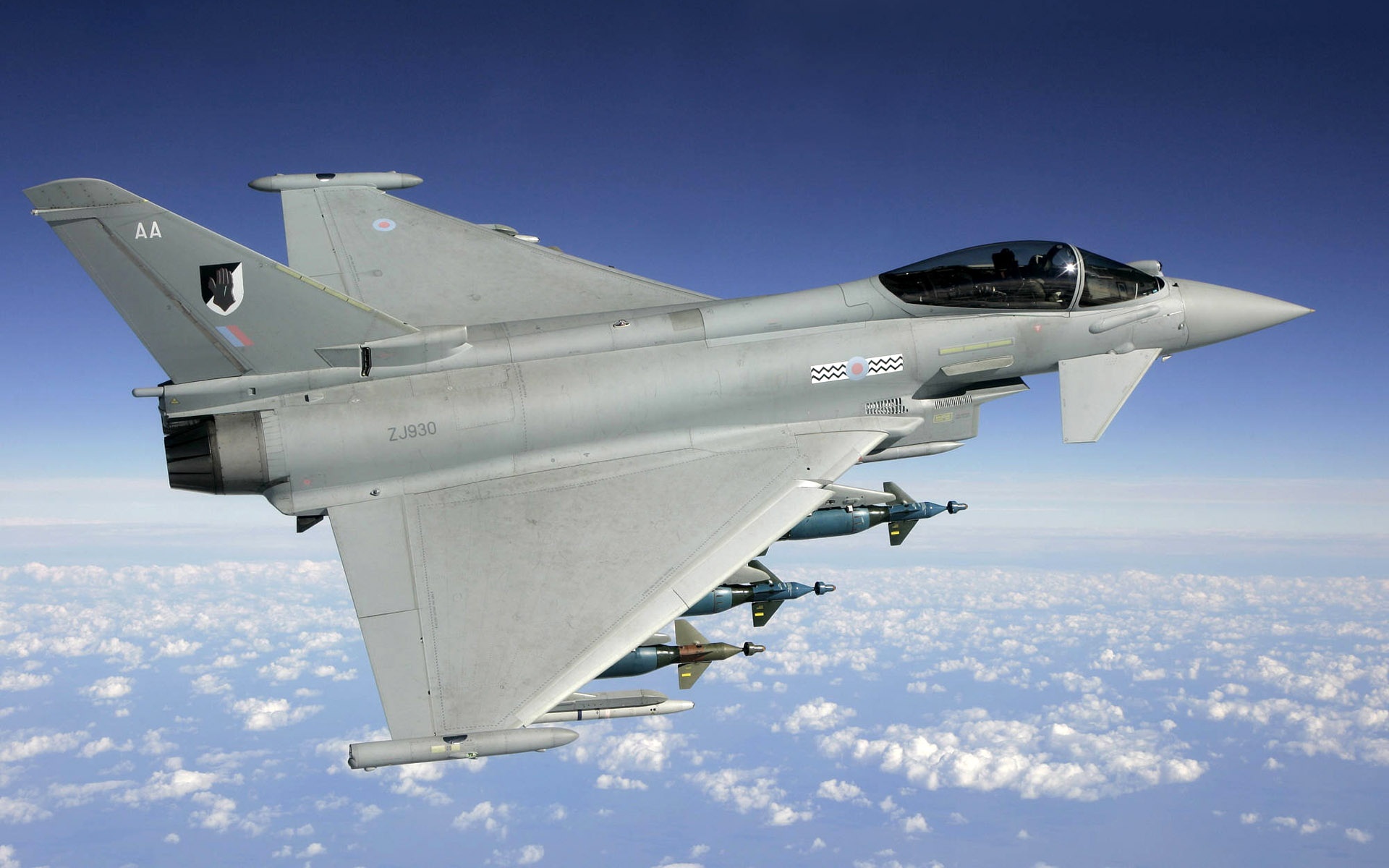
Leonardo has sharpened its sales pitch to the Philippines, with Enrico Fossatti, head of the company's Eurofighter Export Campaigns, telling the Philippine News Agency on August 11 that the consortium is prepared to tailor the Typhoon's configuration specifically to Manila's tropical, maritime operating environment, building on an offer of up to 32 Tranche 5 aircraft first floated in September 2025. The pitch is part of a five-way competition for the Philippine Air Force's Multi-Role Fighter (MRF) program that also includes Sweden's Gripen-E/F, South Korea's KF-21 Boramae, Lockheed's F-16V, and the Dassault Rafale, all vying to replace a PAF fleet still centered on the FA-50PH light fighter, an aircraft with neither the range nor the beyond-visual-range weapons load to seriously contest Chinese airpower over the South China Sea.
The timing of Leonardo's push is notable for a reason the source coverage doesn't dwell on: China has been actively working to undercut exactly this kind of European sales pitch, with Chinese state broadcaster CCTV claiming in May 2026 that a Pakistani J-10CE swept a Qatari Eurofighter Typhoon squadron 9-0 in a 2024 joint exercise, four BVR engagements and five dogfights, all reportedly won by the Chinese-origin jet. PLA analyst Rick Joe, among others, has offered a plausible read on that result that doesn't require dismissing it outright: Pakistan's air force had likely absorbed fresh PLAAF tactics and training specifically tailored to exploit the Eurofighter, making a lopsided outcome believable in that specific matchup without it necessarily meaning the J-10C is broadly superior, especially given the Eurofighter's own history of besting the F-22 in Red Flag exercises back in 2012. Whatever the exercise's true tactical significance, Beijing's decision to publicize it two years after the fact, right as the Philippines nears a fighter decision, reads as a deliberate attempt to seed doubt about the European option.
The bigger obstacle facing Leonardo's bid, though, isn't Chinese messaging, it's arithmetic. The Philippines' Department of National Defense has pegged the MRF program's budget at roughly PHP 60 billion to PHP 100 billion, somewhere around $1 billion to $1.7 billion, a figure that sits awkwardly against the cost of 32 Eurofighter Typhoons, aircraft that typically run well above $100 million apiece once weapons, spares, and support packages are included, putting a full-fleet purchase in the $4 billion-plus range even before Manila's stated preference for bundling in AWACS and aerial tanker platforms alongside the fighters themselves. That gap isn't a minor rounding error; it's the difference between what's been pitched and what's actually been appropriated; it's the difference between the headline offer and what Manila appears able to fund under current budget lines.
This funding pattern is not new to the Philippines' modernization effort, it's arguably the defining feature of it. Defense Secretary Gilberto Teodoro has previously told lawmakers that only about 10 percent of the first Horizon phase, running 2013-2018, and roughly 53 percent of the second, 2018-2022, were actually completed, prompting the government to restructure the entire program into the current $35 billion, ten-year Re-Horizon 3 framework specifically because the original paradigm had proven unworkable. Against that track record, an MRF budget line covering perhaps a quarter to a third of what a 32-aircraft Eurofighter order would actually cost looks less like an anomaly and more like the same structural funding gap that has trailed Philippine military modernization for over a decade, reappearing in a new procurement cycle with a new aircraft type attached.
None of this means the Eurofighter bid, or the broader MRF competition, is doomed; PAF Chief Lt. Gen. Arthur Cordura has been explicit that the goal was never parity with China's air force, "we cannot be at par with China even 10 to 20 years from now," he said in June, but rather credible deterrence, a threshold a much smaller fighter order could plausibly meet. But credible deterrence still requires aircraft that actually arrive, and the honest reading of Leonardo's expanded pitch is that it's competing less against the Gripen, the KF-21, or Chinese propaganda about a 2024 exercise, and more against a budget appropriation that, as written, doesn't yet cover the offer on the table.

No comments:
Post a Comment