
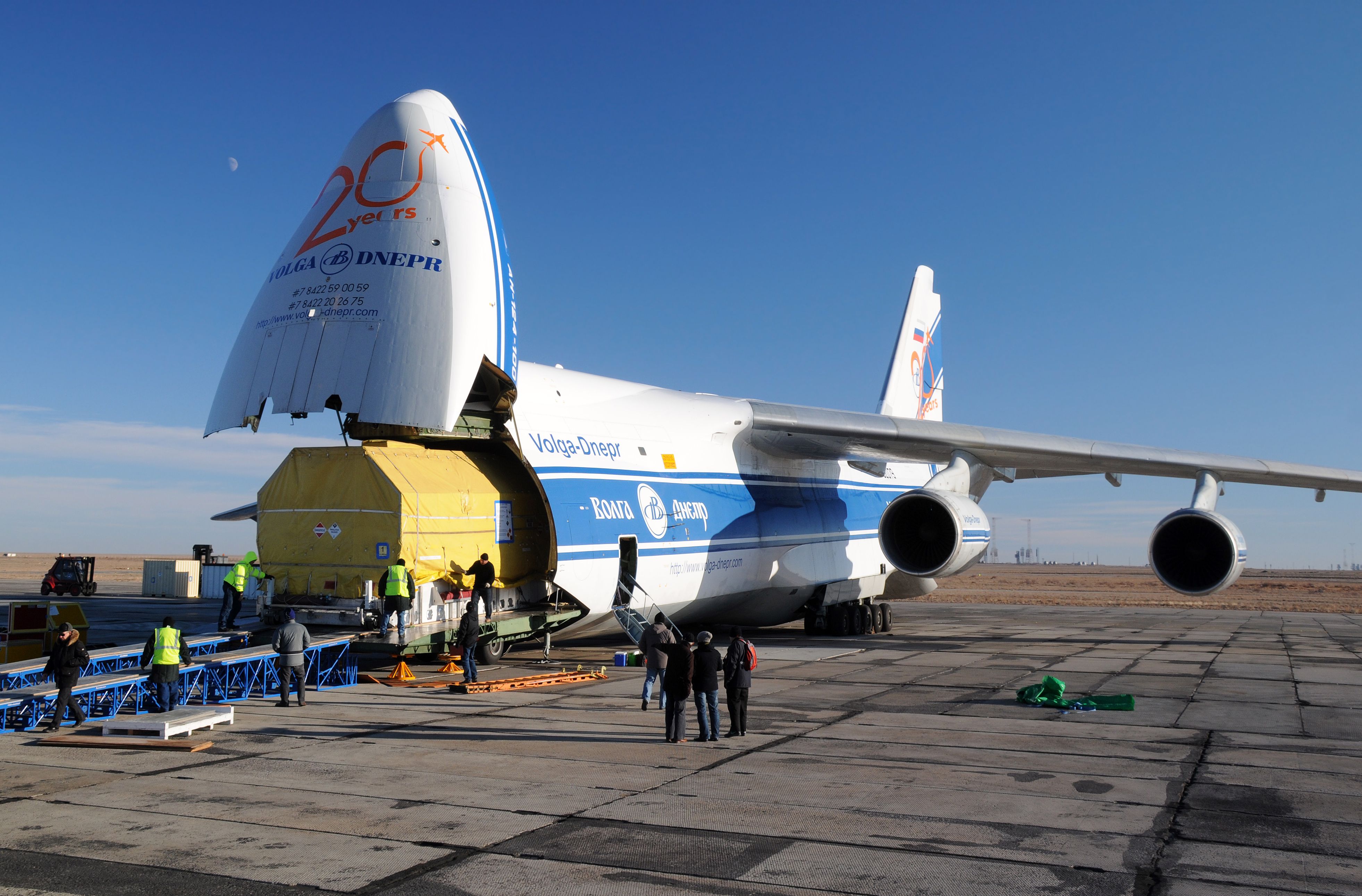
Russian state-aligned military forces flew at least 75 flights into the Central Sahel between January 2025 and July 2026, according to a new report from the Center for Advanced Defense Studies (C4ADS), a Washington-based research organization that tracks illicit networks. Analyzing Automatic Dependent Surveillance-Broadcast (ADS-B) data sourced from FlightRadar24, the report filtered for aircraft models historically linked to Russian private military contractors or the Ministry of Defense, finding 56 flights into Burkina Faso, 38 into Mali, and just six into Niger, a distribution C4ADS attributes partly to Burkina Faso's role as a transit hub between the other two and partly to the intensity of attacks by Jama'at Nusrat al-Islam wal-Muslimin (JNIM) and the Islamic State in the Greater Sahara during the period. The single busiest operator was Flight Unit 224, a Russian Ministry of Defense-owned airline the U.S. sanctioned in May 2023, followed by Russia's Special Flight Squadron, which typically transports senior officials, and the Ministry for Emergency Situations, an ostensibly humanitarian agency prior reporting has separately linked to military cargo transport into Mali, Syria, and Iran.
What this flight-tracking data actually documents, even if the source article frames it primarily as a logistics story, is the physical supply line for an exchange that has become central to how Russia funds its war effort under sanctions: security assistance and mercenary protection traded directly for resource concessions, gold above all. Mali, Niger, and Burkina Faso together produce roughly 230 tonnes of gold annually, and Africa Corps-linked networks, the Ministry of Defense-formalized successor to the Wagner Group following Yevgeny Prigozhin's 2023 death, are estimated to generate around $114 million a month from African gold using mercenaries, shell companies, and weak local governance to route the proceeds around Western sanctions. Since Russia's full-scale invasion of Ukraine in 2022, that gold trade has generated over $2.5 billion for the Russian state, funds researchers have directly linked to sustaining Moscow's sanctioned war effort rather than treating the African operations as a separate line of business.
The routing details C4ADS documented reinforce that this is a sanctions-evasion architecture, not simply a security-assistance program. State-owned aircraft like Flight Unit 224's RA-82030 typically refueled at Russia's Khmeimim air base in Syria and at Libyan sites including Al-Khadim, effectively stitching together Russia's Syrian and Libyan footholds into a single logistics corridor feeding the Sahel, while private carriers more often transited commercial hubs in the UAE, Algeria, and Türkiye, jurisdictions with looser enforcement of Western sanctions regimes and, in the UAE's case, a well-documented role as a hub for loosely regulated African gold exports. This isn't incidental routing; it's the same pattern investigators have flagged around Wagner and Africa Corps gold flows more broadly, using intermediary states with weaker compliance regimes to obscure the origin and destination of both personnel and proceeds.
This connects directly to a separate Defense News investigation published in April 2026, which documented a shadowy Russian military-affiliated cargo fleet making more than a hundred flights to Algeria over the prior year, delivering fighter jets to the Algerian air force while doubling as a logistics backbone for onward flights into the Sahel and West Africa. Read together, the two investigations describe less a single "air bridge" than a genuinely networked system, Algeria functioning as both an arms-delivery destination in its own right and a transit node feeding the Sahel operation, with Syria and Libya providing the fuel stops that keep aircraft airborne across the full route from Russia to the gold fields of Mali and Burkina Faso.
C4ADS is careful to caveat its own findings as preliminary rather than conclusive, citing inconsistent ADS-B coverage and the well-documented possibility that operators manipulate transponder data to obscure destinations, a limitation worth taking seriously given how central concealment already is to this entire operation. But even as a lower-bound estimate, 75 tracked flights sustaining a security presence tied to $114 million a month in gold-linked revenue makes clear that Russia's Sahel footprint isn't a peripheral holdover from the Wagner era winding down, it's an actively resourced logistics operation whose scale is arguably better measured in dollars extracted than in flights counted.

No comments:
Post a Comment