
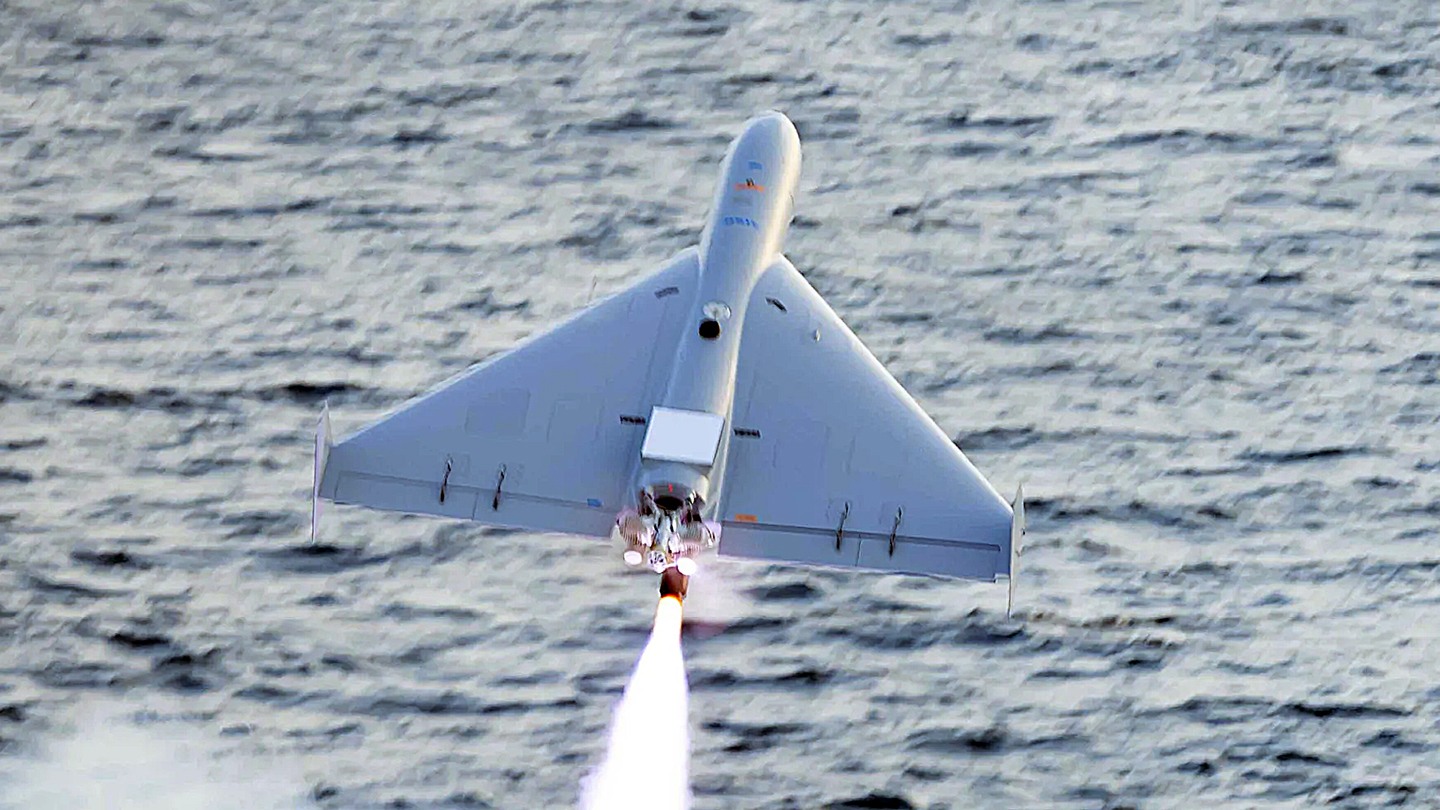
U.S. Central Command announced this week the creation of Task Force Falcon Strike, described as the first multinational one-way attack drone task force, integrating air, surface, and underwater unmanned systems operated jointly by U.S. forces and regional partners still to be formally invited. CENTCOM Commander Adm. Brad Cooper framed it as building on the "tremendous innovation happening among our regional allies," with U.S. Special Operations Command Central leading the task force staff and further details on participating nations and specific systems still unannounced. The timing is not incidental: it follows a shaky U.S.-Iran ceasefire, continued Houthi attacks on shipping in the Red Sea including a deadly missile strike on a Tanzania-flagged cargo vessel this week, and an active standoff over control of the Strait of Hormuz, all while, as CENTCOM itself has acknowledged, concerns mount over the expenditure of expensive, hard-to-replace American munitions during the Iran war.
That last point deserves more weight than a passing mention. Falcon Strike builds directly on Task Force Scorpion Strike, established in December 2025 as the first operational U.S. unit armed with Low-Cost Uncrewed Combat Attack System (LUCAS) drones, a platform explicitly reverse-engineered from Iran's own Shahed-136. There's a genuine irony worth sitting with here: after a year of Iranian Shahed drones forcing multi-million-dollar Patriot and THAAD interceptors into a catastrophically lopsided cost exchange, the U.S. response has been to adopt Iran's own cheap, attritable drone doctrine as an offensive tool rather than simply trying to out-produce interceptors to match the threat. Scorpion Strike's operational record already validates the approach on its own terms: LUCAS drones saw first combat use on the opening day of Epic Fury in February, a Saronic Corsair unmanned surface vessel carried out the first known drone-boat rescue of a downed Apache crew in the Gulf of Oman in June, and in July three Corsairs conducted the first U.S. use of an uncrewed surface vessel as an attack weapon, striking a submarine and ship maintenance facility at Iran's Bandar Abbas Naval Base.
Falcon Strike's addition of uncrewed underwater vehicles (UUVs) as attack platforms, a capability CENTCOM has not previously acknowledged using offensively, extends this same low-cost doctrine into a domain where the U.S. currently has less publicly demonstrated combat experience than Ukraine, whose security service claimed the first-ever UUV attack on a Russian vessel in December 2025, striking an Improved Kilo-class submarine at Novorossiysk. That Ukraine's Black Sea drone-boat campaign, waged by a country with a fraction of CENTCOM's budget, has become the reference case the U.S. military is visibly drawing doctrine from is itself notable, and mirrors how Ukraine's Magura-series surface drones forced the Russian Black Sea Fleet into defensive postures no amount of traditional naval hardware fully solved.
The economic logic tying all of this together is the same one this blog has tracked since Lt. Gen. Rafferty's SMD Symposium disclosures: Patriot and THAAD interceptors running $3-12 million per unit cannot be the default answer to $20,000-50,000 drone and missile threats indefinitely, regardless of how much production capacity gets added. What Falcon Strike represents is the offensive mirror of that same realization, fielding attritable, mass-producible one-way systems rather than relying exclusively on the exquisite, expensive platforms that dominate U.S. force structure, while explicitly building a "unified multi-domain, multinational deterrent" that spreads the cost and production burden across regional partners rather than the U.S. alone. CENTCOM's own acknowledgment that the task force could create a lucrative regional marketplace for U.S.-built one-way attack drones adds a second, more commercial layer to that logic, turning a doctrine born from Iran's most successful tactic into a potential American export product.
Whether Falcon Strike meaningfully changes the trajectory of the standoff with Iran or the Houthi threat to Red Sea shipping remains to be seen, and CENTCOM has so far declined to specify which partners will join or what systems they'll contribute. But the structural shift it represents, treating cheap, attritable unmanned systems as core doctrine rather than emergency improvisation, is arguably the more durable story here, one where the U.S. military's fastest-maturing response to a cost-exchange problem it can't out-produce its way out of is to fight the same way the adversary that created the problem already does.

No comments:
Post a Comment