Thursday, September 10, 2026

Taiwan's New Rule for Its Air Force: One Jet, One Bunker


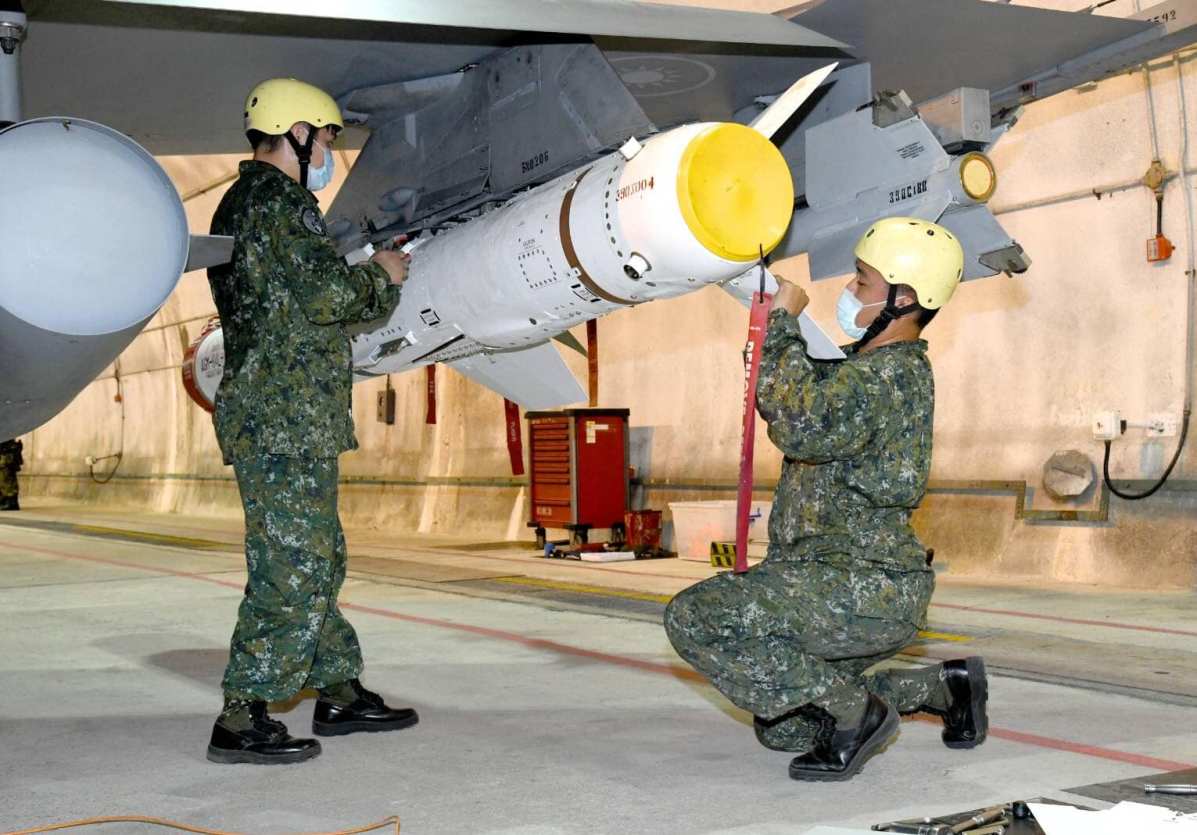
Taiwan's air force has settled on a simple ratio for how it wants to protect its fighter fleet going forward: one aircraft, one shelter. That's the actual policy name behind a plan to build 26 new hardened aircraft shelters at Hualien and Taitung, and it's a meaningfully different standard than parking multiple jets together and hoping for the best. The math driving it is straightforward too. Taiwan is taking delivery of 66 new F-16C/D Block 70 fighters from the United States, on top of the 139 existing F-16s already being upgraded to the Viper standard, and once all of that arrives, the island's east coast bases will be sheltering up to 120 F-16Vs. The current shelter inventory doesn't come close to matching that number one-for-one.

The bigger of the two facilities getting attention right now, Chiashan in Hualien, isn't new. Carved into the Central Mountain Range and completed in the early 1990s, it can reportedly hold around 250 fighter jets underground, protected by the mountain itself against both bomb hits and Taiwan's frequent earthquakes. But a facility built more than three decades ago comes with three decades of aging infrastructure, and Taiwan's air force is now asking the legislature for NT$3.57 billion, roughly $112.5 million, to upgrade ten separate systems inside it: ventilation, emergency power, elevators, security doors, fire protection, water and drainage. The Air Force's own stated reason for the overhaul is refreshingly blunt, some of the equipment inside is genuinely hard to maintain because of overseas procurement rules, patent restrictions, and exclusive agency agreements that complicate getting replacement parts at all.

Layer the new 22-shelter buildout at Chiashan and four more at Shizishan on top of that maintenance backlog, and the total price tag across both programs runs to roughly $330 million. The timeline is the part worth sitting with, though: this construction is scheduled to run from 2027 to 2031, with the new F-16 deliveries wrapping by the early 2030s. Taiwan is effectively racing to finish building enough bunkers to match a fighter fleet that's already on its way, a five-year infrastructure project trying to keep pace with an aircraft delivery schedule that's already locked in.

None of this is happening in a vacuum, and Taiwan's own air force has been explicit about the strategic logic behind it: disperse the core of the fighter fleet to Chiashan and Shizishan during wartime specifically to preserve combat capability if China strikes first, particularly with the ballistic and cruise missile arsenal Beijing has spent years building up. It's worth noting China has hardened its own airfields extensively too, so this isn't a one-sided defensive posture, it's two air forces that have each independently concluded a first strike against exposed aircraft is a real enough possibility to justify burying half their fleet inside mountains.

What the shelters don't solve, and what veteran fighter pilots have pointed out before, is the moment an aircraft actually has to leave one. A jet taxiing from an underground bunker out to the runway is, for those minutes, exactly as exposed as it would have been parked in the open the whole time, arguably more vulnerable given how predictable that exposed taxi route is to anyone watching. Underground tunnel networks that let aircraft reach their takeoff point without surfacing early solve that specific problem, but building tunnel-connected taxiways is a considerably bigger and more expensive undertaking than adding shelters, and current reporting on this expansion doesn't suggest that's part of the current plan. Taiwan is buying real protection for its jets while they're parked. What happens in the gap between the bunker door and the runway is still, for now, a separate and unresolved question.

Anduril's Pitch to Poland: Buy the Apache, Then Buy Three Robot Wingmen for Every One


Three unmanned aircraft flying alongside a single crewed Apache, carrying the weapons themselves, triples that formation's available firepower without putting a single additional pilot in the cockpit. That's the actual sales pitch Anduril brought to Poland's biggest defense show this week, and it's a considerably more concrete offer than the usual trade-show talk about "future capability." Poland already has F-35s and Apaches on order through 2028. Anduril wants to sell Warsaw the robot escorts to go with both.

For the F-35 side, the offer is Fury, officially the YFQ-44A, already a U.S. Air Force program of record after Anduril won production alongside General Atomics' rival design in June. Brian Moran, Anduril's vice president for Europe, described it plainly at the MSPO show in Kielce: Fury is "tailor-made to partner with an F-35 as a loyal wingman and as a force multiplier," built specifically to keep aircrews out of the most dangerous part of a mission by sending an unmanned aircraft in first. That's not a hypothetical demo either, Fury has already fired a live AMRAAM in testing, putting it well past the mockup stage most competing loyal-wingman concepts are still stuck at.

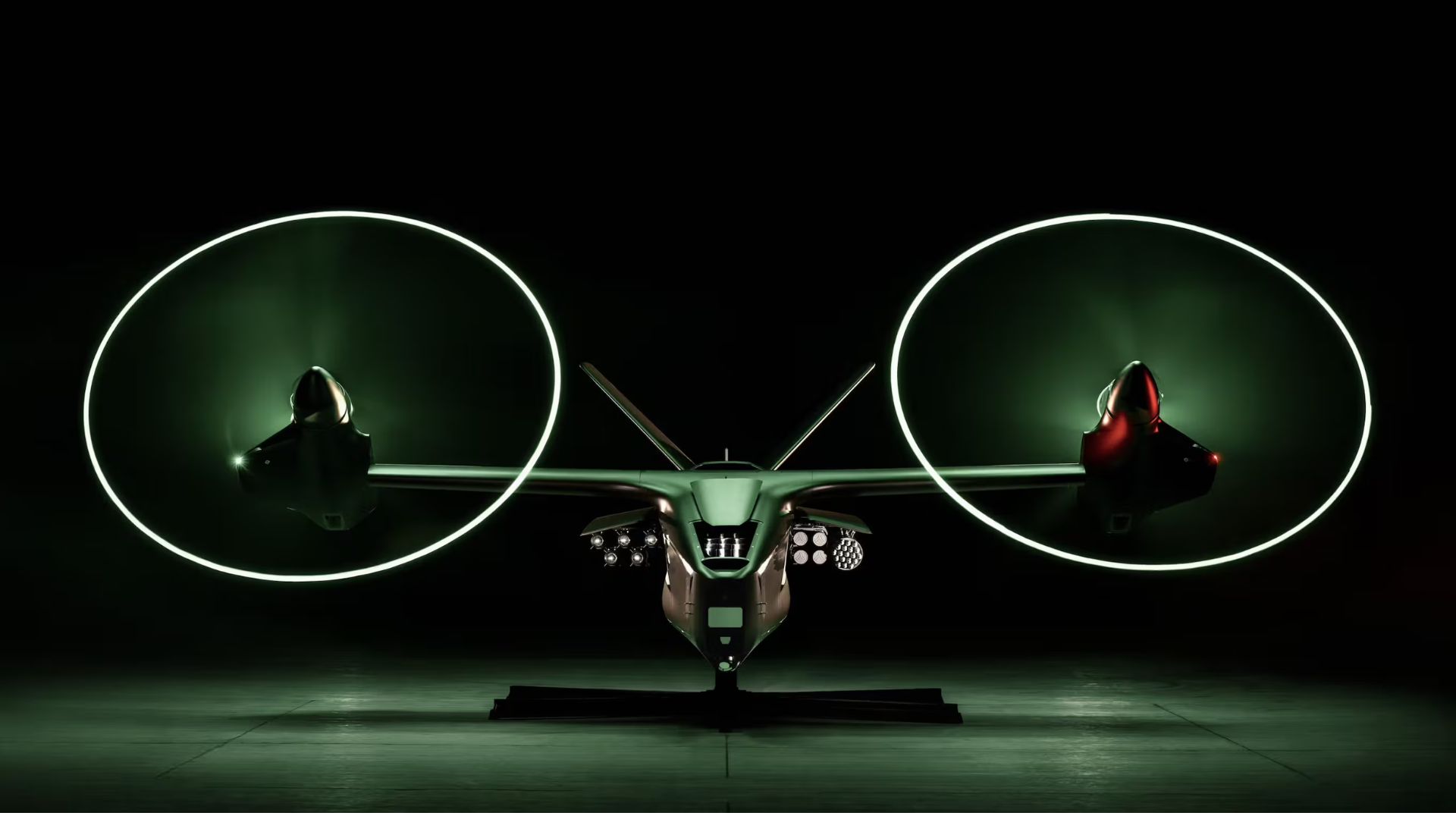
The Apache pitch, an autonomous tiltrotor called Thunder, is the newer and arguably more interesting of the two. Co-developed with Archer Aviation and unveiled in July, it's built to match an MV-75's range and speed while carrying an Apache's worth of payload, converting between vertical takeoff and forward cruise flight the way a tiltrotor does. Its internal bays can carry ten Hellfire, JAGM, or Anduril's own Barracuda-100M missiles, sixteen ALTIUS-600 launched effects, or 76 unguided rockets, plus a dozen more counter-drone effectors in the nose. The whole concept is built around a specific tactical answer to a problem Ukraine has made brutally clear: loitering munitions and cheap ground-based air defense have made low-flying, crewed attack helicopters genuinely dangerous to operate near the front line. Send three Thunders in instead, and a Combat Aviation Brigade gets a threefold jump in available weapons at, according to Anduril, a fraction of what an equivalent crewed formation would cost, all while the actual Apache crew stays farther back.

Both aircraft run on Anduril's own Lattice for Mission Autonomy software, which handles formation flying, spacing, and flight logic autonomously so a human operator directs the aircraft through broad intent rather than manually flying it stick-and-rudder style. That's the same software backbone running across Anduril's growing product line, and it's worth noting as a deliberate business strategy as much as a technical one: every new platform that adopts Lattice makes the whole ecosystem more valuable to whichever country buys into it, and harder to walk away from once integrated.

Poland isn't just a customer prospect here, it's already a manufacturing partner. Anduril is working with Poland's state-owned defense group PGZ on local assembly and production of the Barracuda-500M ground-launched cruise missile, a model Anduril has also shown integrated onto Embraer's C-390 airlifter. If talks over Fury and Thunder actually close, Poland would become the first European customer for either aircraft, a genuinely significant milestone for programs that are, for now, purely American in service. Whether that happens depends on negotiations still underway with Poland's defense ministry, and Anduril's own trade-show enthusiasm is, as always, a sales pitch rather than a signed contract. But a country already buying the crewed platforms these systems are built to escort, and already building missiles alongside the same company pitching them, is about as favorable a starting position as any arms manufacturer gets.

The Navy Promised a Fighter Jet Decision "in August." It's September.


Track the promises and a pattern emerges. In April, Chief of Naval Operations Adm. Daryl Caudle told reporters at Sea-Air-Space the Navy would pick a builder for its next carrier fighter in August. Defense Secretary Pete Hegseth backed that same timeline in an April 29 congressional hearing. August came and went. Now, sources tell Defense News an announcement is coming "soon," a Pentagon spokesperson says only that officials "continue work to award the F/A-XX contract in the near future." That's the fourth or fifth version of "any day now" this program has produced in roughly eighteen months, and it's worth asking why a decision this important keeps slipping the same way, one vague reassurance at a time.

The program itself, designated F/A-XX because it doesn't have a real name yet, is meant to replace the Navy's aging F/A-18E/F Super Hornets with a genuine sixth-generation carrier fighter, one built for longer range, deeper stealth, and the sensors and networking needed to operate alongside autonomous drone wingmen. Boeing and Northrop Grumman are the two companies left standing after Lockheed Martin got cut from the competition back in early 2025, and whoever wins effectively decides which company shapes what launches off American carriers into the 2050s. That's not hyperbole, it's the actual scale of what's riding on this specific procurement decision.

What's actually held the decision up isn't a design problem, it's money, and specifically money being pulled toward a different program entirely. The Air Force's own sixth-generation fighter, the F-47, already has a contract, awarded to Boeing back in March 2025, and the Trump administration has made no secret of which program it wants prioritized. The fiscal 2027 budget request put $5 billion behind the F-47 on top of the $3.4 billion it already got in fiscal 2026. F/A-XX, over that same stretch, was allocated roughly $214 million, and at one earlier point the White House had cut its funding down to just $74 million, described by one report as enough to keep the program "alive, but on ice." Some Pentagon officials reportedly pushed to delay F/A-XX by as much as three years outright, citing genuine concerns about whether American industry has the engineering and supply-chain capacity to build two advanced sixth-generation fighters at the same time.

Congress has been the one actually forcing this program to keep moving. Lawmakers wrote $750 million for F/A-XX into 2025's tax-and-spending bill and added another $1.4 billion in the fiscal 2026 budget, overriding the administration's preference to slow-walk it. That's not a subtle disagreement, it's Congress and the White House pulling in opposite directions on whether the Navy actually needs this fighter on the timeline the Navy itself says it does.

The strategic argument for urgency hasn't gotten any weaker while the funding fight has played out. China keeps fielding advanced combat aircraft, some of which Beijing itself now describes as sixth-generation, and the longer this decision drags, the longer the Navy operates into the 2030s without a modern carrier-capable fighter built for that threat environment. A U.S. official put the stakes plainly: continued delay risks the Navy's ability to project power in contested waters at all. Whether "soon" this time actually means soon, or becomes one more entry in a list of missed deadlines stretching back to a program the Navy has now been promising to decide on for the better part of two years, is something only an actual contract announcement will settle.

Sweden Just Paid Saab $303 Million for a Fighter Jet That Still Doesn't Exist on Paper


Nothing about this week's contract commits Sweden to building a new fighter jet. That's worth saying plainly before the headline number does its usual work, because $303 million sounds like a production decision and isn't one. What Sweden's Defense Materiel Administration actually bought is more studies, more demonstrators, and more time, the third contract in a row funding exactly that kind of preparatory work rather than a single new aircraft moving toward a factory floor.

The money runs through 2028, with options stretching to 2030, and covers what Saab describes as flying and ground-based demonstrators, advanced studies, and concept development for both manned and unmanned platforms. It builds directly on two earlier awards, an initial contract in March 2024 and a SEK 2.6 billion extension in October 2025, the latter of which had set a target of wrapping concept and technology work by the third quarter of this year, with demonstrator flights, including first flights, running through 2027. This new award effectively extends that same runway rather than replacing it, buying Sweden more freedom to decide later rather than locking in an architecture now.

That "decide later" framing isn't incidental, it's the entire point of the program. FMV's own language describes the goal as preserving "future freedom of action" on Swedish air combat capability, while building out core competencies, systems integration, autonomy, low-observable signature work, propulsion, digital engineering, that would matter regardless of which final design Sweden eventually picks. Saab's Lars Tossman put it more simply: this is about developing and demonstrating the technologies that will matter later, not committing to a shape now. The program even has a name that reflects the hedge built into it, Koncept för Framtida Stridsflyg, or KFS, sitting inside a broader initiative called Vägval stridsflyg, roughly "fighter crossroads," a name that's honest about the fact Sweden hasn't picked a direction yet.

The backstory explains why Sweden is running this cautious, study-first path instead of joining one of the bigger multinational programs already underway. Sweden was originally part of the UK-led Team Tempest effort before pulling out in 2023; that program has since evolved into GCAP, the UK-Italy-Japan sixth-generation fighter partnership. Rather than rejoin a multinational consortium or commit early to a single design the way France, Germany, and Spain did with their now-struggling FCAS program, Sweden chose to develop its own national concept work first and keep its options open on whether a future partnership, a fully indigenous design, or something else entirely ends up making the most sense. Given how publicly troubled FCAS has been, that caution looks less like indecision and more like a deliberate bet that moving slower now avoids getting locked into someone else's industrial fight later.

Some of this work is already flying, not just sitting in a lab. Project Beyond, funded under this same KFS umbrella, put a Gripen E into the air over the Baltic Sea in mid-2025 running Helsing's Centaur AI system, a real demonstration of exactly the kind of autonomy research this contract is meant to keep funding. And Saab has already shown its hand on what an eventual unmanned component might look like: an August 22 unveiling at Malmen Air Base displayed a full-scale concept model of an uncrewed combat air system, part of what the company calls its F-series family, spanning a manned fighter concept alongside both subsonic and supersonic unmanned platforms of varying sizes. None of that is a committed program yet either. It's Saab showing Sweden's own defense establishment, and everyone else watching, what the eventual menu of choices might actually look like once FMV is finally ready to pick one.