
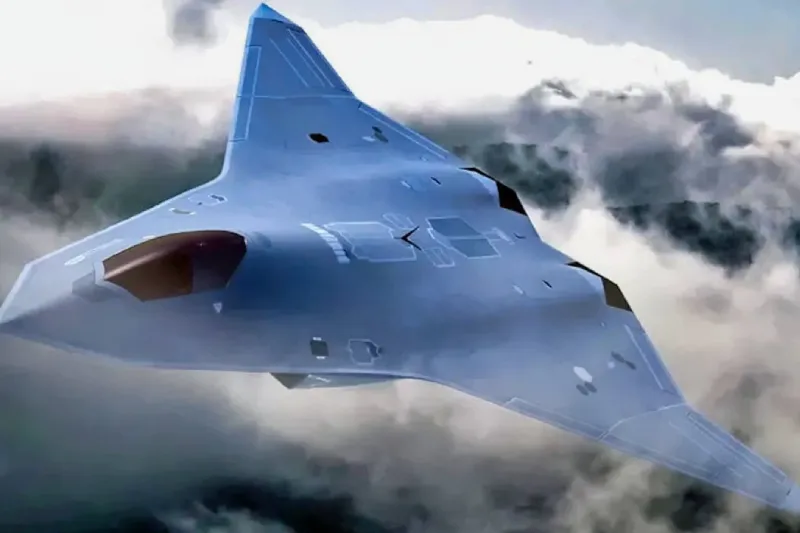
Track the promises and a pattern emerges. In April, Chief of Naval Operations Adm. Daryl Caudle told reporters at Sea-Air-Space the Navy would pick a builder for its next carrier fighter in August. Defense Secretary Pete Hegseth backed that same timeline in an April 29 congressional hearing. August came and went. Now, sources tell Defense News an announcement is coming "soon," a Pentagon spokesperson says only that officials "continue work to award the F/A-XX contract in the near future." That's the fourth or fifth version of "any day now" this program has produced in roughly eighteen months, and it's worth asking why a decision this important keeps slipping the same way, one vague reassurance at a time.
The program itself, designated F/A-XX because it doesn't have a real name yet, is meant to replace the Navy's aging F/A-18E/F Super Hornets with a genuine sixth-generation carrier fighter, one built for longer range, deeper stealth, and the sensors and networking needed to operate alongside autonomous drone wingmen. Boeing and Northrop Grumman are the two companies left standing after Lockheed Martin got cut from the competition back in early 2025, and whoever wins effectively decides which company shapes what launches off American carriers into the 2050s. That's not hyperbole, it's the actual scale of what's riding on this specific procurement decision.
What's actually held the decision up isn't a design problem, it's money, and specifically money being pulled toward a different program entirely. The Air Force's own sixth-generation fighter, the F-47, already has a contract, awarded to Boeing back in March 2025, and the Trump administration has made no secret of which program it wants prioritized. The fiscal 2027 budget request put $5 billion behind the F-47 on top of the $3.4 billion it already got in fiscal 2026. F/A-XX, over that same stretch, was allocated roughly $214 million, and at one earlier point the White House had cut its funding down to just $74 million, described by one report as enough to keep the program "alive, but on ice." Some Pentagon officials reportedly pushed to delay F/A-XX by as much as three years outright, citing genuine concerns about whether American industry has the engineering and supply-chain capacity to build two advanced sixth-generation fighters at the same time.
Congress has been the one actually forcing this program to keep moving. Lawmakers wrote $750 million for F/A-XX into 2025's tax-and-spending bill and added another $1.4 billion in the fiscal 2026 budget, overriding the administration's preference to slow-walk it. That's not a subtle disagreement, it's Congress and the White House pulling in opposite directions on whether the Navy actually needs this fighter on the timeline the Navy itself says it does.
The strategic argument for urgency hasn't gotten any weaker while the funding fight has played out. China keeps fielding advanced combat aircraft, some of which Beijing itself now describes as sixth-generation, and the longer this decision drags, the longer the Navy operates into the 2030s without a modern carrier-capable fighter built for that threat environment. A U.S. official put the stakes plainly: continued delay risks the Navy's ability to project power in contested waters at all. Whether "soon" this time actually means soon, or becomes one more entry in a list of missed deadlines stretching back to a program the Navy has now been promising to decide on for the better part of two years, is something only an actual contract announcement will settle.

No comments:
Post a Comment