Sunday, August 30, 2026

India Can't Build a Stealth Fighter Yet — So It's Building a Grid That Doesn't Need One


India has no fifth-generation fighter of its own and won't for at least five to ten years, according to retired Air Marshal Anil Chopra, writing for EurAsian Times. China already has an estimated 450 of them. Rather than wait, Chopra describes a quieter Indian Air Force project running in parallel to that gap: training pilots to find and shoot down a J-20 not through a stealthier jet of its own, but through sensors, radar wavelengths, and networking built specifically to expose what stealth is actually good at hiding from.

The physics behind that bet is worth laying out plainly. Chopra's own figures put the J-20's radar cross-section at roughly 0.1 square meters against the Rafale's 1.0, meaning a J-20 shows up on radar far later and at far shorter range than a conventional fighter, that's the whole point of stealth shaping. But stealth coatings and airframe geometry are optimized against the high-frequency X- and Ku-band radars carried aboard most fighters, not against longer-wavelength VHF radar, which scatters differently off a stealth aircraft's surface and can pick it up from angles the shaping wasn't designed to defeat. India's Surya VHF radar and its broader Mission Sudarshan Chakra network are built around exactly that gap, fusing longer-wavelength ground radars, passive and multi-static arrays, AEW&C aircraft, and space-based sensors into a single tracking picture that doesn't depend on any one radar catching the J-20 head-on.

Chopra frames the resulting doctrine carefully, and it's worth taking his framing at face value: the goal isn't a Rafale outdueling a J-20 one-on-one. It's using that fused sensor picture to detect, track, and fire on a J-20-class aircraft before it gets close enough to matter, then letting long-range surface-to-air systems like the S-400 or India's own developing Kusha system finish the job. If the aircraft never leaves the ground, even better, Chopra points to a BrahMos strike on the J-20's Hotan airbase as the more decisive option in his own accounting.

Where India apparently gets its practice against genuine fifth-generation performance is via a proxy: American F-35s, flown alongside IAF fighters in multinational drills like Pitch Black in Australia and Exercise Konkan, with US F-35s set to join India's own Tarang Shakti exercise at Jodhpur this September for the first time on Indian soil. That's the closest thing available to studying how a real stealth aircraft behaves without operating one, watching how late it appears on radar, how it manages its own emissions, how difficult it is to track from the front.

Chopra's piece sits alongside a separate story worth reading together: China's J-16 "Hidden Dragon" drilling for the first time against Egyptian Rafales, the same jet India flies and plans to buy 114 more of. He's dismissive of the wilder claims circulating from Chinese-aligned social media, a reported 7-1 J-16 win he calls "imaginative," and lays out a fairly detailed technical case for why the Rafale's smaller radar cross-section, more integrated SPECTRA electronic warfare suite, and the Meteor missile's unusually large no-escape zone should give it a real edge over the heavier, larger-radar J-16 in a genuine dogfight. That's his assessment as a decorated fighter test pilot with four decades in the IAF, not an independently verified outcome, and it's worth reading with the same caution due any single analyst's technical judgment, however credentialed.

What actually connects the two stories is less about who wins a hypothetical dogfight and more about what both air forces are really doing in Egypt and Jodhpur alike: neither China nor India is trying to settle a one-on-one matchup. Both are quietly building a picture of exactly how the other side's best aircraft behaves, long before either expects to actually need it.

China Says It Has the World's First Carrier Stealth Drone — Here's What's Actually Confirmed


Chinese social media analysts reported this year that a naval variant of the GJ-11 "Sharp Sword" stealth drone, designated GJ-21, flew alongside J-15T and J-35 fighters from the carrier Fujian, part of an exercise apparently testing how manned fighters, the new drone, and KJ-600 early-warning aircraft coordinate together. If accurate, it would make China the first country to operate a stealth combat drone from a carrier deck, ahead of anything the US Navy currently fields. That's a genuinely significant claim. It's also, worth saying plainly, not yet independently confirmed by anyone outside Chinese state and enthusiast media.

What is solidly documented is the hardware itself. The GJ-11 first flew in 2013 and was publicly unveiled at China's 2019 military parade: a tailless flying-wing design, roughly 10 meters long with a 14-meter wingspan, S-shaped air intake and shielded exhaust to reduce its radar signature, painted the same light gray as China's crewed stealth fighters. It reappeared at the September 2025 Victory Day parade with a new detail, visible folding wing hinges, exactly the kind of modification a drone needs before it can fit on a carrier elevator or in a hangar bay. A November 2025 PLA Air Force promotional film showed it flying in formation with a J-20 and a J-16D electronic warfare jet for the first time, evidence the drone has reached at least some level of manned-unmanned operational integration, according to Chinese military commentator Song Zhongping.

The carrier infrastructure to actually operate it is real and observable too. Fujian, China's third carrier, uses an electromagnetic catapult system, only the third in the world after USS Gerald Ford, a launch method that matters here specifically because it can handle heavier, less robust airframes than the ski-jump decks on China's first two carriers. Sichuan, the Type 076 amphibious assault ship that completed sea trials and is expected in PLAN service this year, was apparently built around unmanned aircraft from the start: two aircraft lifts, an air wing expected to lean heavily on drones rather than crewed jets, and the same electromagnetic catapult technology. Satellite imagery has separately shown full-scale carrier test facilities in Wuhan and a site on Changxing Island, near where Sichuan was built, apparently used to rehearse deck handling for exactly this kind of aircraft.

Where the story gets softer is the specific claim that any of this is now "in service" in a meaningful operational sense. The reported Fujian flight comes from Chinese social media analysts interpreting posts, not an official PLAN announcement, and no outside government or independent defense analyst has verified it happened as described. China's own state media has been willing to showcase confirmed GJ-11 milestones plainly, the 2019 parade reveal, the 2025 folding-hinge display, the J-20 formation film, so the absence of an equally clear official statement about carrier operations is itself worth noting rather than assuming away.

The tactical logic behind wanting this capability is straightforward regardless of exactly when it's confirmed: a stealth drone that can extend a fighter's sensor range, absorb the first contact with enemy air defenses, or simply act as a decoy gives a carrier air wing options no manned-only force has. China would be moving here ahead of the US Navy, whose own X-47B carrier drone program proved the basic launch-and-recovery concept back in 2013 before the Navy shelved it in favor of the MQ-25 Stingray tanker drone, a considerably less ambitious mission set. Whether China has actually closed that gap operationally, or is simply further along in testing it than anyone outside the program can currently verify, is the honest state of what's known.

France Is Racing to Build a New Missile in Four Years — But the Rafale's Radar Might Not Be Able to Use It


Patrick Pailloux, the head of France's armaments directorate, told a parliamentary hearing in April that his agency wants a new air-to-air missile flying by 2030. Called COMET, it's meant to fly further than the Meteor, the ramjet-powered missile that's been the Rafale's premier long-range weapon for over a decade. Pailloux was candid about how compressed the timeline is: "It's a new way of working," he said, calling the 2030 target "very ambitious." The brief he gave engineers was almost comically blunt for a weapons program: the missile needs to "work and go far."

The urgency traces back to a specific battle. In the May 2025 clash between India and Pakistan, jets on both sides reportedly exchanged fire at ranges around 180 to 200 kilometers, Pakistani J-10CEs and JF-17s carrying Chinese PL-15E missiles against Indian Rafales armed with the Meteor. Pakistan claimed multiple Indian aircraft downed, Rafales included; credible evidence, including remarks from France's own Air Force chief, supports at least one such loss, though India has never officially confirmed the aircraft type and the exact count remains disputed between the two governments' accounts. What isn't in dispute is that both sides fired at genuinely long range, and that outcome landed inside French defense planning as proof the Meteor's roughly 200-kilometer reach is no longer automatically decisive.

The bigger problem sitting behind Pakistan's PL-15E is China's PL-17, credited with a 400-kilometer range, roughly double the Meteor's and enough to threaten not just fighters but the tankers, AWACS aircraft, and other support planes a fighter force depends on to operate at all. Every major air power seems to have converged on the same insight this year: the fighter jet isn't really the target worth prioritizing anymore, the slow, unstealthy, hard-to-replace support aircraft behind it are. Chinese doctrine reportedly has a name for this, "kill the eyes and ears first." The American AIM-174B Gunslinger, the newer AIM-424 Malice pushing past 460 kilometers, and Russia's hypersonic R-37M are all built around variations of the same logic.

COMET, as currently described, is a deliberately modest answer to that pressure rather than a Meteor-beating flagship. French think-tank analyst Etienne Marcuz's own assessment is that a missile design brief this stripped-down, "works and goes far," on a four-year timeline probably rules out anything as sophisticated as the Meteor's ramjet propulsion. More likely, he suggests, is a cheaper dual-pulse solid rocket booster bolted onto extended range, an interim fix rather than the "successeur du missile METEOR" some French planning documents apparently label it. Reported range sits around 300 kilometers, further than the Meteor, short of the PL-17 or America's newest entries.

Marcuz flags the harder problem COMET's speed doesn't solve: the Rafale's own radar. A missile that can fly 300 kilometers is only useful if something can actually detect and designate a target at that range in the first place, and the Rafale's radar aperture is comparatively small, likely unable to pick out a low-signature target at true COMET range on its own. That points toward a dependency the missile's rushed timeline hasn't addressed, relying on external cueing from France's future SCAF-linked sensors or the Global Eye AEW&C aircraft this blog covered as part of the UK-Canada AWACS story, rather than the Rafale finding its own targets. France is also running a parallel 12-month study with the UK to scope what actually comes after COMET, alongside Britain's own Future Air Superiority Effectors program, suggesting Paris knows this fast-tracked missile is a stopgap rather than the real answer.

Russia's "Most Powerful ICBM" Test Was Actually Its Routine One — The Timing Is What Matters


Three days after CIA Director John Ratcliffe made an unannounced trip to Moscow, Russia's Strategic Missile Forces fired an intercontinental ballistic missile from the Plesetsk Cosmodrome across the country to a test range on Kamchatka, roughly 6,700 kilometers away. Headlines calling it Russia's "most powerful ICBM" overstate the hardware: the Defense Ministry didn't name the missile, but launch footage and the involvement of a mobile road launcher point almost certainly to the RS-24 Yars, a solid-fuel missile Russia has tested from the same site repeatedly, including as recently as May. That's a capable, MIRV-carrying weapon, but it's not the same missile as the Sarmat, the genuinely record-setting "Satan II" ICBM that title implies. Russia's Defense Ministry called this one a routine confirmation of "tactical, technical and flight characteristics," language nearly identical to what it used for the May test.

What actually makes this launch worth writing about is the calendar, not the missile. Ratcliffe's Moscow trip was itself unusual enough to draw coverage on its own: the first known visit by a CIA director to Russia since William Burns flew there in November 2021 to warn Putin against invading Ukraine, three months before he did anyway. Multiple outlets reported Ratcliffe met FSB chief Alexander Bortnikov rather than Putin directly, delivering what The New York Times described as a blunt assessment that Russia's military and economic position would keep deteriorating without serious peace talks, alongside a separate warning against any Russian move on NATO territory. The Kremlin's own spokesman, Dmitry Peskov, confirmed the visit happened and that Putin was briefed on it, while declining to say what was actually discussed.

Belarus read the sequence the same way this piece does. Minsk explicitly tied its own snap military drill, a brigade deployed for combat tasks, to Ratcliffe's presence in Moscow, and the exercise landed just days before a scheduled Lukashenko-Putin meeting. Whether that's genuine alarm or coordinated theater timed for maximum visibility is hard to say from outside, but it's one more data point suggesting both Moscow and Minsk wanted this particular ICBM test read as a response to the American visit rather than a coincidence of scheduling.

There's a wrinkle worth noting on the American side too: ahead of Ratcliffe's trip, Washington reportedly asked Ukraine to pause its drone strikes on Moscow and St. Petersburg until the delegation left Russian airspace, according to a senior Ukrainian official cited by Kyiv Post. If accurate, that's a real, if temporary, constraint the US placed on Ukraine's own strike campaign specifically to protect a diplomatic and intelligence channel, a detail that complicates any simple reading of this moment as pure escalation. Trump himself downplayed the whole episode as "semi-routine," framing direct intelligence contact as a possible step toward ending the war rather than a crisis in itself.

Read plainly: a well-worn ICBM type got test-fired from a launch site Russia has used for this exact purpose all year, and the only genuinely new variable is that it happened right after a rare, high-level American intelligence visit to Moscow. Whether that sequencing was a deliberate signal to Washington, routine scheduling that happened to land at an awkward moment, or some mix of both is something none of the public reporting so far actually settles.

Ukraine's Grain Ports Are 98% Closed — Because of a Missile That Costs Less Than a Used Car


A Ukrainian official didn't mince words describing what's happened to the country's Black Sea shipping corridor this summer: the ports are "98% closed." The weapon doing most of that damage isn't a headline-grabbing hypersonic missile or a massed drone swarm. It's the S8000 Banderol, a small, jet-powered cruise missile that costs somewhere between $100,000 and $300,000 to build, and Russia is now producing around 80 of them a month with a stated target of 1,000 for the year.

The Banderol was built to fill a specific gap. Russia's Shahed-type drones are cheap but slow and relatively easy to track down; its Kh-101 cruise missiles are fast and precise but expensive. Developed by Kronstadt, the same company behind Russia's Orion reconnaissance drone, since 2021, the Banderol lands in between: 150-kilogram warhead, 350 to 500 kilometers of range depending on the source, and a cruise speed around 550-600 kilometers an hour, fast enough that Ukraine's fleet of interceptor drones simply can't catch it. Vladyslav Vlasiuk, Zelenskyy's sanctions-policy commissioner, told Bloomberg that roughly 80 percent of strikes on Greater Odesa's port infrastructure now come from this one missile.

The math behind that success is the real story. A Banderol costs a fraction of what Ukraine needs to shoot one down, and Ukraine simply doesn't have enough of the right interceptors to spare. Interceptor drones can't match its speed; dedicated anti-air missiles that could are in short supply. Russia doesn't need the Banderol to be sophisticated, it needs it to be cheap enough to fire constantly, and Ukrainian trackers describe the resulting pattern as missile "spam," a Banderol or two launched steadily throughout the day, sometimes mixed with Kh-59 cruise missiles or Geran drones, keeping air defense crews perpetually on edge rather than overwhelmed all at once.

Two details point to where this goes next. First, the targets are almost entirely static, port terminals, logistics hubs, grain and food warehouses, not military positions, meaning the campaign functions as economic warfare against Ukraine's export capacity as much as a battlefield weapon. More than 20 ships have reportedly been damaged in the strikes on Greater Odesa alone. Second, Ukrainian intelligence has spotted what looks like a mobile ground launcher for the Banderol, tested from occupied Crimea, a shift from its original air-only launch platforms, Orion drones and Mi-28 helicopters. Analysts covering the sighting are careful to note that photographs of hardware don't prove an operational system exists at scale, but if it does pan out, it would let Russia disperse Banderol launches across multiple sites rather than relying on a limited number of aircraft, stretching Ukrainian air defense even thinner.

There's an irony sitting inside the missile's own guidance system worth noting: Ukrainian investigators who examined recovered Banderol wreckage in 2025 found more than 20 components sourced from the US and other countries, the same pattern of sanctions leakage that keeps showing up in Russia's other precision-guided weapons. A missile designed to be cheap and disposable is still, underneath the cheap airframe, built partly from parts that were never supposed to reach a Russian production line at all.

The First 28 Tanks Poland Just Got From Korea Aren't the Point — The Factory Is


Twenty-eight South Korean K2 Black Panther tanks rolled off a transport this week and into the hands of Poland's 16th Mechanized Division, the unit responsible for the stretch of border facing Kaliningrad, Russia's isolated exclave wedged between Poland and Lithuania. Defense Minister Władysław Kosiniak-Kamysz announced the delivery himself on August 25, the first hardware to arrive under a second, roughly $6.5 billion contract signed a year earlier. It's a small number against the scale of what's coming: 116 more Korean-built K2GF tanks by 2027, then 64 K2PL variants, Poland's own customized version, between 2028 and 2030, plus 81 support vehicles for bridging, recovery, and combat engineering built on the same chassis.

Basing the first batch at the 16th Division isn't incidental. Kaliningrad sits directly across from where these tanks are headed, and putting new armor there specifically, rather than spreading it evenly across Poland's force structure, reads as a deliberate signal about where Warsaw expects any confrontation with Russia to actually start.

What makes this deal different from a routine arms purchase is what's written into the contract rather than what's rolling off the ship. The first three K2PLs will be assembled in South Korea; the remaining 61, along with every one of the 81 support vehicles, get built at the Bumar-Łabędy plant in Gliwice, a state-owned facility that had drifted close to dormant before this deal. Hyundai Rotem signed the actual subcontracting agreement governing that localization back in April, alongside deals with Polish electronics and optics suppliers. Poland isn't just buying tanks anymore; it's rebuilding a domestic armor industry that mostly died with the end of PT-91 production in the late 2000s, using Korean technology transfer as the on-ramp.

South Korea offered something Germany and the United States generally haven't: real willingness to hand over production rights for frontline armor rather than just sell finished units. That's reportedly what tipped the deal in Seoul's favor over European alternatives, and it fits a broader pattern of South Korean defense exports, the same country selling Poland its Piorun MANPADS and its Chunmoo rocket artillery has consistently paired hardware sales with a path toward the buyer eventually building the stuff themselves.

Add it up and Poland is on track for roughly 1,370 tanks by the early 2030s once the K2, M1A2 Abrams, and modernized Leopard 2 fleets are all counted, more than the UK, Germany, France, and Italy combined, according to tracking cited across multiple defense outlets. Whether that raw number matters as much as the underlying industrial shift is a fair question. A country that couldn't build a modern tank domestically five years ago is now positioned to manufacture, and eventually export, one of the world's newer main battle tank designs, and that capability doesn't disappear even if the current threat environment along Poland's eastern border eventually cools.

If Kazakhstan Really Is Getting the Su-57, It Would Be Rostec's First Confirmed Sale in Its Own Backyard


Reports circulating this week point to a Russia-Kazakhstan agreement that would put Su-57 stealth fighters in Kazakh service within roughly two years. Specific terms, aircraft numbers, delivery schedule, price, haven't been independently verified by outlets outside the initial report, and that caution matters here more than usual: Russia's own claims about Su-57 export interest over the past two years have repeatedly outpaced anything that's actually shown up on a runway.

The pattern is worth laying out plainly. Rosoboronexport told reporters at a Kuala Lumpur defense show in April that it had signed Su-57E export agreements with "several" countries and described a "steadily expanding" customer list, without naming a single one. Russia's trade minister made an almost identical claim in Saudi Arabia in February, "some contracts have been signed, though I cannot disclose the details." Algeria remains the only country outside observers have actually watched operating the jet, based on aircraft spotted at Algerian bases in late 2025 and early 2026, and even that link only firmed up after a hacker collective published leaked Rostec documents allegedly detailing a 12-aircraft order running through 2026. Everything else, India's long-running talks, rumored North Korean and Iranian interest, has stayed in the discussion phase for years without a signed, publicly confirmed contract to show for it.

Kazakhstan fits the shortlist of plausible buyers for reasons that have nothing to do with the aircraft's own merits. It's a CSTO member with deep, decades-old defense ties to Moscow, already flying Russian Su-30SM multirole fighters bought under a deal Kazakh officials chose over the French Rafale. Its defense budget is modest by regional standards, and any Su-57 purchase would almost certainly involve financing terms, discounts, or barter arrangements Moscow doesn't extend to arm's-length customers, the kind of deal analysts have suggested may function as political payment for standing by Russia through the Ukraine war rather than a straightforward capability purchase.

Set against that backdrop, Kazakhstan's own recent behavior cuts in two directions at once. Astana has also been quietly drifting toward the West: in 2024 it auctioned off more than a hundred aging Soviet-era MiG-31s, MiG-27s, MiG-29s, and Su-24s, a sale that ended with the United States buying 81 of them through offshore intermediaries, aircraft since speculated to be headed for spare parts, decoys, or eventual transfer to Ukraine. A country simultaneously selling its Cold War jets toward Washington's orbit while reportedly buying Moscow's most advanced fighter would be threading a genuinely awkward needle, and it's the kind of contradiction that should make anyone treat this week's reports with real skepticism until Kazakhstan's own defense ministry confirms anything.

Russia's actual production capacity adds a final layer of doubt. Independent estimates put the entire Su-57 fleet, Russian and foreign orders combined, at somewhere around 30 aircraft as of early 2026, against a 2019 promise of 76 jets by 2027 or 2028. A defense-industrial base struggling to supply its own air force isn't an obvious candidate to simultaneously stand up a new export customer on a two-year timeline, and if Kazakhstan does get Su-57s that fast, it will likely say more about which existing airframes get redirected than about any surge in Russian manufacturing.

South Korea's Sixth-Generation Fighter Study Costs Less Than a Single F-35


Nine hundred million won. That's the entire budget South Korea's Defense Acquisition Program Administration has set aside for its newly launched conceptual study of a next-generation fighter, roughly $650,000, less than what a single modern jet engine costs to overhaul. DAPA issued the request for proposal on August 21, giving industry 14 months to submit conceptual designs, technology roadmaps, and industrial plans for what would eventually become South Korea's answer to the sixth-generation programs now underway in the US, China, and Europe. The tiny price tag is the point: this is a paper study, not a prototype commitment, and bids aren't even due until October 1.

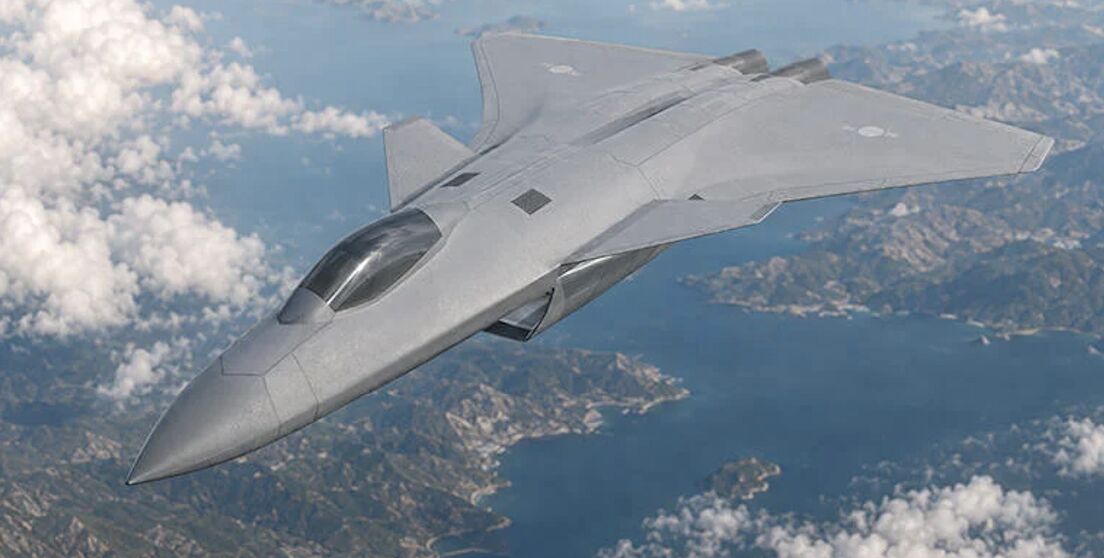
Two design threads are already circulating ahead of that deadline. DAPA's own RFP calls for both tailless and conventional layouts, twin adaptive-cycle engines capable of supersonic cruise, broadband stealth across the L, S, and X radar bands, and an internal weapons bay. Separately, and with no formal connection to DAPA's study, South Korea's Agency for Defense Development unveiled its own in-house concept at an aerospace conference in Daejeon on July 7: a single-seat, twin-engine, tailless design with a cranked delta wing, canted canard foreplanes, and flat exhaust nozzles. Korean outlets covering the reveal noted the ADD design skips vertical tail fins entirely, a configuration choice that could give it a genuine stealth edge over Europe's GCAP program, which keeps twin tails, while trading away some of the range and payload that a larger airframe like China's J-36 or America's F-47 can carry.

The honest read on scale: South Korea's concept is smaller than every other sixth-generation program currently flying or in serious development. That's a real trade-off, less fuel, fewer weapons stations, shorter legs, but it's also a deliberate one. A compact, tailless, twin-engine fighter is a cheaper aircraft to build and, if South Korea's defense-export record with the K2 tank and K9 howitzer is any guide, a more exportable one. Seoul isn't trying to match Chengdu or Lancashire on size; it's betting a smaller jet built faster and sold wider does more for its air force and its balance sheet than an oversized flagship program would.

What actually makes this credible rather than aspirational is the KF-21 sitting behind it. DAPA formally closed out KF-21 system development on July 29 after more than 1,600 flight tests, with first production aircraft due to the Republic of Korea Air Force later this year. Six prototypes have flown, including a two-seater, and the jet completed its first aerial refueling trial back in 2024, just eighteen months after its maiden flight. South Korea's own defense ministry has already said publicly that the KF-21 itself is meant to evolve toward fifth-generation stealth and eventually feed lessons into a genuine sixth-generation design, meaning this new concept study isn't starting from a blank sheet so much as asking what comes after a program that's already, by most measures, delivered.

The one place every outlet covering this study flags real uncertainty is propulsion. Building a domestic adaptive-cycle engine capable of supersonic cruise is a different order of difficulty than anything South Korea's aerospace industry has attempted before, and Hanwha's own engine work has so far been built on the KF-21's existing, less exotic powerplant. A $650,000 concept study won't answer that question. It exists to sketch what South Korea wants before anyone commits real money to finding out whether its industry can actually build it.

Refueling Is the One Moment Even a Stealth Fighter Can't Hide


Two seconds of footage, tucked into the closing shot of a film marking ten years of the Y-20 transport's service, is what China chose to confirm its sixth-generation fighter can take fuel in the air. A tanker crewman is asked who he's refueling that sortie. "First the 'Master Six,'" he says, using the established nickname for the H-6 bomber, "then the 'Little Six.'" The camera cuts to a tailless jet sliding into position behind the YY-20 tanker. That's the entire disclosure: no specs, no schedule, no acknowledgment the aircraft even has an official name. Analysts have called it the Chengdu J-36 since prototypes first turned up over the city in December 2024, a designation assigned by outside observers, not Beijing.

The refueling detail matters more than the jet itself, and it's worth explaining why. A stealth aircraft's whole design logic is built around not being found, low radar cross-section, careful shaping, limited emissions. Refueling breaks all of that at once: two aircraft flying in tight, predictable formation for several minutes, radios and datalinks active to coordinate the approach, radar-reflective refueling gear extended, at a location and time an adversary who's tracking the tanker can potentially predict. For those few minutes, an aircraft built to be hard to find becomes, functionally, easy to find. That China is willing to show this in official media, rather than treat it as an operational vulnerability worth hiding, suggests either confidence that the tradeoff is worth it or a deliberate signal that the capability, and the range it buys, matters more than the exposure costs.

And the range is the point. China had barely any meaningful tanker fleet before the early 2020s, a handful of converted H-6 bombers each carrying under 30 tons of fuel. The YY-20, adapted from the same Y-20 transport airframe, changes that math substantially. Pairing it with a fighter believed to have a combat radius past 4,000 kilometers means Beijing isn't just building a fast, stealthy jet, it's building one that can loiter or strike deep into the Pacific and come home, the kind of endurance that starts to resemble a strategic bomber's reach more than a conventional fighter's. Military analyst Fu Qianshao made roughly that point to state media: an aircraft with a bomber's range flying fighter missions can run patrols "of strategic significance."

None of this settles how close the J-36 actually is to service. Five distinct prototypes have flown since December 2024, cycling through at least three configurations, changed intakes, altered exhaust, different landing gear, a pace of iteration that outside analysts have called unusually fast even while cautioning it reflects a methodical flight-test program rather than a finished aircraft. The U.S. Air Force's own read, delivered by then-Pacific Air Forces commander Gen. Kenneth Wilsbach, classifies both the J-36 and its carrier-oriented cousin, the Shenyang J-50, as genuine sixth-generation air superiority platforms, an assessment carrying real weight given how sparingly the Pentagon usually concedes ground on program timelines. Boeing's F-47, America's answer, hasn't flown yet.

What two seconds of tanker footage actually proves is narrower than the headlines around it: China has reached the stage of testing air-to-air refueling on this airframe. Everything past that, timeline to combat readiness, actual stealth performance, whether the exposure during refueling matters operationally, remains outside camera range.

Turkey's Compact Cruise Missile Just Learned a New Trick — And Indonesia Wants the Factory, Not Just the Missile


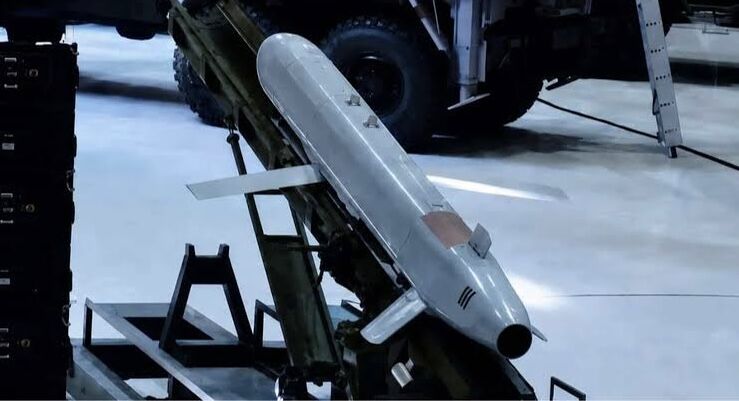
Roketsan fired two ÇAKIR cruise missiles from a mobile ground launcher on August 27, striking separate land and maritime targets in what the company says is the weapon's first publicly disclosed ground-launch trial. The video Roketsan released shows a booster carrying the missile clear of the launcher before its KTJ-1750 turbojet engine takes over, the same propulsion setup that powered ÇAKIR's original 2023 air-launch debut from a Bayraktar Akıncı drone. Beyond confirming both shots hit their targets, the company disclosed nothing else: no location, no range flown, no target description, no telemetry. That's a thin data set to build much certainty on, and it's worth being upfront that this looks like a marketing reel more than a qualification milestone until Roketsan says otherwise.

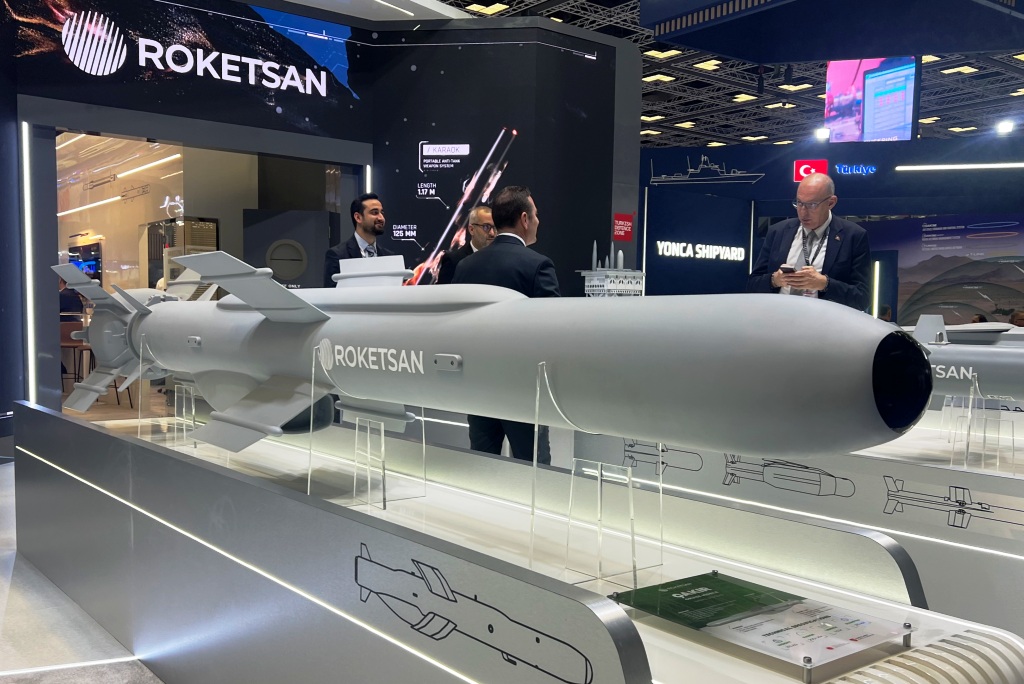
What ÇAKIR actually is matters more than this single test. Unveiled in 2022 as a modular missile family meant to fly off nearly anything, jets, helicopters, drones, ships, trucks, even unmanned surface vessels, it's a genuinely compact weapon, 275 kilograms without its booster, advertised past 150 kilometers of range, and available with a choice of imaging-infrared, radio-frequency, or hybrid terminal seekers. The version fired on the 27th used what Roketsan describes as a next-generation infrared seeker. A two-way datalink lets an operator retask, re-attack, or abort mid-flight, and the missile can hug terrain over land or skim the sea depending on the target, features that, on paper, put it somewhere between a tactical cruise missile and a loitering munition.

The more interesting story sits in Jakarta, not Ankara. Indonesia's ambassador to Turkey confirmed this month that Indonesia has already bought ÇAKIR missiles, and that Roketsan is setting up a joint rocket-and-missile production line inside Indonesia itself, no missile count, no contract value, and no firm delivery date attached. That fits a pattern Indonesia has been running with Turkish industry for over a year now: a 2025 joint venture to build Bayraktar TB3 and Akıncı drones locally, a separate June 2025 Roketsan tie-up covering Atmaca anti-ship missiles, Hisar and Sungur air-defense systems, and now ÇAKIR, and a May 2026 deal making Indonesia the first export customer for Turkey's Kızılelma unmanned fighter, complete with its own local production and workforce-development component. Indonesia isn't just buying Turkish weapons anymore; it's assembling, piece by piece, the industrial capacity to build several of them domestically.

That's a genuinely different relationship than a typical arms sale, and it says something about what Indonesia is actually trying to build: a domestic defense-industrial base stitched together from Turkish know-how across drones, missiles, and now coastal defense systems, rather than a shopping list of finished imports. A private shipbuilder under the same Republikorp umbrella already showed off a fast attack craft concept armed with ÇAKIR at last year's Indo Defence exhibition, suggesting Jakarta sees the missile's naval application as seriously as its land role.

For Roketsan, a working ground-launch mode simply widens ÇAKIR's addressable market, coastal defense batteries alongside its existing ship, drone, and aircraft options, exactly the kind of platform flexibility that makes a weapon easier to pitch to a country building out a joint production line rather than shopping for a single-use import. Whether this specific test represents genuine qualification progress or just a well-timed piece of promotional footage ahead of deeper negotiations with Jakarta is impossible to tell from what Roketsan has released so far.