Wednesday, September 2, 2026

Seventy Percent of the Foreign Parts in Russia's Missiles Are American — And Ukraine Says the Fix Is Sitting in Congress


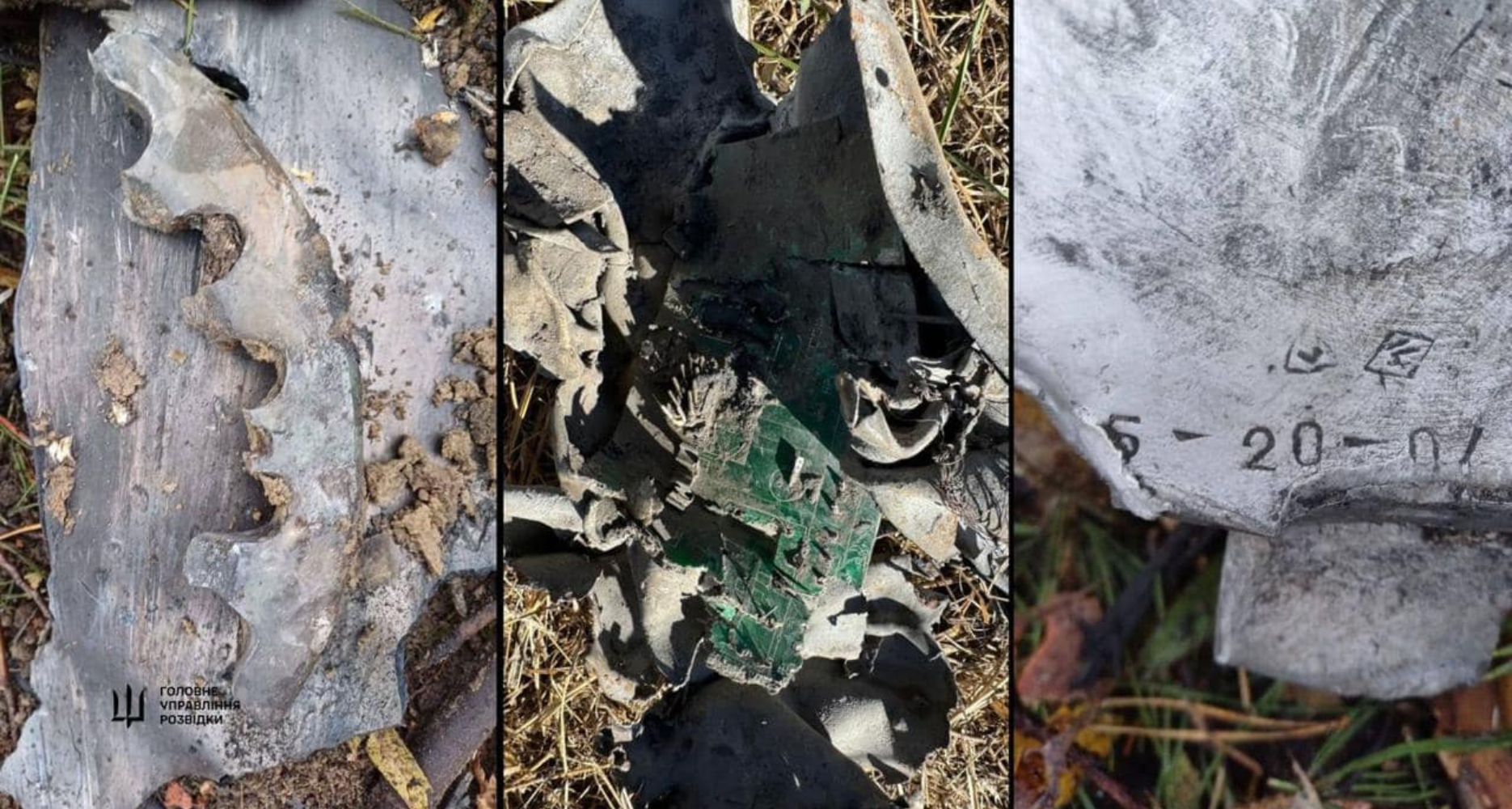
Ukraine has run this exact demonstration before. Back in 2024, an investigation found roughly 70 percent of the foreign-made components recovered from Russian missiles traced back to American companies. On August 25, Vladyslav Vlasiuk, Ukraine's presidential commissioner for sanctions policy, laid the parts out again for reporters, this time from Iskander missiles and 48N6-family rounds fired out of S-400 launchers, guidance and navigation electronics stamped with origins in the United States, Japan, Germany, Taiwan, France, Britain, and Switzerland. His summary of who dominates that pile hasn't changed: "The United States is the leader," he said, "because ballistic missiles are especially demanding in terms of quality and product characteristics." Companies named in the components include Nvidia, Texas Instruments, Analog Devices, and Microchip Technology, firms that aren't shipping to Russia directly but whose chips are getting there anyway.

Nearly 24,000 sanctions have been imposed on Russia-linked individuals and entities since 2022. That number alone tells you the problem isn't a lack of sanctions, it's that the sanctions aren't actually stopping the flow. Components move through third-country intermediaries that get sanctioned and replaced almost as fast as investigators can identify them, an enforcement pattern that's been documented for years without meaningfully closing the loophole it describes.

Vlasiuk's ask this time comes with an actual legislative vehicle attached, and it's one that's already cleared half of Congress. The Sanctioning Russia and Iran Act of 2026, sponsored by Sen. Lindsey Graham, passed the Senate and would address a chunk of what Vlasiuk is describing, but it's been sitting unpassed in the House. Trump's own posture on the bill shifted only recently: he largely withheld support for nearly a year while pursuing peace talks with Putin, before reversing course earlier this year. Vlasiuk arrived in Washington this week specifically to lobby House members to move it.

His actual proposal runs in three parts. First, get allied jurisdictions to synchronize their sanctions designations against every identified Russian ballistic-missile manufacturer, so a company sanctioned by the US isn't still doing business freely with the EU or UK. Second, impose sectoral restrictions on roughly 110 specific materials used in missile production, a narrower, more targeted list than blanket entity sanctions. Third, tighten export licensing specifically for sensitive electronics and chemical inputs. On the EU side, Vlasiuk wants a small, targeted package aimed just at the ballistic-weapons supply chain passed by September, with a second follow-up in October, rather than waiting for Brussels' broader 22nd sanctions package, which isn't expected before late October at the earliest.

The urgency behind pushing this now connects to two numbers that matter more than the sanctions statistics themselves. Russia is producing more than 100 ballistic and high-speed missiles a month, according to Ukrainian military officials. Meanwhile Patriot interceptor deliveries to Ukraine have dropped to somewhere between 50 and 60 a month, a fraction of what's needed against combined weekly salvos running into the hundreds of drones and missiles. That gap is the same interceptor shortage this blog has already tracked repeatedly this year, and Vlasiuk's argument is essentially that closing off Russia's component supply is a second lever alongside sending more interceptors, one that doesn't depend on Western stockpiles that are already stretched thin. Whether Congress moves on a bill that's been stalled for the better part of a year, while the missiles it's meant to slow keep launching at more than 100 a month, is the open question this latest disclosure doesn't answer.

The Navy's "Expendable" Carrier Drone Just Got Twice as Expensive to Actually Expend


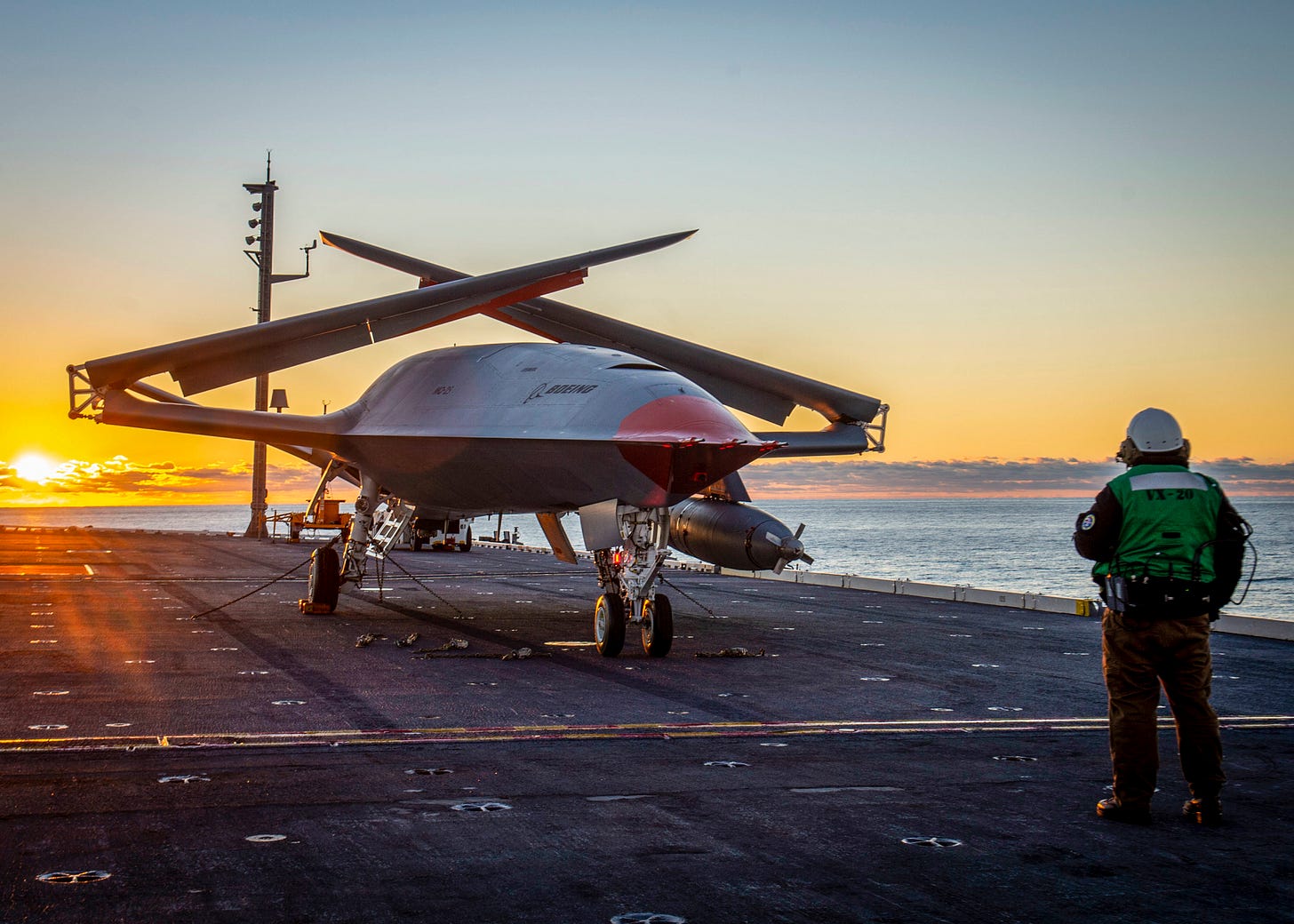
In 2024, Navy officials were clear about the number that mattered most for their planned carrier-based combat drone: keep it around $15 million a unit, because the whole point was that it's meant to be expendable, something you can afford to lose in a fight without the program collapsing. The Request for Information the Navy put out on August 31 quietly doubled that target. Contractors are now being asked to hit $30 million per aircraft, and to submit an interim manufacturing and supply chain plan for getting there. That's the same order of magnitude as a fourth-generation manned fighter, which raises an obvious question: at what price does "expendable" stop meaning anything?

The rest of the spec sheet reads like a genuinely serious attempt to build a real combat aircraft rather than a stripped-down sacrificial drone. Up to five tons of ordnance. Four external weapons up to 2,500 pounds each, carried through the full flight envelope and carrier certification testing. Catapult launches and arrested landings in sea states up to 13-foot waves, the same rough-water tolerance the Navy expects from its manned jets. Operation off both Ford- and Nimitz-class decks without requiring major modifications to either. This isn't a scaled-down toy meant to soak up enemy fire cheaply, it's a drone built to carry a real strike payload and survive real carrier operations, and that ambition is exactly what's driving the cost up.

The stated rationale for building it at all is worth taking at face value, because it's genuinely different from the usual "drones are cheaper" pitch. The Navy's own language in the RFI frames the problem around absorbing losses, not avoiding them: traditional manned platforms and surface combatants carry "high cost and extended timelines required to replace" them, which "limit the Joint Force's capacity to absorb operational losses." That's a subtly different argument than simply wanting cheap hardware. It's an admission that the Navy expects to take real losses in a serious fight and wants something it can lose and rebuild fast, without every combat loss meaning a years-long wait for a replacement F-35 or Super Hornet. A $30 million drone still replaces faster than a $100 million-plus fighter, even if it's no longer cheap in any absolute sense.

The integration requirements tell their own story about how conservative the Navy is being on everything except the aircraft's actual mission profile. The CCA has to fit within existing deck, elevator, and hangar bay dimensions, its "spot factor," how much space it eats up on a crowded flight deck, can't exceed a standard fourth-generation fighter. It has to fly using the same carrier air wing personnel already aboard, controlled through the MD-5 Unmanned Carrier Aviation Mission Control System already built for the MQ-25 Stingray tanker drone. Even the eventual specialized handling equipment the Navy wants has to work through existing EMCON, emergency communications-out, procedures without adding deck crew. Every one of those constraints is the Navy protecting its existing carrier infrastructure and workflow rather than redesigning around the drone, a genuinely sensible way to avoid the kind of disruptive, expensive integration problems this blog has already tracked with the Ford-class's own arresting-gear troubles.

Two prototypes, shore-based and carrier-qualified within three years, is the near-term target, with proposals due September 18. Whether contractors can actually thread the needle the Navy's asking for, real strike payload, real carrier-deck compatibility, genuine expendability, all at a price point that's already doubled once before the program has even selected a design, is the real test this RFI sets up. A drone this capable, at a cost creeping closer to a manned aircraft's, only pays off if the Navy is genuinely prepared to lose it in combat rather than treating it, once it's actually built, as too expensive to risk.

Why Canada, of All Countries, Is the Star of Poland's Biggest-Ever Arms Show


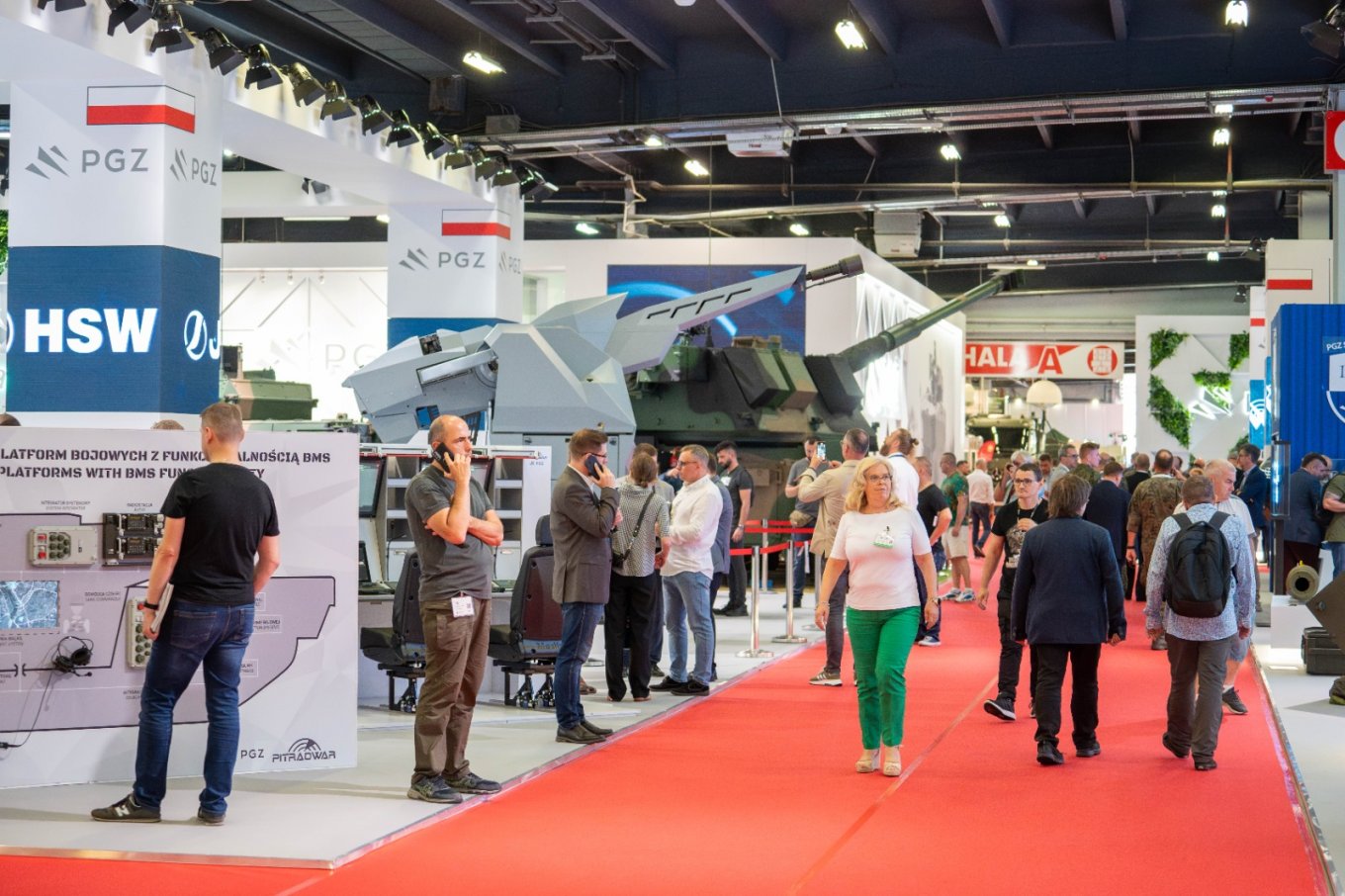
Every square meter of exhibition space at Poland's MSPO defense show sold out nearly two months before it even opens. Around 1,000 exhibitors, a brand-new hall built specifically to hold them, the largest edition in the show's 34-year history. And the country organizers chose to headline all of it, the "Lead Nation" with its largest-ever national pavilion, isn't the United States, isn't Germany, isn't any of the usual major arms exporters. It's Canada, bringing 82 companies to Kielce to show off military vehicles, aerospace hardware, cybersecurity systems, and radar technology.

That choice makes more sense once you look at what Canada's been doing since December. That's when it became the first non-EU country allowed into the EU's SAFE defense-financing scheme, the same €150 billion low-interest loan pool this blog has already tracked funding Poland's own Piorun MANPADS consortium and reshaping procurement decisions across the continent. Getting into SAFE as a non-EU member is a genuine structural opening, it puts Canadian defense firms in the room for a funding pool otherwise reserved for EU governments, and MSPO is where Ottawa is cashing in that access, pitching directly to European buyers now spending at a pace this blog has documented repeatedly this year.

There's a more pointed backdrop to Canada's push into Europe worth naming directly. This blog covered the friction that erupted this summer when Washington used tariff pressure to try pulling Ottawa away from its own preferred Saab GlobalEye purchase toward Boeing's E-7 Wedgetail instead, and separately covered Canada's $11.3 billion icebreaker deal explicitly framed by Prime Minister Mark Carney as leverage in exactly that kind of trade relationship, "there's a world in which America is part of that," Carney said of a related U.S. icebreaker program, "but on terms that work for Canadians." Headlining MSPO reads like the next chapter of the same strategy: Canada's defense industry building out European buyers and European financing access specifically so it isn't as dependent on Washington's terms for its own defense trade relationships.

Poland's side of this story is its own genuine spectacle. Warsaw is on track to spend a record 200 billion zloty, roughly $53.8 billion, on its military in 2026, pushing defense spending to 4.8 percent of GDP, driven directly by Russia's war next door in Ukraine. That budget has already bought Abrams tanks, F-35s, Apache helicopters, and Patriot missiles from American suppliers, this blog's earlier coverage of Poland's own K2 tank deal with South Korea and its Piorun missile expansion showed the same pattern of aggressive, diversified buying across multiple allies simultaneously rather than concentrating spending with any single supplier.

The dual-use technology thread running through this year's show is worth a mention too: exhibitors like Ecoline showing AI-driven predictive maintenance platforms, Axon' Cable and others pitching systems that work across defense, aerospace, and energy sectors alike, alongside the Polish Armaments Group's own showcase of active modernization programs. That mirrors something this blog has already tracked in Turkey's defense-industrial buildout, civilian and military technology increasingly built on the same underlying platforms rather than as separate product lines, a trend MSPO's own organizers are explicitly leaning into this year. Between the sold-out floor, the new hall, and roughly PLN 6 billion in contracts typically signed onsite in a normal year, this edition is shaping up to be less a trade show and more a live snapshot of where European defense spending is actually flowing right now, and who's best positioned to catch it.

This Is the Sixth Time This Year the Pentagon Has Announced It's Fixing the Missile Shortage


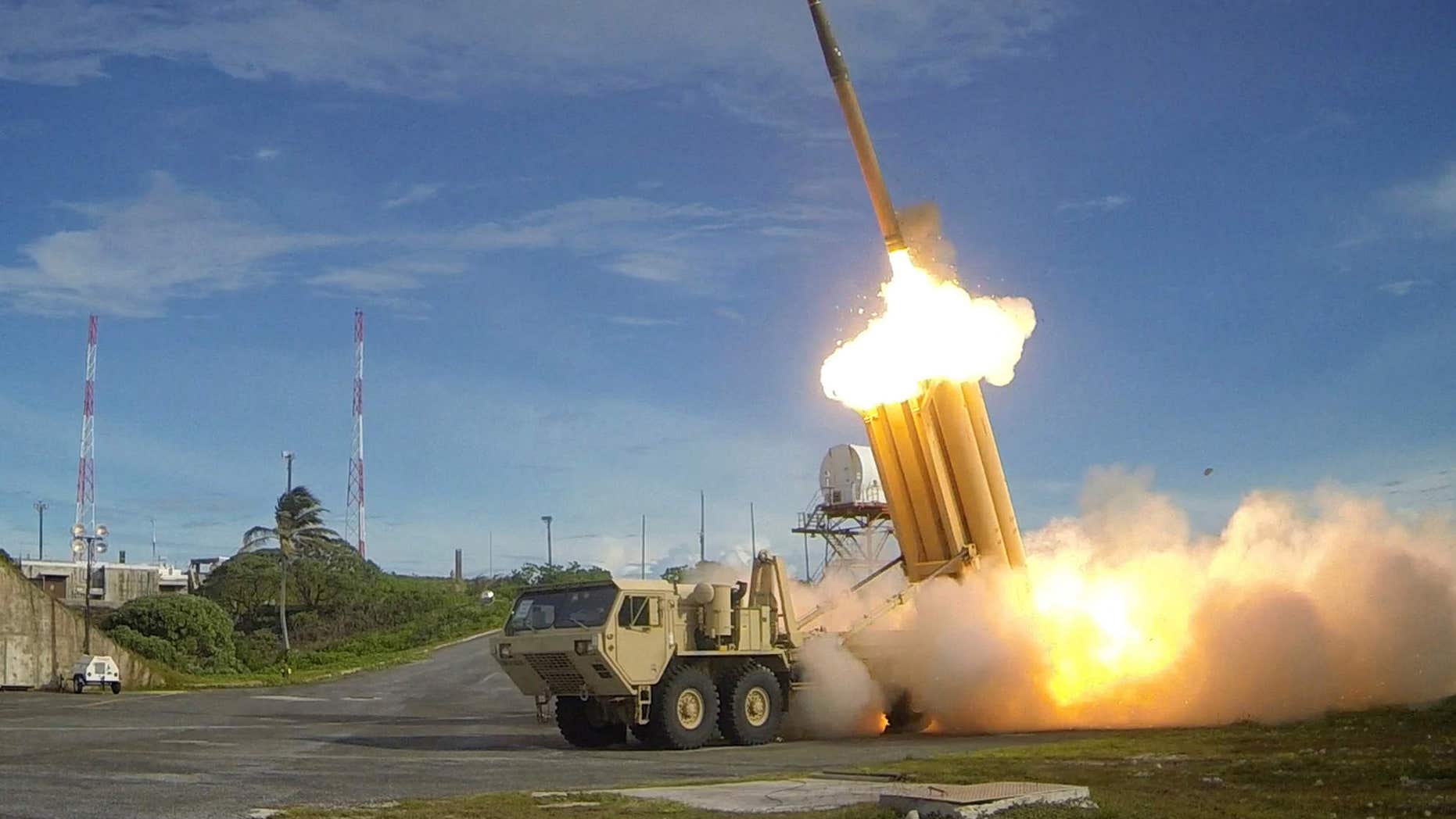
Count them: March, three framework agreements with BAE Systems, Lockheed, and Honeywell. April, a seven-year deal with Boeing to triple PAC-3 seeker production. Then an agreement with L3Harris and Lockheed to quadruple THAAD propulsion systems. June, a separate $35 billion Lockheed contract specifically for THAAD. Now, Monday's announcement, two more framework agreements with General Dynamics Ordnance and Tactical Systems and Lockheed Martin, targeting a tripling of PAC-3 MSE output and a quadrupling of THAAD interceptor capacity. That's at least six distinct missile-production deals announced in roughly six months, all aimed at the same underlying problem.

The problem itself is well-documented and getting worse, not better, even as the deals pile up. CSIS estimated in a July report that the U.S. has burned through roughly 65 percent of its pre-war Patriot inventory and 38 percent of its THAAD interceptors, drained simultaneously on two fronts, sustained combat against Iran and continued transfers of Patriot systems and Army Tactical Missile Systems to Ukraine. Missile production simply doesn't scale on a wartime timeline, which is precisely why the Pentagon keeps signing multi-year framework agreements rather than one-time emergency orders: Under Secretary of War for Acquisition and Sustainment Michael Duffey's own description of the strategy is that guaranteeing minimum annual procurement quantities over seven years gives contractors and their sub-tier suppliers "a stable, long-term demand signal," enough certainty to justify the kind of capital investment, new facilities, expanded workforce, bulk material purchases, that a single annual contract wouldn't.

What Monday's specific deal actually targets is instructive: not finished missiles, but the components that bottleneck finished-missile output, motor cases, seeker housings, midsections, and shroud deployment systems, the unglamorous subassemblies that determine how fast a prime contractor can actually turn raw material into a working interceptor. General Dynamics will build those components; Lockheed remains the prime contractor stitching them into complete PAC-3 MSE and THAAD rounds. That's a genuinely sensible way to attack a production bottleneck, expanding capacity at the sub-tier supplier level rather than just pressuring the prime contractor to somehow build faster with the same input pipeline.

There's a caveat attached to every single one of these announcements that's easy to miss buried in the press-release language, and it matters more than the headline multiplication factors do: funding for all of it is subject to annual congressional appropriations. A seven-year framework agreement isn't a seven-year funding guarantee, it's a commitment to buy at a certain rate if Congress actually appropriates the money each year to do so. Six deals announced doesn't mean six deals fully funded through their entire multi-year term; it means six demand signals sent to industry, betting that Congress keeps writing checks at the pace the Pentagon is now promising.

Whether tripling and quadrupling production capacity actually closes the gap CSIS documented is a question of years, not months. Interceptor manufacturing involves specialized components, skilled labor, and testing timelines that don't compress just because a contract says "seven years" instead of "one year." What's genuinely notable about the pace of these announcements, six in half a year, is less that any single one represents a breakthrough and more that it reflects an institution treating this as an emergency it hasn't yet solved with the previous five attempts, still building toward capacity it doesn't currently have, one framework agreement at a time.

Why Was the Air Force's Top General, Not CENTCOM, the One Meeting Israel's Military Chiefs?


Under the normal chain of command, this isn't the visit anyone would have expected. When American and Israeli military leadership sit down to talk regional strategy, it's typically CENTCOM Commander Gen. Brad Cooper, or his air component chief, Lt. Gen. Daniel Lasica, making the trip, not the Air Force's own service chief of staff. But on August 23 in Tel Aviv, it was Gen. Kenneth Wilsbach, the Air Force's top officer, sitting across from IDF Chief of Staff Lt. Gen. Eyal Zamir and Israeli Air Force commander Maj. Gen. Omer Tischler. The Israeli side's own reporting flagged the same thing this piece is flagging: that's an unusual visit.

The meeting itself was described in fairly standard diplomatic language on both sides, Wilsbach's own social media post cited "shared priorities for regional security" and "opportunities to deepen cooperation," while the IDF's account added that the three discussed "advancing learning from the joint campaign" against Iran. That campaign, which passed its six-month mark right around this meeting, has been a genuinely intensive combined effort: U.S. Air Force assets flying alongside Israeli strikes have included B-1B and B-52 bombers, F-15E Strike Eagles, F-35As, A-10s, and KC-135 tankers, a real mix of long-range strike and refueling capability committed to a single regional campaign since it began February 28.

Two competing explanations for why Wilsbach specifically made this trip are both plausible, and the reporting doesn't settle which one is actually right. One is that the war itself has pushed Air Force-to-Air Force cooperation between the two countries to a level that now genuinely warrants direct engagement at the service-chief level, above and beyond what CENTCOM's own chain of command normally handles. The other, more mundane explanation is timing: Lasica only recently took over as CENTCOM's air component commander from Lt. Gen. Derek France, and a general still settling into a new post might reasonably have a service chief step in for a high-profile allied engagement rather than lead it himself this early. Nothing in the public reporting confirms either explanation over the other.

What is confirmed is how this fits into a busier-than-usual travel pattern for Wilsbach this year. He'd already toured seven bases across CENTCOM and EUCOM's combined area of responsibility back in December 2025, then made a separate July stop at the Global Air and Space Chiefs Conference in London, RAF Mildenhall, and Aviano Air Base in Italy, before this Israel visit. That's a chief of staff spending an unusual amount of personal travel time on the specific European and Middle Eastern theaters where American air power has been most actively engaged this year, a travel pattern that lines up with a separate report the same week that the Pentagon's top policy official said U.S. access to European air bases will be a central factor in decisions about future American military posture on the continent.

The casualty accounting detail buried in this same story deserves its own mention rather than a footnote. Eighteen U.S. service members have died since the Iran war began in February. The Pentagon has since reclassified four of those deaths into a separate casualty summary, lowering the number that appears in the war's headline casualty figure. Whatever the technical justification for that reclassification, it's the kind of quiet accounting change that changes the number the public actually sees without changing how many people actually died, and it's worth registering plainly rather than letting the headline figure pass without the caveat attached.