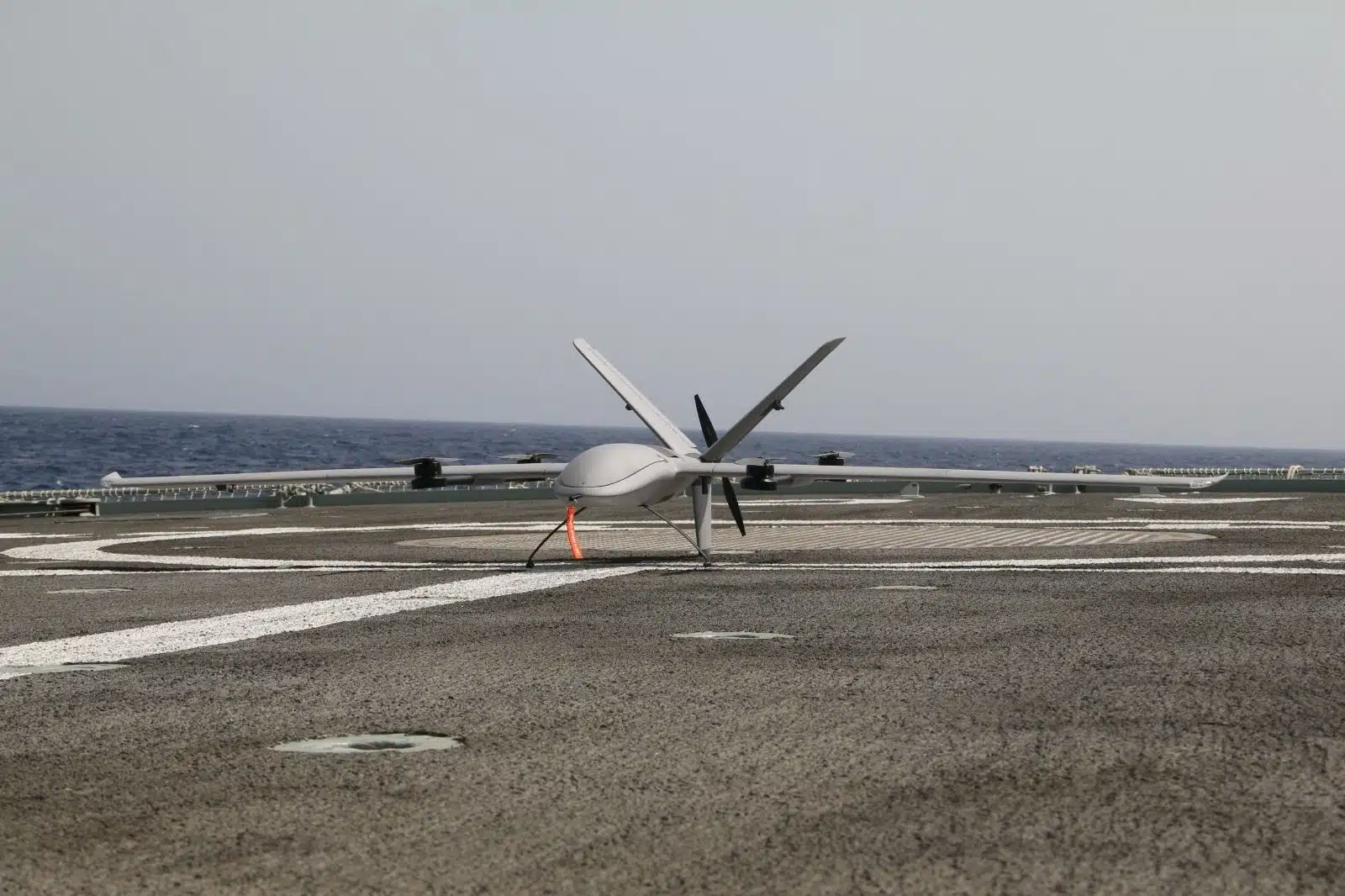
DARPA closed out its Lift Challenge on August 11 without finding a drone that could hit its stated target, lifting four times its own weight, but the results landed close enough to be genuinely notable. Maryland-based AVIDrone won first place and $1.25 million with its Katana electric helicopter design, lifting a 3.84-to-1 payload ratio, meaning a 29.3-pound aircraft carried 112.4 pounds of cargo across roughly five nautical miles. Massachusetts-based MTech Operations took second at 3.64-to-1, and California's Xtreme Aerial Concepts placed third at 3.45-to-1, with Utah-based DefendTex earning a separate technology award for an unscored 9.63-to-1 ratio design that didn't complete a full qualifying run. Lift Challenge program manager Phillip "Donna" Smith framed the underlying problem as a "heavy-lift bottleneck," multirotor drones have traditionally struggled to carry payloads exceeding their own weight, calling economical heavy vertical flight "the next great technological inflection point" for adoption across agriculture, construction, and logistics.
The military application Smith's framing gestures toward but doesn't spell out directly connects to a genuinely persistent problem this blog has tracked across several distinct stories this summer: getting supplies to a contested or hard-to-reach location without exposing an expensive, vulnerable manned platform to do it. This blog's earlier coverage of the Navy's proposed UUV-based submarine resupply concept documented exactly this logic applied underwater, using autonomous vehicles to transfer parts between a submarine and a carrier without either surfacing, specifically because a surface vessel making that same delivery in contested waters creates a detectable signature both platforms exist to avoid. A heavy-lift drone capable of carrying more than triple its own weight is the airborne equivalent of that same problem: a helicopter resupply run into a forward position or contested area puts an expensive, crewed aircraft and its pilots at risk, while a comparably capable uncrewed platform doesn't carry that same cost if it's shot down or simply doesn't return.
That's also the same underlying economic logic this blog has tracked through the interceptor cost-exchange problem and CENTCOM's Task Force Falcon Strike pivot toward attritable systems, cheap, expendable, mass-producible hardware doing jobs that used to require expensive, hard-to-replace platforms. A heavy-lift cargo drone sits on the less dramatic, but arguably more consequential, logistics side of that same shift: contested resupply, casualty evacuation, and forward-position sustainment are unglamorous missions compared to strike and reconnaissance, but they're also missions where a $1.25 million prize-winning design proving a nearly 4-to-1 lift ratio could meaningfully change what's possible without risking a Black Hawk crew or committing scarce helicopter airframes to routine cargo runs.
The competition's structure itself is worth noting as a genuinely different, and arguably more efficient, model than the traditional acquisition pipeline this blog has spent the summer documenting as chronically slow, from India's DRDO radar and engine delays to the U.S. Army's own history of stalled directed-energy and munitions-production programs. A $2.5 million total prize pool across three winners, plus additional subjective awards for revolutionary aerodynamic and powertrain design, produced multiple independently developed, competitively validated approaches to the same hard engineering problem in a matter of months, with Smith explicitly framing the event's real value as the networking and cross-pollination it generates among "inventors, investors and users" who, per past DARPA challenges, tend to combine forces afterward to build the next generation of whatever the challenge targeted. That's a meaningfully different innovation model than a traditional single-vendor, multi-year Request for Proposals process, and one this blog's coverage of repeatedly delayed procurement programs suggests the Pentagon could stand to lean on more heavily across other capability gaps.
None of the three winning designs is an immediately fieldable military system, DARPA's own framing treats this as foundational technology demonstration rather than a program of record, and turning a competition-winning prototype into deployed, sustainable hardware is a different and often much longer process than winning the challenge itself. But a heavy-lift drone that can genuinely move more than triple its own weight addresses a logistics problem this blog has now traced across submarines, contested Pacific resupply lines, and the broader attritable-systems doctrine reshaping how the Pentagon thinks about risking expensive platforms, and DARPA's competition model getting three independent teams within striking distance of that benchmark in a single challenge cycle is a genuinely encouraging data point in a summer of coverage that's mostly documented the opposite problem.