Friday, June 7, 2024

Hezbollah Destroys Israeli Iron Dome with Iranian Almas Missile: Details and Implications


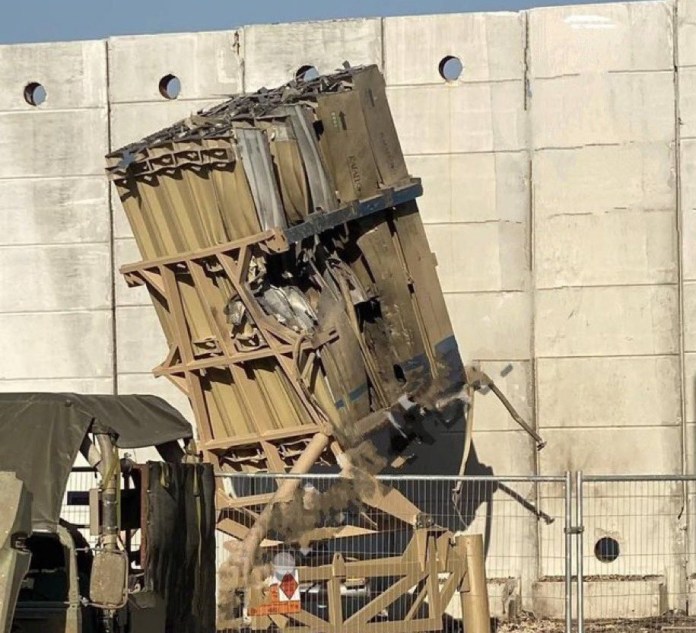
 In a significant show of strength, Lebanon-based militant group Hezbollah recently claimed to have destroyed Israel's famed 'Iron Dome' using an Iranian-made missile. On June 5, Hezbollah announced it had struck an Iron Dome launcher near Ramot Naftali, referred to by the group as "northern occupied Palestine."

A video released by Hezbollah confirmed the strike, showing a guided missile hitting the launcher. The following day, photos and information circulated on social media, indicating that the Iron Dome battery was destroyed by an Iran-origin Almas missile, reportedly supplied to Hezbollah by Tehran.

Various military bloggers and open-source intelligence accounts confirmed that Hezbollah used the 'Almas-3' anti-tank guided missile (ATGM) for the attack. Ironically, the Almas is based on Israel's Spike ATGM. The Israel Defense Forces (IDF) have not officially acknowledged the destruction, with some pro-Israeli bloggers suggesting the target could have been a decoy or inactive launcher.

Elijah J. Magnier, a veteran Middle East correspondent, noted on social media that Hezbollah's action was a message to stop the war on Gaza, implying that the Lebanese front would cease its activities in response. Pro-Iranian commentators praised the effectiveness of Iranian weapons, highlighting the Almas missile's capabilities.


The Almas missile is believed to be an Iranian reverse-engineered version of Israel's Spike missile, captured by Hezbollah during the 2006 war and subsequently brought to Iran. Hezbollah has been using various Iranian-supplied weapons against Israel since October last year.

Hezbollah's video of the attack shows the Almas missile approaching and striking the Iron Dome launcher. This wasn't the first use of the Almas against Israel; earlier footage from January showed the missile being used against an Israeli intelligence installation near the Lebanon border.

The Almas missile, capable of precise indirect attacks, poses a significant threat to Israeli military and border infrastructure. The Spike missile, used by the IDF with great success, is renowned for its precision and first-person control capabilities. The Almas' possession by Hezbollah, therefore, is concerning for Israel.

The Almas, meaning 'Diamond' in Persian, is a high-precision anti-tank guided missile developed by Iran and supplied to Hezbollah. The missile's sophisticated technology reflects Iran's robust missile development capabilities, with a range of about eight kilometers and a tandem warhead designed for high precision.

Hezbollah's acquisition of advanced weapons like the Almas underscores Iran's extensive support, providing the militant group with sophisticated missiles and rockets. Iran has a history of replicating Western ammunition, demonstrating its ability to produce weapons close to the originals in capability.

The development and deployment of the Almas missile by Hezbollah highlight the evolving threat landscape and the growing sophistication of Iran's missile technology, posing new challenges for Israel's defense systems.

Turkey's Hürjet and Anka-III Unmanned Aircraft Conduct Joint Flight, Showcasing Growing Military Prowess


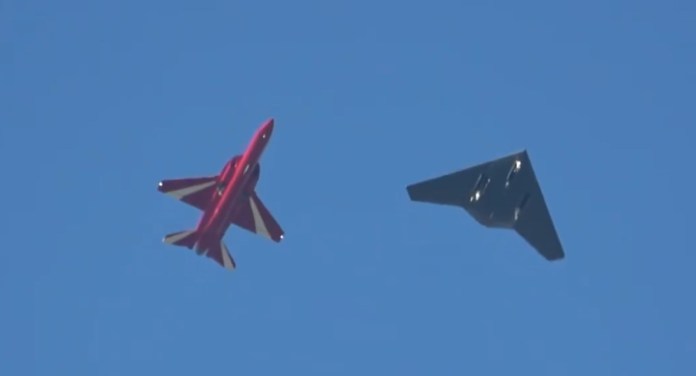
In a remarkable display of Turkey's advancing military capabilities, two indigenously developed aircraft—the Hürjet trainer jet and the Anka-III unmanned combat aircraft—recently completed a joint flight.

Local media reports revealed that the ANKA-3 Flying Wing Unmanned Combat Aircraft and the HÜRJET, Turkey's first domestically built supersonic jet, flew together. During the test, the aircraft reached an altitude of 7,000 feet, flew at 165 knots, and remained airborne for 50 minutes.

Turkish Aerospace Industries (TAI) announced on social media platform X (formerly Twitter) that this joint flight marked the ANKA III's eighth sortie and the HÜRJET's 66th. This joint operation could signify the beginning of future collaborations, considering the Hürjet's role as a trainer aircraft and the Anka-III's as an unmanned jet. Analysts note this is significant as TAI plans to integrate manned-unmanned teaming in its next-generation stealth aircraft, 'KAAN', utilizing a data link for coordination.

The Anka-III made its maiden flight last year, following its development initiation in 2022. This medium-altitude UAV, designed for long-endurance surveillance, boasts a 30-hour endurance and can operate at 30,000 feet, covering 250 kilometers. The stealth UCAV, weighing 6.5 tonnes with a payload capacity of 750 kilograms, first flew on December 28, 2023.

The Anka-III is capable of various missions, including electronic warfare, ISR operations, and precision strikes, often overseen by ground stations. Its stealth design aims to withstand combat missions, such as electronic warfare and the suppression of enemy air defenses.

TAI is enhancing Anka-III's capabilities, with plans for a supersonic version featuring two engines, as confirmed by TAI CEO Temel Kotil.

The Hürjet, an advanced jet trainer and light attack aircraft, made its maiden flight on April 23, as announced by Turkish President Recep Tayyip Erdogan on April 25. The aircraft, which has completed 66 sorties in over a year, gained attention after TAI won a contract to supply light combat aircraft to the Royal Malaysian Air Force, although it lost the tender to South Korea's FA-50.

Despite this setback, Turkey continues its efforts to export the Hürjet, recently entering Spain's tender to replace its F-5 trainer aircraft. Some analysts view the Hürjet as a competitor to Boeing's T-7 Red Hawk, which has faced delays. TAI hopes to market the Hürjet internationally before the T-7.

Hürjet is part of TAI's ambitious projects, including the Anka-III and KAAN fighter jets. The trainer is scheduled for its first overseas flight in Egypt this year, aiming to attract international customers. This recent flight underscores the rapid progress the aircraft has made in just a year.

US Navy and Taiwan Conduct Unplanned Military Exercises in West Pacific Amid Rising Tensions with China


In an unannounced move showcasing growing maritime cooperation, the U.S. and Taiwan conducted impromptu military exercises in the West Pacific. This development comes amid rising tensions between Taiwan and China, ahead of the inauguration of Taiwan's president-elect, Lai Ching-te. According to unnamed sources cited by Reuters, the drills took place during routine naval encounters.

One source mentioned the involvement of “multiple military assets,” while another highlighted that these exercises were unofficially termed “unplanned sea encounters,” implying a tacit agreement that these drills were coincidental rather than premeditated.

These exercises occurred between a series of scheduled high-profile drills. In mid-April, the U.S. conducted a trilateral exercise with Japanese Maritime Self Defense Force (JMSDF) and Republic of Korea Navy (ROKN) vessels, focusing on interoperability and warfighting capabilities. Shortly after, the Balikatan 24 exercise in the Philippines involved the U.S., Philippine, Australian, and French forces, concentrating on counter-landing operations and maritime domain awareness.

During the unplanned U.S.-Taiwan drills, around six ships, including supply vessels and frigates, engaged in basic communications, resupply operations, and joint anti-submarine warfare (ASW) exercises. These drills are critical for ensuring operational compatibility between the two navies in emergencies, involving tactical maneuvers and underwater target searches.

Taiwan's Ministry of National Defense spokesperson, Major General Sun Li-fang, stated that the exercises adhered to the Code for Unplanned Encounters at Sea (CUES), which manages interactions between different militaries at sea. This protocol was previously utilized in 2016 during an encounter between the USS Chafee and three ROCN ships.

The disclosure of these exercises follows Taiwanese Chief of General Staff Admiral Mei Chia-shu’s visit to the U.S. Indo-Pacific Command (USINDOPACOM) change of command ceremony in Hawaii in early May. Shortly after, China conducted significant military exercises around Taiwan, labeled “Joint Sword-2024A,” which involved near-encirclement maneuvers similar to those after Nancy Pelosi's visit in 2022.

In late May, the U.S. began Tiger Strike 2024 with Malaysia, focusing on amphibious warfare and multi-domain awareness. Early June saw the announcement of the “Freedom Edge” exercise, a first-time trilateral drill involving the U.S., Japan, and South Korea.

These high-profile activities in the West Pacific lead up to the Rim of the Pacific 2024 (RIMPAC 24) exercises, scheduled from June 28 to August 2, involving 29 nations, 40 surface ships, 3 submarines, 14 national land forces, over 150 aircraft, and more than 25,000 personnel. The Italian carrier Cavour and a French Navy FREMM air defense frigate will also participate.