Monday, August 31, 2026

Ford's Landing Gear Was Built for Four Engines — It's Been Running on Three the Whole Time


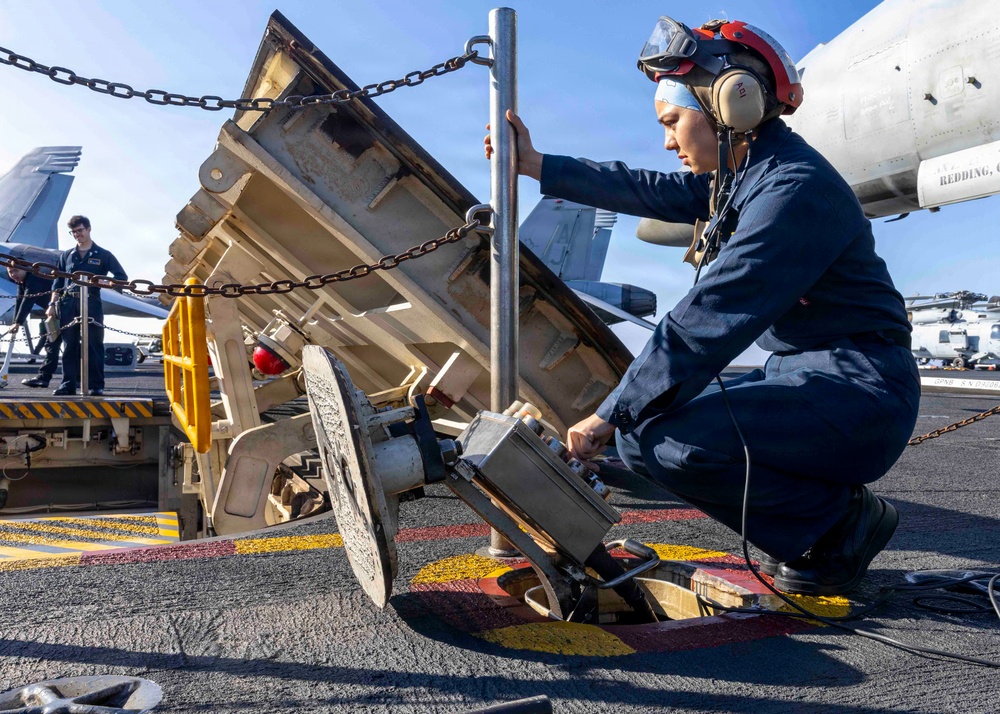
There's a specific number buried in a Navy acquisition report that explains a lot about why USS Gerald R. Ford's arresting gear has spent years generating headlines for the wrong reasons: the system installed aboard the ship runs a three-wire, three-engine configuration, but the operational reliability target the Navy originally set was built around a three-wire, four-engine design. The hardware simply wasn't built to the specification its own performance was being measured against. A fix, adding a fourth engine, is now scheduled to reach the carrier in fiscal year 2029, more than a decade after Ford entered service.

The Advanced Arresting Gear was meant to be a genuine improvement over the hydraulic system Nimitz-class carriers have used for decades, capable of recovering a wider range of aircraft weights and speeds while cutting down on maintenance. Instead it became one of the signature reliability problems of the entire Ford-class program's rocky early years. What's changed, according to an April 2026 Modernized Selected Acquisition Report the Pentagon has now released, is that the numbers have actually started moving in the right direction under real fleet conditions rather than just developmental testing. During the first six months of Ford's second operational deployment, AAG hit an instantaneous operational availability rate of 0.987, edging close to the 0.985 threshold that defines system maturity. During a four-day sortie generation demonstration with Carrier Air Wing Eight, the ship set a new single-day record of 134 aircraft recoveries in one cyclic period, averaging 19 combat-loaded sorties per cycle, with AAG posting a perfect 1.000 availability rate and zero operational mission failures.

Those are genuinely strong numbers for a system that spent its early years defined by underperformance. They're also, worth noting plainly, still short of the Navy's own cumulative reliability threshold, which the report confirms AAG hasn't yet met even as instantaneous performance has improved. The gap between "reached record performance during a good week" and "meets the reliability standard across its full service life" is exactly what the 2029 upgrade is meant to close.

What's actually planned for that upgrade is more than just bolting on a fourth engine. The Navy's report describes engine-room isolation changes, a Wire 2 backup barricade capability, and enhanced high-power fuse protection alongside the fourth-engine solution, changes the Navy estimates could more than triple system reliability compared to the current setup. A parallel software effort is targeting latency and unpredictable behavior in the system's control code, with installation timed to the same 2029 window. None of this is cosmetic; a single arresting-gear failure during high-tempo flight operations doesn't just ground one aircraft, it can back up the entire recovery cycle and choke off the sortie generation rate the whole carrier exists to produce.

The stakes get more concrete once F-35C integration is factored in. The Navy has been running compatibility testing for the stealth fighter on AAG since 2022, moving through deadload and then manned testing, with a formal Aircraft Recovery Bulletin expected in fiscal year 2027, two years before the reliability upgrade itself arrives. That sequencing means the Navy is set to clear the F-35C for AAG recovery on a system it already knows won't reach full designed reliability until two years later, a real if manageable risk given how central the F-35C is becoming to Ford-class air wings.

The price tag attached to all of this is its own story: $3.123 billion in total AAG acquisition spending, plus roughly $3.76 billion in operating and support costs projected across four ships and a 50-year service life. Forty separate obsolescence changes still need to be incorporated into production and retrofitted across Ford, Kennedy, and Enterprise just to keep the fleet on a common configuration. Ford's arresting gear is getting better. It's also a genuinely expensive, still-unfinished fix for a system that was supposed to have four engines from the start and has been quietly running on three the whole time.

Why a "Training Jet" Just Became Saab's Most Important Export Pitch


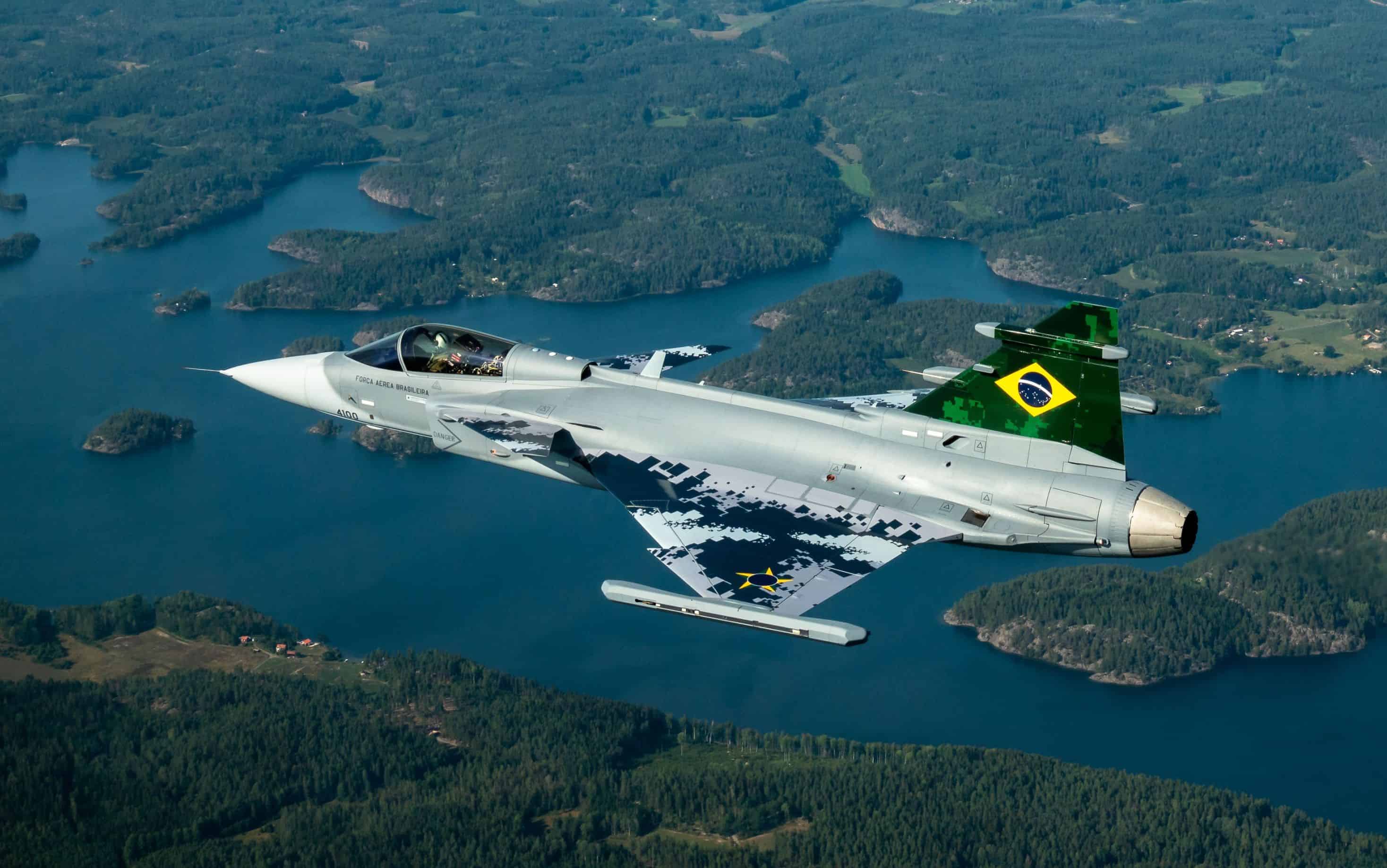
The official reason a second cockpit exists on Saab's new Gripen F is training. Convert new pilots faster, put an instructor behind them in a fully operational fighter, cut down the schedule needed to get someone combat-ready. That's what Saab says the aircraft is for, and it's true as far as it goes. It's also almost certainly not why the company is talking about this jet the way it is.

The aircraft flew for the first time on August 28, a 40-minute sortie out of Linköping with Saab's chief test pilot up front and Brazilian Air Force test pilot Lt. Col. Abdon de Rezende Vasconcelos in the rear seat, a detail Saab clearly wanted noted given how deeply Brazil is embedded in this program. Brazil signed on as the Gripen E's first customer back in 2014, ordering 36 aircraft, 28 single-seat E models and 8 of the twin-seat F, with a technology-transfer deal substantial enough that Embraer builds the jets locally and more than 350 Brazilian engineers, technicians, and pilots have cycled through the development and testing program. This isn't a customer taking delivery of someone else's design; Brazil helped build it.

What Saab's own statements make clear is that the rear seat isn't just for a trainee. In a genuinely difficult mission, one pilot alone is managing sensors, weapons, electronic warfare, and communications simultaneously, a cognitive load that gets worse exactly when things go wrong. A second crew member splits that workload, one person flying and fighting, the other running sensors, coordinating jamming, managing precision strikes, or simply keeping track of a chaotic battlespace while the pilot up front stays focused on the immediate fight. Saab is explicit that the Gripen F retains every piece of the single-seat E's mission system, AESA radar, beyond-visual-range missiles, full electronic warfare suite, so the second seat isn't a stripped-down trainer variant bolted onto a real fighter. It's the same fighter with a second brain added.

That second brain is where this actually gets interesting, and where the training story starts to look more like cover for the real pitch. Saab is already building the Autonomous Collaborative Platform, a stealthy, supersonic drone meant to fly as a companion to the Gripen E, and the company has openly described the rear-seat crew member as a natural operator for exactly that kind of loyal-wingman drone, commanding multiple ACPs for reconnaissance, jamming, target suppression, or acting as decoys, without forcing the front-seat pilot to fly the jet and run a drone swarm at the same time. Sweden's own defense minister has separately called a loyal-wingman drone a "natural further development" of the Gripen system. Put those two programs together and the Gripen F stops looking like a training jet with a bonus seat and starts looking like the crewed half of a manned-unmanned team Saab is building deliberately, piece by piece.

The timing helps explain why Saab wants that story told well beyond Brazil. After a decade-long drought following the original Brazil deal, the Gripen E/F has quietly picked up close to $10 billion in new orders in the past year alone, Thailand, Colombia, and, notably, Ukraine, which signed for 16 Gripen-Es in June with deliveries starting in 2029. Saab is also actively re-pitching the aircraft to Canada as Ottawa reconsiders its F-35A commitment amid tensions with Washington, while Portugal, the Philippines, and Peru have all expressed interest without formal talks yet. Every one of those conversations gets easier if Saab can point to a working demonstration of exactly the kind of manned-unmanned teaming every major air force is racing to field. A twin-seat trainer that happens to double as a drone-control platform is a considerably stronger sales pitch than a trainer alone, and it's hard to believe that's an accident.

Algeria's Real Sahel Play Isn't Its Fighter Jets — It's the Helicopters It's Handing Off


Two Mi-24V gunships and two Mi-8/17-series transport helicopters left Algeria's forward base at In Guezzam on August 9 and landed in Niamey. Both flights are logged as outright transfers to Niger's military, not a loan, not a joint exercise, hardware changing hands. It's a modest handover in raw numbers, four helicopters, but the location says more than the count: In Guezzam sits right on the Algeria-Niger border, meaning Algeria has effectively been staging equipment there specifically to move it south when needed.

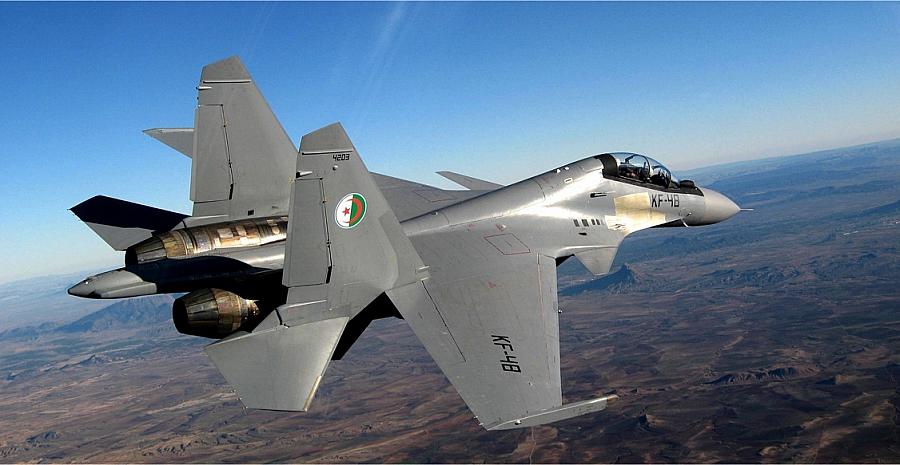
The headline framing around Algeria's air power, its Su-30MKA multirole fighters, MiG-29M/M2 interceptors, and reportedly incoming Su-57s, describes a genuinely serious force, one of the more capable air arms in Africa, backed by S-300 and S-400 layered air defense. But none of that hardware is what's actually showing up in Niger. What Algeria is sending south is aging rotary-wing equipment, the kind of gear a modernizing air force sheds as it upgrades, repurposed as a direct contribution to a neighbor fighting an active jihadist insurgency rather than flown in service of Algeria's own front-line deterrent posture.

That's a specific kind of power projection, and it's worth being precise about what it actually buys Algeria. Gunships and transport helicopters handed to Niger's military support counter-insurgency operations against Islamic State and al-Qaeda-linked groups operating across the Sahel, the same instability Algeria's own defense planning treats as a top-tier security concern given its shared, largely unguarded border with Mali, Niger, and Libya. Algeria isn't sending fighter jets because a fighter jet doesn't do much against a jihadist convoy moving through open desert. A gunship and a transport helicopter do.

The broader fleet context helps explain why Algeria has helicopters to spare in the first place. Open-source tracking puts Algeria's active air fleet at 607 aircraft, 156 of them combat types, with 49 more on order, a force large enough that donating four older helicopters barely registers against the total. That same tracking also logged a Su-30MKA crash near Adrar during a training flight in March, a reminder that even a well-resourced fleet like Algeria's runs real attrition, and that the fighter jets getting the attention aren't the part of the force actually being deployed into the Sahel mission.

Algeria has walked a careful diplomatic line for years, backing the Polisario Front against Morocco, avoiding direct intervention in neighboring conflicts, and generally keeping its own considerable air power close to home rather than projecting it abroad. Quietly handing off retiring helicopters to Niger's counter-insurgency effort fits that caution: real support for a Sahel partner, delivered through gear Algeria doesn't need for its own defense, without the political weight of deploying its own advanced fighters or opening a new front for its own air force to manage.

Turkey's Newest Frigate Has a Deeper Missile Silo Than Its Sister Ship — And Nobody's Saying Why Yet


Two frigates from the same production line, built to the same design, and one of them has a visibly bigger hole in the deck. Turkey's Anadolu Shipyard put TCG İzmir to sea for the first time on August 10 for Sea Acceptance Trials, and the photographs released alongside that milestone show something the lead ship in its class doesn't have: a forward vertical launch compartment that sits noticeably deeper than the one on TCG İstanbul, commissioned as the first of Turkey's new İstif-class frigates.

Both ships carry a 16-cell indigenous MİDLAS launch system, so the missile count hasn't changed. What's changed is the volume available in each cell. İstanbul's VLS is built to the tactical-length standard, sized around the HİSAR-D family of short-to-medium-range air defense missiles. İzmir's enlarged, strike-length version opens up space for genuinely longer and heavier weapons, Turkey's developing SİPER extended-range air defense interceptor, the GEZGİN land-attack cruise missile, or a vertically launched version of the ATMACA anti-ship missile that currently fires from angled deck launchers on both ships. Neither the shipyard nor Turkey's Defence Industry Agency has confirmed which of those actually gets loaded, or released the cell's dimensions, leaving the specific capability upgrade a matter of informed inference rather than official confirmation.

The infrastructure argument matters more than any single missile choice, though. Once a shipyard commits to pouring a deeper VLS well into a hull, that decision is effectively permanent, retrofitting a tactical-length launcher into a strike-length one after construction is a far more disruptive undertaking than simply choosing which missile to load into a cell that was already built oversized. Building İzmir with room to grow into GEZGİN or SİPER, even before either weapon is confirmed to arm the class, is Turkey installing future strike and layered air defense capacity now, while the ship is still on the slipway, rather than betting it can retrofit that capability in later at greater cost and disruption.

That fits a broader pattern in Turkey's naval shipbuilding this year: heavy reliance on domestic content, İzmir is reported at over 80 percent Turkish-built systems, paired with an unusually distributed production model. The lead ship came out of the state-run Istanbul Naval Shipyard, but the three sister vessels, İzmir included, are being built simultaneously by private industry under an STM-TAIS partnership, spreading the class's four hulls across multiple yards rather than queuing them one after another through a single production line. Combined with the sensor suite carried across the class, an ASELSAN AESA radar, indigenous infrared search-and-track and electro-optical systems, sonar, torpedo countermeasures, all built domestically, the İstif class reads as much like a demonstration of what Turkey's defense industry can now build end-to-end as it does a straightforward frigate replacement program.

The class exists to retire Turkey's aging Yavuz-class frigates, themselves 1980s-era MEKO 200 hulls built under license, and İzmir's own trials will spend the coming months validating propulsion, seakeeping, and the ship's HAVELSAN-built combat management system before it's cleared for delivery. Whether that oversized missile silo eventually gets filled with a domestically built cruise missile, an extended-range interceptor, or something Turkey hasn't disclosed yet is the detail worth watching once these trials wrap and the Defence Industry Agency finally says what İzmir's deeper VLS was actually built to carry.