Saturday, August 29, 2026

Russia's "New" Missile Runs on American Chips — Ukraine's Own Intelligence Just Proved It


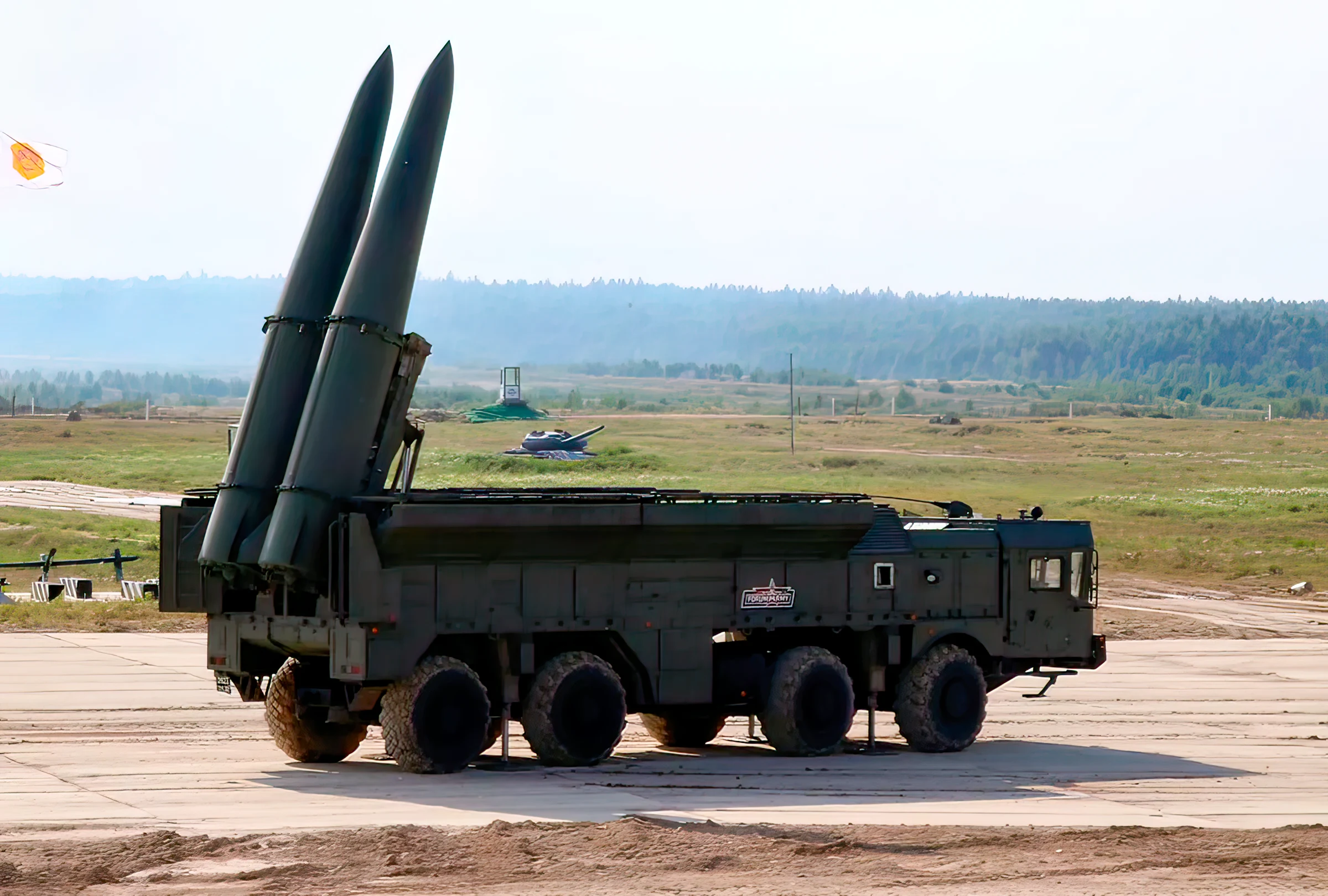
Ukraine's Defense Intelligence agency confirmed August 27 that Russia used an upgraded 9M723-2 ballistic missile, provisionally dubbed the Iskander-1000, against Kyiv during a combined strike this summer, the first confirmed combat employment of this specific variant. The name is misleading in a way worth clarifying immediately, HUR's own confirmed figures put the missile's actual operational range at 550 kilometers, a genuine 41 percent increase over the standard 9M723-1's 390 kilometers achieved primarily through a larger rocket motor and correspondingly enlarged launcher tube, not the 1,000-kilometer figure the informal nickname implies. Army Recognition's own technical analysis is careful to frame the 9M723-2 accurately as "a range-extension package built around an established missile" rather than an entirely new ballistic weapon, and Ukrainian aviation expert Kostiantyn Kryvolap's own assessment, that the upgraded variant's difficulty to intercept hasn't meaningfully changed from the baseline Iskander-M, is a useful corrective against treating this as a qualitatively new threat category.

The development timeline itself, worth noting against this blog's summer of skepticism toward Russian production and capability disclosures, is genuinely fast by any standard: Army Recognition's own research places roughly 27 months between the first visible indication of this extended-range configuration in May 2024 test-range materials and confirmed combat use in summer 2026, with only about a year between planned initial production of the first 18 identified units and actual battlefield employment. That's a considerably tighter development-to-deployment cycle than this blog's summer of coverage on comparable American and allied programs, NGSRI, GMLRS, AHEL, has generally documented, and it's worth registering honestly as a genuine Russian execution success even while treating the specific "1,000 km" branding with appropriate caution.

The detail that connects most directly to this blog's own research this month is buried in Defense News's own reporting on this same story, and it deserves to be the actual headline rather than a footnote: HUR simultaneously released a detailed production-network database for Russia's broader 9M723 Iskander-M missile family, documenting 140 identified components sourced from 35 companies and 108 officials, with only about one-quarter of those components actually manufactured in Russia. The rest comes overwhelmingly from foreign sources despite years of sanctions, 63 components from American manufacturers, eight each from Switzerland and Belarus, four each from Germany and Taiwan, three from China, and in one specific guidance-system unit processing laser-gyroscope flight data, just five of 43 components are Russian-made.

This is direct, independently sourced confirmation of exactly the sanctions-evasion pattern this blog documented through the NVIDIA Jetson Orin chip found inside Russia's S-71 missile wreckage, and through the broader NYT and Fletcher School research this blog cited showing more than 80 percent of Russia's wartime semiconductor purchases flowing through ordinary, largely unconcealed trade channels rather than sophisticated smuggling operations. Where that earlier coverage relied on a single recovered component and aggregate trade-flow statistics, this HUR database provides considerably more granular, weapon-system-specific evidence of the identical dynamic, a flagship Russian ballistic missile system, the one this blog's own Ukraine coverage has tracked hunting Patriot radars and striking Kyiv's power grid all summer, remains structurally dependent on American, German, and Taiwanese components four and a half years into a sanctions regime specifically designed to prevent exactly this dependency.

That dependency connects directly to the Russian cash crisis this blog covered just days earlier, a government cutting non-military spending by 35 percent specifically to sustain weapons production that, per this new HUR disclosure, still can't actually be sourced domestically at anything close to full self-sufficiency. Sustaining a missile program this dependent on foreign, sanctioned components isn't simply a rubles-and-manufacturing-capacity problem, it's a foreign-currency and international-trade-relationship problem layered on top of the fiscal strain this blog already documented, every guidance-system laser gyroscope requiring foreign parts is a foreign-currency expenditure a government facing a genuine liquidity crisis has to find room for regardless of how tight its own domestic budget has become. Whether the Iskander-1000's genuinely fast development timeline reflects Russian engineering competence or simply reveals how much of that competence still runs through components Washington's own export-control regime was supposed to keep out of exactly this kind of weapon is the question this HUR disclosure leaves for policymakers, not analysts, to actually answer.

Taiwan's Coastal Missile Density Is About to Rival Any Coastline on Earth


Taiwan's navy has been conducting live testing of its U.S.-supplied Harpoon Coastal Defense System, part of a broader rollout under the Littoral Combatant Command established January 1, 2026, specifically to unify the island's coastal anti-ship missile units under a single command structure capable of coordinating multilayered saturation strikes against a Chinese amphibious force. Deliveries are running in phases, this blog's research confirms 32 complete Harpoon systems are scheduled by the end of 2026, with the remaining 68 of the total 100-system, 400-missile order arriving by 2028, following an April 2023 $1.17 billion Boeing contract that included launchers, testing gear, and training running through March 2029.

The doctrine Taiwan's Navy has explicitly built around these systems connects directly to the distributed, mass-over-quality strategy this blog has documented running through nearly every piece of Taiwan's 2026 defense posture. This blog's coverage of the Ghostwake USV startup already quoted STR8 Industries' own framing of that same doctrine, "capability now comes from large numbers of low-cost systems rather than a small number of expensive ones," and Taiwan's Harpoon deployment applies the identical principle to coastal missile defense specifically. Taipei Times' own reporting confirms Taiwan is running a deliberate "high-low mix," domestically produced Hsiung Feng II and III missiles at a combined roughly 200 units annually from indigenous production, layered with the higher-end, longer-range Harpoon Block II systems, aiming for 232 total coastal batteries and, per earlier open-source tracking, more than 1,000 Hsiung Feng missiles spread across the island's 1,550-kilometer coastline by the end of 2026.

That density figure is genuinely worth taking seriously as a strategic calculation rather than just a procurement statistic. The stated aim, per open-source Taiwan defense trackers this blog's research surfaced, is sinking roughly half of any invading PLAN fleet within the first 24 to 48 hours of a landing attempt through sheer barrage density per kilometer of coastline, a saturation-strike doctrine that connects directly to the same magazine-depth-over-individual-platform-sophistication logic this blog has traced through the J-16 and Su-35 "missile truck" doctrines, and the NSPO SeaSparrow consortium's own emphasis on defending against massed salvos rather than isolated engagements. Taiwan's version applies that same insight offensively rather than defensively, overwhelming an approaching fleet with dispersed, mobile, hard-to-eliminate coastal batteries rather than trying to match China's naval tonnage ship-for-ship.

The mobile, dispersed launcher architecture itself connects to the Hsuehshan Tunnel blockade doctrine this blog covered in detail earlier this summer, where Taiwan's broader defense posture shifted toward converting ordinary infrastructure into hard-to-target defensive terrain. Road-mobile Harpoon launchers, radar vehicles, and command-and-control units distributed across the coastline rather than concentrated in fixed, easily-targeted installations apply the identical survivability logic this blog identified running through Taiwan's tunnel and bridge blockade exercises, denying an adversary a small number of high-value fixed targets whose elimination would meaningfully degrade the overall defensive network.

The range and performance ambiguity worth flagging honestly connects to this blog's summer-long treatment of disputed capability figures generally: Boeing's own stated Harpoon Block II range exceeds 67 nautical miles, roughly 124 kilometers, while Taiwan's own Navy has told lawmakers the acquired version offers improved performance, and some external estimates place range above 148 kilometers, a genuine discrepancy between manufacturer specifications and operator claims this blog has learned to note rather than resolve definitively from open sources alone. Regardless of which specific range figure proves accurate, the combined effect of Taiwan's high-low missile mix, if fielded at the scale and density currently planned, would represent one of the densest coastal anti-ship missile networks anywhere in the world, a genuinely serious deterrent investment this blog's broader Taiwan coverage this year has shown building steadily across nearly every domain simultaneously, air, sea, land, and now coastal defense in concentrated combination.

Boeing's "$131 Billion" F-15 Contract Actually Committed $343,740 on Day One


The U.S. Air Force awarded Boeing a sole-source, indefinite-delivery/indefinite-quantity contract with a $131.23 billion ceiling on August 24 for F-15 production, modernization, and sustainment under the F-15 Eagle Crest program, running through an initial ordering period to August 2031 with an option extending to 2036 and work continuing through August 2037. The headline figure is genuinely enormous, but the actual disclosed obligation at signing tells a considerably more modest story this blog's summer of coverage on ceiling-versus-reality procurement gaps would recognize immediately: just $343,740 in fiscal 2026 research and development funding, with the notice itself including no actual order for a single jet. Defense News's own comparison is the clearest illustration of that gap, when the same contracting office awarded Lockheed Martin a comparable $62 billion, 10-year F-16 export ceiling in August 2020, it issued a $4.94 billion order for 90 aircraft the same day, an immediate, substantial commitment this new F-15 contract's announcement simply doesn't include.

That distinction connects directly to the execution-risk skepticism this blog has applied consistently to headline procurement figures all summer, this blog's coverage of the NGSRI Stinger replacement RFI already established the pattern of ambitious ceiling numbers disclosed alongside considerably more conservative, hedged near-term commitments, and this Eagle Crest IDIQ structure is the same pattern taken to its logical extreme, a $131 billion number that authorizes future spending without obligating almost any of it upfront. An IDIQ contract ceiling is, by design, a maximum authorization rather than a purchase commitment, and treating this $131.23 billion figure as equivalent to a signed, funded production run considerably overstates what actually happened on August 24.

The seven-country Foreign Military Sales scope, Japan, Israel, Saudi Arabia, South Korea, Singapore, Indonesia, and Poland, deserves real attention against throughlines this blog has already documented independently. Poland's own inclusion is genuinely notable given this blog's extensive coverage of Warsaw's defense posture this month, the Patriot transfer scandal, the Piorun MANPADS consortium, the Wicher frigate launch, a country this blog has already shown investing heavily and, in the frigate case, executing unusually well across multiple simultaneous domestic and allied programs. Indonesia's inclusion is more surprising still, this blog's own research confirms Indonesia does not currently operate the F-15 at all, meaning its presence in this contract's FMS scope signals a prospective future acquisition rather than sustainment of an existing fleet, worth watching given this blog's coverage of Jakarta's own hedging behavior across the J-10C, Rafale, and other fighter evaluations this year.

Japan's inclusion connects most directly to a story this blog has tracked in unusual depth, the F-15 Japan Super Interceptor Program this blog's research found already running as a separate, active contract modification, cumulative value already at $1.22 billion as of September 2025. That existing program, layered underneath this new $131 billion ceiling framework, illustrates exactly how these headline IDIQ figures actually function in practice, aggregating and providing contracting authority for a whole family of country-specific, individually negotiated programs that were already underway or planned, rather than representing one single new $131 billion purchase decision made on a single day.

The multiyear procurement legislation this blog's research surfaced as a parallel development deserves a brief mention as genuinely relevant context: a Fiscal Year 2027 NDAA proposal would authorize contracts running up to five years for systems including the F-15EX and F-35, with the Congressional Research Service estimating 5-15 percent savings compared to annual procurement cycles. That's the same production-efficiency logic this blog has tracked through the GMLRS and NGSRI production-ramp stories, longer-duration contracting authority intended to give industry the demand certainty needed to actually invest in scaled manufacturing capacity, rather than requiring annual renegotiation. Whether Eagle Crest's own $131 billion ceiling translates into anything close to that figure in actual F-15 production depends entirely on how many of the participating countries, Poland and Indonesia's prospective new-customer status chief among the uncertain variables, actually place real orders in the years ahead, a question this contract's own August 24 announcement leaves entirely open.

India Just Ended DRDO's Missile Monopoly — Which Is an Admission Its Own Institutions Couldn't Scale Fast Enough


India's Ministry of Defence approved the transfer of DRDO-developed technology for all conventional missile systems to private industry, ending decades of production concentrated in a small number of state-owned agencies. Defence Minister Rajnath Singh's own framing is direct about the motivating fear: shortages of U.S.-made Patriot interceptors straining Ukraine's air defenses and worrying American allies in the Middle East, this blog's own extensively documented interceptor-scarcity throughline, have made clear to Indian planners that a narrow, state-monopolized industrial base cannot rapidly replenish missile stockpiles during a sustained conflict. Bharat Dynamics Limited's own production numbers illustrate exactly why: the Pralay quasi-ballistic missile, capped at just 40 units annually under BDL's sole production, is being scaled to 150-250 units through four parallel assembly lines once Adani Defence, Bharat Forge, and Solar Defence come online alongside it, a six-fold capacity increase from ending a single company's manufacturing monopoly.

This connects directly to the institutional pattern this blog has traced through DRDO's own radar and engine programs all summer. This blog's engagement with Air Marshal Thakur's Virupaksha radar analysis established a fourteen-year Uttam-derived maturation curve; this blog's coverage of the AMCA engine race documented India's outreach to France and the Rolls-Royce-Safran competition specifically because domestic engine development couldn't keep pace with operational timelines. Both of those earlier stories concerned technology development speed, DRDO taking too long to actually build something new. This missile-privatization story reveals the parallel manufacturing-scale problem, DRDO's technology existing and working, but production bottlenecked by a state-owned industrial base too narrow to build it fast enough once developed. Together, the three stories this blog has now covered describe a single Indian defense-industrial institution struggling with both halves of the problem, innovation speed and production scale, simultaneously.

The specific systems being opened, the Long Range Land Attack Cruise Missile at 1,000-1,500 kilometers and the Pralay tactical missile, connect directly to the squadron and fleet-readiness crisis this blog's AMCA coverage already flagged, India's Air Force operating just 29 squadrons against a sanctioned strength of 42.5. A private-sector-scaled missile production base doesn't solve a fighter-squadron shortfall directly, but it does address the parallel readiness gap this blog's Uzbekistan MiG-29 coverage identified as a genuine crisis pattern, a state finding its existing platforms and munitions insufficient for its actual strategic posture, and choosing rapid industrial reform over continued reliance on institutions that have already demonstrated they can't scale on their own. The explicit exclusion of strategic systems, Agni, BrahMos, and the K-series submarine-launched missiles, from this privatization is a sensible boundary, keeping India's nuclear-capable deterrent under direct state control while opening the conventional systems where production volume, not strategic sensitivity, has been the actual constraint.

The export dimension this blog's research surfaced deserves attention as a genuinely different angle than the domestic-readiness framing alone suggests. India's defense exports grew from just $72 million in 2014-15 to $4 billion in 2025-26, and the government's own stated target of ₹50,000 crore in exports by FY 2028-29 treats missile-manufacturing capacity as a genuine commercial opportunity, not simply a domestic-security fix. That connects to this blog's coverage of Turkey's own defense-export dominance through Baykar, and China's J-10C export struggles, a reminder that expanding a country's missile-industrial base serves a dual purpose this blog has now documented across multiple nations this year, meeting domestic readiness needs while positioning for a global arms market this blog's own coverage suggests is expanding rapidly across nearly every conflict-adjacent region simultaneously.

None of this guarantees smooth execution, and this blog's summer of coverage on comparably ambitious Indian defense reforms, the AMCA engine race and Virupaksha radar timeline chief among them, counsels genuine caution before assuming private-sector missile manufacturing scales as cleanly as the government's own six-fold Pralay production target implies. Qualification, certification, and regulatory requirements for new private entrants take real time to establish, and this blog's own research found no confirmation of specific delivery timelines beyond the stated production-capacity targets. But ending a state monopoly that had visibly bottlenecked missile output at a fraction of what India's own armed forces are ordering is a genuinely different, more structurally sound response than simply requesting more funding for the same institutions, and it's worth reading as India applying a lesson this blog's own coverage of interceptor scarcity in Ukraine and the Middle East has spent all summer demonstrating in real time.

Canada's $11.3 Billion Icebreaker Deal Is Also a Message to Washington


Davie Shipbuilding secured an $11.3 billion fixed-price contract from the Government of Canada to build six Program Icebreakers for the Canadian Coast Guard, the largest shipbuilding contract in Quebec's history, with construction beginning in 2027 and the full fleet entering operation by 2038. The deal builds on the existing Polar Icebreaker Project, where Davie is already constructing CCGS Arpatuuq jointly with Helsinki Shipyard, the Finnish yard Davie acquired from its previous Russian owner in 2023, hull assembly for that vessel began in Finland in May 2026 before shifting to Quebec production.

Prime Minister Mark Carney's own framing of this contract deserves to be read as more than routine ceremonial language, and it connects directly to two separate throughlines this blog has tracked extensively. Carney explicitly tied this announcement to the ICE Pact, an 11-icebreaker delivery arrangement to the United States involving Finnish designs and Davie's own construction work, stating plainly "there's a world in which America is part of that... but on terms that work for Canadians." That's a pointed reference to the same Canada-U.S. defense-industrial friction this blog documented through the Canada AWACS tariff dispute, where Washington used tariff leverage to pressure Ottawa away from its own preferred Saab GlobalEye purchase. Carney's icebreaker announcement, made days after his own government's response to new U.S. tariffs, reads as a deliberate signal that Canada's shipbuilding capacity, considerable enough to win an $11.3 billion domestic contract while simultaneously building toward the American ICE Pact, gives Ottawa genuine leverage in exactly the kind of trade relationship the AWACS dispute already showed Washington willing to weaponize.

This also extends the Finland Model story this blog covered in detail, where the Pentagon opened U.S. Navy warship construction to allied shipyards specifically because domestic capacity couldn't scale fast enough. Davie's own Helsinki Shipyard acquisition and its role building Polar Class icebreakers jointly across Finnish and Canadian facilities is functionally the same allied-shipbuilding-integration model, just already operating rather than newly proposed. If the Finland Model's underlying logic, foreign design and construction capacity filling a domestic production gap, genuinely works, Davie's own Finnish-Canadian icebreaker production is a live proof of concept this blog's earlier coverage didn't have direct evidence for at the time.

The Arctic strategic dimension connects directly to this blog's coverage of Operation Polar Dagger and the CSIS-documented asymmetry between Russia's extensive Arctic base network and America's comparatively minimal permanent presence in the same region. Six new Polar Class 3 icebreakers replacing Canada's aging heavy and medium fleet across the Arctic, St. Lawrence, and Great Lakes represents a genuinely serious investment in exactly the kind of year-round Arctic access and sovereignty presence this blog's Polar Dagger coverage identified as structurally lacking on the North American side of that asymmetry. Canada's own stated rationale, protecting Canadian waters and strengthening Arctic sovereignty and presence, is the direct policy answer to the infrastructure gap this blog's earlier reporting documented.

None of this guarantees smooth execution, and this blog's summer of coverage on comparably ambitious multi-decade shipbuilding programs, Australia's Hunter-class overrun, Germany's collapsed F126 program, the AUKUS Pillar I submarine production shortfall, counsels genuine caution before assuming a fixed-price contract announced today translates cleanly into six delivered icebreakers by 2038. But a program built around an already-functioning Finnish-Canadian production partnership, tied explicitly to broader American cooperation on Carney's own stated terms, and directly addressing the Arctic infrastructure gap this blog has documented extensively, is a genuinely coherent strategic bet, one that treats shipbuilding capacity itself as leverage in exactly the kind of allied trade and defense-industrial disputes this blog's Canada AWACS coverage already showed running in the opposite direction just weeks earlier.

Russia Nearly Ran Out of Cash in April — Ukraine's Own Drone Campaign Is a Big Reason Why


Bloomberg's own reporting, citing people familiar with the matter, reveals Russia's Finance Minister Anton Siluanov warned Prime Minister Mikhail Mishustin in April that the government would not have enough money to make all scheduled payments on time, with the federal treasury's single account falling to roughly negative 5.5 trillion rubles, about $65.3 billion in the red. The resulting austerity regime has cut non-military spending by 35 percent, a genuinely severe fiscal contraction Moscow has chosen to absorb specifically to avoid touching military expenditures, which have continued rising even as the rest of the government's budget gets squeezed. That crisis has since compounded into what the Washington Post and Fortune both independently describe as a slow-motion bank run, Russians withdrawing $7.3 billion in July and $3.4 billion in the first half of August alone, on pace to nearly double the $24.7 billion annual withdrawal rate seen in 2022 when the invasion began.

This connects directly to the strike campaign this blog has documented in exhaustive detail all summer, and one specific data point deserves to be named explicitly: this blog's research into Ukraine's own Iskander-hunting and archer-versus-arrow doctrine surfaced Wikipedia's own detailed account of the 2025 Russian fuel crisis, over a dozen Ukrainian drone attacks on Russian oil infrastructure in a single three-week window in August 2025 alone, striking facilities across Ryazan and Volgograd Oblasts specifically, with independent analyst Boris Aronstein describing the damage as the most severe crisis in years precisely because the coordinated, repeated waves of drones prevent Russia from completing repairs before the next attack arrives. This blog's own coverage of the ArcelorMittal steel plant strike and Russia's broader campaign against Ukrainian defense industry already established this as a two-way economic war; this Bloomberg reporting confirms the financial toll of Ukraine's own side of that exchange has now reached the level of a genuine near-default event inside the Russian government itself.

The Ratcliffe visit detail is worth flagging as a genuinely significant escalation in how directly American intelligence is now engaging Moscow. This blog's coverage of the U.S.-Ukraine intelligence-sharing surge already established CIA Director John Ratcliffe as a central figure insisting on maintaining Ukraine's intelligence pipeline "free of charge" even as other American support grew more transactional; this reporting's account of Ratcliffe's own secretive Moscow visit, delivering what the New York Times described as an unfiltered assessment of Russia's bleak battlefield and domestic situation, suggests the same official managing intelligence flow to Kyiv is simultaneously delivering blunt reality checks directly to the Kremlin, a genuinely unusual dual role this blog's earlier coverage hadn't previously connected.

The Asia Times "bear trap" analysis this blog's research surfaced adds a useful structural framing worth setting against Fedorov's own warning this blog covered days earlier that Ukraine is "gradually, slowly losing" the war. Both assessments describe the same underlying dynamic from opposite sides, a war that has stopped being a simple contest of who runs out of resources first and become a genuinely compounding trap for Russia specifically, manpower costs rising as recruitment becomes more expensive, territorial gains slowing even as Moscow claims summer advances, and Zelenskyy's own August 12 claim of 745 square kilometers retaken this year corroborated independently by Ukraine's open-source DeepState mapping project. Reading Fedorov's institutional pessimism about Ukraine's own effectiveness alongside this financial and territorial pressure on Russia produces a genuinely more complicated picture than either single story suggests alone, both sides show real, independently documented strain simultaneously, a war of mutual exhaustion rather than one side clearly winning the attrition contest.

None of this confirms Russia's financial position collapses outright, and this blog's own summer of coverage on Iran's repeatedly underestimated reconstitution capacity, and the Su-34 and Su-35 production-disclosure ambiguity, counsels real caution before assuming a single fiscal crisis, however severe, translates directly into diminished Russian capacity to sustain the war. But a government forced to cut non-military spending by more than a third while facing a bank run nearly double its 2022 pace, disclosed through leaked internal warnings rather than Kremlin messaging, is a genuinely different order of evidence than the state-sourced production announcements this blog has learned to treat with structural skepticism all summer, and it's worth weighing accordingly as real confirmation that the economic war running parallel to the battlefield one has now reached the Kremlin's own treasury account.

Turkey's Newest Underwater Project Solves a Problem Sanctions Created, Not Just One the Sea Presents


HAVELSAN unveiled AVISTA, a new self-funded underwater autonomy research project, at TEKNOFEST Blue Homeland 2026 in Gölcük, building on the company's existing SANCAR and RAFNAR unmanned marine vehicle programs. The project targets precise underwater positioning where GNSS signals don't reach, three-dimensional underwater mapping, hull inspection, and critical underwater infrastructure protection, developed on a six-degree-of-freedom remotely operated vehicle platform with software architecture explicitly built to be platform-independent, designed for eventual integration across different unmanned underwater vehicles and coordinated operation with HAVELSAN's own ADVENT Combat Management System.

The origin story HAVELSAN discloses in its own press release deserves more attention than a routine capability announcement would normally warrant: the company states AVISTA was initiated specifically in response to the high cost of underwater sensors and customs-related restrictions affecting procurement, aiming to develop cost-effective, readily available sensors rather than depending on foreign-sourced components. That's a direct acknowledgment of the same defense-supply-chain vulnerability this blog's coverage of Ghost Robotics' struggles against Chinese-dominated component sourcing already documented, just applied to underwater sensing hardware rather than robotics actuators, and it fits the broader import-substitution logic running through nearly every Turkish defense program this blog has covered this year.

This is now the fourth distinct Turkish unmanned maritime system this blog has documented in roughly a month, following MARLIN's mine-laying capability, TUFAN's kamikaze strike role, and FNSS's U-MAV amphibious assault platform. AVISTA extends that portfolio into underwater positioning and mapping infrastructure specifically, the sensing and navigation layer that platforms like ÇAKA, HAVELSAN's own submersible hybrid unmanned marine vehicle this reporting confirms AVISTA is meant to directly feed, would actually depend on to operate autonomously and covertly. Where MARLIN, TUFAN, and U-MAV represent the visible, weapon-carrying end of Turkey's unmanned maritime buildout, AVISTA represents the less glamorous but arguably more foundational underlying capability, the ability to navigate, map, and operate precisely underwater without relying on GPS signals an adversary might jam or deny.

That GNSS-denial framing connects directly to the Baltic spoofing research this blog cited through its Vaisala coverage, where independent Gdynia Maritime University and GPSPatron research documented sustained GPS spoofing and jamming attacks against shipping in contested waters near Kaliningrad. A system explicitly built to operate without GNSS access isn't solving a hypothetical problem, it's solving exactly the demonstrated vulnerability this blog's own research has already confirmed is an active, daily threat in contested European waters, extended here to the underwater domain where GPS signals don't naturally penetrate anyway, making genuinely autonomous underwater navigation without surface-relay dependency a considerably harder and more valuable problem to solve than surface-level GNSS resilience alone.

The dual military-civilian framing HAVELSAN emphasizes, underwater search and rescue, forensic investigation, port security, energy-facility inspection, alongside the explicitly stated anti-submarine, anti-surface, mine, and seabed warfare applications feeding into the ADVENT MÜREN combat management system, mirrors the same dual-use positioning this blog identified in Ocius's Bluebottle sonar contracts, technology marketed simultaneously for border-security and defense applications to maximize both domestic budget access and eventual export appeal. With sea trials planned imminently and an operational-readiness target of 2027, AVISTA is still firmly in the early R&D category this blog's summer of coverage has learned to treat with real caution before assuming rapid fielding, but the underlying strategic logic, building indigenous underwater sensing capability specifically to reduce dependence on cost-prohibitive or export-restricted foreign components, is a coherent and increasingly familiar entry in the same self-sufficiency throughline running through nearly every Turkish defense-industrial story this blog has covered this year.

A Ceasefire, a Hilltop, and a "Pilot Zone" Nobody Can Actually Verify


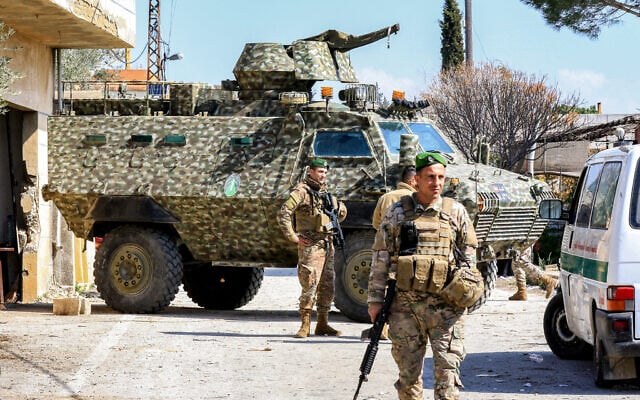
Defense News's own on-the-ground reporting from Nabatieh district captures something this blog's summer of coverage has documented repeatedly in other theaters, but rarely with this much granular, human detail: a ceasefire that exists on paper while daily military activity continues almost entirely unconstrained by it. Israeli troops withdrew from Zawtar Gharbieh under a U.S.-mediated "pilot zone" framework requiring areas to be verifiably cleared of Hezbollah weapons and fighters before Israeli forces leave, but no verification mechanism has actually been agreed, and Israel has withdrawn from only one of two agreed zones so far. Meanwhile the Ali al-Taher hills nearby, a strategic high point believed to host a Hezbollah command center, absorbed an average of 137 projectiles a day between August 5 and 16, according to UNIFIL, despite the ceasefire nominally governing this exact stretch of territory.

That gap, a ceasefire in name and sustained bombardment in practice, is the same structural pattern this blog has documented through retired Gen. Glen VanHerck's warnings about ambiguous authority and attribution across multiple theaters this summer, the Kuwait F-5 raid, the Langley drone incursions, Iran's contingency planning against Cyprus and Bulgaria. What distinguishes this Lebanon story is how explicitly the ambiguity itself becomes the strategic weapon, per Mounir Shehadeh, the former Lebanese Armed Forces brigadier general and UNIFIL coordinator interviewed in this reporting, Israel "may not need to formally declare a permanent occupation in order to establish a reality resembling one." That's a considerably more deliberate use of unresolved authority than this blog's earlier VanHerck coverage described, not an accountability gap slowing a defensive response, but a sustained, low-intensity presence used specifically to avoid the political and diplomatic costs a formal, declared occupation would carry.

The reconnaissance-drone detail in this reporting connects directly to the electronic-warfare and surveillance throughline this blog has tracked all summer, Israeli drones flying "low among the residents" over Zawtar Gharbieh, close enough that the Lebanese Armed Forces have had to formally request distance through the ceasefire's own communication channel. That's the same persistent, low-signature ISR pattern this blog documented through China's TB-001 and Y-9FQ operations near Japan, sustained aerial presence functioning as much for psychological effect and information-gathering as for any immediate tactical purpose, adapted here to a ground-contact conflict rather than a maritime one.

Shehadeh's own skepticism about the "massive military hub" framing surrounding Ali al-Taher's underground infrastructure deserves the same treatment this blog has applied to unverified capability claims from every side of every conflict covered this year, his assessment that the existence of tunnels is "plausible" but that claims about their scale, occupant numbers, and reported gas use "remain unverified," paired with his direct suggestion that such framing may serve to "prepare public opinion for a longer incursion," is exactly the kind of information-warfare skepticism this blog applied to Russia's own unverified claims about Ukrainian mercenary casualties and China's contested anti-stealth demonstrations earlier this summer. An unverified claim serving one side's narrative interests deserves the same scrutiny regardless of which government or military is making it.

This also connects to the broader regional throughline this blog has tracked through the Mecca Pact and Cyprus's Merkava pursuit, an Israel increasingly positioned across multiple simultaneous fronts, Gaza, Iran, and now this slow-motion territorial dispute in southern Lebanon, each generating its own localized version of the same underlying pattern this blog has documented all year, formal agreements and ceasefires that constrain the letter of military activity far less than their headlines suggest. Nabatieh's own mayor's suggestion that the hills' strategic significance may be politically exaggerated ahead of Israeli elections adds a domestic-politics dimension this blog's coverage of Trump's own election-adjacent Korea exercise cutback would recognize, military posture decisions shaped as much by each government's internal political calendar as by the underlying security calculus the public messaging emphasizes.