
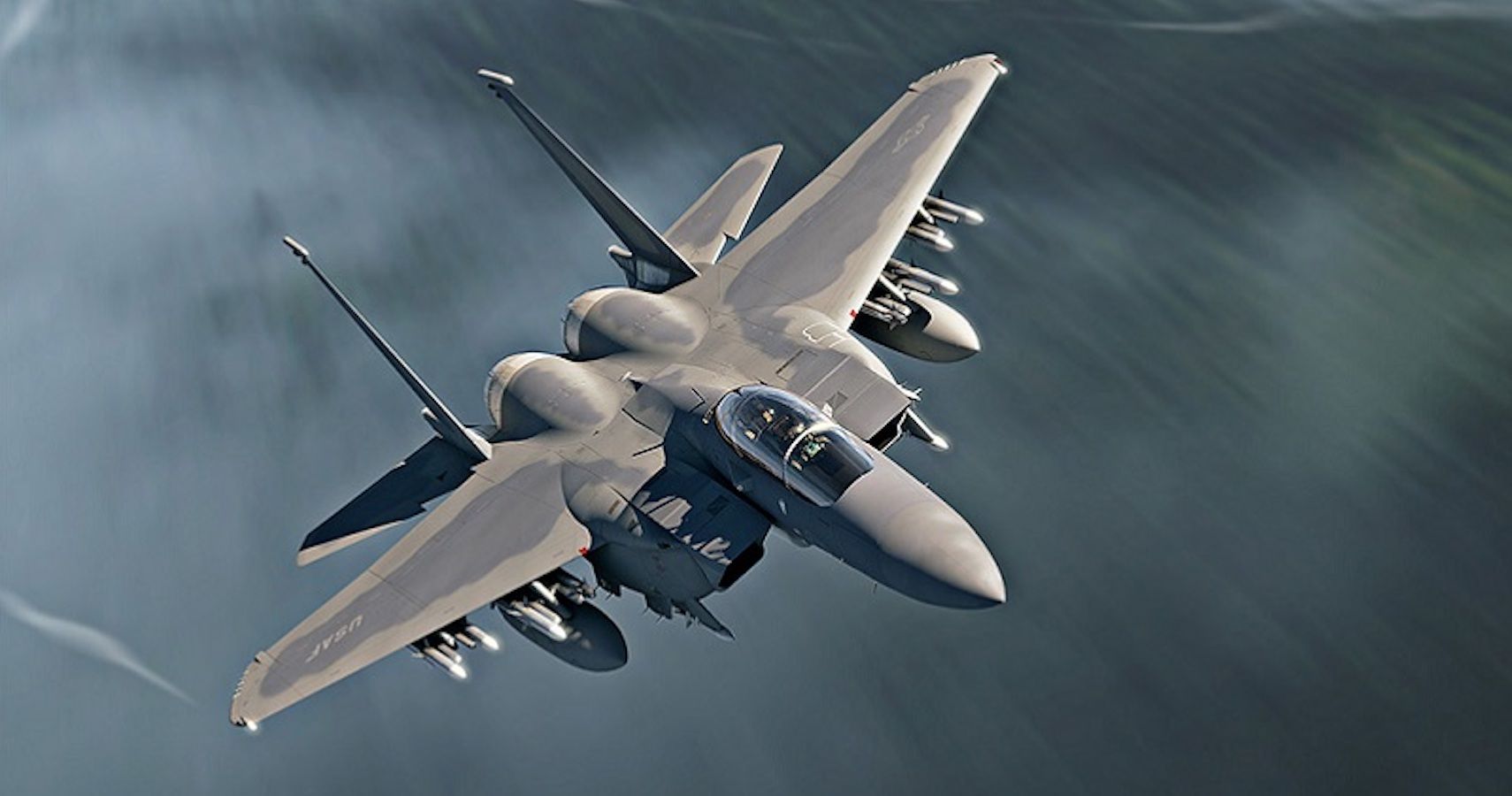
The U.S. Air Force awarded Boeing a sole-source, indefinite-delivery/indefinite-quantity contract with a $131.23 billion ceiling on August 24 for F-15 production, modernization, and sustainment under the F-15 Eagle Crest program, running through an initial ordering period to August 2031 with an option extending to 2036 and work continuing through August 2037. The headline figure is genuinely enormous, but the actual disclosed obligation at signing tells a considerably more modest story this blog's summer of coverage on ceiling-versus-reality procurement gaps would recognize immediately: just $343,740 in fiscal 2026 research and development funding, with the notice itself including no actual order for a single jet. Defense News's own comparison is the clearest illustration of that gap, when the same contracting office awarded Lockheed Martin a comparable $62 billion, 10-year F-16 export ceiling in August 2020, it issued a $4.94 billion order for 90 aircraft the same day, an immediate, substantial commitment this new F-15 contract's announcement simply doesn't include.
That distinction connects directly to the execution-risk skepticism this blog has applied consistently to headline procurement figures all summer, this blog's coverage of the NGSRI Stinger replacement RFI already established the pattern of ambitious ceiling numbers disclosed alongside considerably more conservative, hedged near-term commitments, and this Eagle Crest IDIQ structure is the same pattern taken to its logical extreme, a $131 billion number that authorizes future spending without obligating almost any of it upfront. An IDIQ contract ceiling is, by design, a maximum authorization rather than a purchase commitment, and treating this $131.23 billion figure as equivalent to a signed, funded production run considerably overstates what actually happened on August 24.
The seven-country Foreign Military Sales scope, Japan, Israel, Saudi Arabia, South Korea, Singapore, Indonesia, and Poland, deserves real attention against throughlines this blog has already documented independently. Poland's own inclusion is genuinely notable given this blog's extensive coverage of Warsaw's defense posture this month, the Patriot transfer scandal, the Piorun MANPADS consortium, the Wicher frigate launch, a country this blog has already shown investing heavily and, in the frigate case, executing unusually well across multiple simultaneous domestic and allied programs. Indonesia's inclusion is more surprising still, this blog's own research confirms Indonesia does not currently operate the F-15 at all, meaning its presence in this contract's FMS scope signals a prospective future acquisition rather than sustainment of an existing fleet, worth watching given this blog's coverage of Jakarta's own hedging behavior across the J-10C, Rafale, and other fighter evaluations this year.
Japan's inclusion connects most directly to a story this blog has tracked in unusual depth, the F-15 Japan Super Interceptor Program this blog's research found already running as a separate, active contract modification, cumulative value already at $1.22 billion as of September 2025. That existing program, layered underneath this new $131 billion ceiling framework, illustrates exactly how these headline IDIQ figures actually function in practice, aggregating and providing contracting authority for a whole family of country-specific, individually negotiated programs that were already underway or planned, rather than representing one single new $131 billion purchase decision made on a single day.
The multiyear procurement legislation this blog's research surfaced as a parallel development deserves a brief mention as genuinely relevant context: a Fiscal Year 2027 NDAA proposal would authorize contracts running up to five years for systems including the F-15EX and F-35, with the Congressional Research Service estimating 5-15 percent savings compared to annual procurement cycles. That's the same production-efficiency logic this blog has tracked through the GMLRS and NGSRI production-ramp stories, longer-duration contracting authority intended to give industry the demand certainty needed to actually invest in scaled manufacturing capacity, rather than requiring annual renegotiation. Whether Eagle Crest's own $131 billion ceiling translates into anything close to that figure in actual F-15 production depends entirely on how many of the participating countries, Poland and Indonesia's prospective new-customer status chief among the uncertain variables, actually place real orders in the years ahead, a question this contract's own August 24 announcement leaves entirely open.

No comments:
Post a Comment