
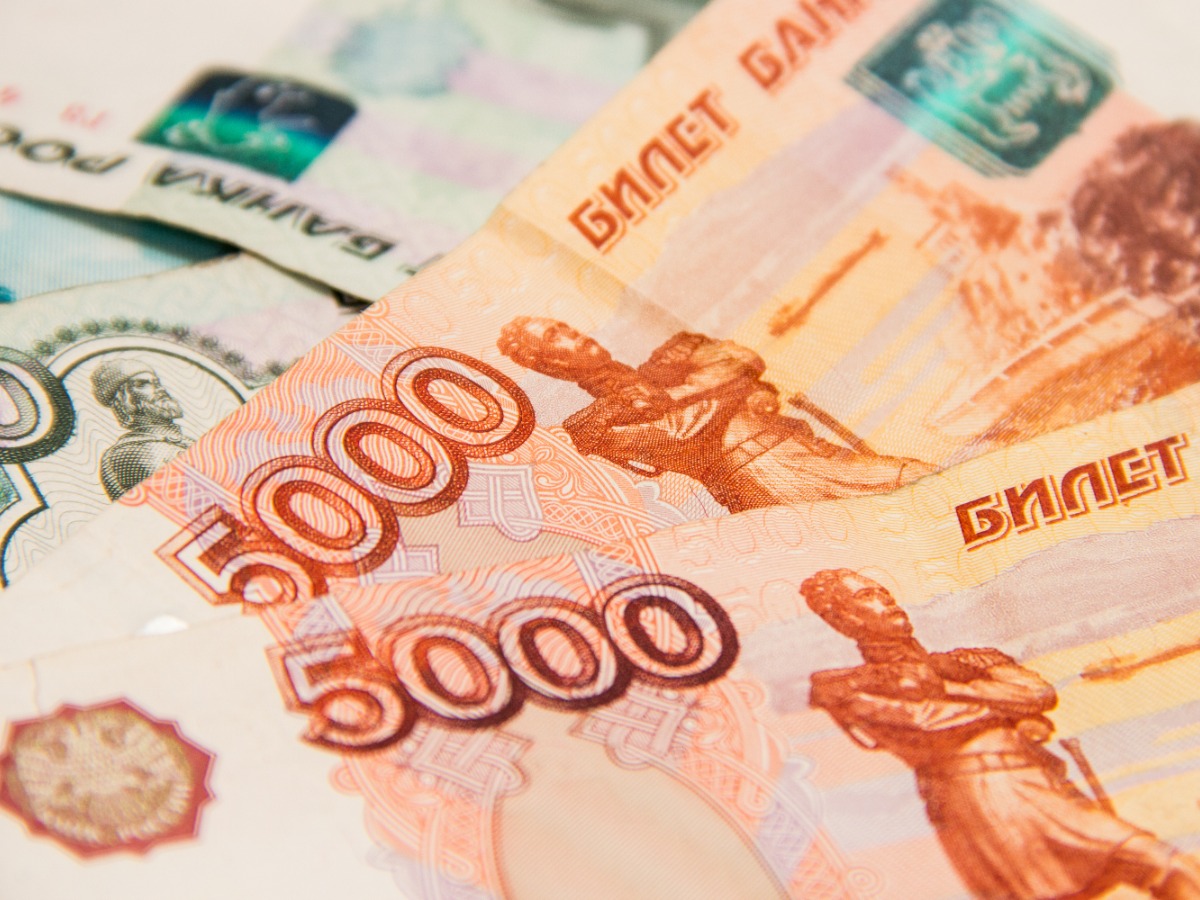
Bloomberg's own reporting, citing people familiar with the matter, reveals Russia's Finance Minister Anton Siluanov warned Prime Minister Mikhail Mishustin in April that the government would not have enough money to make all scheduled payments on time, with the federal treasury's single account falling to roughly negative 5.5 trillion rubles, about $65.3 billion in the red. The resulting austerity regime has cut non-military spending by 35 percent, a genuinely severe fiscal contraction Moscow has chosen to absorb specifically to avoid touching military expenditures, which have continued rising even as the rest of the government's budget gets squeezed. That crisis has since compounded into what the Washington Post and Fortune both independently describe as a slow-motion bank run, Russians withdrawing $7.3 billion in July and $3.4 billion in the first half of August alone, on pace to nearly double the $24.7 billion annual withdrawal rate seen in 2022 when the invasion began.
This connects directly to the strike campaign this blog has documented in exhaustive detail all summer, and one specific data point deserves to be named explicitly: this blog's research into Ukraine's own Iskander-hunting and archer-versus-arrow doctrine surfaced Wikipedia's own detailed account of the 2025 Russian fuel crisis, over a dozen Ukrainian drone attacks on Russian oil infrastructure in a single three-week window in August 2025 alone, striking facilities across Ryazan and Volgograd Oblasts specifically, with independent analyst Boris Aronstein describing the damage as the most severe crisis in years precisely because the coordinated, repeated waves of drones prevent Russia from completing repairs before the next attack arrives. This blog's own coverage of the ArcelorMittal steel plant strike and Russia's broader campaign against Ukrainian defense industry already established this as a two-way economic war; this Bloomberg reporting confirms the financial toll of Ukraine's own side of that exchange has now reached the level of a genuine near-default event inside the Russian government itself.
The Ratcliffe visit detail is worth flagging as a genuinely significant escalation in how directly American intelligence is now engaging Moscow. This blog's coverage of the U.S.-Ukraine intelligence-sharing surge already established CIA Director John Ratcliffe as a central figure insisting on maintaining Ukraine's intelligence pipeline "free of charge" even as other American support grew more transactional; this reporting's account of Ratcliffe's own secretive Moscow visit, delivering what the New York Times described as an unfiltered assessment of Russia's bleak battlefield and domestic situation, suggests the same official managing intelligence flow to Kyiv is simultaneously delivering blunt reality checks directly to the Kremlin, a genuinely unusual dual role this blog's earlier coverage hadn't previously connected.
The Asia Times "bear trap" analysis this blog's research surfaced adds a useful structural framing worth setting against Fedorov's own warning this blog covered days earlier that Ukraine is "gradually, slowly losing" the war. Both assessments describe the same underlying dynamic from opposite sides, a war that has stopped being a simple contest of who runs out of resources first and become a genuinely compounding trap for Russia specifically, manpower costs rising as recruitment becomes more expensive, territorial gains slowing even as Moscow claims summer advances, and Zelenskyy's own August 12 claim of 745 square kilometers retaken this year corroborated independently by Ukraine's open-source DeepState mapping project. Reading Fedorov's institutional pessimism about Ukraine's own effectiveness alongside this financial and territorial pressure on Russia produces a genuinely more complicated picture than either single story suggests alone, both sides show real, independently documented strain simultaneously, a war of mutual exhaustion rather than one side clearly winning the attrition contest.
None of this confirms Russia's financial position collapses outright, and this blog's own summer of coverage on Iran's repeatedly underestimated reconstitution capacity, and the Su-34 and Su-35 production-disclosure ambiguity, counsels real caution before assuming a single fiscal crisis, however severe, translates directly into diminished Russian capacity to sustain the war. But a government forced to cut non-military spending by more than a third while facing a bank run nearly double its 2022 pace, disclosed through leaked internal warnings rather than Kremlin messaging, is a genuinely different order of evidence than the state-sourced production announcements this blog has learned to treat with structural skepticism all summer, and it's worth weighing accordingly as real confirmation that the economic war running parallel to the battlefield one has now reached the Kremlin's own treasury account.

No comments:
Post a Comment