
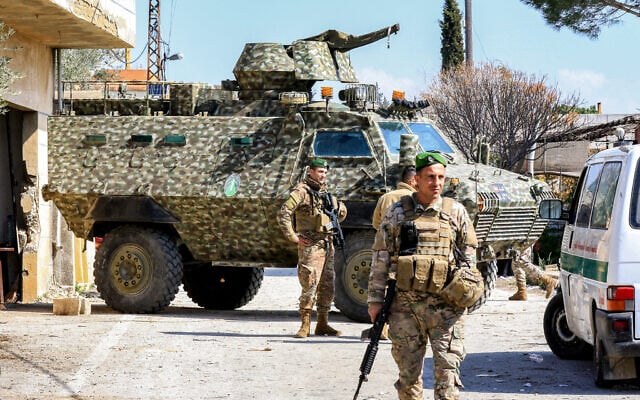
Defense News's own on-the-ground reporting from Nabatieh district captures something this blog's summer of coverage has documented repeatedly in other theaters, but rarely with this much granular, human detail: a ceasefire that exists on paper while daily military activity continues almost entirely unconstrained by it. Israeli troops withdrew from Zawtar Gharbieh under a U.S.-mediated "pilot zone" framework requiring areas to be verifiably cleared of Hezbollah weapons and fighters before Israeli forces leave, but no verification mechanism has actually been agreed, and Israel has withdrawn from only one of two agreed zones so far. Meanwhile the Ali al-Taher hills nearby, a strategic high point believed to host a Hezbollah command center, absorbed an average of 137 projectiles a day between August 5 and 16, according to UNIFIL, despite the ceasefire nominally governing this exact stretch of territory.
That gap, a ceasefire in name and sustained bombardment in practice, is the same structural pattern this blog has documented through retired Gen. Glen VanHerck's warnings about ambiguous authority and attribution across multiple theaters this summer, the Kuwait F-5 raid, the Langley drone incursions, Iran's contingency planning against Cyprus and Bulgaria. What distinguishes this Lebanon story is how explicitly the ambiguity itself becomes the strategic weapon, per Mounir Shehadeh, the former Lebanese Armed Forces brigadier general and UNIFIL coordinator interviewed in this reporting, Israel "may not need to formally declare a permanent occupation in order to establish a reality resembling one." That's a considerably more deliberate use of unresolved authority than this blog's earlier VanHerck coverage described, not an accountability gap slowing a defensive response, but a sustained, low-intensity presence used specifically to avoid the political and diplomatic costs a formal, declared occupation would carry.
The reconnaissance-drone detail in this reporting connects directly to the electronic-warfare and surveillance throughline this blog has tracked all summer, Israeli drones flying "low among the residents" over Zawtar Gharbieh, close enough that the Lebanese Armed Forces have had to formally request distance through the ceasefire's own communication channel. That's the same persistent, low-signature ISR pattern this blog documented through China's TB-001 and Y-9FQ operations near Japan, sustained aerial presence functioning as much for psychological effect and information-gathering as for any immediate tactical purpose, adapted here to a ground-contact conflict rather than a maritime one.
Shehadeh's own skepticism about the "massive military hub" framing surrounding Ali al-Taher's underground infrastructure deserves the same treatment this blog has applied to unverified capability claims from every side of every conflict covered this year, his assessment that the existence of tunnels is "plausible" but that claims about their scale, occupant numbers, and reported gas use "remain unverified," paired with his direct suggestion that such framing may serve to "prepare public opinion for a longer incursion," is exactly the kind of information-warfare skepticism this blog applied to Russia's own unverified claims about Ukrainian mercenary casualties and China's contested anti-stealth demonstrations earlier this summer. An unverified claim serving one side's narrative interests deserves the same scrutiny regardless of which government or military is making it.
This also connects to the broader regional throughline this blog has tracked through the Mecca Pact and Cyprus's Merkava pursuit, an Israel increasingly positioned across multiple simultaneous fronts, Gaza, Iran, and now this slow-motion territorial dispute in southern Lebanon, each generating its own localized version of the same underlying pattern this blog has documented all year, formal agreements and ceasefires that constrain the letter of military activity far less than their headlines suggest. Nabatieh's own mayor's suggestion that the hills' strategic significance may be politically exaggerated ahead of Israeli elections adds a domestic-politics dimension this blog's coverage of Trump's own election-adjacent Korea exercise cutback would recognize, military posture decisions shaped as much by each government's internal political calendar as by the underlying security calculus the public messaging emphasizes.

No comments:
Post a Comment