
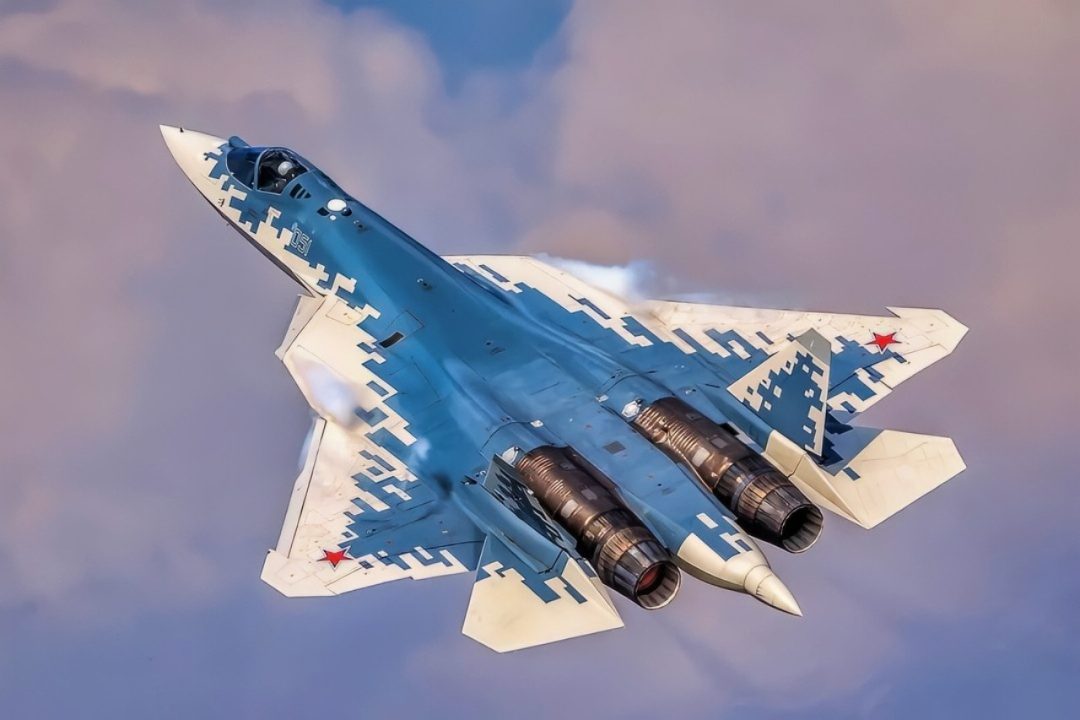
Reports circulating this week point to a Russia-Kazakhstan agreement that would put Su-57 stealth fighters in Kazakh service within roughly two years. Specific terms, aircraft numbers, delivery schedule, price, haven't been independently verified by outlets outside the initial report, and that caution matters here more than usual: Russia's own claims about Su-57 export interest over the past two years have repeatedly outpaced anything that's actually shown up on a runway.
The pattern is worth laying out plainly. Rosoboronexport told reporters at a Kuala Lumpur defense show in April that it had signed Su-57E export agreements with "several" countries and described a "steadily expanding" customer list, without naming a single one. Russia's trade minister made an almost identical claim in Saudi Arabia in February, "some contracts have been signed, though I cannot disclose the details." Algeria remains the only country outside observers have actually watched operating the jet, based on aircraft spotted at Algerian bases in late 2025 and early 2026, and even that link only firmed up after a hacker collective published leaked Rostec documents allegedly detailing a 12-aircraft order running through 2026. Everything else, India's long-running talks, rumored North Korean and Iranian interest, has stayed in the discussion phase for years without a signed, publicly confirmed contract to show for it.
Kazakhstan fits the shortlist of plausible buyers for reasons that have nothing to do with the aircraft's own merits. It's a CSTO member with deep, decades-old defense ties to Moscow, already flying Russian Su-30SM multirole fighters bought under a deal Kazakh officials chose over the French Rafale. Its defense budget is modest by regional standards, and any Su-57 purchase would almost certainly involve financing terms, discounts, or barter arrangements Moscow doesn't extend to arm's-length customers, the kind of deal analysts have suggested may function as political payment for standing by Russia through the Ukraine war rather than a straightforward capability purchase.
Set against that backdrop, Kazakhstan's own recent behavior cuts in two directions at once. Astana has also been quietly drifting toward the West: in 2024 it auctioned off more than a hundred aging Soviet-era MiG-31s, MiG-27s, MiG-29s, and Su-24s, a sale that ended with the United States buying 81 of them through offshore intermediaries, aircraft since speculated to be headed for spare parts, decoys, or eventual transfer to Ukraine. A country simultaneously selling its Cold War jets toward Washington's orbit while reportedly buying Moscow's most advanced fighter would be threading a genuinely awkward needle, and it's the kind of contradiction that should make anyone treat this week's reports with real skepticism until Kazakhstan's own defense ministry confirms anything.
Russia's actual production capacity adds a final layer of doubt. Independent estimates put the entire Su-57 fleet, Russian and foreign orders combined, at somewhere around 30 aircraft as of early 2026, against a 2019 promise of 76 jets by 2027 or 2028. A defense-industrial base struggling to supply its own air force isn't an obvious candidate to simultaneously stand up a new export customer on a two-year timeline, and if Kazakhstan does get Su-57s that fast, it will likely say more about which existing airframes get redirected than about any surge in Russian manufacturing.

No comments:
Post a Comment